Back to top

Recovering Rail Cars from the Susquehanna River

Short title: 
Recovering Rail Cars from the Susquehanna River

The CSX freight train was heading to Richmond, VA when it derailed between Cecil and Harford Counties at approximately 8:00 pm. The rail cars were empty so no environmental or human health impacts are expected. The cause of the accident remains under investigation. However, strong winds, with gusts up to 40-50 mph, may have been the cause. Federal, state, and local responders are all working cooperatively to remove the rail cars. Two rail cars have already been removed and CSX is bringing in crane barges to recover the two remaining rail cars from deeper water. These crane barges are expected to be on-scene by Monday, March 12 to begin removing the two remaining rail cars. The Office of Response and Restoration’s Emergency Response Division has been providing up-to-date weather forecasts to assist the U.S. Coast Guard and CSX contractors.

Rail car floating in a river.
One of the rail cars that fell into the river. Image credit: NOAA.
Rail car being recovered with a crane.
Car from the derailed train being recovered. Image credit: NOAA.
Crane pulling a rail car from a river.
A rail car being pulled from the water. Image credit: NOAA.
Node Weight: 
1

Minds Behind OR&R: Meet Emergency Management Guru Katie Krushinski

Short title: 
Minds Behind OR&R: Meet Emergency Management Guru Katie Krushinski
A photo of a woman with the ocean in the background. .
Exercise and Communication Coordinator Katie Krushinski. (Photos Courtesy of Katie Krushinski).
A group of people posing for a photo.
From left, Lisa Symons, Katie Krushinski, Scientific Support Coordinator Brad Benggio, Brian Thom, and U.S. Coast Guard Lt. Michael Oubre during the Hurricane Irma response in October.
A profile photo of a woman.
Node Weight: 
1

National Ocean Service Boosts Disaster Preparedness Efforts with New Program

Short title: 
National Ocean Service Boosts Disaster Preparedness Efforts with New Program

That's all great! But are the batteries fresh? Is your insurance coverage adequate? Have better evacuation routes been created? Have those phone numbers changed?

Preparedness requires continued vigilance to ensure that the best laid plans are reviewed regularly, equipment is maintained, and the plan is tested to make sure it works. Then, once you’ve tested your plan, you will probably find there are improvements to be made.

Being prepared is not a one time effort.

Through 40 years of emergency preparedness, response, and recovery experience, the Office of Response and Restoration knows that a truly effective preparedness posture requires constant vigilance and continuous improvement.

The international humanitarian response community has noted “resilience itself is not achievable without the capacity to absorb shocks, and it is this capacity that emergency preparedness helps to provide.”

The National Ocean Service agrees!

The Office of Response and Restoration is honored to support the National Ocean Service through the development of the Disaster Preparedness Program and its mission to prepare NOS and partners to respond to and recover from pollution events and natural disasters.

The 2017 hurricane season was the most costly hurricane season in U.S. history, with damages estimated at over $200 billion. The National Academies of Sciences, Engineering, and Medicine finds that the U.S. should expect a greater incidence of high-intensity storms, producing substantially more rainfall. To address this and other escalating threats to coastal environments, communities, and economies, the National Ocean Service is bolstering its ability to respond quickly and effectively to coastal storms and other disasters.

The new program will expand on the current program activity of the Gulf of Mexico Disaster Response Center, and streamline existing operational capabilities and knowledge to ensure that commerce, communities and natural resources can recover as quickly as possible.

The Disaster Preparedness Program will focus on providing disaster response and recovery training, exercises, lessons learned and resources within NOAA and to our emergency response partners across the nation to ensure that we are in the best possible position to respond to coastal threats quickly, safely, and effectively.

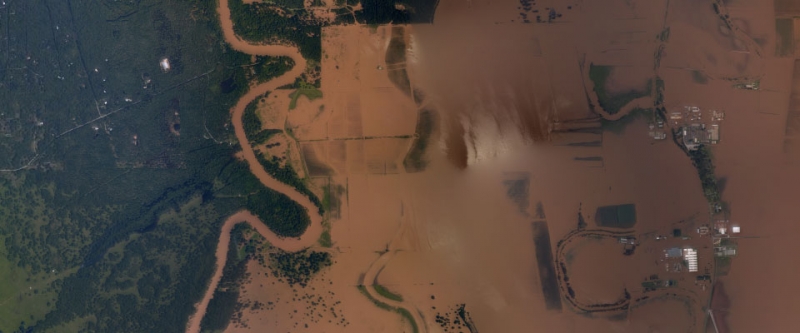
An aerial view of a flooded landscape.

From Aug. 27-Sept. 4, the National Geodetic Survey (NGS) collected damage assessment imagery in the aftermath of Hurricane Harvey. The aerial imagery was collected in specific areas identified by FEMA and the National Weather Service. Image credit: NGS.

A satellite image of a hurricane.
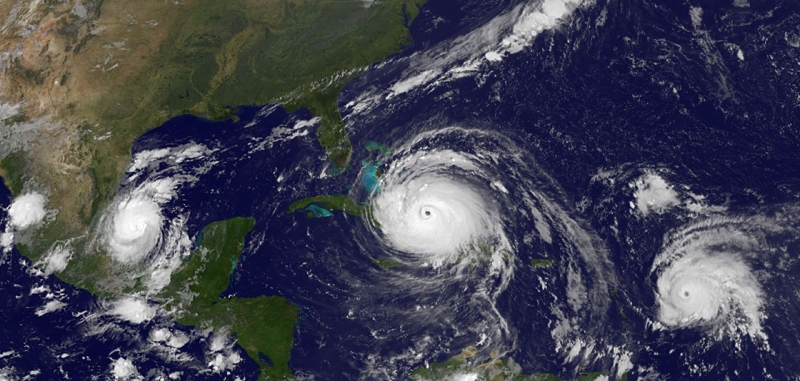
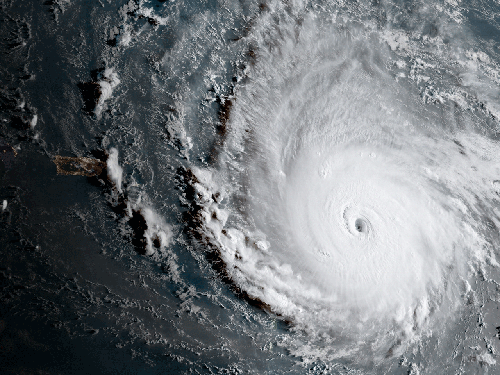
Hurricane Irma, one of the strongest storms to impact the Caribbean and U.S. in history, made landfall at several points along its catastrophically destructive path in early September 2017. Image credit: NOAA.
Node Weight: 
7

Washington Project Showcased to New NOAA Leader: Restoration Benefits Fish, Wildlife, and Local Communities

Short title: 
Washington Project Showcased to New NOAA Leader: Restoration Benefits Fish, Wildlife, and Local Communities
A group of people talking near water.
Rear Adm. Tim Gallaudet, assistant secretary of commerce for oceans and atmosphere and acting under secretary of commerce for oceans and atmosphere; Kurt Nelson, Fish and Water Resources scientist, The Tulalip Tribes; Rebecca Hoff, NOAA environmental scientist and regional resource coordinator; Jennifer Steger, NOAA Restoration Center, regional supervisor. Image credit: NOAA.
A group of people in a boat in a flooded marsh.
The DARRP group touring the flooded marsh. Image credit: NOAA
Node Weight: 
2

$4 million Settlement Reached to Help NOAA Restore Port Gardner and Snohomish River Habitat

Short title: 
$4 million Settlement Reached to Help NOAA Restore Port Gardner and Snohomish River Habitat
A slough along a river.
Union Slough is a branch of the Snohomish River which feeds into Port Gardner Bay. These sloughs are critical to the survival of many species of salmonids.
A view of a river.
Image credit: NOAA
Node Weight: 
1

OR&R Attends NOAA Congressional Staff Briefing on 2017 Hurricane Season

Short title: 
NOAA Congressional Staff Briefing on 2017 Hurricane Season

Acting NOAA Administrator RDML Tim Gallaudet provided an overview of the services that NOAA programs provided in the aftermath of Hurricanes Harvey, Irma, and Maria. A panel of NOAA staff and external partners provided in depth information on NOAA services. Rear Admiral Peter W. Gautier, Director of Governmental and Public Affairs for the US Coast Guard, highlighted services provided by the Office of Response and Restoration, including Scientific Support Coordinators and the Environmental Response Management Application (ERMA). 

The briefing provided an opportunity for interested congressional staff to learn more about NOAA services during natural incidents and for Office of Response and Restoration to interact with NOAA and partner leadership. 

For more information contact Robin.Garcia@noaa.gov or Kate.Wheelock@noaa.gov

Return to OR&R Weekly.

Node Weight: 
1

The Minds Behind OR&R: Meet ‘Fellow’ Ocean Lover Amanda Laverty

Short title: 
The Minds Behind OR&R: Amanda Laverty

This is the third in a 12-part monthly series profiling scientists and technicians who provide exemplary contributions to the mission of NOAA’s Office of Response and Restoration (OR&R). This month’s profile is on 2017 Sea Grant Knauss Fellow Amanda Laverty.

Coming to the Marine Debris Program (MDP) from Old Dominion University, Amanda Laverty joined NOAA’s Office of Response and Restoration (OR&R) in February as a 2017 Sea Grant Knauss Fellow.

Amanda’s deep love and desire to be near the ocean led her to earn a Bachelor of Science degree with a concentration in biological oceanography. The relationships she forged as an undergraduate led her to pursue a Master of Science under the supervision of Dr. Fred Dobbs at Old Dominion University in Norfolk, Virginia. Interested in both marine microbial ecology and marine pollution, she focused her thesis research on the potential for marine plastic pollution to carry and transmit bacteria and human pathogens.

As a graduate student, Amanda has presented her research at various scientific conferences. Through meaningful conversations with colleagues at these venues, she realized her interest in science management. While finishing her graduate degree, she learned about the John A. Knauss Marine Policy Fellowship Program. This fellowship presented the perfect chance to learn about management and dive into the point where science and policy meet in our nation’s capital. With no direct policy experience, she hoped this fellowship would enrich her understanding of policy and contribute to her growth as a successful marine scientist.

During her fellowship, Amanda has had the unique opportunity to assist MDP on a wide variety of projects — ranging from the development of communications and outreach resources, to leading a Zero Waste Initiative for the upcoming Sixth International Marine Debris Conference. Through this initiative, co-hosts at NOAA and U.N. Environment aim to reduce the overall footprint of the conference by limiting single-use items and preventing marine debris.

Another major project Amanda has worked on has been to compile literature on the benefits of marine debris removal to marine and coastal ecosystems. With the assistance of Adam Domanski, formerly in OR&R’s Assessment and Restoration Division, this literature review will apply the most up-to-date science to habitat evaluations following an event that damages a habitat, such as a hazardous waste release, oil spill, or vessel grounding. Through Amanda’s work, marine debris removal can be scaled for restoration efforts, ultimately serving OR&R and external resource managers in decision-making.

During her fellowship year, one of Amanda’s most fulfilling experiences has been attending marine debris action-planning workshops. At these workshops, Amanda has served in a much-needed supporting role for the MDP. By interacting with leading experts in the field, she learned first hand how marine debris challenges are perceived, and ultimately managed, at a regional level.

A woman picking up trash.
Amanda Laverty participates in the 2017 International Coastal Cleanup on Kingman Island in Washington, D.C. Image credit: NOAA.
A woman scuba diving.
Amanda Laverty scuba diving at a coral reef in Cozumel, Mexico.
A woman standing next to a podium with a sign reading "The Pentagon" in the background.
Amanda Laverty visits The Pentagon during her 2017 Sea Grant Knauss Fellowship.
Node Weight: 
2

2017 Accomplishments: The Year in Review

Short title: 
2017 Accomplishments Report

OR&R puts out an annual report as an overview of the efforts in oil and chemical spill response, shoreline restoration, marine debris reduction, and the many other tasks OR&R handled during the previous fiscal year.

Here are some of the highlights from the 2017 Accomplishments Report:

Responding to Oil and Chemical spills

The Office of Response and Restoration's Emergency Response Division (ERD) supports the U.S. Coast Guard by providing round-the-clock scientific expertise for oil and chemical spills in marine and coastal waters.

In Fiscal Year 2017 (FY17), ERD responded to a total of 205 oil spills, chemical releases, and other threats — surpassing the previous record of 201 incident responses in 2009. To help improve incident response practices, ERD also made several advances to its digital toolkit — from the creation of a new mobile app for hazardous chemicals (CAMEO Chemicals) to added updates to the GNOME™ suite, a set of modeling tools for predicting the fate and transport of pollutants (such as oil) spilled in water.
 

Assessing and Restoring our Shores

The Office of Response and Restoration's Assessment and Restoration Division (ARD) is responsible for evaluating and restoring coastal and estuarine habitats damaged by hazardous waste releases, oil spills, and vessel groundings.

This year ARD received $5,130,000 through settlements from two oil spills and a waste site to be used for restoration. In FY17 NOAA’s Office of Response and Restoration reached multiple agreements that will require companies to restore natural resources that were damaged following releases of industrial pollution — including an $8.2 million agreement to restore habitats on the St. Louis River in Minnesota, and the announcement of a large-scale restoration plan for the Portland Harbor region in Oregon.

Reducing Marine Debris on our Shores

The NOAA Marine Debris Program, a division of the Office of Response and Restoration, leads national efforts to research, prevent, and reduce the impacts of marine debris. The program also spearheads national research efforts and works to change behavior in the public through education and outreach initiatives.

For the previous fiscal year, the Marine Debris Program was awarded a total of $2,173,514 for marine debris research and removal projects. Some of the program’s projects included the quantification of microplastics in national park beaches, and a study to assess the impact of lost and abandoned crab pots on wildlife and the economy in the Chesapeake Bay.

Gulf of Mexico Disaster Response Center

NOAA's Gulf of Mexico Disaster Response Center (DRC) brings together NOAA-wide resources to improve preparedness, planning, and response capacity for natural and man-made disasters along the Gulf Coast. Located in Mobile, Alabama, the center is focused on the five states bordering the Gulf of Mexico.

The facility is designed to survive up to Category 5 hurricane winds, contains a Force-5 tornado shelter, and has backup power systems to continue operations in the midst of severe weather. Intended to serve as a safe and ready command center during major disaster responses in the Gulf, the DRC also offers facilities for drills, training, workshops, and planning activities. During the last fiscal year, the DRC hosted 23 trainings and response events.

For more information on OR&R’s work during FY17, check out “2017 Accomplishments: The Year in Review.”

Debris along a canal lined with houses and trees.
Key West, Florida following Hurricane Harvey. Image credit: NOAA.
An infographic depicting "2017: By the Numbers," including the following information: 205 incident responses, 23 training and response events, $2,173,514 awarded for marine debris research and removal, 2,130 people trained in oil and chemical response, and $5,130,000 for restoration recovered from three settlements.
Node Weight: 
4

The Minds Behind OR&R: Meet a Rock-Star Chemist

Short title: 
The Minds Behind OR&R: Meet a Rock-Star Chemist

When oil or chemicals spill into our oceans and waterways, who can provide the chemical expertise we need to respond to the spill? Enter Dalina Thrift-Viveros, one of NOAA's hardworking chemists who does just that.

Dalina first joined the Emergency Response Division of NOAA's Office of Response and Restoration in 2011 as a contractor through information management consulting firm Genwest Systems, Inc. Dalina provides scientific support for oil and chemical spill responses and OR&R’s software programs.

An early passion for science and engineering brought Dalina to the California Institute of Technology (Caltech) in Pasadena, California, where she earned a Bachelor of Science in chemistry. The beautiful landscape of Seattle, and its proximity to both the ocean and mountains, led her to the University of Washington (UW), where she completed a Master of Science in chemistry. Her lab work at the UW involved chemical synthesis, with a focus on organometallic synthesis (synthesis involving metal and organic components).

Dalina taught chemistry at South Seattle Community College after she graduated, but at the suggestion of a former classmate she applied for a position in OR&R’s Emergency Response Division (ERD). Selected from a group of candidates for the ERD position, she initially worked on a two-year long literature project related to the Chemical Reactivity Worksheet (CRW), a software program that estimates the chemical reactivity of thousands of common hazardous chemicals.

She also helped integrate this information into the CAMEO Chemicals program, which is part of the CAMEO® suite of chemical response tools. Initially a collaboration between NOAA and the EPA, the award-winning CRW most recently involved collaboration between government, industry, and NGOs, and it was successfully transitioned to the Center for Chemical Process Safety in 2016.

Dalina has also supported other OR&R software products in the CAMEO suite, such as CAMEO Chemicals and ALOHA®. She was instrumental in adding the biodegradation model to OR&R’s oil weathering model, ADIOS®, now part of the GNOME suite for oil spill modeling.

Profile shot of a woman.
OR&R chemist Dalina Thrift-Viveros at a recent Emergency Response Division “All Hands” meeting in Seattle. Image credit: NOAA
Two people in orange jump suits wading through water.
Dalina Thrift-Viveros (left) participates in Cold Water Survival Training at the Kasitsna Bay Laboratory, Alaska, October 2014. Image credit: NOAA
A woman playing a saxophone.
A woman singing into a microphone.
Node Weight: 
1

Working with Pacific Northwest Native Communities to Assess Damage to Natural Resources

Short title: 
Working with Pacific Northwest Native Communities to Assess Damage to Natural Resources

The Office of Response and Restoration’s Assessment and Restoration Division focuses on assessing harm to natural resources caused by oil and chemical spills. The goal of the assessment process, known as “natural resource damage assessment” (NRDA), is to quantify and scale injuries to natural resources over time following exposure to oil, petroleum products, and hazardous substances to seek restoration or replacement of those resources. Examples of natural resources in the context of NRDA include fish, shellfish, mammals, birds, the habitats where these animals exist, and the food sources they rely on for survival.

Under existing U.S. laws, NOAA is a trustee on behalf of the public for the marine environment and associated species of plants and animals. But trusteeship is not limited to NOAA; other federal agencies, states, and many Native American tribes are also authorized under existing laws to act as natural resource trustees. Thus NOAA’s Assessment and Restoration Division works with Native American tribes all over the country on NRDA projects. Perhaps no other place better exemplifies the extent that NOAA and Native American tribes collaborate on these assessment projects than the Pacific Northwest.

NOAA’s primary focus in damage assessment is the documentation of ecological losses and associated impacts to human uses such as recreational activities and, ultimately, restoration projects aimed at addressing those losses. In the Northwest, NOAA’s damage assessment work often focuses on salmon (e.g., Chinook, Coho, Steelhead trout, etc.) and their habitats. Many stocks of salmon are under threat in the Northwest from a range of stressors including dams, development, changing climates and ocean conditions, and, of course, urban and industrial pollution. It is difficult to understate the historic, cultural, and spiritual significance of salmon to Northwest Native American tribes. For countless generations before the arrival of Europeans and the westward expansion of the United States, tribal peoples relied on salmon as a primary source of food. Salmon were plentiful, easy to harvest during certain seasons, and a tremendous source of energy and nutrition — not to mention delicious. The well-being of tribal cultures and salmon are deeply and inextricably intertwined in this region of the country. Though the interests of NOAA and many Northwest tribes with respect to salmon are different, they also overlap substantially. Many Northwest tribes recognize that the damage assessment process is an important tool to help protect and restore salmon. Furthermore, they have become proficient practitioners of NRDA and outstanding partners.

In Oregon and Washington, NOAA is involved in numerous NRDA cases. Some are relatively small and short-lived while others are complex, expensive, longstanding affairs. In virtually all of these projects — far too many to discuss here — NOAA is working with tribal partners to conduct assessment and restoration activities.

For example, NOAA and its natural resource co-trustees are deeply involved in an NRDA at the Portland Harbor Superfund Site on the lower Willamette River in Portland, Oregon. NOAA shares a seat on the Portland Harbor Trustee Council with the U.S. Department of the Interior (Fish and Wildlife Service), the state of Oregon, and no fewer than five tribes: the Confederated Tribes of the Grand Ronde Community of Oregon, the Confederated Tribes of Siletz Indians, the Confederated Tribes of the Umatilla Indian Reservation, the Confederated Tribes of the Warm Springs Reservation of Oregon, and the Nez Perce Tribe.

At the Lower Duwamish River in Seattle, NOAA leads a trustee council along with the state of Washington, the U.S. Department of the Interior, the Suquamish Tribe and the Muckleshoot Indian Tribe.

At the Hanford Nuclear Site on the Columbia River in Washington, NOAA is one of nine natural resource trustees, including three tribes: the Confederated Tribes and Bands of the Yakama Nation, the Confederated Tribes of the Umatilla Indian Reservation, and the Nez Perce Tribe.

At Port Angeles Harbor in Port Angeles, Washington, NOAA is working with the State Department of Ecology, the U.S. Department of the Interior (Fish and Wildlife Service), and three tribes: the Jamestown S’Klallam Tribe, the Port Gamble S’Klallam Tribe, and the Lower Elwha Klallam Tribe.

In all these natural resource damage assessment cases, the tribal trustees are providing critical expertise and leadership.


Keep your eye on our blog and the Marine Debris blog throughout the week for more on our critical partnerships with native communities.

A view of a bridge.
Railroad Bridge, Portland Harbor Superfund site.
Four people standing together talking.
Frances Charles, chairwoman of the Lower Elwha Klallam Tribe, with Ericka Hailstocke-Johnson and Craig O'Connor of NOAA General Counsel Office and Paul Cereghino of the NOAA Restoration Center. Photo by Rob Neely.
A sign with the name "Bernice White" and a picture of a woman in front of a shoreline.
Lower Duwamish restoration site dedicated to Tribal Elder Bernice White (Muckleshoot Indian Tribe). Photo by Robert Neely.
Node Weight: 
1

Science of Oil Spills Training: Apply for Spring 2018

Short title: 
Accepting SOS Applications for Spring 2018

Nov. 14, 2017 — NOAA's Office of Response and Restoration (OR&R), a leader in providing scientific information in response to marine pollution, offers several Science of Oil Spills (SOS) classes annually for spill responders to increase their understanding of oil spill science. Registration is now open for this year's spring sessions:

  • Mobile, Alabama the week of March 26, 2018
  • Lewes, Delaware the week of April 9, 2018

OR&R will accept applications for these classes as follows:

  • The application period for the Mobile class will run through Jan. 19, 2018. We will email applicants regarding their application status no later than Feb. 2.
  • The application period for the Lewes class will run through Jan. 26, 2018. We will email applicants regarding their application status no later than Feb. 9.

SOS classes help spill responders increase their understanding of oil spill science when analyzing spills and making risk-based decisions. They are designed for new and mid-level spill responders. The trainings cover:

  • Fate and behavior of oil spilled in the environment.
  • An introduction to oil chemistry and toxicity.
  • A review of basic spill response options for open water and shorelines.
  • Spill case studies.
  • Principles of ecological risk assessment.
  • A field trip.
  • An introduction to damage assessment techniques.
  • Determining cleanup endpoints.

To view the topics for the next SOS class, download a sample agenda [PDF, 170 KB].

Please understand that classes are not filled on a first-come, first-served basis. We try to diversify the participant composition to ensure a variety of perspectives and experiences, to enrich the workshop for the benefit of all participants. Classes are generally limited to 40 participants.

For more information, and to learn how to apply for the class, visit the SOS Classes page.

Three men lean over a table working on an exercise.
Students participate in an oiled feather exercise during a recent SOS class.
Node Weight: 
5

10 Years Later: Restoring Injured Natural Resources after Cosco Busan

Short title: 
10 Years Later: Restoring Injured Natural Resources after Cosco Busan

Starting to Rebuild

Though a decade has now passed since the Cosco Busan oil spill, restoration efforts are still underway in the San Francisco Bay Area. 

As of 2017, nearly $20 million has been allocated to over 50 projects, designed to enhance and restore habitats, animals and public recreation that were affected. For some injured resources such as migratory birds, the best way to restore them are to undertake actions elsewhere on the west coast such as the Klamath Basin. The funds available for restoration, about $30 million, are part of a $44.4 million settlement with Regal Stone Limited and Fleet Management Limited, the companies responsible for the spill from the container ship Cosco Busan.

Settlement funds have gone to the restoration of shoreline habitats, with projects to restore sandy beach, salt marsh and mudflats, as well as the creation of new habitats for bird species such as cormorants, pelicans and shorebirds. Among these projects are two that focus on the restoration of plant species imperative to the Bay’s ecosystem — eelgrass (Zostera marina) and Rockweed (Fucus distichus).

Eelgrass Restoration

Eelgrass is a subtidal grass that lives in shallow waters from nearshore to several meters in depth. The most common in the San Francisco Bay Estuary is of the genus Zostera. Eelgrass beds and meadows are teeming with life  — serving as habitat for amphipods and other invertebrates, fish that feed and breed in the beds, and even for birds who forage in eelgrass beds at low tide.

Immediately following the Cosco Busan oil spill, there was limited evidence to suggest any serious injury to the eelgrass plants of the area, said Dr. Katharyn E. Boyer, biology professor at San Francisco State University’s Romberg Tiburon Center for Environmental Studies. “It was the impact to herring, which spawn on eelgrass, that was really the large motivation behind eelgrass being a restoration target.”

Boyer took part in the assessment phase after the spill, using the university’s lab as a home base and searching along the shorelines for signs of damage to the eelgrass. Seven years after the spill occurred Boyer, along with Keith Merkel of Merkel and Associates, began working on eelgrass restoration in the Bay Area using funds from the settlement.

From 2014 to 2016, they focused on planting and dispersing seeds in Richardson Bay, Corte Madera Bay, and San Rafael Bay, and continually monitored the plots. Restoration efforts during this time revealed natural variability in environmental conditions to be an added obstacle. After planting, multiple plots appeared to have done well initially, only to decline and fail the following season.

Extreme temperatures, drought conditions, extreme freshwater outflows and low salinities have made it difficult for the new plants to survive and in many cases resulted in a significant reduction of eelgrass, in both the restoration plots and in other existing eelgrass beds.

“It’s been interesting to do restoration when these large-scale variabilities are going on,” Boyer said. “But this summer we were able to see these plants, that I honestly thought were a total loss, start to come back.”

This year the group decided to take a break from actively planting eelgrass to see if the plots already planted will continue to bounce back on their own. Site visits in December will monitor progress, with the expectation of planting again in 2018.

Rockweed Restoration

Fucus, commonly called rockweed, is an intertidal alga that provides food and shelter to a variety of other organisms. As an intertidal plant, rockweed has an increased likelihood of coming into contact with floating oil.

After the Cosco Busan oil spill, intertidal researchers with the University of California, Santa Cruz were able to rush out ahead of the oil and get initial population numbers in a few sites. From those numbers they discovered a decline in Fucus distichus populations along the East San Francisco Bay after the oil hit the shoreline.

Among the more affected areas after the spill, Point Isabel Regional Shoreline in the City of Richmond was heavily oiled. Both the oil and the high-powered hot water cleaning performed by responders scoured the shoreline leaving it uninhabited for some time. Fucus donor material was harvested along the nearby shoreline of Golden Gate Fields for strategic transplanting to Point Isabel.

“There isn’t necessarily a prescribed way to restore Fucus … So we’re trying to figure out a way to not just deplete a one-source population,” said Laura Anderson, intertidal research associate at UCSC.

In 2015, the group began monitoring the progress of the rockweed on a monthly basis, but they weren’t initially seeing a huge change in growth. Similar to the eelgrass, rockweed was also affected by the increased natural variability in water conditions in recent years.

Despite the challenging conditions, Anderson said the plants seem to have restored enough that the team felt they could walk away and wait out 2017 to see what happens next before continuing their restoration efforts.

In a report, the UCSC team noted, “The Fucus has recovered to a point where no further intervention is required because further increases will occur through local reproduction.”

Moving Forward and Looking Ahead

Though 2017 has marked a year to sit back and see what happens for both eelgrass and rockweed, restoration efforts in the San Francisco Bay Area are far from over.

For Fucus, the restoration goal identified in the Cosco Busan restoration plan is to restore 1,000 meters of the alga along shorelines that were impacted. At Point Isabel, Anderson says there is now about 400 meters established and growing along the shoreline. To reach the restoration plan goal, the team has decided next to transplant additional Fucus to a different site. They will transplant more than 600 linear meters of Fucus at Marina Park in San Leandro in the hopes of reaching the total of 1,000 meters.

The next phase in eelgrass restoration is to start planting again in 2018 and move to other sites along the East Bay. The objective is to plant approximately 36 acres, yielding 70 acres in total through expansion of the new beds. But the amount of time this will take may rely more heavily on the natural variability of the area than the restoration efforts themselves, Merkel said, “To be really candid, we need things to really calm down in the Bay.”

“It’s hard to not get discouraged when you have some progress and then have an event that just wipes things out,” Boyer said. “It’s a sign of things to come. We’re going to have more variable climates that we’re going to have to respond to. If we can learn how to do it from the success of doing it now, we’ll be better prepared for it in the future.”

Progress in restoring essential habitats is not the only benefit to come from the Cosco Busan settlement; NOAA and its partners are also learning better ways to support these habitats well into the future.

Resources

To learn more about the Cosco Busan oil spill, you can also visit the resources below:

A view of the back of a container ship with a bridge in the background.
Cosco Busan leaving the San Francisco Bay. Image credit: U.S. Coast Guard.
An underwater shot of eelgrass.
Zoestra marina, or common eelgrass. Image credit: NOAA.
Two people examining the shoreline.
Collecting fucus on cobbles at Golden Gate Fields to outplant at Point Isabel. Image credit: UCSC.
A close-up of rockweed samples and rocks in a container.
Collecting fucus on cobbles at Golden Gate Fields to outplant at Point Isabel. Image credit: UCSC.
A close-up shot of fucus samples.
Resultant juveniles from adult Fucus outplanted to Point Isabel. Image credit: UCSC.
Node Weight: 
5

Sentinels of the Coast: Surveying the Beaches After Cosco Busan

Short title: 
Sentinels of the Coast: Surveying the Beaches After Cosco Busan

The Incident: Early Days

On Nov. 7, 2007 reports on the Cosco Busan spill reached Greater Farallones National Marine Sanctuary. Staff of the Sanctuary and Greater Farallones Association began to mobilize Farallones Beach Watch volunteers. Sanctuary headquarters in San Francisco at the Presidio’s Crissy Field Beach was transformed into the initial Command Post for the incident’s Natural Resources Damage Assessment. The garage became an intake station where dozens of trained staff and volunteers processed dead birds and hundreds of samples of oil, sediment and biota using forensic protocols for handling evidence, chain-of-custody and cataloguing. The sanctuary reshuffled staffing from the top down, and at dawn, Nov. 8, beach watchers hit the beaches at several outer coast sites, with full protective gear and monitoring equipment to perform pre-spill assessments before the oil could reach sanctuary beaches.

    Beach Watch: Coastal Sentinels

    Beach Watch is a monitoring program supervised by staff biologists, where highly trained volunteer citizen scientists regularly document the condition of sanctuary shores. In the course of frequent field surveys they become experts on specific beaches, knowledgeable about what species feed, rest or transit through and their seasonality. Surveyors methodically catalogue live and dead marine life, and oil which occasionally strands on the region’s beaches throughout the year. Trained in forensic protocols for gathering evidence, the pre-spill and post-spill data gathered by Beach Watch teams represented a key element in assessing adverse changes caused by the spill. At a Senate subcommittee hearing the sanctuary and Beach Watch were singled out for praise due to their preparedness and detailed knowledge of these resources.

      Two people on a beach in white jumpsuits, one is reaching down to collect a sample.
      Beach Watch surveyors. Image credit: Jan Roletto/ GFNMS
      A woman holding a dead bird.
      Greater Farallones National Marine Sanctuary dead bird intake station. Image credit: GFNMS.
      A close-up shot of someone's hands in rubber gloves as they clean a bird.
      Specially trained volunteers clean birds during the Cosco Busan oil spill response in 2007. (California Dept. Fish and Game, D. Hamilton)
      A man holds up a dirty oil-laden snare.
      Close-up view of oil-laden snare after swabbing in riprap crevices at Horseshoe Cove. Worker holding snare stated that the oiled snare was originally white like the first run snare shown at the right of the photo. Photo by Jordan Stout, NOAA.
      A view of a rocky shoreline.
      Nov. 9 overflight Southeast Farallon Closeup. No oil was observed. Photo credit NOAA.
      Node Weight: 
      4

      Assessing Cosco Busan: The Damage From 10 Years Ago

      Short title: 
      Assessing Cosco Busan: The Damage From 10 Years Ago

      As The Fog Cleared

      The infamous fog of San Francisco was thick and gray the morning the Cosco Busan cargo ship crashed into the San Francisco-Oakland Bay Bridge. It was Nov. 7, 2007, and within seconds of the crash, 53,000 gallons of fuel oil were released into the surrounding waters. One of the largest oil spills in the history of the San Francisco Bay Area, it set into motion a series of events that ultimately led to a $44.4 million settlement with the companies responsible for the spill (Regal Stone Limited and Fleet Management Limited). $32.3 million of the settlement was earmarked for natural resource restoration projects managed by a trustee council with input from the public.

      To the public, this has meant funding for bird, fish and habitat restoration work in the Bay and on outer coasts where impacts from the oil spill were felt. It has also been used to enhance shoreline parks and outdoor recreation in dozens of locations around the Bay Area, helping compensate the public for the lost visits to the beach when oil washed up on the shores.

      That first morning in 2007, we didn’t really know how much oil had been spilled — initial reports indicated it was only a small amount. But as the fog lifted, it quickly became apparent that oil was spreading over a large expanse of the Bay. When I got the initial call about the spill, I had just landed in southern California to work on my major project at the time. My coworker on the phone suggested I get back to the Bay Area as soon as possible. For the next several weeks I worked long hours alongside fellow scientists to quickly organize and conduct the field work to evaluate natural resource damages from the Cosco Busan oil spill.

      The type of oil that gushed into San Francisco Bay was bunker oil, which is commonly used to propel large ships and is different from crude oil or refined fuels. Bunker fuels are so viscous (thick and slow-moving) that they actually have to be heated to over 100 degrees Celsius (212 degrees Fahrenheit) in order to flow to ship engines.

      As the thick bunker oil spread on the waters surrounding San Francisco, it turned into tarry patches and balls that eventually stranded along hundreds of miles of shoreline. Much of our understanding about the toxic effects from oil spills at that time had come from studies of spills of crude oil, such as the 1989 Exxon Valdez oil spill in Alaska. But as we studied the effects of bunker oil on fish and wildlife after the Cosco Busan spill, we discovered bunker oil appeared to have different toxicological effects compared to crude oil.

      Lingering Effects

      Two to three months after the spill, when the huge annual schools of Pacific herring entered San Francisco Bay to find their shallow spawning grounds, most of the shoreline and nearshore evidence of lingering bunker oil was already gone — either cleaned up, dissipated or at least hidden from view. But when we collected herring eggs from shallow areas both affected and unaffected by the spill, we made a remarkable discovery — almost all of the eggs collected from spill locations were dead or deformed. The eggs collected outside of the spill zone were largely normal. This was especially surprising given the lack of significant remaining evidence of bunker oil.

      We conducted additional studies over two more seasons of herring spawning in the Bay and eventually concluded that the toxic characteristics of the bunker oil from the Cosco Busan spill affected as much as a quarter of the herring spawning in 2008. We also concluded that the effects didn’t carry over past that first spawning season after the spill. Our studies, directed by scientists from NOAA’s Northwest Fisheries Science Center and the Bodega Marine Laboratory in California, forged new scientific understandings on the effects of oil spills on aquatic resources and have guided further progress on our assessment of present and future spills. In fact, the scientific studies of the effects of the 2007 Cosco Busan oil spill, particularly the magnification of oil toxicity caused by sunlight, set scientists on the path to further groundbreaking investigations during and after the 2010 Deepwater Horizon oil spill in the Gulf of Mexico. In the 10 years since the Cosco Busan spill, we have gained an even better understanding of the mechanisms by which oil exposures lead to cardiac deformities and other adverse effects in developing fish, and in other wildlife.

      Next week will mark a full decade since the Cosco Busan oil spill. I’ve reflected on the countless hours of work that led to the settlement of damages: from the emergency responders cleaning up the oiled waters (and the thank-you cards to them from local school kids left on the beach) to the attorneys poring over the maritime and clean water laws violated by the spill. The 2012 settlement set us on the path toward the restoration of the impacts the spill had on San Francisco Bay and the people who recreate around the Bay.

      The Damage Assessment and Restoration Plan for the Cosco Busan oil spill provides details on the restoration projects that have been and continue to be implemented; you can review it here


      This blog post was written by Greg Baker. Baker works as an environmental scientist in the Assessment and Restoration Division of NOAA’s Office of Response and Restoration and is based in the San Francisco Bay Area.


      RESOURCES

      To learn more about the Cosco Busan oil spill, you can also visit the resources below:

      A wide shot view of the bay with a bridge in the background.
      Pt. Bonita in the foreground looking across sheens eastward to Golden Gate Bridge and San Francisco Bay on Nov. 9, 2007. Photo credit NOAA/NMS.
      A sheen with brown oil and a bridge in the background.
      This photo was taken during an overflight near Richmond Bridge. A sheen with brown oil in the convergence was visible. Photo credit NOAA.
      Two men standing knee-high in water holding a plastic sack.
      NOAA scientists collect herring embryos along sites affected by the Cosco Busan oil spill.
      A microscopic view comparing herring and zebra eggs from clean water and herring and zebra eggs from contaminated water.
      Oil contains polycyclic aromatic hydrocarbons (PAHs), which are toxic to the developing fish heart (arrows). The hearts of affected larvae are unable to pump properly, resulting in fluid accumulation in the pericardial space. This form of heart failure is eventually lethal. Image credit: NOAA
      An aerial view of a shoreline
      During a Nov. 11 overflight from Pt. Reyes to Tomales Pt., a phytoplankton (diatom) bloom was visible as yellow material in the surf. A total of 371 miles of shoreline was surveyed following the Cosco Busan oil spill. Image credit: NOAA
      Node Weight: 
      3

      The Initial Call: Looking Back 10 Years to the Day of the Cosco Busan Oil Spill

      Short title: 
      The Initial Call: Looking Back 10 Years to the Day of the Cosco Busan Oil Spill

      The Initial Call

      As Nov. 7 drew closer, I found myself perusing my field notes from the Cosco Busan oil spill and instantly reliving memories as if fresh from a week ago …

      I was out of town at an interagency oil spill meeting (Regional Response Team 9) with many colleagues from the U.S. Coast Guard and California’s Office of Oil Spill Prevention and Response (OSPR). According to my notes, it was 9:53 a.m. on Nov. 7, 2007 when I got the first call from the Coast Guard Sector Command Center on Yerba Buena Island. I stepped into the hallway to take the call and everything changed …

      From my quickly jotted scribblings I had written “Container ship hit Bay Bridge,” “3’ wide sheen, foggy conditions,” “10 bbls,” “0830 [time of collision] … not actively leaking at 0850” and “100 ft. gash.”

      I’d worked enough spills to know not to rely on early spill-volume estimates. The 10 barrels (420 gallons) I had written down in my notes later turned out to be much more. In total, 53,500 gallons of black fuel oil spilled from the 900 foot-long container ship in less than 10 seconds.

      Regardless of the reported volume, it was clear that a spill had occurred. It was going to be challenging to see how big the problem might be in low visibility conditions, and it would consume my time for the foreseeable future. I returned to the meeting only long enough to pass a note to a Coast Guard colleague of mine who then joined me in the hallway for numerous follow-up calls with our respective offices before we both headed to the airport for a quick flight home.

      Once back in the Bay Area, I joined up with other spill responders at the local Coast Guard Unit and heard that Piers 1, 2 and 3 along the San Francisco waterfront (near the foot of the Bay Bridge) were heavily oiled, Piers 33 and 39 (close to the iconic Fisherman’s Wharf) were “sheening” and showed oil on the seawalls, Alcatraz and Angel Islands were already oiled, and some oil had already gotten beyond the Golden Gate Bridge out to Kirby and Bonita Coves.

      Normally we would have been able to conduct overflights of the area to see the extent of the problem pretty quickly, but low visibility continued to hamper any effective aircraft operations until the following day and we were forced to rely on scattered reports from the shorelines and from vessels. Meanwhile, some oiled birds had already been recovered and two oiled wildlife search teams were out looking for more.  

      I spoke with my key spill contacts at the National Park Service and the Gulf of the Farallones National Marine Sanctuary (now the Greater Farallones NMS) and recommended they send representatives to the Incident Command Post (ICP) at Fort Mason Center early the following morning. I also activated a NOAA Scientific Support Team from our offices back in Seattle to join me the next day to help with overflights, trajectory support, shoreline assessments and identifying sensitive resources at risk.

      By the end of the first day, I was running on adrenaline, my brain was a whir with an ever-increasing to do list, and I could hardly get to sleep. Early the next morning at Fort Mason Center, the ICP was buzzing with the somewhat orderly frenzy that’s common early in emergency responses. We quickly realized that cellphone coverage at the Fort Mason ICP was challenging at times. We were also outgrowing the small facility and local parking lots. Within a few days we moved to a much larger ICP (an old officer’s club on Treasure Island) that leaked when it rained.

      The following weeks were something of a blur of typical response activity (long days, overflights, trajectory estimates, shoreline assessments, cleanup endpoint discussions, etc.) peppered with what seemed like innumerable press conferences, VIP briefings, hearings and then finally interviews for the Coast Guard’s Incident Specific Preparedness Review (ISPR – those are rare!). As it turned out, the spill quickly caught national headlines and seemed to have a reverberating effect in the oil spill response community for years to come.

      A Flood of Memories

      Looking through my notes, several other memory snippets came flooding back … such as the numerous false reports of oil from the public and a flurry of spill-related legislation that moved through the state in the months that followed.

      The spill quickly gained national, and even international, attention — as I recall my Coast Guard friend who was on vacation abroad telling me the spill had made the front page of “Le Monde” in Paris.

      The response efforts took on unique tactics, such as the “Jet ski SCAT,” when surf rescue teams on jet skis were trained to investigate and document the degree of oiling along otherwise inaccessible shorelines along the outer coast.

      The removal of oil debris took even greater efforts, with teams sometimes having to descend to hard-to-reach places on the shoreline. One such activity, nicknamed “Operation Spider Man,” involved a mountain rescue team with the National Park Service descending to a pocket beach along the Marin Headlands to remove oil debris.

      It was a stressful response but it ended up being tactically successful. Our participation from local and port partners in planning for future spills has greatly improved through the Area Contingency Planning process. We’ve also enhanced the way we interact with local governments and the media, and how we manage unaffiliated volunteers. Though this spill caused a great deal of damage, it taught us valuable lessons and we are better prepared for future spills.

      Jordan Stout is the senior scientific support coordinator for NOAA’S Emergency Response Division. He is based out of Alameda, California.

      View the first blog post, "Remembering Cosco Busan: An Overview of the 2007 Oil Spill" here

      RESOURCES

      To learn more about the Cosco Busan oil spill, you can also visit the resources below:

      A group of people and press gather around a media vehicle.
      This photo is from a press conference at Fort Mason following the Cosco Busan oil spill. Fort Mason was the Incident Command Post during the oil spill response.
      A small U.S. Coast Guard vessel in front of a gash in a container ship.
      Photo showing damage to port side of vessel. Image credit: U.S. Coast Guard District 11 Public Affairs.
      A close-up shot of three people rappel down to a pocket beach.
      Due to safety concerns to SCAT teams and shoreline cleanup crews, National Park Service search and rescue crews geared up and rappelled into the oiled "slot beach" just north of Rodeo Beach on Nov. 27, 2007. Photo shows team rappelling down to beach. Image crdit: NPS
      A man leaning over a laptop typing.
      NOAA Scientific Support Coordinator Jordan Stout working in the command center during the Cosco Busan response. Image credit: NOAA
      A wide shot of three people rappeling down to a pocket beach.
      Node Weight: 
      2

      Remembering Cosco Busan: An Overview of the 2007 Oil Spill

      Short title: 
      Remembering Cosco Busan: An Overview of the 2007 Oil Spill

      The Spill

      In the decade since marine vessel Cosco Busan struck the San Francisco Bay Bridge, our concept of a big oil spill has changed. Compared with the Deepwater Horizon oil spill, which gushed millions of gallons into the Gulf of Mexico, Cosco Busan’s 53,000 gallons seems small. Yet that incident had a major impact on the Bay Area — on both the habitat and the public outlook.

      Initial reports were that only 140 gallons were spilled. However, those estimates were quickly revised when it became obvious that more than 50,000 gallons of thick tarry oil were spreading across the Bay. This bunker fuel congealed in the cold water and strong winds and tides swiftly carried it to the bay shorelines and as far as Pacific beaches.  

      The closed beaches around the Bay and up the coast brought local and national attention to the spill. Oil was found as far north as Muir Beach, and south as far as Pacifica. Miles of beaches were closed; fishing and crabbing were suspended. An estimated one million user-days were lost.

      Bunker fuel proved especially toxic to sea life. Fish and birds were highly impacted, with more than 6,800 dead birds documented, including many marbled murrelets, a threatened species. The timing was bad for herring who spawn at that time of year. Fish embryos are particularly vulnerable to even traces of bunker fuel, developing developmental defects that decimated their numbers in 2008. As the herring are a major food source for salmon and other large fish, and marine mammals as well, more wildlife were affected.

      The Outcome

      Through the natural resource damage assessment (NRDA) and resulting settlement, the ship’s owners were held accountable for damages incurred. A historic settlement of $44.4 million was reached with the responsible parties to pay civil penalties, reimburse remaining costs of the emergency response, cleanup and damage assessment, and to provide more than $30 million for projects to restore injured natural resources and compensate for lost recreational uses. 

      "The repercussions from this oil spill led to many changes in how we prepare for, respond to, and assess effects from such incidents in the Bay Area, the state, and even nationally,” noted Dr. Rob Ricker, branch chief of NOAA’s Assessment and Restoration Division.

      What began as a pilot’s blunder in the fog has since led to an improvement in how we respond to and recover from such incidents. Not only that, the Cosco Busan incident raised awareness throughout the Bay Area about protecting local resources and led to significant habitat improvements for birds, aquatic vegetation, fish and shellfish.

      For more information on the Cosco Busan oil spill, watch for our upcoming blogs detailing the initial call and the emergency response efforts, the assessment phase, a close-up look at the Greater Farallones National Marine Sanctuary’s response efforts, and a concluding piece on the continued restoration efforts.

      Patrise Henkel is a communication specialist with NOAA Fisheries.


      RESOURCES

      To learn more about the Cosco Busan oil spill, you can also visit the resources below:

      A large shipping vessel loaded with containers. A gash appears on the port side over the text "Hanjin."
      Photo showing damage to port side of vessel. Photo credit U.S. Coast Guard District 11 Public Affairs.
      Oil on a sea surface with hills in the background.
      Oil on the sea surface, with Tennessee Cove, Marin County, visible in the background; view from overflight aircraft. Darker patches represent the thickest accumulation of spilled oil. The oil is spreading out to become sheen (very thin layer of oil on the water). Sheen is visible here as lighter colored patches. Photo credit: NOAA
      A shipping vessel being offloaded.
      Photo of M/V Cosco Busan being offloaded on Nov. 10, 2007. Photo Credit NOAA.
      A view of a bay with a bridge in the background.
      Pt. Bonita in the foreground looking across sheens eastward to Golden Gate Bridge and San Francisco Bay on Nov. 9, 2007. Photo credit NOAA/NMS.
      Node Weight: 
      1

      The Minds Behind OR&R: Meet Scientist and Technician Michael Greer

      Short title: 
      The Minds Behind OR&R: Meet Scientist and Technician Michael Greer

      Michael Greer has devoted his technical skills to NOAA’s Office of Response and Restoration (OR&R) for more than a decade. He graduated from the University of Washington with a Bachelor of Science in geology and has worked at the NOAA Seattle Sand Point campus since 2004 as an employee of Genwest Systems Inc., an information management consulting firm that contracts with NOAA.

      For the last several years, Mike has played a major role as part of OR&R’s Spatial Data Branch. Dr. Amy Merten, who heads the group, values Mike’s hard work and creativity, as well as his “even-keeled” approach to problems. Managing large data bases, testing a suite of software tools, creating maps and reports, and providing training and support on NOAA applications such as ERMA and DIVER are all part of the technical work that he does.

      Mike is also part of the OR&R Scientific Support Team and provides remote and on-scene help with data management and mapping needs at major oil spills and disasters. He has previously worked on larger incidents such as the Deepwater Horizon oil spill in the Gulf of Mexico in 2010, the Tank Barge Argo oil spill in Lake Erie in 2015, and the pollution response to hurricane Sandy in 2012. Most recently Mike spent two weeks in Puerto Rico coordinating mapping and information management on the pollution response after the devastation caused by Hurricane Maria — mainly focusing on vessel removal and salvage.

      NOAA Regional Operations Branch Chief John Tarpley describes Mike as “a highly valued part of the Scientific Support Team — always dependable, capable and a positive light in what are often chaotic and stressful situations.”

      For Mike, the most challenging part of his job is making varied systems, tools and protocols work together to achieve the same goal, as well as the long hours, high pressure and fast deadlines of on-scene response.

      Though his job may be challenging at times, Mike’s satisfaction comes from knowing that his work helps local economies by restoring and preventing further damage to property and natural resources from pollution events. He enjoys working with a range of federal, state and local partners at disasters, and the opportunity to experience different parts of the U.S.

      Peter Murphy, a colleague of Mike’s at both Genwest and OR&R, appreciates the “positive and proactive approach to his work that makes him an asset to any team,” and his ability to “deliver high quality results for any job, large or small, while working with partners to share information and identify the best solution.”

      Ask anyone at OR&R about Mike Greer and you’ll hear not only about his professional abilities, but also his fun and positive attitude that makes it such a joy to work with him!

      Two men in an office, one is gesturing to a computer screen while the other is seated and watching.
      Michael Greer, right, gesturing toward the computer screen while working with his colleague, Robb Wright, left. Image credit: NOAA.
      A man and a woman stand behind an open laptop on a table while they pose for a photo. The woman is holding a small sign that says "GIS."
      OR&R’s Mike Greer and Rachel Fox participated in the Puget Sound Shell Refinery Oil Spill Exercise in 2016. Image credit NOAA.
      Node Weight: 
      2

      Oilapalooza! An Oiled Wildlife Response Workshop

      Short title: 
      Oilapalooza! An Oiled Wildlife Response Workshop

      This year 170 attendees representing 48 different wildlife rehabilitation organizations and primary care facilities across the state participated in the event. This workshop is a regular training and team-building opportunity for OWCN’s members ranging in size from a handful of staff and volunteers to long-established facilities like SeaWorld. All have oil spill training and are prepared to respond, but some have limited experience with actual oil spills.

      Oilapalooze included a wide variety of talks on rehab and oil spill-related topics, including "Distribution of Guadalupe Fur Seals (Arctocephalus townsendi) off the California Coast," "Use of Technology for Improving Wildife Recovery during Oil Spills," "Evaluation of Unmanned Aerial Vehicles for Detection of Oiled Wildlife," "Inland Oil Spills: Species Data & Implications for Wildlife Responders," "Predator Consumption of Forage Fish in the California Current" and "Movement Patterns of Oiled Brown Pelicans (Pelecanus occidentalis) Following Rehabilitation."

      Attendees also had the opportunity to explore hands-on laboratories on topics ranging from pelagoic bird necropsy and sea otter necropsy, to clinical pathology and sea otter reconaissance. A new series to the workshop this year included hands-on "101" labs to provide cross-training for participants to learn how to work with new species. The "101" labs included terrestrial mammals, terrestrial (non-raptor) birds, raptors, herptiles, passerines and more.

      For more information, contact Jordan.Stout@noaa.gov.

      A group of people look down the shoreline of a sandy beach lined with trees.
      Conducting beach surveillance activities along the shores of Monterey Bay, CA using protocols developed by the Beachcomber Shoreline Monitoring Program. Image credit: NOAA.
      Node Weight: 
      4

      Texas Barge Fire Extinguished, OR&R Responding Due to Potential Crude Oil Release

      Short title: 
      Texas Barge Fire Extinguished, OR&R Responding to Potential Crude Oil Release

      According to a press release from the Coast Guard, watchstanders received a mayday call from the captain of the tugboat, Buster Bouchard, at 4:35 a.m. reporting that the barge attached to the vessel had caught fire and two crewmembers were missing.

      "In this situation, safety is paramount," said Capt. Jason Smith in the press release, the Sector/Air Station Corpus Christi acting sector commander. "Our first objective is to find the missing crew members, and our immediate second objective is pollution response and ensuring navigational safety in the affected area."

      The fire has been extinguished though it is unknown how much of the crude oil cargo has been discharged. The barge was carrying 133,000 barrels (5,586,000 gallons) at the time of the fire.

      OR&R is continuing to model the possible trajectory and a pollution boom is being staged to contain any discharged oil. There are initial reports of some oil in the water, but there is no estimate of the amount. As the amount consumed by the fire is still unknown, the uncertainty surrounding numbers will remain high.  

      A helicopter flies over the barge. Smoke is seen billowing out from the flames on the bow.
      Coast Guard responds to barge on fire approximately 3 miles from Port Aransas, Texas, jetties Oct. 20, 2017. A Coast Guard Corpus Christi MH-65 Dolphin and HC-144 Ocean Sentry are searching for two missing crewmembers. Image Credit: U.S. Coast Guard.
      A vessel sprays water on the burning barge.
      A Corpus Christi Fire Department vessel attempts to extinguish a fire onboard a barge approximately 3 miles from the Port Aransas, Texas, jetties Oct. 20, 2017. A Coast Guard Corpus Christi MH-65 Dolphin and HC-144 Ocean Sentry are searching for two missing crewmembers. Image Credit: U.S. Coast Guard.
      Node Weight: 
      1

      Pages

      Subscribe to response.restoration.noaa.gov RSS