Back to top

Science of Oil Spills Training Now Accepting Applications for Spring 2016

Short title: 
Accepting SOS Applications for Spring 2016

NOVEMBER 16, 2015 -– NOAA's Office of Response and Restoration, a leader in providing scientific information in response to marine pollution, has scheduled Science of Oil Spills (SOS) classes in two locations in spring 2016:

  • Mobile, Alabama, the week of March 28, 2016
  • Ann Arbor, Michigan, the week of May 16, 2016

We will accept applications for these classes as follows: For the Mobile class, the application period will be open until Friday, January 22. We will notify accepted participants by email no later than Friday, February 5. For the Ann Arbor class, the application period will be open until Friday, March 11. We will notify accepted participants by email no later than Friday, March 25. SOS classes help spill responders increase their understanding of oil spill science when analyzing spills and making risk-based decisions. They are designed for new and mid-level spill responders. These trainings cover:

  • Fate and behavior of oil spilled in the environment.
  • An introduction to oil chemistry and toxicity.
  • A review of basic spill response options for open water and shorelines.
  • Spill case studies.
  • Principles of ecological risk assessment.
  • A field trip.
  • An introduction to damage assessment techniques.
  • Determining cleanup endpoints.

To view the topics for the next SOS class, download a sample agenda [PDF, 170 KB]. Please understand that classes are not filled on a first-come, first-served basis. We try to diversify the participant composition to ensure a variety of perspectives and experiences, to enrich the workshop for the benefit of all participants. Classes are generally limited to 40 participants. For more information, and to learn how to apply for the class, visit the SOS Classes page.

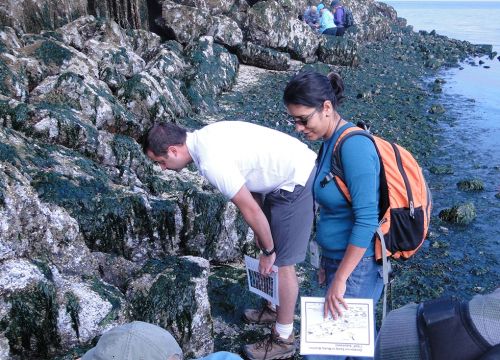
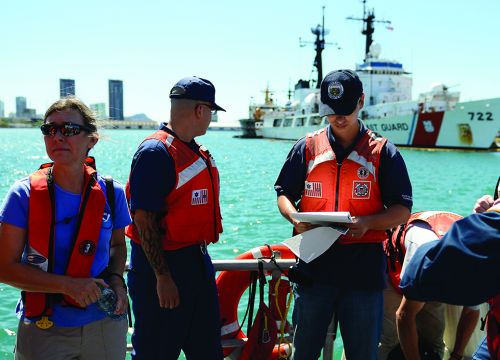
Two people closely examining rocks and seaweed on a shoreline.
These classes help prepare responders to understand the environmental risks and scientific considerations when addressing oil spills, and also include a field trip to a local beach to apply newly learned skills. (NOAA)
Node Weight: 
40

With Release of Draft Restoration Plan for Gulf, Thousands of Deepwater Horizon Spill Data Records Now Available

Short title: 
Thousands of Deepwater Horizon Spill Data Records Now Available

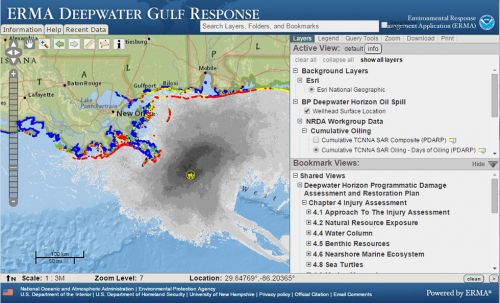
The ERMA data release accompanied the Deepwater Horizon oil spill trustees' release of the Draft Deepwater Horizon Oil Spill Programmatic Damage Assessment and Restoration Plan (PDARP) and Programmatic Environmental Impact Statement (PEIS). This draft document outlines 15-year comprehensive, integrated environmental ecosystem restoration plans for the Gulf of Mexico in response to the April 20, 2010 Deepwater Horizon oil rig explosion and spill. More than 1,200 new data layers were released to the public and all pre-existing public data layers were reviewed and updated as needed. This brings the total to more than 2,800 data layers available on ERMA Deepwater Gulf Response. Recently released data are referenced in 35 new ERMA bookmarks organized by draft restoration plan chapter and resource group (e.g. water column, sea turtles, etc.). Users can also use the "Recent Data" tab to find newly added data in ERMA.

In additional support of the draft restoration plan, the public can access and download more than 13 million searchable, standardized records from the oil spill response and damage assessment through NOAA's public data warehouse and query tool, Data Integration Visualization Exploration and Reporting (DIVER) Explorer. DIVER provides access to 20,000 data collection trips, over 100,000 observations of oiling and marsh conditions, oceanographic data, tracking of marine mammals and turtles, 2 million laboratory results, and over 600,000 photographs documenting environmental conditions and monitoring. See the NOAA Gulf Spill Restoration website for additional information and reports.

Screenshot of ERMA Deepwater Gulf Response map with restoration plan data.
More than 2,800 data layers are now available on ERMA Deepwater Gulf Response. (NOAA)
Node Weight: 
3

Deepwater Horizon Oil Spill Trustees Release Draft Comprehensive Restoration Plan for the Gulf of Mexico

Short title: 
Draft Comprehensive Restoration Plan for the Gulf of Mexico

The five goals of the draft plan are to: restore and conserve habitat, restore water quality, replenish and protect living coastal and marine resources, provide and enhance recreational opportunities, and provide for monitoring, adaptive management, and administrative oversight to support restoration implementation. The 13 proposed restoration types are:

  1. Wetlands, coastal, and nearshore habitats
  2. Habitat projects on federally managed lands
  3. Nutrient reduction
  4. Water quality
  5. Fish and water column invertebrates
  6. Sturgeon
  7. Submerged aquatic vegetation
  8. Oysters
  9. Sea turtles
  10. Marine mammals
  11. Birds
  12. Mesophotic and benthic (lowlight and ocean floor) communities
  13. Provide and enhance recreational opportunities

In proposing this plan to address the ecosystem-level injuries caused by this spill, we considered both the potential environmental benefits and impacts. The plan does not identify specific projects for each restoration type, but lays out a framework for developing future project-specific restoration plans. The public will have the opportunity to comment on these subsequent restoration plans. The Deepwater Horizon Oil Spill Draft Programmatic Damage Assessment and Restoration Plan and Draft Programmatic Environmental Impact Statement is available for public review and comment through December 4, 2015. We will hold eight public meetings where you will be able to provide comments on the draft plan and the proposed settlement with BP. 

See a related story on the release of thousands of Deepwater Horizon oil spill data records in the online mapping tool ERMA.

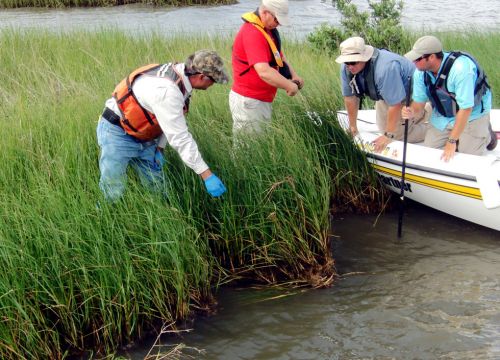
People in boat and marsh assess oil's impacts.
Together, these restoration efforts will restore wildlife and habitat in the Gulf by addressing the ecosystem injuries that resulted from the Deepwater Horizon incident. (NOAA)
Node Weight: 
1

Science of Oil Spills Training Now Accepting Applications for December 2015

Short title: 
Accepting SOS Applications for December 2015

JULY 23, 2015 -– NOAA's Office of Response and Restoration, a leader in providing scientific information in response to marine pollution, has scheduled a Science of Oil Spills (SOS) class for the week of December 7, 2015 in Honolulu, Hawaii.

We will accept applications for this class until Friday, October 16, and we will notify applicants regarding their participation status by Friday, October 30, via email.

SOS classes help spill responders increase their understanding of oil spill science when analyzing spills and making risk-based decisions. They are designed for new and mid-level spill responders.

These trainings cover:

  • Fate and behavior of oil spilled in the environment.
  • An introduction to oil chemistry and toxicity.
  • A review of basic spill response options for open water and shorelines.
  • Spill case studies.
  • Principles of ecological risk assessment.
  • A field trip.
  • An introduction to damage assessment techniques.
  • Determining cleanup endpoints.

To view the topics for the next SOS class, download a sample agenda [PDF, 170 KB].

Please be advised that classes are not filled on a first-come, first-served basis. We try to diversify the participant composition to ensure a variety of perspectives and experiences, to enrich the workshop for the benefit of all participants. Classes are generally limited to 40 participants.

For more information, and to learn how to apply for the class, visit the SOS Classes page.

Several response personnel at the harbor's edge.
OR&R spill specialists were among those responding when 233,000 gallons (1,400 tons) of molasses were spilled into Hawaii’s Honolulu Harbor in 2013. (U.S. Coast Guard)
Node Weight: 
2

NOAA Helps Reverse Pollution Woes for Two Florida Wetland Areas

Short title: 
NOAA Helps Reverse Pollution Woes for Two Florida Wetland Areas

Big Worries from Fertilizer Slurries

On September 5, 2004, Hurricane Frances made landfall on the east coast of Florida and swept across the state, passing near Tampa Bay as a tropical storm. High winds and heavy rainfall associated with the storm damaged an outdoor storage system at the Mosaic Fertilizer plant in Riverview, releasing 65 million gallons of acidic, nutrient-rich process water into Archie Creek Canal, Hillsborough Bay, and surrounding wetlands. Mosaic Fertilizer, LLC is the world’s largest producer of concentrated phosphate and potash, which are used to manufacture plant fertilizer. Phosphorus is an essential nutrient for plants. Yet its original form, calcium phosphate derived from phosphate rock, is not water-soluble and therefore cannot be absorbed by plants. Getting it into a water-soluble form is accomplished by treating it with sulfuric acid to create phosphoric acid. The by-product from that conversion is mostly calcium sulfate but goes by the name “phosphogypsum.” Phosphogypsum starts out as slurry when it is first stored in outdoor containment units. Over time, as the slurry is piled higher and higher, immense stacks are created with sloped sides of phosphogypsum and open-air ponds at the top. Acidic process water is stored and recycled from the top of the stack through the phosphate production facility. If the berms that contain the acidic, nutrient rich ponds at the top of the stack fail, as they did in the wake of Hurricane Frances, they pose a threat to human health and the environment. The pollution released from the Mosaic Fertilizer plant in 2004 harmed nearly 10 acres of seagrass beds and more than 135 acres of wetland habitats, including nearly 80 acres of mangroves. The acidic water dramatically lowered pH, directly killing thousands of fish, crabs and bottom-dwelling organisms. The influx of nitrogen and phosphorous also disrupted the local ecosystem, potentially injuring fish and other aquatic wildlife. NOAA and State trustees worked with Mosaic Fertilizer, LLC to assess these environmental injuries and restore the site. In 2013 and 2014, Mosaic implemented restoration projects to compensate for the environmental injuries that the process water spill caused. Restoration included the removal of invasive exotic plants, widening and improving tidal creeks and increasing through 85 acres of mangrove forest, constructing a 3500‘ oyster reef, and creating an oligohaline or brackish tidal wetland. Mosaic is now monitoring the health of the restored natural areas, with NOAA and our partners providing oversight.

From Illegal Dump to Wetland Bonus

Not far from the Mosaic Fertilizer plant, a five acre parcel of low-lying land pocked with sinkholes had produced its own pollution woes for wetlands. Located on Raleigh Street, battery casings, furnace slag, trash, and construction debris were dumped at this site from 1977 to 1991. By 2009, the level of pollution was deemed dire enough to land it on the U.S. Environmental Protection Agency’s National Priorities List, slating it for cleanup under the Superfund law. Years of illegal dumping had left the area filled with contaminated soil, sediment, and groundwater. EPA investigations at the site found a number of chemical contaminants posing an unacceptable risk to human health and the environment, including oil-related compounds and heavy metals such as antimony, arsenic, and lead. Cleanup and restoration activities at the Raleigh Street Dump Site were comprehensive and involved replacing contaminated soils with clean soils, removing contaminated sediments, planting grass, restoring wetland areas, and reducing the concentration of contaminants in the groundwater. NOAA has worked closely with EPA over the years to ensure the cleanup at Raleigh Street Dump Site was protective of the environment. By the end, restoration actually resulted in an increase of wetland area at the site, more than doubling it to 2.6 acres. The restoration work done at the Mosaic Fertilizer and Raleigh Street sites is just part of a larger overall conservation effort in a region that for decades had been experiencing environmental decline. According to the Tampa Bay Estuary Program, a regional alliance of local, state, and federal government partners dedicated to the area’s health, the Tampa Bay area has made “a remarkable comeback in recent years, with impressive gains in water quality, seagrass recovery, and fish and wildlife populations.” NOAA is happy to have a part in making this a reality.
Marsh surrounded by vegetation.
Oligohaline or brackish tidal wetland, created at the Mosaic fertilizer site in Riverview, FL. (NOAA)
Node Weight: 
1

Three and a Half Things You Didn't Know About the History of Oil Spills

Short title: 
The History of Oil Spills
Lakeview oil gusher surrounded by sandbags.
The largest oil spill in the United States actually took place in 1910 in Kern county, California. The Lakeview #1 gusher is seen here, bordered by sandbags and derrick removed, after the well's release had started to subside. (U.S. Geological Survey)
The Naval ship S.S. Jonathan Harrington surrounded by Arctic sea ice.
The Naval ship S.S. Jonathan Harrington surrounded by Arctic sea ice. This ship likely caused the first major oil spill in Alaskan Arctic waters in August 1944. (U.S. Navy)
Site Themes: 
Node Weight: 
7

How Do You Keep Invasive Species out of America's Largest Marine Reserve?

Short title: 
Keeping Invasives out of the Northwestern Hawaiian Islands
A young monk seal and birds on the beach of French Frigate Shoals.
The coral reefs of Papahānaumokuākea Marine National Monument are the foundation of an ecosystem that hosts more than 7,000 species, including marine mammals, fishes, sea turtles, birds, and invertebrates. Many are rare, threatened, or endangered, including the endangered Hawaiian monk seal. At least one quarter are found nowhere else on Earth. (NOAA)
Map of main and Northwestern Hawaiian Islands.
Papahānaumokuākea Marine National Monument is the single largest fully protected conservation area under the U.S. flag, and one of the largest marine conservation areas in the world. It encompasses 139,797 square miles of the Pacific Ocean -- an area larger than all the country's national parks combined. (NOAA)
Node Weight: 
6

To Save Corals in an Oahu Bay, First Vacuum up Invasive Algae, Then Apply Sea Urchins

Short title: 
Vacuum up Invasive Algae, Then Apply Sea Urchins
Diver gathering algae into Super Sucker's vacuum hose.
With the help of a gentle vacuum hose attached to a barge -- a device known as the "Super Sucker" -- divers can now remove invasive algae from coral reefs in Kaneohe Bay in much less time. (Credit: State of Hawaii Division of Aquatic Resources)
Top, coral reef with invasive algae. Bottom, same reef after algae was removed.
Top, coral reef before Super Sucker operations, and bottom, the same reef after the Super Sucker has cleared away the invasive algae. (Credit: State of Hawaii Division of Aquatic Resources)
Node Weight: 
8

Science of Oil Spills Training Now Accepting Applications for Summer 2015

Short title: 
Accepting SOS Applications for Summer 2015

FEBRUARY 12, 2015 -– NOAA's Office of Response and Restoration, a leader in providing scientific information in response to marine pollution, has scheduled a Science of Oil Spills (SOS) class for the week of June 1–5, 2015 in Seattle, Washington.

We will accept applications for this class until Monday, April 6, and we will notify applicants regarding their participation status by Friday, April 17, via email.

SOS classes help spill responders increase their understanding of oil spill science when analyzing spills and making risk-based decisions. They are designed for new and mid-level spill responders.

These trainings cover:

  • Fate and behavior of oil spilled in the environment.
  • An introduction to oil chemistry and toxicity.
  • A review of basic spill response options for open water and shorelines.
  • Spill case studies.
  • Principles of ecological risk assessment.
  • A field trip.
  • An introduction to damage assessment techniques.
  • Determining cleanup endpoints.

To view the topics for the next SOS class, download a sample agenda [PDF, 170 KB].

Please be advised that classes are not filled on a first-come, first-served basis. The Office of Response and Restoration tries to diversify the participant composition to ensure a variety of perspectives and experiences to enrich the workshop for the benefit of all participants. Classes are generally limited to 40 participants.

For more information, and to learn how to apply for the class, visit the SOS Classes page.

Four individuals direct their attention to a laptop computer screen.
These trainings help oil spill responders increase their understanding of oil spill science when analyzing spills and making risk-based decisions. (NOAA)
Node Weight: 
40

Science of Oil Spills Training Now Accepting Applications for Spring 2015

Short title: 
Accepting SOS Applications for Spring 2015

JANUARY 15, 2015 -– NOAA's Office of Response and Restoration, a leader in providing scientific information in response to marine pollution, has scheduled a Science of Oil Spills (SOS) class for the week of April 27–May 1, 2015 in Houston, Texas.

We will accept applications for this class through Friday, February 27, 2015, and we will notify applicants regarding their participation status by Friday, March 13, 2015, via email.

SOS classes help spill responders increase their understanding of oil spill science when analyzing spills and making risk-based decisions. They are designed for new and mid-level spill responders.

These trainings cover:

  • Fate and behavior of oil spilled in the environment.
  • An introduction to oil chemistry and toxicity.
  • A review of basic spill response options for open water and shorelines.
  • Spill case studies.
  • Principles of ecological risk assessment.
  • A field trip.
  • An introduction to damage assessment techniques.
  • Determining cleanup endpoints.

To view the topics for the next SOS class, download a sample agenda [PDF, 170 KB].

Please be advised that classes are not filled on a first-come, first-served basis. The Office of Response and Restoration tries to diversify the participant composition to ensure a variety of perspectives and experiences to enrich the workshop for the benefit of all participants. Classes are generally limited to 40 participants.

One additional SOS class will be held in 2015 in Seattle, Washington (date to be determined).

For more information, and to learn how to apply for the class, visit the SOS Classes page.

A group of people gathered on a deck, with a ferry in the background.
These classes help prepare responders to understand the environmental risks and scientific considerations when addressing oil spills, and also include a field trip to a beach to apply newly learned skills. (NOAA)
Node Weight: 
20

Science of Oil Spills Training Now Accepting Applications for Winter 2015

Short title: 
Accepting SOS Applications for Winter 2015

DECEMBER 9, 2014 -– NOAA's Office of Response and Restoration, a leader in providing scientific information in response to marine pollution, has scheduled a Science of Oil Spills (SOS) class for the week of February 23–27, 2015 at the NOAA Disaster Response Center in Mobile, Alabama.

We will accept applications for this class through Friday, January 9, 2015, and we will notify applicants regarding their participation status by Friday, January 16, 2015, via email.

SOS classes help spill responders increase their understanding of oil spill science when analyzing spills and making risk-based decisions. They are designed for new and mid-level spill responders.

These trainings cover:

  • Fate and behavior of oil spilled in the environment.
  • An introduction to oil chemistry and toxicity.
  • A review of basic spill response options for open water and shorelines.
  • Spill case studies.
  • Principles of ecological risk assessment.
  • A field trip.
  • An introduction to damage assessment techniques.
  • Determining cleanup endpoints.

To view the topics for the next SOS class, download a sample agenda [PDF, 170 KB].

Please be advised that classes are not filled on a first-come, first-served basis. The Office of Response and Restoration tries to diversify the participant composition to ensure a variety of perspectives and experiences to enrich the workshop for the benefit of all participants. Classes are generally limited to 40 participants.

Additional SOS courses will be held in 2015 in Houston, Texas, (April 27–May 1, 2015) and Seattle, Washington (date to be determined).

For more information, and to learn how to apply for the class, visit the SOS Classes page.

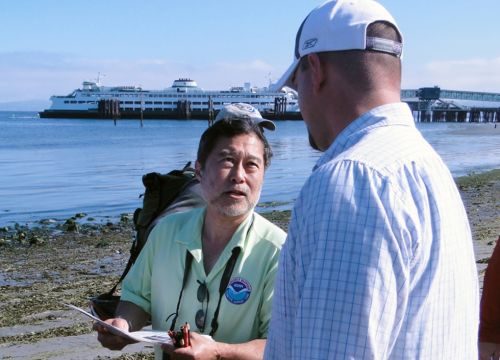
Two people talking on a beach with a ferry in the background.
These classes help prepare responders to understand the environmental risks and scientific considerations when addressing oil spills, and also include a field trip to a beach to apply newly learned skills. (NOAA)
Node Weight: 
40

Evolution of the ESI Map

Short title: 
Evolution of the ESI Map

NOVEMBER 21, 2014 -- Environmental Sensitivity Index (ESI) maps have been produced for over 35 years. Throughout that time, the cartographic product has seen some change (e.g., the addition of the “back of the map” species list, hatched polygons replacing range bars, and the grouping of resources at risk), but by and large, the ESI maps produced in the 80s look very similar to the maps produced in 2014. This is good!

It is a tribute to the ESIs that the format has stood the test of time. We pride ourselves on the fact that a responder in Hawaii can travel to Alaska for a spill, and easily interpret the ESI maps for that region, as they have the same look and feel as those in their home state. The ESI colors, icons, and composition are well recognized by planners and responders, and have been replicated internationally. There’s a lot to be said for consistency!

Increasing Amounts of Data

On the other hand, the content of the ESI data has evolved significantly over the past 35 years. Species have been added (there are currently over 4,000 species included in our master species list!), more data are available digitally, attributes have been added, and more human-use data are collected. While maintenance of the digital data presents less of a challenge, the production of maps that convey the essential information readily and accurately has become increasingly difficult. It has become harder to decipher the shoreline types due to the abundance of biology polygons, and for the same reason, it has become harder to identify which are the more vulnerable populations and where they occur.

The 1985 ESI map of Indian River Bay and the accompanying information from the back of the map.
ESI map of Indian River Bay, produced in 1985.
Most populations were mapped by species, with the species key printed in the Introductory pages. Limited assemblages were mapped (circled above) and were very general (A = numerous species). Click to view larger.
Increasing Technology Demands

Add to that the evolution of technology. The first ESI maps were produced manually. Next came Desktop ARC/INFO, followed by workstation ARC/INFO (versions 5.x, 6.x, and 7.x) and ArcView 3.x, then the whole new line of ArcGIS products (vs. 8.x-10.x). That’s a lot of change! Through all the software releases, ESI maps continued to be produced. Unfortunately it is unrealistic, if not impossible, to port all the code and procedures used to create the maps to every version update. Consequently, some of the map processes still rely on software versions that are reaching obsolescence. For all these reasons, it is time to reevaluate the ESI map products and the map-making process.

The 1996 ESI map of Indian River Bay and the accompanying information from the back of the map.
ESI map of Indian River Bay, produced in 1996.
Species were now mapped as assemblages, linked by the resource at risk (RAR) number to the “back” of the map. There, a summary of the species found in each grouping is detailed, including their seasonality, concentration, and life stage activities. Click to view larger.

In conjunction with the Sandy-related ESI mapping on the east coast, NOAA initiated a contract with Photo Science, a Quantum Spatial company (QSI), to evaluate and update the current ESI map and PDF formats. Their first task is to make recommendations on how we might better portray the ESI data. We don’t want to change things that work, but rather, hope to find ways that make them work better with the current ESI data. The goal is a high quality map and PDF product, yet one that can be produced in a cost effective fashion.

The 2014 ESI map of Indian River Bay and the accompanying information from the back of the map.
ESI map of Indian River Bay, produced in 2014.
The format and details have changed little since the 1996 mapping; however, the number of species included has grown considerably. In 1996, the “back of the map” fit on one page; in 2014, the resource details expanded to fill 4 pages, despite using a smaller font. Click to view larger.
Refining What ESI Users Want and Need

As a first step in this process, OR&R created a User Survey, focusing on the current hard copy map and PDF products. The survey was distributed to federal and state oil spill responders. The survey questions highlighted what information they sought from the ESI maps, what attributes they focused on when evaluating protection priorities, and what features in the current maps they liked best and least. Along with multiple choice questions, there were several opportunities for survey respondents to express their opinions in free text on a variety of topics. Not surprisingly, some of the answers overlapped with general ESI content considerations, making the survey useful for evaluating the ESIs beyond the intended hard copy map focus.

QSI analyzed the survey results, and produced a summary of their findings. Though some of the results were predictable, the analysis highlights some of the more subtle ways the maps are used. It wasn’t surprising that almost all respondents targeted the Threatened and Endangered species in their response considerations, but the survey also showed that the life stage seasonality was one of the lesser used attributes. Why might this be? Is it because it’s more detail than needed? Or is it because that information is hard to extract from the maps? If the latter is true, is there a way we can highlight those activities that would make them more accessible? There are many things to take away from the survey and much to consider. For more details, the survey review, as well as the complete survey results [PDF, 808 KB], is available for viewing on this website.

We will keep you updated as the map and PDF design unfolds. Until then, if you have thoughts on what you’d like to us to consider, feel free to send an email to ORR.ESI@noaa.gov.

Word cloud showing most frequently used words by ESI survey respondents.
Word cloud of ESI User Survey respondents' first and second priorities for information displayed on ESI maps. Words mentioned more frequently appear larger in the word cloud. (Word cloud generated by Photo Science, a Quantum Spatial company)
Site Themes: 
Node Weight: 
1

Science of Oil Spills Training Now Accepting Applications for Fall 2014

Short title: 
Accepting SOS Applications for Fall 2014

SEPTEMBER 8, 2014 -– NOAA's Office of Response and Restoration, a leader in providing scientific information in response to marine pollution, has scheduled a Science of Oil Spills (SOS) class for the week of November 17–21, 2014 in Norfolk, Virginia.

We will accept applications for this class through Friday, October 3, 2014, and we will notify applicants regarding their participation status by Friday, October 17, 2014.

SOS classes help spill responders increase their understanding of oil spill science when analyzing spills and making risk-based decisions. They are designed for new and mid-level spill responders.

These trainings cover:

  • Fate and behavior of oil spilled in the environment.
  • An introduction to oil chemistry and toxicity.
  • A review of basic spill response options for open water and shorelines.
  • Spill case studies.
  • Principles of ecological risk assessment.
  • A field trip.
  • An introduction to damage assessment techniques.
  • Determining cleanup endpoints.

To view the topics for the next SOS class, download a sample agenda [PDF, 170 KB].

Please be advised that classes are not filled on a first-come, first-served basis. The Office of Response and Restoration tries to diversify the participant composition to ensure a variety of perspectives and experiences to enrich the workshop for the benefit of all participants. Classes are generally limited to 40 participants.

Additional SOS courses will be held in 2015 in Houston, Texas; Mobile, Alabama; and Seattle, Washington. Course dates will be posted as they are determined.

For more information, and to learn how to apply for the class, visit the SOS Classes page.

Two men on a beach with one holding a bin of sand.
These trainings help oil spill responders increase their understanding of oil spill science when analyzing spills and making risk-based decisions, and also include a field trip to a beach to apply newly learned skills. (NOAA)
Node Weight: 
40

NOAA Prepares for Bakken Oil Spills as Seattle Dodges Oil Train Explosion

Short title: 
Perparing for Bakken Oil Spills
Derailed oil tanker cars up close.
Derailed oil tanker cars beneath Seattle's Magnolia Bridge on Thursday, July 24, 2014. (Courtesy Dana Robinson Slote, Seattle City Council)
Derailed oil tanker cars beneath Seattle's Magnolia Bridge.
No oil was spilled or ignited when three oil tanker cars derailed beneath Seattle’s Magnolia Bridge on Thursday, July 24, 2014. (Courtesy Dana Robinson Slote, Seattle City Council)
Node Weight: 
5

For Alaska's Remote Pribilof Islands, a Tale of Survival and Restoration for People and Seals

Short title: 
Survival and Restoration for the Pribilof Islands
Workers salting fur seal skins in a factory.
Workers salting fur seal skins in the Pribilof Islands likely sometime in the 20th century. (National Archives/ U.S. Fish and Wildlife Service)
Northern fur seal bull, cow, and pup on beach with seals in background.
Northern fur seal bull, cow, and pup in the Pribilof Islands, Alaska. Date unknown. (National Archives/U.S. Fish and Wildlife Service)
Node Weight: 
7

With Lobster Poacher Caught, NOAA Fishes out Illegal Traps from Florida Keys National Marine Sanctuary

Short title: 
NOAA Removes Illegal Lobster Traps from Florida Keys
Crews on a boat pull a casita from the water.
Crews on the surface pull a casita, an illegal structure used to lure in lobsters, from the waters of Florida Keys National Marine Sanctuary. (NOAA)
A casita made of panels and cinder blocks on the seafloor.
A casita on the seafloor of the Florida Keys National Marine Sanctuary. The legs of casitas can be made of treated lumber, parking blocks, or cinder blocks. Their roofs often are made of corrugated tin, plastic, quarter-inch steel, cement, dumpster walls, or other panel-like structures. (NOAA)
Node Weight: 
4

Highlighting 2013: Previewing 2014

Short title: 
Highlighting 2013: Previewing 2014

At the start of last year, ESI mapping was in progress in South Florida, the Upper Coast of Texas, and Louisiana. The South Florida GIS data were completed and posted to the NOAA Downloads page in early November. This is one of the regions for which a hard copy atlas was not generated. Because we know there are still many users who prefer a physical “map,” we plan to generate a product for that area, similar to the PDFs produced for the Florida Panhandle. Be watching for those sometime this spring!

The Upper Coast of Texas update was also completed late last year. Work on this atlas was done jointly with NOAA and Texas General Land Office (TGLO). Texas funded and conducted the ESI shoreline work with the Harte Research Institute (HRI). The completed shoreline was provided to Research Planning, Inc. (RPI), who integrated the biology and human-use data they collected. This portion was funded by NOAA. A similar funding approach was used for the last Florida atlases, as well. Both the Texas and Florida updates were much-needed, as the last round of ESI data for those regions was collected and published in the early to mid-1990’s.

The Louisiana ESI data will be undergoing a final review this month, and will hopefully be ready for posting sometime in February. Both the Texas and Louisiana projects included hard copy maps, so the traditional PDFs are (or in the case of Louisiana, will be) available for download.

Mapping of Delaware Bay began in early 2013. This work is nearly complete, so look for the data on the Downloads page early this spring!

Following Post Tropical Cyclone Sandy, Congress provided funding to several agencies for a variety of mapping efforts to ensure that accurate and current data are available to federal, state, and local authorities for preparedness and response activities in Sandy-affected areas. OR&R received funding for ESI mapping in areas ranging from Maine to South Carolina. ESI mapping for this region will include some additional features to increase the utility of the ESI data for other hazards, particularly coastal storms. We don’t want to lose focus on the traditional role of the ESIs for oil spill planning and response, but some data that might be particularly useful in storm-related emergencies could also benefit the original audience. Most of the enhancements will become part of the management or human-use data layers, and will include things such as storm surge inundation areas, evacuation routes, and additional jurisdictional boundaries.

We have been exploring how to better use some of the internal skills and knowledge of other NOAA offices, as well as working to increase capacity by linking to NOAA contracts that are currently in place for similar mapping efforts. Avoiding duplication is especially important with regard to the Sandy-related work, where multiple government agencies are working in the same area doing complementary projects. There is a government-wide committee tracking all the Sandy efforts and helping to bridge communications between offices that are working on similar projects.

The first Sandy-related ESI mapping has begun in Long Island Sound. For this effort we have partnered with NOAA’s National Centers for Coastal Ocean Services (NCCOS) office for compilation of the biology and human-use data. The National Geodetic Survey (NGS) office is updating shoreline for the northern portion of the sound; their contractor, Woolpert, will be conducting the ESI shoreline classification. The next areas to be mapped will be Maine and South Carolina. We hope to have those contracts in place within the next 2 months.

Of course, Sandy work does not mean that other ESI mapping comes to an end! RPI is working on the other coast, mapping the outer shoreline of Washington and Oregon. ESI classification is already underway. Later this month, the biology and human-use data collection will gear up and by February and March, should be well underway. We anticipate completion of this work in late fall of this year. And, if the final budget allows, we hope to begin updating the Georgia ESI later this year.

So, you see, there may have been silence, but work did continue! 2014 looks like it will be even busier with lots of areas to be mapped, new features to include, and some new ways of doing things.

We’re looking forward to the challenges and anticipate a prosperous year ahead for ESIs. We wish you equal success!
 

Questions: As always, contact the ESI Specialist with questions, comments, or suggestions about ESI maps and data.

A small island with palm trees, a large home, and a riprap perimeter.
Site Themes: 
Node Weight: 
1

Updated ESIs to Improve Disaster Response and Planning

Short title: 
Updated ESIs

NOVEMBER 18, 2013 -- In addition to causing devastating damage to manmade structures, the strong winds and waves of Post Tropical Cyclone Sandy caused considerable change to shorelines in the northeast, particularly in the metropolitan New York area, northern Long Island, Connecticut, and New Jersey. In the wake of Sandy, under the Disaster Relief Appropriations Act of 2013, funds were allocated to update OR&R’s existing northeast ESI maps to reflect changes caused by the storm and to add information that would enhance the maps’ value when another disaster strikes.   

Questions: As always, contact the ESI Specialist with questions, comments, or suggestions about ESI maps and data.

Weathered sign, "reading North Brigantine Natural Area," among beach grasses.
You can see representative coastal habitat in a large wildlife conservation area managed by Bass River State Forest at the north end of Brigantine Island, a popular beach destination located on the New Jersey coast. (NOAA)
Site Themes: 
Node Weight: 
4

Florida Panhandle ESI Correction

Short title: 
Florida Panhandle ESI Correction

JUNE 3, 2013 -- We were recently made aware of a problem with the PDF maps for the Florida Panhandle. The PDF maps were missing the human-use resources when they were first posted to the Web page, Download ESI Maps and GIS Data. They have been corrected now.
 

Questions: As always, contact the ESI Specialist with questions, comments, or suggestions about ESI maps and data.

Site Themes: 
Node Weight: 
1

Pages

Subscribe to response.restoration.noaa.gov RSS