Back to top

Science of Oil Spills Training: Apply for Spring 2017

Short title: 
Accepting SOS Applications for Spring 2017

October 3, 2016 -- NOAA's Office of Response and Restoration (OR&R), a leader in providing scientific information in response to marine pollution, has scheduled two more Science of Oil Spills (SOS) classes:

  • Charleston, South Carolina, the week of February 13, 2017
  • Mobile, Alabama the week of March 27, 2017

OR&R will accept applications for these classes as follows:

  • The application period for the Charleston class will run through Monday, November 28, 2016. We will email applicants regarding their application status no later than Friday, December 9.
  • The application period for the Mobile class will run through Friday, January 20, 2017. We will email applicants regarding their application status no later than Friday, February 3, 2017.

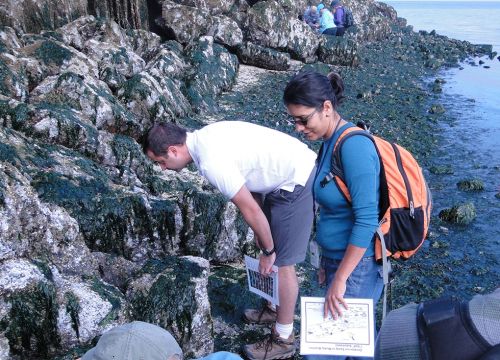
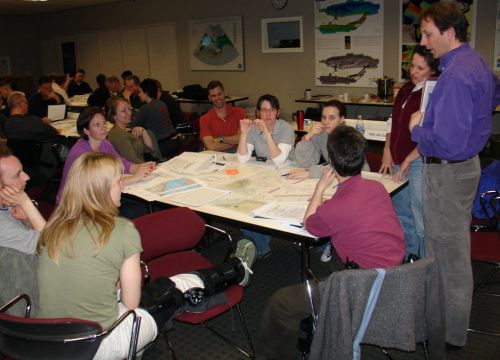
SOS classes help spill responders increase their understanding of oil spill science when analyzing spills and making risk-based decisions. They are designed for new and mid-level spill responders. The trainings cover:

  • Fate and behavior of oil spilled in the environment.
  • An introduction to oil chemistry and toxicity.
  • A review of basic spill response options for open water and shorelines.
  • Spill case studies.
  • Principles of ecological risk assessment.
  • A field trip.
  • An introduction to damage assessment techniques.
  • Determining cleanup endpoints.

To view the topics for the next SOS class, download a sample agenda [PDF, 170 KB]. Please understand that classes are not filled on a first-come, first-served basis. We try to diversify the participant composition to ensure a variety of perspectives and experiences, to enrich the workshop for the benefit of all participants. Classes are generally limited to 40 participants. For more information, and to learn how to apply for the class, visit the SOS Classes page.

Node Weight: 
40

For Better Chemical Safety, NOAA and EPA Work to Improve Data Sharing During Emergencies

Short title: 
Improved Data Sharing During Emergencies

Chemical Reaction, Executive Decision

In the United States, organizations and businesses that produce or store specific hazardous chemicals above certain amounts are required to disclose information to local fire departments, local emergency planning committees, and state or tribal emergency response commissions to help those groups plan for and respond to chemical emergencies.

This process is mandated by the Emergency Planning and Community Right-to-Know Act (EPCRA). Under EPCRA, those chemical sites must complete an annual “Tier II form,” where they share information about the chemicals on site (such as types, quantities, and locations), as well as other important details like contact information for their site’s emergency coordinator.

As a result of fatal chemical accidents in recent years, Executive Order (EO) 13650 (Improving Chemical Facility Safety and Security) was implemented in August 2013. It called for improving operational coordination between federal, state, local, and tribal organizations; enhancing information collection and sharing; and modernizing regulations, policy, and standards.

Many of the items in the executive order are specifically related to facilitating the exchange of information to help emergency responders and planners. Among the changes that EO 13650 proposes is the creation of a national Tier II data standard so that information can be shared between systems (e.g., between neighboring states using different Tier II filing systems) to improve the exchange of Tier II information.

NOAA and the U.S. Environmental Protection Agency (EPA) have recently developed and released version 1.0.0 of the national Tier II data standard, which will allow Tier II information to be shared by all programs that follow the standard. We chose a common platform, XML, for the new standard to make adoption of the standard as easy as possible.

Top Tier Software

NOAA and EPA also develop a Tier II management program called Tier2 Submit™, which allows chemical sites to complete Tier II forms electronically. The chemical sites can then submit those electronic Tier II submission files, according to the requirements of their state. About half of the states and territories in the U.S. use the Tier2 Submit program, which is available for download from the EPA website. Tier2 Submit files can also be imported directly into the CAMEOfm database program for emergency response and planning purposes.

When the new version of Tier2 Submit is released this fall, it will be able to import and export data in an XML format that adheres to the new national Tier II data standard. (Tier2 Submit will also continue to support import from the older file formats in this upcoming release.) While this is a significant change to the data file structure and an important improvement for exchanging data between programs, it will have minimal impact on the user experience and they will interact with Tier2 Submit much as they have in previous years. (The fall release of CAMEOfm will also allow Tier II information to be imported via the new XML data standard, but the next CAMEOfm will not include any additional import or export XML support beyond that.)

A Suite of Updates for Safety

Besides the Tier II data standard, the joint NOAA-EPA CAMEO® team has implemented several other changes, prompted by the executive order, to the suite of chemical response and planning software. We have added the Department of Homeland Security’s Chemical Facility Anti-Terrorism Standards (CFATS) information in CAMEO Chemicals; added Spanish and French response guides from the 2016 Emergency Response Guidebook in CAMEO Chemicals; included the Navy’s RAILCAR model in ALOHA® as an alternative tank source strength model, and redesigned the MARPLOT® mapping program to allow users to incorporate geospatial data from many sources (and in many different file formats).

In addition, the CAMEO team is currently developing several apps for mobile phones and tablets.

The CAMEO software products have been valuable hazardous materials response and planning tools since the first products were introduced in 1986. The CAMEO suite consists of four core programs—ALOHA (models hazardous gas clouds), CAMEO Chemicals (a chemical database), CAMEOfm (a chemical emergency data management application), and MARPLOT (a mapping program)—as well as several related programs, such as Tier2 Submit. These applications can be used together or separately, but when used together, the programs interact seamlessly and information can be linked easily between them.

As a result of NOAA and EPA’s work to address Executive Order 13650 recommendations, emergency responders have improved access to information and an enhanced ability to share information with other organizations for chemical facility safety and security—improving safety for everyone when a disaster occurs.

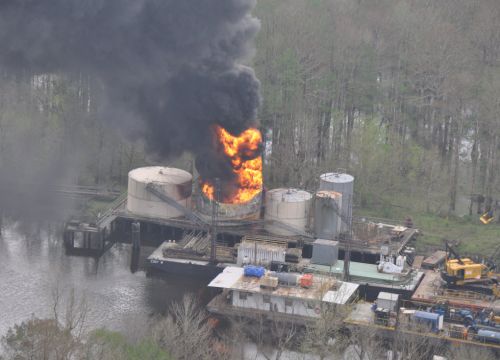
Flames and dark smoke billow from oil production platform fire next to a bayou.
In March 2016, the U.S. Coast Guard worked with state and local partners to respond to an oil production platform fire in Bayou Sorrel, Louisiana. (U.S. Coast Guard)
Site Themes: 
Node Weight: 
7

An Estuary in the Shadow of Seattle

Short title: 
An Estuary in the Shadow of Seattle

Main challenges for restoring the Duwamish:

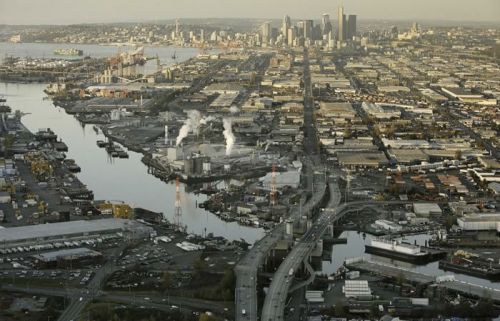
Sept. 27, 2016 - Where the Duwamish River meets Puget Sound in Washington state this shift of water flow happens daily. The Duwamish pours into the salty waters of Puget Sound, making it Seattle’s downtown estuary. The powerful tides that fill and drain the sound push and pull on the Duwamish causing a shift in directions at the river's estuary. This estuary does not look like the estuaries from high school text books. It no longer has a wide delta where the freshwater river fans out to meet the salty ocean. Instead, it looks like a channelized waterway. Almost all of the Duwamish estuarine wetlands and mudflats have been lost to dredging or filling for industrial purposes. Restoring the Duwamish‘s estuary is a massive challenge—requiring government agencies, industry, and the public to work together. I am happy to report a significant step forward in this collaboration. NOAA recently produced key answers to some tough questions, based on lessons we learned as we worked on this restoration effort: What works the best to restore this highly urban and developed river and estuary? What are some of the key obstacles we encountered?

  • Dealing with costs and challenges of existing contamination
  • Preventing erosion of new restoration
  • Keeping newly-planted vegetation alive—geese and other wildlife love to eat newly planted restoration sites

Key lessons learned for successful restoration:

  • Plan for uncertainty: the most common issue for restoration in urban areas is discovering unexpected challenges, such as sediment contamination during construction.
  • Allow for ongoing maintenance: Restoration isn’t over just because a project is complete. To ensure the long-term success of restoration efforts, continued stewardship of the site is necessary and should be included in project planning.
  • Get the biggest bang for your buck: When companies conduct cleanups of their sites, it is most cost effective to conduct restoration at the same time. River with grid strung above it.

The challenges and recommendations are only a snapshot of what can be found in the NOAA report, Habitat Restoration in an Urban Waterway: Lessons Learned from the Lower Duwamish River. While the Duwamish estuary may look nothing like it did historically, it is important to always be reminded that it is still full of life. From salmon to kayakers to industry, the estuary serves a key role in the Seattle community. Learn more about what we are doing to restore the Duwamish River. See video: A River Reborn: Restoring Salmon Habitat along the Duwamish River.

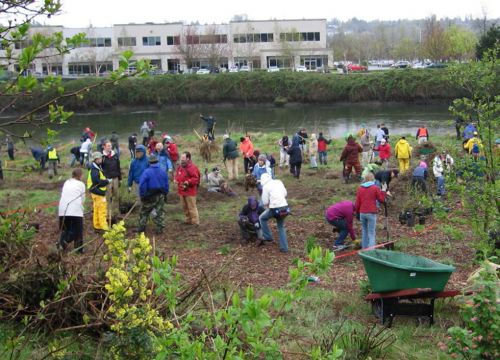
People working in a marsh.
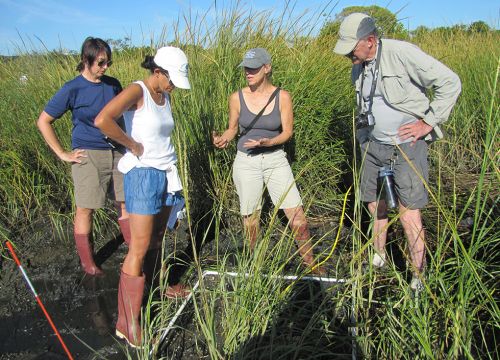
Volunteers help restore the Duwamish River by planting native vegetation at an Earth Day event hosted at Codiga Park, April 2008. (NOAA)
Aerial cityscape with river.
Aerial photograph of the Lower Duwamish River. Harbor Island and Elliott Bay are shown in the top left and downtown Seattle in the top center of the photograph. (NOAA)
Node Weight: 
6

What Scientists Learned About Cleaning up Oil Spills by Covering a Delaware Beach with Oil — on Purpose

Short title: 
Cleaning up Oil Spills by Covering a Delaware Beach with Oil

SEPT. 15, 2016 — Most people don’t want to spill oil onto beaches. But after the disastrous 1989 Exxon Valdez spill covered the remote, rocky beaches of Alaska’s Prince William Sound with crude oil, Al Venosa was itching to do exactly that.

As an environmental scientist with the U.S. Environmental Protection Agency (EPA), Venosa had been called up to Alaska to help study the Exxon Valdez oil spill and its cleanup. In particular, he was interested in an oil spill cleanup technique that was getting a lot of attention at the time—an approach known as “bioremediation.” It involved adding oil-eating microbes and extra nutrients to an oiled beach to accelerate the natural background process of microbes breaking down, or biodegrading, oil.

But Venosa wasn’t satisfied with the research attempts that came out of that spill. He wanted to set up a more scientifically rigorous and controlled study of how effective bioremediation was under realistic conditions in the marine environment. However, in the United States, getting permission to spill oil into the environment on purpose is a very difficult, and nearly impossible, thing to do.

Coming Together

Meanwhile, Ben Anderson, an oil spill biologist with the Delaware Department of Natural Resources and Environmental Control, had also been working on the cleanup after the Exxon Valdez oil spill. Just a couple months after that iconic spill and shortly after he returned home from Alaska, he had to deal with a spill of hundreds of thousands of gallons of bunker oil when the T/V Presidente Rivera ran aground in the Delaware River. He remembered 1989 as a tough year for oil spills. Anderson began wondering how to improve the efficiency of oil spill cleanup and better protect Delaware’s abundant natural resources.

A few years later, in 1993, Anderson was listening to Ken Lee from Fisheries and Oceans Canada as he presented on bioremediation at the International Oil Spill Conference. At the end of his presentation, Lee mentioned how important—and difficult—it was to do controlled field studies on bioremediation. The comment got Anderson thinking; maybe he could help make this happen in Delaware. “Anything we can do to improve the aftermath of an oil spill in Delaware,” recalled Anderson.

After the presentation, he approached Lee, who introduced him to Al Venosa. The pair decided to work together to bring Venosa’s meticulous research approach to a study of oil bioremediation on Delaware’s beaches.

“From that time to next summer, I worked on getting a permit with EPA and with the state,” said Anderson. He and his collaborators also reached out to local environmental groups in Delaware and to NOAA, U.S. Fish and Wildlife Service, and other agencies to build support for the research project, building in as many safeguards as possible to limit any potential environmental impacts.

One issue the research team would have to work around was the fact that each May, Delaware’s sandy shores are crawling with horseshoe crabs, a prehistoric marine creature with armor and a long, pointy tail, which comes ashore to lay its eggs. More than 20 species of birds, as they migrate north to nest in the Arctic each summer, stop along these shores to nourish themselves with a feast of horseshoe crab eggs. To avoid interfering with this ecological phenomenon, Anderson and Venosa would have to start the experiment after horseshoe crab spawning season had passed.

Barrels and workers on a beach.
Delivery of barrels containing Bonny light Nigerian crude oil. Oil was weathered in a separate pool. (NOAA)
20 marked plots on a beach.
View up beach of the 20 oiled plots. (NOAA)
Node Weight: 
5

Bay Long Oil Spill in Louisiana

Short title: 
Bay Long Oil Spill in Louisiana

The pipeline was shut in and is no longer leaking. The incident occurred at an active restoration site for the Deepwater Horizon oil spill. The cause of the incident is still under investigation. NOAA’s Office of Response and Restoration has been providing scientific support including trajectories and fate of oil, resources at risk, information on tides and currents, and technical guidance towards the response.

Other roles provided by NOAA are guidance on Shoreline Cleanup Assessment Technique (SCAT), a systematic method for surveying an affected shoreline after an oil spill, as well as data management and updates through Environmental Response Management Application (ERMA®). OR&R's Emergency Response Division has a team of six on site.

For more information, read the September 6, 2016 news release from the U.S. Coast Guard.

Woman looking out over water with boom floating in it.
Overseeing cleanup operations on Chenier Ronquille Island. (U.S. Coast Guard)
Node Weight: 
3

Tips for Preventing Small-Vessel Oil Spills

Short title: 
Tips for Preventing Small-Vessel Oil Spills

Small Spills Prevention Checklist

Vessel maintenance:

  • Tighten bolts on your engine to prevent oil leaks. Bolts can shake loose with engine use.
  • Replace cracked or worn hydraulic lines and fittings before they fail. Lines can wear out from sun and heat exposure or abrasion.
  • Outfit your engine with an oil tray or drip pan. You don't need anything fancy or expensive; a cookie sheet or paint tray will do the trick.
  • Create your own bilge sock out of oil absorbent pads to prevent oily water discharge. Here’s a helpful how-to guide from Cap’n Mike (Coast Guard Auxiliary Instructor Mike Brough).

At the pump:

  • Avoid overflows while refueling by knowing the capacity of your tank and leaving some room for fuel expansion.
  • Shut off your bilge pump while refueling – don’t forget to turn it back on when done.
  • Use an absorbent pad or a fuel collar to catch drips. Always keep a stash handy.
  • If spills do happen, it’s important that boaters manage them effectively. Spills should immediately be contained and cleaned up with absorbent pads or boomed to prevent their spread. Notify the Coast Guard and your state spill response office, per federal law, and let the marina or fuel dock staff know about the incident, so they can assist.

This is a guest post by Lauren Drakopulos, a Science Communications Fellow with Washington Sea Grant and is pursuing her Ph.D. in geography at the University of Washington. Lauren has worked for the Florida Fish and Wildlife Conservation Commission and her current research looks at community engagement in fisheries science. Washington Sea Grant, based at the University of Washington, provides statewide marine research, outreach and education services. The National Sea Grant College Program is part of the National Oceanic and Atmospheric Administration (NOAA) U.S. Department of Commerce. For more information or to join the conversation @WASeaGrant on Facebook, WASeaGrantTwitter and Instagram.

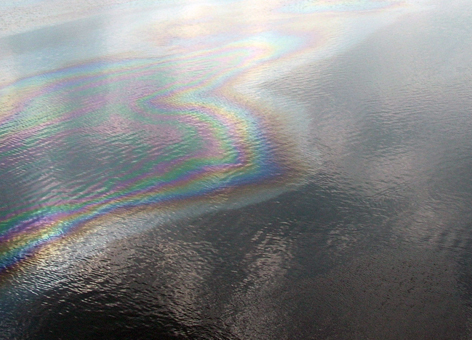
Oil sheen on water in a marsh.
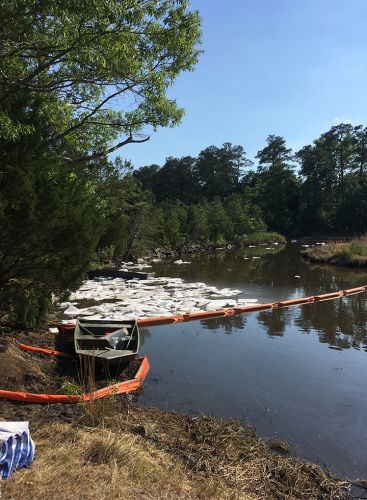
Oily sheen in a marsh. (NOAA)
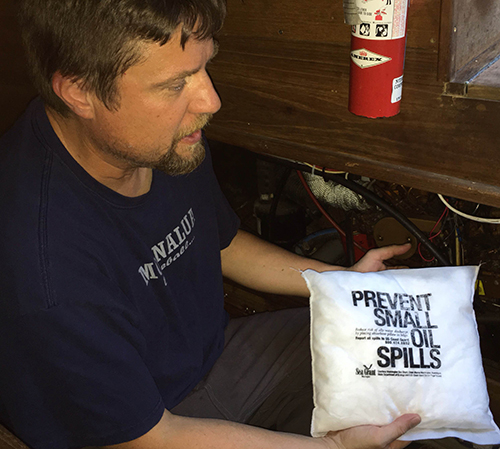
Man with spill prevention kit.
Seattle recreational boater Greg Mueller placing an absorbent oil spill prevention kit pillow in the engine bilge. (Lauren Drakopulos, Washington Sea Grant)
Node Weight: 
1

Mallows Bay by Kayak: A Tour of Maryland’s Proposed National Marine Sanctuary, the First in Chesapeake Bay

Short title: 
Mallows Bay by Kayak
Old image of ships in a row, listing.
Wooden ships owned by Western Marine & Salvage tied together in 1925, likely on the Potomac or at Mallows Bay. (Library of Congress: National Photo Company Collection)
Skeleton of an old vessel in water with a yellow kayak nearby.
NOAA's Frank Csulak and LT David Ruhlig from USCG Sector Maryland North Capitol Region (NCR).
Node Weight: 
4

Ferry Fire Near San Juan Harbor, Puerto Rico

Short title: 
Ferry Fire Near San Juan Harbor, Puerto Rico
Large vessel with smaller boat spraying water on it.
A local San Juan, Puerto Rico-based tug crew use a fire hose to cool the hull of the 561-foot Caribbean Fantasy ferry vessel that caught fire earlier a mile from San Juan Harbor, San Juan, Puerto Rico, Wednesday, Aug. 17, 2016. The Caribbean Fantasy's engine room caught fire, which began to spread to other compartments forcing passengers and crew to abandon the ferry vessel. (U.S. Coast Guard)
Node Weight: 
4

Abandoned Vessels of Florida's Forgotten Coast

Short title: 
Abandoned Vessels of Florida's Forgotten Coast

AUGUST 9, 2016 -- There is a stretch of the Florida Panhandle east of the more heavily developed beach destinations of Destin and Panama City that some refer to as the "Forgotten Coast." This area has vast tracts of pine forest including large stands of longleaf pine and savanna, towering dunes and nearly undeveloped barrier islands, seemingly endless coastal marsh, and miles and miles of winding shoreline along its expansive bays and coastal rivers. It is no coincidence that much of the area is undeveloped; reserves, wildlife refuges, and other federal and state protected lands and waters occupy a large percentage of the area. However, this flattened landscape of wild greens and blues is occasionally punctuated by the unnatural texture of human influence of a certain type: rusting hulls, broken masts, boats half-submerged in the muddy waters. It was one of these abandoned and decaying vessels that brought NOAA's Adam Davis to Florida's Forgotten Coast.

Birds-Eye View of a Problem

The U.S. Coast Guard as well as state and local agencies and organizations have been working to address potential pollution threats from a number of abandoned and derelict boats sprinkled throughout this region. Vessels like these often still have oils and other hazardous materials on board, which can leak into the surrounding waters, posing a threat to public and environmental health and safety.

Half-sunken boat surrounded by oil containment boom.
Even a small release of marine fuel in sensitive environmental areas like this can have significant negative environmental consequences. Many abandoned vessels still have fuel and other hazardous materials on board. (NOAA)

As a Scientific Support Coordinator for NOAA's Office of Response and Restoration, Adam Davis provides assistance to the Coast Guard in their pollution response efforts. This support often involves analyzing which natural resources are vulnerable to pollution and the potential fate and effects of oil or chemicals released into the environment. In this case, the Coast Guard called Davis with an unusual complication in their efforts: A pair of osprey had taken up residence on one of these abandoned vessels. Their nest of sticks was perched atop the ship's mast, now bent at a precarious 45 degree angle. The Coast Guard needed to know what kind of impacts might result from assessing the vessel's pollution potential and what might be involved in potentially moving the osprey nest, or the vessel, if needed. As a federal agency, the Coast Guard must adhere to federal statutes that protect wildlife, such as the Endangered Species Act and the Migratory Bird Treaty Act. Essentially, these statutes require the Coast Guard (or other person or organization) to consider what effect their actions might have on protected species, in this case, osprey. This is where Scientific Support Coordinators often can provide some assistance. A large part of their support in this area involves coordinating with the "trustee" agencies responsible for the stewardship of the relevant natural resources. Davis' challenge is evaluating the scientific and technical aspects of the planned action (disturbing the chicks and their parents or possibly moving the osprey nest in order to remove the vessel), weighing possible effects of those actions against threats posed by no action, and communicating all of that in an intelligible way to trustees, stakeholders, and the agency undertaking the action in question. Fortunately, the pollution assessment and removal in the case of the osprey-inhabited vessel proved very straightforward and the abandoned vessels project got off to a good start.

Abandoned But Not Forgotten
Aerial view of abandoned vessels with osprey nest on mast, located in Florida waterway.
NOAA's Adam Davis helped the U.S. Coast Guard with a project spanning more than 230 miles of Florida coastline and resulted in the removal of hundreds of gallons of fuel and other hazardous materials from six abandoned vessels and one shoreline facility. (NOAA)

Over the course of eight weeks, Davis felt fortunate to contribute in a number of ways to this project. For example, he joined several aerial overflights of the coast from Panama City to St. Marks, Florida, and participated in numerous boat rides throughout the Apalachicola Bay watershed to identify, assess, and craft strategies for pollution removal from abandoned vessels. Ultimately, the project spanned more than 230 miles of coastline and resulted in the removal of hundreds of gallons of fuel and other hazardous materials from six abandoned vessels and one shoreline facility. Most of the fuel was removed from vessels located in highly sensitive and valuable habitats, such as those located along the Jackson and Brother's Rivers. Portions of both of these rivers are located within the Apalachicola National Estuarine Research Reserve and are designated as critical habitat for Gulf sturgeon, a federally threatened species of fish that, like salmon, migrates between rivers and the ocean.

People on boats on a Florida coastal river.
When NOAA supports the Coast Guard with abandoned vessels work, our efforts often involve analyzing which natural resources are vulnerable to pollution and the potential fate and effects of oil or chemicals released into the environment. These Coast Guard boats are equipped to remove fuel from abandoned vessels. (NOAA)

Even a small release of marine fuel in areas like this can have significant negative environmental consequences. Impacts can be even more severe if they occur during a time when species are most vulnerable, such as when actively spawning, breeding, or nesting. In addition, spills in these otherwise pristine, protected areas can have negative consequences for important commercial and recreational activities that rely upon the health of the ecosystem as a whole. While we'd like to be able to remove the entire vessels every time, which can be navigation hazards and create marine debris, funding options are often limited for abandoned vessels. However, the Oil Pollution Act of 1990 enables the federal government to remove the hazardous materials on board and reduce that environmental threat. Davis finds working in the field directly alongside his Coast Guard colleagues to be invaluable. Inevitably, he comes away from these experiences having learned a bit more and increased his appreciation for the uniqueness of both the people and the place. He hopes that makes him even better prepared to work with them in the future—and in the beautiful and remote wilds of the Forgotten Coast.

NOAA's Adam Davis, left, on a Coast Guard boat removing oil from a derelict vessel.
NOAA's Adam Davis, left, on a Coast Guard boat removing oil from a derelict vessel along Florida's Forgotten Coast. (NOAA)
Derelict vessel with osprey nest on top of broken mast.
Along Florida's Forgotten Coast, a pair of osprey had built a nest on an abandoned vessel. The U.S. Coast Guard called in NOAA for assistance as they were trying to remove fuel from that boat with minimal impact to wildlife. (NOAA)
Node Weight: 
5

Preparing for Anything: What to Do When a Hypothetical Ferry Disaster Overlaps with a National Presidential Convention

Short title: 
Preparing for Anything: Ferry Disaster, Oil Spill, Presidential Convention?
A small boat on the Delaware River with Philadelphia's skyline in the background
In June 2016, team of federal and state emergency responders practiced responding to a hypothetical ferry disaster and oil spill scenario in anticipation of the Democratic National Convention, which occurred in Philadelphia at the end of July. (Credit: Kevin Harber, CC BY-NC-ND 2.0)
Node Weight: 
5

Science of Oil Spills Training: Apply for Fall 2016

Short title: 
Accepting SOS Applications for Fall 2016

JULY 13, 2016 -- NOAA's Office of Response and Restoration, a leader in providing scientific information in response to marine pollution, has scheduled an autumn Science of Oil Spills (SOS) class in Portsmouth, New Hampshire, October 3-7, 2016. OR&R will accept applications for this class through Monday, August 15, and will notify accepted participants by email no later than Monday, August 22. SOS classes help spill responders increase their understanding of oil spill science when analyzing spills and making risk-based decisions. They are designed for new and mid-level spill responders. The trainings cover:

  • Fate and behavior of oil spilled in the environment.
  • An introduction to oil chemistry and toxicity.
  • A review of basic spill response options for open water and shorelines.
  • Spill case studies.
  • Principles of ecological risk assessment.
  • A field trip.
  • An introduction to damage assessment techniques.
  • Determining cleanup endpoints.

To view the topics for the next SOS class, download a sample agenda [PDF, 170 KB]. Please understand that classes are not filled on a first-come, first-served basis. We try to diversify the participant composition to ensure a variety of perspectives and experiences, to enrich the workshop for the benefit of all participants. Classes are generally limited to 40 participants. For more information, and to learn how to apply for the class, visit the SOS Classes page.

A NOAA spill responder with a clip board talking on a beach with a ferry behind.
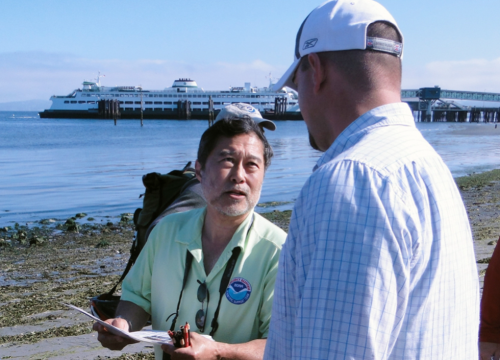
Science of Oil Spills classes help new and mid-level spill responders better understand the scientific principles underlying oil's fate, behavior, and movement, and how that relates to various aspects of cleanup. The classes also inform responders of considerations to minimize environmental harm and promote recovery during an oil spill.
Node Weight: 
40

Restoration on the Way for New Jersey's Raritan River, Long Polluted by Industrial Waste

Short title: 
Restoration on the Way for New Jersey's Raritan River
The Raritan River as it runs through a wooded area.
A draft restoration plan and environmental assessment is now available for the American Cyanamid Superfund Site which affected the Raritan River in northern New Jersey. Image credit: U.S. Geological Survey
Factories and trains at the American Cyanamid chemical manufacturing site, 1940.
The American Cyanamid Company, shown here circa 1940, produced fertilizers, cyanide, and other chemical products whose wastes were released directly into the Raritan River for decades. (Photographer unknown)
Node Weight: 
8

After Decades of Pollution, Bringing Safe Fishing Back to Kids in Southern California

Short title: 
Bringing Safe Fishing Back to Kids in Southern California
A boy holds up a scorpion fish on a boat.
A boy participating in the Montrose youth fishing program shows off his catch, a scorpion fish, from the Betty-O fishing boat with Marina Del Rey Anglers in southern California. (NOAA)
A boy stands next to a sign warning not to eat contaminated fish, with people fi
Decades of pollution dumped onto the Palos Verdes Shelf off of southern California later led to fish consumption advisories, warning people of the dangers of eating contaminated fish. (NOAA)
Node Weight: 
5

How Do We Measure What We Lose When an Oil Spill Harms Nature?

Short title: 
Measuring What We Lose When an Oil Spill Harms Nature
A beach closed sign on a fence in front of an ocean beach at Coal Point.
When an oil spill closes a beach, economists will count how many trips to the coast were affected by that spill and use information on where those trips were originating to measure the lost value per lost trip. This informs the amount of restoration that needs to make up for those losses. (Used with permission of Chris Leggett)
People walking on a developed portion of white sand beach at the ocean.
Pollution makes for a bad day at the beach, which is why NOAA also measures the impact of oil spills and chemical releases on people’s use of natural resources. (NOAA)
Node Weight: 
5

Science of Oil Spills Training: Apply for Summer 2016

Short title: 
Accepting SOS Applications for Summer 2016

JANUARY 7, 2016 -- NOAA's Office of Response and Restoration, a leader in providing scientific information in response to marine pollution, has scheduled a summer Science of Oil Spills (SOS) class in Seattle, Washington, June 6-10, 2016. Currently, we are accepting applications for three SOS classes for these locations and dates:

  • Mobile, Alabama, the week of March 28, 2016
  • Ann Arbor, Michigan, the week of May 16, 2016
  • Seattle, Washington, the week of June 6, 2016

We will accept applications for these classes as follows:

  • For the Mobile class, the application period will be open until Friday, January 22. We will notify accepted participants by email no later than Friday, February 5.
  • For the Ann Arbor class, the application period will be open until Friday, March 11. We will notify accepted participants by email no later than Friday, March 25.
  • For the Seattle class, the application period will be open until Friday, April 1. We will notify accepted participants by email no later than Friday, April 15.

SOS classes help spill responders increase their understanding of oil spill science when analyzing spills and making risk-based decisions. They are designed for new and mid-level spill responders. SOS training covers:

  • Fate and behavior of oil spilled in the environment.
  • An introduction to oil chemistry and toxicity.
  • A review of basic spill response options for open water and shorelines.
  • Spill case studies.
  • Principles of ecological risk assessment.
  • A field trip.
  • An introduction to damage assessment techniques.
  • Determining cleanup endpoints.

To view the topics for the next SOS class, download a sample agenda [PDF, 170 KB]. Please understand that classes are not filled on a first-come, first-served basis. We try to diversify the participant composition to ensure a variety of perspectives and experiences, to enrich the workshop for the benefit of all participants. Classes are generally limited to 40 participants. For more information, and to learn how to apply for the class, visit the SOS Classes page.

Group of Coast Guard members sit and stand at a table.
These trainings help new and mid-level spill responders increase their understanding of oil spill science when analyzing spills and making risk-based decisions. (NOAA)
Node Weight: 
40

Pages

Subscribe to response.restoration.noaa.gov RSS