Back to top

Highlighting 2013: Previewing 2014

Short title: 
Highlighting 2013: Previewing 2014

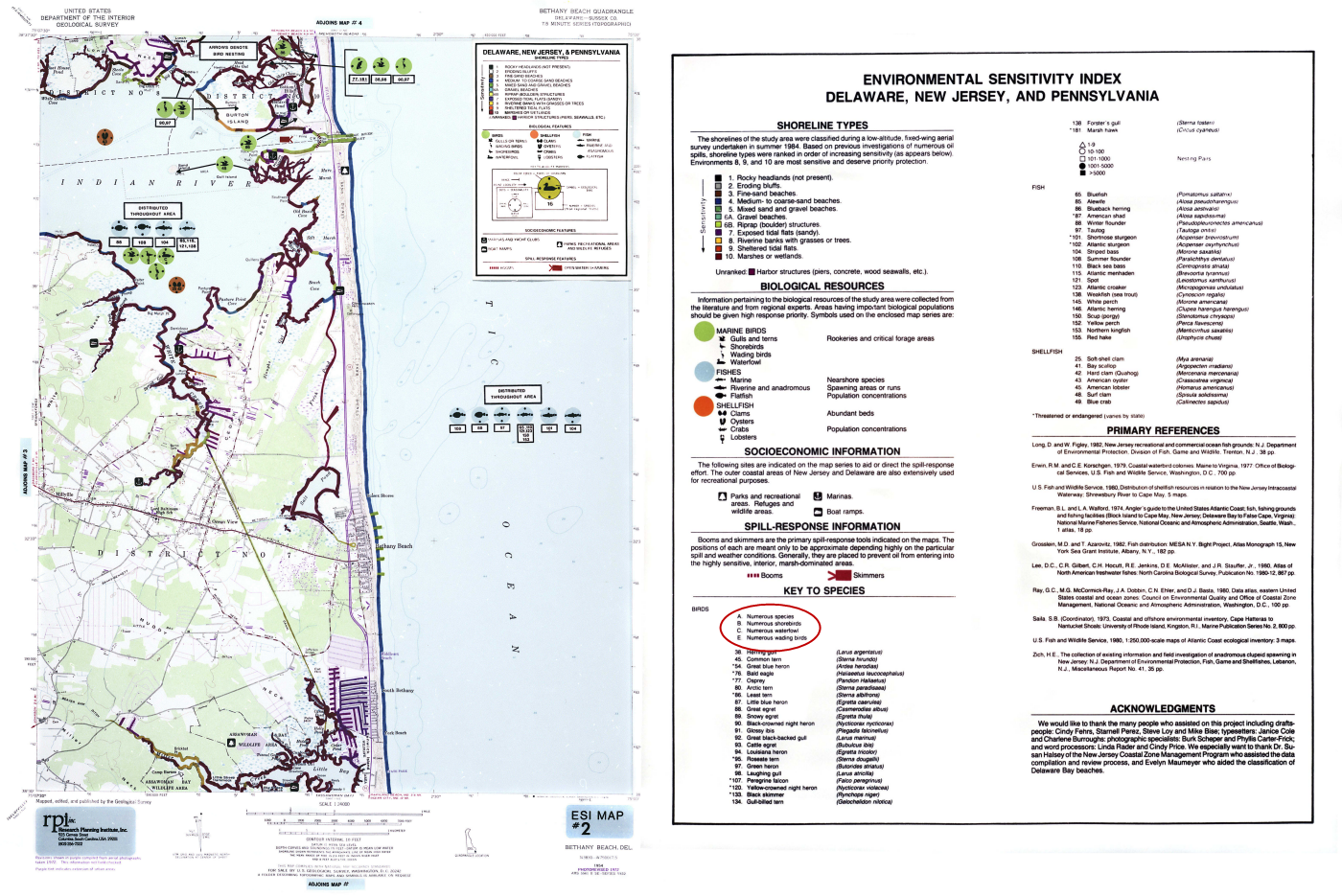
At the start of last year, ESI mapping was in progress in South Florida, the Upper Coast of Texas, and Louisiana. The South Florida GIS data were completed and posted to the NOAA Downloads page in early November. This is one of the regions for which a hard copy atlas was not generated. Because we know there are still many users who prefer a physical “map,” we plan to generate a product for that area, similar to the PDFs produced for the Florida Panhandle. Be watching for those sometime this spring!

The Upper Coast of Texas update was also completed late last year. Work on this atlas was done jointly with NOAA and Texas General Land Office (TGLO). Texas funded and conducted the ESI shoreline work with the Harte Research Institute (HRI). The completed shoreline was provided to Research Planning, Inc. (RPI), who integrated the biology and human-use data they collected. This portion was funded by NOAA. A similar funding approach was used for the last Florida atlases, as well. Both the Texas and Florida updates were much-needed, as the last round of ESI data for those regions was collected and published in the early to mid-1990’s.

The Louisiana ESI data will be undergoing a final review this month, and will hopefully be ready for posting sometime in February. Both the Texas and Louisiana projects included hard copy maps, so the traditional PDFs are (or in the case of Louisiana, will be) available for download.

Mapping of Delaware Bay began in early 2013. This work is nearly complete, so look for the data on the Downloads page early this spring!

Following Post Tropical Cyclone Sandy, Congress provided funding to several agencies for a variety of mapping efforts to ensure that accurate and current data are available to federal, state, and local authorities for preparedness and response activities in Sandy-affected areas. OR&R received funding for ESI mapping in areas ranging from Maine to South Carolina. ESI mapping for this region will include some additional features to increase the utility of the ESI data for other hazards, particularly coastal storms. We don’t want to lose focus on the traditional role of the ESIs for oil spill planning and response, but some data that might be particularly useful in storm-related emergencies could also benefit the original audience. Most of the enhancements will become part of the management or human-use data layers, and will include things such as storm surge inundation areas, evacuation routes, and additional jurisdictional boundaries.

We have been exploring how to better use some of the internal skills and knowledge of other NOAA offices, as well as working to increase capacity by linking to NOAA contracts that are currently in place for similar mapping efforts. Avoiding duplication is especially important with regard to the Sandy-related work, where multiple government agencies are working in the same area doing complementary projects. There is a government-wide committee tracking all the Sandy efforts and helping to bridge communications between offices that are working on similar projects.

The first Sandy-related ESI mapping has begun in Long Island Sound. For this effort we have partnered with NOAA’s National Centers for Coastal Ocean Services (NCCOS) office for compilation of the biology and human-use data. The National Geodetic Survey (NGS) office is updating shoreline for the northern portion of the sound; their contractor, Woolpert, will be conducting the ESI shoreline classification. The next areas to be mapped will be Maine and South Carolina. We hope to have those contracts in place within the next 2 months.

Of course, Sandy work does not mean that other ESI mapping comes to an end! RPI is working on the other coast, mapping the outer shoreline of Washington and Oregon. ESI classification is already underway. Later this month, the biology and human-use data collection will gear up and by February and March, should be well underway. We anticipate completion of this work in late fall of this year. And, if the final budget allows, we hope to begin updating the Georgia ESI later this year.

So, you see, there may have been silence, but work did continue! 2014 looks like it will be even busier with lots of areas to be mapped, new features to include, and some new ways of doing things.

We’re looking forward to the challenges and anticipate a prosperous year ahead for ESIs. We wish you equal success!
 

Questions: As always, contact the ESI Specialist with questions, comments, or suggestions about ESI maps and data.

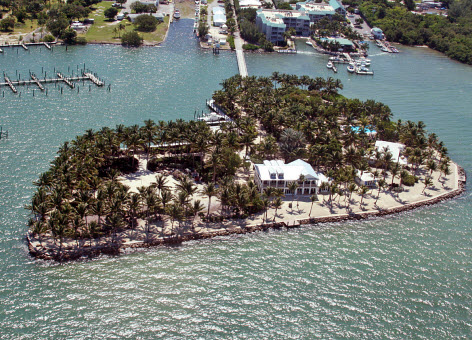
A small island with palm trees, a large home, and a riprap perimeter.
Site Themes: 
Node Weight: 
1

Updated ESIs to Improve Disaster Response and Planning

Short title: 
Updated ESIs

NOVEMBER 18, 2013 -- In addition to causing devastating damage to manmade structures, the strong winds and waves of Post Tropical Cyclone Sandy caused considerable change to shorelines in the northeast, particularly in the metropolitan New York area, northern Long Island, Connecticut, and New Jersey. In the wake of Sandy, under the Disaster Relief Appropriations Act of 2013, funds were allocated to update OR&R’s existing northeast ESI maps to reflect changes caused by the storm and to add information that would enhance the maps’ value when another disaster strikes.   

Questions: As always, contact the ESI Specialist with questions, comments, or suggestions about ESI maps and data.

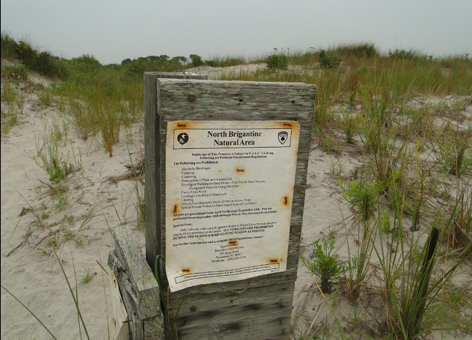
Weathered sign, "reading North Brigantine Natural Area," among beach grasses.
You can see representative coastal habitat in a large wildlife conservation area managed by Bass River State Forest at the north end of Brigantine Island, a popular beach destination located on the New Jersey coast. (NOAA)
Site Themes: 
Node Weight: 
4

Florida Panhandle ESI Correction

Short title: 
Florida Panhandle ESI Correction

JUNE 3, 2013 -- We were recently made aware of a problem with the PDF maps for the Florida Panhandle. The PDF maps were missing the human-use resources when they were first posted to the Web page, Download ESI Maps and GIS Data. They have been corrected now.
 

Questions: As always, contact the ESI Specialist with questions, comments, or suggestions about ESI maps and data.

Site Themes: 
Node Weight: 
1

Science of Oil Spills Training Now Accepting Applications for Spring 2014

Short title: 
Accepting SOS Applications for Spring 2014

DECEMBER 9, 2013 -– NOAA's Office of Response and Restoration, a leader in providing scientific information in response to marine pollution, has scheduled a Science of Oil Spills (SOS) class for the week of March 3-7, 2014, at NOAA's Gulf of Mexico Disaster Response Center in Mobile, Ala.

We will accept applications for this class through Friday, January 17, 2014, and we will notify applicants regarding their participation status by Friday, January 31, 2013.

SOS classes help spill responders increase their understanding of oil spill science when analyzing spills and making risk-based decisions. They are designed for new and mid-level spill responders.

These three-and-a-half-day trainings cover:

  • Fate and behavior of oil spilled in the environment.
  • An introduction to oil chemistry and toxicity.
  • A review of basic spill response options for open water and shorelines.
  • Spill case studies.
  • Principles of ecological risk assessment.
  • A field trip.
  • An introduction to damage assessment techniques.
  • Determining cleanup endpoints.

To view the topics for the next SOS class, download a sample agenda [PDF, 117 KB].

Please be advised that classes are not filled on a first-come, first-served basis. The Office of Response and Restoration tries to diversify the participant composition to ensure a variety of perspectives and experiences to enrich the workshop for the benefit of all participants. The class will be limited to 40 participants.

One additional SOS class is planned during fiscal year 2014 (ending September 30, 2014) in Seattle during the summer. At this time, we are only accepting applications for the Mobile, Ala., class; however, when the application dates for the Seattle class are finalized, we will announce them on this website.

For more information, and to learn how to apply for the class, visit the SOS Classes page.

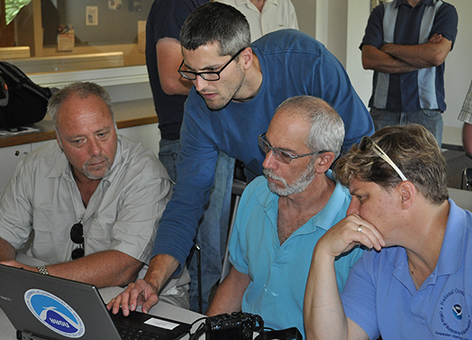
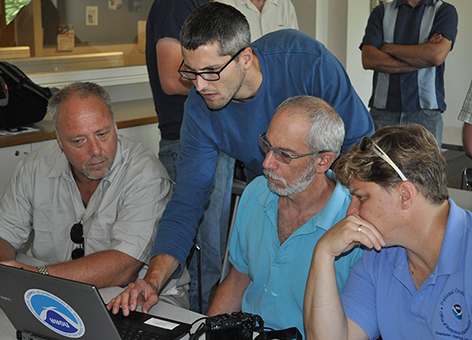
People looking at computer.
These trainings help oil spill responders increase their understanding of oil spill science when analyzing spills and making risk-based decisions. (NOAA)
Node Weight: 
40

NOAA's Office of Response and Restoration Fiscal Year 2013 Accomplishments Report

Short title: 
OR&R FY 2013 Accomplishments Report

Accomplishments by Division

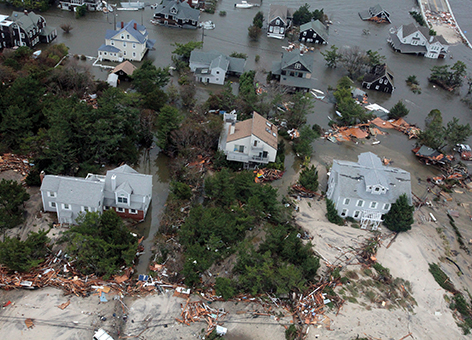
Flooded houses along mid-atlantic coast after Hurricane Sandy.
At the end of October 2012, Hurricane Sandy sped toward the East Coast, eventually sweeping waves of oil, hazardous chemicals, and debris into the coastal waters of New Jersey, New York, and Connecticut. (U.S. Air Force)
Node Weight: 
2

Apply for a NOAA Marine Debris Removal Grant

Short title: 
Apply for a NOAA Marine Debris Removal Grant

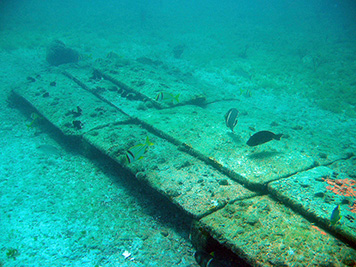
AUGUST 30, 2013 -- The NOAA Marine Debris Program, in cooperation with the NOAA Restoration Center, has opened a fiscal year 2014 federal funding opportunity for marine debris removal. This opportunity paves the way for communities to implement marine debris removal projects that create long-term ecological improvements for coastal habitat, waterways and wildlife, including migratory fish. Past projects have removed various types of debris from all over the country, including tires from Osborne Reef in Florida, wood pilings at Point Molate in California, and derelict lobster traps in Maine. Projects have restored critical habitat, such as coral reefs, raised community awareness about the debris problem, and even helped open up public beach access to previously closed areas. From the grant application description:

A principal objective of the NOAA Marine Debris Program is to provide federal financial and technical assistance to grass-roots, community-based activities that improve living marine resource habitats through the removal of marine debris and promote stewardship and a conservation ethic for NOAA trust resources. ... In order to track project success, funded projects will need to be able to report the total amount of debris removed (metric tons), total area or extent cleaned or restored (acres and/or miles), types of debris encountered, and volunteer hours involved.

The deadline for applications is November 1, 2013. Learn more and apply at https://www.grants.gov/web/grants/view-opportunity.html?oppId=240334. UPDATE 9/6/2013: You can check out the 11 community projects that have been awarded nearly $1 million for marine debris removal this year.

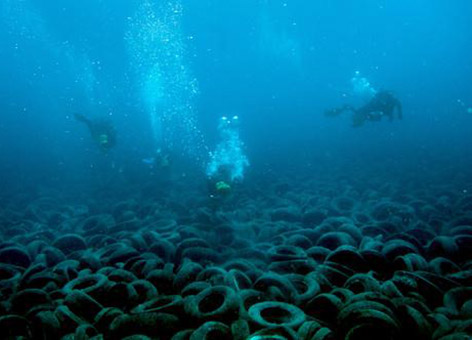
Divers work to remove tires from Osborne Reef in Broward County, Florida.
Broward County tire removal efforts from Osborne Reef in Florida. (Broward County)
Site Themes: 
Node Weight: 
4

Join the 2013 International Coastal Cleanup and Clean up a Beach Near You

Short title: 
Join the 2013 International Coastal Cleanup and Clean up a Beach Near You

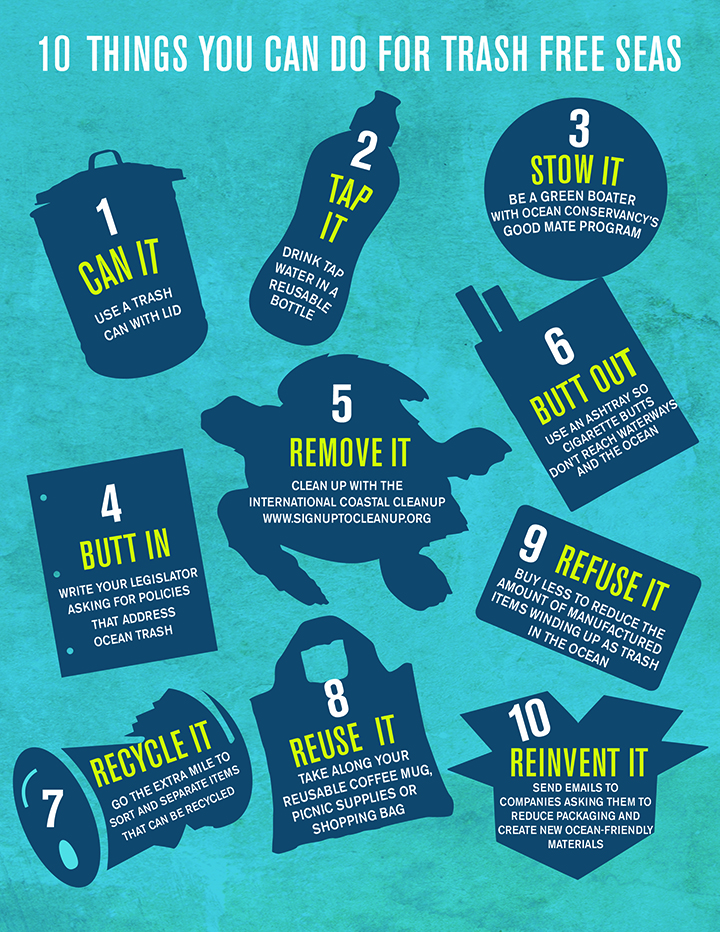
AUGUST 19, 2013 -- Worried about the amount of trash on our coasts? Do gyres of bobbing plastic whirl through your head each night? Help wipe these worries from your mind and the beach by joining the International Coastal Cleanup on September 21, 2013. With more than 550,000 volunteers scouring beaches, rivers, and lakes last year, this event is the biggest one-day cleanup of marine debris in the world. In the past, volunteers have turned up everything from bottle caps and plastic bags to toilet seats and cyborg sea-kitties. But each year cigarette butts take home the prize for most common item of debris found on the beach, with 2,117,931 of these toxic pieces of plastic turning up during the 2012 global cleanup alone. To volunteer at a location near you, visit Ocean Conservancy online. The NOAA Marine Debris Program is a proud sponsor of the annual event, and last year NOAA volunteers cleaned up more than 2.8 tons (nearly 5,700 pounds) of debris from waterways and beaches in DC, Seattle, and Oahu. Even if you can't make it to your nearest waterway on September 21, you can still help reduce how much trash makes it to the ocean by planning your own beach cleanup and considering these 10 suggestions from Ocean Conservancy:

10 things you can do for trash free seas.
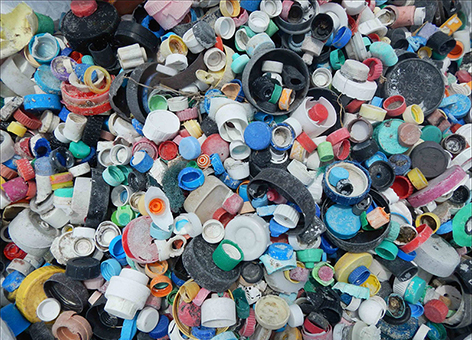
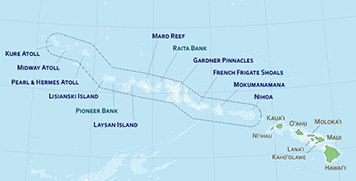
Plastic bottle caps collected from Midway Atoll.
Help pick up marine debris where you live on September 21 with the International Coastal Cleanup. Marine debris is a global problem, even for places like the middle of the U.S. or a remote Pacific island. The plastic bottle caps shown here were collected from Midway Atoll in the Northwestern Hawaiian Islands by NOAA Pacific Islands Fisheries Science Center. (NOAA)
Site Themes: 
Node Weight: 
3

Announcing ESI Data Online!

Short title: 
Announcing ESI Data Online!

ESI Data Viewer

The new Environmental Sensitivity Index Data Viewer allows you to pick your region of interest, divided up by ESI atlas boundaries, and turn on individual ESI layers to query.

Screenshot of the Environmental Sensitivity Index Data Viewer, showing a section of Mobile, Alabama.

In the screenshot of the Mobile, Alabama area, seen above, the following layers are turned on: birds, ESI lines, and the map index. These layers are displayed on top of the ArcGIS Topographic basemap; you can select from a variety of ArcGIS Basemaps using the drop-down list in the upper right corner of the map. The NOAA Raster Navigational Charts and, in some areas, the tiled ESI PDF maps are also options for backdrops. The Navigational Charts can be selected at the top of the Layers Selection panel, located to the left of the map. The ESI Seamless PDFs, if available, can be selected below that, in the ESI Base Layers section. In this example, a bird polygon has been selected, as well as the index map polygon in which it lies. The selected bird polygon is shown as a solid red map object; the selected index polygon has a transparent yellow hue, and is outlined in red. A pop-up window provides some information about the index polygon, and includes a link to the corresponding ESI PDF. The bird species found within the selected polygon are listed in the right panel. In this list, clicking the plus sign next to one of the species’ common names will provide additional information about that species, particular to the polygon selected. Above, you see the details for the Osprey. Its genus/species is Pandion haliaetus, it is State protected (the State/Federal designation, S_F, is “S” for state; the Threatened/Endangered designation, T_E, is “P” for protected*), and it is present in the area year round (Jan-Dec). Clicking the plus sign next to Sources, you learn that the source of the data was Mark Vanhoose at Alabama Department of Conservation and Natural Resources (AL DCNR). Any attributes associated with the ESI Base Layers listed in the top section of the left panel, will be shown using the pop-up window. The attributes of layers listed under the header, ESI Relate Layers, will be shown in the right panel, as in the above example for the bird layer. Only one of the Relate Layers can be shown at any given time.

Threatened and Endangered Species databases

The second product developed in this effort is an online viewing option for the Threatened and Endangered Species databases. (A recent blog post provides more information about these databases.)

Screenshot of the Threatened and Endangered Species geodatabase, showing the location of several threatened/endangered species in Alabama.

The screenshot above shows the location of several threatened/endangered species in Alabama: the Mississippi sandhill crane, the Bald eagle, and the Gulf salt marsh snake. In this example, the ArcGIS imagery basemap is used but, as in the ESI Data Viewer, you can select the ArcGIS basemap of your choice. If pop-up windows are enabled for the layer, clicking on a species polygon will show a window with details of the species in that area. In this case, the selected Bald eagle polygon, highlighted in blue, represents an area where the eagle is present year round (Jan-Dec) and is nesting December through May. You can also see that this species was listed as State protected (S_F shows “S” for state; T_E shows “P” for protected) in 2007, the year the atlas was published. It’s important to remember that protection status is not static, and that the ESI data are a snapshot in time. The status shown reflects the listing status at the time of the atlas publication.

National ESI Shoreline

Our third new online product is the National ESI Shoreline. The shorelines from approximately 45 ESI atlases were merged to create this seamless, attributed shoreline. The shoreline has four display options:

  • National ESI Shoreline is a simple black line presentation of the ESI shoreline, showing the land/water interface.
  • National ESI Shoreline – Cartographic displays a shoreline symbolized by ESI value. In cases where there are multiple ESI types occuring within a shoreline segment, multi-colored lines are used to represent each ESI type present. For example, for a shoreline segment with the ESI value of 1B/3A, the landward shoreline color will be purple, representing type 1B (exposed, solid man-made structures), and the seaward color will be blue, representing type 3A (fine- to medium-grained sand beaches).
  • National ESI Shoreline – Most Sensitive is a shoreline symbolized by a single colored line, based on the most sensitive ESI type present. Since increased sensitivity to oiling is indicated by higher numeric values in the ESI field, a shoreline with an attribute of 1B/3A/9A would have a “most sensitive” value of 9A (sheltered tidal flats), and be shown on the map as an orange line.
  • National ESI Shoreline – Aggregate is a shoreline symbolized using a simplified shoreline classification scheme. Values range from 1 to 5. As an example, ESI types 1A (Exposed rocky shores), 2A (Exposed, wave-cut platforms in bedrock, mud or clay), 3C (Tundra cliffs), and 8A (Sheltered rocky shores), among other types, are all condensed to a more general category, 1 – “Armored,” and symbolized by a purple line. The other general shoreline types are: 2 – “Rocky and steep shorelines (rock, sand or clay),” 3 – “Beaches (sand or gravel),” 4 – “Flats (mud or sand),” and 5 – “Vegetated (grass/marsh/mangroves/scrub-shrub).” All ESI values have been mapped to the appropriate “general” field for this presentation. The symbolization is based on the highest numeric general ESI type present in the segment.

If pop-up windows are enabled, you can select a shoreline segment to see the ESI rank and description, as well as the generalized classification and description. Below you can see an example of the cartographic presentation along with the shoreline pop-up box.

Screenshot of the National ESI Shoreline, showing the ESI rank for a section of shoreline in Alabama.

All of the data used in the online data products are also available as a map service. This means you can bring the data into your own ArcMap session and offers an alternative to downloading the dataset to your computer. This is particularly useful if you want a quick look at the data in reference to other items on your map. For more in-depth viewing and analysis, it may still be appropriate to download the ESI data from the ESI downloads page, where you can get the geodatabase and a supporting map document for the atlas of your choice.

So, take the new products for a spin! Be sure to let us know of any problems you experience, or any suggestions or ideas for future development! And thank you again to Nipa, Robb and Robby. It has been a pleasure working with all of you!  


*For an explanation of the feature layer names and the attribute headers and values, click the Help link in the upper right corner of the Data Viewer window. The online help section also provides an overview of the ESI Data Viewer features and some information about how to navigate within the program. [Back to text]

Site Themes: 
Node Weight: 
1

PDF Maps for the Florida Panhandle

Short title: 
PDF Maps for the Florida Panhandle

The New ESI Product

Although the new “on the fly” maps created with the Seasonal Summary tool are similar to OR&R’s existing PDF maps, there are some subtle differences. The new maps show the ESI shoreline and polygons, and the “back of the map” summarizes the biological, human-use, and shoreline resources found in the area; however, these maps are less complex than their predecessors, and locational information less refined.
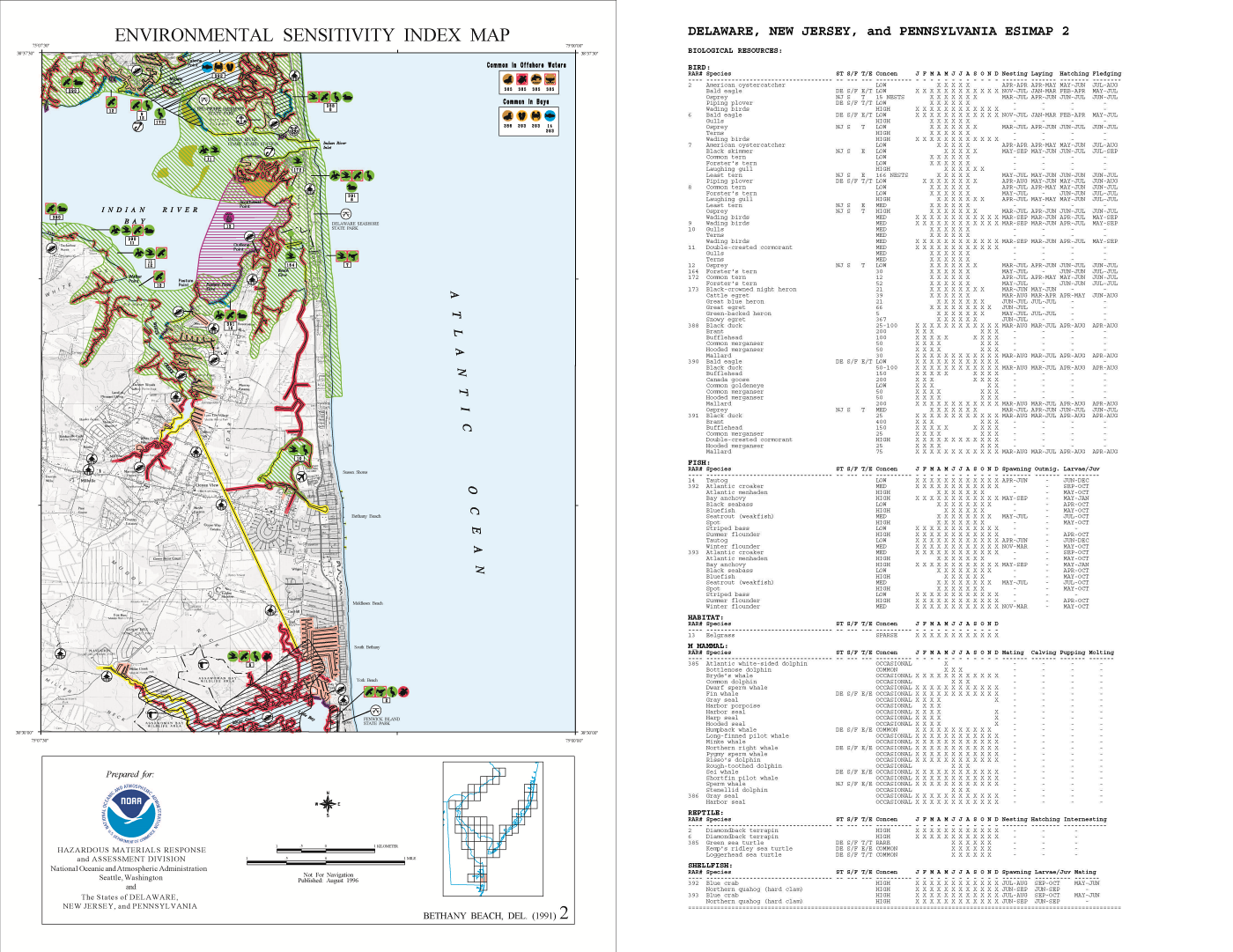
Sample ESI map page, showing Map 10 (Eglin Air Force Base) of the Florida Panhandle ESI maps.
Sample ESI map page
One of the outcomes of last year’s ESI user survey and Workshop were many good presentation suggestions, based on some examples of a simplified ESI map. Workshop participants recommended that we include a locator map and some coordinate reference marks, both of which have been integrated into the current map layout. The participants also had suggestions about the resource summaries, with the majority of them preferring the traditional layout, particularly for the seasonality. Those suggestions were also taken into consideration when designing the “back of the map.”
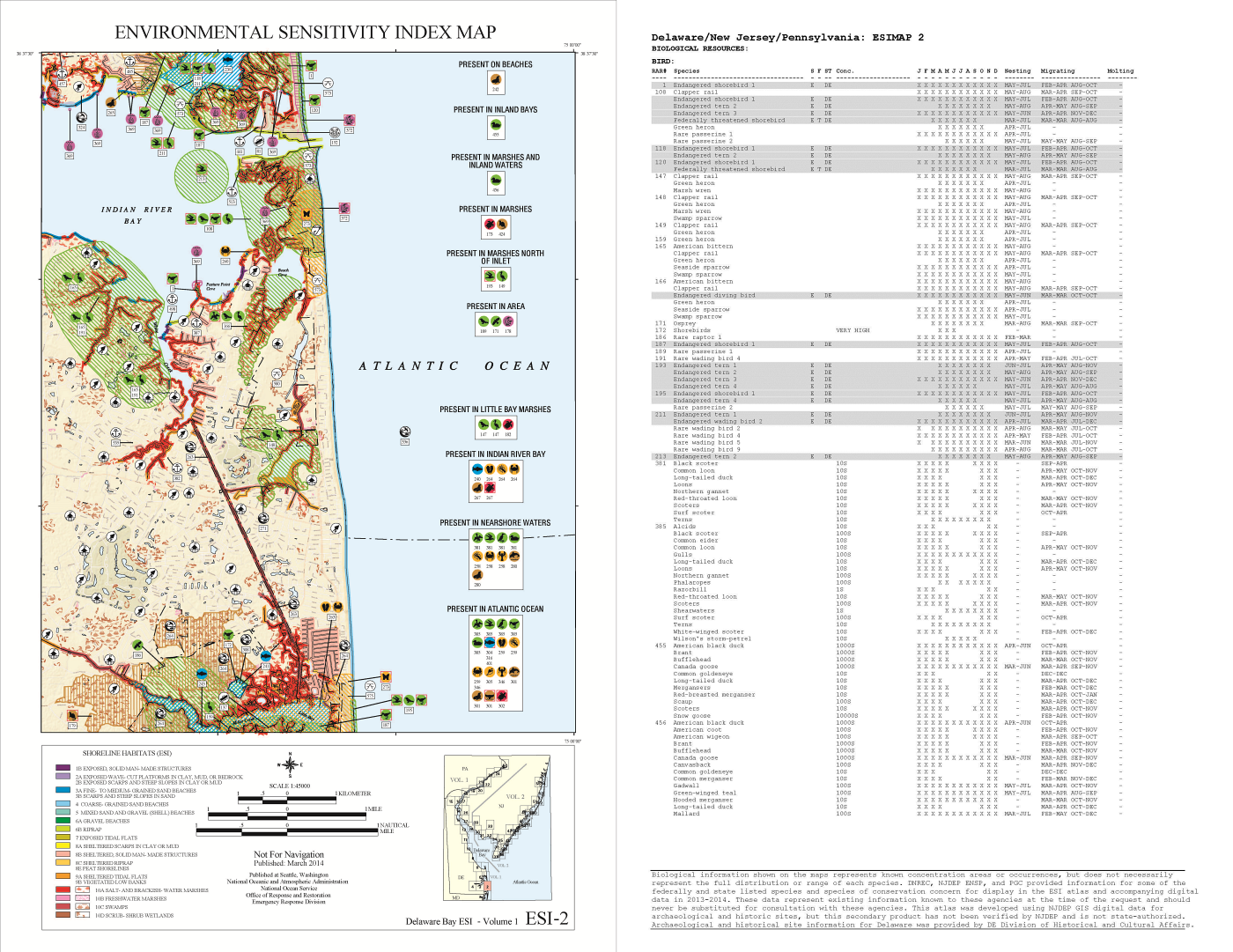
Sample ESI 'back of the map,' showing the seasonal presence of biological resources for Map 10 (Eglin Air Force Base) of the Florida Panhandle ESI maps.
Sample of biology summary—the “back of the map”
A new feature on these maps is a summary of the shoreline resources. The summary provides the length of shoreline on the map, as well as the length and percentage of each shoreline type. Of course, the length measurements are influenced by the scale of the underlying data, so the numbers may seem larger than what you would expect to see if all the “ins and outs” of the shoreline were ignored. The percentage of each shoreline type present is relatively independent of the mapping scale.
Sample summary of shoreline resources, showing the length of shoreline on the map, as well as the length and percentage of each shoreline type, for Map 10 (Eglin Air Force Base) of the Florida Panhandle ESI maps.
Sample summary of shoreline resources

Next Up

The State of Florida has been hard at work extending the functionality and data content of their Florida Marine Spill Analysis System (FMSAS), in which ESIs play a crucial role. Hopefully, in the not too distant future, they will be willing to post on this blog about some of this work. I will also try to find some time to write up a brief description of the Seasonal Summary/“Maps on the Fly” tool—its functionality and limitations—and how it might work for you!  

Questions: As always, contact the ESI Specialist with questions, comments, or suggestions about ESI maps and data.
Site Themes: 
Node Weight: 
1

Hitting the Road for the South Florida ESI Review

Short title: 
Hitting the Road for the South Florida ESI Review

FEB. 14, 2013 — Before OR&R releases a new Environmental Sensitivity Index (ESI) atlas, it provides a rigorous review and testing of the data. It’s particularly important to review the draft product with key data providers to insure that the resources mapped are as accurate as possible within the ESI product. Biologists at our contract partner, Research Planning, Inc. (RPI), recently conducted a "road trip review" of the ESI data for South Florida. Jen Weaver, a biologist for RPI, provides an overview of that adventure in this guest post.

Chris Boring and I, from RPI, and Richard Knudsen, from Florida Fish and Wildlife Research Institute (FWRI), recently traveled through South Florida to review the draft ESI data for that region. It was a busy week—in 5 days, we drove 1,000 miles and met with state, federal and NGO scientists! The draft product was well-received by all and the comments we received were really helpful. RPI conducted a digital only review for the two draft Florida ESI products (Panhandle and South Florida) with data providers throughout the state. Participants were willing and able to successfully review the draft ESIs in this format without the use of draft hardcopy ESI maps. Among the state and federal agencies and NGOs we consulted, and who provided input or data to the new product, were:

The staff at the NOAA Southeast Fisheries Science Center was particularly excited to see their data used in a new and interesting way. There was interest from our data providers in making this a dynamic product and being able to access the data using a Web service. Just a few more great ideas for the future of ESIs!  

Questions: As always, contact the ESI Specialist with questions, comments, or suggestions about ESI maps and data.

Manatee sampling red mangrove leaves.
Manatee sampling red mangrove leaves. Source: Smithsonian Environmental Research Center (SERC). Photo: John Parker.
Site Themes: 
Node Weight: 
1

Zeroing in on Threatened and Endangered Species

Short title: 
Zeroing in on Threatened and Endangered Species

JANUARY 9, 2013 -- OR&R is happy to announce a new ESI product—the Threatened and Endangered (T&E) Species Geodatabases! The T&E geodatabases comprise a subset of the original ESI data, focusing on the coastal species and habitats that are federally and/or state listed as endangered, threatened, protected, or as a species of concern. The complexity of ESI data can make it difficult for those who use the data intermittently to quickly extract the information they need. These T&E databases will offer a more user-friendly option to access some of the more critical biological information for a region.

The new T&E geodatabases are offered on our ESI Downloads page, but read on to learn more about them.

The T&E data are provided in a personal geodatabase format (.mdb). In addition, a map document (.mxd) and separate layer files are available, which replicate the standard ESI symbology and contain links to the supplemental data tables. Each geodatabase corresponds in coverage to an original ESI atlas and contains individual species layers (feature classes), along with the land/water interface (hydro layer) for geographic reference.

Piping plover Diagonally-hatched region in green, representing birds.
Shortnose sturgeon Diagonally-hatched region in blue, representing fish.
Eastern mud turtle Diagonally-hatched region in red, representing reptiles and/or amphibians.
Seabeach amaranth Horizontally-hatched region in purple, representing plants.

For each atlas, a map document (.mxd) has been created to incorporate all of the T&E species data. These documents, for use in Esri's ArcMap software, use all of the standard ESI colors and hatch patterns. In the example below, you see a map of Great South Bay from the Long Island ESI atlas. Polygons indicate where the piping plover, shortnose sturgeon, eastern mud turtle, and seabeach amaranth occur in June.

Screenshot from the Long Island Sound Threatened and Endangered Species geodatabase, showing some threatened/endangered species found in Great South Bay.
Some T&E species found in Long Island's Great South Bay

The table of contents, shown in the left panel, lists all the T&E species found in the Long Island atlas. At the top of the list, in bold, is the data frame name: Long Island T&E Species – 2009. Because the listing status is dynamic, each map document and data frame name includes the year of the atlas publication. As always, it is important to remember that the ESI data are a "snapshot in time." The publication year is also included in each record of the feature attribute table, as shown below.

Screenshot from the Long Island Sound Threatened and Endangered Species geodatabase, showing feature attribute tables for two of the threatened/endangered species layers.
Sample feature attribute tables for two of the T&E species layers

The feature attribute tables include all of the basic information associated with each polygon, point, or line. The tables include fields for subelement (an ESI grouping of species with similar habitat preferences and feeding styles), common name, genus and species, threatened and endangered status, atlas publication date, concentration, seasonal presence, and life history summaries. There are also "month" fields, to simplify searching for presence of a species in a particular month or season.

Three related tables are available if more information is desired. These are the sources table, the breed_dt table, and the ThreatenedEndangered table. These provide search capability within a species for monthly breeding activities and information about the original data source.

Aside from viewing these data in the "canned" ArcMap T&E documents, they can easily be brought into existing map projects. Layer files are available that include the symbology, as well as links to the three supplementary tables if they are added to the ArcMap data frame. In the near future, these data will also be available within NOAA's online mapping tool, ERMA®, and as a separate map service. These additional products will bring ESI data to many users who lack access to Esri's ArcMap.  

Questions: As always, contact the ESI Specialist with questions, comments, or suggestions about ESI maps and data.

Site Themes: 
Node Weight: 
1

Announcing the New ESI Blog

Short title: 
Announcing the New ESI Blog

UPDATED JAN. 10, 2022 — The ESI blog has been retired; however, archived posts from the blog are still available at the bottom of the OR&R web page, News from the ESI Team.


DEC. 12, 2012 — Participants at the 2012 Environmental Sensitivity Index (ESI) workshop unanimously agreed that ESI users need an easier way to share information and ideas amongst each other. The new ESI blog was designed to serve that purpose.

We envision the blog as a forum where OR&R and its partners can announce the roll-out of new atlases, tools, and ESI products, but more importantly, it will provide a way to hear from all of you. As we found at the workshop, sharing what you are doing with the ESI data can benefit other users, as well as the data producers. Guest bloggers and comments on blog posts will be welcomed and encouraged!

On the topic of the ESI workshop, we want to thank everyone who made our time in Mobile, Ala. such a wonderful success! This includes those who attended and presented at the workshop, those who took the time to complete the pre-workshop survey, and those who helped with the logistics and planning. Thanks to all of you, we were able to improve our insight into the "who's and how's" of the current ESI product and garner valuable ideas of what might improve the ESI experience in the future.

At the workshop, we had a wonderful, amazingly diverse group of people gathered. The 40 participants represented 12 coastal states and two countries. Federal and state governmental agencies, industry, and non-profit organizations were all represented. There were new faces, as well as the faces of a few ESI users who had attended the very first ESI workshop back in 1992. And we were among the first to use the new NOAA Disaster Response Center, which proved to be a wonderful venue for this sort of meeting.

We have been busy updating the ESI workshop Web page. Presentations and notes from the break-out sessions are posted and available for download. Please check it out!

We hope this blog will keep our conversations and ideas flowing and we look forward to broadening our group to those who were unable to join us in Mobile. Watch the blog (and this page) in the near future for the status of the ESI work in progress, announcements of new ESI work for 2013, and a new Threatened and Endangered "ESI" offshoot.  


Questions: As always, contact the ESI Specialist with questions, comments, or suggestions about ESI maps and data.

A group of workshop participants are collected together, while one takes notes.
Site Themes: 
Node Weight: 
1

International Council Agrees to Cooperate on Marine Oil Pollution Issues in the Arctic

Short title: 
International Council Agrees to Cooperate on Marine Oil Pollution Issues in the Arctic

JAN. 18, 2012 — Since 1996, the eight Arctic nations (the U.S., Canada, Iceland, Denmark, Norway, Sweden, Finland and Russia) and NGO representatives have worked through an intergovernmental forum called the Arctic Council to protect the Arctic environment and promote sustainable development. From January 7–9, 2013, technical and legal representatives from the Arctic Council countries met in Ottawa, Canada, to develop operational guidelines for implementation of the "Agreement on Cooperation on Marine Oil Pollution Preparedness and Response in the Arctic."

The U.S. delegation included experts from the U.S. Coast Guard, the oil industry, and NOAA's Office of Response and Restoration. The focus of the agreement is on cooperative response to incidents in international waters of the Arctic where no country has clear jurisdiction, as well as incidents in a country's waters when that country seeks international assistance to augment their national capacity to respond. These operational guidelines will be appended to the international agreement on Arctic oil pollution response finalized in 2012 in Reykjavik, Iceland.

"The future of the Alaskan Arctic almost certainly will see increased development, and along with it, greater chances of oil spills," said Office of Response and Restoration Director Dave Westerholm. "It is imperative that everyone—governments, industry, nonprofit, academic, tribe, and resident—work together to understand the benefits and risks of these activities and make decisions founded on sound science." Learn more about the Office of Response and Restoration's various activities in the Arctic.

An iceberg captured during a mission in 2012 to map areas of the Arctic.
An iceberg captured on camera during a 30-day mission in 2012 to map areas of the Arctic aboard the NOAA Ship Fairweather. (NOAA)
Site Themes: 
Node Weight: 
1
NOAA Tracks Path of Possible Japan Tsunami Dock off Washington Coast

Short title: 
NOAA Tracks Path of Possible Japan Tsunami Dock off Washington Coast

UPDATED JAN. 18, 2013 — The Japanese Consulate has confirmed to NOAA and our partners that the large floating dock that washed ashore in Washington's Olympic National Park in late December is in fact one of three* docks missing from the fishing port of Misawa, Japan, which were swept away during the March 2011 Japan tsunami.

UPDATED JAN. 7, 2013 — The dock remains beached on the Olympic Peninsula of Washington as state responders continue developing a plan to remove the large item.

Washington State Department of Ecology reports: "As a precaution, a tracking buoy is attached to the dock. The buoy transmits its location twice daily via satellite ... A small group of responders was able to reach the dock on Friday, Dec. 21. Working quickly during this month's last daytime low tide, the team thoroughly measured and inspected the dock, collected samples of the marine organisms clinging to it and placed the tracking beacon on it."

DEC. 21, 2012 — For NOAA oceanographers working in pollution response, part of their job is to predict where pollutants (mostly oil) spilled into the ocean will end up.

Sometimes that means they are asked to forecast possible paths, or trajectories, for other objects spotted at sea—such as a large dock recently reported to be floating off the coast of Washington state, approximately 16 nautical miles northwest of Grays Harbor.

We suspect—though we are still waiting for confirmation—that this dock began its oceanic journey in March of 2011 at the Port of Misawa, Japan, following the devastating Tōhoku earthquake and subsequent tsunami. Three* docks were ripped away from this port.

After approximately 15 months at sea, one of the docks turned up on Agate Beach near Newport, Ore., in June 2012. A second dock suspected** to be from Misawa was spotted offshore of the Hawaiian Islands in September. The vast difference in the paths of these three docks is a good illustration of how turbulent ocean currents and winds can scatter widely objects floating at sea.

When this latest dock was spotted on Friday, December 14, we at NOAA were asked to forecast where winds and currents might move the dock over the next few days. The dock is a large, unlit, concrete structure and hence posed a significant hazard to navigation.

Furthermore, with stormy weather and strong onshore winds in the forecast, it seemed likely the dock would end up on the beach. Many beaches along the northern Washington coast are quite remote, varying from sandy or rocky beaches to cliffs dropping right down to the water. Depending on where the dock came ashore, access could prove difficult and might allow possible invasive species hitching a ride on the dock time to spread into local ecosystems. To be better prepared to take action, we needed to know where and when the dock might come ashore so it could be located quickly.

In order to predict the trajectory of an object floating at sea, we require forecasts of winds and ocean currents. Many of you may be familiar with the difficulty involved in predicting the weather. Although weather forecasts are generally reliable for the first few days of a forecast period, a forecast always contains some uncertainty which tends to increase over time. For example, this weekend’s weather forecast is generally more accurate than next weekend’s forecast.

Forecasting ocean currents faces similar difficulties, which may be compounded by a lack of observations. There are few (if any) direct measurements of real-time ocean currents on the Washington coast. In addition, there is further uncertainty about how a floating object such as a large dock will move in response to the currents and winds. For example, an object that is floating high in the water will "feel" the winds more than an object floating lower in the water. While we could estimate this effect for the dock, it adds another source of uncertainty to the mix.

So what can we do with all this uncertainty when "I don't know" is not an acceptable answer? The approach we took was twofold. In addition to providing a "best estimate" trajectory for the dock, in which we considered the wind and currents forecasts as truth, we also ran multiple scenarios in our trajectory model to determine where else the dock possibly could end up. These additional scenarios might use different values approximating how much the dock gets pushed along like a sailboat or they might adjust the wind and current forecasts slightly to see how this affects the projected path of the dock. After running the trajectory model multiple times, we produced a map that indicated the most likely area that the dock would come ashore, but the map also included a larger area of uncertainty around it (an "uncertainty boundary") where the dock might be found if, for example, the currents were stronger than predicted.

Because the dock was not spotted again after the initial report on December 14, our trajectory could only narrow down the search area to an approximately 50 mile stretch of the Washington coast (remember, forecast error grows with time).

However, using the forecast guidance, state, federal, and tribal representatives mobilized search teams, and the dock was located on the afternoon of December 18 by a Coast Guard helicopter aerial survey. The dock had been washed ashore, most likely sometime during the evening before, on a rugged stretch of coastline north of the Hoh River. Access to the region is difficult, but personnel from the National Park Service and Washington State Fish and Wildlife are attempting to reach the dock to sample it for invasive species and to attach a tracking buoy in case it refloats before it can be salvaged.

Here you can see an example animation of our trajectory model GNOME showing a potential path of the dock. Particles are released in the model at the position where the dock was initially sighted. The particles move under the influence of winds and ocean currents. They also spread apart over time; this is simulating the small-scale turbulence in the winds and currents. This particular scenario was run after the dock was stranded and uses observed winds from a nearby weather station (wind direction and strength is shown by the arrow on the upper right) and a northward coastal current of approximately 1 knot.

Download the video file of the dock's projected trajectory. [.MP4, 156 KB]

*[UPDATE 4/5/2013: This story originally stated that four docks were missing from Misawa, Japan and that "one of the four turned up several weeks later on an island south of Misawa." We now know only three docks were swept from Misawa in the 2011 tsunami, and none were found on a Japanese island.]

**The dock near Hawaii has not been confirmed by the Japanese Consulate as being from Misawa.

Dock washed up on rocky coast of Washington state.
The dock washed up on the rocky northern coast of Washington state, as viewed from a U.S. Coast Guard helicopter on December 18, 2012. (U.S. Coast Guard)
Map of Washington coast showing possible and actual area of the dock location.
This map of the northern Washington coast shows an example output from the GNOME model for the predicted "best estimate" area (red ellipse) and uncertainty boundary (blue ellipse). The location where the dock was found is shown by the black arrow. (NOAA)
Site Themes: 
Node Weight: 
6

A Trip to the Arctic, Where Shrinking Ice Is Creating Bigger Concerns

Short title: 
A Trip to the Arctic, Where Shrinking Ice Is Creating Bigger Concerns

DEC. 3, 2012 — In early November, several Office of Response and Restoration staff returned to the Arctic for a workshop, this time to the northern hub of Barrow, Alaska.

They came to Barrow with the same intentions as an earlier visit to the Arctic and the city of Kotzebue, Alaska: to discuss oil spill response and restoration issues with the residents of the North Slope Borough.

The Arctic environment is changing rapidly, and the retreat of sea ice in the Arctic Ocean opens new doors for human activity in the region by creating new paths to places previously inaccessible. The all-but-certain increases in ship traffic and offshore oil and gas exploration are setting up a situation where the likelihood of oil spills increases drastically.

The goals of this two-day workshop in the Arctic revolved around community involvement in responding to oil spills and in assessing and restoring resulting damages to natural resources. The workshop also included discussions about how to integrate local community and traditional knowledge into our new Arctic planning and response tool, the Environmental Response Management Application (Arctic ERMA®).

Most importantly, the workshop was an opportunity to enhance relationships between local communities and government agencies.

During the course of the meeting, community members from Barrow expressed their concerns about oil spill response capabilities and how a spill would affect their subsistence lifestyle. It was humbling to hear whaling captains and other residents speak about the remarkably unique natural resources of the Arctic.

During meeting breaks they spoke with several residents who commented on a video playing in the lobby of the meeting center. The video showed numerous local walrus and whale hunts. The residents pointed out features of the ice and how they always had to be prepared at a moment’s notice to deal with the changing ice conditions.

How can we restore environments injured by spilled oil in an amazing setting like this—vast, remote, and mostly undeveloped? While there are no easy answers, we must work together now so we are better prepared if an oil spill occurs and we need to restore the environment.

For NOAA and other government personnel to figure out how much an oil spill has hurt Arctic marine environments and then fix them, we will require the help of local residents who hold generations of knowledge about the landscape. Workshops like these can be an introduction to each other, but we really look forward to sustaining these relationships.

Want to hear more about the challenge of Arctic oil spill response and restoration from the perspectives of Arctic residents? Recently a workshop report from our spring meeting in Kotzebue [PDF] has been released.

Staff from our office also just returned from Kotzebue where they attended a meeting about a new project to map subsistence use of natural resources (e.g., hunting, fishing, etc.) in the Northwest Arctic Borough.

Barrow, Alaska, bowhead whale bone monument to lost sailors.
In Barrow, Alaska, stands a monument constructed of bowhead whale bones and dedicated to lost sailors. (NOAA).
Directional sign in Barrow, Alaska.
A sign in town points out the remoteness of Barrow, Alaska, from the rest of the world. (NOAA)
Node Weight: 
3

OR&R Responds to Aftermath of Hurricane Sandy

Short title: 
OR&R Responds to Aftermath of Hurricane Sandy

OCT. 31, 2012 — The Office of Response and Restoration (OR&R) is actively supporting U.S. Coast Guard efforts with emergency responders and GIS experts on scene in the aftermath of Hurricane Sandy. As water levels recede and access improves after the major East Coast storm, the U.S. Coast Guard is getting more reports of pollution incidents and port damage. OR&R is actively supporting U.S. Coast Guard efforts with emergency responders and GIS experts on scene in New York. Recovery after hurricanes such as Sandy can take a very long time and OR&R will likely be active in the efforts to promote recovery in the months to come.

One of the challenges facing communities after a devastating weather event is information management. ERMA® is a web-based Geographic Information System (GIS) tool that assists both emergency responders and environmental resource managers in dealing with environmental impacts. OR&R scientists are ensuring that Atlantic ERMA is prepared to aid in the effort. See the latest updates on Hurricane Sandy pollution response at IncidentNews. For more information from NOAA on the aftermath of Hurricane Sandy, see NOAA Storm Central 2012.

Vehicles from the NJ National Guard's E Co., 250th Brigade Support Battalion mov
Vehicles from the NJ National Guard's E Co., 250th Brigade Support Battalion move through the streets of Long Beach Island on their way to assist stranded residents. (New Jersey National Guard)
This ERMA screen shot shows Hurricane Sandy's approach over the East Coast on Oc
This ERMA screen shot shows Hurricane Sandy's approach over the East Coast on October 29, 2012.
Node Weight: 
1

Hurricane Sandy Hits the East Coast, NOAA Response Staff at the Ready

Short title: 
Hurricane Sandy East Coast

OCT. 29, 2012 — With Hurricane Sandy focused squarely on the Mid Atlantic and New England, responders are watching closely and standing by to assist with the recovery efforts. These initial recovery efforts will focus on saving lives and restoring essential services, such as power and transportation. However, as was the case during Hurricane Isaac, the hurricane winds and flood waters are also expected to cause wide-spread environmental pollution from damaged coastal industries, ruptured petroleum storage tanks, sunken and stranded vessels, and other sources of pollution.

NOAA’s Scientific Support Coordinators and other responders from the Office of Response and Restoration are on-standby and in communication with their counterparts at the U.S. Coast Guard and Environmental Protection Agency to address these challenges after the storm passes. Get Hurricane Sandy updates at the National Hurricane Center and see real-time tide gauges from the National Ocean Service.

Kitty Hawk, North Carolina, Hurricane Sandy on the morning of October 29, 2012.
Storm surge at Kitty Hawk, North Carolina, during Hurricane Sandy on the morning of October 29, 2012. (North Carolina Department of Transportation)
Site Themes: 
Node Weight: 
1
How Does High-pressure, Hot-water Washing Clean up Spilled Oil?

Short title: 
How Does High-pressure, Hot-water Washing Clean up Spilled Oil?

High-pressure, hot-water washing of shorelines is often a viable method for removing stranded oil from hard surfaces, like large rocks and seawalls. However, while effective, it can directly and indirectly injure and kill plants and animals in the treated zone, both in the short-term and long-term.

When used incorrectly, high pressure water streams may drive oil into the beach sediments where oil may become trapped or further contaminate clean areas. Washing with high pressure may drive oil from the water surface down into the water column, dispersing or emulsifying the oil, which could have additional environmental effects and require additional recovery methods. In addition, using high pressure or large volumes of water can wash away fine sand and silt from shorelines and disrupt the structure of the beach.

Because of these considerations, we tend to be very cautious about the situations and habitats in which we recommend using high-pressure, hot-water washing. Slightly modifying this technique in a number of ways may remove the oil just as well while also minimizing possible injuries from response activities. For example, you can lower the water pressure, use a broad water fan or flow rather than a jet nozzle, or flush the area with warm or ambient temperature water.

Washing techniques, such as high-pressure, hot-water washing, should normally be combined with an effort to contain and collect the mobilized oil, or else it could wash up someplace else along the shoreline. The area being treated must first be contained with boom appropriate for the habitat and sea conditions.

Nearly all oils float on the water (although exceptions do exist), so the methods people use to collect the oil generally focus on removing the layer of oil from the water. How that layer is removed varies—but usually, when oil is washed off a contaminated beach, it is skimmed from the sea surface with special boats or oil skimmers. Cleanup workers also may use special sorbent booms that oil sticks to. These booms can then be collected and recycled or discarded.

Spill Containment Methods: Learn about how sensitive locations can be protected from an advancing oil slick with various kinds of equipment and tactics during an oil spill response.
Lessons Learned From the Exxon Valdez Spill: OR&R's goal is to use science to better understand physical and biological recovery after an oil spill like the Exxon Valdez, and then apply the lessons in future spill responses. This includes the use of hot-water washing on intertidal coastlines during the Exxon Valdez spill.
Has Prince William Sound Recovered From the Spill? Following the Exxon Valdez spill, the NOAA monitoring program in Prince William Sound indicated that oiled and hot-water washed sites initially suffered more severe declines in population abundance than oiled and not-washed sites.
Job Aids for Spill Response: Learn more about the job aids that OR&R has created to help oil spill responders complete their response tasks.
EPA's Oil Spill Response Techniques: The U.S. Environmental Protection Agency lists more information about response methods used during oil spills, including mechanical, chemical, and biological means.
ITOPF's Clean-Up and Response: The International Tanker Owners Pollution Federation offers detailed descriptions of the oil spill cleanup and response process, ranging from aerial observation of spills to the ultimate disposal of collected oil and oiled debris.

Pressure cleaning intertidal rocks in Prince William Sound, Alaska.
Pressure cleaning intertidal rocks in Prince William Sound, Alaska, in the wake of the Exxon Valdez oil spill in March 1989. (Exxon Valdez Oil Spill Trustee Council)
Node Weight: 
6

A Few Pioneering Species of Sea Life Arrive with Japan Tsunami Marine Debris

Short title: 
A Few Pioneering Species of Sea Life Arrive with Japan Tsunami Marine Debris
A few seaweeds, snails, oysters, and other marine life are hitching rides on debris items from the 2011 Japan tsunami which are now washing up in the U.S. This influx of sea creatures aboard tsunami marine debris is also bringing concerns that some of these foreign species may become invasive, possibly threatening marine life and communities here in the United States. For example, more than 90 different species [PDF] managed to make the journey (or hitchhike along the way) aboard a single item from Japan—the 66-foot-long dock which washed up near Newport, Ore., and came coated in marine life. Of those 90+ species, eight have been identified as showing up outside the range where they normally live. This includes a species of Asian kelp known as wakame (Undaria pinnatifida). While wakame is a tasty ingredient in many traditional soups and salads in Japan, the International Union for Conservation of Nature's (IUCN) Global Invasive Species Database also has pegged it as one of the world’s 100 worst invasive species. If it were to become established along the Oregon or Washington coast, wakame could balloon into huge kelp beds that out-compete native kelp and seaweeds and could also become a nuisance as they attach to ships and other marine infrastructure. The northern Pacific seastar (Asterias amurensis) and Japanese shore crab (Hemigraspus sanguineus) are two other known invasive species that arrived on the dock in Oregon in June 2012. Fortunately for Oregon's local marine life, two days after the dock's arrival, the state had workers using shovels and rakes to scrape off invasive species and put them in a deep and sandy resting place, eight feet below the beach’s surface. They then sterilized anything that remained on the dock with a blowtorch. However, the majority of the species identified on the dock are non-invasive seaweeds and polychaete worms. In fact, most of the species arriving on marine debris are not invasive—even if they are hitchhikers. This was the case at Cape Disappointment, Wash., when a small Japanese fishing boat (with a confirmed connection to the tsunami) washed up covered in gooseneck barnacles (order Pedunculata). While unusual-looking, these barnacles are not invasive and have a fascinating historic myth purporting that barnacle geese developed from gooseneck barnacles because they had similar colors and shapes.
Small boat on beach covered in barnacles.
This approximately 20-foot boat washed ashore at Cape Disappointment State Park in Washington as a result of the March 2011 Japan tsunami. It came covered in non-invasive gooseneck barnacles, which are common in the open ocean. (NOAA)
During a recent two-day regional workshop at Portland State University in Oregon, NOAA examined this issue of marine life latching onto and growing on marine debris (a phenomenon known as "biofouling"). Approximately 80 aquatic invasive species experts from federal (U.S. and Canada), tribal, and state government agencies from the West Coast; academic institutions; and non-governmental organizations began developing a regional, science-based approach to biofouling and Japan tsunami marine debris. How—and who—is best suited to respond to the potential introduction of aquatic invasive species on tsunami debris? How should we communicate with the public about the possible threats these aquatic newcomers may pose? The team is working on finalizing a framework and regional protocols "to identify, detect, and respond effectively and rapidly to marine debris with invasive species" [PDF]. If you are in Oregon and find a piece of marine debris which is hosting marine organisms, take a photo of it and send a detailed description to beach.debris@state.or.us. The state of Oregon has more information about what to do [PDF] and recommends to "never move debris with organisms on it to other bodies of water—an aquarium, pond or estuary. It increases the risk that invasive species will spread." For those in Washington, the state recommends that "if you find an object you suspect has invasive species, call 1-855-WACOAST (1-855-922-6278) and press '3' to leave a message for state authorities. Be sure to include as much information about the object's location as possible." If you are in Alaska, California, or Hawaii and find marine debris that has living organisms attached, the Aquatic Nuisance Species (ANS) Task Force offers the following instructions:
  • Remove the item from the water and place on dry land (above the high tide line) so that any organisms living on it will die and not be returned to the ocean. Never move debris with organisms on it to other bodies of water—an aquarium, pond or estuary. It increases the risk that invasive species will spread.
  • Take a photo, if possible, and send photo along with details (location, county, date found, description of item) to DisasterDebris@noaa.gov.
  • This information will be shared with the marine debris response team and invasive species experts to determine what action needs to be taken. If we are notified that dock- or pier-sized structures wash ashore, a science-based team of experts may be deployed to the site for immediate evaluation."
Workers scrape marine life off the Japanese dock that washed up in Oregon.
Workers scrape marine life off the Japanese dock that washed up on Agate Beach in Oregon. Any remaining invasive species were removed with blowtorches. (Oregon Department of Fish and Wildlife)
Dock covered in marine life.
In June 2012 a dock from Japan washed up on Oregon's Agate Beach in Newport. It had a thick layer of living organisms on it. (Oregon Department of Fish and Wildlife
Site Themes: 
Node Weight: 
1
How Much Would it Cost to Clean up the Pacific Garbage Patches?

Short title: 
How Much Would it Cost to Clean up the Pacific Garbage Patches?

Why Can't We Clean it up?

So, why can't we go out and clean up this area? Unfortunately, there are many factors that must be taken into account. Two major factors are that these areas of concentrated marine debris move and change throughout the year and that many of these areas also harbor abundant sea life, much of which is microscopic.

How Much Would it Cost to Clean it up?

Even with all of that in mind, let's perform a rough estimate on the cost of a hypothetical cleanup: Suppose we were to attempt to clean up less than 1% of the North Pacific Ocean (a 3-degree swath between 30° and 35°N and 150° to 180°W), which would be approximately 1,000,000 km2. Assume we hired a boat with an 18 ft (5.5 m) beam and surveyed the area within 100 m off of each side of the ship. If the ship traveled at 11 knots (20 km/hour), and surveyed during daylight hours (approximately 10 hours a day), it would take 67 ships one year to cover that area! At a cost of $5,000-20,000 per day, it would cost between $122 million and $489 million for the year. That's a lot of money—and that's only for boat time. It doesn't include equipment or labor costs. Also, keep in mind that not all debris items can be scooped up with a net.

How Do We Fix it?

The ultimate solution to the global problem of marine debris is not in clean up and removal (we can do that every day for the rest of our lives). The solution lies in prevention—stopping marine debris at the source. That means preventing trash from getting into our oceans and waterways in the first place. For more information on the garbage patch and ways that you can help prevent marine debris, check out the NOAA Marine Debris Program website.

Derelict fishing net floating in the open ocean.
Derelict fishing nets are frequently encountered marine debris items and cannot easily be scooped up with net. (NOAA Fisheries Observer Program)
Site Themes: 
Node Weight: 
4

Pages

Subscribe to response.restoration.noaa.gov RSS