Back to top

Little Sand Island Back in Business for Burn Testing

Short title: 
Little Sand Island Back in Business for Burn Testing

A little background on Little Sand Island

The Joint Maritime Test Facility (JMTF) in Mobile, Alabama, is a partnership between the Coast Guard Research and Development Center and the U.S. Navy’s Naval Research Laboratories. It is the only national federal testing facility for maritime fire protection research and includes the ex-USS Shadwell. Little Sand Island also has a refurbished test tank for large-scale oil burn testing and research. Damaged during Hurricane Katrina in 2005, the facility figured prominently in past burn research and was recently resurrected with funding from Bureau of Safety and Environmental Enforcement (BSEE). The initial series of burn testing at the facility in the late ‘90s led to many advances in burn science, including the establishment of standards on fire resistant booms. Renewed interest of in situ burning (ISB) research has resulted in part from lessons learned from the Deepwater Horizon oil spill in 2010. In situ burning was employed extensively during the spill and many viewed its role as critical in the overall spill response. Approximately 400 safe and effective controlled burns were conducted during the Deepwater Horizon spill, removing an estimated 220,000 to 310,000 barrels (29,700 to 41,800 tons) of oil from the water. According to the Oil Budget Calculator report provided to the National Incident Command in November 2010, approximately 50,000 to 70,000 barrels were burned in one day alone.

'You don’t need a weather man to know which way the wind blows'

But it certainly helps if you want to know which way it is going to blow tomorrow when you are planning a burn. One of the key requirements for burning at the Little Sand Island facility is to ensure that smoke from the burn does not carry over the urban western side of the river, or north over the interstate where it could obscure visibility for motorists. When the newly refurbished facility had its first test burn in November 2015, having support from the National Weather Service in Mobile during the planning and operational phases was important in determining when conditions on the island were favorable for burning. Another benefit of planning a burn at a test facility is that other support conducted during an actual burn can also be planned. That was exactly the approach in November as members of the USCG Gulf Strike Team used the opportunity to deploy Special Monitoring of Applied Response Technologies, air monitoring equipment, at the facility. Although not a primary objective of the testing, we were able to use the opportunity to deploy the Strike Team as part of a practical exercise. Having the opportunity to plan and deploy the equipment in a realistic field setting and assessing actual results from a burn of a known quantity of oil was very beneficial both for the Strike Team and folks from the facility.

Latest research on the horizon

Now that the facility burn pan has had the ‘tires kicked’ so to speak and is ready for use, a number of research projects are planned and underway. USCG Research and Development is currently working with BSEE on two additional ISB research projects which will be conducted in part on Little Sand Island. The most recent testing included initial evaluation of an aggregate compound made from pine saw dust and a fatty acid binding agent. This material is designed to help burn oil in layer thickness ranges that are otherwise too thin to sustain a burn. Additional testing at the facility is scheduled for this spring. Hopefully, I will have the opportunity to join in as the testing continues. Adam Davis serves as NOAA Scientific Support Coordinator for U.S. Coast Guard District 8 and NOAA’s Gulf of Mexico Disaster Response Center.

Black smoke coming from controlled fire on island.
Initial testing of burn pan at Joint Maritime Test Facility located in Mobile on Little Sand island, November 2015. NOAA
Two men on dock with island in background.
USCG Gulf Strike Team deploying air monitoring equipment, November 2016. Little Sand Island in the background. NOAA
Node Weight: 
14

Gulf of Mexico Oil Spill Data: New Monitoring Updates

Short title: 
Gulf of Mexico Oil Spill Data: New Monitoring Updates
Man on ship with machine about to drop into ocean.
Scientists from Louisiana Universities Marine Consortium deploy a water sensor called a CTD sonde rosette to collect water samples to test for oxygen levels during the 2015 R/V Pelican's shelf wide hypoxia cruise. (LUMCON)
Graphic of coastline and the Gulf Of Mexico.
Ocean Conservancy's gap analysis dataset in ERMA. (NOAA)
Node Weight: 
17

Argo Merchant: The Birth of Modern Oil Spill Response

Short title: 
Argo Merchant: The Birth of Modern Oil Spill Response

The maverick research team

In 1974, as work began on the Alaska pipeline, NOAA scientists and academics realized there were important unanswered questions about oil spills.

“How does oil behave in water, that’s what we wanted to know,” recalled Peter Grose, who was then at NOAA’s Environmental Data Services Center in the District of Columbia. “The Environmental Research Lab in Boulder were looking at impacts from Alaskan drilling. We had the simplest models then of how oil moved with wind and waves. Jerry Galt was the modeler in ERL. …. He was kind of leader of the pack.”

Santa Barbara oil spill research

"What made me stand out at the moment was I was focusing my work on oil trajectories," Galt said. The Boulder group was looking for a way to study oil spills. It was suggested they go to Santa Barbara, where they could observe natural ocean oil seeps. Galt, along with other interested NOAA researchers, formed the first Spilled Oil Response (SOR) team.

“We were sort of mavericks,” Galt said. “This was all sort of unofficial.”

The team set some ground rules for that first trip, Galt said. All equipment had to fit into a suitcase and ocean flyovers would be from a Cessna 172, the most commonly available rent-a-plane and already certified by Federal Aviation Administration to fly with the doors off. That made it easier for the ream to drop dye into the ocean and photograph how it spread.

After a week in Santa Barbara, according to Galt, “We said well, let’s think about this and what we learned, make some notes and get together after Christmas. … Well, we didn’t make Christmas.”

Black and white photo of ship sinking in ocean.
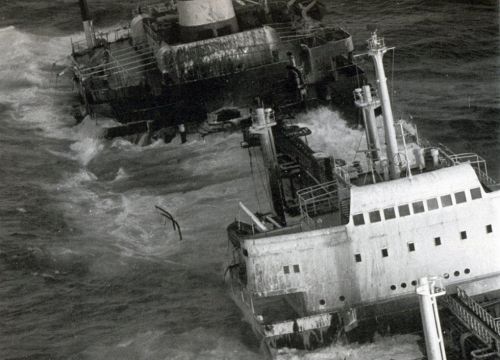
The Argo Merchant was carrying 7.7 million gallons of fuel oil when it went off course and became stuck on Dec. 15, 1976.
Node Weight: 
4

Argo Merchant: The Growth of Scientific Support

Short title: 
Argo Merchant: The Growth of Scientific Support

Dec. 13, 2016 -- Disasters often spark major changes.

The sinking of the Titanic led to increased international requirements for lifesaving equipment, and the Exxon Valdez led to double-hull tankers and a host of other safety improvements. The 1976 grounding of the Argo Merchant led to the creation of the Scientific Support Coordinator (SSC) program that today is the backbone of the marine spill response.

The road to the SSC program started with the nation’s first National Contingency Plan (NCP) in 1968, a result of the massive oil 1967 spill from the tanker Torrey Canyon off the coast of the United Kingdom. There was no plan in place to cope with the more than 37 million gallons of crude oil spilled into the water, causing governmental confusion and massive environmental damage.

To avoid the problems the United Kingdom faced by response officials involved in the Torrey Canyon incident, the United States developed a coordinated approach to cope with potential spills in the nation’s waters. The 1968 plan provided the first comprehensive system of accident reporting, spill containment and cleanup. The plan also established a response headquarters, a national reaction team and regional reaction teams (precursors to the current National Response Team and Regional Response Teams).

Filling a gap in science coordination

But that 1968 NCP had some gaps. One was science coordination. The 1976 Argo Merchant spill threatened one of the most productive fishing grounds in the nation, and raised the immediate attention of the high concentration of federal, state and academic science institutions in the region. And those scientists had no shortage of ideas, predictions, and samples they wanted collected as well as studies they wanted to conduct. However, the United States Coast Guard (USCG), the federal agency tasked with responding to spills, had its hands full with the stricken tanker, growing slicks, and mounting public concerns.

Earlier that year, NOAA and USCG had established the Spilled Oil Research (SOR) team to study the effects of oil and gas exploration in Alaska. This team was a network of coastal geologists, marine biologists, chemists, and oceanographers that could go on-scene at “spills of opportunity” with the goal of investigating oil spill impacts and improve oil spill forecasting models.

The Argo Merchant spill was the first major deployment of the SOR Team. After arriving on scene, the Coast Guard quickly asked the SOR Team to act as its scientific adviser and be an informal liaison with the scientific community concerned with the spill.

The coordination was rocky at first, but within a few months of the spill, the NOAA team compiled and published “The Argo Merchant Oil Spill; a Preliminary Scientific Report.” The 200+ page initial report represented the work of over 100 scientists from numerous agencies and institutions:

  • NOAA
  • NASA
  • USCG
  • U.S. Navy
  • Department of the Interior
  • The Commonwealth of Massachusetts
  • University of Rhode Island
  • Woods Hole Oceanographic Institute
  • Massachusetts Institute of Technology
  • University of Southern California
  • Manomet Bird Observatory
  • Marine Biological Laboratory

Several other synthesis reports were published in the following year.

Black and white photo of ship with crashing waves.
Heavy seas cover the decks of the Argo Merchant while the tanker lies aground near Nantucket Island. Credit: Coast Guard Historian
Node Weight: 
5

Tools and Products: 40 Years of Spill Technology

Short title: 
Tools and Products: 40 Years of Spill Technology

Dec. 15, 2016 -- Earlier stories have described the Argo Merchant oil spill as the catalyst for the creation of the Office of Response and Restoration (OR&R). Its ongoing partnership with the United States Coast Guard (USCG) and other agencies has expanded from scientific support to include the latest developments in spill response technology.

Over the years, OR&R has continued to provide scientific support to the Coast Guard when it responds to oil or chemical spills. On its own, or in partnership with other agencies, OR&R provides software, guidance documents, and training on the scientific aspects of oil and chemical spill response. In addition, OR&R is constantly refining techniques, tools, and training in spill response. 

Expanding OR&R’s Tools and Products

Modeling marine spills: After the Argo Merchant spill, standard methods for assessing marine spills were established, and a series of trajectory and fate modeling programs were created.

In 1979, the On-Scene Spill Model (OSSM) was developed to predict the possible route, or trajectory, a pollutant might follow in, or on, water. In 1999, OSSM became GNOME, General NOAA Operational Modeling Environment program.

The GNOME Online Oceanographic Data Server (GOODS), helps GNOME users access the base maps, ocean currents, and winds needed to run trajectories in their own regions. In addition, OR&R is nearing completion of a multi-year project to produce the next generation of GNOME, which will include integration of ADIOS, a program modeling how different types of oil weather (undergo physical and chemical changes) in the marine environment.

Mapping sensitive shorelines and species: In 1979 Environmental Sensitivity Index (ESI) maps were created after the Ixtoc 1 exploratory oil well blowout. ESIs provide information about coastal shoreline sensitivity, biological species and habitats, and human-use resources. The maps allow spill responders to quickly identify resources at risk before and during an oil spill, in order to establish cleanup methods and priorities.

Providing a Common Operational Picture (COP): Developed after the Deepwater Horizon oil spill in 2010, the online mapping tool ERMA® soon became the COP for the Deepwater Horizon response as well as other spills. ERMA integrates both static and real-time data, such as ESI maps, ship locations, weather, and ocean currents, in a centralized, easy-to-use format for environmental responders and decision makers. ERMA is designed to:

Learn more about the ever-evolving tools and techniques that OR&R uses to respond to environmental spills.

Flat red board and post floating on ocean with ship in background.
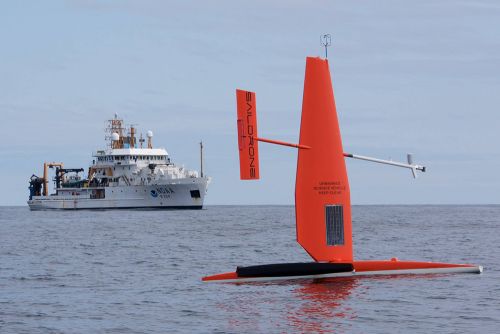
NOAA has deployed the Saildrone to study fisheries in the Bering Sea. (NOAA)
Node Weight: 
3

Argo Merchant: A Woods Hole Scientist's Personal Perspective

Short title: 
Argo Merchant: A Woods Hole Scientist's Personal Perspective

By John Farrington

The scientific community at Woods Hole Oceanographic Institution (WHOI) responded to the oil spill from tanker Argo Merchant on Dec. 15, 1976, out of a sense of public responsibility to assist in minimizing adverse effects on Georges Bank and nearby coastal regions. This was driven by a heightened awareness among scientists and the general public of humankind’s abuse of the environment. The first Earth Day had occurred six years earlier in 1970.

In addition, WHOI wanted to learn more about oil spills in the marine environment. It is important to view the scientific response to this oil spill within a broad framework of other ongoing activities. The United States government, through the Department of the Interior’s Bureau of land Management (BLM), had just initiated a Baselines Study Program in the U. S. Outer Continental Shelf areas in anticipation of potential leasing, exploration and development activities, including the Georges Bank area.

Because of these activities and ongoing concerns about oil tanker and barge accidental spills, the United States Coast Guard and NOAA had developed a contingency plan for assessment responses that included other federal agencies. They also reached out widely to academic scientists and others in the region with possible experience and resources to bring to spill studies.

Several researchers at WHOI, led by Max Blumer, Howard Sanders, and John Teal, had been studying the fate and effects of two No. 2 fuel oil spills in Buzzards Bay, Massachusetts — one in 1969 and another in 1974. I joined these efforts as a postdoc in Blumer’s laboratory in 1971 after conducting research on chronic oil pollution in Narragansett Bay with my advisor, Professor James G. Quinn in the Graduate School of Oceanography (GSO) at the University of Rhode Island (URI). WHOI researchers, along with colleagues at the United States Geological Survey and National Marine Fisheries Service, had been studying the Georges Bank region for years. ERCO, a consulting company funded by the BLM, was spinning up measurements of petroleum hydrocarbons in the Georges Bank ecosystem led by Paul Boehm, a recent graduate of Professor Quinn’s laboratory.

Thus, when phone calls came in from the NOAA folks in the first days after the spill, there were meetings of the aforementioned groups, already familiar with each other’s capabilities, planning what should, and could, be done from a research response. The Coast Guard and NOAA were on the front lines of the spill, innovating frequently for unanticipated situations and keeping all research groups informed of conditions at the scene.

Ship on ocean.
R/V Oceanus responsed to the 1976 Argo Merchant oil spill. Courtesy of the Image Gallery Archive of WHOI
Typed letter authorizing research cruise for Dec. 20, 1976.
Fig. 1. Authorization letter from the Woods Hole Oceanographic Institution director for the Dec. 20, 1976 cruise to the Argo Merchant spill with the ships roster of scientists. Credit: WHOI
Typed letter authorizing research cruise for Dec. 28, 1976.
Fig. 2. Authorization letter from the Woods Hole Oceanographic Institution director for the Dec. 28, 1976 cruise to the Argo Merchant spill with the ships roster of scientists. Credit: WHOI
Node Weight: 
1

Argo Merchant: What if it happened today?

Short title: 
Argo Merchant: What if it happened today?

Improvements in ship construction and navigation

The Argo Merchant’s single-hull design is often cited as a factor to the spill. Tankers now have double hulls that have proven to be safer. Had the Argo Merchant been constructed with double hulls, it may have survived longer on the shoals, allowing more time to refloat or unload the ship. But even with a double hull, survival of the Argo Merchant through December storms in North Atlantic seas would be questionable.

In the same way a car’s air bag is useful only in a crash, a double hull helps only in preventing or reducing spillage once a ship runs aground. Preventing accidents is the key. Fortunately, there have been significant improvements in navigation technology since 1976. The Argo Merchant officers relied on a magnetic compass and celestial navigation during the last voyage, ending up more than 25 miles off course. Even after running aground, the captain was unsure of the ship’s location, hampering the ability of United States Coast Guard (USCG) pilots to find the ship. The owners were not legally required to install the then-new LORAN-C technology that would have given the ship’s position within 500 feet. Additionally, their radio direction finder and gyrocompasses were faulty and their charts out of date.

Today’s navigation technology could have pinpointed the ship within a few feet. Modern electronic charts have real-time updates. Today, the average cell phone has more navigation tools than were available to the officers of the Argo Merchant.

The Oil Pollution Act of 1990

Tankers today are subject to much more stringent inspection. Even in 1976, the Coast Guard had plans to inspect the Argo Merchant in Boston. The ship had a number of known deficiencies, but of course the ship never made it to port.

The geopolitics of the world have also changed in the past 40 years. When the Argo Merchant ran aground 29 miles off Nantucket, it was considered to be in international waters. Congress had just declared the 200-mile Exclusive Economic Zone, but that wouldn’t go into effect for a few months. Under maritime policies of the time, the Coast Guard could rescue the crew, but the commandant had to declare the ship a “grave and imminent danger” before taking salvage and pollution action. And the USCG had only a few million dollars in a pollution fund. There was a strong incentive to let the ship’s owner mount the salvage and response plans.

The Oil Pollution Act of 1990, passed after the Argo Merchant spill, has a dedicated fund, and clear liability for pollution that includes natural resource damages. The law in effect then, the Oil Pollution Act of 1924, provided little help for a ship aground in international waters.

In 1976 a tanker owner had limited liability for spills, and an owner had little incentive to spend money to keep their vessel in top condition (or install the latest navigation electronics). The investigation and litigation after the grounding showed the Argo Merchant was a decrepit and poorly managed ship.

The 1990 act clarified liability for natural resource damages. Forty years ago, there was environmental concern about impacts to the fisheries and wildlife, but no way to hold the spiller responsible for damages. Today, NOAA and other resource agencies can conduct assessments and make claims for restoration, giving ship owners incentive to ensure vessels are well maintained.

Improvements in Response and Preparedness

Organizationally, the United States is in a much stronger position today to respond to spills. The Coast Guard does not have to wait to declare a threat. The ad-hoc science response in 1976 is now codified in the National Contingency Plan. National and regional response teams are in place, along with local area plans. Federal, state, and industry stockpiles of spill response gear are pre-deployed around the country. NOAA has a collection of response tools now, including satellites and models to track spilled oil, and environmental sensitivity index maps of all the coastline.

But some things are the same. Responding to a stranded tanker in rough waters offshore will always be tough. High sea booms are better, and skimmers and pumping systems are improved. Despite the heroic efforts of the USCG and salvage operators in 1976, no oil was recovered from the ship and none of the floating oil was skimmed.

Even with today’s advanced technologies, only a fraction of spilled oil is removed. The best solution, then as now, is to keep ships in good condition, and keep the oil from spilling in the first place. 


Doug Helton is the Regional Operations Supervisor for the West Coast, Alaska, Hawaii, and Great Lakes and also serves as the Incident Operations Coordinator for the National Oceanic and Atmospheric Administration’s (NOAA) Emergency Response Division. The Division provides scientific and technical support to the Coast Guard during oil and chemical spill responses. The Division is based in Seattle, WA, but manages NOAA response efforts nationally.

Large oil slick swirl on ocean with ship.
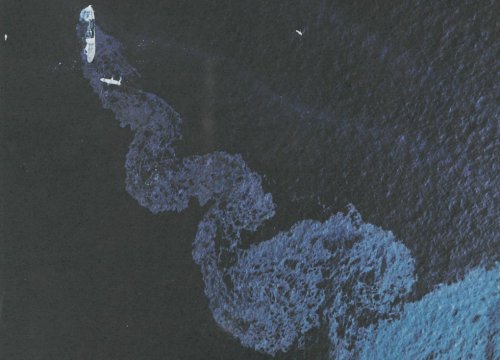
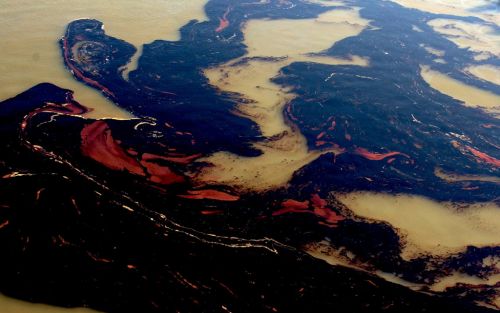
Oil slick from the Argo Merchant, December 1976. (NASA)
Node Weight: 
2

Remediation vs. Restoration: A Tale of Two Terms

Short title: 
Remediation vs. Restoration: A Tale of Two Terms

What is Remediation?

Remediation is the process of stopping or reducing pollution that is threatening the health of people or wildlife. For example, cleaning up sediments - the bottoms of rivers, lakes, marshes, and the ocean - often involves having to physically remove those sediments. One successful method of removing polluted sediments is dredging. Large buckets scoop up contaminated sediment which is then transported by barge to designated areas for safe disposal. The Environmental Protection Agency, along with state agencies, often lead these cleanup efforts. The Office of Response and Restoration (OR&R) scientists advise agencies on the most effective methods to minimize remaining contamination and how to avoid harm to plants and animals during the cleanup. The input of these NOAA scientists helps guide cleanup decisions and promotes faster recovery of wildlife and fish using the area, ultimately benefiting not just the environment but the local economies and communities of these formerly contaminated areas.

What is Restoration?

So if remediation is removal and cleanup of pollution, what is left to do? Plenty. Once the harmful contamination causing pollutants are removed or contained, the next step is to restore the habitat. Restoration is the enhancement, creation, or re-creation of habitats, those places where fish and wildlife live. During this phase, construction projects are often undertaken to return the environment to a healthy functioning ecosystem. Remediation controls the pollution, while restoration efforts, like the construction of wetlands and the planting of trees and vegetation, complete the process of providing healthy habitat for fish and wildlife, and ensuring safe environments for people to live and work in. Remediation and restoration are most effective when they are done together in a coordinated effort. OR&R partners with other federal and state agencies and nonprofit organizations to not only cleanup pollution and restore habitats, but to hold polluters accountable to fund restoration efforts across America. Some of the many contaminated sites where OR&R’s remediation and restoration work is ongoing include: Joe Inslee is a policy/outreach analyst with NOAA’s Assessment and Restoration Division (ARD). His work helps raise the visibility of the critical scientific work ARD conducts after a hazardous release.
Tall grass growing in muddy marsh.
Hazardous substances released over time from a Gulf of Mexico oil refinery required NOAA and its partners to restore intertidal marsh at the Lower Neches Water Management Area in Port Arthur, Texas. Photographed here in 2006. (NOAA)
Mechanical shovel scooping mud from river's edge.
Excavator dredging soft sediment from Menominee River near former 8th Street slip. NOAA
Node Weight: 
9

Emergency Response and Assessment 40 Years after Argo Merchant

Short title: 
Emergency Response and Assessment 40 Years after Argo Merchant

Dec. 12, 2016 -- On Dec. 15, 1976, the tanker Argo Merchant ran aground off the coast of Nantucket Island, Massachusetts.

Despite attempts to refloat the tanker, the Argo Merchant split in half in strong winds and high waves, spilling more than 7.5 million gallons of oil. It was the largest oil spill in United States history at the time.

In responding to the grounding and oil spill, the U. S. Coast Guard (USCG) was overwhelmed with competing, and often conflicting, scientific recommendations. The Coast Guard asked NOAA’s recently formed Spilled Oil Research Team to serve as its scientific adviser and unofficial liaison with the scientific community.

As a result of that collaboration, NOAA formed the Hazardous Material Response Division, now the Emergency Response Division (ERD) of the Office of Response and Restoration (OR&R). Scientific Support Coordinators were strategically located across the country. ERD now represents NOAA as the primary scientific support during oil and hazardous chemical spills as indicated in the National Contingency Plan. ERD also provides annual trainings to prepare government and industry responders and planners for future spills.

In the wake of Argo Merchant, trajectory and fate modeling programs were developed to further assist USCG with spill response. OR&R currently has a suite of preparedness, response and assessment tools for oil spills and chemical spills to support responders and planners. NOAA also created standard methods for damage assessment after oil spills following the Argo Merchant; this activity is now carried out by OR&R’s Assessment and Restoration Division (ARD). Today, ARD provides environmental protection during cleanup and conducts Natural Resource Damage Assessments. ARD is also a partner in Damage Assessment, Remediation and Restoration Program (DARRP) a collaboration among OR&R, NOAA General Counsel, and the National Marine Fisheries Restoration Center.

The sinking of the Argo Merchant was NOAA’s first coordinated oil spill response. Today, the Office of Response and Restoration is a center of expertise in preparing for, responding to, and evaluating threats to coastal environments including oil spills. OR&R is looking back on the 40 years following Argo Merchant this week, highlighting the history of emergency oil spill response and assessment, the advances that have been made and what a response would look like if Argo Merchant ran aground today.

Ship sinking in the ocean.
The Argo Merchant spilling its heavy fuel oil southeast of Nantucket Island, Massachusetts. (NOAA)
Node Weight: 
6

Effects of the Deepwater Horizon Oil Spill on Coastal Salt Marsh Habitat

Short title: 
Effects of the Deepwater Horizon Oil Spill on Coastal Salt Marsh Habitat

Nov. 23, 2016 _ The 2010 explosion on the Deepwater Horizon Macondo oil well drilling platform triggered a massive oil release polluting over 1,300 miles of shoreline along the Gulf of Mexico. The harm from the spill to coastal salt marsh habitat was extensive, and in some instances, permanent. NOAA's Office of Response and Restoration along with other federal and state agencies measured the spill’s effects and created a restoration plan as part of the Natural Resource Damage Assessment (NRDA).

Why are coastal salt marshes important?

A large variety of open water and estuarine fish, birds and invertebrates, use the salt marsh habitats of the northern Gulf of Mexico for refuge and feeding. Marsh plants and nearshore oysters can dampen wave energy, trap and stabilize soil and adjacent sediment, and provide structure and cover for predators and prey. The salt marshes promote rapid growth of juvenile fish and invertebrates of commercial importance.

Animals affected by exposure to oil include:

  • Periwinkle snails (L. Litoraria)
  • Fiddler crabs (Uca spp.)
  • White and brown shrimp (F. aztecus, L. setiferus)
  • Flounder, drum, and forage fish (P.lethostigma, F. grandis, S. ocellatus)
  • Nearshore oysters (C. virginica)

Because birds, fish, crabs, shrimp, oysters, coastal dolphins, and other wildlife depend on the Gulf’s salt marshes, any loss or degradation of this habitat has broad implications for the ecosystem.

Harm to coastal salt marshes

Oil can affect animals and plants through chemical toxicity and physical smothering. More than 687 miles of coastal wetland shoreline were polluted with oil throughout the Gulf during the 87-day spill. The injury assessment team used field and laboratory studies to demonstrate that oil degraded the health of coastal marsh plants and animals, reduced nearshore oyster cover, and increased erosion of oiled marsh edge habitat. The amount of oil along the shoreline (and how long it stayed there) was the most useful indicator of harm to nearshore organisms, while plant stem oiling was the best indicator of loss of vegetation.

Activities to clean up oiled marshes (like flushing with water or raking to remove oil) delayed marsh recovery and exacerbated the loss of oysters, though it was not always possible to separate effects of oiling from effects of response actions. Salt marshes in Louisiana were most intensively polluted by the oil spill. At least 350 miles of coastal marsh shoreline in Louisiana was injured. Even trace oiling of plant stems in Louisiana salt marshes reduced plant cover in the marsh, and affected plant growth, particularly in the marsh edge zone closest to the shoreline. The marsh edge is most productive zone because it provides migrating animals access to flooded marsh surfaces for refuge and foraging. Oil damage to plants and oysters, as well as oil clean-up measures (see graphic), increased the erosion of marsh shorelines between 2010 and 2013. Increased erosion of oiled vegetated shorelines is estimated to have occurred over at least 108 miles of shoreline throughout the Gulf. Marsh recovery is expected to take more than 10 years for long-lived species such as periwinkle, while eroded shoreline has been permanently lost. All data collected as part of the Deepwater Horizon NRDA are available online.

Read the full study “Integrated effects of the Deepwater Horizon Oil Spill on Nearshore Ecosystems” in the scientific journal, Marine Ecology Progress Series. Mary Baker is the OR&R branch chief for the Northwest and Great Lakes.

Oil in marsh vegetation during the 2010 Deepwater Horizon/BP oil spill.
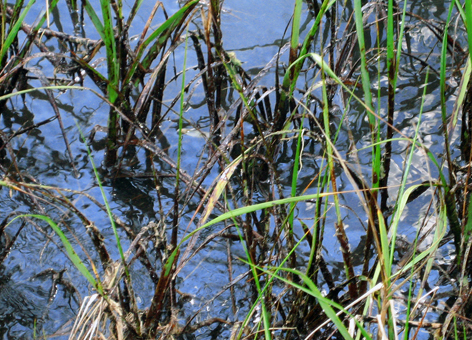
Oil in marsh vegetation during the 2010 Deepwater Horizon/BP oil spill. (NOAA)
Graphic with person raking on drawing of salt marsh layers.
Oil clean-up actions in salt marsh. (NOAA)
Node Weight: 
10

Keeping the Great Lakes’ Freshwater Clean is a Tall Order

Short title: 
Keeping the Great Lakes’ Freshwater Clean is a Tall Order

Nov. 1, 2016 — North America’s Great Lakes contain 6 quadrillion gallons of freshwater within the five lakes of Superior, Michigan, Huron, Erie, and Ontario. With roughly 20 percent of the world’s surface freshwater, the Great Lakes are the world’s largest freshwater system, and contain enough water to cover the entire lower 48 states to a depth of almost 10 feet.

Shared by two countries, eight states, and one province; the Great Lakes’ centralized location, favorable geography, climate, and water rich environment culminate into a natural hub for manufacturing, business, agriculture and tourism, and home to over 40 million people who depend on the lakes for their domestic and industrial water supply.

In addition to their freshwater needs, many of these same economies are equally dependent on petroleum products, which travel to and through the region via a mix of transportation modes. While all environments are sensitive to oil spills, the Great Lakes are especially sensitive due to a number of unique risk factors.

Unique Risk Factors

Freshwater is the most obvious unique risk factor for the Great Lakes and for good reason. Approximately 44 billion gallons of water is withdrawn each day for industrial and domestic use. The first question for every spill in the Great Lakes is location of the closest freshwater intake. Shutting down freshwater intakes can cause widespread economic and political impacts, not normally associated with a spill in the marine environment.

Take for example the 2014 harmful algal bloom event that shut down Toledo, Ohio water intakes for 500,000 residents. That emergency shut down local businesses and universities at a cost of millions for the city and state. This is a very real and unique concern for spills in the Great Lakes and other freshwater environments.

The density of freshwater can make spills in the Great Lakes more challenging as well. Oil usually floats because it is less dense than the water it is floating on. Density is the mass, or weight, of a substance divided by its volume. The density of freshwater is usually about 1 gram per cubic centimeter (g/cc). Ocean saltwater is denser (usually around 1.02 to 1.03 g/cc) because it contains more salt. The higher the salinity of water, the denser it is. Densities of oils generally range from 0.85 g/cc for a very light oil, like gasoline, to 1.04 g/cc for a very, very heavy oil. Most types of oils have densities between about 0.90 and 0.98 g/cc. These oils will float in either fresh or salt water. However, heavy oils, which have a density of 1.01 g/cc, would float in salt water, but sink in the freshwater of the Great Lakes.

Water in the Great Lakes originates from thousands of streams and rivers covering a drainage basin of approximately 201,000 square miles. This water exits the Great Lakes so slowly through the St. Lawrence River that it essentially makes the Great Lakes a closed system. The retention time—the amount of time it takes for lakes to discharge water and pollutants—ranges from 2.6 years for Lake Erie to 191 years for Lake Superior. With no more than one percent of the water in the Great Lakes exiting the system each year, any residual oil spill contaminants have the potential to reside within the lakes for a substantial time.

Ocean waves hitting lighthouse.
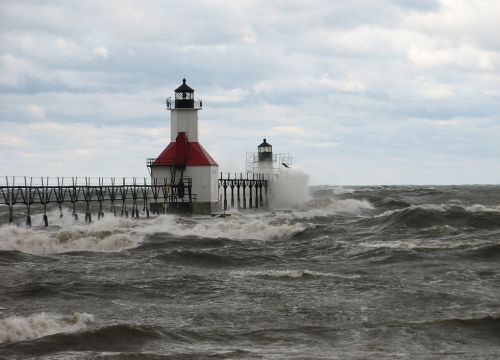
Storm drives high surf on the Great Lakes. (NOAA)
Node Weight: 
7

Washington Sea Grant Launches New Program to Prevent Small Oil Spills that Add Up

Short title: 
Preventing Small Oil Spills that Add Up Big

This is a guest post by Lauren Drakopulos of Washington Sea Grant.

JULY 5, 2016 -- To paraphrase an old saying, "There's no use crying over spilled oil." But many people in Washington worry a lot about oil pollution in Puget Sound and other coastal waters around the state.

What many don't realize is that the biggest source of oil spills to date in Puget Sound isn't tankers and freighters but small recreational and commercial vessels.

Small oil spills from these types of vessels account for 75 percent of the oil spilled in local waters over the last 10 years.

How do these small oil spills happen? A common cause is when oil, along with water, builds up in the bottommost compartment of a boat, known as the bilge, which has a pump to keep rain and seawater from building up. Oil from broken oil lines in the engine area or spilled fuel on deck can get washed down into the bilge and then pumped into surrounding waters.

Taking Charge of Discharges

In the future, however, Washington boaters increasingly will have access to a simple remedy known as the Small Oil Spills Prevention Kit, which consists of a small absorbent pillow, or "bilge sock," that is placed alongside bilge pumps to prevent oily discharges from entering the water. Washington boaters will be seeing and using a lot more of the kits.

The Clean Marina Program, a partnership of the Puget Soundkeeper Alliance, the Northwest Marine Trade Association, and Washington Sea Grant, has worked for 20 years to minimize small vessel spills. But the summer of 2016 marks a change: for the first time the campaigners are targeting private boaters rather than marina managers.

Washington Sea Grant, the Washington Department of Ecology, and Washington's District 13 Coast Guard Auxiliary have launched the Small Spills Prevention Program to provide boaters with the knowledge and tools they need to stop oil pollution at the source. Last year, in a trial run, Washington Sea Grant Boating Program Specialist Aaron Barnett succeeded in distributing 1,000 oil spill prevention kits.

This year that labor is bearing fruit: according to Coast Guard Auxiliary Instructor Mike Brough, more and more boaters are requesting kits after seeing their friends and other boaters use them. As Barnett explains, the success of the program depends on first, getting the kits out to boaters, and second, word of mouth—with boaters educating each other about oil spills.

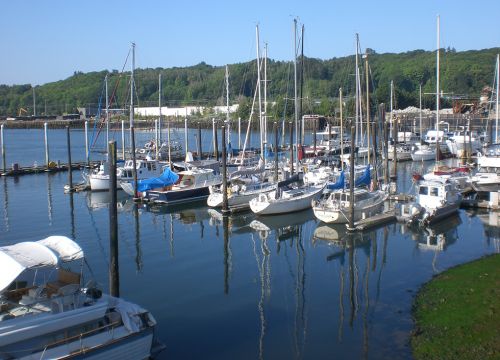
Marina in Seattle with small boats.
Small recreational and commercial vessels account for 75 percent of the oil spilled in waters around Washington's Puget Sound over the last 10 years. (NOAA)
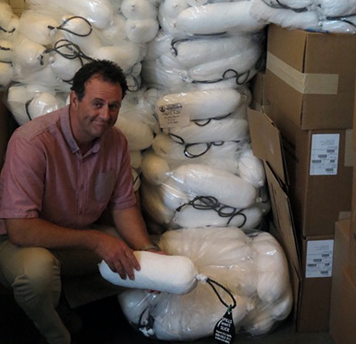
Aaron Barnett holds a bilge sock next to stacks of them.
Washington Sea Grant's Aaron Barnett preparing to distribute small oil spill kits in 2015. (MaryAnn Wagner/Washington Sea Grant)
Node Weight: 
3

In Florida, Rallying Citizen Scientists to Place an Ocean-Sized Problem Under the Microscope

Short title: 
Citizen Scientists Examine Microplastics in Florida Waters
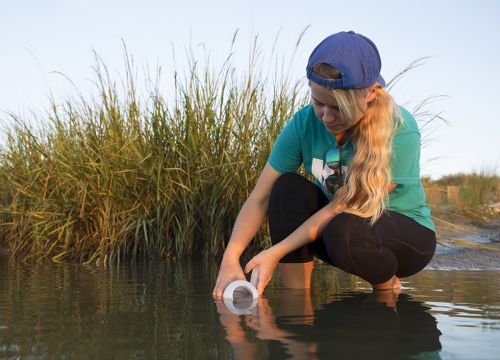
Young woman filling a one liter bottle with water along a marshy beach.
Florida Sea Grant has been teaching volunteers how to sample and examine Florida's coastal waters for microplastics and educating the public on reducing their contribution to microplastic pollution. (Credit: Tyler Jones, University of Florida, Institute of Food and Agricultural Sciences)
Node Weight: 
4

Pages

Subscribe to response.restoration.noaa.gov RSS