Back to top

GNOME Suite for Oil Spill Modeling

Short title: 
Plan Oil Spill Response

The GNOME Suite is a set of modeling tools for predicting the fate and transport of pollutants (such as oil) spilled in water. These modeling tools are used for NOAA’s spill response support and are also publicly available for use by the broader academic, response, and oil spill planning communities.

Node Weight: 
3
Site Themes: 
A large vessel leaks oil into ocean waters.
The disabled vessel, the T/B DBL 152, discharges oil into the Gulf of Mexico in 2005. Image credit: ENTRIX, Inc.

The GNOME (General NOAA Operational Modeling Environment) suite is a set of modeling tools for predicting the fate and transport of pollutants—such as oil—spilled in water. These modeling tools are used for NOAA’s spill response support and are also publicly available for use by the broader academic, response, and oil spill planning communities.

The GNOME suite has a number of components available to users, depending on their application:

  • WebGNOME, a Web-based application that provides a user-friendly interface for setting up, running, and visualizing spill scenarios.
  • PyGNOME, the computational “engine” of GNOME; a stand-alone Python package that includes a command line scripting environment.
  • ADIOS Oil Database, a Web-based interface for accessing physical and chemical information on a wide variety of petroleum products. Oil records can be downloaded and used in spill modeling scenarios.
  • GOODS, a Web-based application to help users access base maps, ocean currents, and winds needed as inputs to spill modeling scenarios.
  • TAP, a contingency planning tool that investigates the probabilities that spilled oil will move and spread in particular ways within a particular area, such as a large bay or inlet.

GNOME Suite: Related Software

Several other stand-alone programs can be used with the GNOME suite for spill planning or response:

  • CAFE Database, a program that estimates the environmental impacts from oil or chemical spills into an aquatic environment.
  • NUCOS, a simple desktop unit converter that includes units unique to oil spill response.

Legacy Desktop Versions

Previous core components of the GNOME suite continue to be maintained. However, active development is no longer occurring on these legacy programs.

  • GNOME—the desktop trajectory modeling tool—that can be used with downloadable Location Files (pre-packaged information about tides and currents for a particular place).
  • ADIOS®, NOAA's stand-alone oil weathering model.
  • ROC, a tool that assesses the general performance of oil spill response systems, such as the mechanical recovery (skimming) of oil from the water, the application of dispersant, and the burning of spilled oil.


Questions: Contact us with questions, comments, or suggestions about GNOME.

Is Marine Debris Spreading Invasive Species?

Short title: 
Is Marine Debris Spreading Invasive Species?

March 2, 2017 - If you ask a gardener what a weed is, the answer is likely to be any plant growing where they don’t want it. Invasive species, be they plant, animal, or insect, are much more harmful than an unwanted plant in a well-tended garden.

Invasive species are interlopers that muscle out natives by out competing them for resources, like food and shelter. Left unchecked, the invaders can lead to the extinction of native plants and animals. In the marine environment, this can result in damaging local economies and fundamental disruptions of coastal and Great Lakes wildlife habits.

Invasive species can colonize a new area via the ballast water of oceangoing ships, intentional and accidental releases of aquaculture species, aquarium specimens or bait, and marine debris.

Growing concern about increasing amounts of marine debris in our oceans has led scientists to research the potential for invasive species to hitch rides on debris and carry them to new areas across the globe. NOAA’s Marine Debris Program has a new report exploring the subject. Read “Marine Debris as a Potential Pathway for Invasive Species” for detailed information.

Plant growing on cement wall.
A close-up of marine life found on a derelict dock from Japan that washed up on Agate Beach in Newport, Oregon. Credit: Oregon State University, Hatfield Marine Science Center
Site Themes: 
Node Weight: 
5

Below Zero: Partnership between the Coast Guard and NOAA

Short title: 
Below Zero: Partnership between the Coast Guard and NOAA

By Lt. Cmdr. Morgan Roper, U.S. Coast Guard

Feb. 28, 2017 -- For more than 200 years, the U.S. Coast Guard and National Oceanic and Atmospheric Administration (NOAA) have partnered together in maritime resiliency, environmental sustainability and scientific research. In fact, a variety of NOAA projects encompassed over 50 percent of Coast Guard Cutter Healy operations for 2016, including a Coast Guard and NOAA collaborative effort to chart the extended continental shelf and survey marine habitats and biodiversity. Today, more than ever in the past, the Coast Guard and NOAA are working together on numerous levels of profession in the U.S. Arctic Region, which happens to be Coast Guard Alaska‘s northern area of responsibility, or AOR. From daily sector operations and district-led full scale exercises to partnering on the national level in workgroups under the Arctic Council, Coast Guard and NOAA have a strong working relationship supporting and representing the U.S. in cold weather operations and Arctic initiatives.

In a recent search and rescue case off the coast of the Pribilof Islands, where the fishing vessel Destination sank suddenly in the frigid seas, NOAA’s National Weather Service (NWS) Regional Operations Center was the Coast Guard’s ‘first call’ to get current weather information in support of search plan development. NOAA and NWS also played a role in setting the stage for the potential cause of the incident by providing sea state information and the dangerous effects of sea spray icing on vessels. For SAR planning and other mission support, NOAA’s NWS Ice Program also works with the Port of Anchorage on a daily basis with regards to ice conditions all along the coastline of Alaska, and provides bi-weekly regional weather briefs for the district and sector command centers; they are part of the ‘team’ when it comes to response planning and preparation. NOAA and the Coast Guard continue to work diligently together to ensure all possible capabilities from the U.S. Government enterprise are available to support homeland security and Arctic domain awareness on a broader, high level position.

On a national level, personnel from Coast Guard and NOAA headquarters partner together as members of the Arctic Council’s Emergency Prevention Preparedness and Response working group. This group addresses various aspects of prevention, preparedness and response to environmental emergencies in the Arctic. The Coast Guard and NOAA jointly play a large role in ensuring operational support and training mechanisms are in place for vital response capacities and capabilities.

The Coast Guard also fully employs the use of NOAA’s Environmental Response Management Application (ERMA®) in the Arctic. ERMA is NOAA’s online mapping tool that integrates both static and real-time data, such as ship locations, weather, and ocean currents, in a common operational picture for environmental responders and decision makers to use during incidents. Also used for full scale exercises, in 2016, the Healy employed ERMA onboard to help provide a centralized display of response assets, weather data and other environmental conditions for the incident response coordinators. In the same exercise, NOAA tested unmanned aerial systems for use with Coast Guard operations in the Arctic. Furthermore, NOAA and the Coast Guard are working together with indigenous communities to learn how ERMA can best be used to protect the natural resources and unique lifestyle of the region. ERMA has been in use by the Coast Guard in other major response events, such as Deepwater Horizon; where it was the primary tool providing Coast Guard and other support agency leadership a real-time picture of on-scene environmental information.

Among a number of future projects, the Coast Guard and NOAA are developing a focused approach on how to best handle the damage of wildlife in the areas of subsistence living in the northern Arctic region of Alaska during and following a spill event. The Coast Guard and NOAA are also collaborating on how to better integrate environmental information and intelligence to proactively support Arctic marine traffic safety as a whole.

The partnership between Coast Guard and NOAA continues to thrive and grow stronger as maritime and environmental conditions, caused by both natural and man-made effects, shift and change over time.

This story was first posted Feb. 17, 2017, on Coast Guard Compass, official blog of the U.S. Coast Guard as part of a series about all things cold weather – USCG missions, operations, and safety guidance. Follow the Coast Guard on Facebook, Twitter and Instagram, and look for more #belowzero stories, images, and tips!

Red and white ship on ocean with ice.
Coast Guard icebreaker Cutter Healy perches next to a shallow melt pond on the ice in the Chukchi Sea, north, of the Arctic Circle July 20, 2016. During Cutter Healy’s first of three missions during their West Arctic Summer Deployment, a team of 46 researchers from the University of Alaska-Anchorage and the National Oceanic and Atmospheric Administration (NOAA) studied the Chukchi Sea ecosystem. U.S. Coast Guard photo by Ensign Brian P. Hagerty/CGC Healy
Man on ship holding mini plane.
National Oceanographic and Atmospheric Administration scientist Kevin Vollbrecht launches a Puma unmanned aerial vehicle from the bow of the Coast Guard Cutter Healy July 11, 2015. The Puma is being tested for flight and search and rescue capabilities. (U.S. Coast Guard photo)
Node Weight: 
9

5 Ways the Coast Guard and NOAA Partner

Short title: 
5 Ways the Coast Guard and NOAA Partner

March 1, 2017 -- How do the Coast Guard and National Oceanic and Atmospheric Administration work together? There are many ways the two government organizations partner to keep the nation’s coasts and waterways safe for maritime commerce, recreational activities, and wildlife. Here are five:

1. It all began with surveyors and smugglers

Actually, it was an effort to suppress smuggling and collect tariffs that prompted President George Washington to create the Coast Guard Revenue Cutter Service [PDF download] in 1790, launching what would become the U.S. Coast Guard known today. It was President Jefferson’s approval of the surveying of the nation’s coasts in 1807 to promote “lives of our seamen, the interest of our merchants and the benefits to revenue,” that created the nation’s first science agency, which evolved into NOAA.

2. Coast Guard responds to spills; we supply the scientific support

The Coast Guard has the primary responsibility for managing oil and chemical spill clean-up activities. NOAA Office of Response and Restoration provides the science-based expertise and support needed to make informed decisions during emergency responses. Scientific Support Coordinators provide response information for each incident that spill’s characteristics, working closely with the Coast Guard’s federal On-Scene Coordinator. The scientific coordinator can offer models that forecast the movement and behavior of spilled oil, evaluation of the risk for resources, and suggest appropriate clean-up actions.

3. Coast Guard and NOAA Marine Debris Program keep waters clear for navigation

The Coast Guard sits on the Interagency Marine Debris Coordinating Committee, of which NOAA is the chair. The committee is a multi-agency body responsible for streamlining the federal government’s efforts to address marine debris. In some circumstances, the Coast Guard helps to locate reported marine debris or address larger items that are hazardous to navigation. For instance, in certain circumstances, the Coast Guard may destroy or sink a hazard to navigation at sea, as was the case with a Japanese vessel in the Gulf of Alaska in March 2011.

4. NOAA and Coast Guard train for oil spills in the Arctic

As Arctic ice contracts, shipping within and across the Arctic, oil and gas exploration, and tourism likely will increase, as will fishing, if fisheries continue migrating north to cooler waters. With more oil-powered activity in the Arctic and potentially out-of-date nautical charts, the region has an increased risk of oil spills. Although the Arctic may have "ice-free" summers, it will remain a difficult place to respond to spills, still facing conditions such as low visibility, mobilized icebergs, and extreme cold. The Office of Response and Restoration typically participates in oil spill response exercises with the Coast Guard.

5. It’s not just spills we partner on, sometimes it’s about birds

The Coast Guard as well as state and local agencies and organizations have been working to address potential pollution threats from a number of abandoned and derelict boats in the Florida. Vessels like these often still have oils and other hazardous materials on board, which can leak into the surrounding waters, posing a threat to public and environmental health and safety. In 2016, the Coast Guard called Scientific Support Coordinator Adam Davis with an unusual complication in their efforts: A pair of osprey had taken up residence on one of these abandoned vessels. The Coast Guard needed to know what kind of impacts might result from assessing the vessel's pollution potential and what might be involved in potentially moving the osprey nest, or the vessel, if needed. Davis was able to assist in keeping the project moving forward and the vessel was eventually removed from the Florida Panhandle.

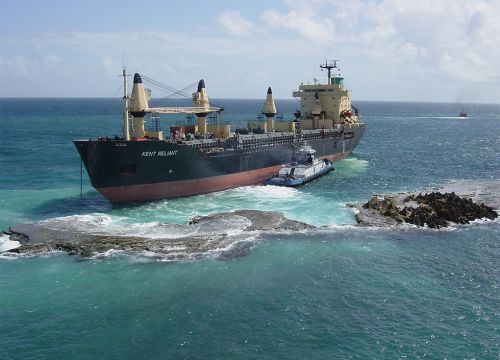
Large ship on reef with small boat beside it.
On September 18, 2003, M/V Kent Reliant grounded at the entrance to San Juan Harbor, Puerto Rico. USCG and NOAA’s Office of Response and Restoration responded to the incident. (NOAA)
Node Weight: 
8

How the Modern Day Shipping Container Changed the World

Short title: 
How the Modern Day Shipping Container Changed the World

Feb. 23, 2017 -- For thousands of years, methods of shipping products across the seas and oceans remained essentially the same. Products came to port in wooden crates, sacks, and kegs by wagons or, later, by trucks and trains. Ships were then loaded and unloaded crate by crate, sack by sack, and keg by keg. It was a time-consuming and labor-intensive process. Theft was a perpetual problem. Often a ship spent more time in ports, loading and unloading, than it would spend at sea.

The advent of World War II brought new logistical challenges in supplying millions of U.S and allied troops overseas and innovative approaches were needed to efficiently supply the war effort. During this period, the introduction of small, standardized boxes full of war material increased the American convoys' capacity to deliver wartime necessities.

After the war, a trucking entrepreneur named Malcom McLean bought a shipping company and, in 1956, started the practice of transporting product-filled truck trailers that were lifted directly from truck to ship. Whole containers, not just small parcels, now moved efficiently onto ships. This transportation process, called intermodalism, allowed products to be shipped around the world quickly, cheaply, and efficiently by using cargo containers that more easily fit on trucks, trains, and ships.

The arrival of containers and intermodalism revolutionized the shipping industry. Containers could be efficiently stacked, allowing more and more goods transported across the seas. Labor costs dropped dramatically and, since containers were sealed, theft declined. Over time, the marine transportation industry and the size of ships, trucks, trains, docks, and ports increased and expanded to handle the growing use of containers. The impact on global commerce was enormous, leading to a boom in international trade due to lower transportation and handling costs.

As container ships continue to grow in size and ports grow more congested by the year, NOAA plays an increasingly critical role in U.S. marine transportation. NOAA services and products improve the efficiency of ports and harbors, promote safety, and help to ensure the protection of coastal marine resources. Today, NOAA's PORTS® system improves the safety and capability of maritime commerce through the integration of real-time environmental observations, forecasts, and other geospatial information. NOAA's Office of Coast Survey supplies electronic navigation charts, coast pilots, and navigation response teams to meet the increasing challenges associated with marine navigation. NOAA's National Weather Service provides up-to-date meteorological and oceanographic data. And, when there are spills, NOAA’s Office of Response and Restoration provides the science-based expertise and support needed to make informed decisions during emergency responses.

Read about some of our work in maritime emergency response:

On the Hunt for Shipping Containers Lost off California Coast

How Much Oil Is on That Ship?

University of Washington Helps ITOPF and NOAA Analyze Emerging Risks in Marine Transportation

Large ships with cargo containers.
As container ships continue to grow in size and ports grow more congested by the year, NOAA plays an increasingly critical role in U.S. marine transportation. NOAA services and products improve the efficiency of ports and harbors, promote safety, and help to ensure the protection of coastal marine resources. (NOAA)
Node Weight: 
9

Rescuing Oiled Birds, Leave it to the Experts

Short title: 
Rescuing Oiled Birds, Leave it to the Experts

Feb. 15, 2017 - Birds, especially those that spend most of their time on the water, are vulnerable to the effects of oiling. Oil can clog feathers and cause them to mat, separate, or lose their natural waterproofing. Birds coated with oil may not be able to fly, may get sick from accidentally ingesting oil while trying to clean their feathers, or may drown from reduced buoyancy. Many people love birds, and it’s normal to want to help during an oil spill – especially when you’re seeing photos of impacted birds on the news – but it’s a myth that just a bit of dish soap can restore an oiled bird to health. So, before you hit the beach with your scrub brush and your handy-dandy dish soap, read these answers to some frequently asked questions on how to help oiled birds.

What should I do if I see an oiled bird? If there is an established oiled wildlife reporting hotline available, then please, call it as soon as possible. If not, then call your local U.S. Fish and Wildlife Office.

The bird seemed to be in distress, wouldn’t it be faster for me and my dog to chase it down and transport it in my trunk? No - birds are wild animals. It’s important to let a trained professional with the appropriate safety gear (think safety goggles, gloves, etc.) handle bird removal. Plus, depending on the species, a permit may be needed to touch or handle it.

I’m actually less concerned with own my safety than with helping this bird. Is there a problem with the dog chase and trunk transport method? Picture this: You reach into your fridge for a snack and, when you pull out your arm, it’s covered in a gooey, smelly substance. The next thing you know, aliens chase you, grab you, and take you away in the trunk of their spaceship. How would you feel? Confused? Terrified? Exactly. Please, let a trained professional handle the bird rescue. I saw an oiled bird, but I think it’s dead.

Is it still worth calling it in? Yes, other animals may see that bird as an easy meal and become ill from eating it, so it’s important the oiled bird to be removed by trained workers.

It seems like it would be faster for me to just grab the dead, oiled bird and bring it in – can I do that? No, not only is a permit needed to handle the carcass, it is considered legal evidence and needs to be handled properly, and an appropriate chain of custody needs to be maintained.

Are there ever opportunities to volunteer to help clean birds? Yes – Under some circumstances, the response officials may issue a public service announcement to request pre-trained volunteer assistance. A bird rehabilitation center is like a hospital emergency room, so please understand that it's critical for any volunteers to have the appropriate training.

Is it true that liquid dish soap is used to clean oiled birds? Yes it is. Specifically, Dawn dish soap (not antibacterial) has been approved for use in cleaning oiled birds. Read more articles on myths and misconceptions in spill response: Debunking the Myths about Garbage Patches Clean up spilled oil at all costs? Not always Restoration: The Other Part of Spill Response

Allison O'Brien is the Department of the Interior's Regional Environmental Officer for the Pacific Northwest Region, covering Oregon, Washington, and Idaho. For more information, please visit https://www.doi.gov/oepc/regional-offices/portland.

Yellow gloved hands holding bird's head with suds.
Oiled Northern Gannet is cleaned at the Theodore Oiled Wildlife Rehabilitation Center. (FWS)
Two people hosing a bird in a sink.
An oiled gannet being cleaned at the Theodore Oiled Wildlife Rehabilitation Center. (FWS)
Node Weight: 
7

Restoration: The Other Part of Spill Response

Short title: 
Restoration: The Other Part of Spill Response
Grass at waterway with bridge at sunset.
From landfill to vibrant tidal marsh, the wetland restoration at Lincoln Park in Jersey City, New Jersey, was funded from multiple oil spill settlements and the American Recovery and Reinvestment Act. This project restored a significant area of coastal wetlands in New York-New Jersey harbor's Arthur Kill ecosystem. (NOAA)
Node Weight: 
14

Zoos and Aquariums Training for Oil Spill Emergency Response

Short title: 
Zoos and Aquariums Training for Oil Spill Emergency Response

Feb. 8, 2017- When an oil spill occurs and photos of injured birds and other wildlife start circulating, there is often an immediate desire to want to help impacted animals.

One group that feels that desire strongly are the people who work at the nation’s accredited zoos and aquariums. For instance, during the 2010 Deepwater Horizon oil spill, the Association of Zoos and Aquariums (AZA) was one of the largest organizations to mobilize volunteers in the Gulf of Mexico. Lessons learned from the Deepwater Horizon experience, both good and bad, led the association to launch a large-scale training program to certify members in hazardous response training.

“By participating in a credentialed training program, it provides that extra expertise to our zoo and aquarium professionals that will enable AZA members to become more coordinated and more involved when future environmental disasters arise in their community and throughout the nation,” said Steve Olson, AZA’s vice president of federal relations. “AZA members are uniquely qualified to assist in an oil spill animal response and recovery. They bring a wealth of animal care experience that is unmatched. Not only do they have a passion for helping animals, they bring the practical handling, husbandry and medical experience that would make them invaluable to any response agency.

The AZA spill response training, taught by the Alaska SeaLife Center in Seward, Alaska and the University of California Davis Oiled Wildlife Care Network, includes certification in Hazardous Waste Operations and Emergency Response established by the Occupational Safety and Health Administration with specific standards for worker safety. NOAA’s Office of Response and Restoration also recently presented information on oil spill response at one of AZA’s training sessions at the Detroit Zoo.

Moody Gardens in Galveston, Texas, is one of the AZA accredited members, which has hosted oil spill response training in the past two years. “As one of the first trainees I feel very strongly that we have the ability, and now the training, to make a difference,” said Diane Olsen, assistant curator at Moody Gardens.

To date, the AZA training program has credentialed over 90 AZA member professionals from over 50 accredited institutions. Those zoo and aquarium professionals are located throughout the country allowing for rapid local or national deployment if a spill occurs.

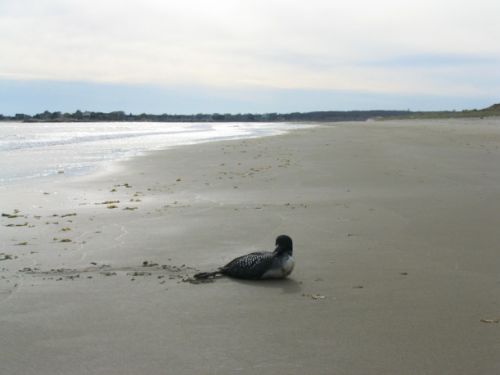
Bird covered in oil on sandy beach.
An oiled loon on Horseneck Beach from the 2003 Bouchard Barge 120 oil spill. (NOAA)
Node Weight: 
10

Effects of the Deepwater Horizon Oil Spill on Sea Turtles and Marine Mammals

Short title: 
Effects of the Deepwater Horizon Oil Spill on Sea Turtles

These populations will require significant restoration efforts to offset impacts from the spill. A special issue of Endangered Species Research, published Jan. 31, 2017, features 20 scientific articles summarizing the impacts of the oil spill on marine mammals and sea turtles. The scientific studies, conducted by National Oceanic and Atmospheric Administration authors and partners, document the unprecedented mortality rate and long-term environmental impacts of the oil’s exposure and presents a synthesis of more than five years’ worth of data collection, analysis, and interpretation.

Findings from these research studies, in addition to other studies on other parts of the ecosystem, formed the basis of the natural resources damage assessment settlement with BP for up to $8.8 billion. All of the data associated with the settlement is available publicly in the Data Integration Visualization Exploration and Reporting database, but the Endangered Species Research special issue is the first time this information on sea turtles and marine mammals has been compiled together in peer-reviewed scientific publications. Find out more about Deepwater Horizon here.

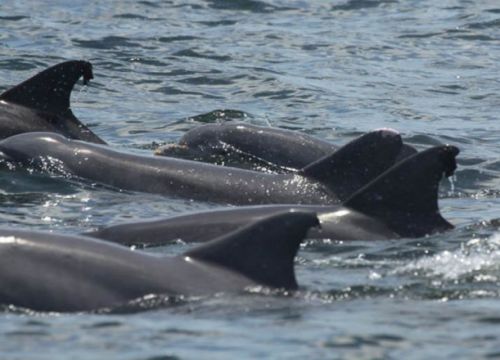
Dolphins on the water's surface.
Studies showed dolphins were impacted by the Deepwater Horizon oil spill. (NOAA)
Node Weight: 
11

Coping in the Aftermath of Deepwater Horizon

Short title: 
Coping in the Aftermath of Deepwater Horizon

Jan. 25, 2017 - Ever wonder about mental health issues in communities recovering from a man-made disaster? The Gulf of Mexico Sea Grant Oil Spill Science Outreach Team recently published an overview of peer-reviewed research into how individuals and communities coped in the aftermath of the Deepwater Horizon oil spill. Studies show that the spill impacted the mental health of some coastal residents, including cleanup workers and those who relied on a healthy Gulf Coast for their occupations.

Gulf Coast locals experienced the Deepwater Horizon oil spill in different ways. Some coastal residents witnessed oiling on the water and shoreline. Others, including cleanup workers, physically encountered oil in their daily lives. People in many industries, including fishing, tourism, and more, lost income as a result of the spill.

The 2010 spill came five years after Hurricane Katrina hit much of the same area, compounding some effects. Several studies have examined the mental health impacts of the oil spill on people living along the Gulf Coast. While short-term repercussions are well-documented, long-term outcomes have been harder to identify. As a result, scientists are developing new ways to determine the consequences of disasters, both natural and man-made, on the physical and mental health of communities. To learn more, go to Sea Grant in the Gulf of Mexico and read “The Deepwater Horizon oil spill’s impact on people’s health: Increases in stress and anxiety.” It’s one of many publications the team has developed to extend our understanding of oil spills science, from dispersant use to seafood safety.


Tara Skelton is the Oil Spill Science Outreach Team Communicator for the Mississippi-Alabama Sea Grant Consortium. The four Gulf of Mexico Sea Grant College Programs with funding from partner Gulf of Mexico Research Initiative has assembled a team of oil spill science outreach specialists to collect and translate the latest peer-reviewed research for those who rely on a healthy marine ecosystem for work or recreation. To learn more about the team’s products and presentations, visit gulfseagrant.org/oilspillscience.

Fishing boats tilting on their sides on the water.
The Gulf of Mexico fishing industry suffered much physical damage from Hurricane Katrina in 2005 (pictured), followed by economic damage from the Deepwater Horizon oil spill. (NOAA)
Drawing of Gulf of Mexico states, explaining mental health effects.
Residents of states surrounding the Gulf of Mexico reported various negative mental health impacts following the Deepwater Horizon oil spill. (Florida Sea Grant/Anna Hinkeldey)
Node Weight: 
8

Preserving an Estuary in Hawaii

Short title: 
Preserving an Estuary in Hawaii

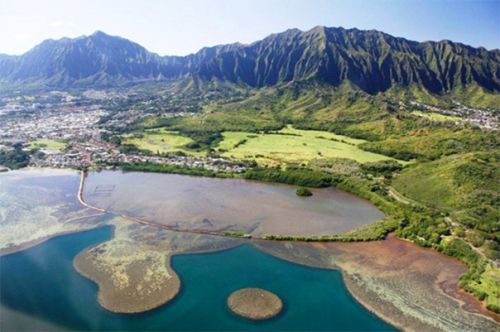
He’eia National Estuarine Research Reserve is one of 29 areas in the National Estuarine Research Reserve System, protected for long-term research, water-quality monitoring, education, and coastal stewardship. Created when the fresh water of rivers meets the salty water of the sea, estuaries act like giant sponges protecting upland areas from ocean waves and storms. The National Oceanic and Atmospheric Administration in partnership with coastal states and territories works to preserve these unique natural areas. This 1,385 acre Oahu reserve includes unique and diverse upland, estuarine, and marine habitats within the He’eia estuary and a portion of Kāne’ohe Bay, protecting features such as the He’eia stream, coral reefs, sand flats, and important cultural components. NOAA’s Office of Response and Restoration has worked in Kāne’ohe Bay and other Oahu locations to minimize the impacts of oil spills and hazardous waste sites on these important habitats. You can read more about some of our work in Oahu in the following articles:

Posted Jan. 19, 2017

Hawaii coastline with mountains.
He’eia National Estuarine Research Reserve, Oahu, Hawaii. NOAA
Node Weight: 
12

Using Big Data to Share Scientific Knowledge

Short title: 
Using Big Data to Share Scientific Knowledge

Integrating environmental data

The real world experience with legacy data management systems and building new data management systems to work with those existing programs, has informed our entire approach to managing environmental data, and is a key part of our approach to current and future data management. For years, NOAA and ocean advocates have been talking about a concept known as “ecosystem-based management” for marine species and habitats. Put simply, ecosystem-based management is a way to find out what happens to the larger tapestry design and function when one thread is pulled from the cloth. We were able to leverage “big data” techniques and develop a data warehouse and information portal built with open source tools for ingesting, integrating and organizing information. This tool, called the Data Integration Visualization, Exploration and Reporting (DIVER) application, allows scientific teams from different organizations to upload their field data and other key information related to their studies, such as scanned field notes, electronic data sheets, scanned images, photographs, and to filter and download results. For instance, the large quantity and multitude of sources for the data collected from the Deepwater Horizon (DWH) spill results in datasets of different types and structures. DIVER addresses this challenge by integrating standardized data and allowing users to query across multiple datasets simultaneously. To facilitate this process, the DIVER team developed common data models, which provides a consistent and standardized structure for managing and exchanging information. DIVER was developed to support data generated in the DWH oil spill response and assessment efforts. DIVER data models and a data warehouse approach have expanded to serve the entire coastal and Great Lakes of the United States. The common data model concept is based upon creating data schemas, which serve as blueprints to organize and standardize information.

Powerful tools for protecting marine habitats

Data integration systems like DIVER put all of that information in one place at one time, allowing users to look for causes and effects that they might not have ever known were there and then use that information to better manage species recovery. These data give us a new kind of power for protecting marine species. Systems like DIVER are set up to take advantage of quantum leaps in computing power and tools that were not available to the field of environmental conservation 10 years ago. These advances give DIVER the ability to accept reams of diverse and seemingly unrelated pieces of information and, over time, turn them into insight about the nature and location of the greatest threats to marine wildlife. Ultimately, all the advancement in data sharing benefits not only the science and academic communities but also the public. Ben Shorr is a physical scientist with Assessment and Restoration Division’s Spatial Data Branch.

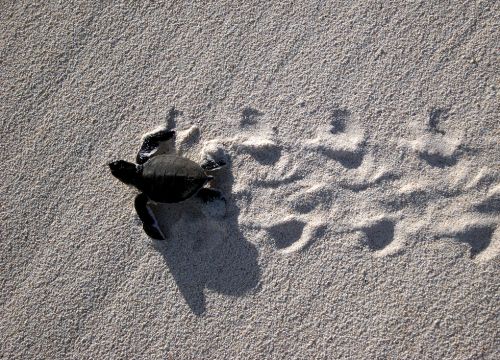
Small turtle on sand with turtle tracks.
Data management tools like NOAA's DIVER help turn lots of disparate sets of data into insight about the nature and location of the greatest threats to marine wildlife. (NOAA)
Map view of DIVER software map showing where tagged dolphins swam in the Gulf of
A map view of DIVER shows where tagged dolphins traveled along the Gulf Coast, showing two populations that stayed in their home bases of Barataria Bay and Mississippi Sound. (NOAA)
Node Weight: 
10

10 Common Words with Uncommon Meanings in Spill Response

Short title: 
10 Common Words with Uncommon Meanings in Spill Response

Jan. 18, 2017 - Despite an effort to use plain language, government agencies often use jargon that only makes sense to insiders. Here is list of common words that can become head-scratchers when used in the context of spill response.

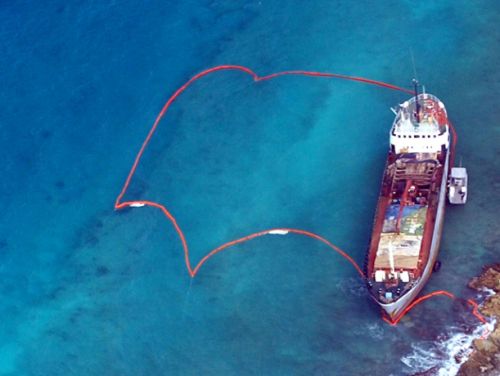
Boom Not the loud deep resonating sound described in a dictionary. In oil response booms are floating, physical barriers to oil, made of plastic, metal, or other materials, which slow the spread of oil and keep it contained. Read more on the history of booms in spill response here.

Crude A vulgar comment? Nope. in this case the spill response definition fits more into the traditional understanding of the word, something in a raw or unrefined state. Crude oil is unrefined petroleum, usually liquid, consisting of a mixture of hydrocarbons. Crude oil may be refined into any of hundreds of components, such as commercial gasoline, kerosene, heating oils, diesel oils, lubricating oils, waxes, and asphalts. Read more on crude and other oil types here.

Hazing Usually defined as a rigorous initiation process into an organization of some sort, in spill response hazing is about exclusion, “hazing” methods are used to keep whales out of harm’s way. Read more about hazing methods here.

Mousse The first thing that pops into the mind when someone uses the word mousse is that silky pudding-like dessert, or a product to sculpt unruly hair. In spill response, mousse is a term to describe a water-in-oil emulsion that resembles chocolate mousse in color and texture. These emulsions are often very stable, and often have a pudding-like consistency. Typically, a mousse forms when relatively fresh oil is exposed to strong wave action. Mousse colors can range from orange or tan to dark brown. A mousse may contain up to 75 percent water, and may have a volume up to four times that of the original oil. Learn how to make an oil and water mousse here.

Pancakes Nope, not the breakfast food. In this case pancakes refer to isolated, roughly circular patches of spilled oil ranging in size from a few feet across to hundreds of yards (or meters) in diameter. These oil patches can form tarballs sometimes found along sandy beaches. Read more on tarballs here.

Pom-poms Similar to the equipment used by many a cheer-squad member, pom-poms in spill response are used to absorb oil for removal. Made of synthetic fibers, pom-poms are used individually or tied on long ropes and used to catch oil as it leaches from beaches and rocky areas. Strings of pom-poms are effective in collecting oil in rock or difficult to reach areas where the tide rises and falls. Read about how pom-poms were used to cleanup an oil spill here.

SOS Save our ship? How about Science of Oil Spills. Every year the Emergency Response Division educates emergency spill responders increasing their understanding of oil spill science. Read about SOS classes here.

Slick Typically defined as something done in a smooth way, a slick is the common term used to describe a film of oil (usually less than 2 microns thick) on the water surface. Oil spilled on water absorbs energy and dampens out surface waves, making the oil appear smoother—or slicker—than the surrounding water. Read about oil slicks and sea turtles here.

Streamer Those paper ribbons hanging from the ceiling at a party, right? Wrong. In spill response a streamer, also called fingers or ribbons, are narrow lines of oil, mousse, or sheen on the water surface, surrounded on both sides by clean water. Streamers result from the combined effects of wind, currents, and/or natural convergence zones. Often, heavier concentrations of mousse or sheen will be present in the center of a streamer, with progressively lighter sheen along the edges. Read about techniques for cleaning up streamers in oil spills here.

Weathering OK, in this instance, the meaning used in spill response is similar to the general definition. In oil response weathering is the physical and chemical characteristics of oil interacting with the physical and biochemical features of the habitat where a spill occurs. These factors determine how the oil will behave and ultimately what will happen to it. Read more about weathering here.

A ship run aground on coral reef, surrounded by protective oil boom.
A ship run aground on coral reef in Puerto Rico is surrounded by protective oil boom. Credit: U.S. Fish and Wildlife Service.
Node Weight: 
9

Pages

Subscribe to response.restoration.noaa.gov RSS