Back to top

Innovative Solutions to Tackling Plastic Pollution in the Ocean

Short title: 
Innovative Solutions to Plastic Pollution
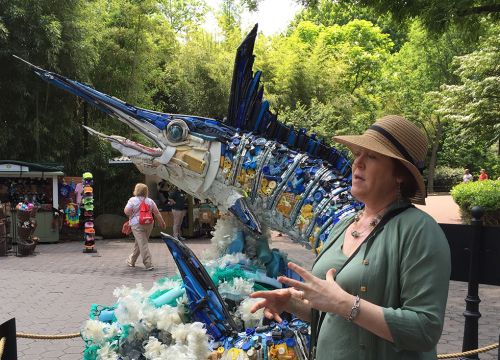
Washed Ashore's Angela Haseltine Pozzi with a giant marlin statue of ocean trash
Washed Ashore Executive Director Angela Haseltine Pozzi leads a lesson on how marine debris can be used as a powerful art medium to engage students on the topic while at the Smithsonian's National Zoo. Behind her is one of her organization's marine life sculptures crafted entirely from trash retrieved from the ocean and coasts. (NOAA)
Node Weight: 
3

Improving Currents Predictions for Washington Waters Will Help Efforts to Prevent and Respond to Oil Spills

Short title: 
Predicting Currents and Modeling Oil Spills
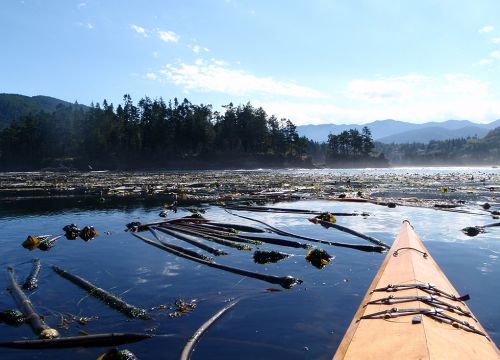
Front of a kayak pushing through floating wood in the Strait of Juan de Fuca.
Kayakers and oil spill responders alike will appreciate the updated currents predictions NOAA is producing from a survey of Washington's Puget Sound, San Juan Islands, and Strait of Juan de Fuca. (Courtesy of Amy MacFadyen)
Node Weight: 
4

Studying Marine Life a Year After the Oil Spill at Refugio State Beach

Short title: 
A Year After the Refugio State Beach Oil Spill

June 21, 2016 -- One year after the pipeline oil spill at Refugio State Beach near Santa Barbara, California, scientists from NOAA and our partners have been back to the site of the spill. They are gathering a new round of samples to help determine the health of the environment and marine life. This May and June, these teams have been conducting comprehensive scientific surveys to collect data on three distinct but interconnected habitats within the impacted spill zone: sandy beach, subtidal, and rocky intertidal habitats. Specifically, the surveys are examining:

  • talitrid (beach hopper or “sand flea”) populations in sandy beach habitats.
  • a variety of organisms in rocky intertidal habitat.
  • surfgrass in subtidal habitats.
  • fish, including grunion spawning on the beaches and surfperch in nearshore waters.

Information collected from these sampling efforts will be used to determine the amount of restoration needed to return the environment to the condition it would have been in if not for the spill, and to compensate the public for natural resource injuries and lost recreational opportunities. This is part of the Natural Resource Damage Assessment process, which evaluates the environmental impacts of pollution and implements restoration to make up for those effects. This pipeline spill occurred on May 19, 2015 and resulted in more than 100,000 gallons of crude oil being released on land, with a portion of the oil reaching the Pacific Ocean. Field teams documented dead fish, invertebrates, and other wildlife in the oiled areas following the spill. The spill also shut down fisheries, closed multiple beaches, and impacted recreational uses, such as camping, non-commercial fishing, and beach visits. To submit a restoration project idea, please visit: https://docs.google.com/a/noaa.gov/forms/d/e/1FAIpQLSf5vbBQtrydSofaUJ7oskJ1uQdvare3S8vpDi1JWHFsJpEtjg/viewform. Learn more about spill cleanup and response efforts at www.refugioresponse.com.

Ten people stand in the beach surf pulling a seine net to shore.
Scientists pull in a seine net along a beach near Santa Barbara, California, about a year after the oil spill at Refugio State Beach. They are sampling fish known as surfperch to evaluate any impacts from the oil spill. (NOAA)
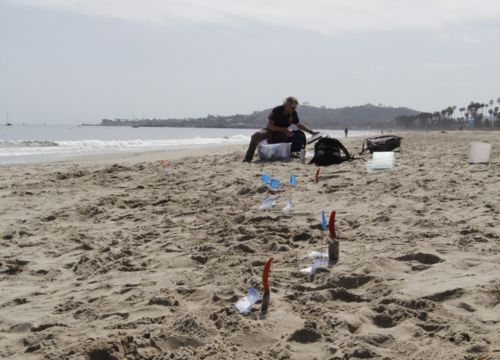
Scientist recording data on a beach with trowels and flags marking sampling site
Government scientists are examining how the 2015 pipeline oil spill at California's Refugio State Beach may have affected marine life a year later. Here, a scientist samples the eggs of a small fish called grunion and the levels of oil compounds found in the surrounding sand. (NOAA)
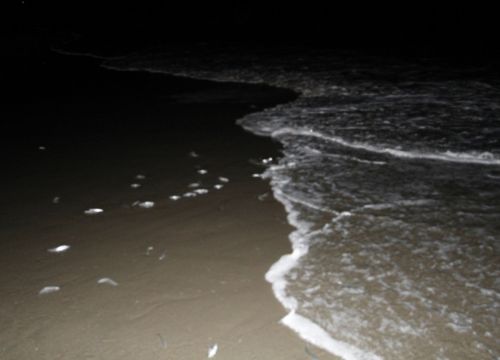
Small silver fish called grunion on a sandy beach at night.
Grunion are a small, silvery fish that comes ashore to spawn and bury their eggs in the sand at night after high tide in spring and summer. (NOAA)
Node Weight: 
4

How Do Oil Spills Affect Sea Turtles?

Short title: 
How Do Oil Spills Affect Sea Turtles?

JUNE 16, 2016 -- Sea turtles: These beloved marine reptiles have been swimming the seas for millions of years. Yet, in less than a hundred years, threats from humans, such as accidentally catching turtles in fishing gear ("bycatch"), killing nesting turtles and their eggs, and destroying habitat, have caused sea turtle populations to plummet. In fact, all six species of sea turtles found in U.S. waters are listed as threatened or endangered under the U.S. Endangered Species Act.

As we’ve seen in the Gulf of Mexico in recent years, oil spills represent yet another danger for these air-breathing reptiles that rely on clean water and clean beaches. But how exactly do oil spills affect sea turtles? And what do people do during and after an oil spill to look out for the well-being of sea turtles?

Living the Ocean Life

From the oil itself to the spill response and cleanup activities, a major oil spill has the potential to have serious negative effects on sea turtles. Part of the reason for this is because sea turtles migrate long distances and inhabit so many different parts of the ocean environment at different stages of their lives.

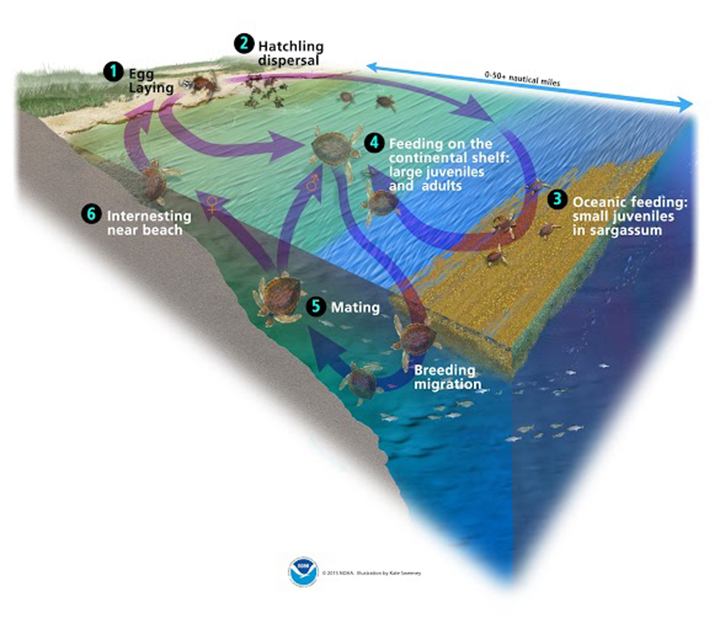
Graphic showing the life cycle of sea turtles in the ocean: egg laying; hatchling dispersal; oceanic feeding: small juveniles in sargassum; feeding on the continental shelf: large juveniles and adults, mating and breeding migration; and internesting near beach.
The life cycle of a sea turtle spans multiple habitats across the ocean, from sandy beaches to the open ocean. (NOAA)

For starters, sea turtles hatch (and females later return as adults to lay eggs) on sandy beaches. Then, they head to the vast open ocean where the tiny young turtles drift, hide from predators, and grow among floating islands of seaweed called sargassum. Finally, as larger juveniles and adults, they swim to the shallower waters of the continental shelf and near shore, where they spend the majority of the rest of their lives.

If a large offshore spill releases oil into the open ocean, currents and winds can carry oil across all of the habitats where sea turtles are found—and into the potential path of sea turtles of every age—as it makes its way to shore.

Another reason sea turtles can be particularly vulnerable to ocean oil spills is simply because they breathe air. Even though sea turtles can hold their breath on dives for extended periods of time, they usually come to the surface to breathe several times an hour. Because most oils float, sea turtles can surface into large oil slicks over and over again.

The situation can be even worse for very young sea turtles living among floating sargassum patches, as these small turtles almost never leave the top few feet of water, increasing their exposure to a floating oil slick. Furthermore, ocean currents and winds often bring oil to the same oceanic convergence zones that bring sargassum and young sea turtles together.

Turtle Meets Oil, Inside and Out

So, we know the many places sea turtles can run into an oil spill, but how exactly do they encounter the oil during a spill?

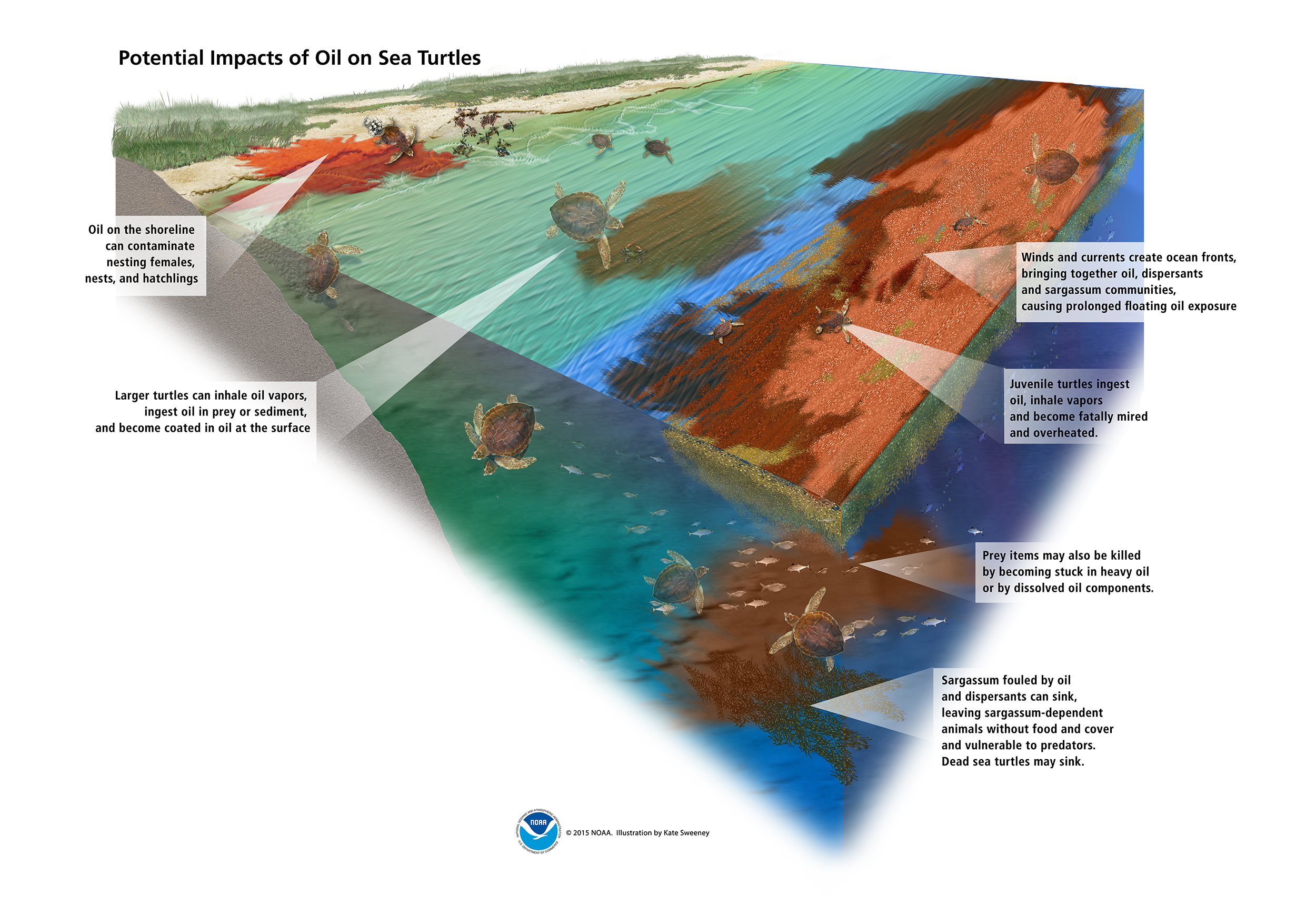
Graphic showing how spilled oil in the ocean can affect sea turtles at all stages of life and across ocean habitats: Oil on the shoreline can contaminate nesting females, nests, and hatchlings; larger turtles can inhale oil vapors, ingest oil in prey or sediment, and become coated in oil at the surface; winds and currents create ocean fronts, bringing together oil, dispersants, and sargassum communities, causing prolonged floating oil exposure; juvenile turtles ingest oil, inhale vapors, and become fatally mired and overheated; prey items may also be killed by becoming stuck in heavy oil or by dissolved oil components; and sargassum fouled by oil and dispersants can sink, leaving sargassum-dependent animals without food and cover and vulnerable to predators. Dead sea turtles may sink.
The potential impacts of an oil spill on sea turtles are many and varied. For example, some impacts can result from sea turtles inhaling and ingesting oil, becoming covered in oil to the point of being unable to swim, or losing important habitat or food that is killed or contaminated by oil. (NOAA) Click to view larger.

It likely starts when they raise their heads above the water's surface to breathe. When sea turtles surface in a slick, they can inhale oil and its vapors into their lungs; gulp oil into their mouths, down their throats, and into their digestive tracts while feeding; and become coated in oil, to the point of becoming entirely mired and unable to swim. Similarly, sea turtles may swim through oil drifting in the water column or disturb it in the sediments on the ocean bottom.

Female sea turtles that ingest oil can even pass oil compounds on to their developing young, and once laid, the eggs can absorb oil components in the sand through the eggshell, potentially damaging the baby turtle developing inside. Nesting turtles and their hatchlings are also likely to crawl into oil on contaminated beaches.

Not the Picture of Health
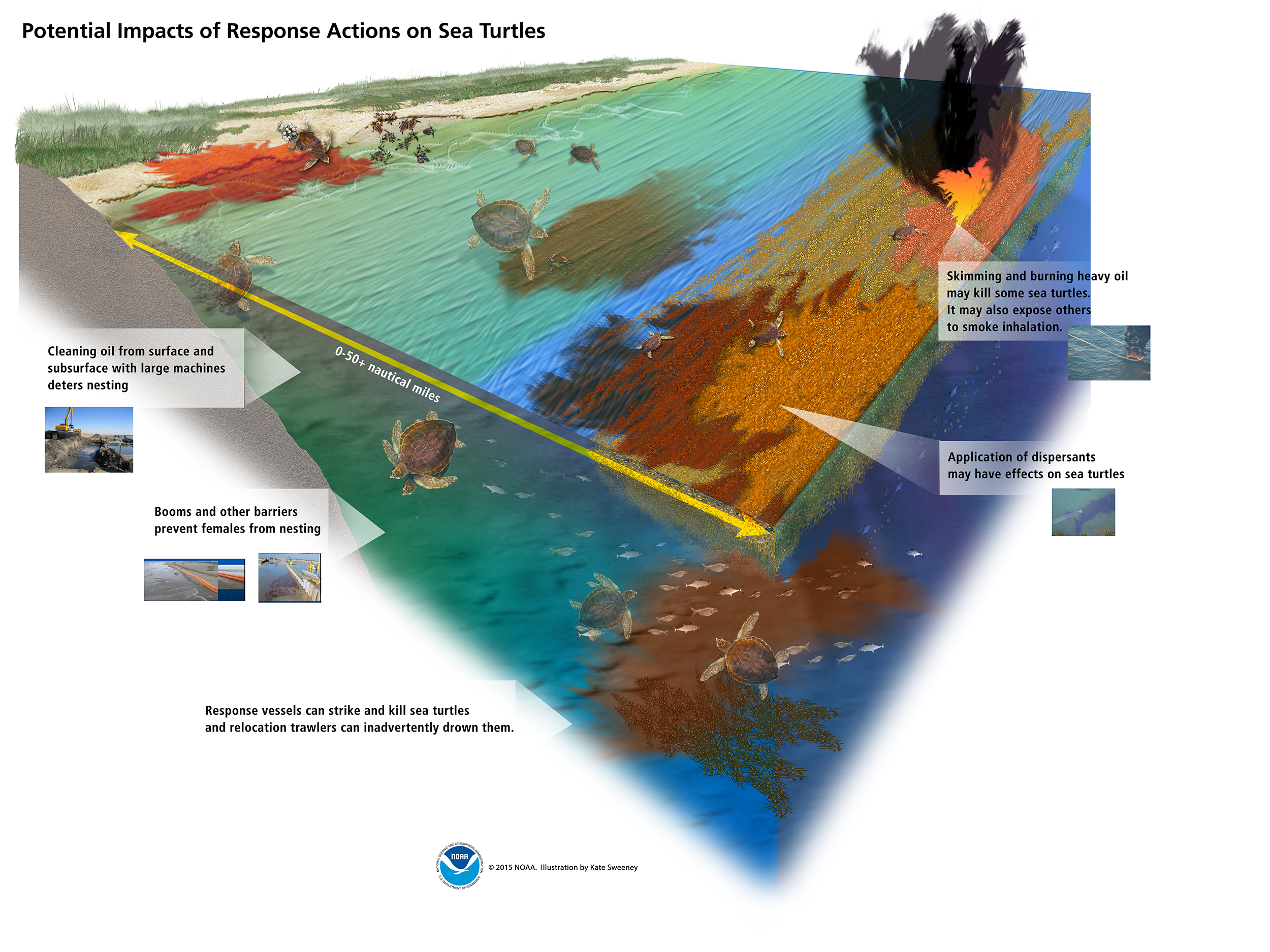
Graphic showing how oil spill cleanup and response activities can negatively affect sea turtles: Cleaning oil from surface and subsurface shores with large machines deters nesting; booms and other barriers prevent females from nesting; response vessels can strike and kill sea turtles and relocation trawlers can inadvertently drown them; application of dispersants may have effects on sea turtles; and skimming and burning heavy oil may kill some sea turtles, while also exposing others to smoke inhalation.
Oil spill cleanup and response activities can negatively affect sea turtles as well. For example, oil containment booms along beaches can prevent nesting females from reaching the shores to lay their eggs. (NOAA)

Once sea turtles encounter oil, what are the impacts of that exposure?

Inhaling and swallowing oil generally result in negative health effects for animals, as shown in dolphins and other wildlife, hindering their overall health, growth, and survival.

Lining the inside of sea turtles' throats are pointy spines called esophageal papillae, which normally act to keep swallowed food inside while allowing water to be expelled. Unfortunately, these projections also seem to trap thick oil in sea turtles' throats, and evidence of oil has been detected in the feces of oiled turtles taken into wildlife rehabilitation centers.

Oil can irritate sensitive mucus membranes around the eyes, mouth, lungs, and digestive tract of sea turtles, and toxic oil compounds known as polycyclic aromatic hydrocarbons (PAHs) can be absorbed into vital organ tissues such as the lungs and liver. Because sea turtles can hold their breath for long periods, inhaled oil has a greater chance of being absorbed into their bodies. Oil compounds that get passed from mother turtles to their young can interfere with development and threaten the survival of sea turtles still developing in the eggs.

Once inside their systems, oil can impede breathing and heart function in sea turtles, which can make diving, feeding, migrating, mating, and escaping predators more difficult. Being heavily covered in oil likewise impedes sea turtles' abilities to undertake these activities, which puts them at risk of exhaustion and dehydration. In addition, dark oil under a hot summer sun can heat up turtles to dangerous temperatures, further jeopardizing their health and even killing them. In fact, sea turtles heavily coated in oil are not likely to survive without medical attention from humans.

Another, less direct way oil spills can affect the health of sea turtles is by killing or contaminating what they eat, which, depending on the species, can range from fish and crabs to jellyfish to seagrass and algae. In addition, if oil kills the sargassum where young sea turtles live, they lose their shelter and source of food and are forced to find suitable habitat elsewhere, which makes them more vulnerable to predators and uses more energy.

Spill response and cleanup operations also can harm sea turtles unintentionally. Turtles can be killed after being struck by response vessels or as a result of oil burning and skimming activities. Extra lighting and activity on beaches can disrupt nesting and hatchling turtles, as well as incubating eggs.

Help Is on the Way
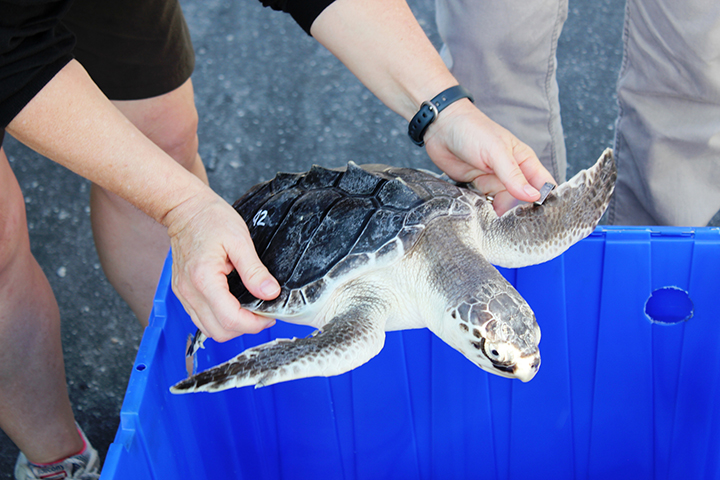
A person holding a small clean Kemp's Ridley sea turtle over a blue bin.
A Kemp's Ridley sea turtle ready to be returned to the wild after being cleaned and rehabilitated during an oil spill. (NOAA)

The harm that oil spills can cause to sea turtles is significant, and estimating the full suite of impacts to these species is a long and complicated process. There are some actions that have been taken to protect these vulnerable marine reptiles during oil spills. These include activities such as:

  • Performing rescue operations by boat, which involve scooping turtles out of oil or water using dip-nets and assessing their health.
  • Taking rescued turtles to wildlife rehabilitation centers to be cleaned and cared for.
  • Monitoring beaches and coastlines for injured (and sometimes dead) turtles.
  • Monitoring nesting beaches to safeguard incubating nests.
  • Conducting aerial surveys to assess abundance of adults and large juvenile turtles potentially in the footprint of an oil spill.

Finally, the government agencies acting as stewards on behalf of sea turtles, as well as other wildlife and habitats, will undertake a scientific evaluation of an oil spill's environmental impacts and identify restoration projects that make up for any impacts.

As an example, read about the impacts to sea turtles from the 2010 Deepwater Horizon oil spill, details about how they were harmed, and the proposed restoration path forward.

A Kemp's Ridley sea turtle covered in oil from the Deepwater Horizon oil spill i
The head and upper body of a Kemp's Ridley sea turtle covered in oil.
Site Themes: 
Node Weight: 
2

University of Washington Helps ITOPF and NOAA Analyze Emerging Risks in Marine Transportation

Short title: 
Analyzing Emerging Risks in Marine Transportation

This is a guest post by University of Washington graduate students Megan Desillier, Seth Sivinski, and Nicole White.

JUNE 9, 2016 — A warming climate is opening up new shipping routes—and hence, new avenues for trade—through the Arctic Ocean as summer sea ice shrinks and thins.

Developing technologies have also allowed for mega-ships (unprecedented in size) and newer cargoes to begin transiting the ocean.

These developments could bring new or greater hazards, including oil spills, for the maritime shipping network worldwide.

Our group of three graduate students at the University of Washington, with the support of the International Tanker Owners Pollution Federation (ITOPF) and NOAA's Office of Response and Restoration, sought to understand how the world's shipping dynamic has changed in recent years and how these emerging challenges in marine transportation will affect that dynamic. The ITOPF, NOAA, and the marine industry can consider these emerging risks in marine transportation as they plan for the future.

Here's what we found.

A Changing Climate

Based on climate changes that have already occurred, ports are likely to experience more intense storm events and increased precipitation. In the more distant future, this greater degree of storminess will combine with sea level rise, causing both the probabilities and consequences of risk to marine transportation to increase.

Given the resources and services that ports provide, climate change could seriously impact the efficiency of the greater maritime transportation network. While infrastructure risks can be mitigated, it is important to note that according to experts in the field interviewed during this project, the majority of ports have made few preparations or plans for sea level rise related to climate change.

Although Arctic climate change is creating new shipping opportunities, these come with great challenges for the marine transportation system, especially in the second half of this century. At sea, the retreat of sea ice is accompanied by an increase in storminess, increasing risks to ships and shipping infrastructure from storm surge and waves. On land, permafrost has already begun to thaw, contributing to impacts to infrastructure, including railroads, ice roads, airstrips, and pipelines.

Taken together, the changing Arctic climate will require changes in the marine transportation system both at sea and on land. These changes include improved infrastructure along shipping routes, harbors of refuge, search and rescue capabilities, ice-breaking services, and coordination among organizations with a central role in spill response.

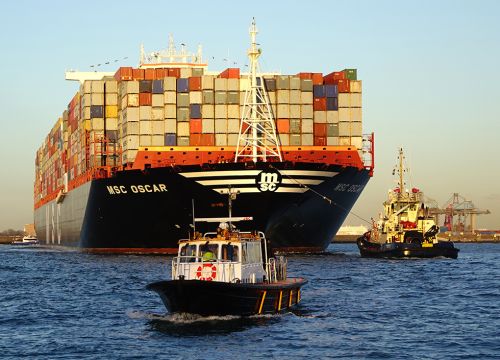
Huge container ship MSC Oscar being guided by two small ships into port.
Massive container ships, carrying unprecedented amounts of fuel and cargo, are one of many developments in marine transportation that also is bringing new risks of oil spills to the high seas. Shown here is the MSC Oscar, one of the largest container ships in the world. (Credit: kees torn, Creative Commons Attribution-ShareAlike 2.0 Generic license)
Node Weight: 
4

At the U.S.-Canadian Border, Surveying a World War II Shipwreck for History and Oil

Short title: 
Surveying a World War II Shipwreck for History and Oil

JUNE 2, 2016 — On June 2, 2016, an underwater survey team is looking at what they believe to be the wreck of the 324-foot-long Coast Trader, a U.S. Army-chartered freight ship sunk somewhere off the Washington coast during World War II. The shipwreck being surveyed is located near the entrance to the Strait of Juan de Fuca just across the border of Washington state and British Columbia in Canadian waters.

The Coast Trader sank on June 7, 1942 after the Imperial Japanese Navy's deadly I-26 submarine torpedoed it on its journey between Port Angeles, Washington, and San Francisco, California. Its precise location on the seafloor remained unknown until a 2010 survey by the Canadian Hydrographic Service. A wreck with the same dimensions and basic shape as the Coast Trader lies in 450 feet of water just two miles from where the ship’s master reported his ship was attacked.

The survey team is led by archaeologist James Delgado, director of maritime heritage for NOAA's Office of National Marine Sanctuaries, and Michael Brennan, archaeological director for the Ocean Exploration Trust, which was founded by underwater explorer Robert Ballard, who years ago discovered the wreck of the Titanic. Joining the team at the University of Rhode Island's Inner Space Center is Frank Cantelas, archaeologist for NOAA's Office of Ocean Exploration Research, along with naval architects, corrosion and oil spill response experts from the U.S. Coast Guard, and a Canadian historian from the Vancouver Maritime Museum.

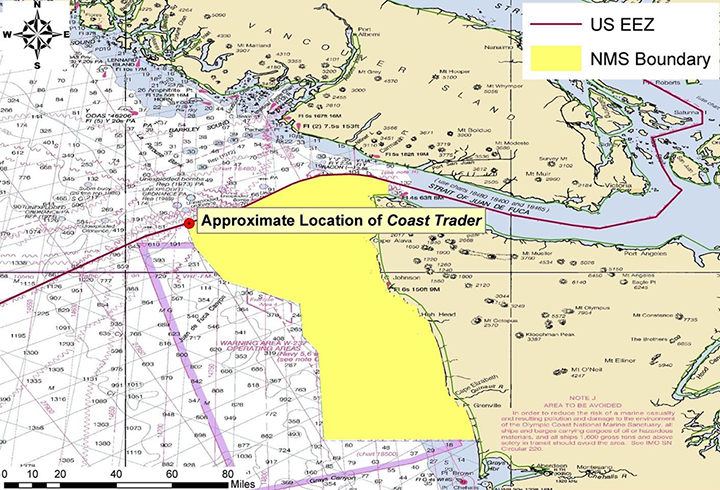
While the Coast Trader appears to rest in Canadian waters, it is just north of Washington's Olympic Coast National Marine Sanctuary.

Nautical chart showing approximate location of Coast Trader wreck between Washington state and Vancouver Island.
A map of what was believed to be the approximate location of the wreck of the Coast Trader, on the border of the Olympic Coast National Marine Sanctuary and Canada. The likeliest scenario of oil release from most sunken wrecks, including the Coast Trader, is a small, episodic release that may be precipitated by disturbance of the vessel in storms. However, NOAA's modeling shows that a worst-case scenario spill would oil shorelines on the southern coast of Canada's Vancouver Island. (NOAA)


Why the interest in a 74-year-old wreck? History and the threat of oil pollution. While the Coast Trader was a pretty typical ship of its era, the wreck is now considered historically significant for being one of a handful of ships sunk on this side of the Pacific during World War II. In addition, in 2013, it was one of the priority shipwrecks NOAA's Office of Response and Restoration, along with the National Marine Sanctuaries program, identified for its potential risk of spilling oil. While the Coast Trader was carrying a cargo of newsprint when it sank, it was also loaded with more than 7,000 barrels of a heavy fuel oil known as Bunker C [PDF].

The marine archaeologists looking at the wreck will be trying to confirm that it is in fact the Coast Trader, and they’ll be searching for clues as to whether the ship’s hull is still intact and likely still holding its fuel. Our 2013 assessment of the Coast Trader's pollution potential [PDF] reports the following about the ship's sinking and its potential condition:

The explosion blew the hatch covers off the cargo hold and sent rolls of newsprint flying through the air. Survivors of the attack reported looking down into the hatches and seeing a "sea of oil and water" in and around the damaged portion of the ship and that "quite a bit of fuel oil surrounded ship." The vessel eventually sank by the stern and the survivors watched as each of the hatch covers were blown off in succession as the ship sank.
Based on the large degree of inaccuracy in the reported sinking location and the depths of water the ship was lost in, it is unlikely that the shipwreck will be intentionally located. Although the survivor reports of the sinking make it sound like substantial amounts of oil was lost when the vessel sank, it is not possible to determine with any degree of accuracy what the current condition of the wreck is and how likely the vessel is to contain oil since the shipwreck has never been discovered.
The only way to conclusively determine the condition of the shipwreck will be to examine the site after it is discovered.

Hopefully, we'll soon find out if this wreck actually is the long-lost Coast Trader.


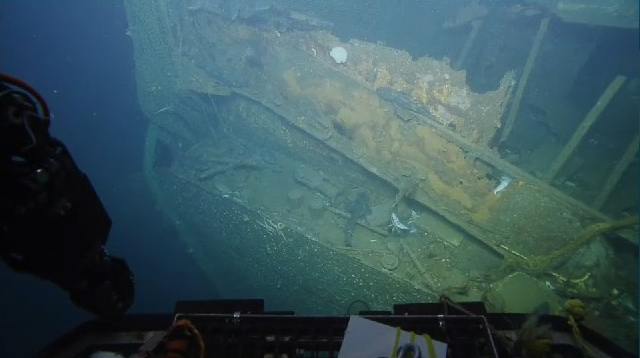
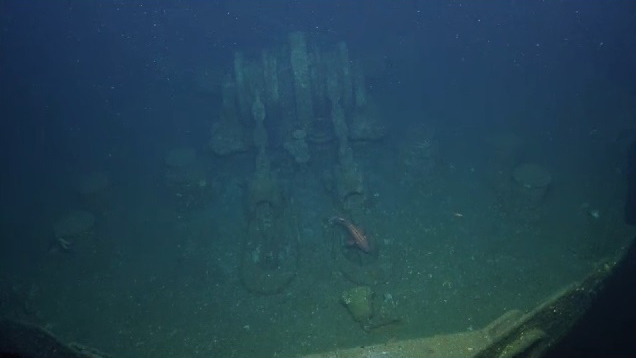
UPDATED JUNE 2, 2016: The survey team has confirmed that this wreck is, with very little doubt, the Coast Trader. Watch video of the underwater survey on the Nautilus Live website and enjoy a few photos below of the livestream exploration of the wreck:

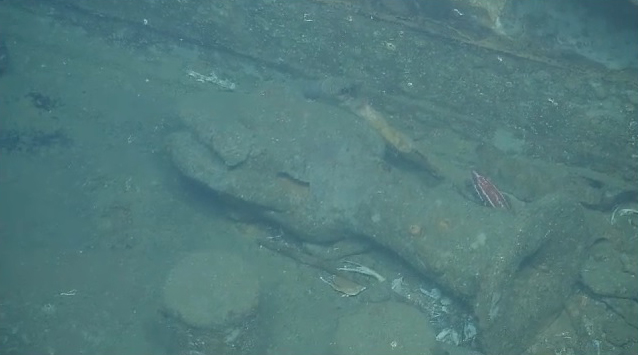
Underwater photo of fish swimming around barnacle-covered features of the Coast Trader shipwreck.
A close-up of fish swimming around various external features of the Coast Trader's wreck. Image taken during the livestream exploration. (NOAA)
 
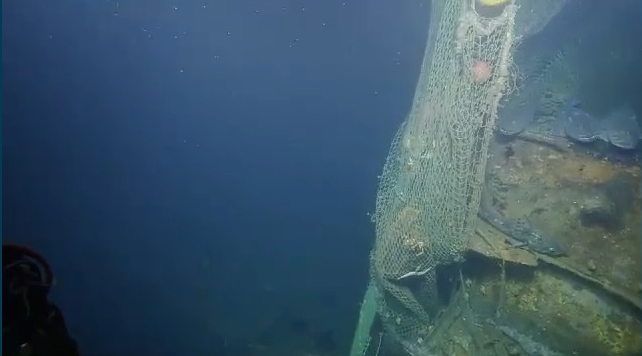
Underwater photo of a fishing net caught on the Coast Trader shipwreck.
A fishing net, with some fish resting and others tangled, on the edge of the wreck of the Coast Trader. Image taken during the livestream exploration. (NOAA)
 
Underwater photo of the rusting hull, with fish and a net, of the Coast Trader shipwreck.
A zoomed out view of the decaying remains of the Coast Trader. Image taken during the livestream exploration. (NOAA)
 
Underwater photo of the deck of the Coast Trader shipwreck, with chains, a fish, and bell in view.
A view of the deck of the Coast Trader shipwreck, with chains at center and a bell just below the fish. Image taken during the livestream exploration. (NOAA)
Historical photo of the Coast Trader at port in San Francisco.
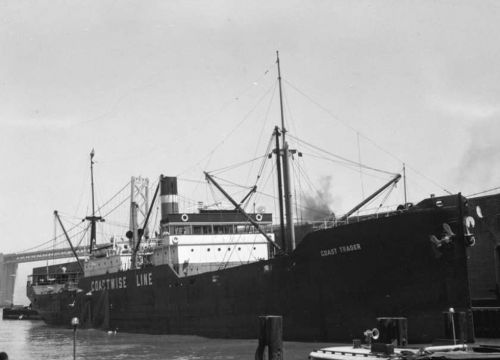
The Coast Trader, first launched in 1920, was sunk by a Japanese torpedo in 1942. (San Francisco Maritime National Historical Park)
Node Weight: 
3

How Do You Begin to Clean up a Century of Pollution on New Jersey's Passaic River?

Short title: 
Cleaning up a Century of Pollution on the Passaic River
A mechanical dredge pulls contaminated sediment from the bottom of the Passaic R
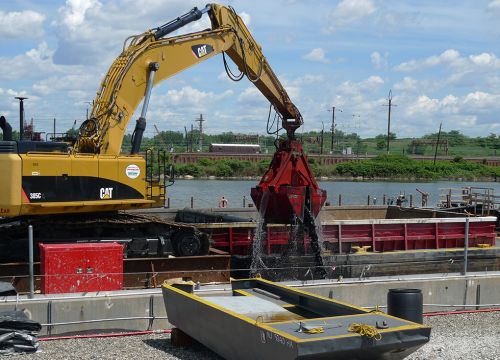
A mechanical dredge removes sediment from an area with high dioxin concentrations on the Passaic River, adjacent to the former Diamond Alkali facility in Newark, New Jersey. (NOAA)
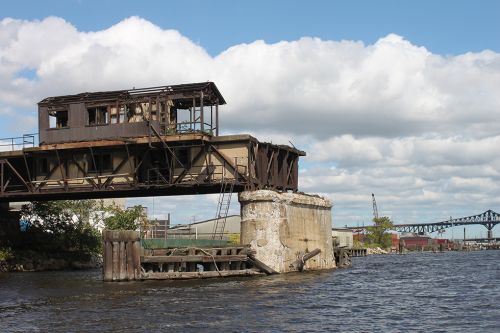
Ruins of an old railroad bridge end part way over the Passaic River.
Ruins of an old Central Railroad of New Jersey bridge along the Passaic River hint at a bustling era of industrialization gone by. (Credit: Joseph, Creative Commons)
Node Weight: 
2

NOAA Supporting Spill Response in the Green Canyon Oil Reserve Area of the Gulf of Mexico

Short title: 
Spill Response in Gulf Green Canyon Oil Reserve Area
Vessels skim oil from the surface of the Gulf of Mexico.
Vessels conduct skimming operations, May 14, 2016, in response to an estimated 88,200 gallons of crude oil discharged from a segment of flow line at the Glider Field approximately 90 miles south of Timbalier Island, Louisiana. As of May 15, the vessels have removed a combined total of more than 51,000 gallons of oily-water mixture since the discharge on May 12, 2016. (U.S. Coast Guard)
Node Weight: 
3

How Does NOAA Model Oil Spills?

Short title: 
How Does NOAA Model Oil Spills?

MAY 11, 2016 -- One foggy morning in 2007, a cargo ship was gliding across the gray waters of San Francisco Bay when it ran into trouble, quite literally.

This ship, the M/V Cosco Busan, struck the Bay Bridge, tearing a hundred-foot-long gash in its hull and releasing 53,000 gallons of thick, sticky fuel oil into the bay.

When such an oil spill, or even the threat of a spill, happens in coastal waters, the U.S. Coast Guard asks the oceanographers at NOAA's Office of Response and Restoration for an oil spill trajectory.

Watch as NOAA's Ocean Service breaks down what an oil spill trajectory is in a one-minute video, giving a peek at how we model the oil’s path during a spill.

Using a specialized suite of modeling tools, called GNOME, our oceanographers forecast the movement of spilled oil on the water surface.

With the help of data for winds, tides, weather, and ocean currents, they model where the oil is most likely to travel and how quickly it may come ashore or threaten vulnerable coastal resources, such as endangered seabirds or a busy shipping lane.

During the Deepwater Horizon oil spill, we produced dozens of oil spill trajectory maps, starting on April 21 and ending August 23, 2010, when aerial surveys and satellite analyses eventually showed no recoverable oil in the spill area. You can download the trajectory maps from that spill.

Learn more about how we model and respond to oil spills:

Attempting to Answer One Question Over and Over Again: Where Will the Oil Go?

"Over the duration of a typical spill, we’ll revise and reissue our forecast maps on a daily basis. These maps include our best prediction of where the oil might go and the regions of highest oil coverage, as well as what is known as a 'confidence boundary.' This is a line encircling not just our best predictions for oil coverage but also a broader area on the map reflecting the full possible range in our forecasts [PDF]. Our oceanographers include this confidence boundary on the forecast maps to indicate that there is a chance that oil could be located anywhere inside its borders, depending on actual conditions for wind, weather, and currents."

A Bird's Eye View: Looking for Oil Spills from the Sky

"Aerial overflights are surveys from airplanes or helicopters which help responders find oil slicks as they move and break up across a potentially wide expanse of water ... Overflights give snapshots of where the oil is located and how it is behaving at a specific date and time, which we use to compare to our oceanographic models. By visually confirming an oil slick's location, we can provide even more accurate forecasts of where the oil is expected to go, which is a key component of response operations."

Five Key Questions NOAA Scientists Ask During Oil Spills

"Responders can potentially clean up what is on top of the water but recovering oil droplets from the water column is practically impossible. This is why it is so important to spill responders to receive accurate predictions of the movement of the surface slicks so they can quickly implement cleanup or prevention strategies."
Dark oil drifts near the populated shores of Berkeley and Emerville, California.
After the cargo ship M/V Cosco Busan struck the San Francisco-Oakland Bay Bridge in 2007, NOAA oceanographers modeled how wind, waves, tides, and weather would carry the ship's fuel oil across San Francisco Bay. Here, dark oil drifts near the shores of Berkeley and Emerville, California, on November 9, 2007. (NOAA)
Swirls of oil on the surface of San Francisco Bay west of the Golden Gate Bridge
Specially trained observers fly over oil spills to gather information that is fed back into NOAA's trajectory model to improve the next forecast of where the oil is going. (NOAA)
Node Weight: 
4

Creative Solutions Save Money and Marsh Along Galveston Bay, Texas

Short title: 
Saving Money and Marsh Along Galveston Bay, Texas
Aerial view of marsh with levees being built.
An aerial view of levee construction in progress at Pierce Marsh in Texas. The levees will contain dredged sediments transported from the Gulf Intracoastal Waterway. (Credit: John Morris/Mike Hooks, Inc.)
Oil pits and grass with buildings in the background.
Oil pits were obvious and numerous prior to the cleanup of the Malone Services Company hazardous waste site, which began in 2014. (NOAA)
Node Weight: 
3

Spiny Lobsters, Tropical Cyclones, and Derelict Traps

Short title: 
Spiny Lobsters, Tropical Cyclones, and Derelict Traps

Damage to Habitat

The commercial spiny lobster fishery is important to the Florida Keys. According to experts at the Florida Sea Grant Program at the University of Florida, the fishery contributes over $20 million per year to the economy of south Florida and the Florida Keys. Also, 90% of Florida's spiny lobster harvest comes from the Florida Keys. A fact sheet [PDF] the National Sea Grant program published several years ago recognized the problem of the derelict traps: "Another significant issue in the spiny lobster fishery is the impact of ghost traps. The prevalence of trap gear that has not been retrieved is concerning as it has been noted to have impacts on benthic habitats and contribute to ghost fishing. Traps, though typically weighted with cement, are still capable of drifting large distances with currents along sand or seagrass causing habitat damage through abrasion or entanglement. Once the line and buoy are separated from the trap, lines may drift with the currents and entangle marine organisms or, more likely, entangle reef structures." Uhrin's study evaluated three scenarios of tropical cyclone intensification across four levels of fishing effort (based on number of traps used). The study takes the position that derelict traps and marine debris generated by their degradation will increase as hurricanes intensify in the Florida Keys. In order to create the scenarios, Uhrin carefully looked at historical data of both fishery effort and patterns in the region and calculated future projections, or predictions, of monthly trap loss as related to maximum wind speed under the three levels of tropical cyclone intensification.

Outlook for the Future

The article suggests that "by maintaining existing fishing effort in the coming decades, trap loss could exceed 11 million over 60 years depending upon the rate of tropical cyclone intensification." Even a scenario of existing fishing effort with a relatively unchanged (i.e., business-as-usual scenario) hurricane intensification would generate over 6.5 million lost traps on the seafloor over 60 years, and create the potential for more than 3 million square meters of injured habitat. This is not including the potential for additional injuries during high wind events when the debris is likely to be moving across the seafloor. Uhrin concludes, "The legacy of trap debris in the Florida Keys combined with possible increased inputs of yet more trap debris resulting from a future rise in tropical cyclone intensity presents an immediate challenge for both fisheries management and climate adaptation planning and underscores the importance of an effective process for addressing these issues." Amy V. Uhrin is currently Chief Scientist for the NOAA Marine Debris Program, where she oversees the research portfolio, leads internal research projects, and oversees Program-funded external research projects. Her work has addressed issues of natural and human-influenced disturbances in seagrass and other coastal ecosystems, including effects of hurricanes, wave energy, vessel groundings, and commercial fishing gear.
Related Information
Commercial Spiny Lobster Trap Fishery Florida's Spiny Lobster Fishery: A history of user conflict [PDF]
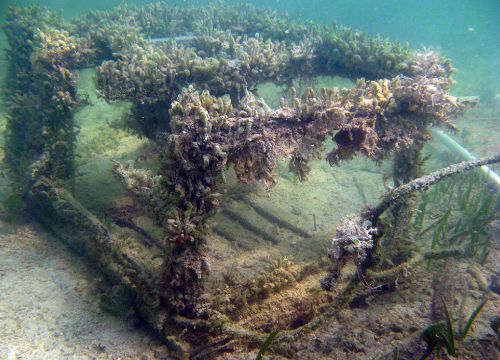
Broken derelict trap on seafloor with vegetation.
Derelict lobster trap frame with biofouling (most of the side slats are missing). The trap is residing on mixed seagrass and hard-bottom habitat. (NOAA)
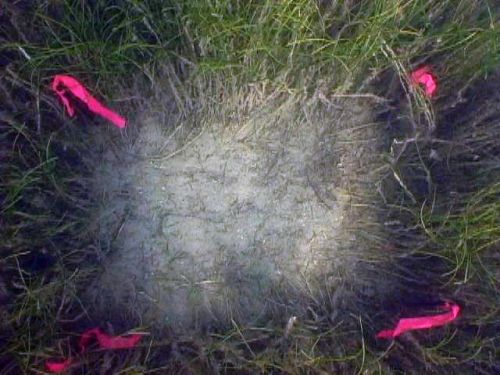
Patch of bare seafloor visible in the middle of a larger patch of seagrass.
2005 image of an impact area from a lobster trap that was experimentally deployed in seagrass (Syringodium filiforme, or manatee grass) and remained resting on the seagrass for six months. (NOAA)
Node Weight: 
4

Looking Back: Six Years Since Deepwater Horizon Oil Spill

Short title: 
Looking Back: Six Years Since Deepwater

APRIL 20, 2016 — Wednesday, April 20, marks six years since the blowout on the Deepwater Horizon oil rig in the Gulf of Mexico.

That terrible incident was the start of a three month-long oil spill of millions of gallons per day until the well was capped on July 15, 2010. The cleanup took years to complete, the natural resource damage assessment was just finalized this spring, and restoration activities will take decades to complete.

Many long-term research projects are underway, and we are still learning about the effects of the spill on the environmental and the coastal communities of the Gulf of Mexico.

On April 4, 2016, the court approved a settlement with BP for natural resource injuries stemming from the Deepwater Horizon oil spill. This settlement concludes the largest natural resource damage assessment ever undertaken.

It is safe to say that scientists will be publishing papers and results for decades. For many of the people involved, the Deepwater Horizon oil spill is considered THE SPILL, the same way the generation of scientists that worked on the Exxon Valdez spill in Alaska almost 30 years ago consider that event.

We even keep track of events in a rough vernacular based on those incidents: Post-Deepwater or Pre-OPA (the Oil Pollution Act, passed in 1990, the summer after the Exxon Valdez spill).

But while those spills generate most of the publicity, policy interest, and research, responders in NOAA, the U.S. Coast Guard, and other agencies know that spills are a routine occurrence. Since the Deepwater Horizon spill, NOAA's Office of Response and Restoration has responded to over 800 other incidents.

Most are ones that you've probably never heard of, but here are a few of the larger incidents since Deepwater Horizon.

Enbridge Pipeline Leak, Kalamazoo, Michigan: On July 25, 2010, while the nation was fixated on the spill in the Gulf of Mexico, an underground pipeline in Michigan also began gushing oil. More than 800,000 gallons of crude oil poured out of the leaking pipeline and flowed along 38 miles of the Kalamazoo River, one of the largest rivers in southern Michigan. The spill impacted over 1,560 acres of stream and river habitat as well as floodplain and upland areas, and reduced recreational and tribal uses of the river. A natural resource damage assessment was settled in 2015 that will result in multiple resource restoration projects along the Kalamazoo River.

Exxon Mobil pipeline rupture, Yellowstone River, Montana: On July 1, 2011, an ExxonMobil pipeline near Billings, Montana, ruptured, releasing an estimated 31,500 to 42,000 gallons of oil into the iconic river, which was at flood-stage level at the time of the spill. Oil spread downstream affecting sensitive habitats.

Paulsboro, New Jersey, rail accident and release: On Nov.30, 2012, a train transporting the chemical vinyl chloride derailed while crossing a bridge that collapsed over Mantua Creek, in Paulsboro, New Jersey, near Philadelphia. Four rail cars fell into the creek, breaching one tank and releasing approximately 23,000 gallons of vinyl chloride. A voluntary evacuation zone was established for the area, and nearby schools were ordered to immediately take shelter and seal off their buildings.

Molasses spill, Honolulu, Hawaii: On Sept.8, 2013, a faulty pipeline operated by Matson Shipping Company leaked 233,000 gallons (1,400 tons) of molasses into Hawaii's Honolulu Harbor. A large fish kill resulted.

Texas City "Y" collision, Galveston, Texas: On March 22, 2014, the 585 foot bulk carrier M/V Summer Wind collided with an oil tank barge, containing 924,000 gallons of fuel oil. The collision occurred at the intersection, or "Y," in Lower Galveston Bay, where three lanes of marine traffic converge: vessels from the Port of Texas City, the Houston Ship Channel, and the Gulf Intracoastal Waterway. The collision breached the hull of the tank barge, spilling about 168,000 gallons of fuel oil into the waterway. A natural resource damage assessment is underway, evaluating impacts to shoreline habitats, birds, bottlenose dolphins, and recreational uses.

Refugio State Beach pipeline rupture, California: On May 19, 2015, a 24-inch crude pipeline ruptured near Refugio State Beach in Santa Barbara County, California. Of the approximately 100,000 gallons of crude oil released, some was captured and some flowed into the Pacific Ocean. The spill raised many challenges. The spill occurred in an especially sensitive region of the coast, known for its incredible diversity of marine life and home to the Channel Islands National Marine Sanctuary. The Refugio spill site is also the site of one of the most historically significant spills in U.S. history. Just over 46 years ago, off the coast of Santa Barbara, a well blowout occurred, spilling as much as 4.2 million gallons of oil into the ocean. A natural resource damage assessment for the Refugio spill is underway, focusing on impacts to wildlife, habitat, and lost recreational uses.

Barge Apex 3508 collision, Columbus, Kentucky: On Sept. 2, 2015, two tug boats collided on the Mississippi River near Columbus, Kentucky, spilling an estimated 120,500 gallons of heavy oil. The oil sank to the river bottom and had to be recovered by dredge.

Train derailment, West Virginia: On Feb.16, 2015, a CSX oil train derailed and caught fire in West Virginia near the confluence of Armstrong Creek and the Kanawha River. The train was hauling 3.1 million gallons of Bakken crude oil from North Dakota to a facility in Virginia. Of the 109 train cars, 27 of them derailed on the banks of the Kanawha River, but none of them entered the river. Much of the oil they were carrying was consumed in the fire, which affected 19 train cars, and an unknown amount of oil reached the icy creek and river.

Each year NOAA's Office of Response and Restoration is asked to respond to an average of 150 incidents and so for this year we have been asked for help with 43 incidents. Most of these were not huge, and include ship groundings in Alaska, Oregon, Washington, and Hawaii; five sunken vessels, fires at two marinas, a burning vessel, and an oil platform fire; nine oil spills and a chemical spill; and multiple "mystery sheens"—slicks of oil or chemicals that are spotted on the surface of the water and don't have a clear origin.

Since 1990, we have responded to thousands of incidents, helping to guide effective cleanups and protect sensitive resources. Also, since 1990 and with our co-trustees, we have settled almost 60 spills for more than $9.7 billion for restoration.

We hope that we will never have to respond to another "Deepwater Horizon" or "Exxon Valdez," but should a large disaster occur, we will be ready. In the meantime, smaller accidents happen frequently and we are ready for those, too.

Beach grasses with water in the background.
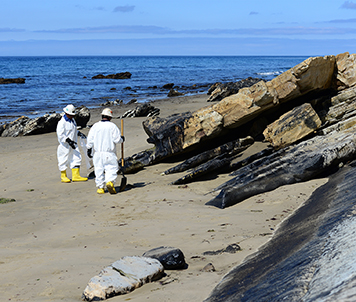
Two people dressed in cleanup suits on a beach with oiled rocks.
Two cleanup crew members work to remove oil from the sand along a portion of soiled coastline near Refugio State Beach, on May 23, 2015. (U.S. Coast Guard)
Node Weight: 
3

After Pollution Strikes, Restoring the Lost Cultural Bond Between Tribes and the Environment

Short title: 
Restoring the Lost Cultural Bond Between Tribes and the Environment
Community Camps in Alaska

When the M/V Kuroshima ran around on Unalaska Island, Alaska, in November 1997, approximately 39,000 gallons of heavy oil spilled into Summer Bay, Unalaska's prime recreational beach. As a result of the spill, access to the bay and its beach was closed off or restricted for several months. In an effort to restore the lost use of their beach, the local Qawalangin Tribe received funding for an outdoor summer recreational camp, which focuses on tribal and cultural projects such as traditional subsistence harvesting techniques for shellfish and activities with Unangan elders in Alaska's Aleutian Islands. To ensure the safety of local seafoods eaten by the tribe, NOAA also arranged for further chemical analysis of shellfish tissues and educated the community about the results

Cultural Apprenticeships in New York

Years of aluminum and hydraulic fluid manufacturing released toxic substances such as PCBs into New York's St. Lawrence River, near the Canadian border. This history of pollution robbed the St. Regis Mohawk Tribe, whose Mohawk name is Akwesasne, of the full ability to practice numerous culturally important activities, such as fishing. Legal settlements with those responsible for the pollution have provided funding for the tribe to implement cultural programs to help make up for those losses. But first, representatives from the St. Regis Mohawk Tribe conducted oral history research, hosted community outreach meetings, and solicited restoration project ideas from the community. As a result of these efforts, they determined that two main components of restoration [PDF] were necessary: an apprenticeship program and funding for cultural institutions and programs. The long-term, master-apprentice relationship program focuses on the four areas of traditional cultural practices that were harmed by the release of hazardous contaminants into the St. Lawrence River and surrounding area. This program also promotes and supports the regeneration of practices associated with traditions in these four areas:

  • Water, fishing, and use of the river.
  • Horticulture and basketmaking.
  • Medicinal plants and healing.
  • Hunting and trapping.

Hands-on experience and Mohawk language training are also integral parts of the apprenticeship program. In addition to this program, resources have been provided to a number of existing Akwesasne-based programs that have already begun the work of responding to the cultural harm caused by this contamination. One example is providing opportunities for Akwesasne youth and surrounding communities to receive outdoor educational experience in a natural and safe location for traditional teachings, such as respect for the land and survival skills.

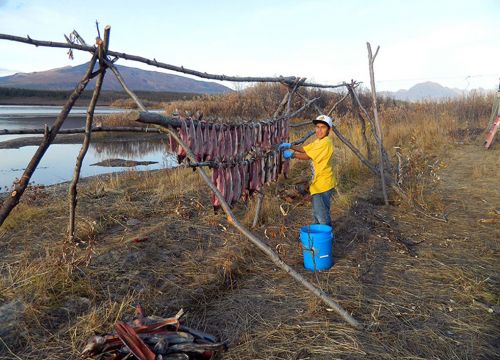
A young boy hangs humpback whitefish on a drying rack next to a river.
Restoring the deep cultural ties between native communities and the environment is an important and challenging part of restoration after oil spills and chemical releases. Here, a boy from the Alaska Native village of Shungnak learns to hang dry humpback whitefish. (U.S. Fish and Wildlife Service)
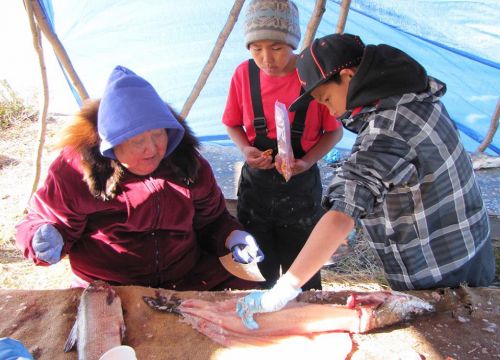
An Alaska Native expert teaches two boys how to cut and prepare pike for drying.
Many ideas for cultural restoration after pollution center around the concept of teaching youth the traditional ways of using natural resources. Here, students from the Alaska Native village of Selawik learn to cut a pike for drying from a local expert. (U.S. Fish and Wildlife Service)
Node Weight: 
5

10 Photos That Tell the Story of the Exxon Valdez Oil Spill and its Impacts

Short title: 
10 Photos Showing the Exxon Valdez Oil Spill and its Impacts

MARCH 24, 2016 -- While oil spills happen almost every day, we are fortunate that relatively few make such large or lasting impressions as the Deepwater Horizon or Exxon Valdez spills.

Before 2010, when the United States was fixated on a gushing oil well at the bottom of the Gulf of Mexico, most Americans could probably only name one spill: when the tanker Exxon Valdez released 11 million gallons of crude oil into Alaska's Prince William Sound on March 24, 1989.

Here we've gathered 10 photos that help tell the story of the Exxon Valdez oil spill and its impacts, not only on the environment but also on science, policy, spill response, school kids, and even board games. It has become a touchstone event in many ways, one to be learned from even decades after the fact.
 

1. Time for safety
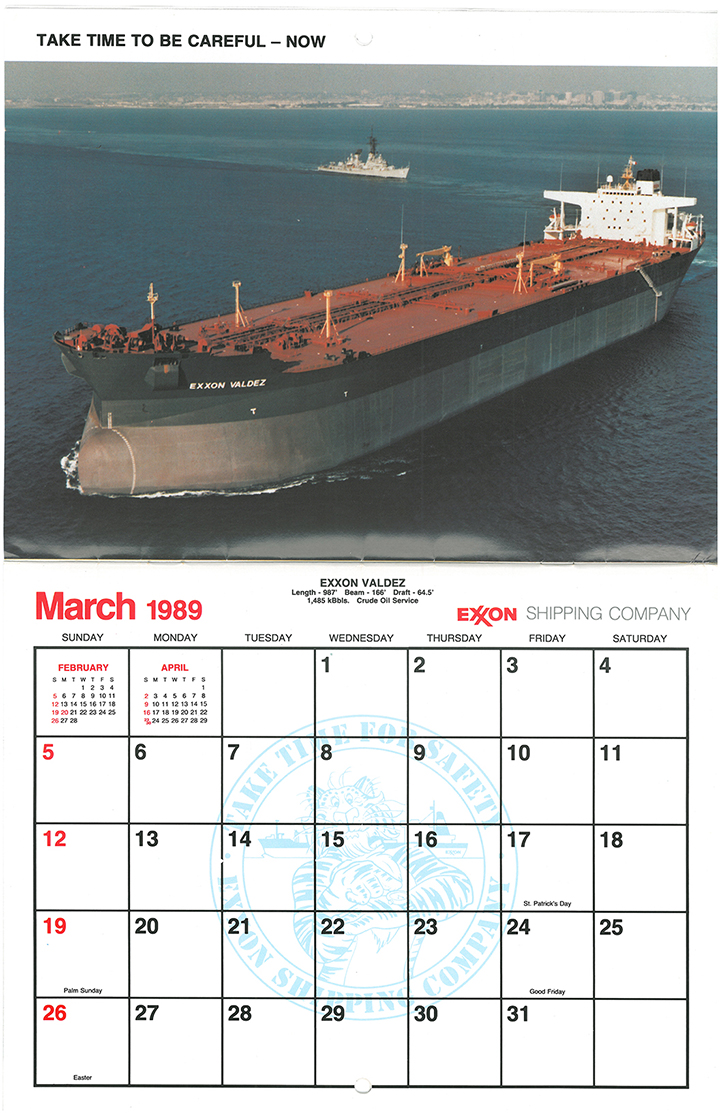
Calendar showing March 1989 and image of Exxon Valdez ship.
In an ironic twist of fate, the Exxon Shipping Company's safety calendar featured the tanker Exxon Valdez in March 1989, the same month the ship ran aground. Image: From the collection of Gary Shigenaka.

Long before the Exxon Valdez tanker ran aground on Bligh Reef in Prince William Sound, a series of events were building that would enable this catastrophic marine accident to unfold as it did. These actions varied from the opening of the Trans-Alaska Pipeline in the 1970s to the decision by the corporation running that pipeline to disband its oil spill response team and Exxon’s efforts to hold up both the tanker Exxon Valdez and its captain, Joseph Hazelwood, as exemplars of safety.

Captain Hazelwood received two Exxon Fleet safety awards for 1987 and 1988, the years leading up to March 1989, which was coincidentally the month the Exxon Valdez was featured on an Exxon Shipping Company calendar bearing the warning to "take time to be careful - now."

Read more about the timeline of events leading up to the Exxon Valdez oil spill.
 

2. A law for the birds
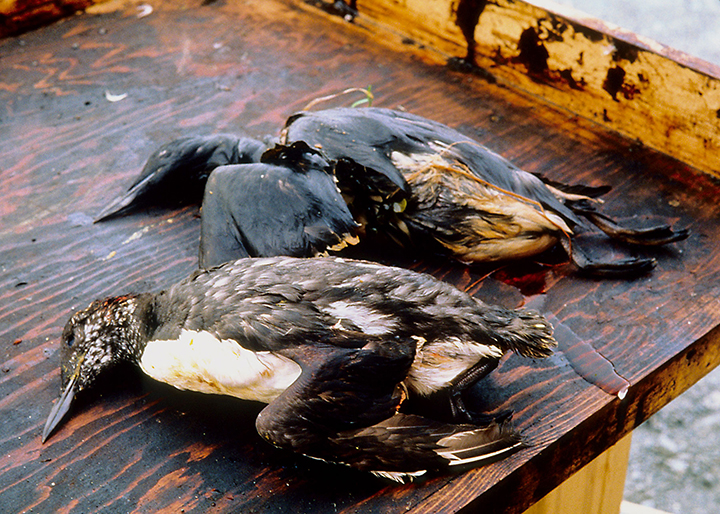
Birds killed as a result of oil from the Exxon Valdez spill.
Thanks to the Oil Pollution Act, federal and state agencies can more easily evaluate the full environmental impacts of oil spills -- and then enact restoration to make up for that harm. (Exxon Valdez Oil Spill Trustee Council)

Photos of oil-soaked birds and other wildlife in Prince William Sound reinforced just how inadequate the patchwork of existing federal, state, and local laws were at preventing or addressing the Exxon Valdez oil spill.

While lawmakers took nearly a year and a half—and a few more oil spills—to pass the Oil Pollution Act of 1990, this landmark legislation was without a doubt inspired by that major oil spill. (After all, the law specifically "bars from Prince William Sound any tank vessels that have spilled over 1,000,000 gallons of oil into the marine environment after March 22, 1989." In other words, the Exxon Valdez.) In the years since it passed, this law has made huge strides in improving oil spill prevention, cleanup, liability, and restoration.
 

3. The end of single-hull tankers
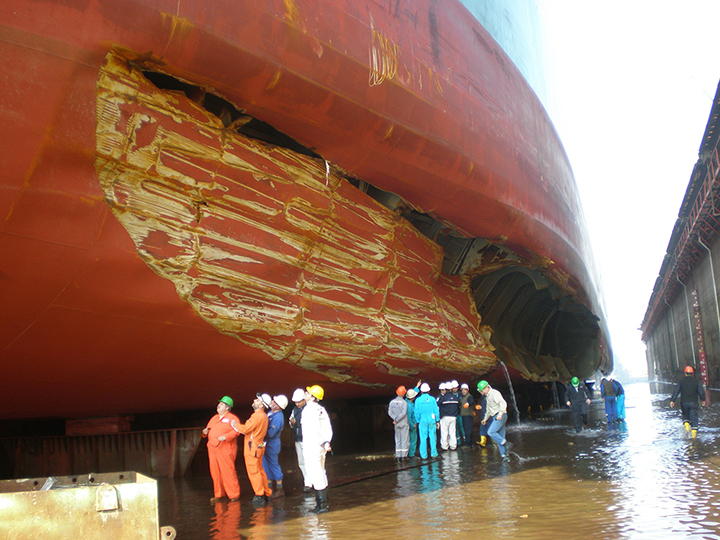
People observe a large tanker with a huge gash in its hull in dry dock.
Evidence of the success of double-hull tankers: The Norwegian tanker SKS Satilla collided with a submerged oil rig in the Gulf of Mexico in 2009 and despite this damage, did not spill any oil. (Texas General Land Office)

This image of a damaged ship is not showing the T/V Exxon Valdez, and that is precisely the point. The Exxon Valdez was an oil tanker with a single hull, which meant that when it hit ground, there was only one layer of metal for the rocks to tear through and release its tanks of oil.

But this 2009 photo shows the Norwegian tanker SKS Satilla after it sustained a major gash in its double-sided hull—and didn't spill a drop of oil. Thanks to the Oil Pollution Act of 1990, all new tankers and tank-barges were required to be built with double hulls to reduce the chance of another Exxon Valdez situation. January 1, 2015 was the final deadline for phasing out single-hull tankers in U.S. waters.
 

4. Oiled otters and angry kids
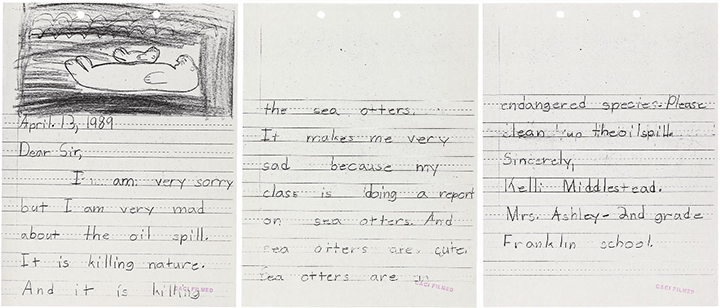
Three pages of a 1989 letter and otter drawing from second grader Kelli Middlestead about the Exxon Valdez oil spill's effects on sea otters.
Letter from Kelli Middlestead from the Franklin School, Burlingame, California to Walter Stieglitz the Regional Director of the Alaska Region of the U.S. Fish and Wildlife Service, 04/13/1989. (U.S. National Archives)

Policymakers weren't the only ones to take note and take action in the wake of the Exxon Valdez oil spill. Second grader Kelli Middlestead of the Franklin School in Burlingame, California, was quite upset that the oil spill was having such devastating effects on one of her favorite animals: sea otters. So, on April 13, 1989, she wrote and illustrated a letter to Walter Stieglitz, Alaskan Regional Director of the U.S. Fish and Wildlife Service, to let him know she felt that the oil spill was "killing nature."

Indeed, sea otters in Prince William Sound weren’t declared recovered from the Exxon Valdez oil spill until 2013. Other species still haven’t recovered and in some sheltered beaches below the surface, you can still find pockets of oil.
 

5. Oil and killer whales do mix (unfortunately)

Killer whales swimming alongside boats skimming oil from the Exxon Valdez oil spill.
Killer whales swimming in Prince William Sound alongside boats skimming oil from the Exxon Valdez oil spill (State of Alaska, Dan Lawn)

One of the species that has yet to recover after the Exxon Valdez oil spill is the killer whale, or orca. Before this oil spill, scientists and oil spill experts thought that these marine mammals were able to detect and avoid oil spills. That is, until two killer whale pods were spotted swimming near or through oil from this spill. One of them, a group nicknamed the "AT1 Transients" which feed primarily on marine mammals, suffered an abrupt 40% drop in population during the 18 months following the oil spill.

The second group of affected killer whales, the fish-eating "AB Pod Residents," lost 33% of their population, and while they have started to rebound, the transients are listed as a "depleted stock" under the Marine Mammal Protection Act and may have as few as seven individuals remaining, down from a stable population of at least 22 in the 1980s.

Building on the lessons of the Exxon Valdez and Deepwater Horizon oil spills, NOAA has developed an emergency plan for keeping the endangered Southern Resident killer whale populations of Washington and British Columbia away from potential oil spills.
 

6. Tuna troubles
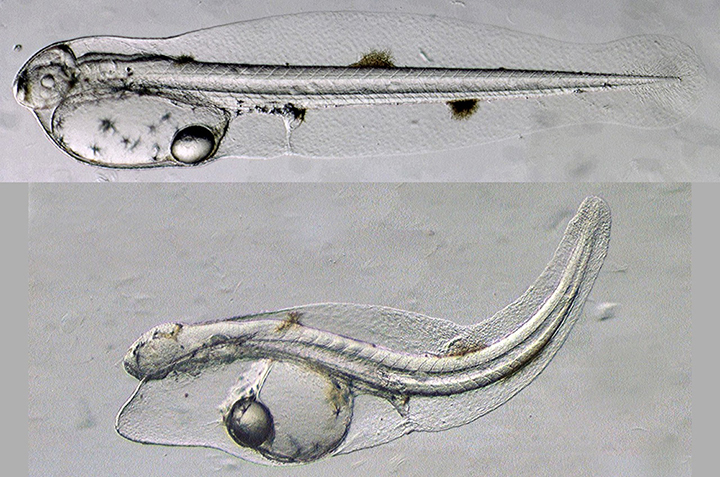
Top: A normal young yellowfin tuna. Bottom: A deformed yellowfin tuna exposed to oil during development.
A normal yellowfin tuna larva (top), and a larva exposed to Deepwater Horizon crude oil as it was developing (bottom). The oil-exposed larva shows a suite of abnormalities including excess fluid building up around the heart due to heart failure and poor growth of fins and eyes. (NOAA)

How does crude oil affect fish populations? In the decades since the Exxon Valdez spill, teams of scientists have been studying the long-term effects of oil on fish such as herring, pink salmon, and tuna. In the first couple years after this spill, they found that oil was in fact toxic to developing fish, curving their spines, reducing the size of their eyes and jaws, and building up fluid around their hearts.

As part of this rich research tradition begun after the Exxon Valdez spill, NOAA scientists helped uncover the precise mechanisms for how this happens after the Deepwater Horizon oil spill in 2010. The photo here shows both a normal yellowfin tuna larva not long after hatching (top) and a larva exposed to Deepwater Horizon crude oil as it developed in the egg (bottom).

The oil-exposed larva exhibits a suite of abnormalities, showing how toxic chemicals in oil such as polycyclic aromatic hydrocarbons (PAHs) can affect the embryonic heart. By altering the embryonic heartbeat, exposure to oil can transform the shape of the heart, with implications for how well the fish can swim and survive as an adult.
 

7. Caught between a rock and a hard place
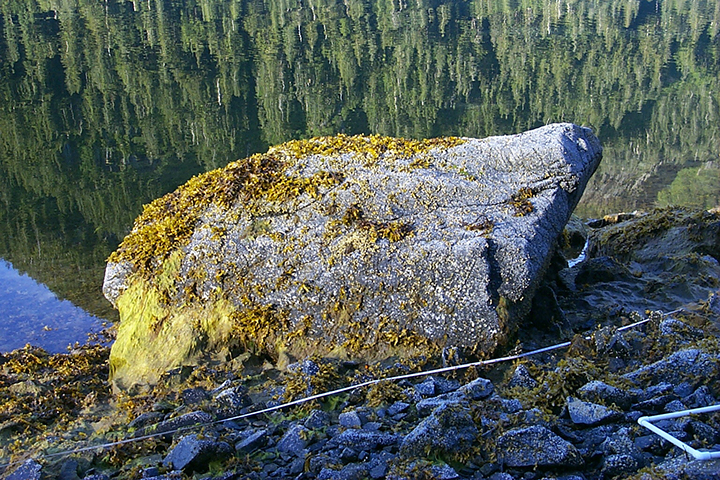
Mearns Rock boulder in 2003.
The boulder nicknamed "Mearns Rock," located in the southwest corner of Prince William Sound, Alaska, was coated in oil which was not cleaned off after the 1989 Exxon Valdez oil spill. This image was taken in 2003. (NOAA)

Not all impacts from an oil spill are as easy to see as deformed fish hearts. As NOAA scientists Alan Mearns and Gary Shigenaka have learned since 1989, picking out those impacts from the noisy background levels of variability in the natural environment become even harder when the global climate and ocean are undergoing unprecedented change as well.

Mearns, for example, has been monitoring the boom and bust cycles of marine life on a large boulder—nicknamed "Mearns Rock"—that was oiled but not cleaned after the Exxon Valdez oil spill. What he and Shigenaka have observed on that rock and elsewhere in Prince William Sound has revealed large natural swings in the numbers of mussels, seaweeds, and barnacles, changes which are unrelated to the oil spill as they were occurring even in areas untouched by the spill.

Read more about how these scientists are exploring these challenges and a report on NOAA’s involvement in the wake of this spill.
 

8. A game culture
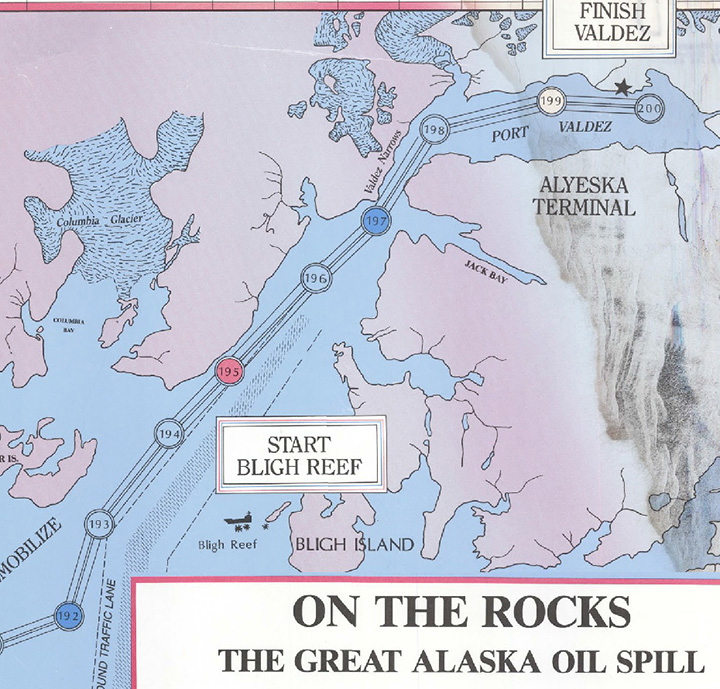
A view of part of the board game On the Rocks: The Great Alaska Oil Spill with a map of Prince William Sound.
The game On the Rocks: The Great Alaska Oil Spill challenges players to clean all 200 miles of shoreline oiled by the Exxon Valdez -- and do so with limits on time and money. (Credit: Alaska Resources Library and Information Services, ARLIS)

Just as the Exxon Valdez oil spill touched approximately 200 miles of remote and rugged Alaskan shoreline, this spill also touched the hearts and minds of people far from the spill. References to it permeated mainstream American culture in surprising ways, inspiring a cookbook, a movie, a play, music, books, poetry, and even a board game.

That's right, a bartender from Valdez, Alaska, produced the board game "On the Rocks: The Great Alaska Oil Spill" as a result of his experience employed in spill cleanup. Players vied to be the first to wash all 200 miles of oiled shoreline without running out of time or money.
 

9. Carrying a piece of the ship
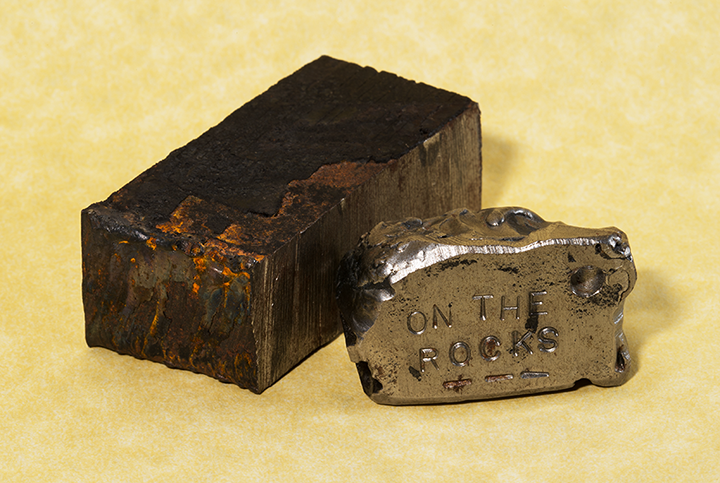
Two pieces of metal from the ship Exxon Valdez.
The rusted and nondescript piece of steel on the left was a piece of the tanker Exxon Valdez, recovered by the salvage crew in 1989 and given to NOAA marine biologist Gary Shigenaka. It was the beginning of his collection of Exxon Valdez artifacts and remains the item with the biggest personal value to him. The piece of metal on the right, inscribed with "On the rocks," is also metal from the ship but was purchased on eBay. (NOAA)

One NOAA scientist in particular, Gary Shigenaka, who kicked off his career working on the Exxon Valdez oil spill, was personally touched by this spill as well. After receiving a small chunk of metal from the ship's salvage, Shigenaka began amassing a collection of Exxon Valdez–related memorabilia, ranging from a highball glass commemorating the ship's launch in 1986 (ironic considering the questions surrounding its captain being intoxicated the night of the accident) to the front page of the local paper the day of the spill.
 

10. The infamous ship's fate
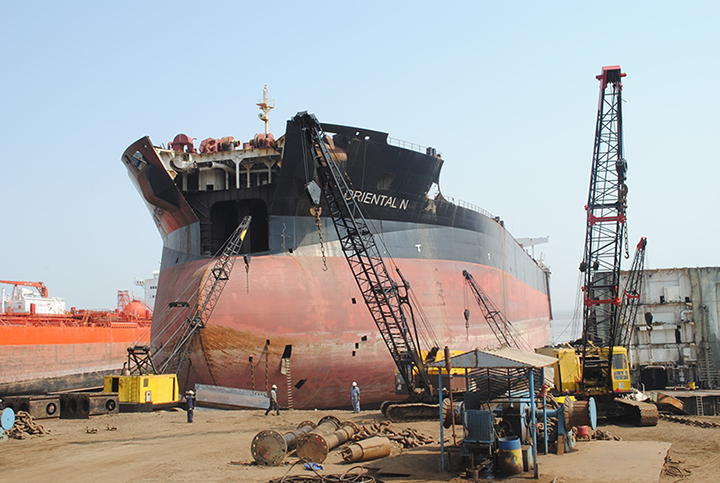
Ship being dismantled on a beach in India.
Exxon Valdez/Exxon Mediterranean/Sea River Mediterranean/S/R Mediterranean/Mediterranean/Dong Fang Ocean/Oriental Nicety being dismantled in Alang, India, 2012. Photo by ToxicsWatch Alliance.

After causing the largest-to-date oil spill in U.S. waters, what ever happened to the ill-fated Exxon Valdez ship? It limped back for repairs to San Diego Bay where it was built, but by the time it was sea-ready again, the ship had been banned from Prince William Sound by the Oil Pollution Act and would instead be reassigned to the Mediterranean and Middle East and renamed accordingly, the Exxon Mediterranean.

But a series of new names and bad luck continued to follow this ship, until it was finally sold for scrap in 2011. Under its final name, Oriental Nicety, it was intentionally grounded at the infamous shipbreaking beaches of Alang, Gujarat, India, in 2012 and dismantled in its final resting place 23 years after the Exxon Valdez ran aground half a world away.

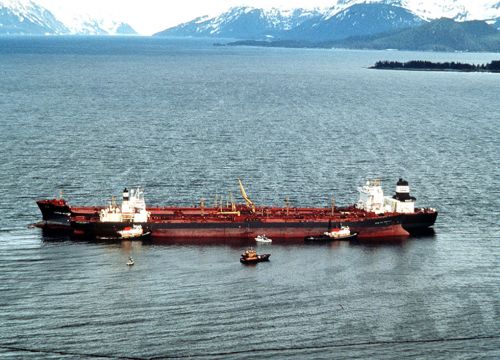
Exxon Valdez ship with response vessels in Prince William Sound
The single-hull tanker Exxon Valdez ran aground on Bligh Reef in Prince William Sound, Alaska, March 24, 1989, spilling 11 million gallons of crude oil. (U.S. Coast Guard)
Node Weight: 
3

Supporting the Response to a Platform Fire and Oil Spill in Bayou Sorrel, Louisiana

Short title: 
Platform Fire and Oil Spill in Bayou Sorrel, Louisiana
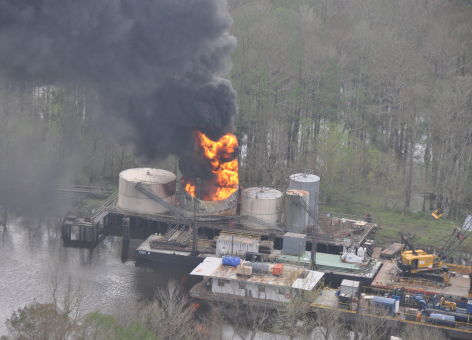
Fire burns in one of several oil tanks on a platform in a bayou.
The Coast Guard, with state and local partners, is responding to an oil production platform fire in Bayou Sorrel, Louisiana, March 15, 2016. (U.S. Coast Guard)
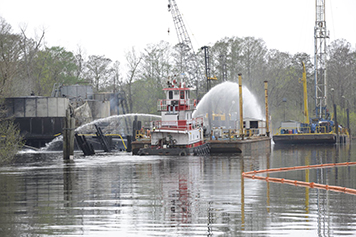
Fire-fighting vessel sprays water on an oil tank on a platform in a bayou.
Response crews extinguished the fire and will continue to monitor the scene. (U.S. Coast Guard)
Node Weight: 
3

For the First Time in Decades, Scientists Examine How Oil Spills Might Affect Baleen Whales

Short title: 
How Might Oil Spills Affect Baleen Whales?

MARCH 16, 2016 -- Several days of unseasonably warm weather in late September had Gary Shigenaka starting to wonder how much longer he and his colleagues would be welcome at Ohmsett, a national oil spill research facility in New Jersey.

They were working with whale baleen, and although the gum tissue anchoring their baleen samples had been preserved with formalin, the balmy fall weather was taking a toll.

As a result, things were starting to smell a little rank.

Fortunately, cooler weather rounded out that first week of experiments, and the group, of course, was invited back again. Over the course of three week-long trials in September, December, and January, they were trying to tease out the potential impacts of oil and dispersants on whale baleen.

As a marine biologist with NOAA's Office of Response and Restoration, Shigenaka's job is to consider how oil spills might threaten marine life and advise the U.S. Coast Guard on this issue during a spill response.

But the last time scientists had examined how oil might affect whale baleen was in a handful of studies back in the 1980s. This research took place before the 1989 Exxon Valdez and 2010 Deepwater Horizon oil spills and predated numerous advances in scientific technique, technology, and understanding.

Thanks to a recent opportunity provided by the U.S. Bureau of Safety and Environmental Enforcement, which runs the Ohmsett facility, Shigenaka and a team of scientists, engineers, and oil spill experts have been able to revisit this question in the facility's 2.6 million gallon saltwater tank.

The diverse team that made this study possible hails not just from NOAA but also Alaska's North Slope Borough Department of Wildlife Management (Dr. Todd Sformo), Woods Hole Oceanographic Institution (Dr. Michael Moore and Tom Lanagan), Hampden-Sydney College (Dr. Alexander Werth), and Oil Spill Response Limited (Paul Schuler). In addition, NOAA's Marine Mammal Health and Stranding Response Program provided substantial support for the project, including funding and regulatory expertise, and was coordinated by Dr. Teri Rowles.

Getting a Mouthful

To understand why this group is focused on baleen and how an oil spill might affect this particular part of a whale, you first need to understand what baleen is and how a whale uses it. Similar to fingernails and hooves, baleen is composed of the protein keratin, along with a few calcium salts, giving it a tough but pliable character.

Left: A hand holds a ruler next to oiled baleen hanging from a clamp next to a man. Right: People attaching baleen plates in a clamp to the moving bridge over a saltwater test tank at Ohmsett.
Left: Made of the flexible substance keratin, baleen plates have tangles of "fringe hair" that act as nets to strain marine life from mouthfuls of ocean water. This study examined how oil and dispersants might affect the performance of baleen. Right: Engineers from Woods Hole Oceanographic Institution worked with Ohmsett staff to attach a custom-built clamp to the mechanical bridges that move back and forth over Ohmsett's massive saltwater test tank. The clamp gripped the sections of baleen and allowed them to be held at different angles as they moved through the water. (NOAA)

Twelve species of whales, including humpback and bowhead, have hundreds of long plates of baleen hanging from the top jaw, lined up like the teeth on a comb, which they use to filter feed. A whale's tongue rubs against its baleen plates, fraying their inner edges and creating tangles of "fringe hair" that act like nets to catch tiny sea creatures as the whale strains massive gulps of ocean water back out through the baleen plates.

Baleen does vary somewhat between species of whales. Some might have longer or shorter baleen plates, for example, depending on what the whale eats. Bowhead whales, which are Arctic plankton-eaters, can have plates up to 13 feet long.

This study was, at least in part, inspired by scientists wondering what would happen to a bowhead whale if a mouthful of water brought not just lunch but also crude oil from an ill-fated tanker traversing its Arctic waters.

Would oil pass through a whale's hundreds of baleen plates and coat their mats of fringe hairs? Would that oil make it more difficult for the whale to push huge volumes of water through the oily baleen, causing the whale to use more energy as it tried? Does that result change whether the oil is freshly spilled, or weathered with age, or dispersed with chemicals? Would dispersant make it easier for oil to reach a whale's gut?

Using more energy to get food would mean the whales then would need to eat even more food to make up for the energy difference, creating a tiring cycle that could tax these gargantuan marine mammals.

Testing this hypothesis has been the objective of Shigenaka's team. While it might sound simple, almost nothing about the project has been straightforward.

Challenges as Big as a Whale
An s-shaped metal load cell attached to the clamp holding baleen over a tank.
An s-shaped metal load cell attached to the clamp holding baleen measures the change in drag acting on the baleen as it moves through water, oil, or dispersant. (NOAA)

One of the first challenges was tackled by the engineers at Woods Hole Oceanographic Institution. They were tasked with turning the mechanical features of Ohmsett's giant saltwater tank into, essentially, a baleen whale's mouth.

Woods Hole fabricated a special clamp and then worked with the Ohmsett engineering staff to attach it to a corresponding mount on the mechanical bridges that move back and forth over the giant tank. The clamp gripped the sections of baleen and allowed them to be held at different angles as they moved through the water. In addition, this custom clamp had a load cell, which was connected to a computer on the bridge. As the bridge moved the clamp and baleen at different speeds and angles through the water, the team could measure change in drag on the baleen via the load cell.

With the mechanical portion set up, the Ohmsett staff released oil into the test tank on the surface of the water, and the team watched expectantly how the bridges moved the baleen through the thin oil slick. It turned out to be a pretty inefficient way to get oil on baleen.

"How might a whale deal with oil on the surface of the water?" asked Shigenaka. "If it's feeding, it might scoop up a mouthful of water and oil and run it through the baleen." But how could they simulate that experience?

Left: A researcher applies oil from a bucket onto baleen in a clamp using a paintbrush. Right: Long baleen plates hung from a clamp are dipped through floating oil contained in a plastic ring in a salwater tank.
Left: In an effort to replicate how a whale might get oil on its baleen, the research team tried using paintbrushes to apply oil to the baleen. However, this approached matted down the fringe hairs too much. Note the shorter baleen plates compared to samples from other species of whales. Right: The most effective approach to adding oil to the baleen plates came by dipping the baleen into a pool of floating oil contained by a plastic ring. (NOAA)

They tried using paintbrushes to apply crude oil to the baleen, but that seemed to alter the character of the baleen too much, matting down the fringe hairs. After discussions with the Ohmsett engineering staff, the research team finally settled on dipping the baleen into a pool of floating oil that was contained by a floating ring. This set-up allowed a relatively heavy amount of oil to contact baleen in the water and would help the scientists calibrate their expectations about potential impacts.

Testing the Waters
Four black plumes of dispersed oil are released underwater onto long plates of baleen moving behind the applicator.
After mixing chemical dispersant with oil, the research team released plumes of it underwater in Ohmsett's test tank as baleen samples moved through the water behind the applicator. Researchers also tested the effects of dispersant alone on baleen function. (NOAA)

In all, Shigenaka and his teammates ran 127 different trials across this experiment. They measured the drag values for baleen in a variety of combinations: through saltwater alone, with fresh oil, with weathered oil, with dispersed oil (pre-mixed and released underwater through a custom array designed and built by Ohmsett staff), and with chemical dispersant alone. They tested during temperate weather as well as lower temperature conditions, which clearly thickened the consistency of the oil. They conducted the tests using baleen from three different species of whales: bowhead, humpback, and right whale.
Following all the required regulations and with the proper permits, the bowhead baleen was donated by subsistence whalers from Barrow, Alaska. The baleen from other species came from whales that had stranded on beaches from locations outside of Alaska.

In addition to testing the potential changes in drag on the baleen, the team of researchers used an electric razor to shave off baleen fringe hairs as samples for chemical analysis to determine whether the oil or dispersant had any effects on baleen at the molecular level. They also determined how much oil, dispersed oil, and dispersant were retained on the baleen fringe hairs after the trials.

At this point, the team is analyzing the data from the experimental trials and plans to submit the results for publication in a scientific journal. NOAA is also beginning to create a guidance document on oil and cetaceans (whales and dolphins), which will incorporate the conclusions of this research.

While the scientific community has learned a lot about the apparent effects of oil on dolphins in the wake of the 2010 Deepwater Horizon oil spill, there is very little information on large whales. The body of research on oil’s effects on baleen from the 1980s concluded that there were few and transient effects, but whether that conclusion holds up today remains to be seen.

"This is another piece of the puzzle," said Shigenaka. "If we can distill response-relevant guidance that helps to mediate spill impacts to whales, then we will have been successful."

Work was conducted under NOAA’s National Marine Fisheries Service Permits 17350 and 18786.

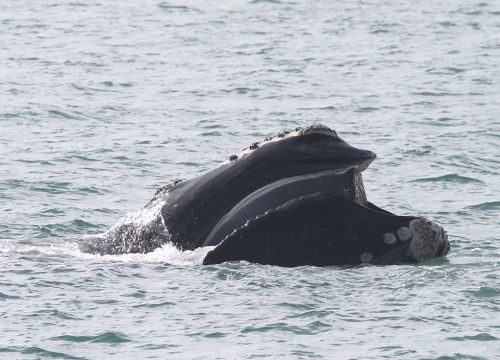
A North Atlantic right whale's mouth is visible at the ocean surface.
NOAA scientists and partners recently collaborated to examine how oil and dispersants might affect the function of baleen in humpback, bowhead, and right whales (pictured). Hundreds of baleen plates hang from these whales' top jaws and allow them to filter food from the water. (Credit: Georgia Department of Natural Resources, Permit 15488)
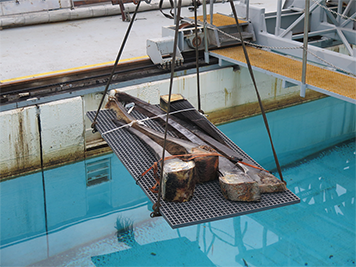
Segments of baleen anchored to gum tissue hanging over a water tank.
A view of some segments of baleen anchored to gum tissue at Ohmsett's 2.6 million gallon saltwater tank. (NOAA)
Node Weight: 
4

Pages

Subscribe to response.restoration.noaa.gov RSS