Back to top

When Boats Don't Float: From Sunken Wrecks to Abandoned Ships

Short title: 
Sunken Wrecks and Abandoned Ships

NOVEMBER 9, 2015 -- The waterways and coastlines of the United States are an important national resource, supporting jobs and providing views and recreation.

However, the past century of maritime commerce, recreation, and even warfare has left a legacy of thousands of sunken, abandoned, and derelict vessels along our coasts, rivers, and lakes.

Some of these sunken shipwrecks are large commercial and military vessels such as the USS Arizona in Pearl Harbor, Hawaii; the Edmund Fitzgerald in the Great Lakes; and the recent tragic loss of the 790 foot cargo ship El Faro and its crew off the Bahamas.

These large vessels may be environmental threats because of their cargoes, munitions, and fuel, but many also are designated as submerged cultural resources—part of our maritime heritage. Some even serve as memorials or national historic landmarks.

Unless they are pollution hazards, or shallow enough to be threats to navigation or become dive sites, most are largely forgotten and left undisturbed in their deep, watery resting sites.

But another class of wrecks, abandoned and derelict boats, are a highly visible problem in almost every U.S. port and waterway.

Some vessels are dilapidated but still afloat, while others are left stranded on shorelines, or hidden just below the surface of the water.

These vessels can have significant impacts on the coastal environment and economy, including oil pollution, marine debris, and wildlife entrapment. They become hazards to navigation, illegal release points for waste oils and hazardous materials, and general threats to public health and safety.

Most derelict and abandoned vessels are the result of chronic processes—rot and rust and deterioration from lack of maintenance or economic obsolescence—with vessels slowly worsening until they sink or become too expensive to repair, and around that point are abandoned.

Others are mothballed or are awaiting repair or dismantling. If the owners can't afford moorage and repairs, or if the costs to dismantle the ship exceed the value of the scrap, the owners often dump the boat and disappear. Many vessels end up sinking at moorings, becoming partially submerged in intertidal areas, or stranding on shorelines after their moorings fail. These vessels typically lack insurance, have little value, and have insolvent or absentee owners, a problematic and expensive combination.

Another source of abandoned vessels comes from major natural disasters. After large hurricanes, coastal storms, and tsunamis, a large number of vessels of varying sizes, conditions, and types may be damaged or set adrift in coastal waters.

For example, approximately 3,500 commercial vessels and countless recreational vessels needed to be salvaged or scrapped after Hurricanes Katrina and Rita hit the Gulf Coast in 2005. And remember the empty squid boat that drifted across the Pacific Ocean after the 2011 Japan earthquake and tsunami?

NOAA's interests in this wide range of lost or neglected ships include our roles as scientific advisers to the U.S. Coast Guard, as stewards of marine living and cultural resources (which extends to when these resources are threatened by pollution as well), and as the nation's chart maker to ensure that wrecks are properly marked for safe navigation.

This week we're taking a deeper dive into the many, varied, and, at times, overlooked issues surrounding the wrecks and abandoned vessels dotting U.S. waters. As recent events have shown, such as in a recently discovered leaking wreck in Lake Erie and a rusted tugboat left to rot in Seattle, this issue isn't going away.

First, check out our infographic below exploring the different threats from wrecked and abandoned ships and a gallery of photos highlighting some examples of these ships, both famous and ordinary.

UPDATE 11/16/2015: Take a look at the story featured during this deep dive: Using NOAA Tools to Help Deal with the Sinking Problem of Wrecked and Abandoned Ships.
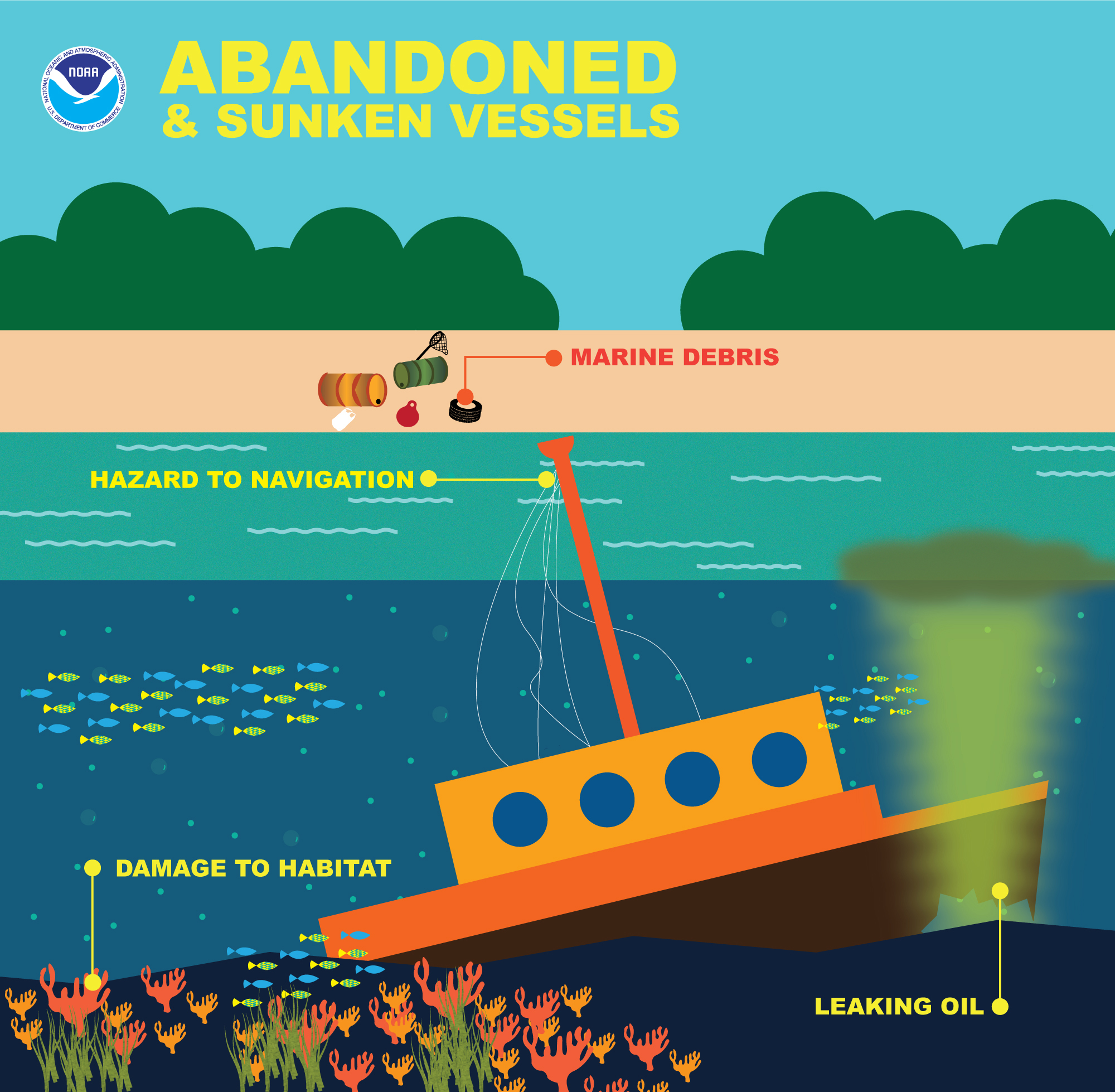
Illustration showing a sunken, abandonedship sticking out of the water close to shore, leaking oil, damaging habitat, posing a hazard to navigation, and creating marine debris on shore.
Sunken and abandoned ships can cause a lot of potential damage to the environment and the economy. (NOAA) Click to enlarge.
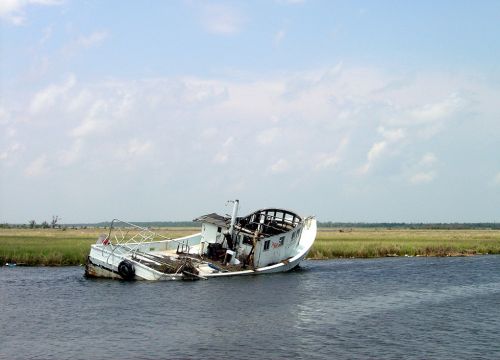
Derelict boat in a Gulf marsh.
Ships end up wrecked or abandoned for many reasons and can cause a variety of environmental and economic issues. After Hurricanes Katrina and Rita, thousands of vessels like this one needed to be scrapped or salvaged in the Gulf of Mexico. (NOAA)
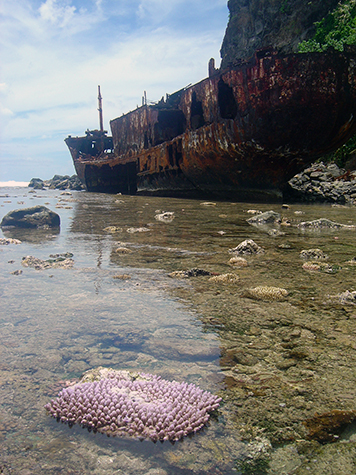
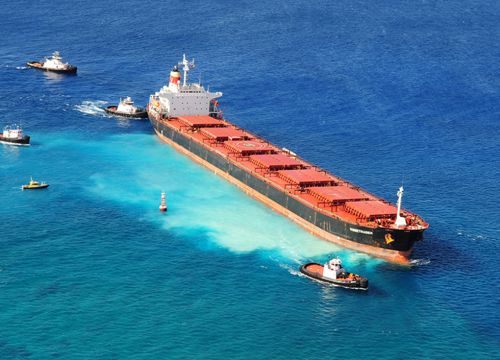
Large rusted out ship in shallow water surrounded by corals.
Some shipwrecks, like this one stranded among coral in American Samoa, can become threats to marine life and people. (NOAA)
Node Weight: 
2

Births Down and Deaths Up in Gulf Dolphins Affected by Deepwater Horizon Oil Spill

Short title: 
Births Down and Deaths Up in Gulf Dolphins

NOV. 4, 2015 — In August of 2011, a team of independent and government scientists evaluating the health of bottlenose dolphins in Louisiana's Barataria Bay gave dolphin Y35 a good health outlook. Based on the ultrasound, she was in the early stages of pregnancy, but unlike many of the other dolphins examined that summer day, Y35 was in pretty good shape. She wasn't extremely underweight or suffering from moderate-to-severe lung disease, conditions connected to exposure to Deepwater Horizon oil in the heavily impacted Barataria Bay. Veterinarians did note, however, that she had alarmingly low levels of important stress hormones responsible for behaviors such as the fight-or-flight response.

Normal levels of these hormones help animals cope with stressful situations. This rare condition—known as hypoadrenocorticism—had never been reported before in dolphins, which is why it was not used for Y35 and the other dolphins' health prognoses. Less than six months later, researchers spotted Y35 for the last time. It was only 16 days before her expected due date. She and her calf are now both presumed dead, a disturbingly common trend among the bottlenose dolphins that call Barataria Bay their year-round home. T

his trend of reproductive failure and death in Gulf dolphins over five years of monitoring after the 2010 Deepwater Horizon oil spill is outlined in a November 2015 study led by NOAA and published in the peer-reviewed journal Proceedings of the Royal Society. Of the 10 Barataria Bay dolphins confirmed to be pregnant during the 2011 health assessment, only two successfully gave birth to calves that have survived. This unusually low rate of reproductive success—only 20%—stands in contrast to the 83% success rate in the generally healthier dolphins being studied in Florida's Sarasota Bay, an area not affected by Deepwater Horizon oil.

Baby Bump in Failed Pregnancies

While hypoadrenocorticism had not been documented previously in dolphins, it has been found in humans. In human mothers with this condition, pregnancy and birth—stressful and risky enough conditions on their own—can be life-threatening for both mother and child when the condition is left untreated. Wild dolphins with this condition would be in a similar situation. Mink exposed to oil in an experiment ended up exhibiting very low levels of stress hormones, while sea otters exposed to the Exxon Valdez oil spill experienced high rates of failed pregnancies and pup death. These cases are akin to what scientists have observed in the dolphins of Barataria Bay after the Deepwater Horizon oil spill.

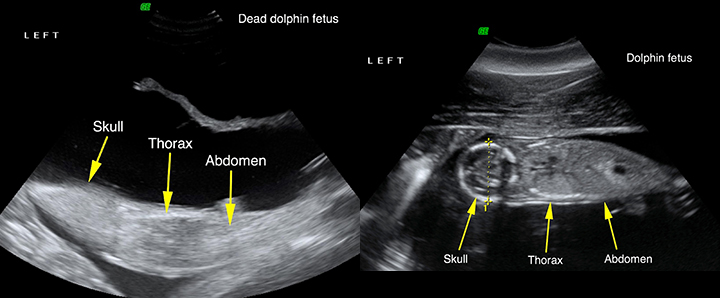
Left: dolphin ultrasound image of a dead fetus. Right: dolphin ultrasound image of a live fetus.
Left, a reproductive ultrasound image of dolphin Y31 showing an approximately 22-week gestational age, nonviable (dead) fetus in a longitudinal plane, acquired in August of 2011. A fetal heart beat was not detected, Doppler interrogation showed no fetal blood flow, and there was no fetal movement. Researchers found a trend of failed pregnancies in Barataria Bay, Louisiana, dolphins in the years following the Deepwater Horizon oil spill. Right, an ultrasound image of dolphin Y37 showing an approximately 18-week gestational age fetus in a longitudinal plane, acquired in August of 2011. Dotted line shows the skull biparietal diameter, which is used to estimate gestational age and birth date. Vessel-based surveys documented that the pregnancy was successful. Dolphin Y37 was seen with a live calf in both April and August of 2012. (Dr. Cynthia Smith/National Marine Mammal Foundation)

Among the pregnant dolphins being monitored in this study, at least two lost their calves before giving birth. Veterinarians confirmed with ultrasound that one of these dolphins, Y31, was carrying a dead calf in utero during her 2011 exam. Another pregnant dolphin, Y01, did not successfully give birth in 2012, and was then seen pushing a dead newborn calf in 2013. Given that dolphins have a gestation of over 12 months, this means Y01 had two failed pregnancies in a row. The other five dolphins to lose their calves after the Deepwater Horizon oil spill, excluding Y35, survived pregnancy themselves but were seen again and again in the months after their due dates without any young. Dolphin calves stick close to their mothers’ sides in the first two or three months after birth, indicating that these pregnant dolphins also had calves that did not survive. At least half of the dolphins with failed pregnancies also suffered from moderate-to-severe lung disease, a symptom associated with exposure to petroleum products. The only two dolphins to give birth to healthy calves had relatively minor lung conditions.

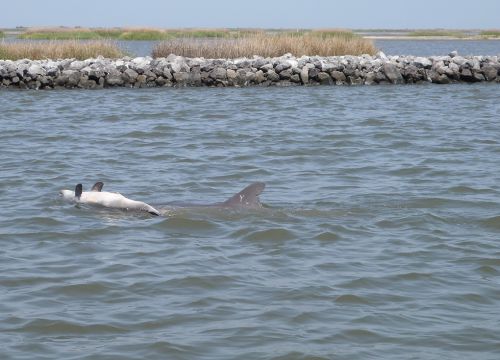
A mother bottlenose dolphin pushes her dead newborn calf at the water's surface.
Dolphin Y01 pushes a dead calf through the waters of Barataria Bay, Louisiana, in March 2013. This behavior is sometimes observed in female dolphins when their newborn calf does not survive. Barataria Bay dolphins have seen a disturbingly low rate of reproductive success in the wake of the Deepwater Horizon oil spill. (Louisiana Department of Wildlife and Fisheries)
Node Weight: 
3

How Does Oil Get into the Ocean?

Short title: 
How Does Oil Get into the Ocean?

NOVEMBER 2, 2015 — When many of us think of oil spills, we might think of an oil tanker running aground and spilling its contents into the ocean, as in the case of the oil tanker Exxon Valdez when the ship ran aground near the coast of Alaska in 1989.

In fact, there are actually several ways crude or refined oil may reach the marine environment. All of those spills add up too.

In a 2003 publication, the National Research Council of the National Academy of Sciences reported that roughly 343,200,000 gallons of oil were released into the sea annually, worldwide.

Of this amount, the report estimates the origin of that oil as follows:

  • Use or consumption of oil (which includes operational discharges from ships and discharges from land-based sources): 37%
  • Transportation (accidental spills from ships): 12%
  • Extraction: 3%
  • Natural seeps: 46%

Wherever oil is consumed, such as in manufacturing or when loading a ship with fuel, there are opportunities for oil spills. According to the Washington State Department of Ecology [PDF], most spills that occur during ship fueling happen because of inattention, inadequate procedure, procedural error, or poor judgment—in other words, human error.

The typically small-in-size spills that come from consuming oil originate from a variety of activities and actually account for most of the oil spilled by humans into the sea.

When the Exxon Valdez oil spill occurred, on the other hand, crude oil was in transport. Since oil is an international commodity and in constant demand, there are always ships, pipelines, and (increasingly) trains moving it around the world.

According to the International Tanker Owners Pollution Federation, occurrences of large spills from tankers and barges (above approximately 2,000 gallons) have decreased dramatically since 1970. This can be attributed at least in part to advances in safety thanks to the Oil Pollution Act of 1990.

While oil extraction is not considered a large source of the overall amount of oil released into the sea each year, spills from offshore oil exploration and drilling can be huge when they do happen. The well blowout that caused Deepwater Horizon spill in the Gulf of Mexico in 2010 is a (very large) example of an oil spill occurring during extraction activities. This type of accident occurs only where oil exploration and drilling operations take place—in the United States, the Gulf of Mexico and waters off the southern California coast are the major areas.

While not technically "oil spills," oil seeps from the ocean floor naturally release oil from subterranean reservoirs and represent the largest source of oil entering seas both in the United States and around the world. Even though seeps are not without their own impacts on marine life, natural oil seeps release oil slowly over time, allowing ecosystems to adapt. During an oil spill, the amount of oil released in a short time can overwhelm an ecosystem.

Impact, then, is not only determined by how much oil is in the environment, but also the type of oil and how quickly it is released.

The May 2015 oil spill at Refugio State Beach was caused by a pipeline break near Santa Barbara, California, adjacent to Coal Oil Point, a region famous for its natural seeps. Oil from seeps there release an estimated 6,500-7,000 gallons of oil per day (Lorenson et al., 2011) and are among the most active in the world. One of the response challenges during that spill was distinguishing between the oil that flowed directly into the ocean from the pipeline break and that from the ongoing seeps.

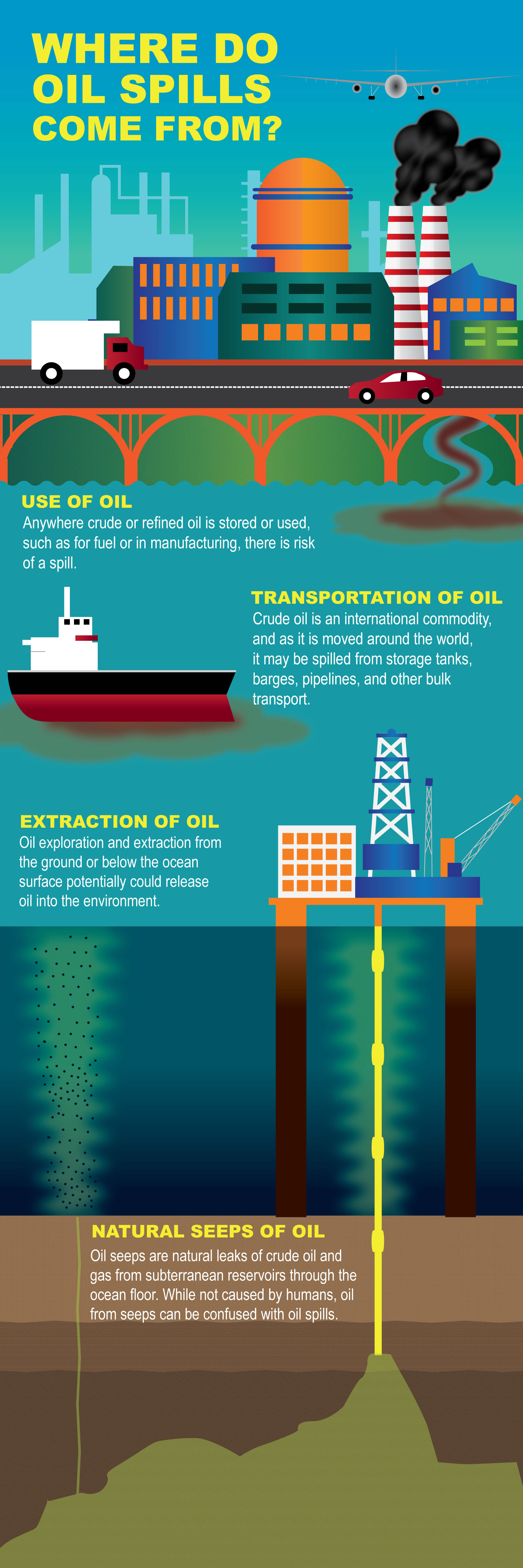
For a quick glance at the major causes of oil spills in the ocean, check out our infographic:

Graphic showing buildings and cars using oil, a tanker transporting oil, and a rig drilling for oil in the ocean, with a natural seep leaking oil out of the seafloor. Use of oil: Anywhere crude or refined oil is stored or used, such as for fuel or in manufacturing, there is risk of a spill. Transportation of oil: Crude oil is an international commodity, and as it is moved around the world, it may be spilled from storage tanks, barges, pipelines, and other bulk transport. Extraction of oil: Oil exploration and extraction from the ground or below the ocean surface potentially could release oil into the environment. Natural seeps of oil: Oil seeps are natural leaks of crude oil and gas from subterranean reservoirs through the ocean floor. While not caused by humans, oil from seeps can be confused with oil spills.
There are four primary ways oil can end up in the ocean: natural seeps, consumption, extraction, and transportation of oil. (NOAA) Click to enlarge.
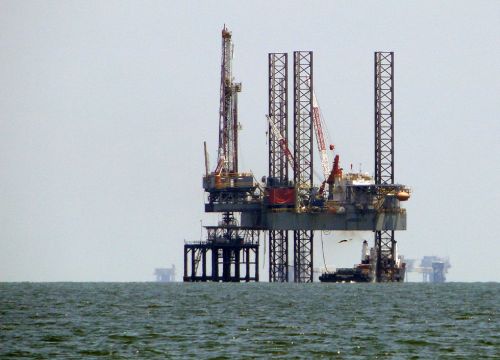
Oil rig in the Gulf of Mexico.
Oil rig in the Gulf of Mexico, off the coast of Port Fourchon, Louisiana. A 2003 report from the National Academy of Sciences estimates 3% of the oil entering the ocean each year comes from oil and gas exploration and extraction activities. (NOAA)
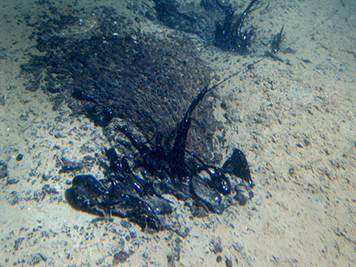
Dark, thick oil seeps out of the ocean floor sediments.
A natural tar seep releases oil offshore from Gaviota, California. When an oil spill occurs in an area with many naturally occurring seeps, responders may have a difficult time telling spilled oil apart from seep oil. (Donna Schroeder/U.S. Geological Survey)
Node Weight: 
7

Stepping on Board the Most Eerie, Neglected Ship I Had Ever Seen

Short title: 
Stepping on Board an Abandoned Ship
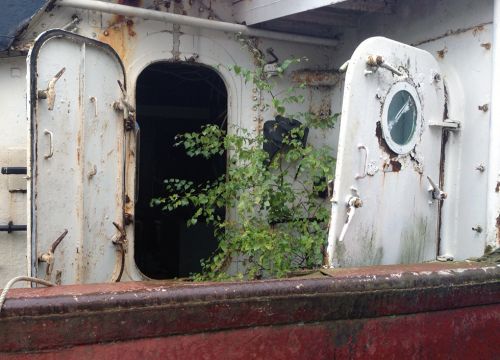
A tree growing on the deck of a decrepit, rusted boat.
Abandoned and derelict ships are a highly visible problem in almost every U.S. port and waterway. (NOAA)
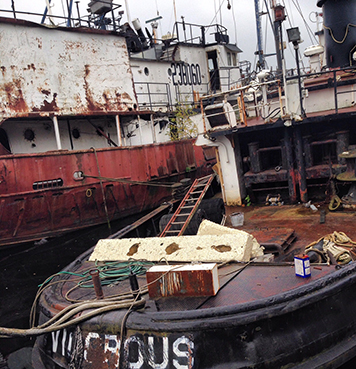
Two rusted and abandoned-looking boats at dock.
To the right is the T/V Vigorous, an apparently abandoned and less-than-vigorous-looking tugboat in Seattle, Washington, which NOAA's LTJG Rachel Pryor recently helped investigate. (NOAA)
Node Weight: 
2

NOAA Involved After Barge Argo, the Lake Erie Shipwreck Lost in 1937, Resurfaces with Oily Leak in U.S. Waters

Short title: 
NOAA Involved After Lake Erie Shipwreck Found with Oily Leak in U.S.

OCTOBER 28, 2015 -- The 1937 sinking of a small barge in Lake Erie went largely unnoticed at the time, but the ill-fated tank barge Argo is in the news now that the wreck’s exact location—along with a leak—has been discovered. And it wasn't in Canadian waters, as previously thought.

Ship Down, Pollution Rising

That piece of underwater detective work by the Cleveland Underwater Explorers, combined with historical research done as part of NOAA's RULET program (Remediation of Underwater Legacy Environmental Threats) which in 2013 identified it as a potentially polluting shipwreck, have been key factors in the developing response to the Argo. Recently found to be on the U.S. side of the border with Canada, the wreck has been traced to reports of pollution on Lake Erie in both nations, indicating that the Argo is leaking.

At the time of the sinking, the barge was reportedly loaded with 4,762 barrels of crude oil and the chemical benzol. The U.S. Coast Guard, with support from NOAA's Office of Response and Restoration and in collaboration with Canada, is ramping up pollution response efforts to address the leaking Great Lakes wreck. While underwater response technologies do exist to address wrecks filled with oil, there are a lot of steps involved before a wreck can be safely remediated.

Early efforts will focus on identifying whether the barge is leaking petroleum or benzol (or both) and determining whether the source of the leaks can be controlled immediately. The Coast Guard is evaluating whether and how to safely remove the cargo from the sunken barge to reduce the likelihood of future pollution. NOAA is providing environmental and chemical data, weather forecasting, modeling of observed oil sheens back to the wreck, and other observations to support the response.

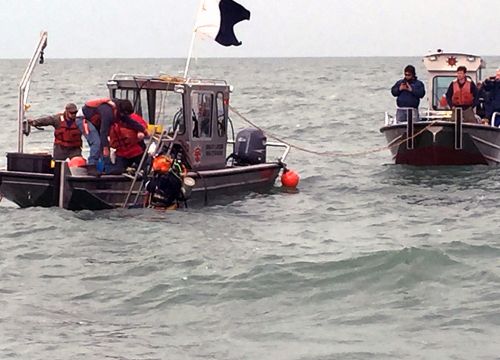
Divers exit small boats into the waters of Lake Erie.
Contractors conduct dive operations at the site of a sunken barge near the Kelley's Island Shoal in Lake Erie, Oct. 21, 2015. The divers were trying to establish the identity of the barge and if it or any of its cargo poses an environmental threat. (U.S. Coast Guard)
Node Weight: 
3

Deepwater Horizon Oil Spill Tied to Further Impacts in Shallower Water Corals, New Study Reports

Short title: 
Deepwater Horizon Oil Spill Tied to Further Coral Impacts
What Lies Beneath

Three of the largest reefs at Pinnacle Trend—bearing the colorful names Alabama Alps Reef, Roughtongue Reef, and Yellowtail Reef—were located beneath the surface slick of Deepwater Horizon oil for three to five weeks in the summer of 2010. Located between 35 and 67 miles from the leaking well, corals on the reefs were likely to have been exposed to oil and dispersant that sank from the surface down toward the seafloor. These reefs were measured against two other reef sites more than 120 miles beyond the leaking well and below the Deepwater Horizon oil slick less than three days.

Because researchers had access to ROV footage of these coral reefs dating back as far as 1989, they could directly measure what level of injury could be considered "normal" for each reef. After all, this area of the Gulf is known to be susceptible to impacts from fishing methods that contact the sea bottom. Researchers suspect that fishing was the cause of injuries observed at the two sites far from the spill because lines were wrapped around many of the coral colonies.

Not a (Sea) Fan of Damaged Corals

The three reefs closer to the wellhead had less evidence of fishing but showed major declines in health after the oil spill in 2010. More than half of the coral colonies at these sites showed signs of damage by 2011, compared with less than 10% before the spill. In comparison, the sites further from the wellhead had no significant change before and after the Deepwater Horizon oil spill. In addition, injured corals the scientists noted in 2011 continued to deteriorate in the years that followed, "suggesting recovery of injured corals is unlikely," said lead author Dr. Peter Etnoyer of NOAA. Healthy corals noted after the incident in 2011 remained healthy through the end of the study in 2014, suggesting the injured corals would have been healthy but for the spill.

The researchers in this most recent study noted significant injuries among at least four species of large gorgonian octocorals (sea fans) in the three impacted reefs. Injuries took the form of overgrowth by hydroids (fuzzy marine invertebrates characteristic of unhealthy corals) and broken or bare branches of coral. To a lesser extent, corals also appeared severely discolored, with eroded polyps, had lost limbs, or toppled over entirely. An earlier study of these mesophotic reefs by some of the same scientists in the journal Deep Sea Research detected low levels of a petroleum compound known as polycyclic aromatic hydrocarbons (PAHs) in coral tissues and nearby seafloor sediments. The levels were low compared to sites near the wellhead, but at this point, no one yet has established what constitutes a toxic level of these compounds to marine life in mesophotic coral communities.

"The corals of the Pinnacle Trend require decades to reach maturity," said Florida State University scientist Ian MacDonald, who also contributed to the study. "Recovery will require years and it may not be immediately apparent whether the injured colonies are being replaced with new settlements. Our task is to study the process—to learn as much as we can and to ensure that nothing impedes this vital natural process."

"The results presented here may vastly underestimate the extent of impacts to mesophotic reefs in the northern Gulf of Mexico," the researchers commented, since the reefs in this study represent less than 3 percent of the mesophotic reef habitat that was known to occur beneath the oil slick. "The reefs have some prospects for recovery since many healthy colonies remain," said Etnoyer.

NOAA and its partners on this study recommend efforts to protect and restore the Pinnacles Trend reefs in order to conserve the corals and fish along this part of the ocean floor.

Learn more about the studies supported by the federal government's Natural Resource Damage Assessment for the Deepwater Horizon oil spill, which determines the environmental harm due to the oil spill and response and seeks compensation from those responsible in order to restore the affected resources.

An infographic showing a benthic profile consisting of land, nearshore rocky reefs, mesophotic reefs, continental slope, wellhead, and deep-sea Benthos.
A profile of the Gulf of Mexico seafloor habitats extending from the shore to depths around the Macondo wellhead. The mesophotic coral reefs in this study were located at the edge of the continental shelf. (NOAA/Kate Sweeney)
Sick sea fan with discolored branches and hydroids covering it.
After the Deepwater Horizon oil spill, researchers found significant injuries in at least four species of sea fans along the Gulf's continental shelf. Damage primarily took the form of overgrowth by hydroids (fuzzy marine invertebrates characteristic of unhealthy corals) and broken or bare branches of coral. (Credit: Ian MacDonald/Florida State University)
Node Weight: 
2

How Do Oil Spills Get Cleaned up on Shore?

Short title: 
How Do Oil Spills Get Cleaned up on Shore?

OCTOBER 7, 2015 -- We often say that no two oil spills are alike, but one thing spills have in common is that cleaning oil off of shorelines is a messy business.

If a ship sinks or an oil pipeline ruptures, the primary goals of spill responders are to contain the oil source to stop any (more) oil from leaking and to prevent already spilled oil from spreading.

However, weather conditions and ocean currents may overwhelm containment booms and other offshore oil spill response strategies.

That means escaping oil may reach shorelines both near to and far from the initial oil spill location.

But when oil stains shorelines, what methods and equipment do responders use to remove it? And how is that different from cleaning up oil out at sea?

Here at NOAA, we have a library full of spill response manuals, technical reports, scientific journal articles, job aids, case histories, and guidance documents describing the methods used to clean up shorelines. And after every major oil spill there are advances in shoreline cleanup methods and equipment.

Here we present some commonly used shoreline cleanup options. Keep in mind that all response options, including what responders call "natural recovery" (letting oil break down naturally in the environment), have potential trade-offs. This means we have to take into consideration the impact of the cleanup methods themselves as we assess the overall environmental impacts of any action.

There are, of course, nuances in cleanup strategies at every oil spill that reflect the specific oil type, local environmental conditions, shoreline habitats, shore access, and a host of safety and logistical considerations. These variables will influence the particular cleanup strategy responders use at any one spill.

And at most oil spills, a combination of cleanup methods will be used (but not necessarily in the order shown here). Let's take a look at each of these methods.

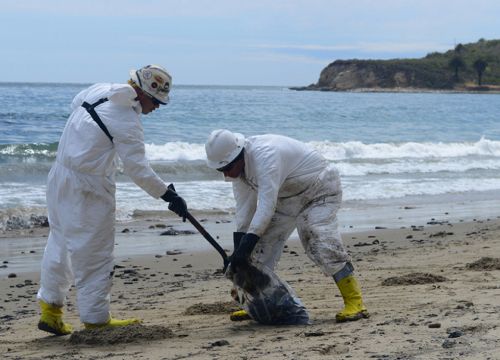
Beach cleanup crew members shovel gathered oil and affected sand into a bag.
Beach cleanup crew members use shovels and their hands to gather oil and affected sand into a bag as they clean up a beach near Refugio State Beach, California, May 21, 2015. (U.S. Coast Guard)
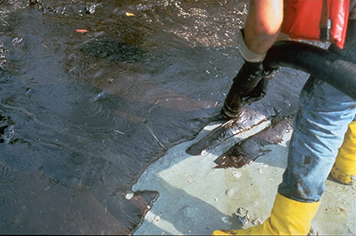
Person in boots vacuuming thick oil from a beach.
Heavy oil vacuumed from a sandy shoreline after the 1993 Tampa Bay oil spill. (NOAA)
Site Themes: 
Node Weight: 
6

NOAA, Deepwater Horizon Trustees Announce Draft Restoration Plans for Gulf of Mexico Following 2010 Disaster

Short title: 
Draft Restoration Plans for Gulf of Mexico Following 2010 Disaster

OCT.5, 2015 — NOAA and the other Deepwater Horizon Natural Resource Trustees today released 15-year comprehensive, integrated environmental ecosystem restoration plans for the Gulf of Mexico in response to the April 20, 2010 Deepwater Horizon oil rig explosion and spill. Implementing the plan will cost up to $8.8 billion. The explosion killed 11 rig workers and the subsequent spill lasted 87 days and impacted both human and natural resources across the Gulf.

The Draft Deepwater Horizon Oil Spill Draft Programmatic Damage Assessment and Restoration Plan and Draft Programmatic Environmental Impact Statement allocates Natural Resource Damage Assessment monies that are part of a comprehensive settlement agreement in principle among BP, the U.S. Department of Justice on behalf of federal agencies, and the five affected Gulf States announced on July 2, 2015. The Department of Justice lodged today in U.S. District Court a consent decree as part of the more than $20 billion dollar settlement. In the draft plan, the Trustees provide documentation detailing impacts from the Deepwater Horizon oil spill to:

  • wildlife, including fish, oysters, plankton, birds, sea turtles, and marine mammals across the Gulf
  • habitat, including marshes, beaches, floating seaweed habitats, water column, submerged aquatic vegetation, and ocean-bottom habitats
  • recreational activities including boating, fishing, and going to the beach

The Trustees determined that "overall, the ecological scope of impacts from the Deepwater Horizon spill was unprecedented, with injuries affecting a wide array of linked resources across the northern Gulf ecosystem." As a result of the wide scope of impacts identified, the Trustees "have determined that the best method for addressing the injuries is a comprehensive, integrated, ecosystem restoration plan." Both the consent decree and the draft plan are available for 60 days of public comment. The Trustees will address public comment in adopting a final plan. For the consent decree, once public comment is taken into account the court will be asked to make it final. Public comments on the draft plan will be accepted at eight public meetings to be held between October 19 and November 18 in each of the impacted states and in Washington D.C. Comments will also be accepted online and by mail sent to: U.S. Fish and Wildlife Service, P.O. Box 49567, Atlanta, GA 30345. The public comment period will end on December 4, 2015. The Trustees are proposing to accept this settlement, which includes, among other components, an amount to address natural resource damages of $8.1 billion for restoration and up to $700 million for addressing unknown impacts or for adaptive management. These amounts include the $1 billion in early restoration funds which BP has already committed.

"NOAA scientists were on the scene from day one as the Deepwater spill and its impacts unfolded. NOAA and the Trustees have gathered thousands of samples and conducted millions of analyses to understand the impacts of this spill," said Kathryn D. Sullivan, Ph.D., undersecretary of commerce for oceans and atmosphere and NOAA administrator. "The scientific assessment concluded that there was grave injury to a wide range of natural resources and loss of the benefits they provide. Restoring the environment and compensating for the lost use of those resources is best achieved by a broad-based ecosystem approach to restore this vitally important part of our nation’s environmental, cultural and economic heritage."

NOAA led the development of the 1,400 page draft damage assessment and restoration plan, with accompanying environmental impact statement, in coordination with all of the natural resource Trustees. The draft plan is designed to provide a programmatic analysis of the type and magnitude of the natural resources injuries that have been identified through a Natural Resource Damage Assessment conducted as required by the Oil Pollution Act of 1990 and a programmatic restoration plan to address those injuries. Alternative approaches to restoration are evaluated in the plan under the Oil Pollution Act and the National Environmental Policy Act. Specific projects are not identified in this plan, but will be proposed in future project-specific restoration proposals. The Trustees will ensure that the public is involved in their development through public notice of proposed restoration plans, opportunities for public meetings, and consideration of all comments received. The draft plan has an array of restoration types that address a broad range of impacts at both regional and local scales. It allocates funds to meet five restoration goals, and 13 restoration types designed to meet these goals. The five overarching goals of the proposed plan are to:

  • restore and conserve habitat
  • restore water quality
  • replenish and protect living coastal and marine resources
  • provide and enhance human use recreational activities
  • provide for long term monitoring, adaptive management, and administrative oversight of restoration efforts.

The 13 proposed restoration activities are:

  1. Restoration of wetlands, coastal, and nearshore habitats
  2. Habitat projects on federally managed lands
  3. Nutrient reduction
  4. Water quality
  5. Fish and water column invertebrates
  6. Sturgeon
  7. Submerged aquatic vegetation
  8. Oysters
  9. Sea turtles
  10. Marine mammals
  11. Birds
  12. Low-light and deep seafloor communities
  13. Provide and enhance recreational opportunities

Together, these efforts will restore wildlife and habitat in the Gulf by addressing the ecosystem injuries that resulted from the Deepwater Horizon incident. Once the plan is finally approved and the settlement is finalized, NOAA will continue to work with all of the Trustees to plan, approve, and implement restoration projects. NOAA will bring scientific expertise and focus on addressing remedies for living marine resources—including fish, sturgeon, marine mammals, and sea turtles—as well as coastal habitats and water quality. NOAA scientists developed numerous scientific papers for the NRDA case including documentation of impacts to bottlenose dolphins, pelagic fish, sea turtles, benthic habitat and deep water corals. The Deepwater Horizon Oil Spill Draft Programmatic Damage Assessment and Restoration Plan and Draft Programmatic Environmental Impact Statement is available for public review and comment through December 4. It is posted at www.gulfspillrestoration.noaa.gov and will be available at public repositories throughout the Gulf and at the meetings listed at www.gulfspillrestoration.noaa.gov/public-meetings.

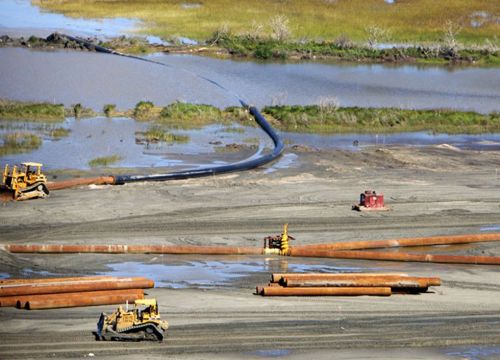
Bulldozers doing construction in a Gulf of Mexico marsh.
These efforts will restore wildlife and habitat in the Gulf by addressing the ecosystem injuries that resulted from the Deepwater Horizon incident. (NOAA)
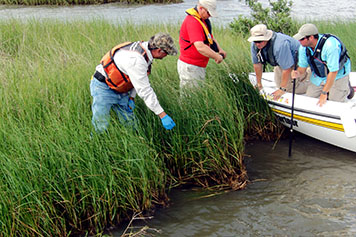
People in boat and in marsh assessing oiling impacts.
The draft plan has an array of restoration types that address a broad range of impacts at both regional and local scales. It allocates funds to meet five restoration goals, and 13 restoration types designed to meet these goals. (NOAA)
Node Weight: 
1

Restoration along Oregon's Willamette River Opens up New Opportunities for Business and Wildlife

Short title: 
Opening up New Opportunities for Business and Wildlife
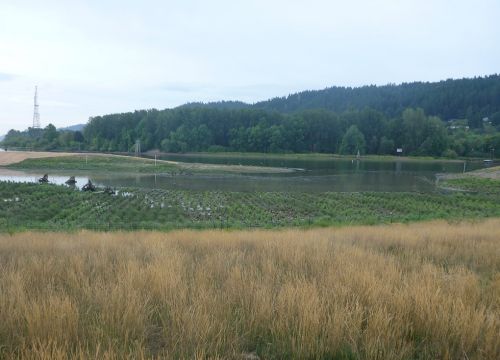
Newly planted wetland vegetation on the bank of a river.
Habitat restored at Alder Creek in Oregon in 2014 was planted with native vegetation in 2015. Salmon and osprey have already been seen making themselves at home in the newly constructed habitat. (Photo courtesy of Wildlands, Inc.)
Node Weight: 
3

Who Pays for Oil Spills?

Short title: 
Who Pays for Oil Spills?

SEPTEMBER 15, 2015 — After every major oil spill, one question comes up again and again: Who is going to pay for this mess?

While the American public and the environment pay the ultimate price (metaphorically speaking), the polluter most often foots the bill for cleanup, response, and restoration after oil spills.

In sum: You break it, you buy it.

But our unspoiled coasts are priceless, and we would rather protect—or at least minimize impacts to—them as much as possible. Which means federal dollars are invested in ensuring top-notch experts are ready to act when oil spills do strike. (Stay tuned for more on that.)

So, Who Pays to Clean up an Oil Spill?

When an oil spill occurs, there are very clear rules about who pays for the direct response activities, the cost of assessing environmental damages, and implementing the necessary restoration. The Oil Pollution Act of 1990, one legacy of the 1989 Exxon Valdez spill, spells out that those responsible for the pollution pay for all costs associated with the cleanup operations. However, similar to a car accident, insurance companies aren't going to start writing checks without first looking at the circumstances. But time is of the essence when oil hits the water.

While insurance companies work out the details of legal (and hence, monetary) responsibility, the U.S. Coast Guard is able to set up an immediate source of funding for federal and state agencies and tribes who support the oil spill cleanup, which pays for their contributions to the response. If the polluter is ultimately deemed liable for the spill, then they reimburse all expenses to the U.S. Coast Guard. Meaning the polluter pays for the cost of the oil spilled.

What About Restoration After Oil Spills?

Well, what about the environmental impacts left behind after the cleanup ends and everyone goes home? Does the American public pay to restore the animals and plants harmed by the spill?

Nope. Again, the Oil Pollution Act states that parties that release hazardous materials and oil into the environment are responsible not only for the cost of cleaning up the release, but also for restoring any "injuries" (harm) to natural resources that result.

As the primary federal steward ("trustee") for coastal animals and habitat, NOAA is responsible for ensuring the restoration of coastal resources in at least two specific cases. First, for coastal resources harmed by releases of hazardous materials (e.g., oil and chemicals) and second, for national marine sanctuary resources harmed by physical impacts (e.g., when a ship grounds on coral reefs in a marine sanctuary).

But What if Polluters Don't Have to Pay for Everything?

It is possible that a polluter can be found not to be liable (e.g., the pollution was an unforeseen accident) or the polluter can reach its limit of liability under the law. So, does the money for cleanup and restoration then come from American taxpayers?

Nope. In these cases, the costs are then covered by the Oil Spill Liability Trust Fund. This fund accrues from taxes on most domestically produced and imported oil. The oil companies, often those responsible for spills, are paying into this fund.

When a spill occurs, those involved in the response, cleanup, and damage assessment can access these funds if the polluter is unknown, unwilling, unable, or not liable for paying the spill’s full costs. For response activities, the fund will cover costs associated with preventing (in the case of a grounded ship that hasn’t released oil yet), minimizing, mitigating, or cleaning up an oil spill. For natural resource damage assessment, the fund will cover costs associated with assessing an area's natural resource damages, restoring the natural resources, and compensating the public for the lost use of the affected resources.

Of course, polluters aren't always eager to accept liability, and accurately assessing environmental damages can take time. In fact, it takes an average of four years to reach a settlement for these damages and then begin restoration after an oil spill. As a result, our job is not only to enforce pollution regulations but to ensure the right type and amount of restoration is achieved.

That means, once again, dollars from polluters are essentially paying for oil spills.

So, the Public Doesn't Pay for Anything?

Well, okay. The same as with your local fire department, public tax dollars are spent developing a highly trained group of professional emergency response and restoration experts. The more prepared we are to respond when an oil spill happens, the sooner a community can recover, environmentally and economically, from these unfortunate events.

When we aren't providing direct support to an oil spill (or other marine pollution event), NOAA's Office of Response and Restoration is hard at work training ourselves (and others) and developing tools and best practices for emergency response and assessment of impacts to natural resources.

Better Safe (and Prepared) Than Sorry

Oil spills can happen at any time of day and any time of year (including holidays). We have to be ready at any time to bring our scientific understanding of how oil behaves in the environment, where it might go, what it might impact, what can be done to address it, and what restoration may be needed.

And we think being prepared before a spill happens is a worthy investment.

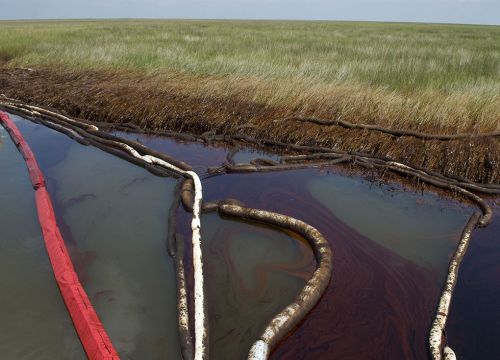
Oiled boom and marsh in Louisiana.
The Oil Pollution Act of 1990 states that those responsible for releasing oil and other hazardous materials pay for all costs associated with the cleanup operations, as well as the assessment of environmental impacts and necessary restoration. (U.S. Coast Guard)
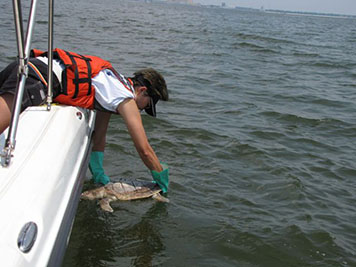
Scientist leans over a boat to retrieve a dead sea turtle from the water.
It takes an average of four years to reach a settlement for environmental damages and then begin restoration after an oil spill. As a result, our job is not only to enforce pollution regulations but to ensure the right type and amount of restoration is achieved. (NOAA)
Node Weight: 
2

NOAA Is Supporting Oil Spill Response in Kentucky After Tugs Collide on Mississippi River

Short title: 
Tug Collision in Kentucky Causes Oil Spill on Mississippi River
A view of damaged barge with boom and sorbent pads in the water.
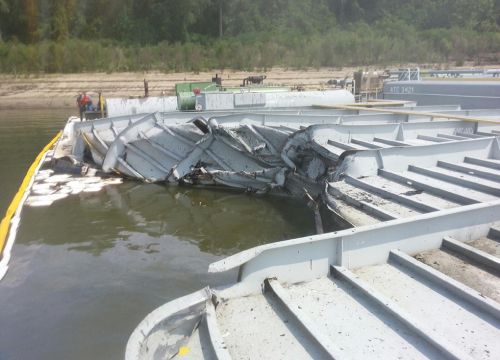
A view of the damaged barge Apex 3508, whose tug boat collided with another on September 2, 2015, causing an oil spill on the Mississippi River near Columbus, Kentucky. The rest of the oil on board the barge has since been removed. (U.S. Coast Guard)
Node Weight: 
2

Podcast: What Was It Like Responding in the Aftermath of Hurricane Katrina?

Short title: 
Podcast: Responding in the Aftermath of Hurricane Katrina

AUGUST 27, 2015 -- On today's episode of Diving Deeper, we remember one of the most devastating natural disasters to hit U.S. shores: Hurricane Katrina, which made landfall 10 years ago this week.

What was it like working in New Orleans and the surrounding area in the wake of such a storm?

In this podcast, we talk with Charlie Henry and Dave Wesley, two pollution responders from NOAA's Office of Response and Restoration who were working in the area in the aftermath of not just one massive hurricane, but two, as Hurricane Rita swept across the Gulf Coast just a few short weeks later.

Hear about their experiences responding to these storms, find out which memories stand out the most for them, and reflect on the toll of working in a disaster zone:

Listen to the podcast

Learn more about our work after Hurricanes Katrina and Rita, explore the progress made in the 10 years since, and see photos of the destruction these storms left across the heavily industrialized coast of the Gulf of Mexico.

Damaged oil tanks and piping with spilled oil along Gulf Coast.
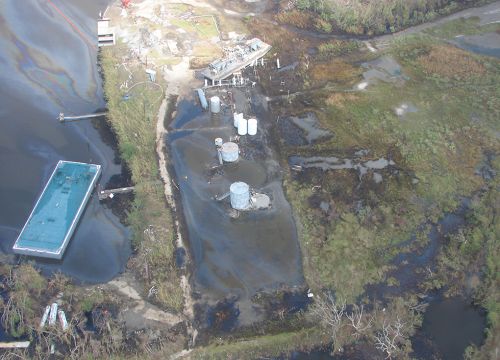
Damage from Hurricane Katrina at the Sundown Energy facility included ruptured tanks and piping, releasing oil into surrounding waters. The site, located in Potash, Louisiana, is remote. (U.S. Coast Guard)
Damaged and flooded beachfront homes.
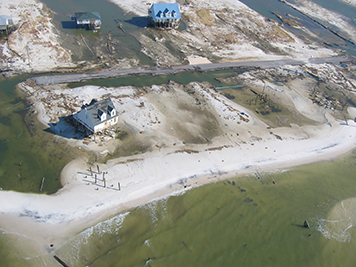
Hurricane Katrina caused significant damage to beachfront homes on Dauphin Island, Alabama. (NOAA)
Node Weight: 
3

Surveying What Hurricane Katrina Swept out to Sea

Short title: 
Surveying What Hurricane Katrina Swept out to Sea

Swept Away

The same massive storm surge that demolished these houses was the reason Barnea was in the region a year after Hurricane Katrina struck the Gulf Coast. The storm surge, over 25 feet high in places, destroyed houses and infrastructure, and when it receded, it washed out to sea massive amounts of what became marine debris. In the wake of Hurricane Katrina and less than a month later, Hurricane Rita, the marine debris in ports and navigation channels was cleared quickly. However, the remaining debris, outside of navigation channels and in fishing and boating areas, posed a safety hazard to people, damaged boats and fishing gear, and hampered recreation and commercial activities. To help deal with this debris, Congress appropriated funding in 2006 and again in 2007 to NOAA's Office of Coast Survey and Office of Response and Restoration to survey traditional fishing grounds, map items found, disseminate survey information to assist with removal, and inform the public. The project took three years. During the first phase, areas off the coast of Alabama, Mississippi, and eastern Louisiana were surveyed with side scan sonar. The survey teams generated maps of suspected underwater debris items (called "targets") and placed them on the Gulf of Mexico Marine Debris Project website. They also shared with the public the locations of debris items determined to be a danger to navigation. In the second phase of the project, the survey covered nearshore areas along the central and western Louisiana coastline. In addition to side scan sonar, survey teams used multi-beam survey technology for major targets, which is a powerful tool that provided vivid images of the objects detected. NOAA, Federal Emergency Management Agency (FEMA), U.S. Coast Guard, and the State of Louisiana collaborated closely to determine which targets were the result of Hurricanes Katrina or Rita and therefore eligible for removal. Many of the targets they detected were actually not the result of these two major storms.

Dealing with Disaster Debris

On September 2, 2009, the project partners met in Baton Rouge, Louisiana, for a workshop summarizing the project. Participants provided insights and suggestions for improving the process, which were later gathered into the workshop proceedings [PDF]. We learned many lessons from this project, which should be put to good use in the future. One of the things NOAA's Barnea liked most about the project was its collaborative nature. Project partners included two NOAA offices and eight contractors, Coast Guard, FEMA, a host of state agencies from the three impacted states, NOAA Sea Grant, and of course, the general public in the Gulf of Mexico. This collaborative effort did not go unnoticed, and the project received the Gulf Guardian Award for Partnership. Hurricane Katrina was the first severe marine debris event for the young NOAA Marine Debris Program, established in 2005. It was not the last. Over the last 10 years, this program, along with other parts of NOAA, have dealt with marine debris from Hurricane Sandy, a tsunami in American Samoa, and most recently, the influx of debris from the Japan tsunami of 2011. Sadly, this trend suggests more such events in the future. NOAA and other agencies have learned a lot over the past 10 years, and are better prepared for the next disaster which might sweep debris out to sea or bring large amounts of it onto shore (what are known as "severe marine debris events"). Learn more at gulfofmexico.marinedebris.noaa.gov and marinedebris.noaa.gov/our-work/emergency-response.

A side scan sonar image of a possible container off the Gulf Coast, 24 feet below the water surface.
A side scan sonar image of a possible container off the Gulf Coast, 24 feet below the water surface. It could be a hazard to navigation. Image credit: NOAA.
Sunken boat next to a house in Louisiana.
Hurricane Katrina's storm surge, over 25 feet high in places, destroyed houses, boats, and infrastructure along the Gulf Coast, and when it receded, it washed out to sea massive amounts of what became marine debris. Image credit: U.S. Coast Guard.
Node Weight: 
3

Thanks, Oil Pollution Act: 25 Years of Enabling Environmental Restoration After Oil Spills

Short title: 
25 Years of Enabling Environmental Restoration After Oil Spills

AUGUST 20, 2015 -- Imagine yourself preparing for your next trip to the beach.

The sun is shining and you drive with excitement to your favorite spot on the coast. But when you arrive, instead of being welcomed by clean sand and blue ocean waves, you see a thick black sludge washing over both beach and birds.

What happened?

A ship just offshore has spilled oil that has made its way to your favorite beach. The spill is large enough to close the beach, halt fishing, and warrant advisories about eating local fish. Wildlife and their habitats are also fouled with oil.

You might wonder: Who caused this and who is going to clean this up? How badly is this harming the local wildlife and how will the environment be restored? Who is going to pay for it? How long will the beach and fisheries be closed?

And how can a disaster like this be prevented?

Before 1990, there was no single law to deal with all these questions. A series of existing federal, state, and local laws contained general provisions about oil spill cleanup, liability, and compensation, but they were largely considered to be inadequate.

A New Decade, A New Law, A New Program

Fortunately, on August 18, 1990, a little more than a year after the Exxon Valdez disaster, the Oil Pollution Act was passed and signed into law.

This historic and timely legislation gave NOAA and other agencies the authority to address impacts to natural resources caused by oil spills in navigable U.S. waters and shorelines.

The law is designed to prevent oil spills, ensure cleanup if they occur, and restore the natural resources impacted as a result of spills. Those responsible for the spill must restore the environment and compensate the public for its lost uses (like beach and recreational fishery closures), from the time of the incident until those natural resources fully recover.

NOAA has been working to protect and restore impacted natural resources at hazardous waste sites and oil spills since the early 1980s. In 1992, shortly after the Oil Pollution Act came into effect, NOAA created the Damage Assessment, Remediation, and Restoration Program (DARRP). The program was established as the central location for expertise in NOAA to assess, restore, and protect coastal environments damaged by oil spills, hazardous waste releases, and ship groundings.

DARRP brings together scientific and legal experts from three parts of NOAA: the Office of Response and Restoration, Office of Habitat Conservation, and General Counsel for Natural Resources.

In DARRP's 23 year history, our experts have assessed the environmental impacts of dozens of oil spills and recovered nearly $2 billion from those responsible for oil spills. These funds are being used to restore a variety of habitats—from tidal wetlands and coral reefs to sandy beaches and rocky coastlines—as well as the sea turtles, fish, birds, and other wildlife harmed by spills. This even extends to funding recreational improvement projects, such as boat launches and fishing piers, to make up for oil spills' impacts on outdoor recreation.

Since then, DARRP staff have worked cooperatively with other agencies to assess and restore impacted natural resources resulting from oil spills on the coasts and Great Lakes. As we celebrate the 25th anniversary of the Oil Pollution Act, we're looking back on a few oil spills around the country and DARRP's work to assess and restore the natural resources harmed by those spills.

Oil coating rock and sand beach with palm trees.
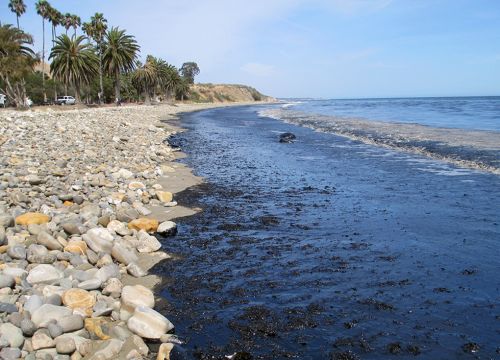
While it doesn't eliminate the possibility of oil spills, the Oil Pollution Act of 1990 tells us who is responsible for cleaning up this oiled beach and what they have to do to restore the environment harmed by the spill. (U.S. Coast Guard)
Athos I oil tanker leaking oil and surrounded by boom and response ships.
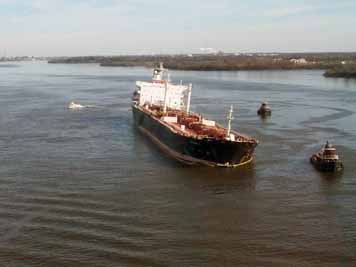
The ship Athos I hit a submerged anchor in the Delaware River in 2004 and spilled more than 263,000 gallons of heavy crude oil. A settlement in 2010 provided $27.5 million for 10 restoration projects for the coastal environment and community. (U.S. Coast Guard)
Node Weight: 
5

It Took More Than the Exxon Valdez Oil Spill to Pass the Historic Oil Pollution Act of 1990

Short title: 
What It Took to Pass the Oil Pollution Act of 1990

AUGUST 18, 2015 -- If you, like many, believe oil shouldn't just be spilled without consequence into the ocean, then you, like us, should be grateful for a very important U.S. law known as the Oil Pollution Act of 1990.

Congress passed this legislation and President George H.W. Bush signed it into law 25 years ago on August 18, 1990, which was the summer after the tanker Exxon Valdez hit ground in Prince William Sound, Alaska.

On March 24, 1989, this tanker unleashed almost 11 million gallons of oil into relatively pristine Alaskan waters.

The powerful images from this huge oil spill—streams of dark oil spreading over the water, birds and sea otters coated in oil, workers in shiny plastic suits trying to clean the rocky coastline—both shocked and galvanized the nation.

They ultimately motivated the 101st Congress to investigate the causes of recent oil spills, develop guidelines to prevent and clean up pollution, and pass this valuable legislation.

Yet that monumental spill didn't fully drive home just how inadequate the patchwork of existing federal, state, and local laws were at addressing oil spill prevention, cleanup, liability, and restoration. Nearly a year and a half passed between the Exxon Valdez oil spill and the enactment of the Oil Pollution Act.

What happened in the mean time?

The summer of 1989 experienced a trifecta of oil spills that drained any resources left from the ongoing spill response in Alaska. In rapid succession and over the course of less than 24 hours, three other oil tankers poured their cargo into U.S. coastal waters.

Between June 23 and 24, the T/V World Prodigy spilled 290,000 gallons of oil in Newport, Rhode Island; the T/V Presidente Rivera emptied 307,000 gallons of oil into the Delaware River; and the T/V Rachel B hit Tank Barge 2514, releasing 239,000 gallons of oil into Texas's Houston Ship Channel.

But these were far from the only oil spills plaguing U.S. waters during that time. Between the summers of 1989 and 1990, a series of ship collisions, groundings, and pipeline leaks spilled an additional 8 million gallons along the United States coastline. And that doesn't even include another million gallons of thick fuel oil released from a shore-side facility in the U.S. Virgin Islands after it was damaged by Hurricane Hugo.

Can you imagine—or perhaps remember—sitting at home watching the news and hearing again and again about yet another oil spill? And wondering what the government was going to do about it? Fortunately, in August of 1990, Congress voted unanimously to pass the Oil Pollution Act, which promised—and has largely delivered—significantly improved measures to prevent, prepare for, and respond to oil spills in U.S. waters.

Now, 25 years later, the shipping industry has undergone a makeover in oil spill prevention, preparedness, and response. A couple examples include the phasing out of tankers with easily punctured single hulls and new regulations for driving tankers that require the use of knowledgeable pilots, maneuverable tug escorts, and an appropriate number of people on the ship’s bridge during transit.

Oil spill response research also received a boost thanks to the Oil Pollution Act, which reopened a national research facility dedicated to this topic and shuttered just before the Exxon Valdez spill.

But perhaps one of the most important elements of this law required those responsible for oil spills to foot the bill for both cleaning up the oil and for economic and natural resource damages resulting from it.

This provision also requires oil companies to pay into the Oil Spill Liability Trust Fund, a fund theoretically created by Congress in 1986 but not given the necessary authorization until the Oil Pollution Act of 1990. This fund helps the U.S. Coast Guard—and indirectly, NOAA's Office of Response and Restoration—pay for the upfront costs of responding to marine and coastal accidents that threaten to release hazardous materials such as oil and also of assessing the potential environmental and cultural impacts (and implementing restoration to make up for them).

This week we're saying thank you to the Oil Pollution Act by highlighting some of its successes in restoring the environment after oil spills. You can join us on social media using the hashtag #Thanks2OilPollutionAct.

Aerial view of Exxon Valdez tanker with boom and oil on water.
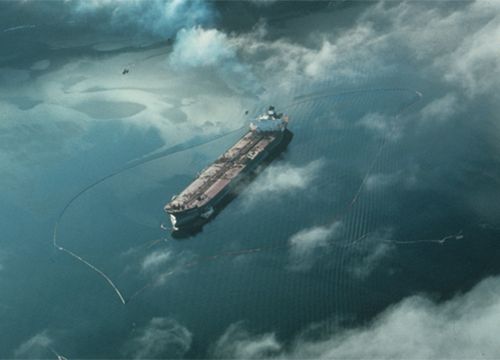
While the tanker Exxon Valdez spilled nearly 11 million gallons of oil into Alaskan waters, a trifecta of other sizable oil spills followed on its heels. These spills helped pave the way for passage of the Oil Pollution Act of 1990, which would vastly improve oil spill prevention, response, and restoration. (NOAA)
Birds killed as a result of oil from the Exxon Valdez spill.
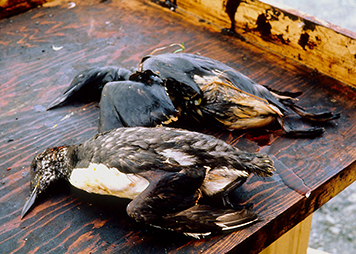
Thanks to the Oil Pollution Act, federal and state agencies can more easily evaluate the full environmental impacts of oil spills -- and then enact restoration to make up for that harm. (Exxon Valdez Oil Spill Trustee Council)
Node Weight: 
4

Expanding a Washington River's Floodplain to Protect Northwest Salmon and Communities

Short title: 
River Restoration to Protect Northwest Salmon and Communities
Bridge over industrial waterway in Tacoma and view of Mt. Rainier.
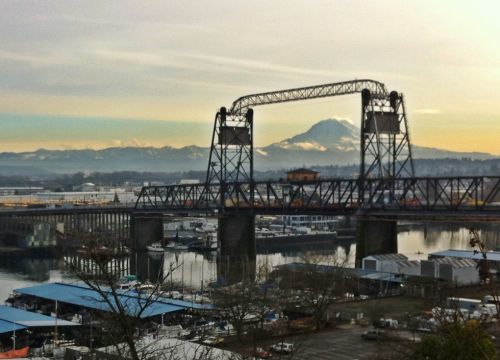
Mt. Rainier looms over the Thea Foss Waterway as it leads out to Commencement Bay, the industrial heart of Tacoma, Washington. Two new restoration projects will make up for the natural resource damages caused by organizations releasing hazardous substances into this and a neighboring waterway. (Photo: Kendrick Hang, Attribution 2.0 Generic License)
Person along the wooded edge of a river in Washington.
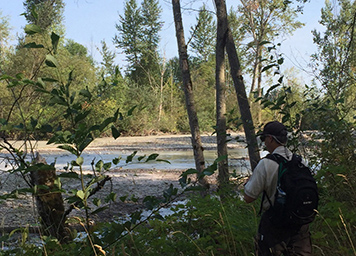
One restoration project will set back levees on the White River and widen its previously re-engineered floodplain. This will create better habitat for migrating fish to feed, rest, and spawn, as well as offer improved flood protection for nearby homes and businesses. (NOAA)
Node Weight: 
3

Opening up the Hudson River for Migrating Fish, One Dam at a Time

Short title: 
Opening up the Hudson River for Migrating Fish

Identifying Barriers

Left: View of Hudson River with forested banks. Right: Two people stand in front of a dam on a creek.
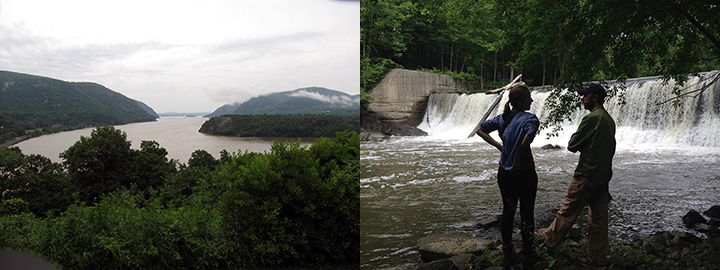
Left: Almost 200 miles of New York's Hudson River is a federal Superfund Site, slated for cleanup after decades of PCB pollution from two GE factories. Right: NOAA scientist Lisa Rosman compares notes with Andrew Meyer of the New York State Department of Environmental Conservation at the Begos Road Dam on Claverack Creek near Stottville, New York, during a field inspection in 2015. (NOAA)

Rosman and Alderson are investigating potential habitat restoration opportunities along 69 tributaries to the Hudson River estuary. The Hudson River is a federal Superfund site spanning almost 200 miles from Hudson Falls in the north to the Battery in New York City. Beginning in the late 1940s, two General Electric (GE) capacitor manufacturing plants in Hudson Falls and Fort Edward, New York, released industrial chemicals known as PCBs (polychlorinated biphenyls) into the Hudson River environment over several decades. The PCB pollution has contaminated Hudson River fish and wildlife, their prey, and their habitats. The investigation assesses the potential for removing dams and culverts that are preventing fish from migrating up and downstream within the Hudson River Valley. Removing abandoned dams and upgrading culverts will provide fish with access to habitat in tributaries of the Lower Hudson River, upstream of the river's tidal influence. Barrier after barrier, this scientific duo determines which dams on Hudson River tributaries still provide services, such as water supply, recreation, or hydroelectric power, and those which no longer serve any meaningful function. Back in the office, they enter the information collected in the field into a database that now includes more than 400 potential barriers to fish, both man-made and natural. Dams and improperly sized or installed culverts have prevented important migratory fish, such as American shad and river herring, from swimming further upstream to spawn, as well as reducing the passage of the historically far-reaching American eel. In addition, NOAA catalogs the rivers' natural barriers—steep gradients, rock ledges, waterfalls—to estimate the extent that most fish previously could travel upstream before the presence of dams. Through a combination of advanced digital mapping software and scouting trips such as the one to Claverack Creek, Alderson and Rosman are identifying potential fish restoration projects. These projects will help make up for the decades when people were either not allowed to fish or retain catches along portions of the Hudson River and were advised against eating its highly polluted fish.

Opening up Rivers and New Opportunities for Collaboration

Left: Tree branches piled up in front of an old stone bridge's culvert in a wooded creek. Right: Old brick building next to creek.
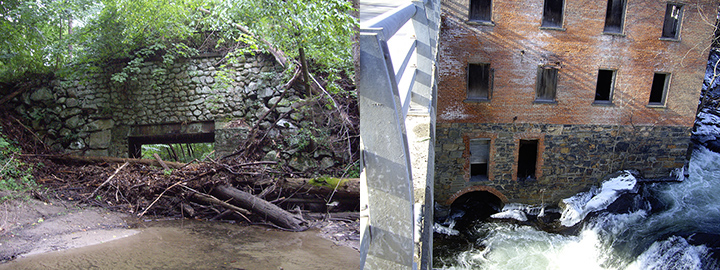
Left: Debris clogs the passage of the brook beneath a stone bridge on Indian Brook near Cold Spring, New York. Removing barriers in these waterways will help open up habitat to migrating fish along the tributaries of the Hudson River. Right: A former mill building on Fishkill Creek, near Beacon, New York, was at one time powered by water shot through a raceway beneath the building. A man-made dam is located upstream of the photo some distance away. Natural ledges in this creek such as the one pictured here also form an impasse to the historical passage of migratory fish and diminish the ability of American eel to move further upstream. (NOAA)

The data Rosman and Alderson are collecting help support other programs as well. NOAA and other government agencies prioritize removing or updating the barriers that provide the best opportunities for habitat improvement and fish passage. Dams that are not candidates for removal may still benefit from structures such as fish ladders, rock ramps, or bypass channels designed to enhance fish passage over or around the dam. Already, their efforts have helped communicate the potential for habitat restoration in the region. In October 2014, they shared information about their database of fish barriers at a workshop co-hosted by New York State Department of Environmental Conservation’s (NYSDEC) water, dam safety, and estuary programs. Later, at an April 2015 summit in Poughkeepsie, New York, the Hudson River Estuary Program announced the official kick-off of a new grant program that will benefit the river and its migrating fish. The program will award $750,000 to restore tributaries of the Hudson River and improve their resilience (e.g., dam removal and culvert and bridge upgrades) and $800,000 for local stewardship planning. The grant announcement and collaboration among NOAA, NYSDEC, and several key stakeholders, including the Hudson River Estuary Program, The Nature Conservancy, and Scenic Hudson, signals an era of growing cooperation and interest in bringing back migrating fish to their historic habitats and improving the vitality of the Hudson River and its tributaries.

Creek passing over a dam in winter.
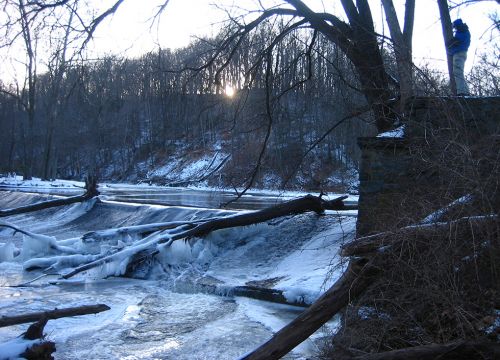
Water, both frozen and liquid, tumbles over the Orrs Mill Dam on Moodna Creek, a tributary of the Hudson River, in Cornwall, New York. NOAA scientists Lisa Rosman and Carl Alderson are investigating dams and other structures that are potentially preventing fish from migrating up these waterways. (NOAA)
Node Weight: 
4

Pages

Subscribe to response.restoration.noaa.gov RSS