Keep Your Holidays Happy and Your Impact Low
An official website of the United States government. Here's how you know we're official.
A .gov website belongs to an official government organization in the United States.
A small lock or https:// means you’ve safely connected to a .gov website. Share sensitive information only on official, secure websites.
DECEMBER 11, 2014 -- January 1, 2015 marks a major milestone in preventing oil spills.
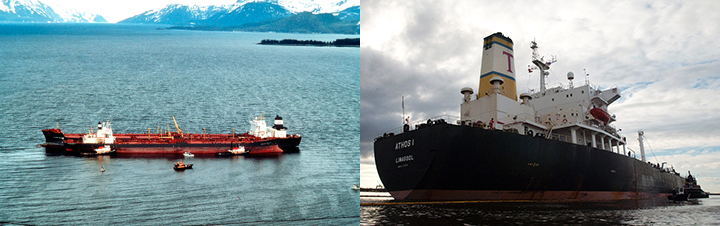
That date is the deadline which the landmark Oil Pollution Act of 1990 (OPA-90) specifies for phasing out single-hull tankers in U.S. waters. That act, passed after the 1989 Exxon Valdez oil spill in Prince William Sound, Alaska, required that all new tankers and tank-barges be built with double hulls.
Recently constructed single-hull tankers were allowed to operate, but 25 years after the Exxon Valdez, those vessels are now at the end of their operational life and will no longer be able to carry oil as cargo. The requirement was phased in gradually because of the difficultly of converting existing single-hull tankers to double hulls, and retiring the single-hull tankers more rapidly would have been a major disruption to world shipping.
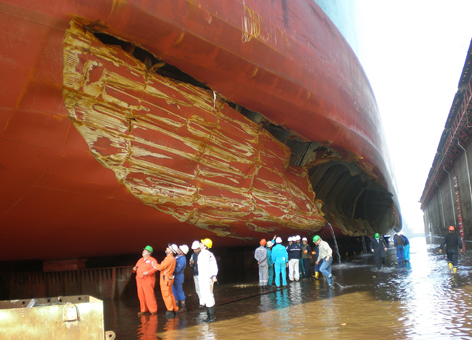
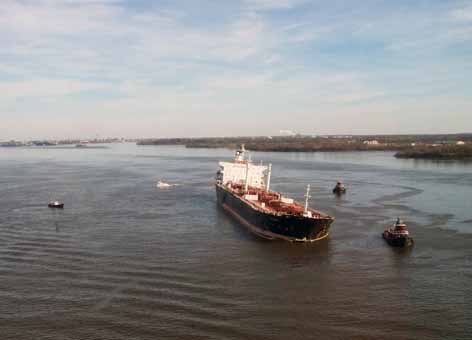
There won't be a dramatic change-over on New Year's Eve; most of the tankers calling on U.S. ports have had double hulls years before this deadline. However, one ship which was not switched over to a double hull soon enough was the tanker Athos I. This ship, carrying 13.6 million gallons of heavy crude oil, struck a submerged anchor in the Delaware River and caused a relatively large, complicated oil spill near Philadelphia, Pennsylvania, 10 year ago.
In 1992, two years after the Oil Pollution Act, the International Convention for the Prevention of Pollution from Ships (the MARPOL Convention) was amended to require all newly built tankers have double hulls. MARPOL has been ratified by 150 countries, representing over 99 percent of merchant tonnage shipped worldwide.
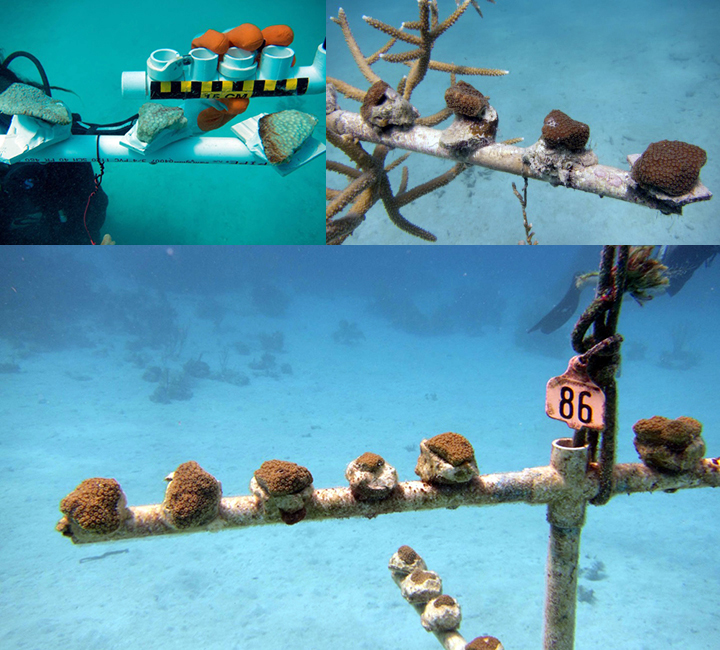
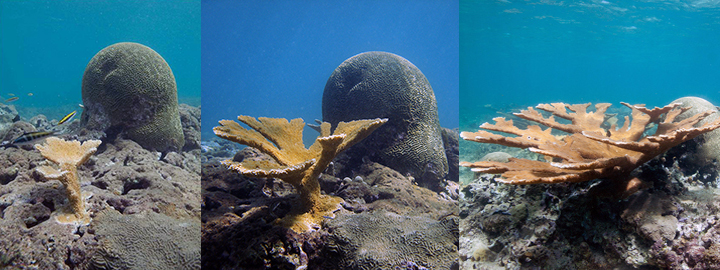
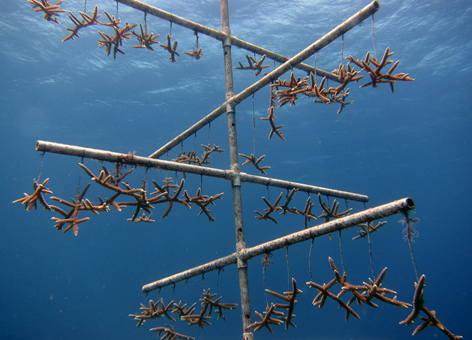
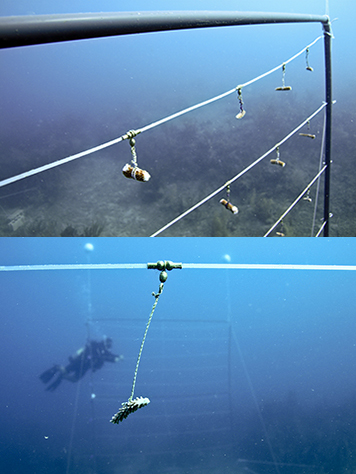
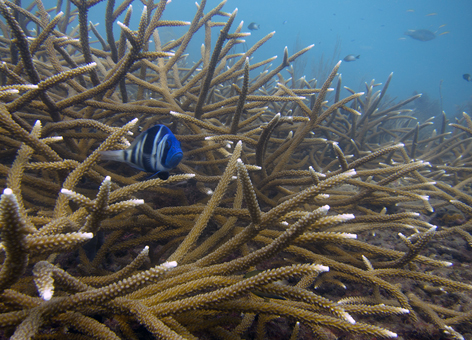
When they enter coral nurseries, bits of coral typically measure about four inches long. They may come from the scene of a ship grounding or have been knocked loose from the seafloor after a powerful storm. Occasionally and with proper permission, they have been donated from healthy coral colonies to help stock nurseries. These donor corals typically heal within a few weeks. In fact, staghorn and elkhorn coral, threatened species which do well in nurseries, reproduce predominantly via small branches breaking off and reattaching somewhere new. In the majority of nurseries, coral fragments are hung like clothes on a clothesline or ornaments on trees made of PVC pipes. Floating freely in the water, the corals receive better water circulation, avoid being attacked by predators such as fireworms or snails, and generally survive at a higher rate. After we have established a coral nursery, divers may visit as little as a few times per year or as often as once per month if they need to keep algae from building up on the corals and infrastructure. "It helps if there is a good fish population in the area to clean the nurseries for you," notes Sean Griffin, a coral reef restoration ecologist with NOAA. Injured corals generally take at least a couple months to recover in the nurseries. After a year in the nursery, we can transplant the original staghorn or elkhorn colonies or cut multiple small fragments from them, which we then use either to expand the nursery or transplant them to degraded areas. One of the fastest growing species, staghorn coral can grow up to eight inches in a year while elkhorn can grow four inches. We are still investigating the best ways to cultivate some of the slower growing species, such as boulder star coral and lobed star coral.
In 2014, we placed hundreds of coral fragments from four new groundings into nurseries in Puerto Rico and the U.S. Virgin Islands. This represents only a fraction of this restoration technique's potential.

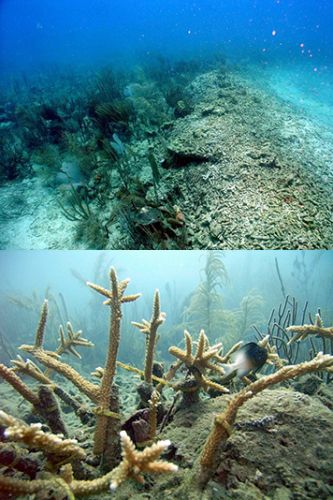
After the tanker Margara ran aground on coral reefs in Puerto Rico in 2006, NOAA divers rescued 11,000 salvageable pieces of broken coral, which were reattached at the grounding site and established a nursery nearby using 100 fragments from the grounding. That nursery now has 2,000 corals in it. Each year, 1,600 of them are transplanted back onto the seafloor. The 400 remaining corals are broken into smaller fragments to restock the nursery. We continue to grow healthy corals in this nursery and then either transplant them back to the area affected by the grounded ship, help restore other degraded reefs, or use some of them to start the process over for another year. Nurseries in Florida, Puerto Rico, and the U.S. Virgin Islands currently hold about 50,000 corals. Those same nurseries generate another 50,000 corals which we transplant onto restoration sites each year. Sometimes we are able to use these nurseries proactively to protect and preserve corals at risk. In the fall of 2014, a NOAA team worked with the University of Miami to rescue more than 200 threatened staghorn coral colonies being affected by excessive sediment in the waters off of Miami, Florida. The sedimentation was caused by a dredging project to expand the Port of Miami entrance channel. We relocated these colonies to the coral nurseries off Key Biscayne run by our partners at the University of Miami. The corals were used to create over 1,000 four-inch-long fragments in the nursery. There, they will be allowed to recover until dredge operations finish at the Port of Miami and sedimentation issues are no longer a concern. The corals then can either be transplanted back onto the reef where they originated or used as brood stock in the nursery to propagate more corals for future restoration.

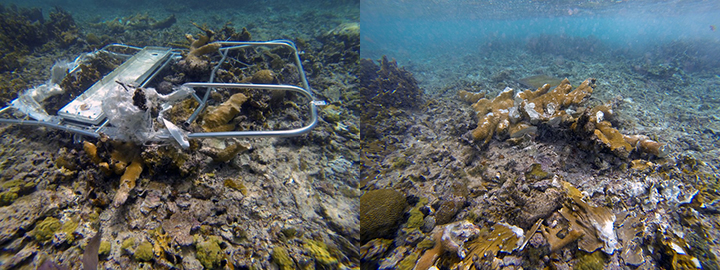
Unfortunately, the story of the Margara is not an unusual one. In 2014 alone, NOAA received reports of 37 vessel groundings in Puerto Rico and the U.S. Virgin Islands. About half of these cases threatened corals, prompting NOAA's Restoration Center to send divers to investigate. After a ship gets stuck on a coral reef, the first step for NOAA is assessing the situation underwater. If the vessel hasn't been removed yet, NOAA often provides the salvage company with information such as known coral locations and water depths, which helps them determine how to remove the ship with minimal further damage to corals. Sometimes that means temporarily removing corals to protect them during salvage or figuring out areas to avoid hitting as the ship is extracted. Once the ship is gone, NOAA divers estimate how many corals and which species were affected, as well as how deep the damage was to the structure of the reef itself. This gives them an idea of the scale of restoration needed. For example, if less than 100 corals were injured, restoration likely will take a few days. On the other hand, dealing with thousands of corals may take months.
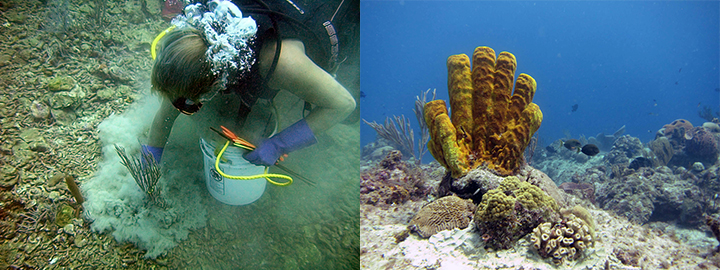
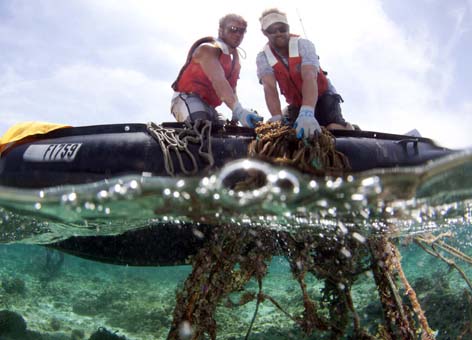
NOAA already has done some form of restoration at two-thirds of the 18 vessel groundings with coral damage in the region this year. They have reattached 2,132 corals to date. What does this look like? At first, it's a lot of preparation. Divers collect the corals and fragments knocked loose by the ship; transport them to a safe, stable underwater location where they won't be moved around; and dig out any corals buried in debris. When NOAA is ready to reattach corals, divers clear the transplant area (sometimes that means using a special undersea vacuum). On the ocean surface, people in a boat mix cement and send it down in five-gallon buckets to the divers below. Working with nails, rebar, and cement, the divers carefully reattach the corals to the seafloor, with the cement solidifying in a couple hours.
Nearly a third of the total reported groundings in Puerto Rico and the U.S. Virgin Islands this year have involved corals listed as threatened under the Endangered Species Act. In previous years, only 10 percent of the groundings involved threatened corals. What changed this year was the Endangered Species Act listing of five additional coral species in the Caribbean. Another form of protection for corals is installing buoys to mark the location of reefs in areas where ships keep grounding on them. Since these navigational aids were put in place at one vulnerable site in Culebra, Puerto Rico, this summer, NOAA hasn't been called in to an incident there yet.
But restoring coral reefs after a ship grounding almost wouldn't be possible without coral nurseries. Here, NOAA is able to regrow and rehabilitate coral, a technique being used at the site of the T/V Margara grounding. Stay tuned because we'll be going more in depth on coral nurseries, what they look like, and how they help us restore these amazingly diverse ocean habitats.
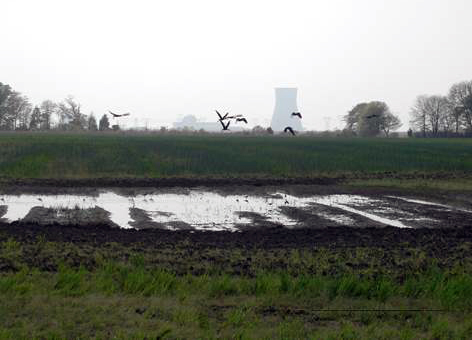
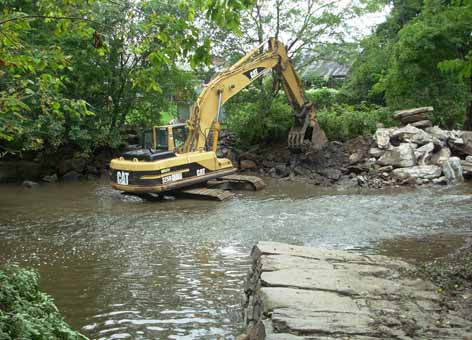
Numerous historical artifacts have been uncovered on lands surrounding Mad Horse Creek, so it's important that before we begin to restore the natural habitat, we make sure we are preserving any colonial or Native American artifacts that might be hidden beneath these fields. Alderson has been been working with Vincent Maresca, a Senior Historic Preservation Specialist with the State of New Jersey to develop plans for a Phase I archaeological investigation of the area. Using a disk cultivator (a machine typically used to cultivate soil between rows of plants), they will be disking all 200 acres of the restoration site, turning over the soil at a depth of 18 inches. After a rainstorm, they can expect any artifacts in the soil to be revealed. At that point, it will take a team of 12 people two weeks to walk the site, one person to a row, looking for exposed shards of pottery or other objects. Anything found will be placed into collection bags and identified with the GPS location. If they find historical artifacts at the Mad Horse Creek restoration area, they will begin a Phase II archaeological investigation. This likely would involve digging more extensive excavation pits in the immediate area of each find to uncover other potential artifacts. The people who do this work are known as field archaeologists. They typically have a degree in anthropology or archaeology and receive specialized training in testing and excavating archaeological sites; screening the soil for evidence; washing, bagging, and labeling artifacts; and completing field inventories of their findings.
No restoration work will begin until they complete this archaeological search. At all times, NOAA makes sure to consult with historic preservationists on each of our sites in accordance with the National Historic Preservation Act. In the first part of the process we ask for input from state experts like Vincent Maresca. Those experts determine whether we should do an archaeological evaluation of the site based on the likelihood of finding artifacts, as was the case at Mad Horse Creek. If the likelihood is high, we then seek input from the federal agency known as the Advisory Council on Historic Preservation. Alderson doesn't know what they're going to find at Mad Horse Creek, if anything, but with Thanksgiving around the corner, he is particularly thankful to be working on a project that is working to restore and preserve both our natural and cultural treasures.
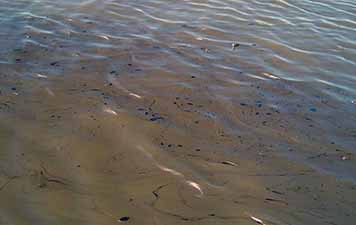
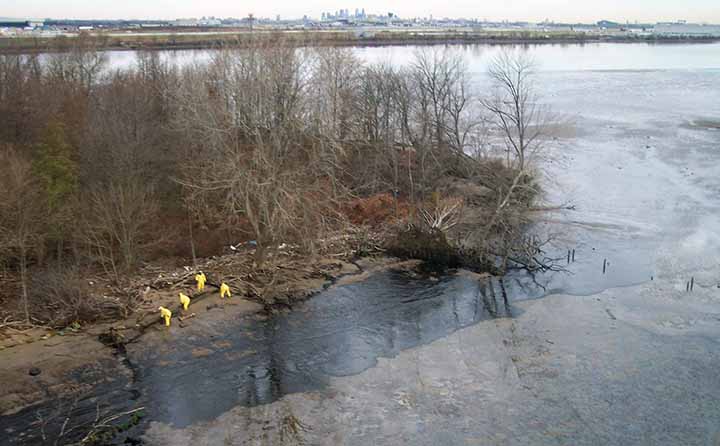
Most oils, most of the time, float on the surface of water. This was precisely what responders expected the oil coming out of the Athos to do. But within a couple days of the spill, they realized that was not the case. This oil was a little on the heavier side. As it shot out of the ship's punctured bottom, some of the oil mixed with sediment from the river bottom. It didn’t have far to go; thanks to an extremely low tide pulling the river out to sea, the Athos was passing a mere 18 inches above the bottom of the river when it sprung a leak. Now mixed with sediment, some of the spilled oil became as dense as or denser than water. Instead of rising to the river surface, it sank to the bottom or drifted in the water column. Even some of the oil that floated became mixed with sediment along the shoreline, later sinking below the surface. For the oil suspended in the water, the turbulence of the Delaware River kept it moving with the currents increasingly toward the Salem nuclear plant, perched on the river's edge.

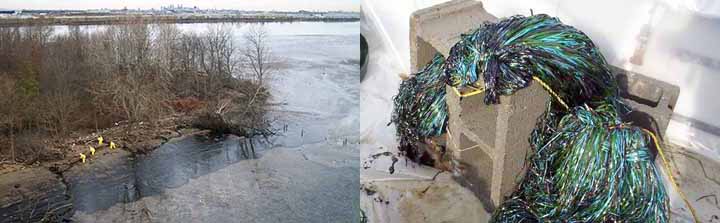
NOAA's oil spill trajectory model GNOME forecasts the spread of oil by assuming the oil is floating on the water's surface. Normally, our oceanographers can verify how well the forecasts are doing by calibrating the model against twice-a-day aerial surveys of the oil’s movement. The trouble with oil that does not float is that it is harder to see, especially in the murky waters of the Delaware River. Responders were forced to improvise. To track oil underwater, they created new sampling methods, one of which involved dropping weighted ropes into the water column at various points along the river. The ropes were lined with what looked like cheerleader pom-poms made of oil-attracting plastic strips that would pick up oil as it passed by.
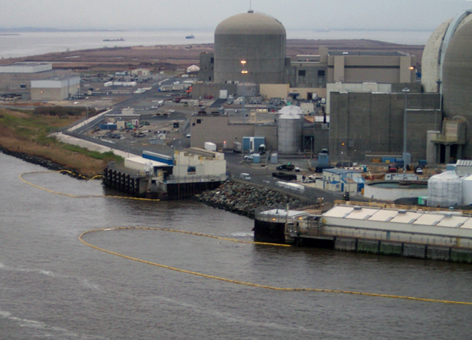
Nuclear plants like the Salem facility rely on a steady flow of freshwater to cool their reactors. A thin layer of floating oil was nearing the plant by December 1, 2004, with predictions that the heavier, submerged oil would not be far behind.

By December 3, small, sticky bits of oil began showing up in the screens on the plant's cooling water intakes. To keep them from becoming clogged, the plant decided to shut down its two nuclear reactors the next day. That was when NOAA's Ed Levine was tasked with figuring out when the significant threats due to the oil had passed. Eleven days later, the Salem nuclear plant operators, the State of New Jersey, and the Nuclear Regulatory Commission allowed the plant to restart. A combination of our modeling and new sampling methods for detecting underwater oil had shown a clear and significant drop in the amount of oil around the plant. Closing this major electric generating facility cost $33.1 million out of more than $162 million in claims paid to parties affected by the Athos spill. But through our innovative modeling and sampling, we were able to reduce the time the plant was offline, minimizing the disruption to the power grid and reducing the economic loss. Levine recalled this as an "eye-opening" experience, one yielding a number of lessons for working with nuclear power plants should an oil spill threaten one in the future. To learn more about the Athos oil spill, from response to restoration, visit response.restoration.noaa.gov/athos. A special thanks to NOAA's Ed Levine and Chris Barker, former U.S. Coast Guard Captain Jonathan Sarubbi, and Henry Font, Donna Hellberg, and Thomas Morrison of the Coast Guard National Pollution Funds Center for sharing information and data which contributed to this post.
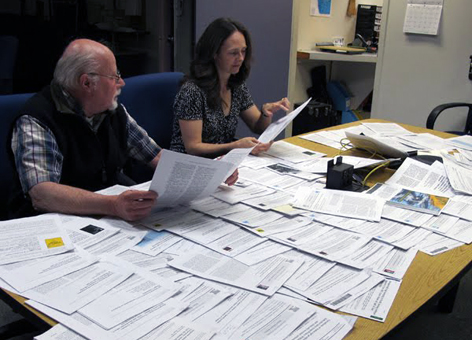
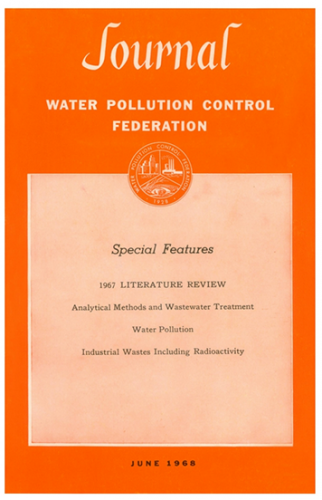
For starters, vastly more studies are being published on marine pollution and its environmental effects. For this year’s publication, Mearns and his six co-authors, who include Reish and NOAA scientists Nicolle Rutherford and Courtney Arthur, reviewed 341 scientific papers which they pulled from a larger pool of nearly 1,000 studies.
The days of having to physically visit a library each month to read the scientific journals are also over. Instead, Mearns can wait until the end of the year to scour online scientific search engines. Emails replace the handwritten 3x5 index cards. And fortunately, typewriters are no longer involved.
The technology the reviewers are using isn't the only thing to change with the years. In the early days, the major contaminants of concern were heavy metals, such as copper, which were turning up in the bodies of fish and invertebrates. Around the 1970s, the negative effects of the insecticide DDT found national attention, thanks to the efforts of biologist Rachel Carson in her seminal book Silent Spring.
Today, Mearns and Reish see the focus of research shifting to other, often more complicated pollutants, such as nanomaterials, which can be any of a number of materials roughly 100,000 times smaller than the width of a human hair. On one hand, nanotechnology is helping scientists decipher the effects of some pollutants, while, on the other, nanomaterials, such as those found in cosmetics, show potentially serious effects on some marine life including mussels.
Another major trend has been the evolution of the ways scientists evaluate the effects of pollutants on marine life. Researchers in the United States and Western Europe used to study the toxicity of a pollutant by increasing the amount animals are exposed to until half the study animals died.
In the 1990s, researchers began exploring pollutants' finer physiological effects. How does exposure to X pollutant affect, for example, a fish's ability to feed or reproduce?
Nowadays, the focus is even more refined, zeroing in on the molecular scale to discern how pollutants affect an animal's genetic material, its DNA. How does the presence of oil change whether certain genes in a fish's liver are turned on or off? What does that mean for the fish?
This Thanksgiving story comes to us from Ed Levine, the Regional Operations Supervisor for the East-Gulf of Mexico Region.
November 23, 2011 -- After a wonderful family Thanksgiving seven years ago, what we in the response business refer to as the "Usual Notification"—a call in the middle of the night during a long holiday weekend—came true.
At 9:30 p.m. on November 26, 2004, the (Black) Friday after Thanksgiving, the tanker Athos I was damaged while docking at the CITGO refinery on the Delaware River and began spilling its cargo of Venezuelan crude oil.
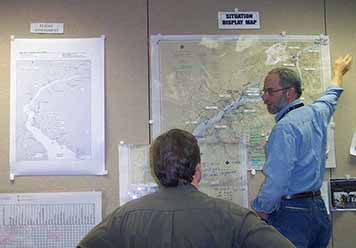
By 2:00 a.m., I was requested to go on-scene and support the Coast Guard's response in Philadelphia.
My sons and wife were used to this scrambling to pack and run out the door. Little did we know how complicated this response would be and how long it would last!
When I arrived, prior to first light, many details were still unknown or just unfolding. We knew the ship was leaking oil, it was leaning to one side, but it was secure at anchor. At that time we didn't know how much oil was leaking, where it was going, how far it would spread, the cause of the damage, the environmental and economic impacts it would have, or the duration of the cleanup.
At daylight, the first helicopter surveys found some oil along the Pennsylvania shoreline, but the first reports were not too alarming. But I knew it was important to get some calibrated eyes on the spill, someone with experience spotting oil from the air. It's not as easy as it sounds to conduct an aerial survey.
After a few hours in the command post, I had a chance to fly.
During my overflight (aerial survey), it was clear that the ship was still leaking. I observed oil many miles up river and in larger concentrations than previously reported. Upon returning to the command post, I told the Captain of the Port, "We need a bigger boat!" This was a major oil spill, and we were going to be here a long time cleaning it up.
Little did I know how right I was.
The ship's crew was eventually able to transfer cargo around the tanks to stop the outflow of oil, but over 240,000 gallons of heavy crude oil were released from the ship. The cleanup took a full year until all the shorelines were signed off as clean. A nuclear power plant even shut down for over a week. Vessel traffic into the port stopped for eight days until the mysterious object that the vessel struck could be located. Hundreds of birds were oiled. Hundreds of miles of shoreline in three states had to be inspected and the oiled areas cleaned up.
Winter operations became brutal, the river eventually froze over and operations ceased for a couple months. In the early weeks of the response, a boat overturned with five people on board. Luckily for them a NOAA ship was nearby and able to rescue all of them.
The spilled oil was nearly neutrally buoyant in the brackish waters of the Delaware Estuary, meaning the oil was just as likely to sink as it was to float, complicating cleanup operations. Eventually, the shorelines were cleaned, and damages to natural resources were assessed and restored.
Because of this accident, the response community has become more prepared and new legislation was passed (President Signs Oil Spill Legislation). It was historic at the time, and I was glad I had given a little piece to the success of the response. It's a thought that helps me be prepared for the next "Usual Notification" I will receive, whenever it comes.
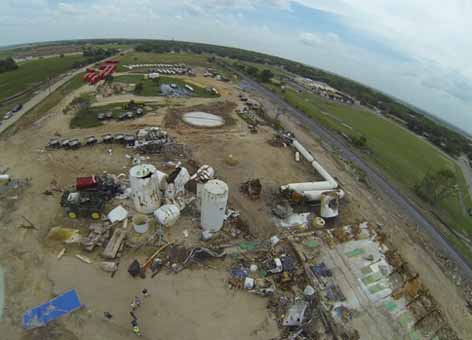
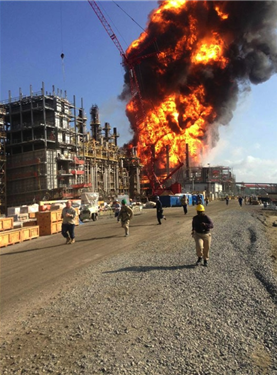
NOVEMBER 6, 2014 -- On April 17, 2013, in the farming community of West, Texas, the storage and distribution facility of West Fertilizer Company caught fire. As firefighters attempted to douse the flames, tons of ammonium nitrate stored at the facility detonated, resulting in an explosion [warning*] packed with the force of a small earthquake. The blast killed fifteen people, injured more than 300, and damaged or destroyed more than 150 buildings.
Just two months later, on June 13, disaster struck again—this time at one of 12 chemical plants along a 10-mile stretch of the Mississippi River. In the industrial town of Geismar, Louisiana, the Williams Olefins chemical facility exploded and caught fire, killing two workers and injuring at least 75 others. The blast sent a huge fireball and column of smoke into the air. Fueled by the petrochemical propylene, the fire burned for more than three hours. Authorities ordered residents to remain indoors for hours to avoid the billowing smoke.
One of the challenges in preventing disasters such as these is to ensure that critical information gets into the planning cycle, and into the hands of the local emergency planning and responder community. To reduce the likelihood of chemical disasters in the United States, Congress has imposed requirements for governments, tribes, and industry.
For example, the Emergency Planning and Community Right-to-Know Act (EPCRA) of 1986 was created to help communities plan for emergencies involving hazardous substances. EPCRA requires federal, state, and local governments; Indian tribes; and the chemical industry to plan for hazardous chemical emergencies. It also requires industry to report on the storage, use, and releases of hazardous chemicals to federal, state, and local governments.
NOAA's CAMEO software suite, jointly developed since 1987 with the U.S. Environmental Protection Agency's Office of Emergency Management, is a key tool in the implementation of EPCRA. CAMEO is a suite of software tools used to plan for and respond to chemical emergencies. Developed to assist front-line chemical emergency planners and responders, CAMEO can access, store, and evaluate information critical for developing emergency plans, such as locations of hazardous chemical storage and nearby hospitals, schools, and other at-risk population centers.
OCTOBER 9, 2014 -- Immediately following the Deepwater Horizon oil spill of 2010, there was a high demand for government agencies, including NOAA, to provide public data related to the spill very quickly. Because of the far-reaching effects of the spill on living things, those demands included data on human health as well as the environment and cleanup.
In mid-September of 2014, a group of scientists including social and public health experts, biologists, oceanographers, chemists, atmospheric scientists, and data management experts convened in Shepherdstown, West Virginia, to discuss ways they could better integrate their respective environmental and health data during disasters. The goal was to figure out how to bring together these usually quite separate types of data and then share them with the public during future disasters, such as oils spills, hurricanes, tornadoes, and floods.
The Deepwater Horizon spill experience has shown government agencies that there are monitoring opportunities which, if taken, could provide valuable data on both the environment and, for example, the workers that are involved in the cleanup.
Looking back, it was discovered that at the same time that "vessels of opportunity" were out in the Gulf of Mexico assisting with the spill response and collecting data on environmental conditions, the workers on those vessels could have been identified and monitored for future health conditions, providing pertinent data to health agencies.
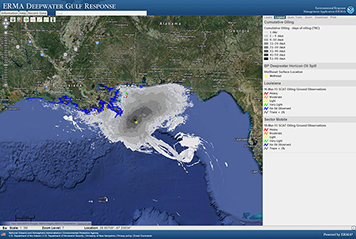
A lot of environmental response data already are contained in NOAA's online mapping tool, the Environmental Response Management Application (ERMA®), such as the oil's location on the water surface and on beaches throughout the Deepwater Horizon spill, chemicals found in sediment and animal tissue samples, and areas of dispersant use.
ERMA also pulls together in a centralized format and displays Environmental Sensitivity Index data, which include vulnerable shoreline, biological, and human use resources present in coastal areas; ship locations; weather; and ocean currents. Study plans developed to assess the environmental impacts of the spill for the Natural Resource Damage Assessment and the resulting data collected can be found at www.gulfspillrestoration.noaa.gov/oil-spill/gulf-spill-data.
Health agencies, on the other hand, are interested in data on people's exposure to oil and dispersants, effects of in situ burning on air quality, and heat stress in regard to worker health. They need information on both long-term and short-term health risks so that they can determine if impacted areas are safe for the communities. Ideally, data such as what are found in ERMA could be imported into health agencies' data management systems which contain human impact data, creating a more complete picture.
Putting out the combined information to the public quickly and transparently will promote a more accurate representation of a disaster's aftermath and associated risks to both people and environment.
Funded by NOAA's Gulf of Mexico Disaster Response Center and facilitated by the University of New Hampshire’s Coastal Response Research Center, this workshop sparked ideas for better and more efficient collaboration between agencies dealing with environmental and human health data. By setting up integrated systems now, we will be better prepared to respond to and learn from man-made and natural disasters in the future.
As a result of this workshop, participants formed an ongoing working group to move some of the best practices forward. More information can be found at crrc.unh.edu/workshops/EDDM.
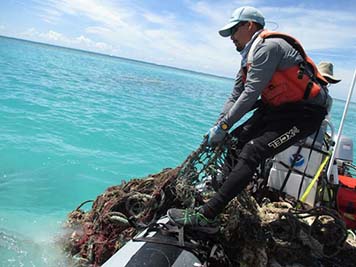
September 20–27, 2014 is National Estuaries Week. This year 11 states and the District of Columbia have published a proclamation recognizing the importance of estuaries. To celebrate these critical habitats, Restore America's Estuaries member organizations, NOAA’s National Estuarine Research Reserve System, and EPA’s National Estuary Program are organizing special events such as beach cleanups, hikes, canoe and kayak trips, cruises, and workshops across the nation. Find an Estuary Week event near you. You and your family and friends can take a personal stake in looking out for the health and well-being of estuaries by doing these simple things to protect these fragile ecosystems.
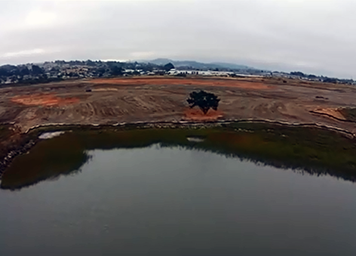
You may be scratching your head wondering whether you know of any estuaries, but you don’t need to go far to find some famous estuaries. The Chesapeake Bay and Delaware Bay are on the east coast, the Mississippi River Delta in the Gulf of Mexico, and San Francisco Bay and Washington’s Puget Sound represent some notable estuarine ecosystems on the west coast. Take a closer look at some of our work on marine pollution in these important estuaries.
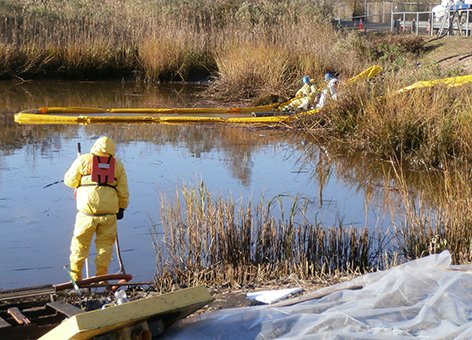
Chesapeake Bay: NOAA has been working with the U.S. Environmental Protection Agency and Department of Defense on cleaning up and restoring a number of contaminated military facilities around the Chesapeake Bay. Because these Superfund sites are on federal property, we have to take a slightly different approach than usual and are trying to work restoration principles into the cleanup process as early as possible.
Delaware Bay: Our office has responded to a number of oil spills in and adjacent to Delaware Bay, including the Athos oil spill on the Delaware River in 2004. As a result, we are working on implementing several restoration projects around the Delaware Bay, which range from creating oyster reefs to restoring marshes, meadows, and grasslands.
Puget Sound: For Commencement Bay, many of the waterways leading into it—which provide habitat for salmon, steelhead, and other fish—have been polluted by industrial and commercial activities in this harbor for Tacoma, Washington. NOAA and other federal, state, and tribal partners have been working for decades to address the contamination and restore damaged habitat, which involves taking an innovative approach to maintaining restoration sites in the Bay. Further north in Puget Sound, NOAA and our partners have worked with the airplane manufacturer Boeing to restore habitat for fish, shorebirds, and wildlife harmed by historical industrial activities on the Lower Duwamish River, a heavily used urban river in Seattle. Young Puget Sound Chinook salmon and Steelhead have to spend time in this part of the river, which is a Superfund Site, as they transition from the river’s freshwater to the saltwater of the Puget Sound. Creating more welcoming habitat for these fish gives them places to find food and escape from predators.
San Francisco Bay: In 2007 the M/V Cosco Busan crashed into the Bay Bridge and spilled 53,000 gallons of thick fuel oil into California’s San Francisco Bay. Our response staff conducted aerial surveys of the oil, modeled the path of the spill, and assessed the impacts to the shoreline. Working with our partners, we also evaluated the impacts to fish, wildlife, and habitats, and determined the amount of restoration needed to make up for the oil spill. Today we are using special buoys to plant eelgrass in the Bay as one of the spill’s restoration projects