Back to top

Attempting to Answer One Question Over and Over Again: Where Will the Oil Go?

Short title: 
Where Will the Oil Go?

The Deepwater Horizon Oil Spill: Five Years Later

This is the first in a series of stories over the coming weeks looking at various topics related to the response, the Natural Resource Damage Assessment science, restoration efforts, and the future of the Gulf of Mexico.

MARCH 30, 2015 — Oil spills raise all sorts of scientific questions, and NOAA's job is to help answer them. We have a saying that each oil spill is unique, but there is one question we get after almost every spill: Where will the oil go? One of our primary scientific products during a spill is a trajectory forecast, which often takes the form of a map showing where the oil is likely to travel and which shorelines and other environmentally or culturally sensitive areas might be at risk.

Oil spill responders need to know this information to know which shorelines to protect with containment boom, or where to stage cleanup equipment, or which areas should be closed to fishing or boating during a spill.

To help predict the movement of oil, we developed the computer model GNOME to forecast the complex interactions among currents, winds, and other physical processes affecting oil's movement in the ocean. We update this model daily with information gathered from field observations, such as those from trained observers tasked with flying over a spill to verify its often-changing location, and new forecasts for ocean currents and winds.

Modeling a Moving Target

One of the biggest challenges we've faced in trying to answer this question was, not surprisingly, the 2010 Deepwater Horizon oil spill. Because of the continual release of oil—tens of thousands of barrels of oil each day—over nearly three months, we had to prepare hundreds of forecasts as more oil entered the Gulf of Mexico each day, was moved by ocean currents and winds, and was weathered, or physically, biologically, or chemically changed, by the environment and response efforts.

A typical forecast includes modeling the outlook of the oil’s spread over the next 24, 48, and 72 hours. This task began with the first trajectory our oceanographers issued early in the morning April 21, 2010 after being notified of the accident, and continued for the next 107 days in a row. (You can access all of the forecasts from this spill online.)

Once spilled into the marine environment, oil begins to move and spread surprisingly quickly but not necessarily in a straight line. In the open ocean, winds and currents can easily move oil 20 miles or more per day, and in the presence of strong ocean currents such as the Gulf Stream, oil and other drifting materials can travel more than 100 miles per day. Closer to the coast, tidal currents also can move and spread oil across coastal waters.

While the Deepwater Horizon drilling rig and wellhead were located only 50 miles offshore of Louisiana, it took several weeks for the slick to reach shore as shifting winds and meandering currents slowly moved the oil.

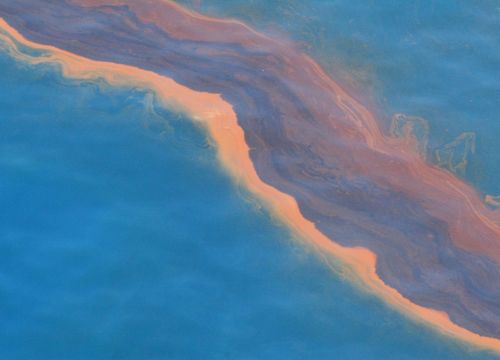
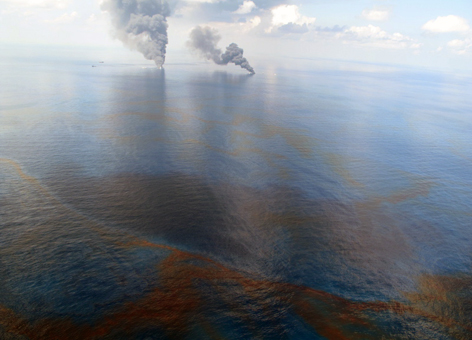
A heavy band of oil is visible on the surface of the Gulf of Mexico.
A heavy band of oil is visible on the surface of the Gulf of Mexico during an overflight of the Deepwater Horizon oil spill on May 12, 2010. Predicting where oil like this will travel depends on variable factors including wind and currents. (NOAA)
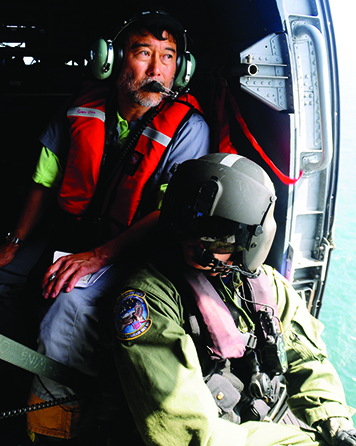
Two people in a helicopter over water.
Overflight surveys from airplanes or helicopters help responders find oil slicks as they move and break up across a potentially wide expanse of water. They give snapshots of where the oil is located and how it is behaving at a specific date and time, which NOAA uses to compare to our oceanographic models. (U.S. Coast Guard)
Node Weight: 
4

Summarizing Five Years of NOAA Research on the Impacts of the Deepwater Horizon Oil Spill on Dolphins

Short title: 
NOAA Research on the Impacts of the Deepwater Horizon Oil Spill on Dolphins

A number of studies to understand impacts on bottlenose dolphins have been conducted over the past five years since the Deepwater Horizon oil spill. The studies have included recovery of dead stranded dolphins and analysis of their tissues, as well as photographic monitoring, remote tissue sampling, and even capture-release health assessments of live dolphins. Collectively, the findings from these studies are presenting a picture of chronic poor health, failed pregnancies, and increased mortality of coastal bottlenose dolphins in the aftermath and footprint of the Deepwater Horizon oil spill.

Since the Deepwater Horizon oil spill, dolphins in Barataria Bay, Louisiana, one of the most heavily oiled coastal areas from the Deepwater Horizon oil spill, have had poor health and high rates of stranded, dead dolphins.

The year following the spill, health assessments1 of live dolphins in Barataria Bay showed that these dolphins were in poor health. Specifically, Barataria Bay dolphins had evidence of lung disease and poorly functioning adrenal glands. These health conditions are consistent with effects of exposure to oil or petroleum-related chemicals in other animal studies. Concurrently, a cluster of increased dead stranded dolphins was documented in this same area beginning in the summer after the spill.2 In fact, some of the highest annual statewide numbers of dolphin deaths on record for Louisiana, Mississippi and Alabama were seen following the Deepwater Horizon spill. Combined, these studies support that dolphins' exposure to Deepwater Horizon oil and petroleum-related chemicals led to subsequent poor health and death.

Preliminary findings also point to potential reproductive issues for the dolphins.

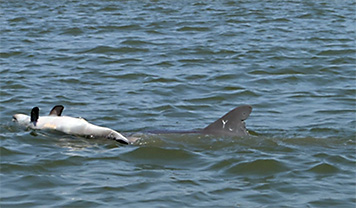
Following the Deepwater Horizon oil spill, there have been high numbers of dead, stranded perinatal dolphins in Louisiana, Mississippi, and Alabama. Stranded perinatal dolphins that have been found died either late in pregnancy in the womb or soon after birth. One of the live pregnant dolphins evaluated in Barataria Bay in August 2011 was determined to be carrying a non-viable (dead) fetus. Another of the pregnant dolphins was seen later pushing a dead newborn. Photo-graphic monitoring studies to determine the outcome of pregnant dolphins evaluated in both Barataria Bay (2011, 2013, 2014) and Mississippi Sound (2013) are being conducted to better understand the extent of reproductive failure.

Current evidence suggests that the Deepwater Horizon oil spill is a contributor to the largest and longest lasting dolphin die-off on record in the Gulf of Mexico.3

First, since the spill, annual elevated numbers of stranded dolphins match coastal areas that received the heaviest oiling (Louisiana, Mississippi, and Alabama).2 Second, lung and adrenal disease found in live Barataria Bay dolphins are consistent with effects of petroleum-based contaminant exposure in other animals.1 Third, there is a lack of evidence for previously known or alternative causes of die-offs of Gulf of Mexico dolphins, primarily morbillivirus and marine biotoxins.3 In addition, concentrations of legacy contaminants such as PCBs and persistent pesticides that have previously been linked to adverse health effects in marine mammals, have proven to be relatively low in dolphins from the northern Gulf of Mexico as compared to other U.S. coastal sites. Thus, the investigation to date supports that the Deepwater Horizon oil spill led to increased mortality in dolphin populations, contributing to the largest and longest lasting dolphin die-off in the Gulf of Mexico.

Samples from natural resource damage assessment (NRDA) studies of dolphins in Barataria Bay as well as Mississippi Sound 3-4 years post-spill are still being analyzed to understand potential recovery and long-term chronic effects. Preliminary analyses suggest that some disease conditions are improving with time since the spill but that some chronic disease conditions, particularly chronic lung disease, persist. Analyses to understand the long-term consequences to coastal bottlenose dolphin populations continue. Dolphins are long-lived species that are slow to mature and reproduce, and it could be many years before the full effects of the Deepwater Horizon spill on dolphin populations are realized. For more information, see NOAA's Unusual Mortality Event and Gulf Spill Restoration websites.

1 Schwacke, Lori H., Balmer, B. Collier, T.K., De Guise, S., Fry, M.M., Guillette, Jr., L.J., Lamb, S.V., Lane, S.M., McFee, W.F., Ylitalo, G.M., Zolman, E.S., Rowles, T.K., Smith, C.R., Townsend, F.I., Wells, R.S., Hart, L.B. 2014. Health of Common Bottlenose Dolphins (Tursiops truncatus) in Barataria Bay, Louisiana, Following the Deepwater Horizon Oil Spill. Environ. Sci. Technol., 2014, 48 (1), pp 93–103. http://pubs.acs.org/doi/full/10.1021/es403610f#showRef

2Venn-Watson S, Garrison L, Litz J, Fougeres E, Mase-Guthrie B, Rappucci G, Stratton E, Carmichael R, Odell D, Shannon D, Shippee S, Smith S, Staggs L, Tumlin M, Whitehead H, Rowles T. 2015. Demographic clusters identified within the northern Gulf of Mexico common bottlenose dolphin (Tursiops truncatus) unusual mortality event: January 2010- June 2013. PLoS ONE 10(2): e0117248. doi:10.1371/journal.pone.0117248

3Litz J, Baran M, Bowen-Stevens S, Carmichael R, Colegrove K, Garrison L, Fire S, Fougeres E, Hardy R, Holmes S, Jones W, Mase-Guthrie B, Odell D, Rosel P, Saliki J, Shannon D, Shippee S, Smith S, Stratton E, Tumlin M, Whitehead H, Worthy G, and Rowles T. 2014. Review of historical unusual mortality events (UMEs) in the Gulf of Mexico (1990 – 2009): providing context for the multi-year northern Gulf of Mexico cetacean UME declared in 2010. Diseases of Aquatic Organisms. 112: 161 – 175.

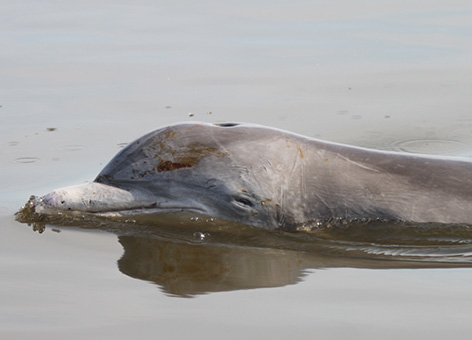
Dolphin with oil on its head swimming in water.
Oiled dolphin swimming through Bay Jimmy in Northern Barataria Bay, Louisiana. (Louisiana Department of Wildlife and Fisheries)
Dolphin swimming while pushing dead calf ahead of her.
A dolphin pushes her dead calf ahead of her while swimming in the waters off of Louisiana. (Louisiana Department of Wildlife and Fisheries)
Node Weight: 
4

University of Washington Helps NOAA Examine Potential for Citizen Science During Oil Spills

Short title: 
Potential for Citizen Science During Oil Spills

What's in it for me?

Our research team found that the potential benefits of citizen science during oil spills extend to three groups of people outside of responders.

  • First, professional researchers can benefit from the help of having so many more people involved in research. Having more citizen scientists available to help gather data can strengthen the accuracy of observations by drawing from a potentially greater geographic area and by bringing in more fine-grain data. In some cases, citizen scientists also are able to provide local knowledge of a related topic that professional researchers may not possess.
  • The second group that benefits is composed of the citizen scientists themselves. Citizen science programs provide a constructive way for the average person to help solve problems they care about, and, as part of a collective effort, their contributions become more likely to make a real impact. Through this process, the public also gets to learn about their world and connect with others who share this interest.
  • The final group that derives value from citizen science programs is society at large. When thoughtfully designed and managed, citizen science can be an important stakeholder engagement tool for advancing scientific literacy and reducing risk perception. Citizen science programs can provide opportunities to correct risk misconceptions, address stakeholder concerns, share technical information, and establish constructive relationships and dialogue about the science that informs oil spills and response options.
How Should This Work?

Recognizing these benefits, we identified three core requirements that NOAA's Office of Response and Restoration should consider when designing a citizen science program for oil spills.

  1. Develop a program that provides meaningful work for the public and beneficial scientific information for NOAA.
  2. Create a strong communication loop or network that can be maintained between participating citizens and NOAA.
  3. Develop the program in a collaborative way.

Building on these core requirements, we identified a list of activities NOAA could consider for citizen science efforts both before and during oil spill responses.

Before a response, NOAA could establish data collection protocols for citizen scientists, partner with volunteer organizations that could help coordinate them, and manage baseline studies with the affiliated volunteers. For example, NOAA would benefit from knowing the actual numbers of shorebirds found at different times per year in areas at high risk of oil spills. This information would help NOAA better distinguish impacts to those populations in the event of an oil spill in those areas.

During a response, NOAA could benefit from citizen science volunteers' observations and field surveys (whether open-ended type or structured-questionnaire type), and volunteers could help process data collected during the response. In addition, NOAA could manage volunteer registration and coordination during a spill response.

How Could This Work?

Evaluating different options for implementing these activities, we found clear trade-offs depending on NOAA's priorities, such as resource intensity, data value, liability, and participation value. As a result, we created a decision framework, or "decision tool," for NOAA's Office of Response and Restoration to use when thinking about how to create a citizen science program. From there, we came up with the following recommendations:

  1. Acknowledge the potential benefits of citizen science. The first step is to recognize that citizen science has benefits for both NOAA and the public.
  2. Define goals clearly and recognize trade-offs. Having clear goals and intended uses for citizen scientist contributions will help NOAA prioritize and frame the program.
  3. Use the decision tool to move from concept to operation. The decision tool we designed will help identify potential paths best suited to various situations.
  4. Build a program that meets the baseline requirements. For any type of citizen science program, NOAA should ensure it is mutually beneficial, maintains two-way communication, and takes a collaborative approach.
  5. Start now: Early actions pays off. Before the next big spill happens, NOAA can prepare for potentially working with citizen scientists by building relationships with volunteer organizations, designing and refining data collection methods, and integrating citizen science into response plans.

While there is not one path to incorporating citizen science into oil spill responses, we found that there is great potential via many different avenues. Citizen science is a growing trend and, if done well, could greatly benefit NOAA during future oil spills.

You can read our final report in full at https://citizensciencemanagement.wordpress.com.

Sam Haapaniemi, Myong Hwan Kim, and Roberto Treviño are graduate students at the University of Washington in Seattle, Washington. The Citizen Science Management Project is being facilitated through the University of Washington’s Program on the Environment. It is the most recent project in an ongoing relationship between NOAA's Office of Response and Restoration and the University of Washington's Program on the Environment.

Photo of volunteers on beach used via Creative Commons: Heal the Bay/Ana Luisa Ahern, Attribution-NonCommercial-ShareAlike 2.0 Generic License

Group of people with clipboards on a beach.
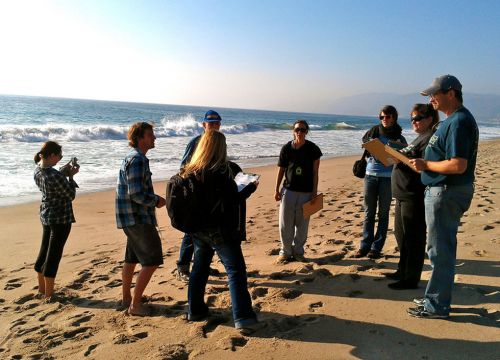
One area where volunteers could contribute to NOAA's scientific efforts related to oil spills is in collecting baseline data before an oil spill happens. (Credit: Heal the Bay/Ana Luisa Ahern, Creative Commons BY-NC-SA 2.0)
 Volunteer scrapes mussels off rocks at Hat Island.
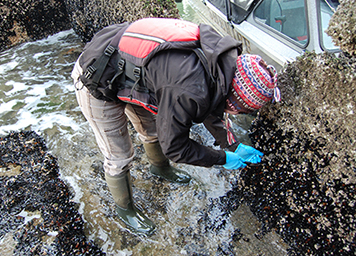
A volunteer samples mussels off of Everett, Washington, as part of the citizen science-fueled NOAA Mussel Watch Program. (Credit: Lincoln Loehr, Snohomish County Marine Resources Committee)
Node Weight: 
3

After an Oil Spill, How—and Why—Do We Survey Affected Shorelines?

Short title: 
Surveying Shorelines After Oil Spills

Survey Says

SCAT aims to describe both the oil and the environment along discrete stretches of shoreline potentially affected by an oil spill. Based on that information, responders then can determine the appropriate cleanup methods that will do the most good and the least harm for each section of shoreline.

The teams of trained responders performing SCAT surveys normally are composed of representatives from the state and federal government and the organization responsible for the spill. They head out into the field, armed with SCAT’s clear methodology for categorizing the level and kind of oiling on the shoreline. This includes standardized definitions for describing how thick the oil is, its level of weathering (physical or chemical change), and the type of shoreline impacted, which may be as different as a rocky shoreline, a saltwater marsh, or flooded low-lying tundra.

After carefully documenting these data along all possibly affected portions of shoreline, the teams make their recommendations for cleanup methods. In the process, they have to take a number of other factors into account, such as whether threatened or endangered species are present or if the shoreline is in a high public access area.

It is actually very easy to do more damage than good when cleaning up oiled shorelines. The cleanup itself—with lots of people, heavy equipment, and activity—can be just as or even more harmful to the environment than spilled oil. For sensitive areas, such as a marsh, taking no cleanup action is often the best option for protecting the stability of the fragile shoreline, even if some oil remains.

Data, Data Everywhere

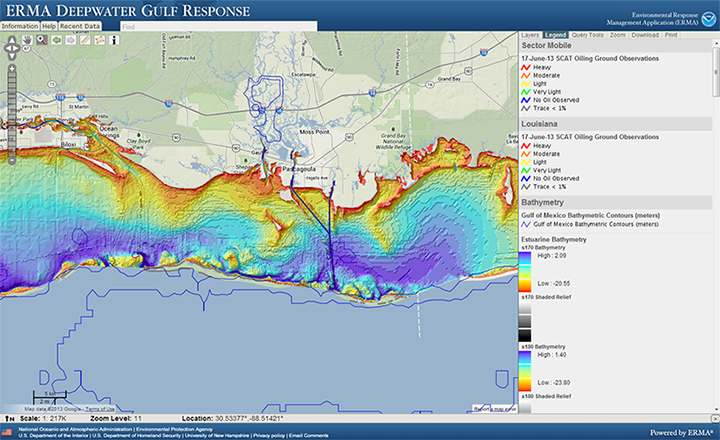
Screenshot of interactive map of Louisiana and Alabama showing water depth and oiled shorelines.
An example of an informational product that incorporates oiled shoreline survey data, as shown in NOAA's online mapping tool, ERMA Deepwater Gulf Response. You can also see the multi-colored water depth measurement data for estuaries off the coast of Louisiana and Alabama. This information aided in assessing risk to nearshore habitats on the Gulf Coast after the 2010 Deepwater Horizon oil spill. (NOAA)

Having a common language for describing shoreline oiling is a critical piece of the conversation during a spill response. Without this standard protocol, spill responders would be reinventing the wheel for each spill. Along that same vein, responders at NOAA are working with the U.S. EPA and State of California to establish a common data standard for the mounds of data collected during these shoreline surveys.

Managing all of that data and turning it into useful products for the response is a lot of work. During bigger spills, multiple data specialists work around the clock to process the data collected during SCAT surveys, perform quality assurance and control, and create informational products, such as maps showing where oil is located and its level of coverage on various types of shorelines.

Data management tools such as GPS trackers and georeferenced photographs help speed up that process, but the next step is moving from paper forms used by SCAT field teams to electronic tools that enable these teams to directly enter their data into the central database for that spill.

Our goal is to create a data framework that can be translated into any tool for any handheld electronic device. These guidelines would provide consistency across digital platforms, specifying exactly what data are being collected and in which structure and format. Furthermore, they would standardize which data are being shared into a spill's central database, whether they come from a state government agency or the company that caused the spill. This effort feeds into the larger picture for managing data during oil spills and allows everyone working on that spill to understand, access, and work with the data collected, for a long time after the spill.

Currently, we are drafting these data standards for SCAT surveys and incorporating feedback from NOAA, EPA, and California. In the next year or two, we hope to offer these standards as official NOAA guidelines for gathering digital data during oiled shoreline surveys.

To learn more about how teams perform SCAT surveys, check out NOAA's Shoreline Assessment Manual and Job Aid.

Four people walking along a beach.
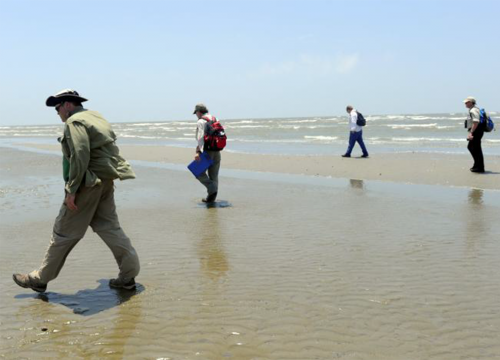
A team of responders surveying the shoreline of Raccoon Island, Louisiana, on May 12, 2010. They use a systematic method for surveying and describing shorelines affected by oil spills, which was developed during the Exxon Valdez spill in 1989. (U.S. Navy)
NOAA employee taking notes of shoreline conditions.
A NOAA employee and member of a Shoreline Cleanup Assessment Technique (SCAT) team records evidence of oil found below the water's surface in Gulf Shores, Alabama, Sept. 20, 2010. SCAT teams use a GPS to gather exact locations of oil and record the data to pass on daily to those leading a spill's cleanup and response. (U.S. Coast Guard)
Node Weight: 
5

NOAA Helps Reverse Pollution Woes for Two Florida Wetland Areas

Short title: 
NOAA Helps Reverse Pollution Woes for Two Florida Wetland Areas

Big Worries from Fertilizer Slurries

On September 5, 2004, Hurricane Frances made landfall on the east coast of Florida and swept across the state, passing near Tampa Bay as a tropical storm. High winds and heavy rainfall associated with the storm damaged an outdoor storage system at the Mosaic Fertilizer plant in Riverview, releasing 65 million gallons of acidic, nutrient-rich process water into Archie Creek Canal, Hillsborough Bay, and surrounding wetlands. Mosaic Fertilizer, LLC is the world’s largest producer of concentrated phosphate and potash, which are used to manufacture plant fertilizer. Phosphorus is an essential nutrient for plants. Yet its original form, calcium phosphate derived from phosphate rock, is not water-soluble and therefore cannot be absorbed by plants. Getting it into a water-soluble form is accomplished by treating it with sulfuric acid to create phosphoric acid. The by-product from that conversion is mostly calcium sulfate but goes by the name “phosphogypsum.” Phosphogypsum starts out as slurry when it is first stored in outdoor containment units. Over time, as the slurry is piled higher and higher, immense stacks are created with sloped sides of phosphogypsum and open-air ponds at the top. Acidic process water is stored and recycled from the top of the stack through the phosphate production facility. If the berms that contain the acidic, nutrient rich ponds at the top of the stack fail, as they did in the wake of Hurricane Frances, they pose a threat to human health and the environment. The pollution released from the Mosaic Fertilizer plant in 2004 harmed nearly 10 acres of seagrass beds and more than 135 acres of wetland habitats, including nearly 80 acres of mangroves. The acidic water dramatically lowered pH, directly killing thousands of fish, crabs and bottom-dwelling organisms. The influx of nitrogen and phosphorous also disrupted the local ecosystem, potentially injuring fish and other aquatic wildlife. NOAA and State trustees worked with Mosaic Fertilizer, LLC to assess these environmental injuries and restore the site. In 2013 and 2014, Mosaic implemented restoration projects to compensate for the environmental injuries that the process water spill caused. Restoration included the removal of invasive exotic plants, widening and improving tidal creeks and increasing through 85 acres of mangrove forest, constructing a 3500‘ oyster reef, and creating an oligohaline or brackish tidal wetland. Mosaic is now monitoring the health of the restored natural areas, with NOAA and our partners providing oversight.

From Illegal Dump to Wetland Bonus

Not far from the Mosaic Fertilizer plant, a five acre parcel of low-lying land pocked with sinkholes had produced its own pollution woes for wetlands. Located on Raleigh Street, battery casings, furnace slag, trash, and construction debris were dumped at this site from 1977 to 1991. By 2009, the level of pollution was deemed dire enough to land it on the U.S. Environmental Protection Agency’s National Priorities List, slating it for cleanup under the Superfund law. Years of illegal dumping had left the area filled with contaminated soil, sediment, and groundwater. EPA investigations at the site found a number of chemical contaminants posing an unacceptable risk to human health and the environment, including oil-related compounds and heavy metals such as antimony, arsenic, and lead. Cleanup and restoration activities at the Raleigh Street Dump Site were comprehensive and involved replacing contaminated soils with clean soils, removing contaminated sediments, planting grass, restoring wetland areas, and reducing the concentration of contaminants in the groundwater. NOAA has worked closely with EPA over the years to ensure the cleanup at Raleigh Street Dump Site was protective of the environment. By the end, restoration actually resulted in an increase of wetland area at the site, more than doubling it to 2.6 acres. The restoration work done at the Mosaic Fertilizer and Raleigh Street sites is just part of a larger overall conservation effort in a region that for decades had been experiencing environmental decline. According to the Tampa Bay Estuary Program, a regional alliance of local, state, and federal government partners dedicated to the area’s health, the Tampa Bay area has made “a remarkable comeback in recent years, with impressive gains in water quality, seagrass recovery, and fish and wildlife populations.” NOAA is happy to have a part in making this a reality.

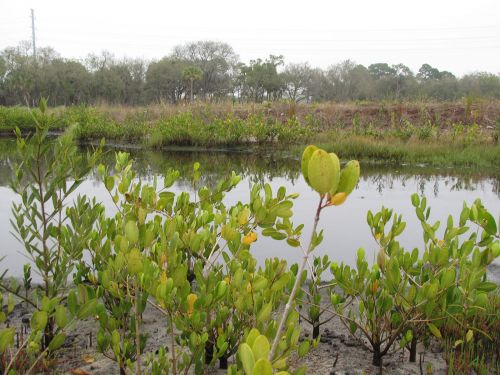
Marsh surrounded by vegetation.
Oligohaline or brackish tidal wetland, created at the Mosaic fertilizer site in Riverview, FL. (NOAA)
Pond surrounded by vegetation.
Restored Raleigh Street Dump site. (NOAA)
Node Weight: 
5

NOAA's Online Mapping Tool ERMA Opens up Environmental Disaster Data to the Public

Short title: 
Bringing Environmental Disaster Data to the Public

MARCH 16, 2015 -- Providing access to data is a challenging task during natural disasters and oil spill responses—which are hectic enough situations on their own.

Following one of these incidents, a vast amount of data is collected and can accumulate quickly. Without proper data management standards in place, it can take a lot of time and effort to ensure that data are correct, complete, and in a useful form that has some kind of meaning to people.

Furthermore, as technology advances, responders, decision makers, and the public expect quick and easy access to data.

NOAA's Environmental Response Management Application (ERMA®) is a web-based mapping application that pulls in and displays both static and real-time data, such as ship locations, weather, and ocean currents. Following incidents including the 2010 Deepwater Horizon oil spill and Hurricane Sandy in 2012, this online tool has aided in the quick display of and access to data not only for responders working to protect coastal communities but also the public.

From oil spill response to restoration activities, ERMA plays an integral part in environmental data dissemination. ERMA reaches a diverse group of users and maintains a wide range of data through a number of partnerships across federal agencies, states, universities, and nations.

Because it is accessible through a web browser, ERMA can quickly communicate data between people across the country working on the same incident. At the same time, ERMA maintains a public-facing side which allows anyone to access publically available data for that incident.

ERMA in the Spotlight

During the Deepwater Horizon oil spill in the Gulf of Mexico, ERMA was designated as the “common operational picture” for the federal spill response. That meant ERMA displayed response-related activities and provided a consistent visualization for everyone involved—which added up to thousands of people.

To date, the Deepwater Horizon spill in the ERMA Gulf of Mexico contains over 1,500 data layers that are available to the public. Data in ERMA are displayed in layers, each of which is a single set of data. An example of a data layer is the cumulative oil footprint of the spill. This single data layer shows, added together, the various parts of the ocean surface the oil spill affected at different times over the entire course of the spill, as measured by satellite data. Another example is the aerial dispersant application data sets that are grouped by day into a single data layer and show the locations of chemical dispersant that were applied to oil slicks in 2010.

Even today, ERMA remains an active resource during the Natural Resource Damage Assessment process, which evaluates environmental harm from the oil spill and response, and NOAA releases data related to these efforts to the public as they become available. ERMA continues to be one of the primary ways that NOAA shares data for this spill with the public.

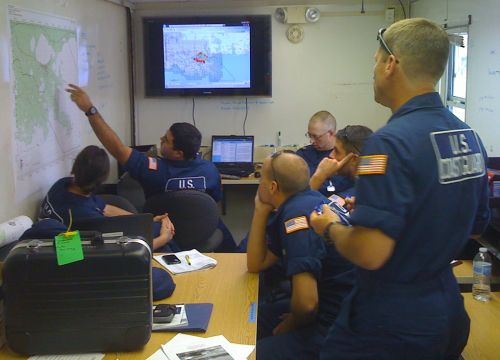
Men looking and pointing at a map.
Members of the U.S. Coast Guard using ERMA during the response to Hurricane Isaac in 2012. (NOAA)
Map of Alaska as seen in ERMA.
ERMA is an active tool in Arctic oil spill response planning. (NOAA)
Node Weight: 
2

NOAA Assists with Response to Bakken Oil Train Derailment and Fire in West Virginia

Short title: 
Bakken Oil Train Derailment and Fire in West Virginia
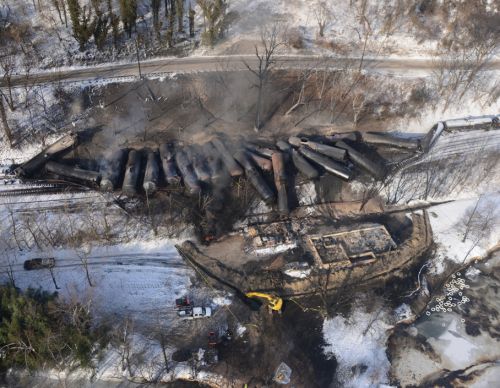
Smoldering train cars derailed from the railroad tracks in snowy West Virginia.
On Feb. 18, 2015, response crews for the West Virginia train derailment were continuing to monitor the burning of the derailed rail cars near Mount Carbon next to the Kanawha River. The West Virginia Train Derailment Unified Command continues to work with federal, state and local agencies on the response efforts for the train derailment that occurred near Mount Carbon on February 15, 2015. (U.S. Coast Guard)
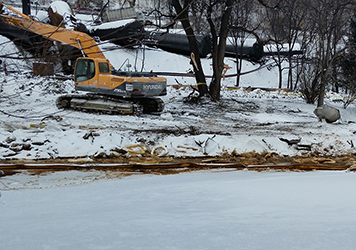
Heavy equipment and oily boom on the edge of a frozen river.
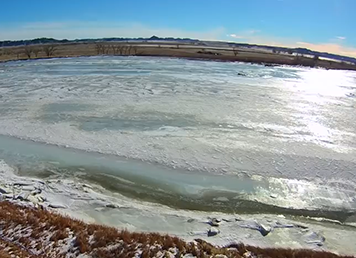
Some oil from the derailed train cars has been observed frozen into the river ice, but no signs of oil appear downstream. (NOAA)
Node Weight: 
2

NOAA Experts Help Students Study up on Oil Spills and Ocean Science

Short title: 
Helping Students Study up on Oil Spill Science

FEBRUARY 19, 2015 -- Every year high school students across the country compete in the National Ocean Sciences Bowl to test their knowledge of the marine sciences, ranging from biology and oceanography to policy and technology. This year's competition will quiz students on "The Science of Oil in the Ocean." As NOAA's center for expertise on oil spills, the Office of Response and Restoration has been a natural study buddy for these aspiring ocean scientists.

In addition to providing some of our reports as study resources, three of our experts recently answered students’ questions about the science of oil spills in a live video Q&A.

In an online event hosted by the National Ocean Sciences Bowl, NOAA environmental scientist Ken Finkelstein, oceanographer Amy MacFadyen, and policy analyst Meg Imholt fielded questions on oil-eating microbes, oil’s movement in the ocean, and much more.

Here is a sampling of the more than a dozen questions asked and answered, plus a bit of extra research to help you learn more. (You also can view the full hour-long video of the Q&A.)

What are the most important policies that relate to the oil industry? There are lots of policies related to the oil industry. Here are a few that impact our work:

  • The Clean Water Act establishes rules about water pollution.
  • The Oil Pollution Act of 1990 establishes the Oil Spill Liability Trust Fund to support oil spill response and holds companies responsible for damages to natural resources caused by a spill.
  • The National Contingency Plan guides preparedness and response for oil and hazardous material spills. It also regulates the use of some response tools such as dispersants.
  • The Outer Continental Shelf Lands Act gives the Department of Interior authority to lease areas in federal waters for oil and gas development and to regulate offshore drilling.
  • The Endangered Species Act and the Marine Mammal Protection Act establish rules for protected species that companies must consider in their operations.

How do waves help transport oil?

Waves move oil in a few ways. First is surface transport. Waves move suspended particles in circles. If oil is floating on the surface, waves can move it toward the shore. However, ocean currents and winds blowing over the surface of the ocean are generally much more important in transporting surface oil. For example, tidal currents associated with rising and falling water levels can be very fast—these currents can move oil in the coastal zone at speeds of several miles per hour. Over time, all these processes act to spread oil out.

Waves are also important for a mixing process called dispersion. Most oils float on the surface because they are less dense than water. However, breaking waves can drive oil into the water column as droplets. Larger, buoyant droplets rise to the surface. Smaller droplets stay in the water column and move around in the subsurface until they are dissolved and degraded.

How widespread is the use of bacteria to remediate oil spills?

Some bacteria have evolved over millions of years to eat oil around natural oil seeps. In places without much of this bacteria, responders may boost existing populations by adding nutrients, rather than adding new bacteria.

This works best as a polishing tool. After an initial response, particles of oil are left behind. Combined with wave movement, nutrient-boosted bacteria help clean up those particles.

Are oil dispersants such as Corexit proven to be poisonous, and if so, what are potential adverse effects as a result of its use?

Both oil and dispersants can have toxicological effects, and responders must weigh the trade-offs. Dispersants can help mitigate oil’s impacts to the shoreline. When oil reaches shore, it is difficult to remove and can create a domino effect in the ecosystem. Still, dispersants break oil into tiny droplets that enter the water column. This protects the shoreline, but has potential consequences for organisms that swim and live at the bottom of the sea.

To help answer questions like these, we partnered with the Coastal Response Research Center at the University of New Hampshire to fund research on dispersants and dispersed oil. Already, this research is being used to improve scientific support during spills.

What are the sources of oil in the ocean? How much comes from natural sources and how much comes from man-made sources?

Oil can come from natural seeps, oil spills, and also runoff from land, but total volumes are difficult to estimate. Natural seeps of oil account for approximately 60 percent of the estimated total load in North American waters and 40 percent worldwide, according to the National Academy of Sciences in a 2003 report.

In 2014, NOAA provided scientific support to over 100 incidents involving oil, totaling more than 8 million gallons of oil potentially spilled. Scientists can identify the source of oil through a chemical technique known as oil fingerprinting. This provides evidence of where oil found in the ocean is from.

An important factor is not only how much oil is in the environment, but also the type of oil and how quickly it is released. Natural oil seeps release oil slowly over time, allowing ecosystems to adapt. In a spill, the amount of oil released in a short time can overwhelm the ecosystem.

What is the most effective order of oil spill procedure? What is currently the best method?

It depends on what happened, where it's going, what's at risk, and the chemistry of the oil.  Sometimes responders might skim oil off the surface, burn it, or use pads to absorb oil. The best response is determined by the experts at the incident.

What do you do with the oil once it is collected? Is there any way to use recovered oil for a later use?

Oil weathers in the environment, mixing with water and making it unusable in that state. Typically, collected oil has to be either processed before being recycled or sent to the landfill, along with some oiled equipment. Oil spill cleanups create a large amount of waste that is a separate issue from the oil spill itself.

Are the effects of oil spills as bad on plants as they are on animals?

Oil can have significant effects on plants, especially in coastal habitat. For example, mangroves and marshes are particularly sensitive to oil. Oil can be challenging to remove in these areas, and deploying responders and equipment can sometimes trample sensitive habitat, so responders need to consider how to minimize the potential unintended adverse impact of cleanup actions.

Does some of the crude oil settle on the seafloor? What effect does it have?

Oil usually floats, but can sometimes reach the seafloor. Oil can mix with sediment, separate into lighter and heavier components, or be ingested and excreted by plankton, all causing it to sink, with potential impacts for benthic (bottom-dwelling) creatures and other organisms.

When oil does reach the seafloor, removing it has trade-offs. In some cases, removing oil could require removing sediment, which is home to many important benthic (bottom-dwelling) organisms. Responders work with scientists to decide this on a case-by-case basis.

To what extent is the oil from the Deepwater Horizon oil spill still affecting the Gulf of Mexico ecosystem?

NOAA and our co-trustees have released a number of studies as part of the ongoing Natural Resource Damage Assessment for this spill and continue to release new research. Some public research has shown impacts on dolphins, deep sea ecosystems, and tuna. Other groups, like the Gulf of Mexico Research Initiative, are conducting research outside of the Natural Resource Damage Assessment.

How effective are materials such as saw dust and hair when soaking up oil from the ocean surface?

Oil spill responders use specialized products, such as sorbent materials, which are much more effective.

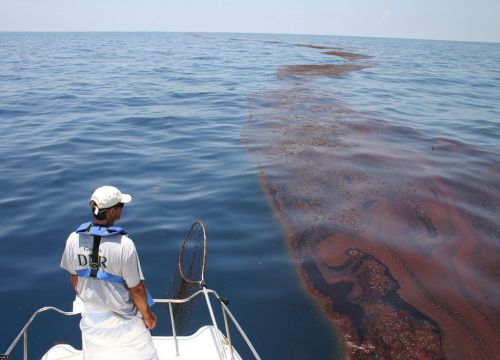
 Person on boat looking oiled sargassum in the ocean.
Mark Dodd, wildlife biologist from Georgia's Department of Natural Resources, surveying oiled sargassum in the Gulf of Mexico. (Credit: Georgia Department of Natural Resources)
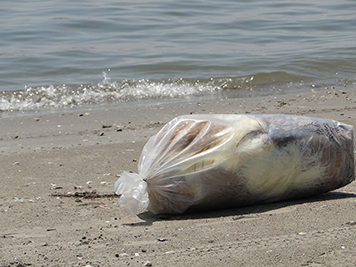
Bag of oiled waste on a beach.
Oiled waste on the beach in Port Fourchon, Louisiana. On average, oil spill cleanups generate waste 10 times the amount of oil spilled. (NOAA)
Node Weight: 
3

For Today's Responders, 1937 Texas Tragedy Still Carries Lessons for Avoiding Disaster

Short title: 
Lessons from a 1937 Texas Tragedy

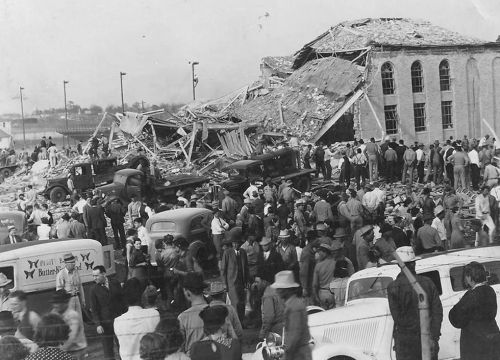
FEBRUARY 17, 2015 — On March 18, 1937, a gas explosion occurred in a school in New London, Texas, killing almost 300 of the 500 students and 40 teachers in the building.

The brand new, steel-and-concrete school, located in the East Texas Oilfield, was one of the wealthiest in the country. Yet it was reduced to rubble in part because no one could smell the danger building in the basement.

While the building originally had been designed for a different heat distribution system, school officials had recently approved tapping into a residue gas line of the local Parade Gasoline Company, a common money-saving practice in the oilfield at the time.

Unfortunately, on that March afternoon, a faulty pipe connection caused the gas (methane mixed with some liquid hydrocarbons) to leak into a closed space beneath the building. Just before class dismissal, when a maintenance employee turned on an electric sander, the odorless gas ignited. The resulting explosion caused the building to collapse, burying victims. (Watch a video of a news reel covering the event from March 1937. [Warning*])

By standards employed today, a gas leak could be detected in advance by its odor. The odorless gas in the New London disaster was able to accumulate in the space before anyone was aware of it. As a direct result of this incident, a Texas law mandated that malodorants be added to all natural gas for commercial and industrial use, a practice that is now an industry standard. Mercaptan, a harmless chemical, gives gas its distinctive rotten egg odor. It is added to natural gas to make it quickly recognizable and to prevent accidents like this from happening.

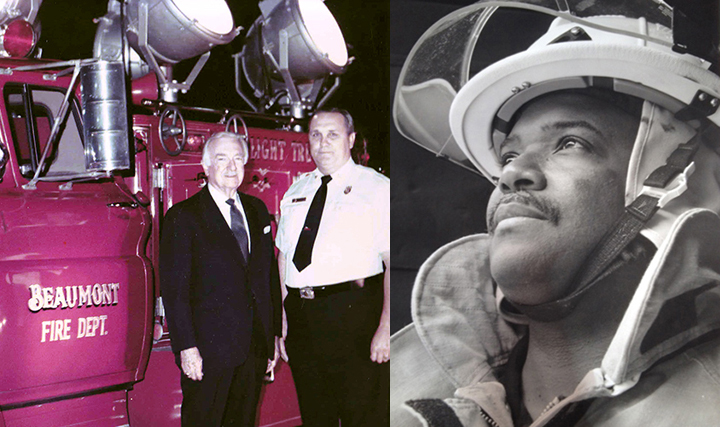
As a firefighter at the beginning of his career in Beaumont, Texas, Derwin Daniels worked for the same fire company that responded many years ago to the 1937 explosion. His personal connection to this particular incident sparked a desire to further his career in the fields of emergency management and fire protection technology.

Left, Walter Cronkite poses with a man and truck from the Beaumont, Texas, fire department. Right, close up of Derwin Daniels in firefighter gear.
Walter Cronkite reported on the New London, Texas, disaster early in his career. Left, he poses many years later in front of the light truck that served at the Beaumont Fire Department response to the 1937 disaster. The bed of the truck, including the lights, is original; the cab was replaced in 1955. (Used with permission of the Fire Museum of Texas Collection, Beaumont, Texas) Right, Derwin Daniels previously worked at the Beaumont Fire Department in Beaumont, Texas, which long ago responded to the 1937 disaster in New London. (Photo: Derwin Daniels)

Derwin Daniels brought his expertise to the NOAA Gulf of Mexico Disaster Response Center to coordinate training activities in emergency response. Daniels has been developing a "First Responder Awareness Level Training" that will provide NOAA staff with better understanding of potential hazards that they might encounter during post-disaster emergency response and recovery activities.

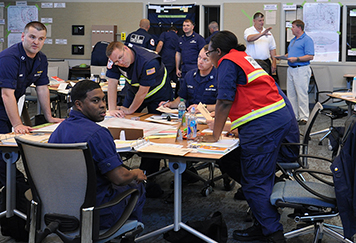
Coast Guard staff standing at tables during a training in the Disaster Response Center.
The Disaster Response Center brings together NOAA-wide resources to improve preparedness, planning, and response capacity for natural and human-caused disasters along the Gulf Coast. As part of that mission, the center regularly provides training on a variety of emergency response-related topics throughout the year. (NOAA)

The training will help staff better assess an emergency situation so they can notify appropriate authorities. As part of this training, students consider real scenarios such as the New London explosion to learn important lessons about responding to disasters, a technique Daniels likes to use whenever possible.

For example, a section of this course covers "Odor Thresholds" and "Dimensions of Odor." This involves human senses as it relates to hazardous materials. Taste, touch, smell, sight, and sound are all valuable tools for detecting the presence of harmful materials.

The New London school explosion and the changes that resulted illustrate to students the role of odor in assessing possible causes of a disaster, such as a chemical release or explosion. Drawing on lessons from past incidents brings context to modern practices.

One of the DRC's many roles is developing and delivering training to NOAA personnel as well as federal, state, and local partners to promote better disaster preparedness in the Gulf region. Learn more about the NOAA Gulf of Mexico Disaster Response Center.


*The video and audio recording linked to here may be disturbing to some audiences.

Crowds of people and emergency vehicles surrounding damaged school.
Accident site at the school in New London, Texas, soon after the explosion that occurred at 3:05 in the afternoon on March 18, 1937. (London Museum in New London/AP)
Node Weight: 
2

How NOAA Oil Spill Experts Got Involved With Chemical Spill Software

Short title: 
From Oil Spill Experts to Chemical Spill Software

FEBRUARY 13, 2015 -- It was late February of 1979, and the Italian container ship Maria Costa [PDF] had sprung a leak. Rough seas had damaged its hull and the ship now was heading to Chesapeake Bay for repairs. Water was flooding the Maria Costa's cargo holds.

This was a particular problem not because of its loads of carpets and tobacco, but because the vessel was also carrying 65 tons of pesticide. Stored in thick brown paper bags, this unregulated insecticide was being released from the clay it was transported with into the waters now flooding the cargo holds. Ethoprop, the major ingredient of this organophosphate insecticide, was not only poisonous to humans but also to marine life at very low concentrations (50 parts per billion in water).

Waters around Norfolk, Virginia, had recently suffered another pesticide spill affecting crabs and shrimp, and the leaking Maria Costa was denied entry to Chesapeake Bay because of the risk of polluting its waters again. During the Maria Costa incident, two NOAA spill responders boarded the ship to take samples of the contaminated water and assess the environmental threat. Even though this event predated the current organization of NOAA's Office of Response and Restoration, NOAA had been providing direct support to oil spills and marine accidents since showing up as hazardous materials (hazmat) researchers during the Argo Merchant oil spill in 1976.

Blood and Water

The NOAA scientists had blood samples taken before and after spending an hour and a half aboard the damaged vessel taking samples of their own. The results indicated that water in the ship's tanks had 130 parts per million of ethoprop and the two men's blood showed tell-tale signs of organophosphate poisoning.

After the resolution of that incident and an ensuing hospital visit by the two NOAA scientists, the head of the NOAA Hazardous Materials Response Program, John Robinson, realized that responding to releases of chemicals other than oil would take a very different kind of response. And that would take a different set of tools than currently existed.

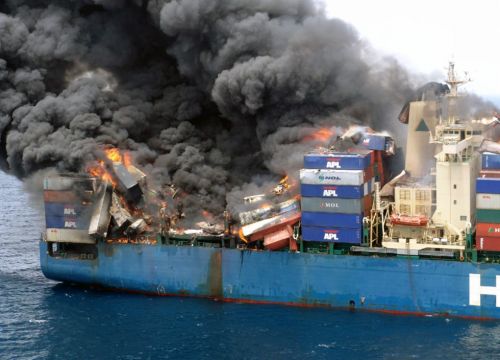
Fire and smoke on a container ship carrying hazardous materials at sea.
The aftermath of a March 2006 explosion of hazardous cargo on the container ship M/V Hyundai Fortune. The risks of transporting hazardous chemicals on ships at sea sparked the inspiration for NOAA oil spill responders to start designing chemical spill software. (Credit: Royal Netherlands Navy)
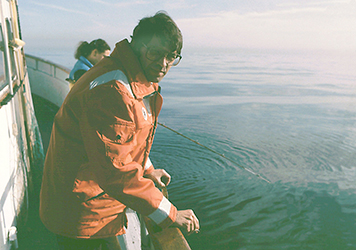
John Robinson leaning on the edge of a boat.
John Robinson led the NOAA Hazardous Materials Response Program in its early years and helped guide the team's pioneering development of chemical spill software tools for emergency responders. (NOAA)
Node Weight: 
2

What Does It Take to Clean up the Cleanup From an Oil Spill?

Short title: 
Cleaning up the Cleanup From Oil Spills

The Mess of a Cleanup

What kinds of wastes are we talking about?

Well, there is the oil recovered itself. In many cases, this can be recycled. Then there are oily liquids. These are the result of skimming oil off of the water surface, which tends to recover a lot of water too, and this has to be processed before it can be properly disposed.

Shoreline cleanup is even messier, due to the large amounts of oily sands and gravel, along with seaweed, driftwood, and other debris that can end up getting oiled and need to be removed from beaches.

Some response equipment such as hard containment booms can be cleaned and reused, but that cleaning generates oily wastes too. Then there are the many sorbent materials used to mop up oil; these sorbent pads and soft booms may not be reusable and would be sent to a landfill. Finally, don't forget about the oil-contaminated protective clothing, plastic bags, and all of the domestic garbage generated by an army of cleanup workers at the site of a spill response.

Aiming for Less Mess

A large U.S. oil spill response will have an entire section of personnel devoted to waste management. Their job is to provide the necessary storage and waste processing facilities, figure out what can be recycled, what will need to be taken to a proper landfill or incineration facility, and how to get it all there. That includes ensuring everything is in compliance with the necessary shipping, tracking, and disposal paperwork.

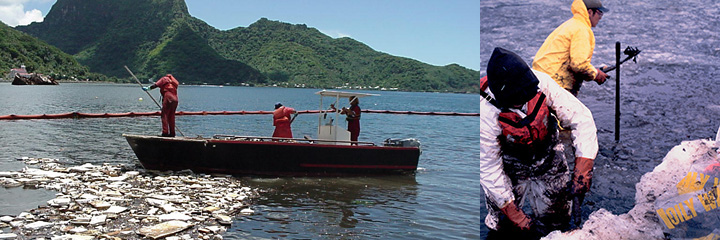
Left: People gathering oily debris from boats with tropical hillsides in background. Right: Cleanup workers in the ocean filling bags with oily waste.
Remote locations such as American Samoa (left) and Dutch Harbor, Alaska (right) offer special challenges for cleaning up and disposing of wastes from oil spills. At right, cleanup workers gather oily waste and debris at the November 1997 M/V Kuroshima spill in Alaska. (NOAA)

The amount of waste generated is a serious matter, particularly because oil spills often can occur in remote areas. In far-off locales, proper handling and transport of wastes is often as big a challenge as cleaning up the oil. Dealing with oily wastes is even more difficult in the Arctic and remote Pacific Islands such as Samoa because of the lack of adequate landfill space. One of the common goals of a spill response is to minimize wastes and segregate materials as much as possible to reduce disposal costs.

In a 2008 article, the U.S. Coast Guard explores in more detail the various sources of waste during an oil spill response and includes suggestions for incentivizing waste reduction during a response.

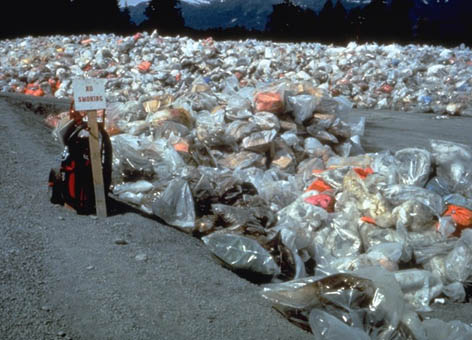
Bags of oiled waste on a beach next to a No Smoking sign.
Bags and bags of oiled waste on the beach of Prince William Sound, Alaska, following the Exxon Valdez oil spill in March 1989. (NOAA)
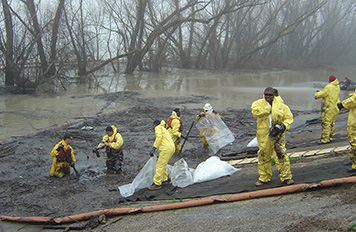
Cleanup workers collect oily debris in bags on the Mississippi River's banks.
Responders collect oily debris during the M/V Westchester oil spill in the Mississippi River near Empire, Louisiana, in November 2000. (NOAA)
Node Weight: 
2

Latest NOAA Mapping Software Opens up New Possibilities for Emergency Responders

Short title: 
New NOAA Mapping Software for Responders

This is a guest post by emergency planner Tom Bergman.

FEBRUARY 5, 2015 -- For 20 years, thousands of emergency planners and responders have used the MARPLOT mapping software to respond to hazardous chemical spills.

But creative MARPLOT users have also employed the program for a wide range of other uses, including dispatching air ambulances and helping identify a serial arsonist.

MARPLOT is the mapping component of a suite of software programs called CAMEO, jointly developed by NOAA's Office of Response and Restoration and the U.S. Environmental Protection Agency to help emergency planners and responders deal with chemical spills.

These agencies have just released a new version of MARPLOT (version 5.0).

MARPLOT 5 offers a host of new and improved capabilities, which translate to more mapping options, greater flexibility, and even more powerful data searching capabilities.

On the Grid

To illustrate a few of the new capabilities of MARPLOT 5, let's imagine that a category EF2/EF3 tornado is blowing through McClain County, Oklahoma. McClain County is a mostly rural area, with only three small towns. For this scenario, we will assume the tornado passes through the small town of Blanchard, Oklahoma.

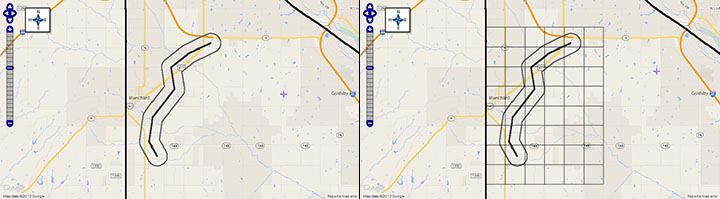
Immediately following the tornado, first responders will conduct initial damage surveys of the affected area. Generally, the Incident Command, which is the multi-agency team responsible for managing the emergency response, will want to divide the area the tornado impacted into a "grid" and assign teams to survey specific areas of it. MARPLOT 5 has a new "gridding" tool, which allows those in an Incident Command to determine and display the various survey zones.

Screenshots of estimated tornado path and affected area (left) with one-square-mile-grids (right) in MARPLOT 5 map.
Estimated tornado path and affected area (left) with one-square-mile-grids (right), a new feature displayed in MARPLOT 5. (NOAA)
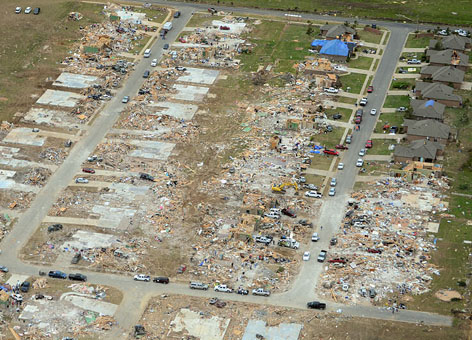
Aerial view of destroyed houses in Vilonia, Arkansas, after EF4 tornado in 2014
NOAA and EPA's MARPLOT mapping software was designed for emergency responders and planners dealing with chemical spills. However, its features lend it to a host of other uses, from search and rescue after a tornado to dealing with wildfires. (NOAA National Weather Service)
Node Weight: 
4

NOAA Partners with University of Washington to Examine How Citizen Science Can Help Support Oil Spill Response

Short title: 
Examining Citizen Science and Oil Spill Response

The Citizen Science Management Project

Our team of University of Washington graduate students is working with NOAA's Office of Response and Restoration to research the potential for incorporating citizen science into its oil spill response efforts.

Thanks to improvements in technology, the public is more interested in and better able to contribute help during oil spills than ever before. During recent oil spills, notably the 2010 Deepwater Horizon incident, large numbers of citizens have expressed interest in supporting monitoring and recovery efforts. As the lead science agency for oil spills, NOAA is considering how to best engage the public in order to respond to oil spills even more effectively.

The goal of the project is to provide recommendations for NOAA on effective citizen science management. To do this, we began working to find the most current and relevant information on citizen science by conducting a broad review of the published scientific literature and speaking with experts in the fields of oil spill response, citizen science, and coastal volunteer management. Our next steps are to analyze the research and come up with possible options for NOAA's Office of Response and Restoration on how to best adopt and incorporate citizen science into its work.

Initial Findings

NOAA's Role. NOAA's role in an oil spill response is primarily that of scientific support. During a response, NOAA begins by addressing a few core questions. Phrased simply, they are:

  • What got spilled?
  • Where will it go and what will it hit?
  • What harm will it cause and how can the effects of the spill be reduced?

We believe that using citizen scientists to help answer these fundamental questions may help NOAA better engage communities in the overall response effort and produce additional usable data to strengthen the response.

Changing Trends and New Opportunities. Technology is changing quickly. More than half of Americans own a smartphone, mapping programs are readily available and easy-to-use, and the Internet provides an unparalleled platform for crowdsourced data collection and analysis, as well as a venue for communication and outreach. These advances in technology are adding a new dimension to citizen science by creating the ability to convey information more quickly and by increasing visibility for citizen science projects. Increased exposure to citizen science efforts spurs interest in participation and the additional data collection capacity provided by smartphones and other technology allows more people to contribute.

One such trend is the digital mapping of crowdsourced information, such as the NOAA Marine Debris Program's Marine Debris Tracker app, which enables people to map and track different types of litter and marine debris they find around the world.

Oil Spills, NOAA, and Citizen Science. In 2012 the National Response Team prepared a document on the “Use of Volunteers: Guidelines for Oil Spills,” outlining ways in which oil spill responders can move toward improved citizen involvement before, during, and after an oil spill. We will use this as a framework to assess potential citizen science programs that could be adopted or incorporated by NOAA’s Office of Response and Restoration.

Challenges. All citizen science programs face certain challenges, such as ensuring data reliability with increased participation from non-experts, finding and maintaining the capacity required to manage a citizen science program and incorporate new data, and working with liability concerns around public participation. The challenges become even greater when incorporating citizen science into oil spill response. The unique challenges we have identified are the compressed timeline associated with a spill situation; the unpredictability in scope, geography, and nature of a spill; and the heightened risk and liability that come from having volunteers involved with hazardous material spill scenarios. We will keep all of these concerns in mind as we develop our recommendations.

Volunteers sample mussels at a rocky beach with a sign in the foreground.
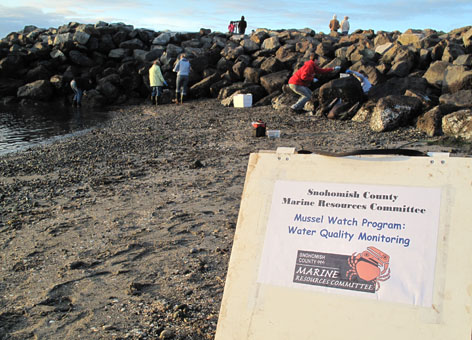
Volunteers sample mussels at a Mussel Watch site in Washington, one of NOAA's National Mussel Watch Program sites. This program relies on citizen scientists to gather data on water pollution levels and seafood safety by regularly sampling mussels at established locations across the nation. (Alan Mearns/NOAA)
Aerial view of Deepwater Horizon oil spill and response vessels.
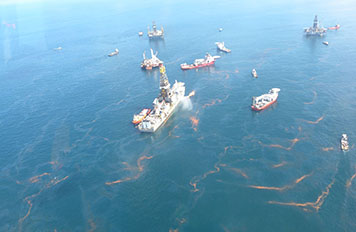
A view of the oil source and response vessels during the Deepwater Horizon incident as seen during an overflight on May 20, 2010. This spill piqued public interest in oil spills. (NOAA)
Node Weight: 
3

When Oil Spills Take You to Hawaii and the Yellowstone River in Two Days

Short title: 
Oil Spills From Hawaii to Montana

JANUARY 30, 2015 — We get called for scientific support between 100 and 150 times a year for oil spills, chemical releases, and other marine pollution events around the nation. That averages to two or three calls per week from the U.S. Coast Guard or U.S. Environmental Protection Agency, but those calls aren't nicely scheduled out during the week, or spread out regionally among staff in different parts of the country.

The date of an oil spill is just the starting point. Many of these pollution incidents are resolved in a day or two, but some can lead to years of work for our part of NOAA. Some oil spills make the national and regional news while others might only be a local story for the small coastal town where the spill took place.

To give you an idea, some of the incidents we worked on just last week took us from Hawaii one day to eastern Montana the next day—and we were already working on two others elsewhere.

These incidents included a pipeline break and oil spill in the Yellowstone River in Montana; a mystery spill of an unknown, non-oil substance that resulted in birds stranded in San Francisco Bay, California; a tug boat sinking and releasing diesel fuel off of Oahu, Hawaii; and a fishing vessel grounded near Sitka, Alaska.

The Yellowstone River spill involved a pipeline releasing oil as it ran under a frozen river. The source of the leaking oil has been secured, which means no more oil is leaking, but response operations are continuing.

It is an interesting spill for several reasons. One is because the oil type, Bakken crude, is an oil that has been in the news a lot recently. More Bakken crude oil is being transported by train these days because the location of the oil fields is far from ports or existing pipelines. Several rail car accidents involving this oil have ended in explosions. Another reason the Yellowstone River spill is of particular interest is because the response has to deal with ice and snow conditions along with the usual challenges of dealing with an oil spill.

Watch footage of an aerial survey over the Yellowstone River and spilled oil:


The mystery spill in the San Francisco Bay Area is still a mystery at this point (both what it is and where it came from), but hundreds of birds are being cleaned in the meantime. The response is coordinating sampling and chemical analysis to figure out the source of the “mystery goo” coating these seabirds.

Marine diesel fuel dyed red and spilled on the ocean surface.
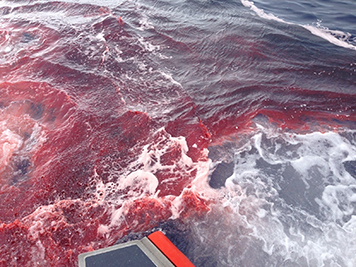
Marine diesel fuel, dyed red, is shown approximately seven miles south of Honolulu Airport on January 23, 2015. The spill came from a tugboat that sank off Barbers Point Harbor, Oahu, on January 22. (U.S. Coast Guard)

Meanwhile, the tugboat accident in Hawaii involved about 75,000 gallons of fuel oil leaking from a tugboat that sank in over 2,000 feet of water. All 11 crewmembers of the tugboat were safely rescued. We were helping forecast what was happening to the spilled oil and where it might be drifting. In addition, there was a lot of concern about endangered Hawaiian monk seals and sea turtles in the area, but no oiled wildlife have been reported.

And that brings us to the fishing vessel grounded in Alaska. At this time the vessel is still intact and hasn’t spilled any of the 700 gallons of fuel believed to be onboard. Salvors are working to refloat the vessel. Fortunately, the crew had time to cap some of the fuel tank vents before abandoning ship, which may be helping prevent oil from being released. All four crew were safely rescued.

That makes four very different spills in four very different areas … and we have to be ready to respond with oil spill models and environmental expertise for all of them at the same time. But that’s just all in a day’s work at NOAA.

Overview of the Yellowstone River, Jan. 19, 2015.
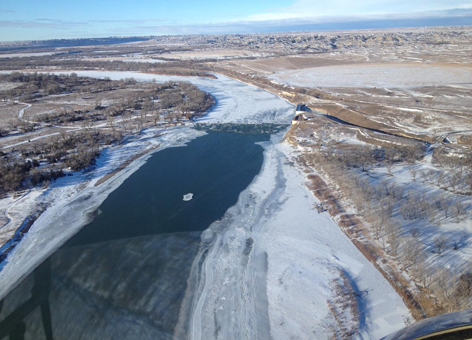
Overview of the Yellowstone River at the site of the pipeline spill on Jan. 19, 2015. (U.S. Environmental Protection Agency)
Aerial view of oil spilled along the edge of Yellowstone River.
View from an aerial survey of the spill site on the Yellowstone River, taken about six miles upstream from Glendive, Montana. (Montana Department of Environmental Quality)
Node Weight: 
4

Despite Threats, Celebrating Restoration Successes for Seabirds in California

Short title: 
Restoration Successes for Seabirds in California

Bait and Switch

While nearly 7,000 birds were estimated killed after the container ship Cosco Busan spilled heavy oil into San Francisco Bay in 2007, restoration projects are already underway. In 2014 alone, over $15 million was spread across more than 50 projects to enhance and restore beaches and habitat, including seabird habitat, around the Bay Area. One project in particular is aimed at undoing the damage done to the threatened Marbled Murrelet. In order for these small, chubby seabirds to recover from this oil spill, they need some help keeping jays from eating their eggs. For three years in a row, a restoration project has been working on this in the old growth forests around campgrounds in the Santa Cruz Mountains. From the Cosco Busan Oil Spill Trustee Council [PDF]: "In order to train jays not to eat murrelet eggs, hundreds of chicken eggs were painted to look like murrelet eggs, injected with a chemical that makes the jays throw up, and placed throughout the forest. Monitoring suggests the jays learn to avoid the eggs and may teach their offspring as well."

Cleaning up the Neighborhood

Meanwhile, down the California coast, seabirds in the Channel Islands were suffering as a result of the pesticide DDT and industrial chemicals that were dumped into the ocean by local industries years ago. The birds themselves were contaminated by the pollution and their eggshells became dangerously thin, reducing reproduction—a notorious effect of DDT. On top of all that, human activities had been altering seabird habitat on these islands for years. NOAA's Montrose Settlements Restoration Program has been focused on reversing this harmful trend with a number of projects to restore seabird nesting habitat, attract seabirds to the restored sites, and to remove non-native plants and animals on the Channel Islands and Baja California Pacific Islands. On Scorpion Rock, a small islet located off the northeast coast of Santa Cruz Island, biologists have been transforming the inhospitable landscape for Cassin’s Auklets, a small open-ocean seabird. Scorpion Rock had been overrun with dense, non-native ice plant which prevented the seabirds from digging burrows to nest and provided little protection from predators. Begun in 2008, the restoration of Scorpion Rock is nearly complete. The island now boasts a lush cover of 17 different native plant species, including shrubs that stabilize the soil and offer cover for nesting birds. That work has been paying off. According to the Montrose Settlements Restoration Program: "Biologists have seen a 3-fold increase in the number of natural Cassin's Auklets burrows since the project started. Over the last few years, biologists have also observed a lower number of dead adult auklets which means that the native plants are providing adequate cover from predators." In the final year of the project, the plan is to use sounds of breeding seabirds to attract greater numbers to the restored habitat on Scorpion Rock, and continue maintaining the native vegetation and monitoring the birds' recovery. Learn more about this and other seabird restoration projects in the Channel Islands and watch a video from 2010 about the restoration at Scorpion Rock during its earlier stages:

Seabird chick in a person's hand.
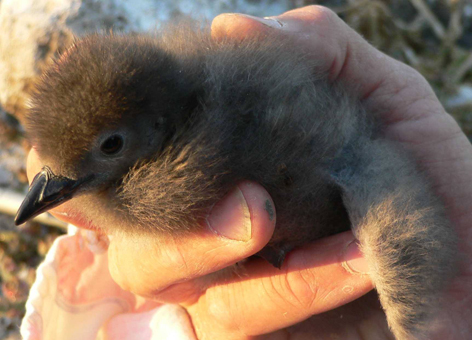
A Cassin’s Auklet chick from Scorpion Rock off of California's Channel Islands. Biologists weigh the chicks and take their wing length to get information on their growth and development as part of NOAA's Montrose Settlements Restoration Program nest monitoring program. (U.S. Geological Survey)
Adult seabird nesting underground in a dirt burrow.
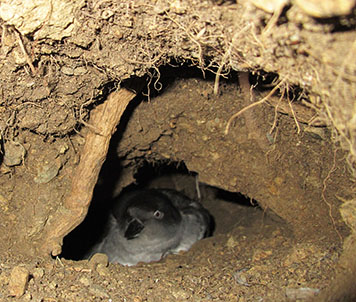
Adult Cassin's Auklet in a nest made by burrowing under native plants on Santa Barbara Island in California's Channel Islands. (NOAA/Montrose Settlements Restoration Program)
Node Weight: 
3

Information about Oil Spills Is at Your Fingertips

Short title: 
Information about Oil Spills

JANUARY 20, 2015 -- Where and when was the biggest oil spill? How many oil spills happen each year? Is the frequency of oil spills going up or down? Where can I get information about oil spills?

We at NOAA's Office of Response and Restoration hear these questions often, frequently from high school students looking for help writing their research papers, and from media outlets when they are reporting on spill incidents.

We have a lot of information on our website about oil spills in general, as well as those cases in which we have provided scientific expertise during the response. In addition, we maintain IncidentNews.noaa.gov, which has information on thousands of selected historical incidents spanning 30 years of our experience responding to spills.

NOAA only becomes involved with larger, more complex incidents in which scientific expertise is required to track or clean up spilled oil or cases with a significant threat to marine and coastal resources. Sometimes we get involved before any oil has actually spilled, such as when a ship runs aground on a coral reef and the fuel tanks have not been breached—yet. We typically respond to 150-200 oil and chemical incidents annually, but there are thousands of smaller spills happening as well, many in marinas and urban and industrial waterways.

So what are some good sources of information on oil spills? For general statistics on oil spills in U.S. waters, we recommend that researchers go to the National Response Center (NRC) section of the U.S. Coast Guard Maritime Information Exchange (CGMIX) website. You'll find the NRC information under the menu, Search CGMIX.

The NRC receives all reports of releases involving hazardous substances, including oil spills. Reports to the NRC activate the National Contingency Plan and the federal government's response capabilities. The NRC maintains reports of all releases and spills in a national database going back to 1990 that you can download and search.

If you are interested in a specific pollution incident in the United States, the Coast Guard has a lot of information in their Marine Casualty and Pollution Data files (search the site for "Marine Casualty and Pollution Data"). This database goes back to 1973 and captures details about marine casualty and pollution incidents that were investigated by the Coast Guard.

On the international level, the International Tanker Owners Pollution Federation (ITOPF) does a good job of providing data on oil spills from tankers and barges transporting oil. The ITOPF database goes back to 1970, and includes data from a variety of sources including maritime insurers and shipping publications.

One of the interesting trends that ITOPF data shows is that while tanker traffic has increased over the past 30 years, there has been a downward trend in oil spills originating from tankers. In their list of the top 20 tanker accidents, 19 occurred before 1990, or pre-Exxon Valdez. Since then, many oil pollution prevention rules have been put in place and ship navigation tools have been improved. One notable example being the phase out of single-hull tankers.

Another good source of international data is CEDRE, the Centre of Documentation, Research and Experimentation on Accidental Water Pollution, based in Brittany, France. The CEDRE website has a good map and database featuring major oil spills around the world, dating back to 2013.

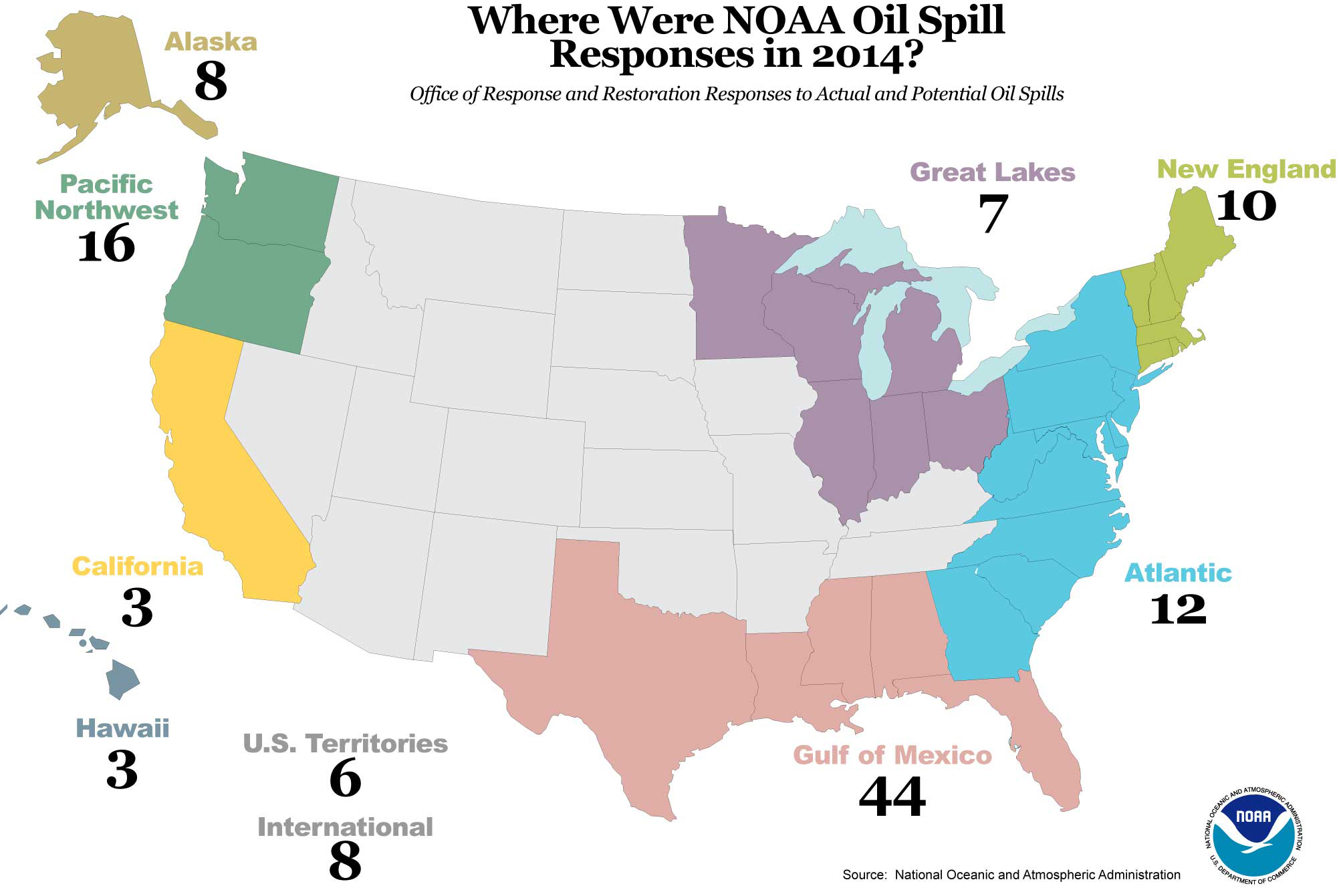
Speaking of oil spill data, we crunched the numbers on the locations of all of our oil spill-related responses from 2014 and came up with the following infographic:  

Map of United States with numbers of oil spill responses in various coastal regions.
NOAA oil spill responses in 2014, by region. Includes actual and potential oil spills. The Gulf of Mexico, a region which produces and refines a lot of oil, also experiences the most oil spill responses NOAA is involved with of any other region. The U.S. Coast Guard in different regions takes advantage of NOAA support services in different ways, which may account for some of the very low or very high numbers of NOAA responses in various regions. (NOAA)
Oil on the ocean and smoke visible in the distance.
Smoke is visible from controlled burns of the oil released during the Deepwater Horizon oil spill in 2010. This oil well blowout was the largest oil spill in U.S. waters. (NOAA)
Worker surveying oiled grasses on the shores of the Aleutian Islands.
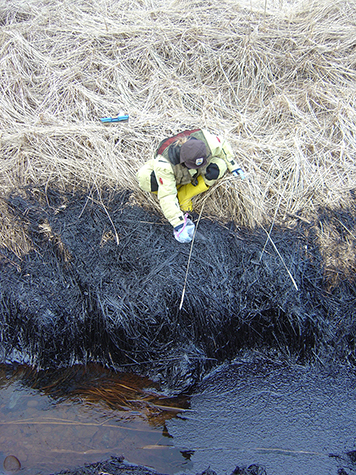
NOAA responds to 150-200 oil spills in U.S. coastal waters each year. Here, a worker conducts a shoreline survey following the M/V Selendang Ayu grounding and oil spill near the Aleutian Islands, Alaska, in December 2004. (NOAA)
Site Themes: 
Node Weight: 
4

Why Are Seabirds so Vulnerable to Oil Spills?

Short title: 
Why Are Seabirds so Vulnerable to Oil Spills?

JANUARY 13, 2015 -- Out of the squawking thousands of black and white birds crowding the cliff, a single male sidled up to the rocky edge. After arranging a few out-of-place feathers with his sleek beak, the bird plunged like a bullet into the ocean below.

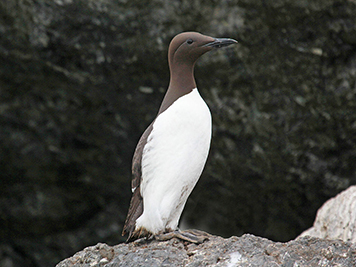
These penguin look-alikes (no relation) are Common Murres. Found along the U.S. coast from Alaska to California, this abundant species of seabird dives underwater, using its wings to pursue a seafood dinner, namely small fish.

During an oil spill, however, these classic characteristics of murres and other seabirds work to their disadvantage, upping the chance they will encounter oil—and in more ways than one.

To understand why seabirds are so vulnerable to oil spills, let's return to our lone male murre and a hypothetical oil spill near his colony in the Gulf of Alaska.

Preening in an Oil Sheen

After diving hundreds of feet beneath the cold waters of the North Pacific Ocean, the male murre pops back to the surface with a belly full of fish—and feathers laminated in oil.

This bird has surfaced from his dinner dive into an oil slick, a common problem for diving birds during oil spills. His coat of feathers, once warm and waterproof, is now matted. The oil is breaking up his interlocking layer of feathers, usually maintained by the bird's constant arranging and rearranging, known as preening.

With his sensitive skin suddenly exposed not just to the irritating influence of oil but also to the cold, the male murre becomes chilled. If he does not repair the alignment of his feathers soon, hypothermia could set in. This same insulating structure also traps air and helps the bird float on the water’s surface, but without it, the bird would struggle to stay afloat.

Quickly, the freshly oiled seabird begins preening. But with each peck of his pointed beak into the plumage, he gulps down small amounts of oil. If the murre ingests enough oil, it could have serious effects on his internal organs. Impacts range from disrupted digestion and diarrhea to liver and kidney damage and destruction of red blood cells (anemia).

But oil can find yet another way of entering the bird: via the lungs. When oil is spilled, it begins interacting with the wind, water, and waves and changing its physical and chemical properties through the process of weathering. Some components of the oil may evaporate, and the murre, bobbing on the water’s surface, could breathe in the resulting toxic fumes, leading to potential lung problems.

Birds'-Eye View

This single male murre is likely not the only one in his colony to experience a run-in with the oil spill. Even those seabirds not encountering the oil directly can be affected. With oil spread across areas where the birds normally search for food and with some of their prey potentially contaminated or killed by the oil, the colony may have to travel farther away to find enough to eat. On the other hand, large numbers of these seabirds may decide to up and move to another home for the time being.

At the same time that good food is becoming scarcer, these birds will need even more food to keep up their energy levels to stay warm, find food, and ward off disease. One source of stress—the oil spill—can exacerbate many other stresses that the birds often can handle under usual circumstances.

If the oil spill happens during mating and nesting time, the impacts can be even more severe. Reproducing requires a lot of energy, and on top of that, exposure to oil can hinder birds' ability to reproduce. Eggs and very young birds are particularly sensitive to the toxic and potentially deadly properties of oil. Murres lay only one egg at a time, meaning they are slower to replace themselves.

The glossy-eyed male murre we are following, even if he manages to escape most of the immediate impacts of being oiled, would soon face the daunting responsibility of taking care of his fledgling chick.

As young as three weeks old, his one, still-developing chick plops off the steep cliff face where the colony resides and tumbles into the ocean, perhaps a thousand feet to its waiting father below. There, the father murre is the chick's constant caregiver as they travel out to sea, an energy-intensive role even without having to deal with the potential fallout from an oil spill.

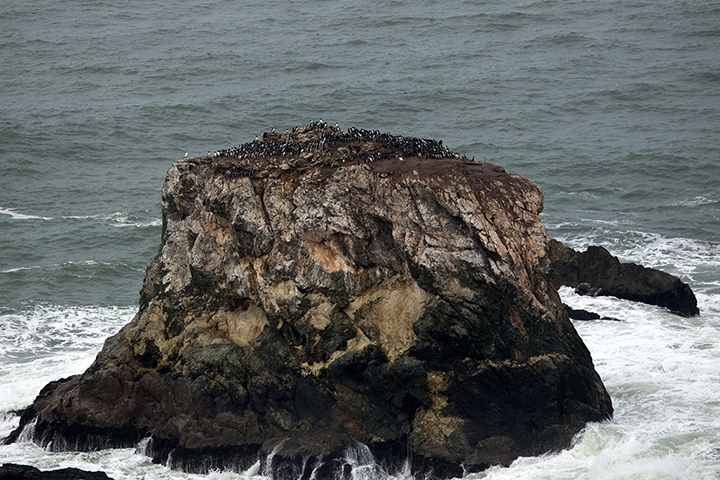
Colony of murres on a rocky outcropping on the California coast.
Murres are very social birds, living in large colonies on rocky cliffs and shores along the U.S. West Coast. If disturbed by an oil spill, many of these birds may set off temporarily to find a more suitable home. (Creative Commons: Donna Pomeroy, Attribution-NonCommercial 3.0 Unported License)
Birds of a Feather Get Oiled Together

Like a bathtub filled with rubber ducks, murres form giant floating congregations on the water, known as "rafts," which can include up to 250,000 birds. In fact, murres spend all but three or four months of the year out at sea. Depending on where the oil travels after a spill, a raft of murres could float right into it, a scenario which may be especially likely considering murre habitat often overlaps with major shipping channels.

After the 1989 Exxon Valdez oil spill in Alaska's Prince William Sound, responders collected some 30,000 dead, oil-covered birds. Nearly three-quarters of them were murres, but the total included other birds which dive or feed on the ocean surface as well. Because most bird carcasses never make it to shore intact where researchers can count them, they have to make estimations of the total number of birds killed. The best approximation from the Exxon Valdez spill is that 250,000 birds died, with 185,000 of them murres.

While this population of seabirds certainly suffered from this oil spill (perhaps losing up to 40 percent of the population), murres began recovering within a few years of the Exxon Valdez oil spill. Surprisingly resilient, this species is nonetheless one of the most studied seabirds precisely because it is so often the victim of oil spills.

Photo of Surf Scoter used via Creative Commons: Brocken Inaglory, Attribution-ShareAlike 3.0 Unported License

Photo of Common Murre used via Creative Commons: Dick Daniels, Attribution-ShareAlike 3.0 Unported License

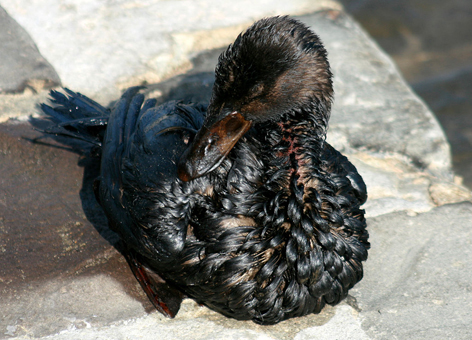
Oiled sea duck.
A Surf Scoter, a large sea duck, was covered in oil as a result of the 2007 Cosco Busan oil spill in San Francisco Bay. See how the oil causes its feathers to mat and separate. (Creative Commons: Brocken Inaglory, Attribution-ShareAlike 3.0 Unported License)
Common murre with breeding plumage.
The Common Murre, one of the most studied species of seabird precisely because it is so often the victim of oil spills. (Creative Commons: Dick Daniels, Attribution-ShareAlike 3.0 Unported License)
Node Weight: 
2

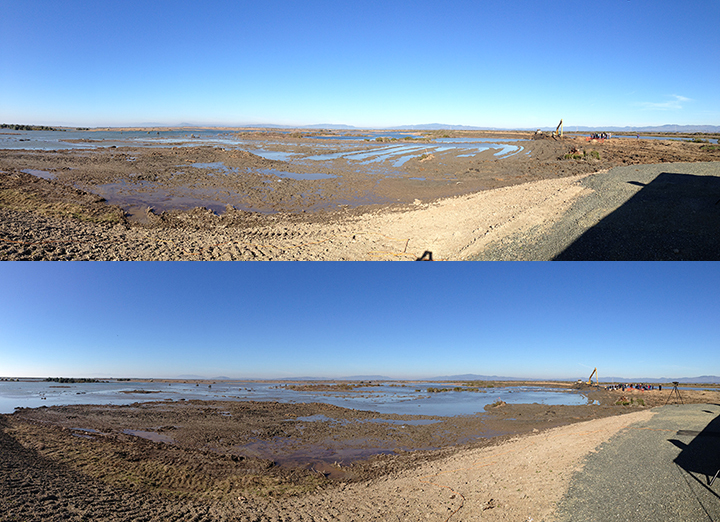
After a Century Apart, NOAA and Partners Reunite a Former Wetland with San Francisco Bay's Tides

Short title: 
Reuniting a Former Wetland with the Tides

How Low Can It Flow

For the most part, Cullinan Ranch will be covered in open water because years of farming, beginning in the 1880s, caused the land to sink below sea level. The open water will provide places for animals such as fish and birds—as well as the invertebrates they like to eat—to find food and rest after big storms. However, some areas of the property will remain above the low tide level, creating conditions for the plant pickleweed to thrive. While a succulent like cacti, pickleweed can survive wet and salty growing conditions. (Fun fact: Some people enjoy cooking and eating pickleweed. When blanched, it apparently tastes salty and somewhat crispy.) The salt marsh harvest mouse, native to California and one of the few mammals able to drink saltwater, also will take advantage of the habitat created by the pickleweed in the recovering wetland.

Above: A view of the wet, muddy field about to be flooded. Below: A view of the wet, muddy field with more water in it.
A view of the 1,200 acre area of Cullinan Ranch just before the first levee was breached (above) and about 30 minutes after (below) on Jan. 7, 2015. The water already visible in the top photo came from recent rains and natural seepage. (NOAA)

Wildlife will not be the only ones enjoying the restoration of Cullinan Ranch. A major highway passes by the site, and Cullinan Ranch has experienced numerous upgrades to improve recreational access for people brought there by Highway 37. Soon anyone will be able to hike on the newly constructed trails, fish off the pier, and launch kayaks from the dock.

Turning Money into Marshes

The restoration of Cullinan Ranch from hay field to tidal wetland has been in the works for a long time, brought about by a range of partners and funding agencies, including NOAA, the U.S. Fish and Wildlife Service, the U.S. Environmental Protection Agency, California Department of Fish and Wildlife, California Wildlife Conservation Board, and Ducks Unlimited. NOAA provided several sources of funding to help finish this restoration project. In addition to $900,000 from the American Recovery and Reinvestment Act, NOAA contributed $650,000 through a community-based restoration partnership with Ducks Unlimited and $1.65 million awarded for natural resource damages through the Castro Cove trustee council. The latter funding was part of a $2.65 million settlement with Chevron as a result of the nearby Chevron Richmond Refinery discharging mercury and oil pollution into Castro Cove for years. Cullinan Ranch and Breuner Marsh are the two restoration projects Chevron funded to make up for this pollution.

Map of San Francisco Bay showing locations of NOAA restoration projects.
NOAA is working on a number of tidal wetland restoration projects in the north San Francisco Bay. (NOAA)

Cullinan Ranch is one of the largest restoration projects in the north San Francisco Bay, but it is far from the only one NOAA is involved with in the region. Helping reverse a century-long trend which saw many of the bay's tidal wetlands disappear, NOAA has been working on a suite of projects restoring these historic and important coastal features in northern California. Watch footage of the earthen levee being breached to reconnect the bay's tide waters to Cullinan Ranch:   Download the video file (.mp4).

Excavator removing earth to allow tide waters into the recovering wetland.
The first of four breaches of tidal levees separating Cullinan Ranch from the tide waters of San Francisco Bay. (NOAA)
Node Weight: 
2

Our Top 10 New Year's Resolutions for 2015

Short title: 
Our New Year's Resolutions for 2015

DECEMBER 31, 2014 -- While we have accomplished a lot in the last year, we know that we have plenty of work ahead of us in 2015.

As much as we wish it were so, we realize oil and chemical spills, vessel groundings, and marine debris will not disappear from the ocean and coasts in the next year.

That means our experts have to be ready for anything, but specifically, for providing scientific solutions to marine pollution.

Here are our plans for doing that in 2015:

  1. Exercise more. We have big plans for participating in oil spill exercises and performing trainings that will better prepare us and others to deal with threats from marine pollution.
  2. Be safer. We work up and down the nation's coastlines, from tropical to arctic environments. Many of these field locations are remote and potentially hazardous. We will continue to assess and improve our equipment and procedures to be able to work safely anywhere our services are needed.
  3. Keep others safe. We are improving our chemical response software CAMEO, which will help chemical disaster responders and planners get the critical data they need, when and where they need it.
  4. Get others involved. We are partnering with the University of Washington to explore ways average citizens can help contribute to oil spill science.
  5. Communicate more effectively. This spring, we will be hosting a workshop for Alaskan communicators and science journalists on research-based considerations for communicating about chemical dispersants and oil spills.
  6. Be quicker and more efficient. We will be releasing a series of sampling guidelines for collecting high-priority, time-sensitive data in the Arctic to support Natural Resource Damage Assessment and other oil spill science.
  7. Sport a new look. An updated, more mobile-friendly look is in the works for NOAA's Damage Assessment, Remediation, and Restoration Program website. Stay tuned for the coming changes at www.darrp.noaa.gov.
  8. Unlock access to data. We are getting ready to release public versions of an online tool that brings together data from multiple sources into a single place for easier data access, analysis, visualization, and reporting. This online application, known as DIVER Explorer, pulls together natural resource and environmental chemistry data from the Deepwater Horizon oil spill damage assessment, and also for the Great Lakes and U.S. coastal regions.
  9. Clean up our act. Or rather, keep encouraging others to clean up their act and clean up our coasts. We're helping educate people about marine debris and fund others' efforts to keep everyone's trash, including plastics, out of our ocean.
  10. Say farewell. To oil tankers with single hulls, that is. January 1, 2015 marks the final phase-out of single hull tankers, a direct outcome of the 1989 Exxon Valdez oil spill.

Photo used via Creative Commons: Marcia Conner, Attribution-NonCommercial-ShareAlike 2.0 Generic License

2014 written in the sand.
Good bye, 2014. Credit: Marcia Conner/CC BY-NC-SA 2.0
Node Weight: 
3

NOAA Assisting UN Spill Response Team in Bangladesh

Short title: 
NOAA Assisting in Bangladesh Oil Spill

How Oil Spills Affect Mangroves

Tangles of roots rising out of the water are a classic characteristic of mangroves. These unique coastal forests are made up of a variety of tree and shrub species that have adapted to living in areas where they are alternately flooded and exposed to air. Growing in tropical and semi-tropical environments, mangroves can also withstand high levels of salt and as a result, they are often found in salty waters along deltas, estuaries (which have a mix of salt and freshwater), lagoons, and islands.

However, their maze of aerial roots which allow them to thrive in tidal areas also presents a particular challenge for responders when an oil spill happens near mangroves. Changing water levels in tidal environments means spilled oil has the potential to coat portions of the trees from bottom to top, including the jungle of exposed roots. These specialized roots not only anchor the trees into soft mudflats, but they also absorb nutrients to feed the plants and exchange gases as part of normal metabolic processes.

When Oil Meets Mangrove

Mangroves are highly susceptible to oil exposure; oiling may kill them within a few weeks to several months. Lighter oils are more acutely toxic to mangroves than are heavier oils. Increased weathering generally lowers oil toxicity. However, heavier oils can result in substantial physical smothering and coating impacts. Oil-impacted mangroves may suffer yellowed leaves, defoliation, and even death of the tree. More subtle responses include a loss of canopy cover, increased rate of mutation, and increased sensitivity to other stresses.

Map showing mangrove regions of the world.
World map of the mangrove distribution zones and the number of mangrove species along each region. (Credit: Deltares) Click to enlarge.

Mangroves have developed a complex series of physiological mechanisms to enable them to survive in a low-oxygen, high-salinity world. Many, if not most, of these adaptations depend on unimpeded exchange with either water or air. When oil coats mangroves, this ability can be compromised.

The severity of oil's impacts on mangroves is linked to the amount of oil reaching the mangroves and the length of time spilled oil remains near them. The invertebrates and plants that live in and around mangroves recover more quickly from oiling than the mangroves themselves. This is due to the longer time for mangroves to reach maturity. Under severe oiling conditions, mangrove impacts may continue for years to decades, resulting in permanent habitat loss.

If trees die in mangrove communities, most deaths tend to occur in the first six months after being exposed to oil. In fact, obvious signs of mangrove stress often begin occurring within the first two weeks of a spill, and these can range from defoliation to tree death. Research shows seedlings and saplings, in particular, are susceptible to oil exposure.

Cleaning up Oil Spills in Mangroves

Past experience has also taught that such forests are particularly difficult to protect and clean up once a spill has occurred because they are physically intricate, relatively hard to access, and inhospitable to humans. In the rankings of coastal areas in NOAA's Environmental Sensitivity Indices, commonly used as a tool for spill contingency planning around the world, mangrove forests are ranked as the most sensitive of tropical habitats.

Mangroves offer a variety of benefits to the surrounding ecosystem, benefits which are jeopardized in the case of oil spills. In particular, mangroves can help protect water quality, especially around coral reefs. Their massive root systems somewhat filter the water, trapping sediments and some types of contamination with them.

Read more in NOAA's report: Oil Spills in Mangroves: Planning and Response Considerations.

Grasses in oily water.
Oiled grass being tested for mobile oil at the site of the Bangladesh oil spill. (NOAA)
Node Weight: 
2

Pages

Subscribe to response.restoration.noaa.gov RSS