Adventures in Developing Tools for Oil Spill Response in the Arctic
An official website of the United States government. Here's how you know we're official.
A .gov website belongs to an official government organization in the United States.
A small lock or https:// means you’ve safely connected to a .gov website. Share sensitive information only on official, secure websites.
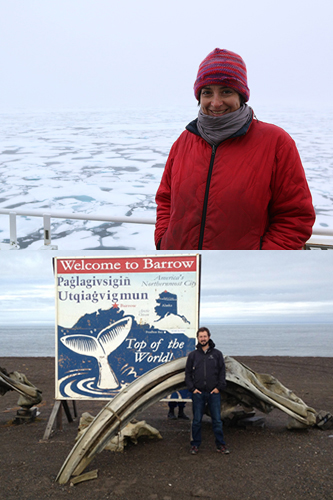
Bodnar has been mapping data during oil spills for more than a decade, but this exercise is her first trip to the Arctic. While preparing for it, she found it sobering to learn just how many basic elements of a spill response can't be taken for granted north of the Arctic Circle. In addition to the scarcity of roads, airports, and hotels, other critical functions such as communications are subject to the harsh Arctic conditions and limited radio towers and satellite coverage. Out at sea ships depend on satellites for phone calls and some Internet connectivity, but above the 77th parallel those satellites often drop calls and can only support basic text email.
The remoteness of the Arctic questions how hundreds of responders would get there, along with all the necessary equipment—such as boom, skimmers, and vessels—not already in the area. Once deployed to the spill, response equipment has the potential to ice-over, encounter high winds, or be grounded from dense fog. Communicating with responders and decision makers on other ships, on shore at a command post, or even farther away in the lower 48 states would be an enormous challenge.
For example, if an oil spill occurs in the Beaufort Sea, north of Alaska, the nearest and "largest" community is Barrow, population 4,429. However, Barrow has very limited accommodations. For comparison, 40,000 people, including Bodnar, responded to the 2010 Deepwater Horizon oil spill in the Gulf of Mexico. This was possible because of the spill's proximity to large cities with hotel space and access to food and communications infrastructure.
This is not the case for small Arctic villages, where most of their food, fuel, and other resources have to be shipped in when the surrounding waters are relatively free of ice. But to respond to a spill in the Arctic, the likely center of operations would be on board a ship, yet another reason working with the Coast Guard during Arctic Shield is so important for NOAA.
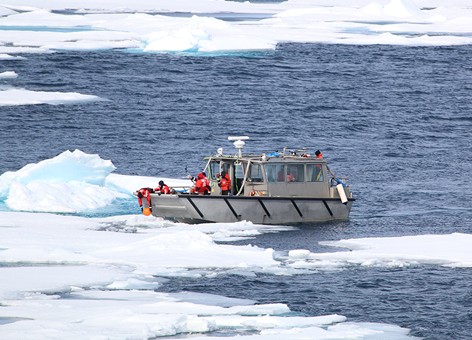
During this August's Arctic Technology Evaluation, the Coast Guard is leading tests of four key areas of Arctic preparedness. NOAA's area focuses on how oil disperses at the edge of the sea ice and collects under the older, thicker ice packs. NOAA's Office of Response and Restoration is working with NOAA's Unmanned Aircraft Systems (UAS) program to develop techniques for quickly identifying and delineating a simulated oil spill in the Arctic waters near the ice edge.

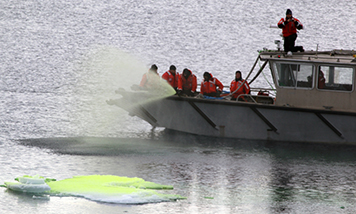
The Coast Guard will be using both an unreactive, green fluorescein dye and hundreds of oranges as "simulated oil" for the various tools and technologies to detect.
Normally during an oil spill, NOAA or the Coast Guard would send people up in a plane or helicopter to survey the ocean for the oil's precise location, which NOAA also uses to improve its models of the oil's expected behavior. However, responders can't count on getting these aircraft to a spill in the Arctic in the first place—much less assume safe conditions for flying once there.
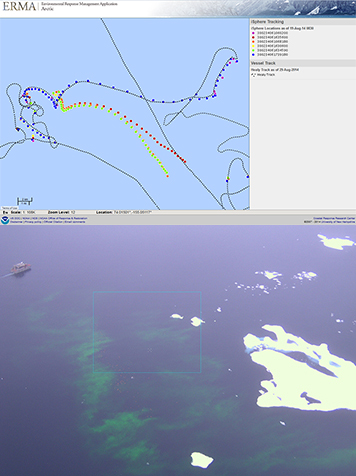
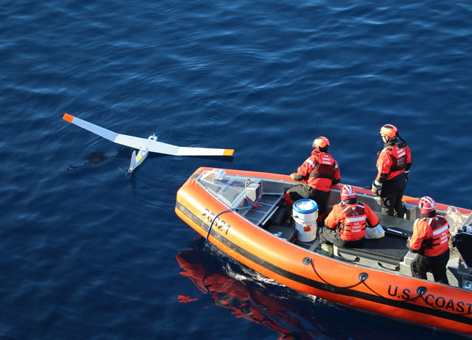
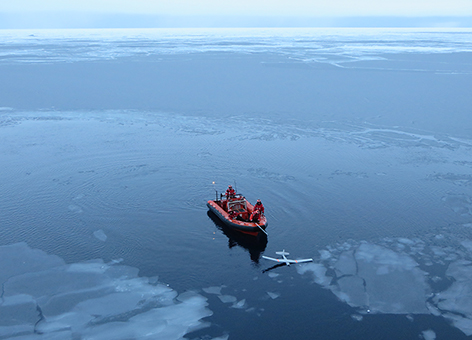
Instead, the UAS group is testing the feasibility of using unmanned, remote-controlled aircraft such as the Puma to collect this information and report back to responders on the ship. Bodnar and Winters-Staszak will be pulling these data streams from the Puma into Arctic ERMA®, NOAA's mapping tool for environmental response data. They'll be creating a data-rich picture of where the oil spill dye and oranges are moving in the water and how they are behaving, particularly among the various types of sea ice.
Once the oil spill simulation is complete, Bodnar and Winters-Staszak will be reporting back on how it went and what they have learned. Stay tuned for the expedition's progress in overcoming the many logistical hurdles of a setting as severe as the Arctic here and at oceanservice.noaa.gov/arcticshield.
Check out photos from their time aboard the U.S. Coast Guard Cutter Healy.
AUGUST 12, 2014 -- On August 8, 2014, OR&R Emergency Response Division marine biologist Gary Shigenaka and Dr. Adrian C. Bejarano, aquatic toxicologist, made presentations to a group of oil spill response professionals as part of the Science of Oil Spills class, offered by OR&R in Seattle last week.
Shigenaka introduced the subject, giving the students background on the history of dispersant use in response to oil spills, starting with the first use in England at the Torrey Canyon spill.
Because the first generation of oil dispersants were harsh and killed off intertidal species, the goal since has been to reduce their inherent toxicity while maintaining effectiveness at moving oil from the surface of the water into the water column.
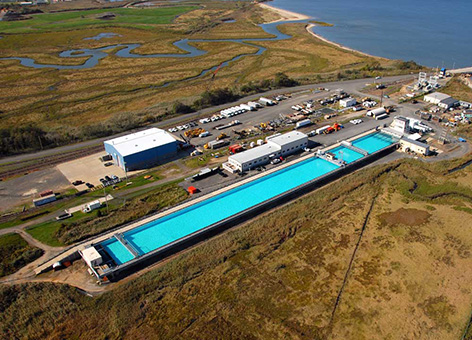
He gave an overview of the most prevalent commercial products, including Corexit 9527 and Corexit 9500, manufactured by Nalco, and Finasol OSR52, a French product. Shigenaka reviewed the U.S. EPA product schedule of dispersants as well as Ohmsett – National Oil Spill Response Research Facility in Leonardo, New Jersey. Ohmsett is run by the U.S. Department of Interior's Bureau of Safety and Environmental Enforcement. He showed video clips of oil dispersant tests conducted recently at the facility by the American Petroleum Institute.
The corporate proprietary aspects of the exact formulation of dispersants were described by Shigenaka as one of the reasons for the controversy surrounding the use of dispersants on oil spills.
Bejarano's presentation, "Dispersant Use in offshore Oil Spill Response," started with a list of advantages of dispersant use such as reduced oil exposure to workers; reduced impacts on shoreline habitats; minimal impacts on wildlife with long life spans; and keeping the oil away from the nearshore area thus avoiding the need for invasive cleanup. She followed with some downside aspects such as increased localized concentration of hydrocarbons; higher toxicity levels in the top 10 meters of the water column; increased risk to less mobile species; and greater exposure to dispersed oil to species nearer to the surface.
Bejarano is working on a comprehensive publicly-available database that will include source evaluation and EPA data as well as a compilation of data from 160 sources scored on applicability to oil spill response (high, moderate, low and different exposures).
Her presentation concluded with a summary of trade-offs associated with dispersant use:
Bejarano emphasized the need for balanced consideration in reaching consensus for the best response to a particular spill.
Following the formal presentations, there was a panel discussion with experts from NOAA, the U.S. Environmental Protection Agency, and State of Washington, and the audience had an opportunity to ask questions. Recent research from the NOAA National Marine Fisheries Service Montlake Laboratory was presented, focusing on effects of oil and dispersants on larval fish. The adequacy of existing science underlying trade-offs and net environmental benefit was also discussed.
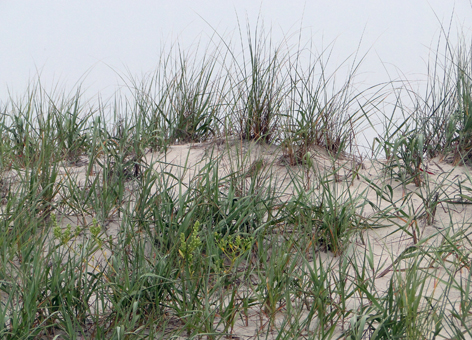
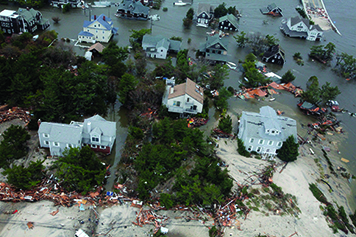
When a severe storm hits, wetlands, sand dunes, reefs and other coastal ecosystems can slow waves down, reducing their height and intensity, and prevent erosion. That means less storm surge, more stable shorelines, and more resilient coastal communities. When the coastal Borough of Harvey Cedars, N.J. replenished beaches with sand dunes to offer this ecosystem service, a New Jersey couple, the Karans, sued on the grounds that the newly placed dunes obstructed the ocean view from their home. Initially, the court barred the jury from considering storm protection benefits from the dunes in their decision. The jury awarded the Karans $375,000, but New Jersey Supreme Court overturned the ruling. The jury should consider storm protection benefits, according to the Supreme Court, and when it did, the Karans' settlement dropped to $1.
Cases like this one spur a lot of questions for both science and the courts. NOAA has been supporting ecosystem services in court for decades through Natural Resource Damage Assessments (NRDA), but putting a price tag on ecosystem services isn't easy. Instead, NOAA often determines how ecosystem services were hurt and what it will take to replace them. Following a spill or chemical release, NOAA is one of a number of mandated state and federal natural resource trustees that assess if and how ecosystem services were injured and typically focuses on habitat and recreation. That assessment is then used to determine how much restoration the responsible party must provide to compensate for the injury.
Determining exactly how much storm protection may have been lost is another challenge. We know that already; there are a variety of estimates showing how much coastal ecosystems reduce a storm’s impact. Still, the science of storm protection is complicated. For example, an ecosystem’s type, location, topography, and local tides all impact its ability to protect us from storms. So, determining how much storm protection services were lost, who they benefited, and what type of restoration could compensate depends on all of those factors too. Ultimately, the decision on how to assess storm protection benefits may be up to the courts. The next case like Borough of Harvey Cedars v. Karan may provide some clues, but until then, we’ll keep working on the science.
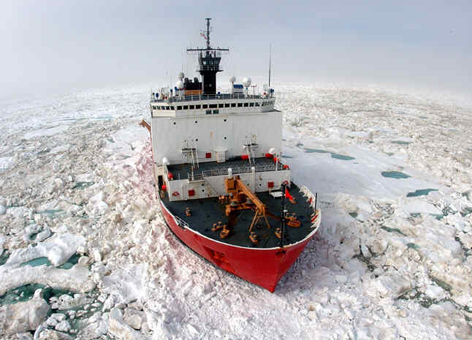
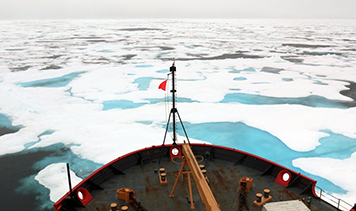
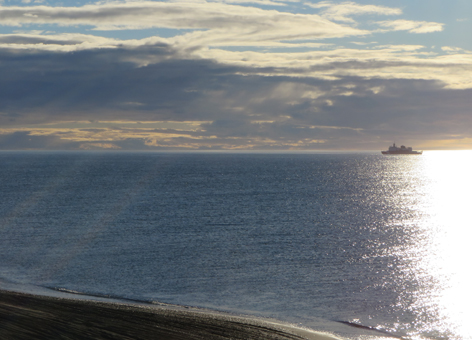
With these challenging circumstances in mind, NOAA's Office of Response and Restoration again will be sending spatial data specialists aboard the Coast Guard icebreaker Healy for an Arctic Technology Evaluation, a month-long scientific expedition to the Arctic Ocean to demonstrate and evaluate oil spill tools, technologies, and techniques as part of Arctic Shield 2014.
The ship leaves for the edge of the sea ice from Seward, Alaska, on August 8. We will be working with the U.S. Coast Guard Research and Development Center (RDC) to operate Arctic ERMA, our mapping tool geared at oil spill response. Normally an online tool, a special internet-independent version of ERMA, known as Stand-alone ERMA, will serve as the common operational picture for scientific data during this Arctic Technology Evaluation.
NOAA provides scientific support to the Coast Guard during oil and chemical spills, and ERMA is an extension of that support. This Arctic Technology Evaluation is an opportunity to work with the Coast Guard in as realistic conditions as possible—on a ship in the Arctic Ocean. Once the Healy makes it far enough north, the Coast Guard RDC will deploy a simulated oil spill so they can test oil spill detection and recovery technologies in ice conditions.
The team will test unmanned technology platforms (both airborne and underwater) to detect where the spilled "oil" is and to collect ocean condition data, such as sea temperature, currents, and the areas where oil is mixing and spreading in the water column. In this case the simulated oil will be fluorescein dye, an inert tracer used for other simulated spills and water transport studies in the ocean and rivers. (Other simulated spilled "oils" have included peat moss, rubber ducks, and oranges.)
One major objective is for NOAA's Unmanned Aircraft Systems group to fly their 8.5 foot wingspan, remote-controlled Puma, instead of an airplane with a human observer, to delineate the extent of the "oil" plume. ERMA's job will be to display the data from the Puma and other unmanned technologies so all of the team can see where measurements have been taken and identify insights into how they could hypothetically clean up a spill in the remote, icy environment.
In many ways, this office is a newcomer to the Arctic, and we still have a lot to learn about past research and current ways of life in the region. As the NOAA co-director for the Coastal Response Research Center (a joint partnership with the University of New Hampshire), Amy Merten worked with her co-director, UNH professor Nancy Kinner, to promote understanding of the risks the Arctic is facing.
In 2007, they participated in a joint industry study which brought them to the Arctic at the SINTEF lab on Svalbard in Norway. Here, Merten saw firsthand how difficult it can be to find oil mixed in ice and then try to do something about it, such as burn it. The temperature extremes in the Arctic limit mobility and the amount of time one can be outside responding to a spill—if you can get to the spill in the first place.
At the same time, they were developing ERMA® (Environmental Response Management Application), a web-based mapping tool for environmental response, which is customized for various regions in the United States.
As NOAA's Office of Response and Restoration began developing strategies for working in the Arctic, support emerged for customizing ERMA for the Arctic region. They worked with several organizations, including Arctic communities, to develop Arctic ERMA, taking care to make connections and build relationships with the people who live in and know the region and its natural resources. ERMA also will use the Healy's onboard satellite communications to relay data back to the live Arctic ERMA website, allowing people outside the vessel to stay up-to-date with the mission.
Merten is excited for her ERMA colleagues, Jill Bodnar and Zach Winters-Staszak, to experience this extreme and special environment firsthand. Academically, you can think through the challenges a spill in the Arctic would present, but actually experiencing it quickly reveals what will and will not work. Partnering with the Coast Guard is helping those of us at NOAA be proactive responders in general, and in particular, is teaching the ERMA team how to pull into this tool data from multiple platforms and improve response decision-making.
We're all connected to the Arctic; weather and oceanographic patterns are changing world wide because of the rapidly changing Arctic. Oil and gas coming from the Arctic will fuel the U.S. economy and current way of life for the foreseeable future. We hope that Arctic Shield and other oil spill exercises will better prepare us for whatever happens next. Follow along with NOAA’s efforts during Arctic Shield at https://oceanservice.noaa.gov/news/welcome.php.
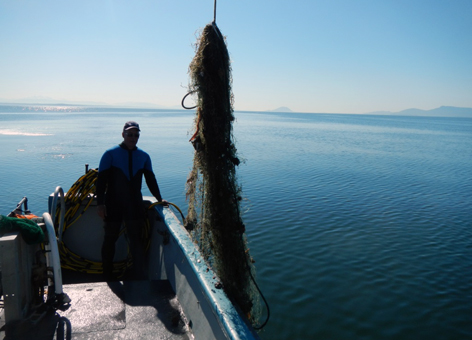
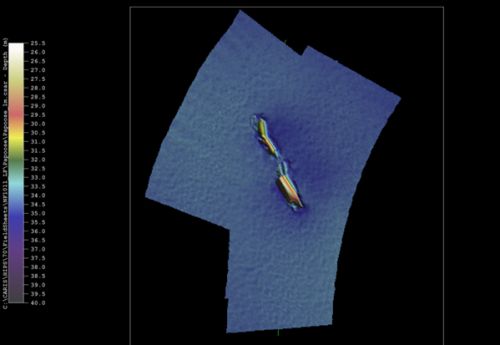
This area off of North Carolina’s Outer Banks is known as the Graveyard of the Atlantic. The combination of harsh storms, piracy, and warfare have left these waters littered with shipwrecks, and because of the conditions that led to their demise, many of them are broken in pieces. In the midst of World War II, on March 18, 1942, the W.E. Hutton was one of three U.S. vessels in the area torpedoed by German U-boats. Tragically, 13 of the 23 crew members aboard the ship were killed. The Hutton’s survivors were rescued by the Port Halifax, a British ship. When the steam-powered tanker was hit by German torpedoes, the Hutton was en route from Smiths Bluff, Texas, to Marcus Hook, Pennsylvania, with a cargo of 65,000 barrels of #2 heating oil. An initial torpedo hit the starboard bow, and the second hit to the port side came 10 minutes later. The ship sank an hour after the first hit, eventually settling onto the seafloor. Today, it is reportedly upside down, with the port side buried in sand but with the starboard edge and some of its railing visible. The wreck of the W.E. Hutton also is located in the NOAA Remediation to Undersea Legacy Environmental Threats (RULET) Database. Evaluated in the 2013 NOAA report “Risk Assessment for Potentially Polluting Wrecks in U.S. Waters,” this wreck was considered a low potential for a major oil spill because dive surveys “show all tanks open to the sea and no longer capable of retaining oil." However, as the fisherman could observe from the waters above, some oil clearly remains trapped in the wreckage. This shipwreck was described by wreck diver and historian Gary Gentile as having “enough large cracks to permit easy entry into the vast interior.” Another wreck diver and historian, Roderick Farb, noted that the largest point of entry into the hull is “about 150 feet from the stern,” through a “huge crack in the hull full of rubble, iron girders, twisted hull plates and other wreckage.” This wreck is the closest one to the spot where the fisherman first saw the leaking oil, and given the Hutton’s inverted position and such cracks, we now realize the possibility that the inverted hull has been trapping some of the 65,000 barrels of its oil cargo as well as its own fuel.
On July 21, 2014, a commercial dive company contracted by the U. S. Coast Guard sent down multiple dive teams to the Hutton’s wreck to assess the scope and quantity of the leaking oil. The contractor developed and implemented a containment and mitigation plan, which stopped the flow of oil from a finger-sized hole in the rusted hull. It is not known how much oil escaped into the ocean or how long it had been leaking before the passing fisherman noticed it in the first place. NOAA's Office of Response and Restoration, led by Scientific Support Coordinator Frank Csulak, provided the U.S. Coast Guard access to historical data about shipwrecks off of North Carolina, survey information, including underwater and archival research, and the animals, plants, and habitats at risk from the leaking oil. Our office frequently provides scientific support in this way when a maritime problem occurs due to sunken wrecks. They may pose a significant threat to the environment, human health, and navigational safety (as an obstruction to navigation). Or, as in this case, shipwrecks can threaten to discharge oil or hazardous substances into the marine environment. Last May, our office released an overall report describing this work and our recommendations, along with 87 individual wreck assessments. The individual risk assessments highlight not only concerns about potential ecological and socio-economic impacts, but they also characterize most of the vessels as being historically significant. In addition, many of them are grave sites, both civilian and military. The national report, including the 87 risk assessments, is available at “Potentially Polluting Wrecks in U.S. Waters.” Several of those higher-risk wrecks also lie in the Graveyard of the Atlantic, but as we discovered, it is difficult to predict where and when a rusted wreck might release its oily secrets to the world.
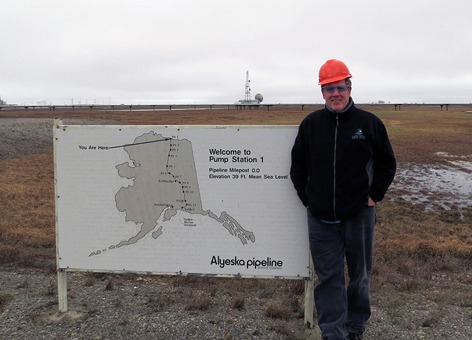
JULY 23, 2014 -- A couple years ago NOAA Incident Operations Coordinator Doug Helton visited the southern end of the 800-mile-long Trans Alaska Pipeline in Valdez, Alaska.
As the northernmost port that remains free of ice, the Valdez Marine Terminal is where crude oil from the North Slope oil fields is loaded on tankers destined for refineries on the west coast of the United States.
Last month Helton was able to visit the northern end of the pipeline in Deadhorse, Alaska, where on average 17,001 gallons of oil enter the pipeline each minute and more than 200,000,000 barrels each year [PDF].
He was in Deadhorse to meet with Alaska Clean Seas, the primary Oil Spill Response Organization (OSRO) for all of the oil exploration and production operations in Prudhoe Bay and the other nearby oil fields.
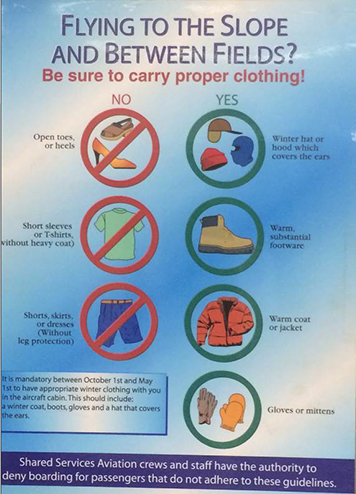
The flight from Anchorage was right on time, boarded quickly, and was full of jackets and hats with every industry logo in the oilfield servicing business. Safety is a big concern in a place that is so remote, and the safety policy starts at Anchorage. Nobody is allowed on the plane without appropriate clothing.
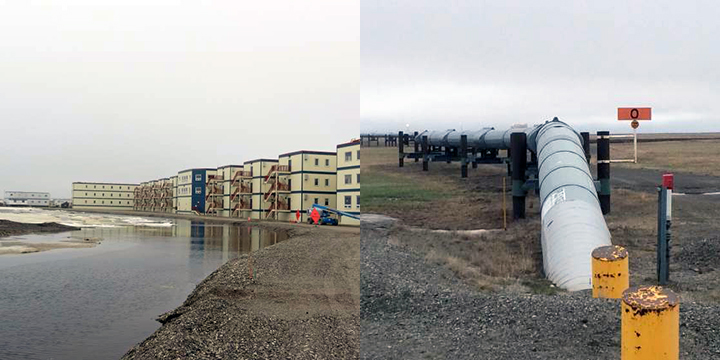
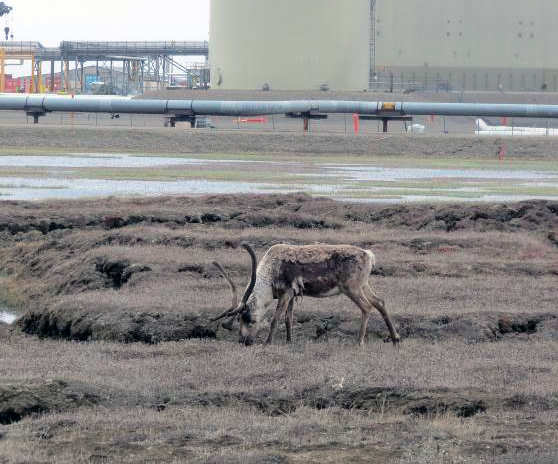
According to Helton, the scenery in Deadhorse is difficult to describe. It has a flat, sprawling industrial footprint surrounded by vast tundra, shallow braided rivers, and innumerable shallow ponds and lakes.
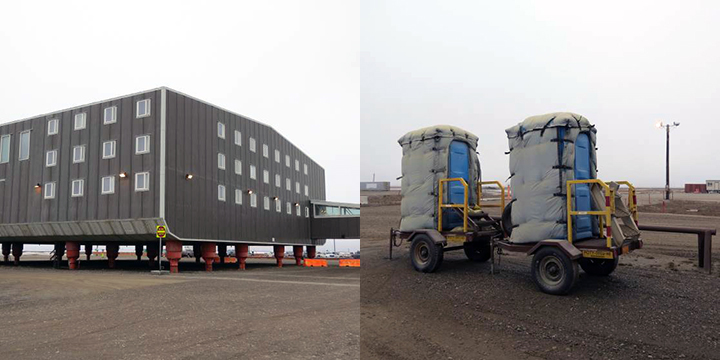
All of the infrastructure is built on large gravel pads: living quarters, warehouses, huge drilling rigs, and other equipment, with multiple racks of elevated pipelines running every direction. Unheated structures sit on the ground, but heated buildings are constructed on concrete stilts to prevent thawing of the permafrost.
Deadhorse is home to the beginning of the Trans Alaska Pipeline, combining oil from five major feeder pipelines that originate in the different oil fields that comprise the North Slope. Oil takes about 15 days to get to Valdez, moving about five miles per hour. Since its construction in 1977, the Trans Alaska Pipeline System has transported nearly 17 billion barrels of oil.
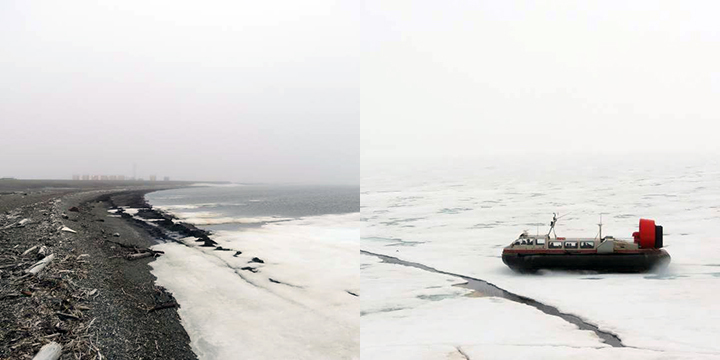
While in Deadhorse, Helton also glimpsed views of the Beaufort Sea. Although it was close to the summer solstice (the last sunset was about a month ago), the ocean was still mostly frozen. Response boats remained staged on land, waiting for open water.
As you can gather from these descriptions and the pictures that follow, the Arctic is not a place that easily lends itself to the type and speed of oil spill cleanup possible in warmer and more accessible areas. Learn more about NOAA's ongoing Arctic efforts in a series of reports released in April 2014.


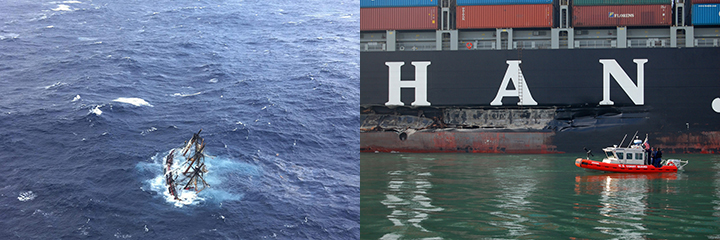
JULY 16, 2014 -- Despite improved navigation aids, including charts and Global Positioning Systems (GPS), ships still have accidents in our nation’s waterways.
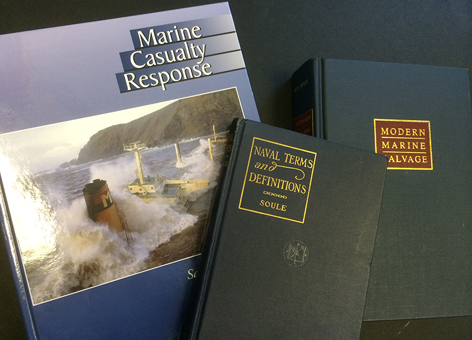
The Office of Response and Restoration's Doug Helton regularly reviews notification reports of these accidents from the National Response Center in his role as Incident Operations Coordinator. Sometimes he needs to consult the old nautical dictionary he inherited from his grandfather (a lawyer and U.S. Navy captain) to figure out what they mean.
The U.S. Coast Guard investigates ship accidents, but they use the terms "marine casualty or accident" interchangeably [PDF]. Mariners are required to report any occurrence involving a vessel that results in:
Some of those terms are pretty straightforward, but what is the difference between grounding and stranding? Or foundering and flooding? And my favorite, collision and allision?
Here is Helton's basic understanding of these terms, but he is confident that some of these could fill an admiralty law textbook.
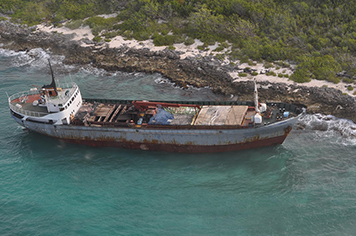
Groundings and are probably the most common types of marine casualties. A grounding is when a ship strikes the seabed, while a stranding is when the ship then remains there for some length of time. Both can damage a vessel and result in oil spills depending on the ocean bottom type (rocky, sandy, muddy?), sea conditions, and severity of the event (is the ship a little scraped or did it break open?).
Flooding means taking on excessive water in one or more of the spaces on a ship (e.g., the engine room), while foundering is basically taking on water to the point where the vessel becomes unstable and begins to sink or capsize. Note that "foundering" is different than "floundering," which is to struggle or move aimlessly.
And collision and allision ... These terms are sometimes used interchangeably, but technically, a collision is when two vessels strike each other, while an allision occurs when a vessel strikes a stationary object, such as a bridge or dock.
No matter the proper terminology, all of these incidents can result in spills, keeping us pollution responders on our toes because of the potential impacts to coasts, marine life, and habitats such as coral reefs and seagrass beds. But understanding these various nautical terms helps us understand the circumstances we're dealing with in an emergency and better adapt our science-based recommendations as a result. And as Helton's grandfather used to say, a collision at sea can ruin your entire day ...
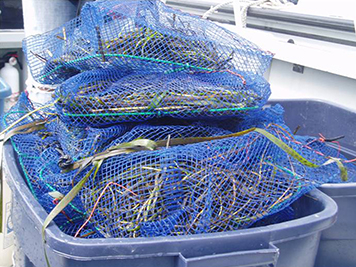
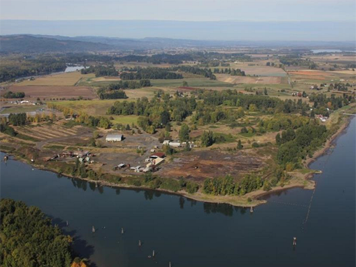
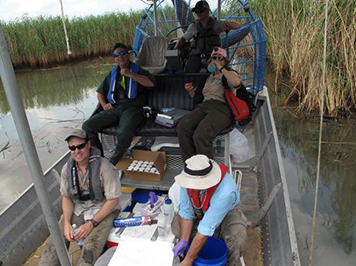
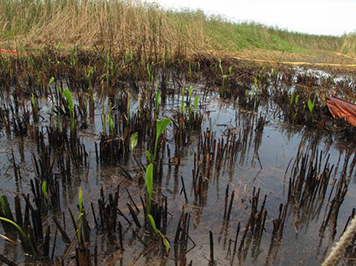
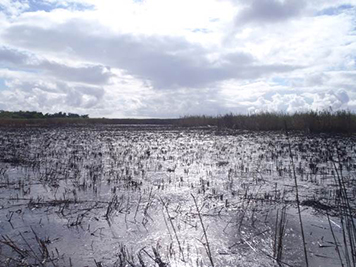
On May 28, 2014 a plane hired by Texas Petroleum Investment Company was performing a routine aerial survey of their inland oilfield and noticed a slight oil sheen and a dead clump of roseau cane (phragmites). This sparked further investigation and the discovery of 100 barrels (4,200 gallons) of crude oil, which had leaked out of a breach in their pipeline passing through the Delta National Wildlife Refuge, outside of Venice, Louisiana. Pipelines like this one are routinely inspected, but as they age the potential for corrosion and spills increases. Roseau cane is a tall, woody plant, similar to bamboo, reaching heights of up to 20 feet. The stalks grow very close together and in water depths between two and 30 inches. This creates a complex situation which is very hard to clean oil out from. The least invasive method for oil cleanup is to flush out the oil with high volumes of water at low pressure, but this is a long process with low amounts of oil recovered each day. Another common practice is to flush with water while cutting lanes into the vegetation, creating pathways for the oil to migrate along for recovery. Though more aggressive and with higher amounts of oil recovered each day, it still would likely take many weeks or months to clean up this particular oil spill using this method.
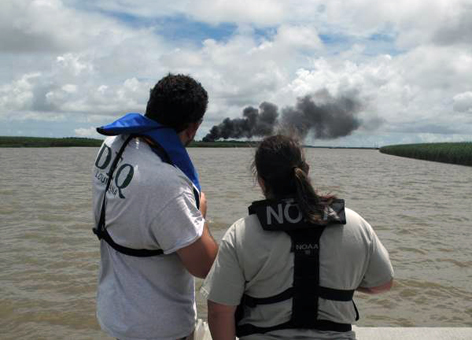
What about doing a controlled burn of the oil where it is, a strategy known as in situ burning? It removes a large amount of oil in a matter of days, and when performed properly, in situ burning can help marsh vegetation recover in five years or less for more than 75 percent of cases in one study. In situ burning, Latin for burning in place, is considered an "alternative" response technology, rather than part of the regular suite of cleanup options, and is only employed under the right set of circumstances. More information about this can be found in the NOAA report "Oil Spills in Marshes," which details research and guidelines for in situ burning in chapter 3, Response.
To help determine if burning was appropriate in this case, the Unified Command brought in the NOAA Scientific Support Team, U.S. Fish and Wildlife Service Fire Management Team, U.S. Coast Guard Gulf Strike Team, and T&T Marine Firefighting and Salvage. After considering the situation, gaining consensus, developing a burn plan, and earning the support of Regional Response Team 6, it was time to light it up!
On June 3, 2014, we burned the oil for two hours, with flames reaching 40 feet. The next day, we burned for another six hours. There was a lot of oil to be burned, with pockets of oil spread throughout three acres of impacted marsh. The fire remained contained to the area where enough oil was present to support the burn, extinguishing once it reached the edge of the oiled marsh. We have an ongoing study to evaluate the impacts of the burn, and preliminary results indicate that there was minimal collateral damage. More than 70 percent of the oil was burned over the two-day period. We considered this to be a very successful controlled burn. The much less remaining oil will be recovered by mechanical methods within a few weeks, instead of months. Texas Petroleum Investment Company, as the responsible party in this case, will be responsible for all costs incurred for this incident, including cleanup and monitoring (and restoration, if necessary).
JUNE 23, 2014 -- They say that imitation is the sincerest form of flattery, which is why we were thrilled to hear about recent efforts in India to mirror one of NOAA's key oil spill planning tools, Environmental Sensitivity Index maps.
A recent Times of India article alerted us to a pilot study led by scientists at the National Institute of Oceanography in India, which used our Environmental Sensitivity Index (ESI) shoreline classifications to map seven talukas, or coastal administrative divisions in India.
Amid the estuaries mapped along India's west coast, one of the dominant shoreline types is mangroves, which are a preferred habitat for many migratory birds as well as other species sensitive to oil.
Traditional ESI data categorize both the marine and coastal environments as well as their wildlife based on sensitivity to spilled oil. There are three main components: shoreline habitats (as was mapped in the Indian project), sensitive animals and plants, and human-use resources. The shoreline and intertidal zones are ranked based on their vulnerability to oil, which is determined by:
The biology data available in ESI maps focus on threatened and endangered species, areas of high concentration, and areas where sensitive life stages (such as when nesting) may occur. Human use resources mapped include managed areas (parks, refuges, critical habitats, etc.) and resources that may be impacted by oiling or clean-up, such as beaches, archaeological sites, or marinas.
Many countries have adapted the ESI data standards developed and published by NOAA. India developed their ESI product independently, based on these standards. In other cases, researchers from around the world have come across ESI products and contacted NOAA for advice in developing their own ESI maps and data. In the recent past, Jill Petersen, the NOAA ESI Program Manager, has worked with scientists who have visited from Spain, Portugal, and Italy.
By publishing our data standards, we share information which enables states and countries to develop ESI maps and data independently while adhering to formats that have evolved and stood the test of time over many years. In addition to mapping the entire U.S. coast and territories, NOAA has conducted some of our own international mapping of ESIs. In the wake of Hurricane Mitch in 1998, we mapped the coastal natural resources in the affected areas of Nicaragua, Honduras, and Ecuador.
Currently, we are developing new ESI products for the north and mid-Atlantic coasts of the United States, many areas of which were altered by Hurricane Sandy in 2012. The new maps will provide a comprehensive and up-to-date picture of vulnerable shorelines, wildlife habitats, and key resources humans use. Having this information readily available will enable responders and planners to quickly make informed decisions in the event of a future oil spill or natural disaster.
For further information on NOAA's ESI shoreline classification, see our past stories: Mapping How Sensitive the Coasts Are to Oil Spills and After Sandy, Adapting NOAA's Tools for a Changing Shoreline.
Photo: Samuel Kimlicka/Creative Commons Attribution 2.0 Generic License
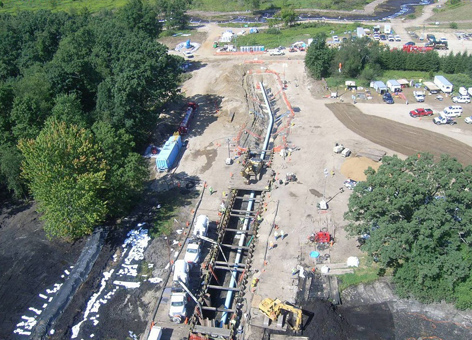
This was her first and NOAA's first major experience with damage assessment for a dilbit spill, and was also a first for nearly everyone working on the cleanup and damage assessment. Dilbit production and shipping is increasing. As a result, NOAA and our colleagues in the field of spill response and damage assessment are interested in learning more about dilbit:
While it's just one case study, the Enbridge oil spill can help us answer some of those questions. My NOAA colleague Robert Haddad and I recently presented a scientific paper on this case study at Environment Canada's Arctic and Marine Oil Spill Program conference.
In addition, the Canadian government and oil pipeline industry researchers Witt O'Brien's, Polaris, and Western Canada Marine Response Corporation and SL Ross [PDF] have been studying dilbit behavior as background research related to several proposed dilbit pipeline projects in the United States and Canada. Those experiments, along with the Enbridge spill case study, currently make up the state of the science on dilbit behavior and ecological impacts.
Dilbit is in the range of other dense, heavy oils, with a density of 920 to 940 kg/m3, which is close to the density of freshwater (1,000 kg/m3). (In general when something is denser than water, it will sink. If it is less dense, it will float.)
Many experts have analyzed the behavior of heavy oils in the environment and observed that if oil sinks below the surface of the water, it becomes much harder to detect and recover. One example of how difficult this can be comes from a barge spill in the Gulf of Mexico, which left thick oil coating the bottom of the ocean.
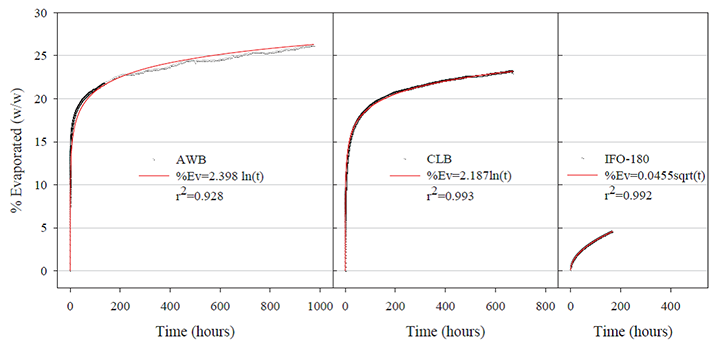
What makes dilbit different from many other heavy oils, though, is that it includes diluent. Dilbit is composed of about 70 percent bitumen, consisting of very large, heavy molecules, and 30 percent diluent, consisting of very small, light molecules, which can evaporate much more easily than heavy ones. Other heavy oils typically have almost no light components at all. Therefore, we would expect evaporation to occur differently for dilbit compared to other heavy oils.
Environment Canada confirmed this to be the case. About four to five times as much of the dilbits evaporated compared to intermediate fuel oil (a heavy oil with no diluent), and the evaporation occurred much faster for dilbit than for intermediate fuel oil in their study. Evaporation transports toxic components of the dilbit into the air, creating a short-term exposure hazard for spill responders and assessment scientists at the site of the spill, which was the case at the 2010 Enbridge spill.
Since the light molecules evaporate after dilbit spills, the leftover residue is even denser than what was spilled initially. Environment Canada, Witt O'Brien's/Polaris/WCMRC, and SL Ross measured the increase in dilbit density over time as it weathered, finding dilbit density increased over time and eventually reached approximately the same density as freshwater.
These studies also found most of the increase in density takes place in the first day or two. What this tells us is that the early hours and days of a dilbit spill are extremely important, and there is only a short window of time before the oil becomes heavier and may become harder to clean up as it sinks below the water surface.
Unfortunately, there can be substantial confusion in the early hours and days of a spill. Was the spilled material dilbit or conventional heavy crude oil? Universal definitions do not exist for these oil product categories. Different entities sometimes categorize the same products differently. Because of these discrepancies, spill responders and scientists evaluating environmental impacts may get conflicting or hard-to-interpret information in the first few days following a spill.
JUNE 16, 2014 -- You already know how much the ocean does for you and how important it is to both celebrate and protect it. The U.S. Department of State also realizes this importance and, as a result, is hosting the Our Ocean Conference in Washington, DC from June 16–17, 2014. According to ourocean2014.state.gov:
We will bring together individuals, experts, practitioners, advocates, lawmakers, and the international ocean and foreign policy communities to gather lessons learned, share the best science, offer unique perspectives, and demonstrate effective actions. We aim to chart a way forward, working individually and together, to protect "Our Ocean."
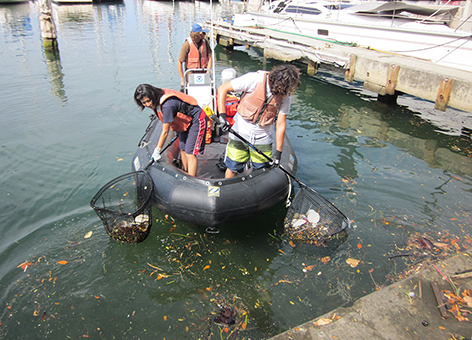
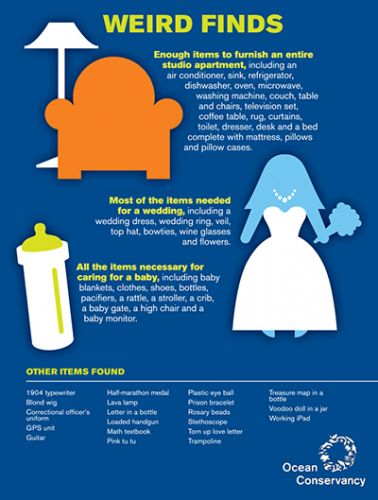
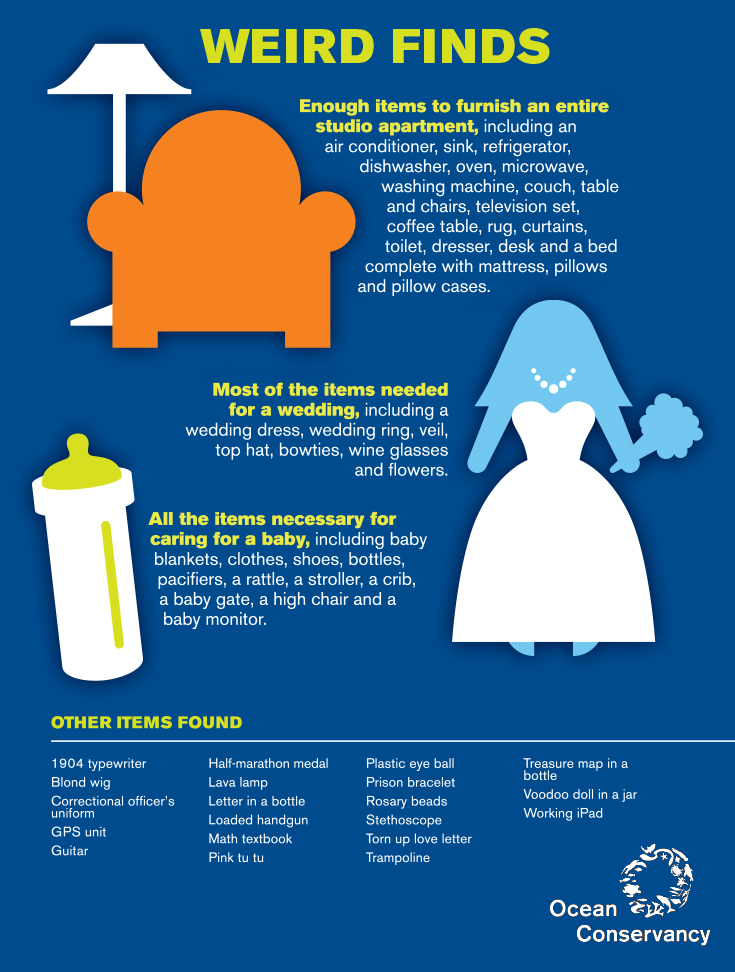
Watch a message about the conference and find out how you can help from Secretary of State John Kerry: Marine pollution, a topic NOAA's Office of Response and Restoration is very concerned about, is one of three core areas the conference aims to address, along with ocean acidification and sustainable fisheries. When a plastic bag or cigarette butt blows into a river, it can end up flowing to the ocean, where it endangers marine life. The problem is global, but mitigation is local. It's in our hands to reduce marine debris—our trash in our ocean—at its source. Learn more about the debris filling our seas by reading about the challenges and solutions in this Our Ocean conference document [PDF], by visiting marinedebris.noaa.gov, and by watching the video below: On the Our Ocean 2014 website, you also can submit your own pledge to protect the ocean, whether that means volunteering to clean up a beach or tracing the sustainability of the seafood you eat. Plus, you can show your support for the ocean by sharing a photo that inspires your dedication to our ocean. (If you're looking for inspiration, try the images in our Flickr stream.) The State Department says all you have to do to participate is:
Post your photo to your favorite social media platform using the hashtag #OurOcean2014 or add it to the OurOcean2014 group on Flickr. We will be keeping an eye out for photos using the hashtag and will choose some of the photos to be featured at the Our Ocean conference in Washington on June 16-17.
Check out the program schedule and watch the conference streaming live starting at 9:30 a.m. Eastern on Monday and Tuesday at state.gov/ourocean.