Back to top

Alaska ShoreZone: Mapping over 46,000 Miles of Coastal Habitat

Short title: 
Alaska ShoreZone: Mapping over 46,000 Miles of Coastal Habitat

Alaska's tidal shoreline measures over 46,600 miles (75,000 km), longer than the shorelines of all the lower 48 states combined. Now imagine for a minute the work involved in flying helicopters low along that entire shoreline, collecting high-resolution imagery and detailed classifications of the coast's geologic features and intertidal biological communities.

No small endeavor, but that's exactly what the Alaska ShoreZone Coastal Inventory and Mapping Project—a unique partnership between government agencies, nongovernmental organizationons, and private industry—has been doing each summer since 2001.

Since then, ShoreZone has surveyed Alaskan coasts at extreme low tide, collecting aerial imagery and environmental data for roughly 90% of Alaska's coastal habitats and continues to move towards full coverage each year. Collecting the vast amounts of imagery and data is a great accomplishment in and of itself, but ShoreZone, with help from NOAA's National Marine Fisheries Service, has done an equally incredible job at making their entire inventory accessible to the public. Just think how this valuable and descriptive information could be used. Planning for an Alaskan kayak trip next summer? ShoreZone can help you prioritize which beaches will save your hull from unwanted scratches.

Trying to identify areas of critical habitat for endangered fishes? ShoreZone can help you in your research. Indeed, ShoreZone has many applications. For the Office of Response and Restoration, ShoreZone is an invaluable tool that serves alongside NOAA's Environmental Sensitivity Index (ESI) maps and data as a baseline for the coastal habitats of Alaska and is currently being used for environmental planning, preparedness, and Natural Resource Damage Assessment planning in Alaska.
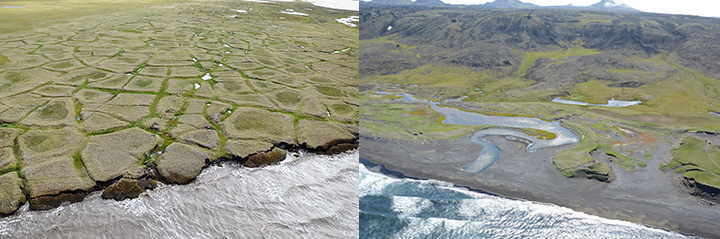
Left, coastline of Alaska's NOrth Slope and right, coastline of St. Lawrence Island in the Bering Sea.
Left, the Arctic's rapidly changing coastline is visible in this photo from the August 2012 Bureau of Ocean and Energy Management ShoreZone survey of Alaska's North Slope (Mandy Lindeberg/NOAA and ShoreZone.org) Right, St. Lawrence Island, Alaska, lies south of the Bering Strait. Another view of the island’s coast from the July 2013 ShoreZone survey. (ShoreZone.org)

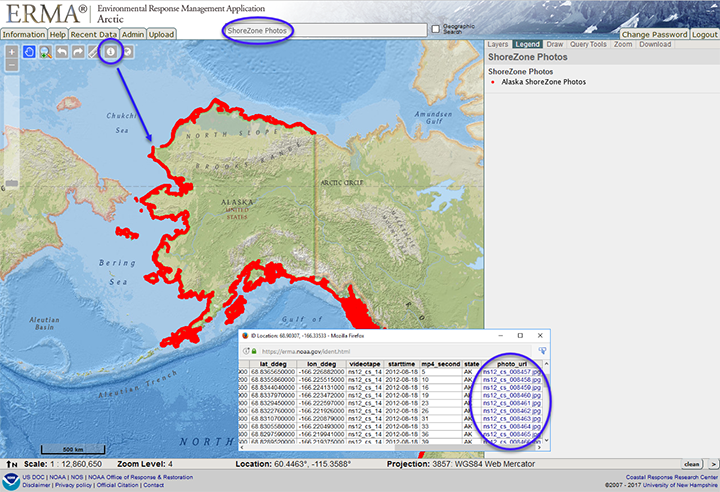
One of the many ways to access ShoreZone imagery and data is through Arctic ERMA, NOAA's online mapping tool for environmental response. There are several advantages to this. For example, the National Marine Fisheries Service used ShoreZone imagery and data to designate critical habitat areas for endangered rockfish in Washington's Puget Sound, a process that could also be applied to Alaska if necessary. That information could quickly be integrated into ERMA and displayed on a map allowing you to view the data used to determine those locations as well. As updates and additions to the imagery database become available they will also be available in Arctic ERMA. The Bureau of Safety and Environmental Enforcement (BSEE) has provided funding to complete the imagery processing and habitat mapping for the North Slope of Alaska. BSEE also provided funding to finish Arctic ERMA and to develop the internet-independent Stand-alone ERMA. The efforts are complementary and strategic given the increased activity in the Arctic.
To prepare for this increase in activity, the ShoreZone and ERMA teams are working to incorporate ShoreZone data into Stand-alone ERMA for use when Internet connectivity is unreliable. The beauty of the photos included here is deceptive. A majority of Alaska's shoreline is rugged, unforgiving, and remote. Having access to high-resolution imagery along with environmental and response-focused data in the kind of Internet-independent package that ShoreZone and ERMA provide would be an indispensable tool during a hazardous incident like a ship collision, oil spill, or search and rescue mission. This is just one way NOAA and ShoreZone are working together to strengthen our commitment to the coastal environments and communities of Alaska.
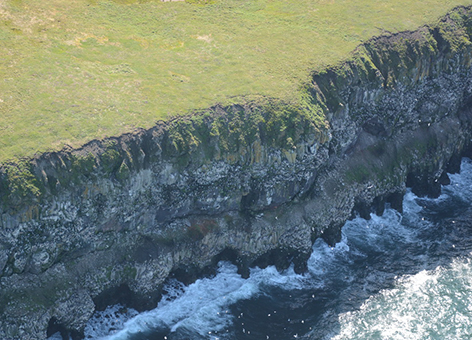
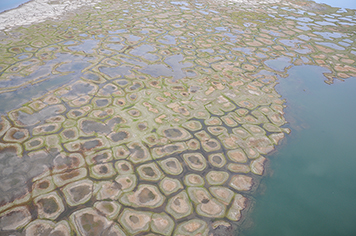
St. Lawrence Island, Alaska, and its dramatic coastal cliffs.
A survey of St. Lawrence Island, Alaska, from July 2013 reveals the island's dramatic coastal cliffs. (ShoreZone.org)
The rapidly changing coastline of the North Slope of Alaska.
The rapidly changing coastline of the Arctic is visible in this photo from the August 2012 Bureau of Ocean and Energy Management ShoreZone survey of the North Slope of Alaska. (Mandy Lindeberg/NOAA and ShoreZone.org)
Node Weight: 
2

Swimming Upstream: Examining the Impacts of Nuclear-age Pollution on Columbia River Salmon

Short title: 
Swimming Upstream: Examining the Impacts of Nuclear-age Pollution on Columbia River Salmon

The River Runs Through It

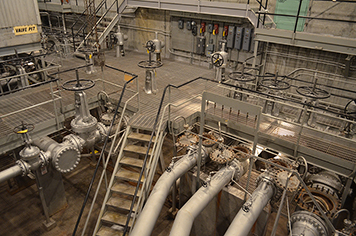
While the nuclear reactors were operating, however, water was pumped from the Columbia River and aerated at a rate of 70,000 gallons a minute. This was meant to improve its quality as it flowed through a maze of processing equipment—pipes, tubes, and valves—and into the core, the heart of the nuclear reactor. There, in the case of B Reactor, about 27,000 gallons of water gushed through 2,004 process tubes every minute. Each tube held 32 rods of uranium fuel.

The “valve pit” in Hanford’s B Reactor, where the thousands of gallons of water that cooled the nuclear reactor’s core passed through.
The "valve pit" in Hanford's B Reactor, where the thousands of gallons of water that cooled the nuclear reactor’s core passed through. (NOAA)

Inside the reactor's core, where the nuclear reactions were occurring, the water temperature would spike from 56 degrees Fahrenheit to 190 degrees in a single minute. Later in the reactor’s lifespan, the operators would be able to leave the water inside the nuclear reactor core long enough to heat it to 200 degrees before releasing the water into lined but leaky outdoor holding ponds. Once in the holding ponds, the reactor water would sit until its temperature cooled and any short-lived radioactive elements had broken down. Finally, the water would return to the Columbia River and continue its path to the Pacific Ocean. Water played such an essential role in the nuclear reactor that engineers had four levels of backup systems to keep water constantly pumping through the core. In addition to being aerated, the water was also filtered and chemically treated. To prevent the core's plumbing equipment from corroding, chromium was added to the water. Hanford's D Reactor, in particular, handled large quantities of solid hexavalent chromium, a toxic chemical known to cause cancer.

The Salmon Runs Through It

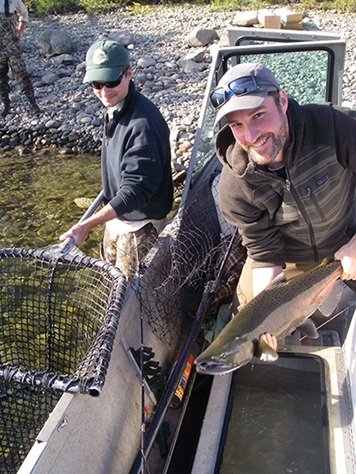
A NOAA scientist takes stock of a male Chinook salmon during their fall run along the Hanford Reach in 2013.
A NOAA scientist takes stock of a male Chinook salmon during their fall run along the Hanford Reach in 2013. (NOAA)

Fast-forward to 2013. NOAA and its partners are participating in a natural resource damage assessment, a process determining whether negative environmental impacts resulted from the Department of Energy's activities at Hanford. As part of that, NOAA is helping look at the places where water leaked or was discharged back into the Columbia River after passing through the reactors. One goal is to establish at what levels of contamination injury occurs for species of concern at Hanford. Salmon and freshwater mussels living in the Columbia River represent the types of species they are studying. Yet these species may face impacts from more than 30 different contaminants at Hanford, some of which are toxic metals such as chromium while others are radioactive isotopes such as strontium-90. Many of the Columbia River's Chinook salmon and Steelhead trout spawn in or migrate through the Hanford Reach. Currently, NOAA and the other trustees are pursuing studies examining the extent of their spawning in this part of the river and determining the intensity of underground chromium contamination welling up through the riverbed. This information is particularly important because salmon build rocky nests and lay their eggs in the gravel on the bottom of the river. You can learn more about the history of the Hanford Reach and the chromium and other contamination that threatens the river (around minute 8:50-9:03) in this video from the Department of Energy: The trustees have many other studies planned, all trying to uncover more information about the natural resources and what they have been experiencing in the context of Hanford’s history. Yet, for the natural resource damage assessment, even if the trustees find salmon experiencing negative impacts, the evidence found needs to be tied directly to exposure to Hanford's pollution (rather than, for example, the influence of dams or pollution from nearby farms). It is a complicated process of information gathering and sleuthing, but eventually it will culminate in a determination of the restoration required for this critical stretch of habitat on the Columbia River. For more information, see:

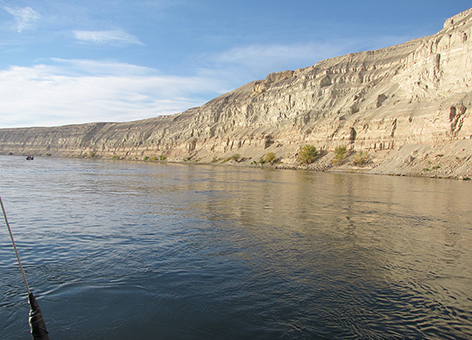
A view of the free-flowing section of Columbia River known as the Hanford Reach.
A view of the free-flowing section of Columbia River known as the Hanford Reach, along with the famous white bluffs that line it. (NOAA)
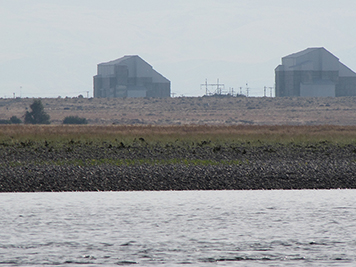
Two of Hanford's nuclear reactors sit decommissioned along the Columbia River.
Two of Hanford’s nine nuclear reactors sit, decommissioned, along the Columbia River at the Hanford Nuclear Reservation. (NOAA)
Node Weight: 
3

No Solid Mass of Debris from Japan in the Pacific Ocean

Short title: 
No Trash Island from Japan in Pacific Ocean

NOVEMBER 5, 2013 -- We've heard a concern from some of you that there's an island of debris in the Pacific Ocean coming from the 2011 earthquake and tsunami in Japan. For those of you who may be new to this topic, we'd like to address those concerns.

Here's the bottom line: There is no solid mass of debris from Japan heading to the United States.

At this point, nearly three years after the earthquake and tsunami struck Japan, whatever debris remains floating is very spread out. It is spread out so much that you could fly a plane over the Pacific Ocean and not see any debris since it is spread over a huge area, and most of the debris is small, hard-to-see objects.

We have some helpful resources for you, if you're interested in learning more.

While there likely is some debris still floating at sea, the North Pacific is an enormous area, and it's hard to tell exactly where the debris is or how much is left. A significant amount of debris has already arrived on U.S. and Canadian shores, and it will likely continue arriving in the same scattered way over the next several years. As we get further into the fall and winter storm season, NOAA and partners are expecting to see more debris coming ashore in North America, including tsunami debris mixed in with the "normal" marine debris that we see every year.

NOAA has modeled the debris' movement, and the model shows the overall spread of all simulated debris and an area where there may be a higher concentration of lower floating debris (such as wood) in one part of the Pacific. However, that doesn't mean it's in a mass, and it doesn't tell us how much is there, it just shows there may be more debris there than in other areas. Observations of the area with satellites have not shown any debris.

Even though there's no mass, addressing this debris is very important. NOAA has worked with partners in the states to monitor the debris, form response plans, and try to mitigate any impacts. We'll continue that work as long as necessary. We're happy to answer any questions you may have. Feel free to email us at MarineDebris.Web@noaa.gov.

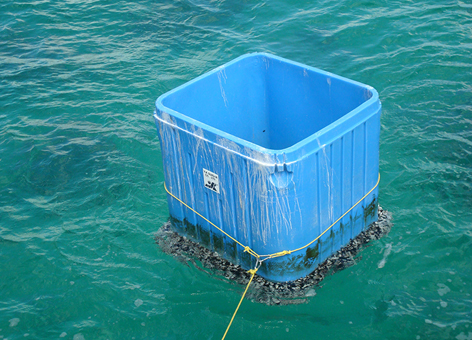
A 4-by-4-foot plastic bin spotted off the eastern coast of Oahu.
There is no solid island of debris from Japan heading to the United States. Here is an example of confirmed Japan tsunami marine debris arriving in the U.S.: a 4-by-4-foot plastic bin spotted off the eastern coast of Oahu, Hawaii, on September 18, 2012. The barnacles on its bottom are a common open-water species. (Hawaii Undersea Research Laboratory)
Node Weight: 
3

Using the Almighty Dollar, NOAA Marine Debris Program Empowers Groups to Keep Coasts Clean

Short title: 
NOAA Marine Debris Program Empowers Groups to Keep Coasts Clean

Get It Out

Earlier this year, we awarded $967,000 to 11 removal projects ranging from Alaska to Puerto Rico. Some focus on abandoned vessels and fishing gear, while other projects aim to sweep plastics, Styrofoam, and other consumer debris from beaches and sea turtle nesting sites. One innovative project in North Carolina establishes a pilot program to encourage commercial fishers to collect derelict crab pots from surrounding waters so they can be transformed into artificial reefs, creating habitat for oysters. The NOAA Marine Debris Blog reports that "through this program, NOAA has funded 76 marine debris removal projects and removed more than 3,800 metric tons of marine debris from our oceans and Great Lakes since 2006."

Keep It Out

Yet the easiest way to clean up marine debris is to keep it from getting into the water in the first place. This is why the NOAA Marine Debris Program also awards grants for outreach and education efforts to prevent marine debris. In 2013, we provided $949,512 to eight groups across the country to develop hands-on education materials and activities, curricula, workshops, and museum displays, as well to three scientific organizations to research the interactions of microplastics with the marine environment.

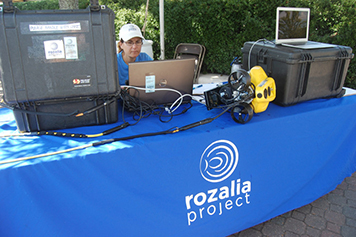
Rozalia Project educational booth with ROV Hector the Collector.
The Rozalia Project sets up dockside education programs and raises awareness about marine debris with their yellow ROV, "Hector the Collector." (The Rozalia Project)

The Rozalia Project for a Clean Ocean received one of these education grants, which they will use to support their traveling dockside education programs featuring "Hector the Collector." Hector is a small, yellow remotely operated vehicle that dives in harbors searching for and gathering marine debris with its headlights, sonar, camera, and gripper claw. In addition to educational activities surrounding Hector, the Rozalia Project organizes beach cleanups, with aspirations of picking up 500,000 pieces of debris this year. The projects funded through the NOAA Marine Debris Program typically last between one and two years but produce lasting benefits to the environment, fish and wildlife, and communities they serve. To learn more about the NOAA Marine Debris Program's efforts to remove and prevent marine debris, head to marinedebris.noaa.gov.

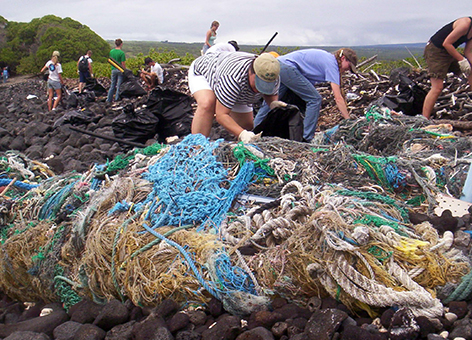
People cleaning up old fishing nets on a beach in Hawaii.
The NOAA Marine Debris Program funds projects that remove old fishing gear and other debris from beaches and coastal waters. (NOAA)
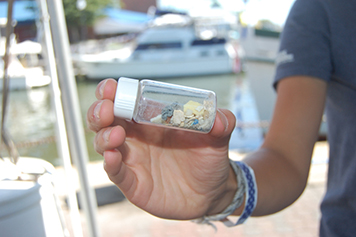
Person holding vial of microplastics.
When larger pieces of plastic degrade into tiny particles, they become known as "microplastics." NOAA is funding research of how these plastics absorb chemicals in the ocean, possible ways marine life could ingest them, and what factors influence their interaction with the environment. (The Rozalia Project)
Node Weight: 
5

At the Coast Guard Academy, Students Get a Dose of Real-World Response Tools

Short title: 
At the Coast Guard Academy, Students Get a Dose of Real-World Response Tools

NOVEMBER 1, 2013 -- Students wearing crisp, blue uniforms lean in to get a better look at the map of the Gulf of Mexico being projected at the front of the small classroom.

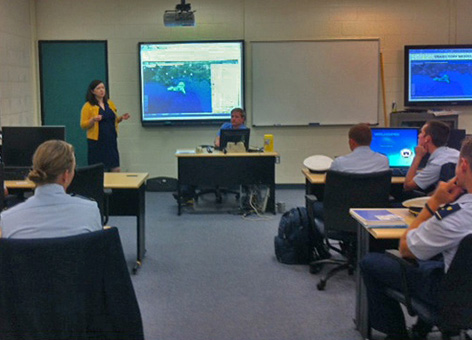
Their normal Friday GIS class at the United States Coast Guard Academy in New London, Conn., has been taken over by two mapping specialists from NOAA's Office of Response and Restoration. Kari Sheets and Jay Coady are standing in front of the classroom of cadets to introduce these future U.S. Coast Guard responders to an important tool they may use one day in the midst of a hurricane or oil spill response.

The tool is NOAA's Environmental Response Management Application (ERMA®). ERMA is an online mapping tool that integrates both static and real-time data, such as ship locations, weather, and ocean currents, in a centralized, interactive map for environmental disaster response.

Having all the latest information in an easy-to-use format provides environmental resource managers with the data they need to make informed decisions about where and how to deal with a pollution threat when it happens. NOAA and the University of New Hampshire developed ERMA with the U.S. Coast Guard, U.S. Environmental Protection Agency, and the Department of Interior.

To the Classroom and Beyond

By offering training and collaboration opportunities like this early in cadets' careers, NOAA and the Academy are providing future Coast Guard responders with the real-world knowledge and tools that they might encounter when addressing future pollution events.

One day this fall, Sheets and Coady taught three GIS classes that focused on ERMA, its capabilities, and how to use it once the cadets graduate from the Academy. The classes covered a general overview of the ERMA platform, how it fits in the Incident Command System structure, how it enables users to see and access data. They also included a live demonstration of the tool that highlighted recent data used in the response to Post Tropical Cyclone Sandy in 2012.

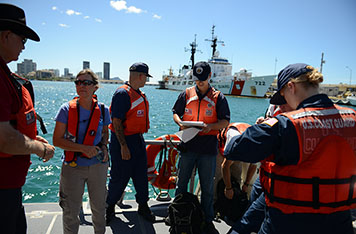
Teaching U.S. Coast Guard Academy students about the ERMA mapping tool.
The Office of Response and Restoration's Spatial Data Team introduces U.S. Coast Guard Academy cadets to ERMA, NOAA's online mapping tool for environmental response. (U.S. Coast Guard Academy)
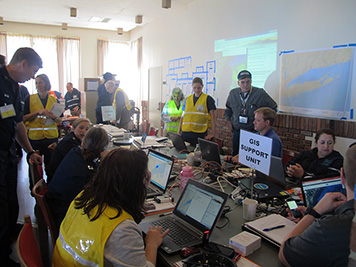
The ERMA team tests the online mapping tool at a simulated oil spill exercise.
The September 2013 training exercise, PREP, simulated a vessel grounding and oil spill in Long Island Sound. In the foreground, NOAA's Kari Sheets is checking metadata in ERMA while to her left, LT Sabrina Bateman and Cadet Jaimie Chicoine of the U.S. Coast Guard Academy look at spill trajectories in ERMA. ERMA is being projected on the wall, with Jay Coady of NOAA and Tom Marquette of the training facilitation firm PPS reviewing how ERMA is functioning at the drill. (NOAA)
Node Weight: 
2

Sandy, One Year Later: Where Are We Now?

Short title: 
Sandy, One Year Later: Where Are We Now?
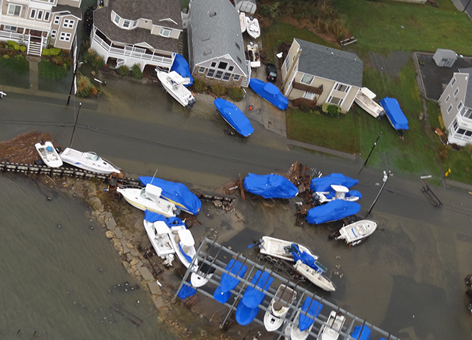
Boats were displaced and houses flooded in Brigantine, N.J., after Sandy in 2012
Boats and debris were out of place in a flooded Brigantine, N.J., Oct. 30, 2012, after Sandy made landfall on the southern New Jersey coastline Oct. 29, 2012. (U.S. Coast Guard)
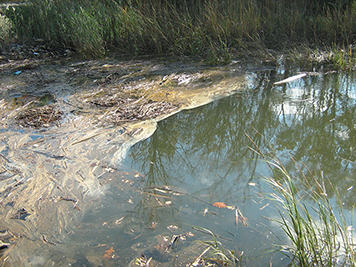
Oil mixed with vegetation in the marshes affected by the Motiva spill.
Oil mixed with vegetation and organic debris in the tidal marshes affected by the Motiva refinery's diesel spill as a result of the storm. (NOAA)
Node Weight: 
4

Above, Under, and Through the Ice: Demonstrating Technologies for Oil Spill Response in the Arctic

Short title: 
Demonstrating Technologies for Oil Spill Response in the Arctic

This is the third in a series of stories about the Office of Response and Restoration's Zach Winters-Staszak during Arctic Shield 2013. Read the previous posts, "Arctic-bound" and "Breaking Ice."

OCTOBER 25, 2013 -- 76° N, 158° W marks the spot. The wind chill has dropped the mercury below zero as the U.S. Coast Guard Cutter Healy, an icebreaker, sits idly, anchored by the sea ice that dominates the landscape.

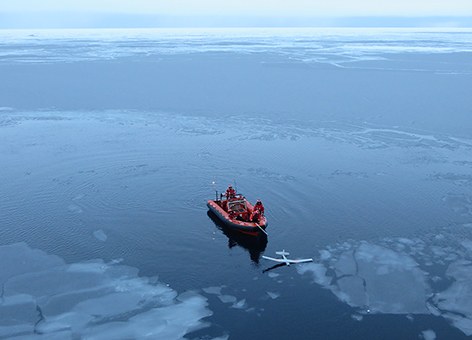
All eyes are fixed on the brilliant orange of the Coast Guard zodiac, the small boat's color contrasted against the cobalt blue water off the icebreaker's port side. A faint hum of a motor gets louder and louder overhead as the "Puma" comes into view. Then, just as the miniature, remote-controlled aircraft is positioned exactly over a nearby patch of open water, the operator kills the motor and the Puma splashes down safely.

During the exercise Arctic Shield 2013, the U.S. Coast Guard Research and Development Center (RDC) brought a group of scientists and specialists together to demonstrate technologies that potentially could be used for oil spill response in the Arctic Ocean's severe conditions.

Existing Technology, New Applications

Increased marine transportation and oil exploration in the Arctic increases the likelihood of, along with the responsibility to be prepared for, potential oil spills. Operating in an area as remote and ice-filled as the Arctic poses new logistical and tactical challenges for safe ship transit, search and rescue efforts, resource extraction, and oil spill response. For those working in oil spill response, this means developing new methods and technologies for surveying, assessing, and responding in these settings.

The RDC, coordinating efforts by the Unmanned Aircraft Systems (UAS) programs at the National Oceanic and Atmospheric Administration (NOAA) and the University of Alaska Fairbanks, demonstrated the Puma as one method to survey, identify, and monitor oil on and around the ice floes from above. The Puma is a battery-powered, aerial survey technology with military roots that is now being used for a variety of environmental applications.

The Puma's advantages for oil spill response in the Arctic are many. With its capacity for high resolution and infrared imagery, the Puma could help identify and monitor oiled environments and wildlife during response efforts, while simultaneously creating a visual record of environmental injury that could be used during a Natural Resource Damage Assessment.

The NOAA Office of Response and Restoration's Emergency Response Division has a long history of recording aerial imagery of oil spills by using trained observers aboard helicopters or airplanes to find and photograph oil on the water's surface. Using a UAS like the Puma removes the risk to human safety, requires batteries and not fuel, and has been shown to have little-to-no influence on the behavior of wildlife. In fact, NOAA has already used Pumas to great effect during marine mammal and sea bird surveys.

This last point is especially important when you consider an animal like the Pacific walrus. With recent, dramatic summer losses in sea ice, Pacific walruses have been seen congregating en masse on the shoreline of Alaska, a behavior happening earlier and earlier in the year. Disturbance of these large groups of walruses, which could be caused by noisy surveying techniques, creates panic in the animals, causing a stampede that could end up trampling and killing young walruses.

Recovering the small unmanned aircraft Puma from the icy waters.
The Puma operator aboard the U.S. Coast Guard zodiak recovers the small unmanned aircraft after demonstrating its capabilities for detecting oil from the air during Arctic Shield 2013. (NOAA)
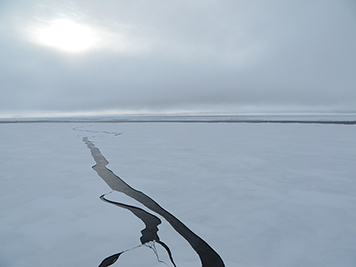
Crack in the ice extending to the horizon in the Arctic Ocean.
The Arctic Ocean remains a difficult to access and often dangerous environment. (NOAA)
Node Weight: 
3

When Oil Spills, School Kids Take Note

Short title: 
When Oil Spills, School Kids Take Note

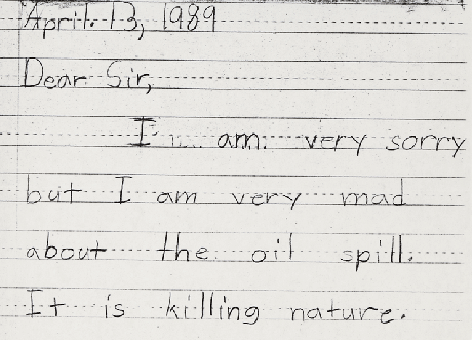
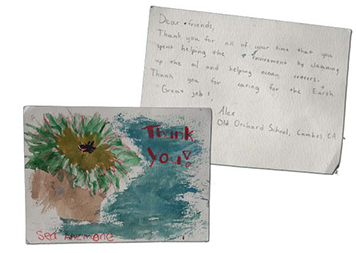
OCTOBER 22, 2013 -- The impacts of an oil spill can be varied: closed beaches, dead fish, oiled birds and wildlife—just to name a few. But the impacts can also be emotional, often drawing out of people feelings like anger, sadness, frustration, or an eagerness to help. Those of us at NOAA who work to minimize the impacts of oil spills on America's water, coasts, plants, and animals are not immune to these impacts either. But we are glad to know that people care. Here a few examples of letters written by school kids after they learned about oil spills in Alaska and California—and how these spills affected them. On April 13, 1989, second grader Kelli Middlestead of the Franklin School in Burlingame, Calif., let her feelings be known after hearing about the Exxon Valdez oil spill in Prince William Sound, Alaska. She addressed her letter, illustrated with her beloved sea otters, to Walter Stieglitz, Alaskan Regional Director of the U.S. Fish and Wildlife Service. (Hat tip to the National Archive's excellent Tumblr, where you can view the full letter.) In November of 2007, middle school students on a science camp field trip to a San Francisco beach were upset instead to find oil on the water, beach, and even the birds. Days earlier, the cargo ship Cosco Busan had crashed into the San Francisco-Oakland Bay Bridge and spilled 53,000 gallons of thick fuel oil into the marine waters nearby. While they were saddened by the events, the seventh grade students from Old Orchard Middle School in Campbell, Calif., decided to help by writing hand-written and illustrated thank you cards to the people cleaning up the oil spill. According to a press release about their efforts [PDF]: "Everyone started pitching in and we came up with the idea to write cards," said seventh grade student Erin. "We felt helpless that we couldn't go and help the animals or clean up the beach," said Alex, another seventh grader from Old Orchard School. "We saw birds staggering and people trying to catch them." "These cards did a lot for the morale of our cleanup crew," said Barry McFarland of the response company O'Brien's Group, which worked to clean up the spill at Muir Beach and received the students' cards. "Some of our crew were actually moved to tears." You can read more of the thank you notes from the concerned students [PDF].
Portion of a letter from a second grader after the Exxon Valdez oil spill, 1989.
Portion of a letter from Kelli Middlestead from the Franklin School, Burlingame, California to Walter Stieglitz the Regional Director of the Alaska Region of the U.S. Fish and Wildlife Service, 04/13/1989.
An example of thank you cards sent to oil spill responders in California.
An example of the thoughtfully crafted thank you cards sent to oil spill responders by seventh graders in California after the 2007 Cosco Busan oil spill.
Node Weight: 
3

Breaking Ice: A Personal Journey amid Preparations for Arctic Oil Spills

Short title: 
Breaking Ice: A Personal Journey amid Preparations for Arctic Oil Spills
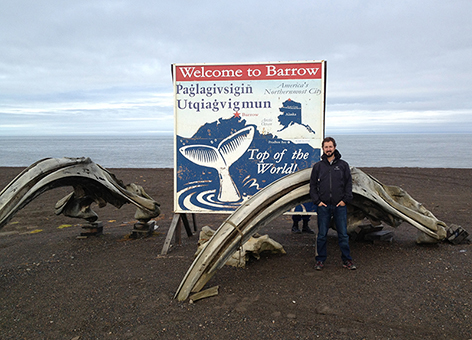
NOAA employee stands with bowhead whale bones and a welcome sign to Barrow.
Bowhead whale bones and a sign announcing Barrow as the northernmost city in America welcomed Zach Winters Staszak to the Arctic. (NOAA)
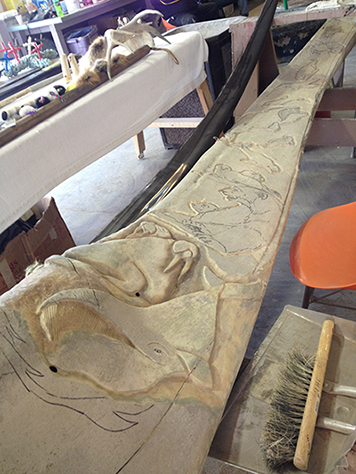
Carvings in a bowhead whale jawbone at the Iñupiat Heritage Center in Barrow.
At the Iñupiat Heritage Center in Barrow, Alaska, you can see local artists carve traditional icons into the jawbone of a bowhead whale. (NOAA)
Node Weight: 
3

Are We Prepared to Communicate Well During the Next Disaster?

Short title: 
Are We Prepared to Communicate Well During the Next Disaster?

SEPTEMBER 27, 2013 -- Ever had a crisis? Did you have a plan for getting people the information they needed during that crisis? Chances are you answered first yes, then no. It is not often we are able to anticipate what our next crisis or disaster will be, but that doesn't mean we should be caught off guard (however unusual the event). The Office of Response and Restoration (OR&R) is no stranger to dealing with crisis. Whether it's an oil spill, influx of marine debris, or chemical release, we plan and prepare to deal with environmental disasters as a part of our work each day. As environmental disasters continue to happen and media coverage becomes more instantaneous, we must also be prepared to communicate with the public about these disasters in a way that is factual, timely, and helpful. On September 19, 2013, OR&R's Kate Clark was able to attend a crisis communications workshop sponsored by the Ad Council. It featured three esteemed and accomplished communication experts: Dee Dee Myers, Managing Director of the Glover Park Group and former White House Press Secretary; Camille Johnston, Vice President, Corporate Affairs for Siemens Corporation and former spokesperson for First Lady Michelle Obama; and Morgan Binswanger, Executive Vice President, Government Relations and External Affairs for the LIVESTRONG Foundation. As OR&R works to improve our crisis communication strategy and strengthen our rapport with stakeholders, we thought these five pieces of advice from the seminar would help inform our efforts:

  1. Outreach. Using the time leading up to a crisis to educate the public, stakeholders, and the press about your mission can save a lot of valuable time during the crisis. This will allow for clearer and more germane dialogue when a crisis does occur.
  2. Plan ahead. What is the most likely crisis scenario? Who will speak for the organization? How we will disseminate information?
  3. Time is of the essence. Information is available through social media within seconds of an event occurring. This leaves a small window of time to react and respond.
  4. Be transparent. In today's day and age, almost everything becomes public, so transparency and honesty in the very early stages are crucial to maintaining trust and credibility.
  5. Humility goes a long way. It's OK to say, "We don't know, but we are working very hard to get an answer."

OR&R and the whole NOAA family is constantly learning and adapting to the changing pace of communications in today's information landscape. Let us know how you think we're doing. Where would you look for information from NOAA during a disaster, such as a hurricane or oil spill? A blog? Facebook or Twitter? NOAA.gov? Somewhere else? We are thankful to the Ad Council for sponsoring this seminar and providing great reminders as we continually work to improve our dialogue with the people we work for—the U.S. public. Editor's Note: September is National Preparedness Month. It is a time to prepare yourself and those in your care for emergencies and disasters of all kinds. NOAA and our partners are making sure that we are prepared in every regard for whenever the next disaster strikes. To learn more about how you can be prepared for all types of emergencies, visit www.ready.gov.

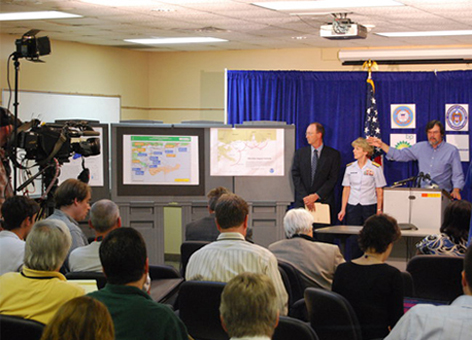
NOAA and Coast Guard at a press conference during Deepwater Horizon oil spill.
On April 29, 2010, at a press conference during the Deepwater Horizon/BP oil spill, NOAA's Scientific Support Coordinator Charlie Henry explained a map of where spilled oil was predicted to spread in the Gulf of Mexico. To the left of Henry is Rear Admiral Mary Landry, U.S. Coast Guard. (NOAA)
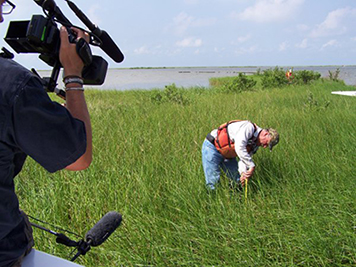
Media observing shoreline surveys in Barataria Bay, La.
Media observing shoreline surveys in Barataria Bay, La., after the 2010 Deepwater Horizon/BP oil spill. (NOAA)
Node Weight: 
2

$3.7 Million to go toward Restoring Contaminated Natural Resources in Alabama

Short title: 
$3.7 Million to go toward Restoring Contaminated Natural Resources in Alabama

OCTOBER 18, 2013 -- Four federal and state trustee agencies have announced $3.7 million in funds following a natural resource damages settlement to restore natural resources and habitats harmed by hazardous substances released from a manufacturing site in McIntosh, Ala. The funds are part of a $5 million settlement with BASF Corporation, the company that acquired the Ciba-Geigy Corporation's McIntosh facility. Beginning in the 1950s, the facility manufactured DDT, a pesticide used to combat disease-carrying insects, as well as other pesticides, herbicides, and various agricultural and industrial chemicals. During those years, hazardous wastes from the facility were released into unlined pits on the property and discharged into the Tombigbee River and its adjacent floodplain. The settlement was negotiated by the U.S. Department of Justice's Environment and Natural Resources Division on behalf of the trustees. The natural resource trustees—NOAA, Department of Interior's U.S. Fish and Wildlife Service, Alabama Department of Conservation and Natural Resources, and Geological Survey of Alabama—began a cooperative natural resource damage assessment with the responsible party in 2005 to identify resource injuries and the amount of restoration needed. The trustees act on behalf of the public to protect and restore natural resources. Nearly $3.2 million of the $5 million BASF settlement will be used to plan, implement, and oversee restoration projects and/or acquire lands within the Mobile Bay watershed to compensate for resources injured as a result of exposure to contaminants from the facility. The state of Alabama will receive $500,000 to fund additional ecosystem restoration efforts through support of the Alabama Aquatic Biodiversity Center. The remaining funds will reimburse the Fish and Wildlife Service and NOAA for their past assessment costs. The use of DDT was banned in the United States in 1972 because of its harmful effects on the environment, wildlife and the public. Once released, DDT persists in the environment for a long time and increases in concentrations up the food chain. In 1984, EPA listed the McIntosh facility as a Superfund site. Early investigations on this site found elevated concentration levels of DDT in fish and sediments within the floodplain, bottomland hardwood forests, and areas of the Tombigbee River adjacent to the site. The settlement agreement is available on NOAA's Damage Assessment, Remediation, and Restoration Program website at www.darrp.noaa.gov/southeast/ciba/index.html. The trustees will develop a draft restoration plan with proposed projects, which will be released for public review and comment. Photos: Top photo: Jeffrey Reed, Creative Commons Attribution-Share Alike 3.0 Unported license. Bottom photo: Used with permission from Alabama Media Group.

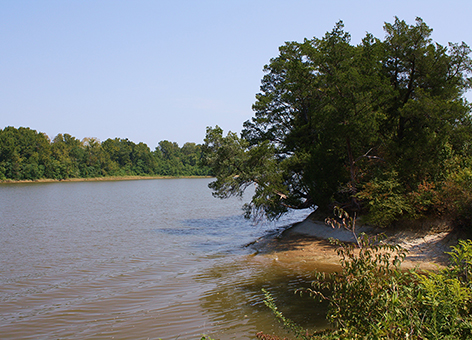
Tombigbee River in Alabama.
Beginning in the 1950s, hazardous wastes from producing the pesticide DDT were released into unlined pits at the McIntosh, Ala., plant and discharged into the Tombigbee River and its adjacent floodplain. (Credit: Jeffrey Reed, Creative Commons Attribution-Share Alike 3.0 Unported license)
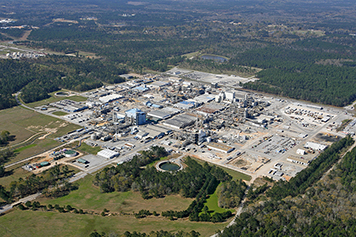
Aerial view of BASF chemical plant in McIntosh, Ala.
A view of the former Ciba chemical plant, now owned by BASF, which has agreed to pay $3.7 million for restoration projects for historical pollution coming from this McIntosh, Ala. facility. (Credit: Alabama Media Group/All Rights Reserved)
Node Weight: 
10

Celebrate Where Rivers Meet the Sea during National Estuaries Week

Short title: 
National Estuaries Week
Celebrate at a National Estuarine Research Reserve

First, locate the estuarine research reserve nearest you. You'll find contact information and directions to all 28 reserves. There are numerous nation-wide activities in honor of National Estuaries Day and Week, such as:

  • Photography contests in Florida.
  • Canoe trips in Washington.
  • Estuary cleanups in North Carolina.
  • Exhibits at state capitals.
  • Guided estuary tours in Texas.
  • Festivals in California.

Find even more events, including one near you, on this National Estuaries Week map of events.

How Estuaries Affect You

Estuaries are incredibly diverse and productive ecosystems. Learn more and then help spread the word about why estuaries matter. For example, estuaries:

  • Are vital temporary homes for migratory species, such as mallards and striped bass.
  • Provide critical nesting and feeding habitat for a variety of aquatic plants and animals, including shrimp, oysters, and other commercial seafood.
  • Help prevent coastal erosion.
  • Filter harmful pollutants washing off the land.
  • Reduce flooding during storms.
  • Are important recreational and tourist destinations.
  • Are crucial to our future and the health of the ocean.
How We Affect Estuaries

Estuaries need everyone's help and hard work to keep them clean and safe. There are many things you can do to help protect and conserve estuaries. Check out these 10 ways to protect estuaries and then explore even more ways to protect estuaries, from taking easy steps around your house to outings at the beach and onto your boat. An example of one important way to keep estuaries clean is to report oil spills or fuel leaks by calling the U.S. Coast Guard National Response Center at 1-800-424-8802. But sometimes oil spills can be much bigger than one person and have serious impacts for estuaries, commerce, and people. For example, in June of 1989, the Greek tanker World Prodigy hit ground in Rhode Island's Narragansett Bay, releasing approximately 290,000 gallons of home heating oil into New England's largest estuary. Not only did the oil affect vast numbers of lobsters, crabs, fish, and shellfish at various stages of life, but the spill also closed beaches and the bay to commercial and recreational clammers.

Through a legal settlement for the World Prodigy grounding's environmental damages, NOAA secured $567,299 to restore these natural resources. NOAA's Office of Response and Restoration, through the Damage Assessment, Remediation, and Restoration Program, partnered with the Narragansett Bay National Estuarine Research Reserve on one of the resulting restoration projects. In 1996 and 1997, the NOAA team and its partners transplanted eelgrass beds in Narragansett Bay to restore habitat for the species affected by the spill. More than 7,000 eelgrass plants were transplanted in 10 locations within Narragansett Bay. Dubbed "meadows of the sea," eelgrass beds provide shelter, spawning grounds, and food for fish, clams, crabs, and other animals while helping keep coastal waters clean and clear.

Don't Forget to Get Involved

Help celebrate National Estuaries Week this September! Get involved with estuaries by visiting the reserve nearest you. Check out the events scheduled at the reserves or at other estuary locations around the country. Volunteer or become a friend of the National Estuarine Research Reserves and participate in the many educational programs offered.

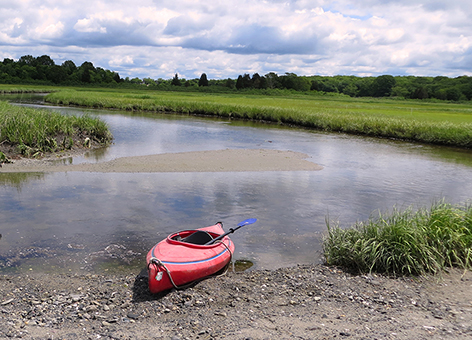
A resting kayak at the Narragansett Bay National Estuarine Research Reserve.
A resting kayak at the Narragansett Bay National Estuarine Research Reserve in Rhode Island. Kayaking is just one of the many recreation opportunities available at our 28 National Estuarine Research Reserves. (Narragansett Bay National Estuarine Research Reserve)
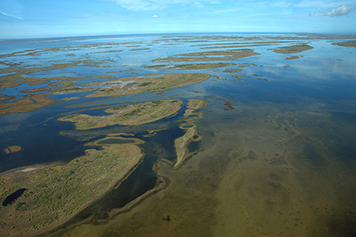
Aerial view of estuary.
A total of 1.3 million acres of coastal wetland areas are managed and conserved through NOAA's National Estuarine Research Reserves. (NOAA)
Node Weight: 
1

Deep Sea Ecosystem may take Decades to Recover from Deepwater Horizon Spill

Short title: 
Deep Sea Ecosystem may take Decades to Recover

SEPT. 24, 2013 — The deep-sea soft-sediment ecosystem in the immediate area of the 2010's Deepwater Horizon well head blowout and subsequent oil spill in the Gulf of Mexico will likely take decades to recover from the spill's impacts, according to a scientific paper reported in the online scientific journal PLoS One. The paper is the first to give comprehensive results of the spill's effect on deep-water communities at the base of the Gulf's food chain, in its soft-bottom muddy habitats, specifically looking at biological composition and chemicals at the same time at the same location.

"This is not yet a complete picture," said Cynthia Cooksey, NOAA's National Centers for Coastal Ocean Science lead scientist for the spring 2011 cruise to collect additional data from the sites sampled in fall 2010. "We are now in the process of analyzing data collected from a subsequent cruise in the spring of 2011. Those data will not be available for another year, but will also inform how we look at conditions over time."

"As the principal investigators, we were tasked with determining what impacts might have occurred to the sea floor from the Deepwater Horizon oil spill," said Paul Montagna, Ph.D., Endowed Chair for Ecosystems and Modeling at the Harte Research Institute for Gulf of Mexico Studies, Texas A&M University Corpus Christi. "We developed an innovative approach to combine tried and true classical statistical techniques with state of the art mapping technologies to create a map of the footprint of the oil spill."

"Normally, when we investigate offshore drilling sites, we find pollution within 300 to 600 yards from the site," said Montagna. "This time it was nearly two miles from the wellhead, with identifiable impacts more than ten miles away. The effect on bottom of the vast underwater plume is something, which until now, no one was able to map. This study shows the devastating effect the spill had on the sea floor itself, and demonstrates the damage to important natural resources."

"The tremendous biodiversity of meiofauna in the deep-sea area of the Gulf of Mexico we studied has been reduced dramatically," said Jeff Baguley, Ph.D., University of Nevada, Reno expert on meiofauna, small invertebrates that range in size from 0.042 to 0.300 millimeters in size that live in both marine and fresh water. "Nematode worms have become the dominant species at sites we sampled that were impacted by the oil. So though the overall number of meiofauna may not have changed much, it’s that we’ve lost the incredible biodiversity."

The oil spill and plume covered almost 360 square miles with the most severe reduction of biological abundance and biodiversity impacting an area about 9 square miles around the wellhead, and moderate effects seen 57 square miles around the wellhead. The research team, which included members from University of Nevada, Reno, Texas A&M University Corpus Christi, NOAA's National Centers for Coastal Ocean Science and representatives from BP, is conducting the research for the Technical Working Group of the NOAA-directed Natural Resource Damage Assessment. Others working on the study with Montagna, Baguley, and Cooksey were NOAA scientists, Ian Hartwell and Jeffrey Hyland. The PLoS One paper can be found here: http://www.plosone.org/article/info%3Adoi%2F10.1371%2Fjournal.pone.0070540.

The NOAA Office of Response and Restoration supported parts of this study through both its spill response and Natural Resource Damage Assessment operations. Contacts: Texas A&M University Corpus Christi, Cindy McCarrier, 361.825.2336/361.871.0837, Cynthia.McCarrier@tamucc.edu; Gloria Gallardo, 361.825.2427 or 361.331.5093 (cell); Cassandra Hinojosa, 361.825.2337 or 361.658.5829 (cell) University of Nevada, Reno, Mike Wolterbeek, 775.784.4547, mwolterbeek@unr.edu NOAA, Ben Sherman/Keeley Belva, 301.713.3066, Ben.Sherman@noaa.gov, Keeley.Belva@noaa.gov

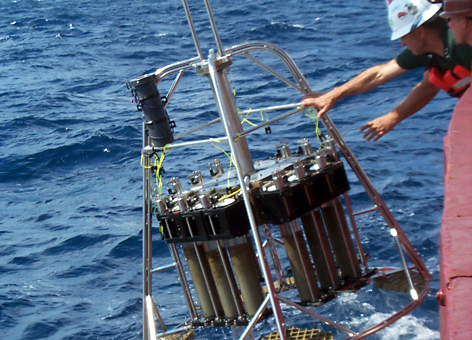
Retrieving Sample Cylinders into Gulf - Multicorer sampling operation aboard the
Retrieving sample cylinders into Gulf - Multicorer sampling operation aboard the RV Gyre. (Credit with permission from: Texas A&M-University Corpus Christi, Sandra Arismendez.)
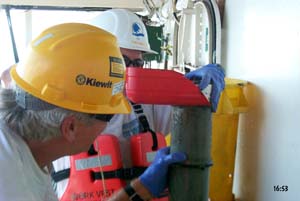
Processing Core Sample Cylinder from Gulf
Processing core sample cylinder from Gulf – Rick Kalke Harte Research Institute processing multicorer sediment sample aboard the RV Gyre. (Credit – with permission from: Texas A&M-University Corpus Christi, Sandra Arismendez.)
Node Weight: 
2

After Sandy, Adapting NOAA's Tools for a Changing Shoreline

Short title: 
After Sandy, Adapting NOAA's Tools for a Changing Shoreline

Tools for Coastal Disasters

In the wake of Sandy, under the Disaster Relief Appropriations Act of 2013, funds were allocated to update the Office of Response and Restoration's existing northeast Environmental Sensitivity Index (ESI) maps to reflect changes caused by the storm and to add information that would enhance the maps' value when another disaster strikes. Historically used mostly for oil and chemical spills, these maps have also proved to be effective tools in preparing for and responding to storms and hurricanes.

ESI maps provide a concise summary of coastal resources that could be at risk in a disaster. Examples include biological resources (such as birds and shellfish beds), sensitive shorelines (such as marshes and tidal flats), and human-use resources (such as public beaches and parks). They are used by both disaster responders during a disaster and planners before a disaster.

In the region affected by Sandy, maps will be updated from Maine to South Carolina. The ESI maps are produced on a state or regional basis. They typically extend offshore to include all state waters, and go inland far enough to include coastal biology and human use resources.

In addition to the outer coastal regions, navigable rivers, bays, and estuaries are included. In the northeast, these include the Hudson River and Chesapeake Bay, which are among those maps being updated with the Sandy funding, as well as Delaware Bay, which was already in progress before the storm hit.

The first region to be updated will be Long Island Sound. NOAA's Office of Response and Restoration is partnering with the Center for Coastal Monitoring and Assessment (CCMA) in NOAA's National Centers for Coastal Ocean Science to develop the biological and human use information for this region. This partnership will take advantage of studies CCMA currently has underway, as well as contacts they have made with the biological experts in the area.

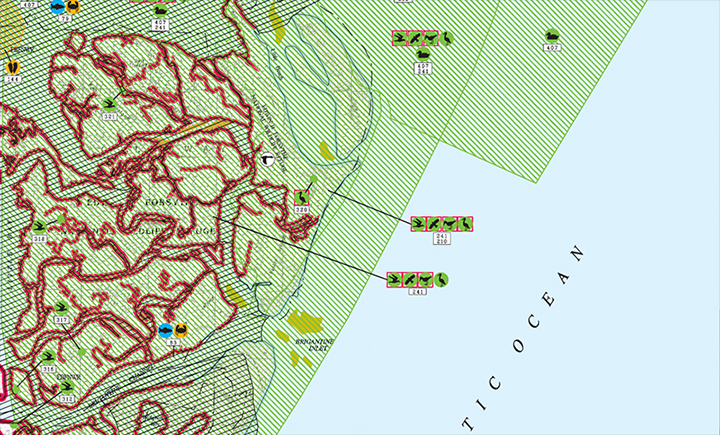
Segment of an existing Environmental Sensitivity Index map of the New Jersey coast.
Segment of an existing Environmental Sensitivity Index map of the New Jersey coast. Used in conjunction with a key, this map provides valuable information to planners and responders on the wildlife, habitats, and geographical features of the area.

Keeping up with a Changing Shoreline

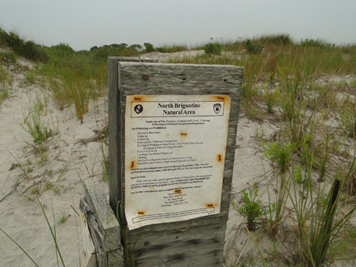
Coastal dune habitat and sign for wildlife conservation area on New Jersey coast.
You can see representative coastal habitat in a large wildlife conservation area managed by Bass River State Forest at the north end of Brigantine Island, a popular beach destination located on the New Jersey coast. (NOAA)

The coastal environment is constantly changing and ESI maps need to be updated periodically to reflect not just storm damage, but changes to resources caused by human use, erosion, and climate change. The new maps will be created with a broad range of potential disasters in mind.

To support this goal, some additional data elements and layers are being considered for the ESI maps developed as part of the post-Sandy effort. These may include such things as flood inundation and storm surge areas, environmental monitoring stations, tide stations, and offshore renewable energy sites.

The end products will provide emergency planners and responders with a better tool for protecting the northeast and mid-Atlantic shoreline when the next coastal disaster occurs.

You can learn more about our Environmental Sensitivity Index maps in our blog post "Mapping How Sensitive the Coasts Are to Oil Spills," and find more technical insights into our work with ESI maps and data in the ESI section of our website.

Storm written in sand by sand castle on New Jersey shore.
A commemoration of Sandy at a sand castle building contest held at the New Jersey shore this past August. (NOAA)
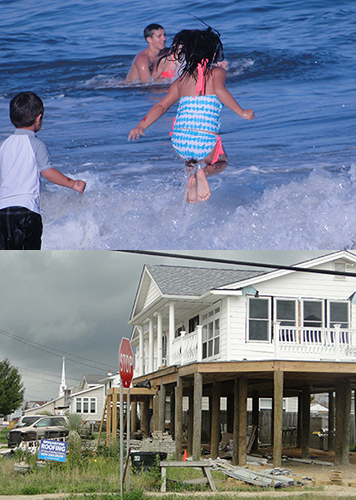
Upper: Children play on the Jersey shore. Lower: Home reconstruction after Sandy
Upper photo: Children play in the waves on the shore of Brigantine, N.J., toward the end of the 2013 summer season. Lower photo: Following Sandy, many homeowners chose to raise their houses in preparation for future storms. (NOAA)
Node Weight: 
4

Molasses and Other Weird Things that Have Spilled

Short title: 
Molasses and Other Weird Things that Have Spilled

SEPTEMBER 17, 2013 -- Last week, the Matson Shipping Company reported an unusual spill after a container ship and faulty pipeline leaked 233,000 gallons (1,400 tons) of molasses into Hawaii's Honolulu Harbor. The Office of Response and Restoration's Emergency Response Division has been working with the Hawaii Department of Health's Hazard Evaluation and Emergency Response Office and state and federal partners to assess the large underwater plume of molasses and reduce risks to marine life in the area. Typically we hear about spills of diesel, oil, and chemicals that cause environmental harm. We know these products can be toxic. Molasses, on the other hand, isn't usually considered pollution. Yet, the Hawaii Department of Health has already collected approximately 25,000 dead fish from Honolulu Harbor and Ke'ehi Lagoon, where the molasses spill has spread and smothered life on the sea floor. Although this isn't your run-of-the-mill spill, it's not the first time strange-sounding things have been spilled into the environment—with at times serious consequences.

Too Much to Drink

On October 17, 1814, a fermented vat of beer exploded, causing adjacent storage tanks to spill and pouring approximately 388,330 gallons of beer throughout the poor London neighborhood of St. Giles and neighboring communities. As a result, at least seven people died in this incident, both from drowning while trapped in slum-like basement apartments and from being buried under the flood's debris.

A Sticky Mess

Believe it or not, molasses has been spilled before. On January 15, 1919, a tank holding at least 2.2 million gallons of molasses burst, sending a wall of the thick, brown syrup down the streets of Boston, Mass. Reports indicate 21 people died in this spill and 150 were injured. Boston Harbor was tinted brown for months. Although it wasn't documented in detail in 1919, fish kills were a likely result. The locals described people and animals being trapped, "like by flypaper." Local residents rumor that when the weather is hot you can still faintly smell molasses to this day.

A Close Call

On September 13, 2011, an OR&R Scientific Support Coordinator provided the U.S. Coast Guard with a trajectory for a bundle of telephone poles that were drifting in the Gulf of Mexico. The Coast Guard considered these poles a hazard to navigation and a threat to oil platforms at sea. NOAA's Office of Response and Restoration applies the same oceanographic modeling tools used for oil spill trajectories to determine where huge bundles of logs, lost containers from cargo ships, and abandoned or derelict vessels might end up. In these cases, the debris itself is less of a concern than what it might encounter on its journey. This type of debris poses a huge threat to fishing vessels, fully loaded oil tankers, and even cruise ships. Floating debris is just another example of an unconventional "spill."

Unexpected Spill Effects

Just about anything can be a hazard if it happens to be in the wrong place at the wrong time. For example, saltwater is very common. In fact, about 97% of all water on Earth is saltwater. A spill of saltwater into the ocean (which is also saltwater) is likely to go unnoticed. But if a large quantity of saltwater were spilled into freshwater estuaries and marsh habitat, the spill would likely kill fish, damage vegetation, and impact the long-term viability of the habitat. For example, century-old cypress trees have died and never returned to an area as a result of a saltwater spill into a freshwater system where they were growing.

The All-Hazards Approach

Today we train our emergency responders for all-hazards. By definition, all-hazards can be any incident or event, natural or manmade, which requires an organized response in order to protect human life, the environment, and property as well as to minimize any disruption of government, social, and/or economic services. Natural disaster such as hurricanes and manmade events such as oil and chemical spills, all require a coordinated response, which is managed under the Incident Command System (ICS) for coordination and stakeholder involvement. While molasses spills aren't a textbook example for training responders, it would be considered an all-hazard threat in situations like Boston's tank failure of 1919 and the spill of 2013 in Honolulu harbor. You never know what might go wrong, which is why it pays to be prepared for anything—even molasses!

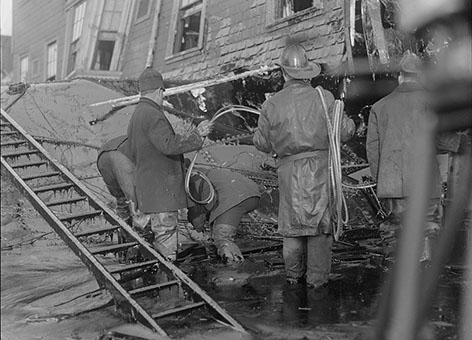
Boston firemen stood in thick molasses after a vat exploded in 1919.
In the wake of the Boston Molasses Disaster of 1919, firemen stood in thick molasses past their ankles as they searched through the sticky debris. (Courtesy of the Boston Public Library, Leslie Jones Collection.)
Response team on board Coast Guard ship in Honolulu Harbor.
The Coast Guard National Strike Force and personnel from the U.S. Environmental Protection Agency, U.S. Fish and Wildlife, and National Oceanic and Atmospheric Administration head to their first location to monitor depleted oxygen and pH levels in Honolulu Harbor, Honolulu, Sept. 15, 2013. They tested the water at various locations around Honolulu Harbor affected by the molasses spill. (U.S. Coast Guard)
Node Weight: 
2

With Eye Toward Restoring Ecosystems, NOAA Releases New Pollution Mapping Tool for Great Lakes

Short title: 
With Eye Toward Restoring Ecosystems, NOAA Releases New Pollution Mapping Tool for Great Lakes

SEPTEMBER 10, 2013 -- NOAA's Office of Response and Restoration is launching the Environmental Response Management Application (ERMA®) for the Great Lakes, an online mapping tool which will give decision makers, resource managers, and environmental responders better information as they clean up hazardous materials and restore the coastal and estuarine environments.

Great Lakes ERMA supports coastal pollution cleanup and restoration efforts across the Great Lakes Basin. This tool brings together regional data and information from NOAA and its partners into a single interactive map.

Great Lakes ERMA was created to help illustrate and expedite cleanup and restoration of Areas of Concern (areas identified by the U.S. and Canada as polluted and in need of cleanup and restoration). It does this by combining environmental contaminant data from NOAA's Great Lakes Query Manager database with ecological, recreational, tribal, and commercial information from across the region.

NOAA, as part of the Great Lakes Restoration Initiative, collaborated with the EPA, U.S. Coast Guard, and University of New Hampshire to develop Great Lakes ERMA. Out of the Great Lakes Restoration Initiative came a five-year action plan focusing on a handful of essential issues for the region, spanning the cleanup of toxic pollution (where Great Lakes ERMA comes in) to the combat of invasive species.

In addition to incorporating environmental cleanup and restoration information, OR&R has worked with emergency response colleagues within NOAA, EPA, Coast Guard, and the academic community on how to use ERMA in the Great Lakes to improve planning, communication, and coordination for responses to oil and chemical spills.

The History Behind the Data

A key part of Great Lakes ERMA is its connection to the data in the Query Manager database. In developing Great Lakes ERMA over the past year, OR&R Physical Scientist Ben Shorr had the opportunity to build upon that work done by NOAA scientists Jay Field and Todd Goeks. They established a Great Lakes–wide database with contaminant concentration data and the related impacts on living organisms.

This database, which is the product of close collaboration with the EPA Great Lakes National Program Office, the Army Corps of Engineers, and the Great Lakes states, is the region's most extensive compilation of environmental contaminant data. Comprised of data from smaller-scale watersheds and studies of individual pollution sites, the Great Lakes Query Manager database now contains over 480 studies with nearly 23,000 stations with contaminant chemistry results. By integrating this data into Great Lakes ERMA, accessing it for cleanup and environmental injury assessment and restoration at contaminant sites across the Great Lakes is now even easier.

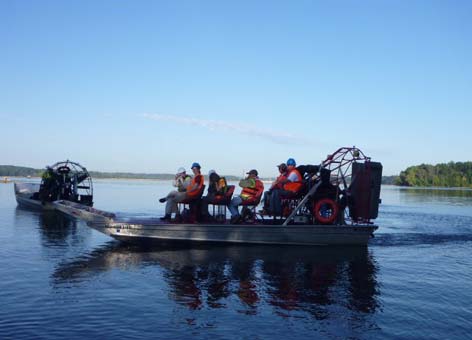
A scientific team monitors cleanup progress in an airboat on the Kalamazoo River
Scientists observe cleanup progress for the Kalamazoo River in Michigan, an Area of Concern in the Great Lakes region. (NOAA/Terry Heatlie)
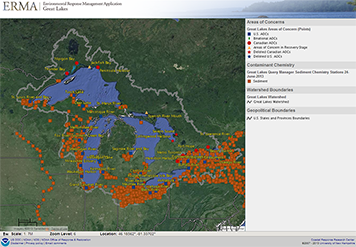
Great Lakes ERMA screen shot.
Great Lakes ERMA, shown above, displays Areas of Concern, areas identified by the U.S. and Canada as polluted and in need of cleanup and restoration, and NOAA Query Manager sediment sampling stations (orange points). This tool can help illustrate progress in restoring the health of the Great Lakes. (NOAA)
Node Weight: 
3

Arctic-bound: Testing Oil Spill Response Technologies Aboard an Icebreaker

Short title: 
Arctic-bound: Testing Oil Spill Response Technologies Aboard an Icebreaker

Editor's Note: September is National Preparedness Month. It is a time to prepare yourself and those in your care for emergencies and disasters of all kinds. The following story shows one way NOAA's Office of Response and Restoration is preparing for a potential oil spill emergency in the Arctic. To learn more about how you can be prepared for other types of emergencies, visit www.ready.gov. SEPTEMBER 5, 2013 -- What's the first thing that comes to mind when someone mentions "the Arctic"? For Zach Winters-Staszak, it's the polar bear. As a mapping specialist for OR&R's Arctic ERMA project, Winters-Staszak has had the opportunity to visit the Arctic communities of Barrow, Wainwright, and Kotzebue, Alaska. On those trips, he has been lucky enough to witness a snowy owl (Barrow's namesake), arctic hare, and caribou. Once, he even hired a local expert to take him on an "Arctic safari" to see a polar bear; the tracks they found were less than 12 hours old, but the polar bear itself continues to elude him. On his upcoming trip to the Arctic, however, his chances are greatly improved; this time he is headed out to sea.

An Arctic Expedition

This week, Winters-Staszak is returning to Barrow to join the U.S. Coast Guard and a team of scientists for two weeks aboard the Coast Guard Cutter Healy where they will take part in Arctic Shield 2013. Once they are aboard the icebreaker, the team will travel to the edge of the sea ice and begin a drill scenario to test oil spill response technologies in the remote and challenging environment of the Arctic Ocean. The technologies being tested range from unmanned aircraft systems gathering data from above to remotely operated vehicles searching under the ice to skimmers that are designed to collect oil on the ocean's surface. The purpose of this hands-on drill is to gain a better understanding of the challenges involved in responding to a theoretical Arctic oil spill at sea and then define the advantages and any constraints of existing technologies to improve the ability to respond to an actual spill.

Connecting the Dots of Data

As the seasonal extent of Arctic sea ice continues to contract and thin, energy exploration and transportation activities will likely continue to increase in the region, escalating the risk of oil spills and accidents. In anticipation, NOAA and interagency partners are actively preparing for these possible emergencies, and Arctic Shield is a great example of this.

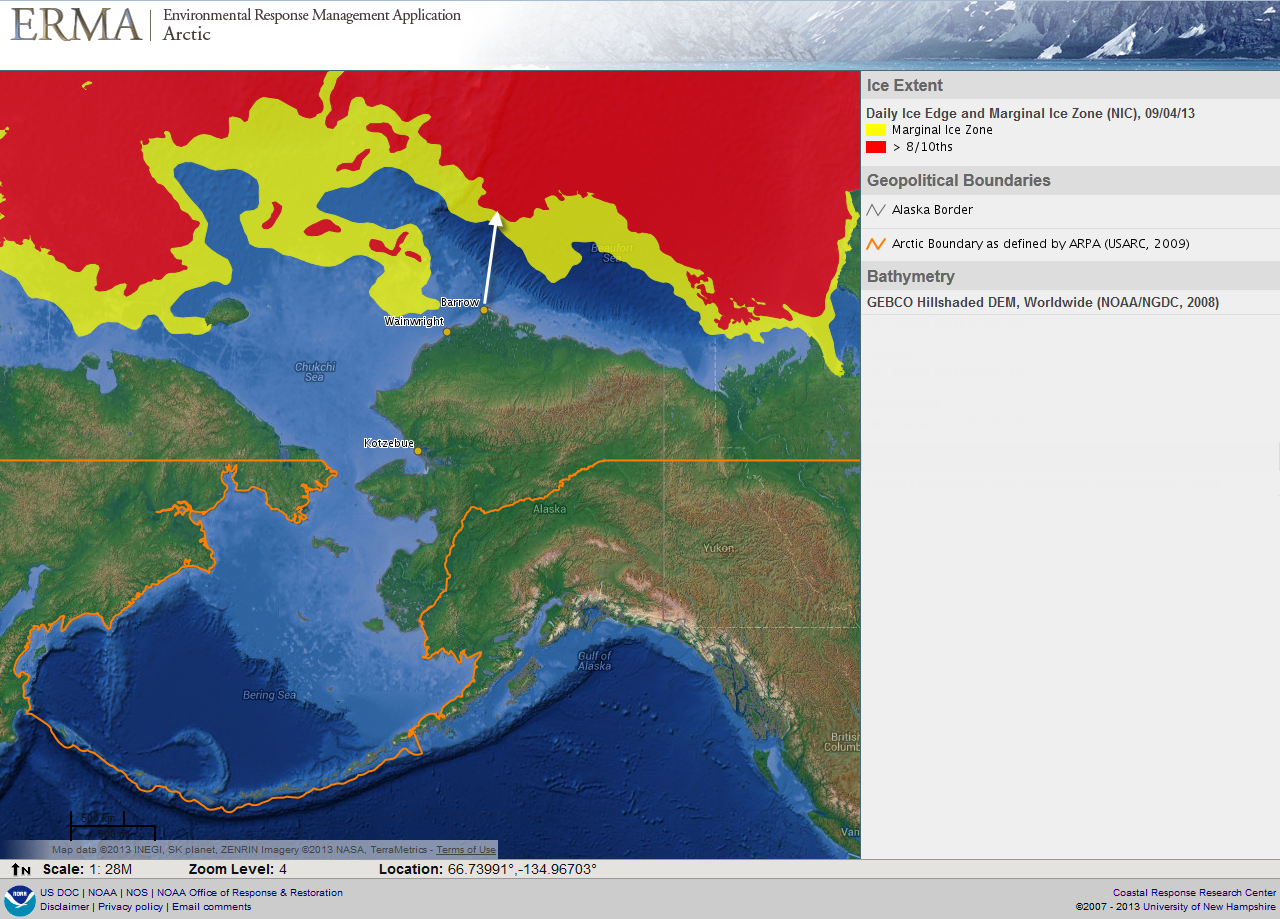
This view of the online mapping program Arctic ERMA shows the approximate path of the Coast Guard Cutter Healy from Barrow, Alaska, to the edge of the sea ice, indicated on the map in yellow. Red shows higher concentrations of sea ice.
This view of the online mapping program Arctic ERMA shows the approximate path of the Coast Guard Cutter Healy from Barrow, Alaska, to the edge of the sea ice, indicated on the map in yellow. Red shows higher concentrations of sea ice. (NOAA) Click to enlarge image.

Winters-Staszak's role will be to connect the various streams of data the science teams will be collecting and incorporate them into a new version of ERMA, NOAA's online mapping tool for environmental response. This latest "stand-alone" version of the tool functions like previous versions of ERMA, except it doesn't need an internet connection. It is common for communities in the Arctic region and for many coastal areas of Alaska to have spotty internet coverage, if coverage is available at all. Stand-alone ERMA is able to map and organize information in a centralized, easy-to-use format for environmental responders and decision-makers when internet connectivity is unreliable. As you read this post, Winters-Staszak be on a plane traveling north. While his first week on the ship is likely to be packed full of activity, he hopes the second week will allow him to write more about his experiences during the cruise. If there is enough internet bandwidth, he will be posting developments from the Healy. He hopes to include information about the technologies being tested, life on the ship, and photos of wildlife. And if he hasn't jinxed myself by now, maybe one of those photos will include a polar bear.

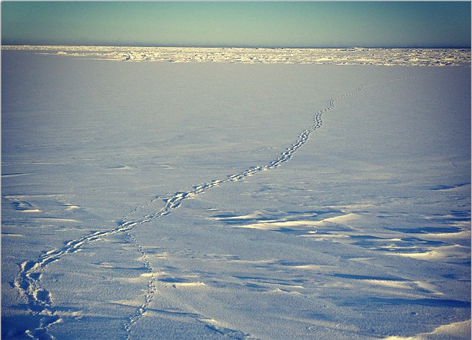
Polar bear tracks crisscrossed by artic fox on sea ice, Barrow, Alaska.
Polar bear tracks crisscrossed by artic fox on sea ice, Barrow, Alaska. (NOAA/Zach Winters-Staszak)
Node Weight: 
3

NOAA Data on Deepwater Horizon Oil Spill Plume Now Available Online

Short title: 
NOAA Data on Deepwater Horizon Oil Spill Plume Now Available Online

SEPT. 12, 2013 — NOAA Physical Scientist Ben Shorr: It was late April 2010, in the first few days of the Deepwater Horizon/BP oil spill response. It was clear that, in addition to a tragic loss of life, this oil spill was going to be a major event.
As I was heading down to the Gulf of Mexico to join my colleagues who were beginning to assess environmental injuries from the spill, I got a call from my supervisor Amy. A research vessel was heading out to collect samples near the leaking wellhead—could I hop on the boat the next day? That's how my journey into this oil spill response began and I ended up on the first federal scientific vessel collecting oceanographic and environmental samples, including those from the underwater oil plume. Now, the finalized and standardized analytical chemistry data have been released in NOAA's online archive. Here's more about it from the press release:

The dataset, collected to support oil removal activities and assess the presence of dispersants, wraps up a three year process that began with the gathering of water samples and measurements by ships in the Gulf of Mexico during and after the oil release in 2010. NOAA was one of the principal agencies responding to the Macondo well explosion in the Gulf of Mexico, and is the official ocean data archivist for the federal government.
While earlier versions of the data were made available during and shortly after the response, it took three years for NOAA employees and contractors to painstakingly catalog each piece of data into this final form. This Deepwater Horizon Oil Spill dataset, including more than two million chemical analyses of sediment, tissue, water, and oil, as well as toxicity testing results and related documentation, is available to the public online at: http://www.nodc.noaa.gov/deepwaterhorizon/specialcollections.html. A companion dataset, including ocean temperature and salinity data, currents, preliminary chemical results and other properties collected and made available during the response can be found at: http://www.nodc.noaa.gov/deepwaterhorizon/insitu.html.
The Deepwater Horizon Oil Spill response involved the collection of an enormous dataset. The underwater plume of hydrocarbon—a chemical compound that consists only of the elements carbon and hydrogen—was a unique feature of the spill, resulting from a combination of high-pressure discharge from the well near the seafloor and the underwater application of chemical dispersant to break up the oil. ... The effort to detect and track the plume was given to the Deepwater Horizon Response Subsurface Monitoring Unit (SMU), led by NOAA's Office of Response and Restoration, and included responders from many federal and state agencies and British Petroleum (BP). Between May and November 2010, the SMU coordinated data collection from 24 ships on 129 cruises.

While on this scientific sampling cruise, I found myself working closely with the U.S. Environmental Protection Agency scientists, the ship's captain and oceanographic technicians, BP's scientific lead and contractors, and NOAA's Natural Resource Damage Assessment representative. There were also experts from Canada's Department of Fisheries and Oceans aboard. The work our team began quickly became the basis for the Subsurface Monitoring Unit within the spill response, which coordinated and provided scientific expertise for sampling, analysis, and mapping. Our team was made up of NOAA staff, in addition to others from the EPA, U.S. Geological Survey, and Gulf states.

During the first several months of the response, our team worked closely with EPA and other partners to establish common data management protocols that would allow us to coordinate and collect data including chemistry samples, acoustics, particle size, and oceanographic measurements from federal, BP, and academic scientific cruises in the Gulf of Mexico. These datasets were quickly analyzed and used by the scientific advisors and U.S. Coast Guard to make decisions about directing spill response clean-up operations.

NOAA's Office of Response and Restoration and National Coastal Data Development Center (a division of the National Oceanographic Data Center) formed a close partnership, working with federal, state, and university scientists to gather, organize, process, and analyze oceanographic data—in addition to archiving and making these datasets publicly available.

NOAA Physical Scientist Mark Miller: In October of 2010, shortly after returning from Coast Guard headquarters where I worked during the oil spill, I was asked to help prepare for public release the data collected by the Subsurface Monitoring Unit on the research vessels such as the one my colleague Ben Shorr was on. A few months later in January of 2011, I picked up where Ben left off on coordinating this effort. Now, I had been involved in database development and deployment for 20 years, so I felt prepared for this task. This was naïve.

While at Coast Guard headquarters in Washington D.C., I had been closely involved with the group that used some of the same Subsurface Monitoring Unit data to prepare operational reports for the National Incident Commander, Coast Guard Admiral Thad Allen. Yet, I did not realize the scope and depth of the data collected on these research cruises. When told later in the project that there were over 2 million records collected, I quickly gained a much greater appreciation of the long, rigorous process involved in preparing and making this information public.

The National Oceanographic Data Center has been releasing and updating this response data on a dedicated public website since early in the spill, and this process is finally complete. Because these data will be archived for at least 75 years, they will be available to help researchers for decades to come.

Ben Shorr has been a Physical Scientist with NOAA's Office of Response and Restoration since he came to Seattle (mostly to ski and sail) in 2000. Ben works on a range of topics, from cleanup, damage assessment, and restoration to visualization and spatial analysis. In his spare time, he enjoys hanging out with his 5 and 3 year old kids, which means riding bikes, skiing, and sailing too.

Mark Miller has been with NOAA's Office of Response and Restoration in the Emergency Response Division for 25 years, starting the year before the Exxon Valdez oil spill. When not wrestling with data from the Deepwater Horizon/BP spill, he supervises the in-house programming staff and is the NOAA Program Manager for the CAMEO software suite used extensively by fire services across the country to respond to chemical release incidents.

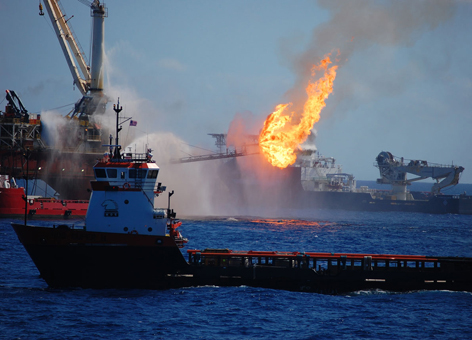
Fighting the flames on the Deepwater Horizon drill platform in 2010.
Fighting the flames on the Deepwater Horizon drill platform in 2010. (NOAA)
Node Weight: 
3

From Driving Underwater Scooters to Texting, Hawaii Students Learn Skills for Science Under the Sea

Short title: 
From Driving Underwater Scooters to Texting, Hawaii Students Learn Skills for Science Under the Sea

AUGUST 29, 2013 -- The sparkling, turquoise waters off the coast of Hawaii may seem like the perfect place to work, no matter what you're doing. But when you're trying to figure out what happened to that idyllic environment after a ship grounds on a coral reef or spills oil, those attractive waters present a surprising number of challenges. You can't just walk up with a clipboard and start taking samples. You have to haul your team and equipment out by boat, be a qualified SCUBA diver, and be able to get around underwater and communicate with your team. And this is all while (carefully and consistently) documenting the species of coral, fish, and other marine life, as well as their habitats, which might have been affected by a misdirected ship or spilled oil. To help cultivate this unique and valuable skill set in Hawaii's future scientists, NOAA has partnered with the University of Hawaii to offer a hands-on (and flippers-on) course introducing their students to a suite of marine underwater techniques. This multi-week course gives developing young scientists, all enrolled at the University of Hawaii, the critical technical skills required to succeed in the rapidly growing field of marine sciences. The course focuses on advanced underwater navigation, communication, and mapping techniques that NOAA uses in environmental assessment and restoration cases but which can be applied to almost any marine-related career.

Under the Sea

For the past month, their classroom was located in the Pacific Ocean off the south shore of the Hawaiian island Oahu. Students learned the proper techniques for using:

  • A GPS (Global Positioning System) tracker where GPS normally can't go. Because a GPS unit doesn't work underwater, students learned how to tow one in a waterproof bag attached to a float at the surface and which is also tethered to them as they dive. The bobbing GPS unit then follows them as they take photos of what they see in the water. Later, using a program to match the photos to their locations, students can create a map of the habitats on the ocean floor.
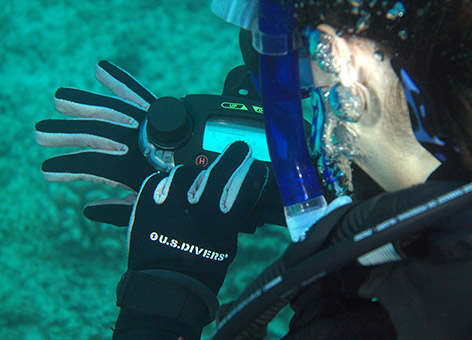
  • Underwater text messaging. While underwater, divers need a way to communicate with other dive teams when they are not in sight of each other. Instructors taught the students to use underwater communication devices that use sonar to send very basic, preset messages to others in their group or on the boat. That way, they can coordinate when someone discovers, for example, a damage site, a rare coral, or even a shipwreck. They can also use it to navigate back to the boat.
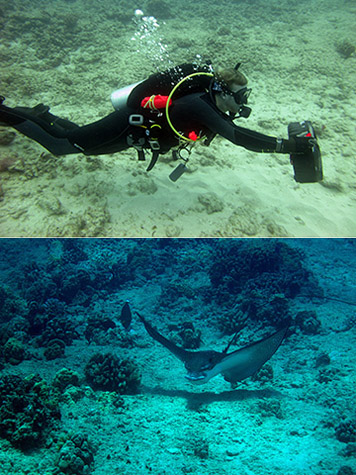
  • Underwater scooters. For longer sampling surveys, students learned how to hang onto and drive a small underwater scooter. These aquatic vehicles allow divers to venture further out at a time and do so more efficiently, because they aren't exerting themselves as much and using as much of their limited air supply.
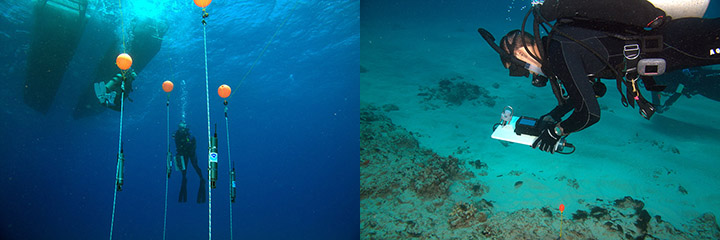
  • High-precision underwater mapping equipment. This system, based on sonar, more accurately maps divers' locations in real time as they gather data underwater. Surrounded by transmitters attached to fixed float lines, students were able to enter data they collected directly into handheld devices, while also creating maps underwater.
Divers float behind the transmitters for the high precision mapping equipment and a student uses a related handheld device to create maps.
Left, class instructors float behind the transmitters for the high precision mapping equipment, which use sonar to determine the location of divers as they take data points using handheld devices. Right, a student uses one of those handheld devices to create maps and input data during the dive. (Jeff Kuwabara/University of Hawaii)
And into Local Jobs

This year's course was taught as a partnership between the NOAA Restoration Center, the NOAA Pacific Islands Regional Office (PIRO), and the University of Hawaii Marine Option Program, with collaboration from staff with the Papahānaumokuākea Marine National Monument. The course was supported by PIRO's Marine Education and Training program.

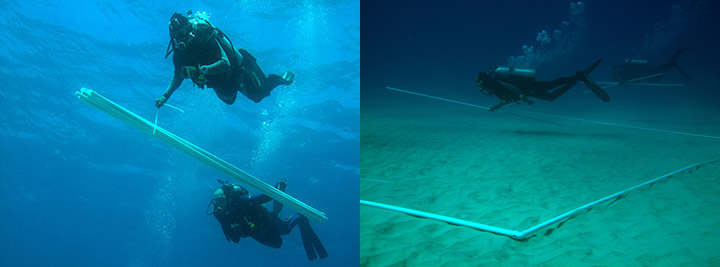
Divers bring PVC pipes down to the seafloor and lay them into a square.
Left, class instructors bring down PVC pipes from the boat. Right, the pipes are assembled into a square of known size so that the students can practice measuring areas underwater. (Jeff Kuwabara/University of Hawaii)

Efforts such as this one are aimed at keeping young scientists with local ecological skills and experience in Hawaii by allowing them to advance their knowledge of practical underwater techniques. Having this specialization enables them to stay employed in the region and in the field of marine science. Ideally, local students gain the technical skills they need to work in the natural resource management field in Hawaii. After taking the marine underwater techniques course, a number of highly specialized jobs would be open to them, such as conducting:

Above, students learned how to extend the range of their surveys by using these underwater scooters. Below, a spotted eagle ray making an appearance.
Above, students learned how to extend the range of their surveys by using these underwater scooters. (Matt Parry/NOAA) Below, a spotted eagle ray making an appearance. (Jeff Kuwabara/University of Hawaii)
  • Environmental damage assessments after ship groundings.
  • Academic research.
  • Search and salvage missions.
  • Mitigation surveys for underwater construction projects.
Underwater Expertise in Action

This kind of underwater expertise was called upon in 2005 when the M/V Casitas ran aground in the Northwestern Hawaiian Islands, in what is now the Papahānaumokuākea Marine National Monument. NOAA divers reported to the scene of the accident to help determine the damage to corals and other parts of the environment caused by the initial ship grounding and subsequent efforts to remove the ship. Using several of the techniques taught in this course, divers were able to accurately determine not only the locations where corals were injured but also how much of the reef was injured (about 18,220 square feet). This information was essential in the process of planning for restoration after the grounding. You can read more about the resulting restoration projects in an earlier update.

A student sending an underwater text message to another dive team.
A student sending an underwater text message to another dive team during the joint NOAA-University of Hawaii course. (Jeff Kuwabara/University of Hawaii)
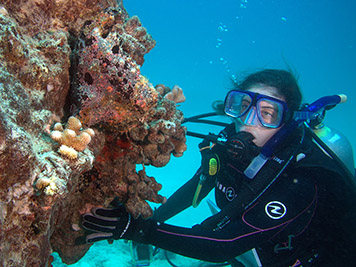
A student diver takes a break to admire a frogfish.
A student takes a break to admire a frogfish. The frogfish can be hard to spot: it is the dark shape with pink dots in the upper left corner. (Jeff Kuwabara/University of Hawaii)
Node Weight: 
3

Pages

Subscribe to response.restoration.noaa.gov RSS