Back to top

Podcast: Visit the NOAA Disaster Response Center with Director Charlie Henry

Short title: 
Podcast: Visit the NOAA Disaster Response Center with Director Charlie Henry

AUGUST 8, 2013 -- Join the National Ocean Service in a recent podcast as they visit the NOAA Disaster Response Center in Mobile, Ala., to learn how this facility is equipped to serve as the central hub for environmental disaster coordination and response in the region.

Director Charlie Henry guides listeners on a virtual tour of the NOAA Disaster Response Center and its value to the Gulf of Mexico and to the people working to prepare for and respond to natural and manmade disasters there.

"I think the unique thing about the Disaster Response Center is that it's a concept of pulling people together from different groups with the common goal in trying to build a better response community and a better response posture," Henry says, "so that the end result is that we have more resiliency and less impact from storms, and that's our ultimate goal: to build a resilient community that when there's a threat from hurricanes or other disasters, that we're prepared for and that we weather those storms and that we recover with the least amount of threat to the public and to property and the environment."

Listen to the full interview with Henry on the National Ocean Service website.

For more information:

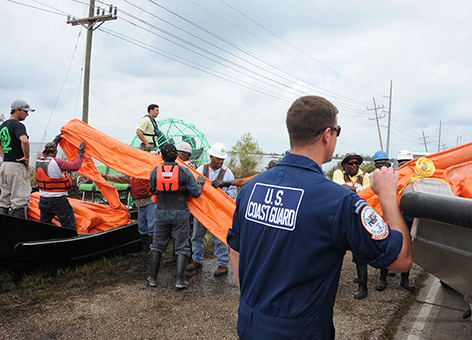
Coast Guard oversees loading of boom onto a response airboat in Lousiana.
A Coast Guard responder oversees the loading of boom onto a response airboat in Louisiana following Hurricane Isaac, Sept. 2, 2012. A team of responders was dispatched to place the boom around a reported oil leak to protect environmentally sensitive marshlands. The NOAA Disaster Response Center provides NOAA support during disasters in the Gulf such as this. (U.S. Coast Guard)
Node Weight: 
1

What Is the Current State of Arctic Sea Ice and What's in Store?

Short title: 
What Is the Current State of Arctic Sea Ice and What's in Store?

This is a post by Samantha Guidon, Constituent and Legislative Affairs Intern with NOAA's Office of Response and Restoration. AUGUST 6, 2013 -- A look at the Arctic region uncovers many hot-button issues: climate change, energy extraction, and cultural impacts, just to name a few—all in a remote area with a harsh environment. Recently, I received a crash course and status update on the Arctic's disappearing sea ice at the 5th Symposium on the Impacts of an Ice-Diminishing Arctic on Naval and Maritime Operations. Co-hosted by the United States National/Naval Ice Center and the U.S. Arctic Research Commission, the conference brought together key stakeholders for information sharing and discussion. Two facts were apparent over the course of the three-day conference: (1) sea ice in the Arctic is shrinking—more rapidly than scientists originally predicted, and (2) "ships" will be essential to the future of the Arctic. NOAA Research Oceanographer Dr. Jim Overland predicted that the Arctic will most likely be functionally ice free in the summer by 2050, at the latest; however, he agreed with others that it may happen even sooner. Rear Admiral Jonathan W. White, Navy Oceanographer and Navigator and Director of the Task Force on Climate Change, set his prediction at 2022, which may be plausible given that all of the older ice in the region has already melted. And, currently, the oldest ice in the Arctic is a mere three years old, according to Dr. Ignatius Rigor of the International Arctic Buoy Program. Regardless of when it happens, the Arctic will be ice-free at some point within our lifetimes, a reality that comes with the potential to alter significantly business and life in the region and across the globe. It is because of these implications that three kinds of "ships" will play a key role in the region's future: icebreaking or ice-capable ships, partnerships, and chairmanship.

Wanted: Ships

The United States currently has only one icebreaker, the U.S. Coast Guard Cutter Healy, which is mission-ready for the Arctic. Yet transit—via maritime commerce, tourism, and energy exploration—within and through the Arctic will increase, whether or not there are enough ice-capable ships able to assist them in an emergency. This fact raised questions about U.S. ship capabilities, especially because icebergs will still be around and posing risks even without historical sea ice levels. While the U.S. does have a strong Arctic maritime presence, there is plenty of room to increase that presence in the future. As part of the U.S. Coast Guard's "Arctic Shield" drill this September, NOAA's Office of Response and Restoration (OR&R) will be participating in an oil spill training exercise on the icebreaker Healy in Alaska. During the exercise, they will test possible spill response techniques and tools, including a new version of NOAA's Arctic ERMA, an online mapping tool that brings together, visualizes, and shares key data from NOAA and its partners in a centralized, easy-to-use format during an environmental response scenario. Developed by OR&R through its partnership with the Bureau of Safety and Environmental Enforcement, this new "Standalone ERMA" has been adapted for use by responders in a remote command post, vessel, or other areas with limited or no internet connection. In addition, the Coast Guard is preparing a second icebreaker, Polar Star, which should be ready for work in November and would give the United States two functioning icebreakers.

Partnerships Are Key

The need for partnerships (interagency, national, indigenous, and international), especially in an area so vast during a time with limited resources, was another key theme. One successful partnership brought up was the Memorandum of Understanding between NOAA and Shell to share data in the Arctic, demonstrating how government and industry can work together effectively. An area where there could be strengthened partnerships and better forms of communication is in working more closely with indigenous peoples to incorporate and use traditional knowledge in Arctic emergency planning, which OR&R’s Dr. Amy Merten mentioned in her talk on Arctic ERMA.

Chairmanship of the Arctic Council

Chairmanship of the Arctic Council was also on everyone's mind. Canada just assumed chairmanship in 2013 and the United States is on deck for 2015, which will result in four years of North American chairmanship. Julia Gourley, U.S. Senior Arctic Official at the Department of State, discussed the desire to communicate and work with Canada in order to accomplish both of the countries' goals and manage the Arctic to the best of their abilities. However, several questions arose out of the Arctic Council discussion, including: When chairmanship moves away from North America, will the priorities shift? The Arctic Council does not have any authority for governance; will this be a problem in the future? Agreements between Arctic Council nations on oil spill response and search and rescue are great ideas in theory, but how will they be implemented during an actual emergency? This may be a compelling reason for supporting the United Nations Convention on the Law of the Sea, which, according to the U.N., extends "international law to the vast, shared water resources of our planet," and under whose provisions the U.S. Navy and Coast Guard already operate, though the U.S. has not yet ratified it.

How Will the U.S. Move Ahead?

Some concerns about the U.S. status in the Arctic stem from having only one functioning ice breaker, the USCG Cutter Healy. However, Rear Admiral White referenced the fact that our country is still in transition from a nation with an Arctic state to an Arctic nation. Other Arctic nations have needed additional resources for quite some time because they have always relied on the area for trade. However, within the United States, attention on the Arctic is still a relatively new phenomenon to non-Alaskans, so it may take more time to gain the status of some of the other Arctic nations. President Barack Obama released his National Strategy for the Arctic Region in May 2013, which outlines an overall plan for the Arctic region, focusing on security, stewardship, and partnerships. There are at least 10 other reports from federal agencies, including the Coast Guard, NOAA, U.S. Arctic Research Commission, and the Interagency Arctic Research Policy Committee, also outlining their own Arctic strategies and policy recommendations, making it difficult to identify a common direction when moving forward in the Arctic region. Because of this, I am composing a report for NOAA's Office of Response and Restoration that will examine all of these plans and policy recommendations and identify a key policy that is common among the reports in order to suggest a priority for implementation. Learn more about our work in the Arctic, from oil spill response support to marine debris removal.

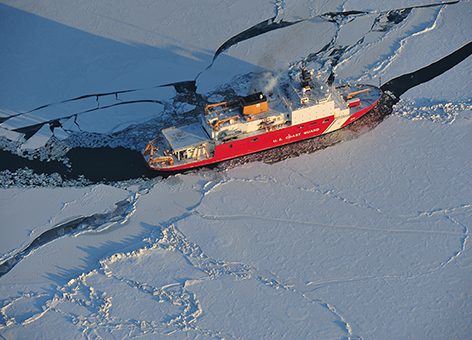
The Coast Guard Cutter Healy breaks ice in the Bering Sea.
The Coast Guard Cutter Healy, the U.S.'s only operational polar icebreaker, breaks ice in the Bering Sea to assist the tanker Renda on its way to deliver winter fuel supplies to Nome, Alaska, on Jan. 8, 2012. (U.S. Coast Guard)
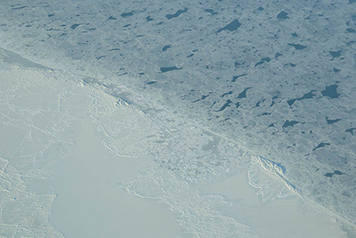
Patches of newly formed ice are visible in the open water of the Chukchi sea.
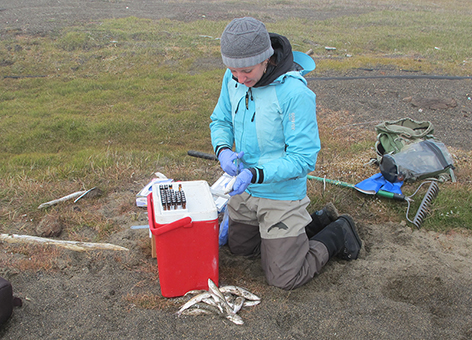
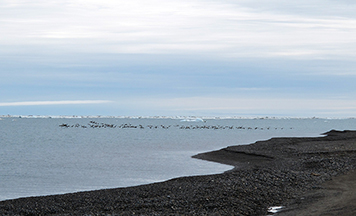
Patches of newly formed ice are visible in the open water of the Chukchi sea, offshore of "landfast ice." Landfast ice, which is frozen to the shoreline, is an essential platform for local Inupiat people's winter and spring hunting. This photo was taken during a flight between Barrow and Wainwright, Alaska, in early 2013. (NOAA)
Node Weight: 
2

See What Restoration Looks Like for an Oiled Stream on an Isolated Alaskan Island

Short title: 
See What Restoration Looks Like for an Oiled Stream on an Isolated Alaskan Island

JULY 31, 2013 -- Earlier this year, NOAA Oil Spill Coordinator Ian Zelo shared the story of a 2010 diesel spill on Adak Island in the central Aleutian Islands of Alaska: a tanker overfilling an underground storage tank; the fuel entering the salmon stream Helmet Creek and nearby Sweeper Cove; the nightmarish logistics of getting to the remote, sparsely populated island; and assessing environmental injury to both the stream and marine habitats amid blizzards, possible unexploded ammunition, and the dark of night. In the wake of the spill, dead fish were collected from Helmet Creek, where diesel was observed both in the creek's waters as well as in the habitat along its banks. As a result, pink salmon and Dolly Varden trout eggs, riparian (stream-side) habitat, and aquatic insects likely were affected in the creek and adjacent riparian area. The spill also may have affected marine mammals in Sweeper Cove and as many as eight marine birds may have died due to oil exposure and subsequent hypothermia. Fortunately, however, the story does not end there. After considering the environmental injuries caused by the diesel spill in Helmet Creek, the natural resource trustees, including NOAA, U.S. Fish and Wildlife Service, and the Alaska Departments of Natural Resources, Environmental Conservation, and Fish and Game, developed restoration projects intended to compensate for injuries to fish, the stream, and surrounding habitat.

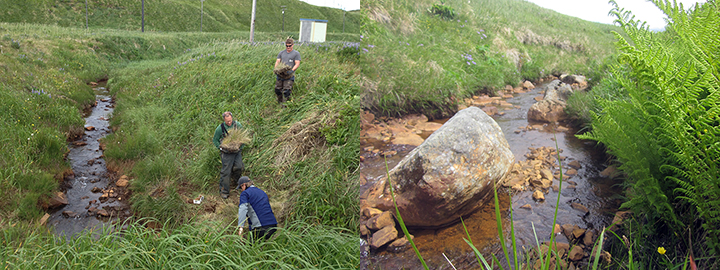
People replanting vegetation on Helmet Creek and close up of stream.
At left, part of restoring Helmet Creek after the 2010 oil spill involved replanting vegetation along the banks. Right, a close up of Helmet Creek. (NOAA)

On July 8, 2013, NOAA Restoration Center, Alaska Department of Fish and Game, and representatives from the fuel facility responsible for the spill traveled to Adak Island to undertake restoration work for the harm done to fish, wildlife, and their habitat by the oil spill.

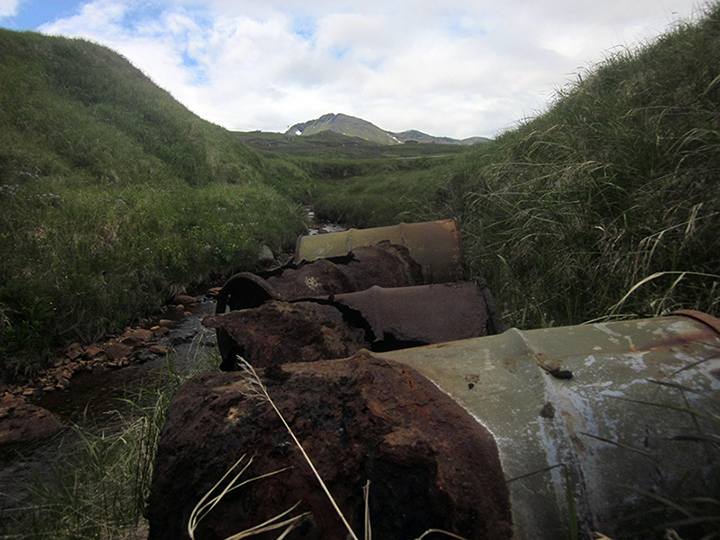
Rusted barrels in the creek bed.
To improve habitat for salmon and other fish, we removed old barrels from Helmet Creek. (NOAA)

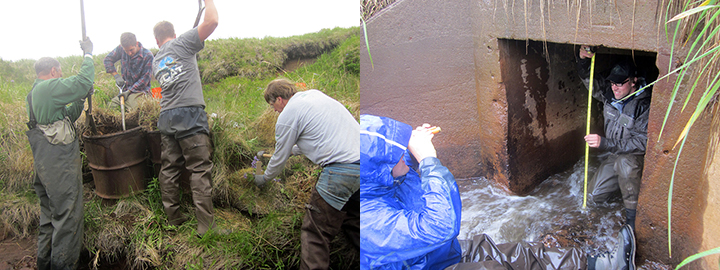
During this trip, we restored fish passage to the creek and improved habitat and water quality by removing creosote pilings and grates over culvert openings which had created barriers and changes to the stream profile, re-grading the stream bed, restoring the main flow channel, and removing at least a dozen 55-gallon drums from the creek bed and banks.

Workers remove rusted drums from the banks of Helmet Creek. People monitoring the streambed regrade.
Left, workers remove rusted drums from the banks of Helmet Creek in July of 2013. Right, monitoring the streambed regrade as part of the restoration projects on Adak Island. (NOAA)
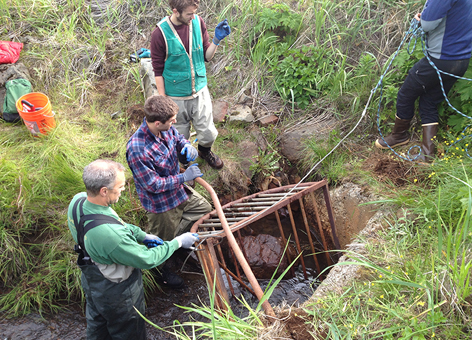
Workers removing trash rack from stream.
We removed grates and racks, originally installed to catch floating trash, from Helmet Creek to improve the flow and profile of the stream for fish. (NOAA)
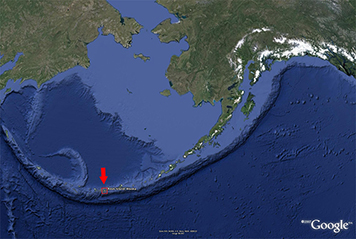
Location of Adak Island (red arrow) among Alaska's Aleutian Islands.
Node Weight: 
3

Embarking on the GYRE Expedition: A Scientific and Artistic Study of the Trash on Alaska's Shores

Short title: 
Embarking on the GYRE Expedition: A Scientific and Artistic Study of the Trash on Alaska's Shores

JULY 29, 2013 -- Our oceans—the Atlantic, Pacific, Arctic, Indian, and Antarctic—are actually all part of one, interconnected body of water. This is one reason Alaska's 33,904 miles of shoreline, which are frequently secluded and have very few people nearby, can still turn up surprisingly high levels of trash arriving from faraway places. In order to study and raise awareness about this problem on Alaska's shorelines, an international group of scientists, artists, and educators, including the NOAA Marine Debris Program's Peter Murphy, recently embarked on the GYRE Expedition. Organized by the Anchorage Museum and Alaska SeaLife Center, this scientific and creative collaboration spent a week in June aboard the research ship Norseman. They traveled around 500 miles down the coast bordering the Gulf of Alaska, making several stops to survey and collect marine debris along the way. "As we stop at debris aggregation beaches at Gore Point, Shuyak Island, and Hallo Bay," wrote Peter Murphy of the NOAA Marine Debris Program before embarking, "we in the science team will collect data on debris densities and composition while artists collect debris and capture their impressions for works." According to the Anchorage Museum website, these marine debris works of art, "on view February through September 2014 at the Anchorage Museum, will tell a global ocean debris story through the work of more than 20 artists from around the world. The 7,500-square-foot exhibition will include a section specific to Alaska featuring the 2013 expedition's resulting scientific discoveries, as well as art created from the marine debris gathered on Alaska's beaches during the journey." The project is called the GYRE Expedition in reference to the ocean’s massive, swirling, whirlpool-like phenomena known as "gyres," which tend to gather and move around large amounts of marine debris. These gyres, including the North Pacific Gyre along the Gulf of Alaska, are associated with what are (misleadingly) known as the "garbage patches."

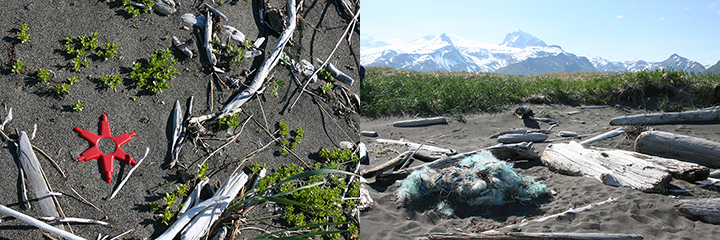
Red plastic star in sand on beach at Hallo Bay on left and fishing gear on beach at right.
At right, the last stop of the expedition was Hallo Bay, famous for its grizzly bears and heavily impacted by debris that washed in from the 2011 tsunami in Japan. At left, tangled fishing gear washed up next to large pieces of driftwood on Alaskan beaches, evidence of the force of the winter storms that bring debris ashore here. (NOAA)

Here is part of Murphy's first dispatch of the expedition, posted from Gore Point East Beach, Alaska, on June 8, 2013:

Friday we left Seward, Alaska, for our first stop at Gore Point, a "catcher" beach that extends into the Alaska coastal current and sees some of the highest debris densities recorded in Alaska. Gulf of Alaska Keeper (GoAK) cleaned the beach in 2007–2008 and removed over 20 tons of debris from less than a mile of shoreline. On Saturday, Chris Pallister, the head of GoAK, arranged to be at the beach with some of his crew to show us the site and how it's changed over the six years that he's been cleaning it. From his initial survey, he thought that the debris was significantly less than in 2012. What we saw in logs pushed far up the beach and broken tree branches were evidence of just how strong the weather and ocean forces are that bring debris ashore here. As we spent the day on-site, a small team of us set up our monitoring system, while others collected impressions and debris. Over the course of the day, we worked together to conduct a full monitoring survey, following the NOAA shoreline protocol to select transects and catalog debris. This sort of snapshot monitoring data is very helpful in putting numbers to the impressions that people have of a place and the debris they see there—"a lot of foam" can become "___% of debris was foam." When you collect data at the same site over time, it can also answer the important question of change, since differences in the composition (what) and the quantity (how much) of debris at a site can give us valuable clues to regional or local changes in the debris picture. We’re looking forward to doing the analysis, though it’s at least certain to indicate a lot of foam present.

You can also watch a video to learn more about the GYRE Expedition at https://www.anchoragemuseum.org/galleries/gyre/ and view a map of the expedition's path below.
View Gyre Expedition in a larger map

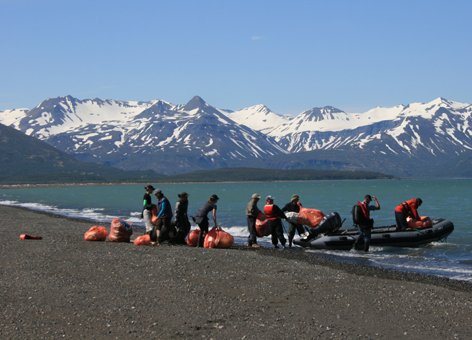
GYRE Expedition participants loading bags of debris from Hallo Bay onto a boat.
During part of the GYRE Expedition in June of 2013, a group of educators, scientists, and artists removed 4 tons of debris that had been previously collected by the National Park Service from Hallo Bay in Alaska's Katmai National Park. Because there was no place to dispose of it locally, the debris had to be transported to Seward, a common problem for dealing with debris on remote shorelines. (NOAA)
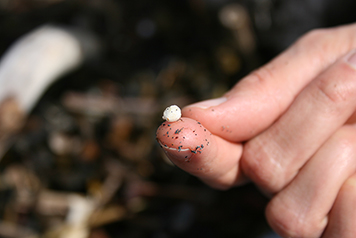
Small foam particle collected from Gore Point held on a finger.
Small foam particles were not in short supply on the beach at Gore Point, Alaska, the first stop on the GYRE Expedition. (NOAA)
Node Weight: 
5

How to Survive an Upside-Down Helicopter Crash in the Ocean? Practice

Short title: 
How to Survive an Upside-Down Helicopter Crash in the Ocean? Practice

JULY 26, 2013 -- "To the count of three, we roll you over. Ready? One, two, and—roll!" This is what 32 NOAA emergency response staff heard when they went through what has become an integral part of their safety training since 1999: The practice of safely exiting an upside-down, underwater helicopter using emergency Survival Egress Air (SEA) bottle systems. SEA bottles are like small, portable SCUBA bottles that fit into a Personal Flotation Device vest. Because many Office of Response and Restoration staff participate in helicopter overflights during oil spill responses, this is important training to have in case an emergency occurred while flying over the ocean. We worked with four rescue swimmers from the U.S. Coast Guard Air Station Port Angeles and in close collaboration with Seattle University staff to carry out this training in a racing pool at the university. They used a frame-encased floating chair, which simulated a helicopter seat. Everyone sat in the floating framed seat, put on a helmet (safety first!), buckled up, and when the chair rolled upside-down into the water, we had to unbuckle the five-point seat belt and exit the "helicopter" while using emergency air in the SEA. Sounds like fun? It was to some, though less so to others, but everyone passed the training, got an adrenaline rush, and had an opportunity to become more familiar with the equipment that could save their lives. The exceptionally professional team of Coast Guard rescue swimmers also coupled the helicopter exit training with offshore survival skills, which include getting into a life raft and a refresher on the use of various types of other survival equipment. Just a day before, we learned about open water survival and helicopter egress (exit) training from the Coast Guard to prepare us for the "dip" in the pool. They hit on several key points for surviving a helicopter water crash and included personal stories that taught important survival lessons. Specifically, the Coast Guard covered the "Seven Steps to Survival":

  • Recognition: Recognize that a bad situation is unfolding and that you are in trouble. Do something about it!
  • Inventory: Decide what to do next, and what you have with you that will help you survive.
  • Shelter: Protect your body and get out of the water as much as you can. Your clothing choice is your first key to shelter.
  • Signal: Make yourself visible to rescuers.
  • Water: Keep yourself hydrated.
  • Food: If you have water, keep yourself sustained with food.
  • Play: Stay busy and keep your mind occupied. Continue working toward getting saved.

Having the right equipment is key to survival, but it isn’t much good if you don’t know how to use it properly. In addition to the action-packed pool training, we familiarized ourselves with the SEA air bottles and the MOLLE (a modular, adjustable vest used to hold the SEA) thanks to the help of Aerial Machine and Tool Company representative Butch Flythe. Butch is a retired Coast Guard Chief, expert on survival equipment, and also was part of the very first group of Coast Guard rescue swimmers when the program launched in 1985. Buckling up when we drive, practicing evacuation from a building, and training safe exit from a downed helicopter are all safety measures we take hoping that we will never need to use them but knowing that if practiced, they could someday save our lives. You can learn about how real-time ocean data from NOAA is aiding Coast Guard search and rescue operations in the video podcast below.

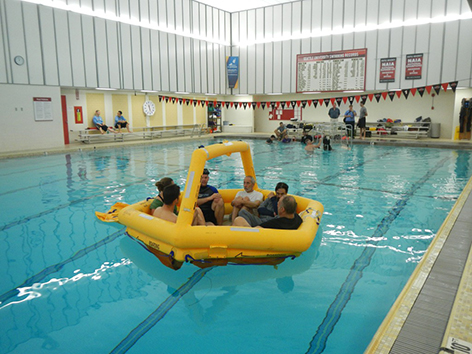
NOAA, with U.S. Coast Guard, practiced their ocean survival skills in a pool.
Oil spill response staff, under the exceptional guidance of U.S. Coast Guard rescue swimmers, practiced their ocean survival skills in a life raft and simulated helicopter chair in a pool at Seattle University. (NOAA)
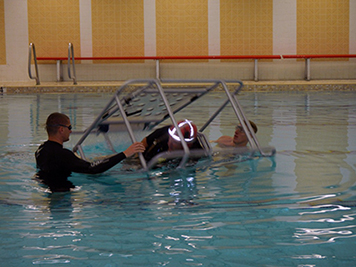
Coast Guard rolling a person in a simulated helicopter chair underwater.
U.S. Coast Guard rescue swimmers rolled each person under water while strapped into the simulated helicopter chair. While under water, individuals had to engage the air supply, unbuckle, and kick out the "window" of the helicopter to escape. (NOAA)
Node Weight: 
4

NOAA Supporting Coast Guard after Natural Gas Rig Lost Well Control, Caught Fire in Gulf of Mexico

Short title: 
NOAA Supporting Coast Guard after Natural Gas Rig Lost Well Control, Caught Fire in Gulf of Mexico

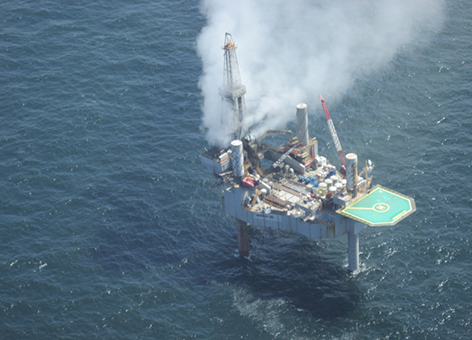
JULY 25 -- The Hercules 265 jack-up drilling rig, which caught fire about 50 miles offshore of Louisiana after experiencing a loss of well control, no longer has natural gas leaking out of the well. The U.S. Coast Guard and Bureau of Safety and Environmental Enforcement, via aerial surveys (overflights), have confirmed that the flow of gas from the well has stopped, though a diminished fire continued to burn residual gas near the well until today. On Tuesday, July 23, the rig operator lost control of the natural gas well during a drilling operation in the Gulf of Mexico. All 44 members of its crew were evacuated safely into life rafts and were later picked up by an offshore supply vessel. Late that night, the leaking gas ignited and the rig caught fire and partially collapsed. The incident occurred at South Timbalier block 220 in about 154 feet of water. The well was releasing natural gas and a small amount of oily fluids, creating a light sheen of variable size. (Gas is often mixed with oily fluids, and the amounts of these fluids vary among reservoirs.) The U.S. Coast Guard has two cutters on scene to provide support. NOAA support has been focused on forecasting the trajectory of the sheen and customized weather reports for the affected area as well as providing technical advice on dealing with methane (a primary component of natural gas) and potential species at risk from hydrocarbon exposure, such as birds, shrimp, fish, sea turtles, and marine mammals. A NOAA scientist and emergency response meteorologist are now at the scene of the response and offering further scientific and weather support as needed. Learn more at the Bureau of Safety and Environmental Enforcement website.

Hercules 265 drilling rig with cloud of leaking natural gas in Gulf of Mexico.
The Hercules 265 drilling rig, located about 50 miles off the coast of Louisiana, caught fire the night of July 23. Earlier that day, the rig experienced a loss of well control while drilling for natural gas. The cloud of leaking natural gas from the well, pictured here, ignited. No one was on board at the time and no injuries have been reported. (Bureau of Safety and Environmental Enforcement)
Node Weight: 
2

Kelp Forest Restoration Project Begins off Southern California Coast

Short title: 
Kelp Forest Restoration Project Begins off Southern California Coast

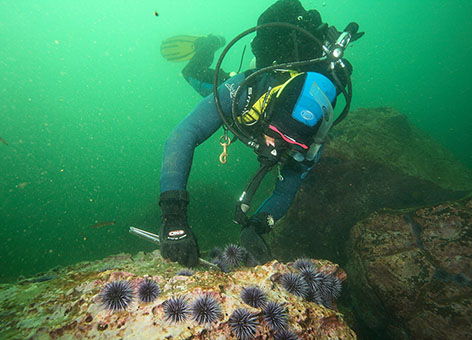
JULY 23, 2013 -- After 15 years of scientific monitoring, research, and planning, the Santa Monica Bay Restoration Foundation (SMBRF), with funding and technical assistance from NOAA's Montrose Settlements Restoration Program (MSRP), begins a large-scale kelp forest restoration project off the coast of California's Palos Verdes peninsula this July. The foundation will bring kelp forests back to life in an area that has experienced a 75% loss of kelp canopy. Nearly 100 acres of reef habitat along the Palos Verdes coast is covered by "urchin barrens," where the densities of urchins are extremely high and kelp plants are non-existent. Sea urchins are spiny marine invertebrates that live on rocky reef substrates and feed mostly on algae. When sea urchin populations are kept stable, they are an important part of a healthy kelp forest ecosystem. On the other hand, in an "urchin barren," urchin densities get very high because predators rarely feed on urchins, preferring the greater cover and higher productivity of healthy kelp forests. The urchins in barrens are also in a constant state of starvation, continually expanding the barren area by eating every newly settled kelp plant before the kelp has a chance to grow. These urchins are of no value to fishermen and urchin predators because they are undernourished, small, and often diseased. To bring back the kelp forests, volunteer divers, commercial urchin divers, researchers, and local nonprofit groups will assist SMBRF with removing urchins from the "urchin barrens" and allow for natural settlement of kelp plants. Divers' removal of the urchins will allow for kelp plants to grow and mature, which can happen quickly since the plants often grow up to two feet per day. Within a year, SMBRF expects that many of the characteristics of a mature kelp forest will return, including providing suitable fish habitat for important commercial and recreational fish species. The mature kelp forest will support greater numbers of urchin predators, such as birds, fish, crabs, lobsters, octopuses, sea stars, and sea otters, which will help to maintain more sustainable levels of urchin populations in the future. NOAA's Montrose Settlements Restoration Program is providing funding for this project as part of its plan to restore fish habitat in southern California. MSRP was developed in 2001 following a case settlement against polluters that released the toxic agricultural and industrial chemicals DDTs and PCBs into the southern California marine environment. MSRP has allocated settlement funds to restore natural resources that were harmed by these chemicals, including impacts to fish habitat due to their presence in ocean sediments. 
A volunteer diver removes urchins from an urchin barren in southern California.
A volunteer diver removes urchins from an urchin barren to encourage the settlement of kelp larvae.
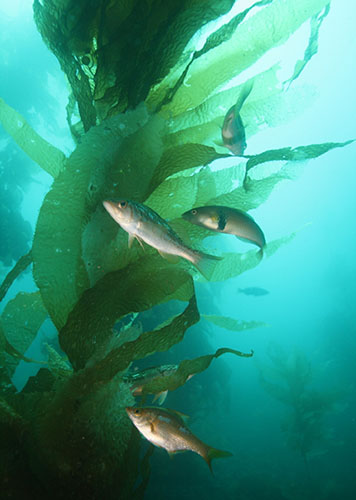
Kelp forest with fish.
Kelp forests provide critical habitat for many fish species. (NOAA/David Witting)
Node Weight: 
4

Watching Chemical Dispersants at Work in an Oil Spill Research Facility

Short title: 
Watching Chemical Dispersants at Work

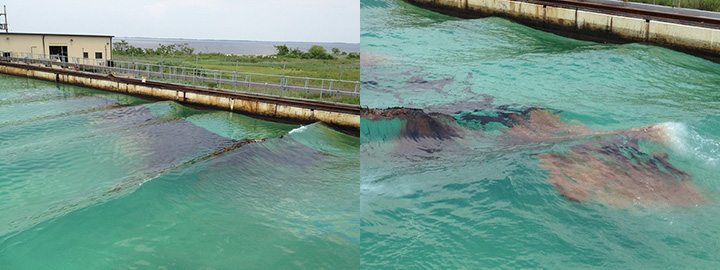
JULY 18, 2013 -- Last week, OR&R Incident Operations Coordinator Doug Helton had the chance to go back to Leonardo, N.J., to observe an oil spill dispersant exercise at the National Oil Spill Response Research and Renewable Energy Test Facility known as Ohmsett (the Oil and Hazardous Material Simulated Environmental Test Tank). Ohmsett is operated by the U.S. Bureau of Safety and Environmental Enforcement (BSEE). The facility features a large saltwater test tank that allows for full-scale testing of oil spill response equipment and technologies. This tank has a large wave generator to simulate the type of conditions seen in the open ocean. Dispersant use became a national topic of discussion following the explosion and subsequent well blowout on the Deepwater Horizon drilling rig on April 20, 2010. The unprecedented use of chemical dispersants on and below the ocean’s surface during this oil spill raised scientific, public, and political questions about both their effectiveness and their potential consequences for ecosystems and marine life in the Gulf of Mexico. Although dispersants get a lot of attention, Helton has worked on hundreds of oil spills over the past 20 years, and during that time, he has only worked on a handful of spills where dispersants were used. Furthermore, he has never had a chance to observe directly how dispersants work. The Ohmsett facility provided that opportunity in a controlled setting that still simulated real-world, open ocean conditions. Here is a series of photos he took from one of the tests:

Freshly spilled crude oil in the Ohmsett saltwater test tank.

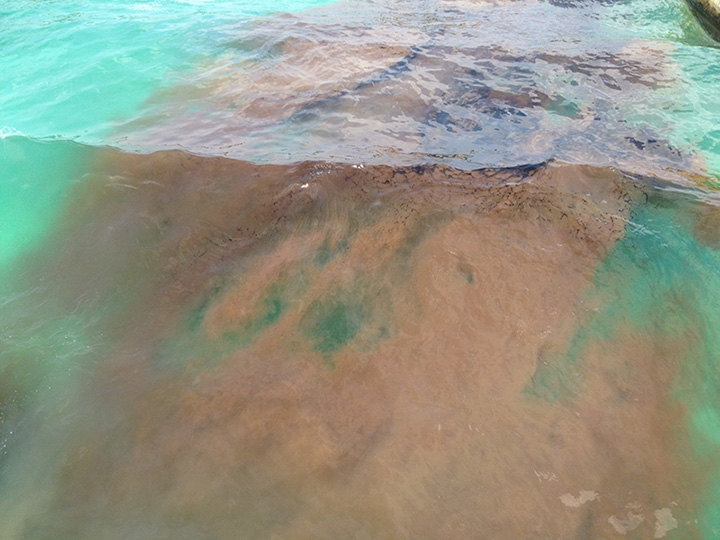
At left, freshly spilled crude oil in the Ohmsett saltwater test tank. To the right, you can see the oil changing a few minutes after dispersants were applied. Note that some of the oil is still black, but some is turning brown.

Brown oil suspended in small droplets in the top couple feet of the pool.

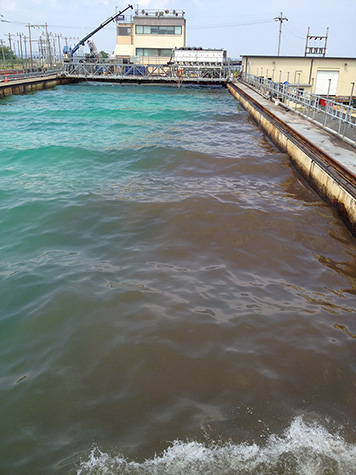
Now most of the oil is brown, and instead of being on the surface, it is now suspended in small droplets in the top couple feet of the pool.

Oil completely mixed in the test tank water.

In the final image, you can see the oil is completely mixed in the water. So what do these tests demonstrate? Dispersants can be effective in removing oil from the surface of the water. Breaking the oil into tiny droplets doesn't remove oil from the water, but it does help to increase the rate of biodegradation. What these tests don't tell you is the biological effect of mixing the oil in the water, as opposed to leaving it on the sea surface. Leaving oil on the surface will increase the potential exposure to birds, mammals, and shorelines, while dispersing oil will increase exposure to fish and other animals living in the water column. The decision to use dispersants or other response strategies will always involve a careful evaluation of the environmental benefits and trade-offs of the particular situation and location. To help answer some of these trade-off questions, NOAA, in between spills, continues to study dispersants and their potential effects on the marine resources that we are trying to protect.

Aerial view of the Ohmsett facility and its test tank.
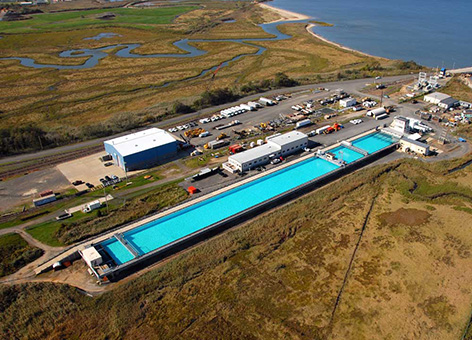
The Ohmsett facility is located at Naval Weapons Station Earle, Waterfront. The research and training facility centers around a 2.6 million-gallon saltwater tank. (Bureau of Safety and Environmental Enforcement)
Node Weight: 
2

Transforming an Oregon Watershed, Once Marred by a Gasoline Spill, into Fish-Friendly Habitat

Short title: 
Oiled Oregon Streams Get Fish-Friendly Makeover
Beaver Creek in Oregon with large pieces of wood added to stream margins.
By adding large pieces of wood to the edges of Beaver Creek, which was affected by the 1999 gasoline spill, we hope to create new areas for fish to find food, rest, and hide from predators. (NOAA)
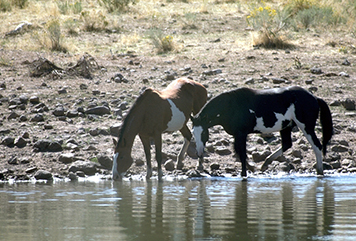
Wild horses drinking at a stream in Oregon.
Wild horses drinking at a stream in Oregon. Soils become compacted when wild horses and cattle congregate along streams, damaging stream-side habitat. (Bureau of Land Management)
Node Weight: 
1

UPDATED: Natural Gas Release from Wellhead off the Louisiana Coast

Short title: 
Natural Gas Release from Wellhead off the Louisiana Coast

JULY 10, 2013 -- NOAA's Office of Response and Restoration has provided a trajectory forecast in response to a release of natural gas into the Gulf of Mexico about 74 miles from Port Fourchon, La., at Ship Shoal Block 225, Platform B. The release, resulting from a loss of well control, began on July 9, when the owner of the well, Energy Resources Technology Gulf of Mexico, notified the U.S. Coast Guard and the Bureau of Safety and Environmental Enforcement (BSEE) of the accident. All workers on the natural gas and crude oil platform at the time of the accident were evacuated and unharmed. Energy Resources Technology Gulf of Mexico is a subsidiary of Talos Energy. The spill has produced a sheen that has varied in size, remaining approximately between four and five miles wide, and one to three quarters of a mile long. The well dates from the 1970s and has not been in production for more than 10 years. NOAA Scientific Support Coordinator Kyle Jellison is in communication with the responders and stated that there appears to be little threat to natural resources from an environmental standpoint at this time. See a U.S. Coast Guard news release for more information on the incident. UPDATE JULY 12, 2013: Operations to plug the leaking well appear to have been successful. Pumping heavy mud into the well created a temporary "seal" so that the well is no longer releasing natural gas or condensate. An early morning overflight on July 12 showed a light sheen, whose source is believed to be residual oil from the previous flow and runoff from the platform. NOAA is providing weather support, but no other services at this time.

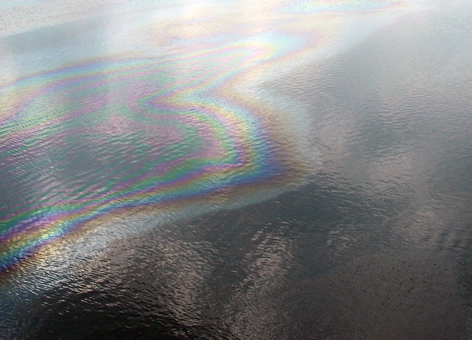
Rainbow sheen.
Rainbow sheen, such as the one shown here from a different incident in the Gulf of Mexico, has been spotted near the leaking natural gas well off the Louisiana coast. (NOAA)
Node Weight: 
4

NOAA Launches Online Tool for the Marine Debris Community

Short title: 
Online Database for Marine Debris Resources

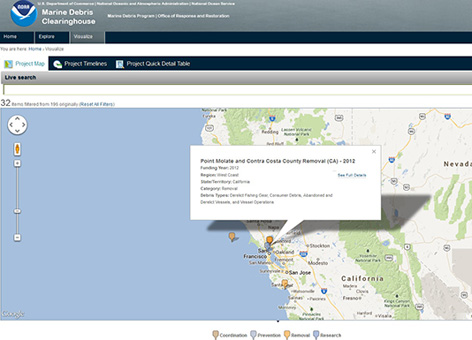
JULY 10, 2013 -- The NOAA Marine Debris Program, a division of the Office of Response and Restoration, has launched the Marine Debris Clearinghouse, a new online tool for tracking and researching marine debris projects and resources. Currently, this database allows users to browse or search records of past, current, and future projects which are funded by the Marine Debris Program and focus on marine debris removal, research, and outreach. One means for discovering this information is its easy-to-use interactive Google map view. Courtney Arthur introduces the Marine Debris Clearinghouse on the Marine Debris Blog, where she shares more about plans to expand it with an archive of marine debris studies, reports, and action plans:

The program expects to expand this database to include information from federal partners and the broader marine debris community. In the coming months, the site will grow to include a library of documents, including best practices, regional action plans, technical documents, and papers that reflect the state of knowledge of a given topic area within marine debris study.

She also gives instructions on where to direct feedback about this exciting new resource for combating the problem of trash in our ocean. It's available at clearinghouse.marinedebris.noaa.gov. Dive in and let us know what you think.

A view of the Marine Debris Clearinghouse map showing NOAA-funded projects.
A view of the Marine Debris Clearinghouse map, which allows users to browse its database of projects by region, activity, funding year, and debris type.
Site Themes: 
Node Weight: 
4

Keeping America the Beautiful this Independence Day

Short title: 
Keeping America the Beautiful this Independence Day

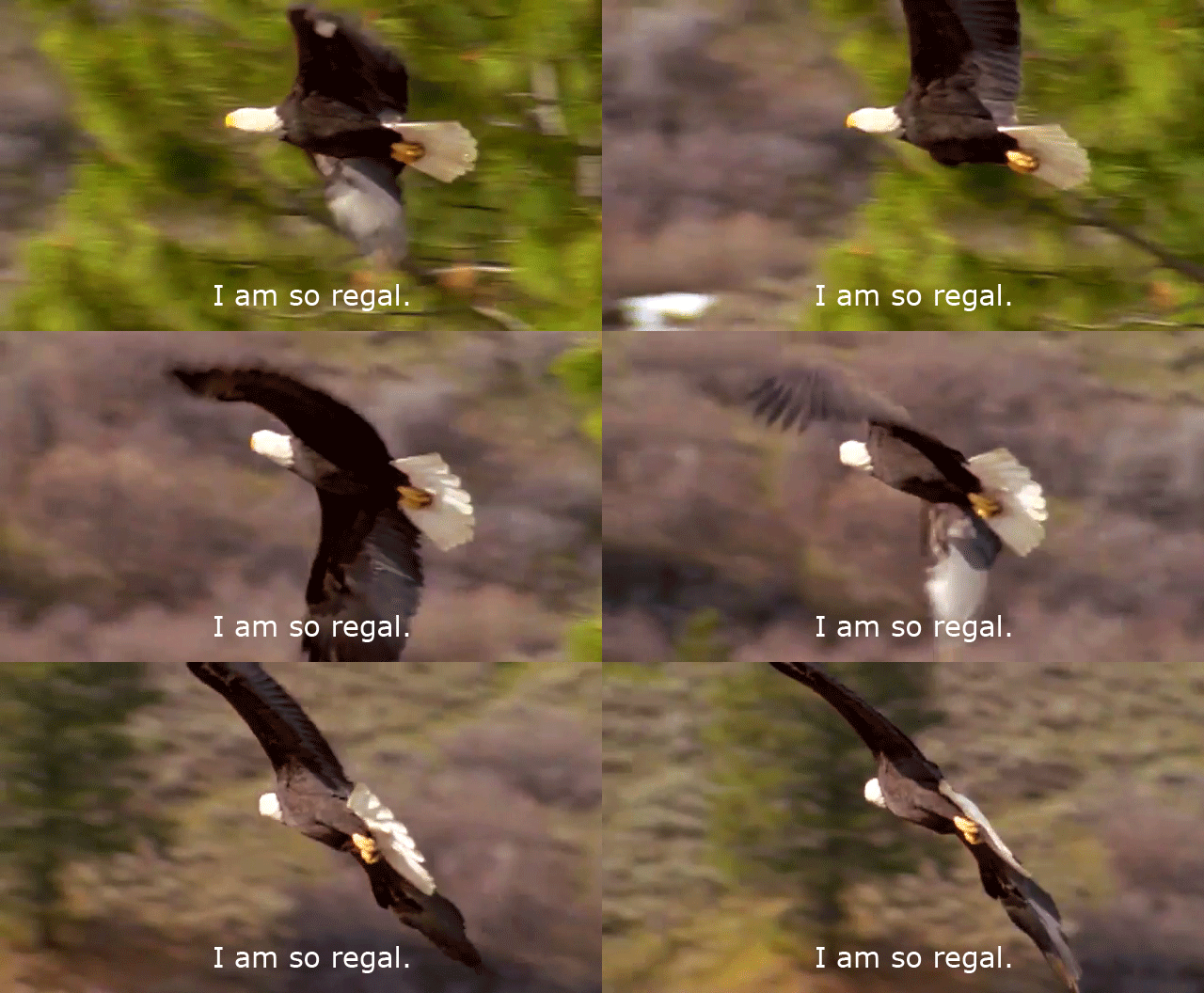
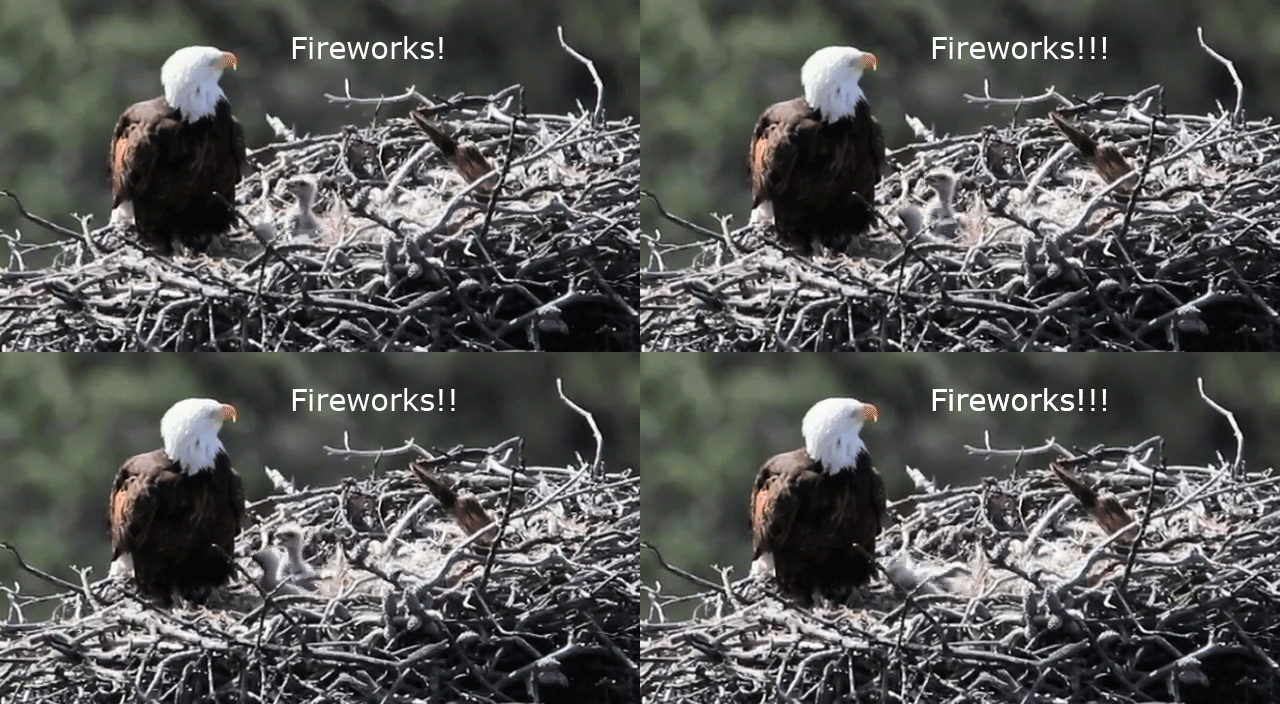
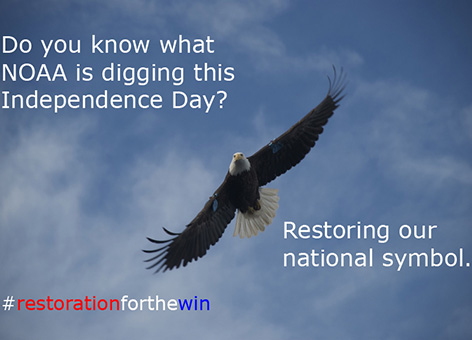
JULY 2, 2013 -- Those of us at the National Oceanic and Atmospheric Administration (NOAA) want to wish everyone a Happy Fourth of July holiday! And what better way than with the triumphant restoration of America's national bird, the mighty Bald Eagle? Thanks to the efforts of NOAA's Montrose Settlements Restoration Program and our partners, including the Institute for Wildlife Studies, Bald Eagles have made a comeback in southern California's Channel Islands. These eagles were wiped out after chemical companies near Los Angeles discharged into the ocean hundreds of millions of pounds of the toxic chemicals DDT and PCBs, both of which stay in the environment for a very long time. Once DDT worked its way up the marine food chain to the eagles, it weakened the shells of their eggs, causing the parent eagles to crush the eggs during incubation (or when keeping them warm) before they could hatch. Fortunately, we've helped return Bald Eagles to the Channel Islands, and since 2006, they now are raising chicks successfully in the wild. You can learn more at montroserestoration.noaa.gov, where you can even download a 3D animation and make a Bald Eagle come to life on your home computer. And now for a special holiday message from the eagles of the Channel Islands ... What Bald Eagles are thinking most of the year:

Swooping Bald Eagle.

What they're thinking on July 4:

Bald Eagle adult with hopping chicks in nest.
Bald Eagle in flight with text, Restoring our national symbol.
We place bands on the eagles' wings to track their movements around the Channel Islands and to monitor their nesting behavior.
Node Weight: 
2

NOAA Likes Rivers Too

Short title: 
NOAA Likes Rivers Too

JUNE 28, 2013 -- June is National Rivers Month. You might think those of us at the National Oceanic and Atmospheric Administration (NOAA) are concerned only with water in the ocean or sky. But we're actually big fans of rivers too. Many rivers flow out to the ocean, creating areas where fresh and saltwater mix called estuaries. These important and unique ecosystems are where many animal species, especially fish and birds, eat, nest, and breed. NOAA also keeps an eye on rivers when they get polluted, either from oil spills or industrial pollution, and looks out in particular for the interests of aquatic species that spend time both in the ocean and rivers. Just take a look at a few examples of how NOAA protects and preserves America's rivers:

  • When it was discovered that aluminum factories in New York spent decades releasing toxic pollution into the St. Lawrence and nearby rivers, we got involved in evaluating and restoring the environmental injuries to aquatic habitats and species, such as American eel and sturgeon, both of which migrate between freshwater and the sea.
  • After a tank accidentally pumped 18,000 gallons of diesel into a Washington creek where endangered Chinook salmon spawn, we worked to help restore nearby river habitat for these fish.
  • In 2010 when an oil sands (tar sands) pipeline in Michigan leaked more than 800,000 gallons of oil into the Kalamazoo River, our scientists were there taking samples and investigating the environmental impacts on natural resources, including fish and mussels.
  • As part of a suite of restoration projects in Massachusetts, NOAA, the state, and the U.S. Fish and Wildlife Service installed "fishways" on the Acushnet River to help herring over dams as they migrate between the Atlantic and their riverine spawning grounds. Since these projects were installed, herring passing over the dams have increased more than 1,000%.
  • NOAA and our partners are examining how more than a century of toxic industrial pollution dumped into the Willamette River in downtown Portland, Ore., has affected Pacific lamprey, a species local tribes used to harvest by hand from waterfalls. Like salmon, lampreys spend their adult lives in the ocean but return to freshwater rivers to reproduce. Unlike salmon, young lampreys burrow into river bottoms to filter feed for up to seven years before maturing and heading out to sea.

You can hear more about the importance of rivers—and keeping them healthy—from the U.S. Fish and Wildlife Service’s Margaret Byrne, an environmental health scientist involved in the Hudson River Natural Resource Damage Assessment:

My work on the Hudson River has taught me about the incredibly diverse and important habitats found in this unique place. The Hudson River has been called "the river that flows in two directions" because the tides of the Atlantic Ocean push water back upstream twice a day. These tides help to create homes for many different kinds of plants and animals ... This month, I celebrate National Rivers Month with a solemn knowledge that the incredible ecological resources of the Hudson River have been extensively contaminated with chemicals called polychlorinated biphenyls, or PCBs. These toxic chemicals have been found in the water, fish and other wildlife, and sediment of the Hudson River below General Electric Company’s plants at Hudson Falls and Fort Edward in New York. We know that PCBs can cause serious harm to wildlife and other natural resources and we are in the process of determining the scope of the injuries caused by this contamination. (Read my colleague's blog post about studies on Hudson River mink and learn about the difference between the EPA's Superfund cleanup and the Natural Resource Damage Assessment process.)

Read the rest of Byrne's post over at the U.S. Fish and Wildlife Service Northeast Region blog, and let us know how you help keep rivers and their inhabitants safe and healthy. Photo: Roy Saplin, Creative Commons Attribution-NonCommercial 2.0 Generic License

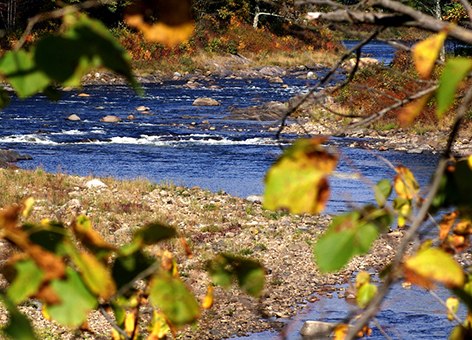
A view of the Hudson River in the fall.
A view of the Hudson River in the fall. NOAA is involved with assessing the environmental impacts to the Hudson River due to industrial pollution from two General Electric plants. (Photo: Roy Saplin, Creative Commons Attribution-NonCommercial 2.0 Generic License)
Node Weight: 
4

Why You Should Thank a Hydrographer

Short title: 
Why You Should Thank a Hydrographer
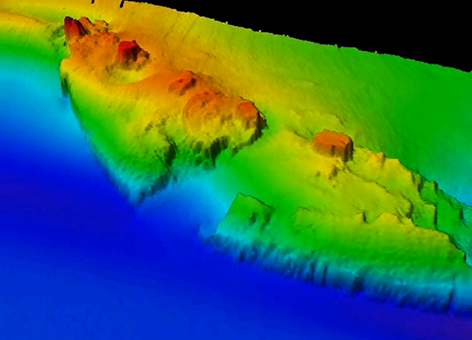
Multi-colored digital terrain model of the wreck of the freighter Fernstream.
NOAA's Office of Coast Survey created this digital terrain model of the wreck of the freighter Fernstream, a 416-foot motor cargo vessel that sank near San Francisco, Calif., in 1952. The different colors indicate water depth and helps inform us on the structural integrity of the wreck, which may still have stores of oil aboard. (NOAA)
Node Weight: 
3

Why Are Tropical Storms and Hurricanes Named?

Short title: 
Why Are Tropical Storms and Hurricanes Named?

JUNE 26, 2013 -- Have you ever wondered why storms are named?

Up until the early 1950s, tropical storms and hurricanes were tracked by year and the order in which each one occurred during that year.

In time, it was recognized that people remembered shorter names more easily. In 1953, a new approach was taken and storms were named in alphabetical order by female name. The process of naming storms helps differentiate between multiple storms that may be active at the same time.

By 1978, both male and female names were being used to identify Northern Pacific storms. This was adopted in 1979 for the Atlantic storms and is what we use today.

The World Meteorological Organization came up with the lists of names, male and female, which are used on a six-year rotation. In the event a hurricane causes a large amount of damage or numerous deaths, that name will be retired. Since the 1950s, when it became normal to name storms, there have been 77 names retired, including: Fran (1996), Katrina (2005), Rita (2005), and Sandy (2012).

To find out this year's storm names and for a complete list of retired names, visit the National Weather Service's website. And if you haven't started your own severe-weather preparations, don't delay; the 2013 Atlantic hurricane season (predicted to be more active than usual) has already begun.

The Gulf of Mexico region, in particular, experiences frequent natural and human-caused disasters such as hurricanes, tornadoes, and oil spills.

NOAA's Gulf of Mexico Disaster Response Center aims to reduce the resulting impacts by helping to prepare federal, state, and local decision makers for a variety of threats, creating more adaptive and resilient coastal communities. Learn more about this valuable resource and center of NOAA expertise on the Gulf Coast.

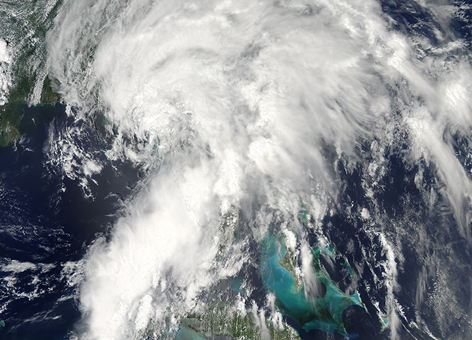
Satellite view of Tropical Storm Andrea on June 8, 2013 crossing over Florida.
The 2013 Atlantic hurricane season's first named storm was Tropical Storm Andrea, pictured here on June 8 crossing over Florida and heading up the East Coast. (NASA)
Node Weight: 
3

NOAA Opens Its Doors (and Scientists) in City-wide Celebration of Science

Short title: 
NOAA Opens Its Doors (and Scientists) in City-wide Celebration of Science

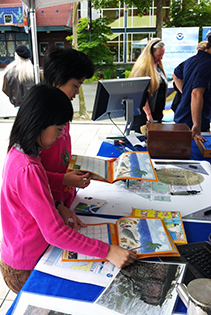
JUNE 18, 2013 -- Do you know the difference between a seal skull and a sea lion skull? Have you walked under a bottom trawl net used for fishery science? Have you ever seen an ocean wave glider used to collect oceanographic data? Have you ever held a piece of a dock that floated across the Pacific Ocean? Visitors to the 2nd annual NOAA Open House in Seattle, an event held in conjunction with the Seattle Science Festival, can answer "Yes!" to these questions, and many more. On June 14, NOAA's Seattle Sand Point campus opened its doors to the public. Four tours were offered that focused on different aspects of NOAA's mission: Marine Mammal Science, featuring the bone collection; Fisheries Surveys, showing off the net loft; Physical Science, including ocean engineering, the dive center, and the weather forecasting floor; and a Shoreline Restoration walk emphasizing the connection between aquatic environments and our everyday lives. The Open House also featured exhibit booths, a movie room, and a kid's corner. Over 500 visitors attended, ranging from families with school-aged children to a bus full of retirees. Visitors had the chance to meet NOAA scientists and managers at exhibit booths highlighting NOAA programs that weren't featured on the tours, including the work of the NOAA Fisheries' Northwest Fisheries Science Center whose campus is located 3 miles away. The 2013 Seattle Science Festival was an 11-day celebration of science and technology that happened in our community from June 6-16, 2013.

Kids learn about marine debris with NOAA at the Seattle Science EXPO Day.
Kids learn about marine debris with NOAA at the Seattle Science EXPO Day. (NOAA)

It featured luminaries from the science world in opening and closing night events, a free Science EXPO Day featuring hands-on activities and special stage programs at the Seattle Center, and a variety of Signature Programs at venues around the region and occurring throughout the Festival. In addition to our Open House, NOAA had a large presence at the Seattle Science Festival Expo day at Seattle Center where at least 2,000 visitors learned about NOAA through hands-on activities. Almost 100 NOAA staff across all line offices participated in these Seattle Science Festival activities to bring NOAA science to kids of all ages. In addition to the Pacific Science Center, regional sponsors included the Boeing Company, Aerojet, Amgen, Facebook - Seattle, Fred Hutchinson Cancer Research Center, Google, Microsoft, and others.

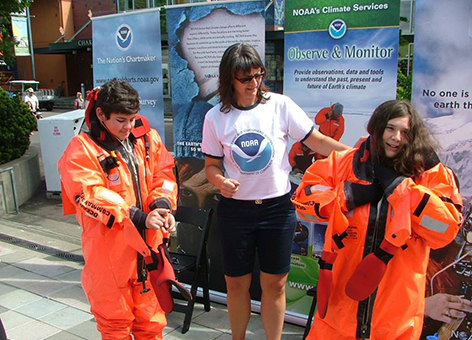
Kids trying on survival suits at the NOAA booth at Seattle Science EXPO Day.
People of all ages were able to learn about NOAA's work, including these kids trying on survival suits, at the 2013 Seattle Science Festival EXPO Day. (NOAA)
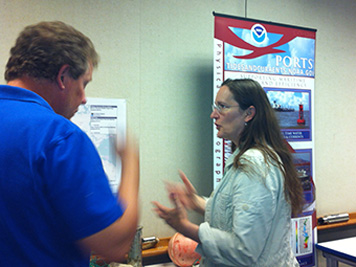
NOAA employee discussing marine debris with a woman at NOAA Open House.
NOAA's Office of Response and Restoration highlighted our work in marine debris at the 2013 NOAA Open House, featuring pieces of concrete, metal, and Styrofoam from the two Japanese docks that came ashore in Washington and Oregon after the 2011 tsunami. (NOAA)
Node Weight: 
2

NOAA Lifts 14 Metric Tons of Fishing Nets and Plastics from Hawaiian Coral Reefs

Short title: 
NOAA Lifts 14 Metric Tons of Fishing Nets and Plastics from Hawaiian Coral Reefs

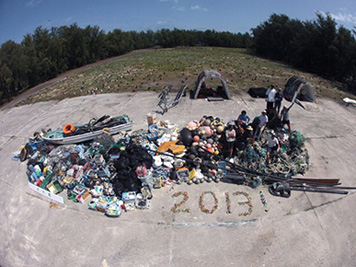
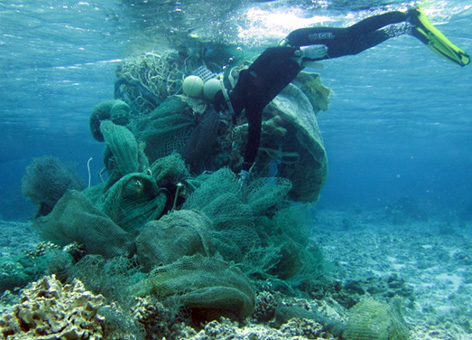
JUNE 14, 2013 -- The sea life around Hawaii's remote Midway Atoll is swimming easier after NOAA recently removed 14 metric tons of debris from its waters (A metric ton equals about 2,204 pounds.). The removal team, consisting of members of the NOAA Coral Reef Ecosystem Division, spent 19 days collecting debris both from along the shoreline and in the water around Midway Atoll in the Northwestern Hawaiian Islands. As usual, the bulk of the items recovered were abandoned fishing gear and plastics. Notably, the team also removed a 23-foot-long derelict vessel weighing close to three-quarters of a metric ton. This vessel was confirmed as having been lost from Japan during the 2011 earthquake and resulting tsunami. (Learn more about marine debris from the tsunami.) This current round of marine debris removal efforts began in 2011 when a plan was put in place to help restore the environment injured after the research ship M/V Casitas ran aground on the coral reefs of Pearl and Hermes Atoll in 2005. This atoll is located in the Northwestern Hawaiian Islands in what is now the Papahanaumokuakea Marine National Monument. Our office, along with our partners, undertook a Natural Resource Damage Assessment for this ship grounding. This process resulted in a legal settlement which provided NOAA with funds to conduct marine debris removal projects over several summers, starting in 2011. The 2011 efforts removed 15 metric tons of marine debris while the 2012 cruise brought in 52 metric tons. Since 2011, NOAA has collected a total of 81 metric tons or 178,000 pounds of debris from the Northwestern Hawaiian Islands.
The 2013 NOAA team collected 14 metric tons of fishing gear, plastic, and other debris from the shoreline and waters around Midway Atoll.
The 2013 NOAA team collected 14 metric tons of fishing gear, plastic, and other debris from the shoreline and waters around Midway Atoll. (NOAA)

Marine debris, particularly discarded and lost fishing gear, is a substantial source of coral damage in the Papahanaumokuakea Marine National Monument. Fishing nets frequently get lodged on corals and smother or break the corals underneath them. NOAA and our partners determined that removing nets from coral reefs in this area would prevent similar injuries to corals as those that occurred during the M/V Casitas grounding and subsequent response. 
A diver removes a mass of nets from a coral reef near Midway Atoll.
Lost or discarded fishing nets frequently get lodged on corals and smother or break the corals underneath them. Here, a diver removes them from a reef near Midway Atoll in the Northwestern Hawaiian Islands. (NOAA)
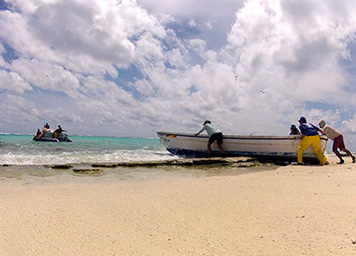
The NOAA team hauls off a beach a 23-foot-long boat from the Japan tsunami.
During the 2013 cruise, the NOAA team discovered and hauled away a 23-foot-long boat that was confirmed to have been washed away from Japan during the 2011 earthquake and tsunami. (NOAA)
Node Weight: 
4

Historic New England Town, Once Plagued by Tack Factory's Toxic Pollution, Enjoys Revitalized Coastal Marshes

Short title: 
Historic New England Town, Once Plagued by Tack Factory's Toxic Pollution, Enjoys Revitalized Coastal Marshes

A Brief History of Atlas Tack

Henry H. Rogers, Standard Oil multimillionaire and friend of famed American author Mark Twain, formed the Atlas Tack Corporation after consolidating several tack manufacturing companies in 1895. The Fairhaven company became one of the nation's largest manufacturers of wire tacks, bolts, shoe eyelets, bottle caps, and other small hardware. However, decades of acids, metals, and other chemical wastes oozing through the factory floor boards and being dumped in building drains, the nearby Boys Creek marsh, and an unlined lagoon left the property contaminated with hazardous substances. Found in the soils, waters, and surrounding marsh were volatile organic compounds, cyanide, heavy metals such as arsenic, pesticides, polychlorinated biphenyls (PCBs), and polycyclic aromatic hydrocarbons (a toxic oil compound). EPA led the Superfund cleanup (referred to as a "remedy") of this hazardous waste site, and the Office of Response and Restoration, through NOAA's Damage Assessment, Remediation, and Restoration Program, contributed scientific and technical guidance to the EPA during the cleanup and restoration of the site’s coastal marshes.

Determining the Remedy: Scalpel vs. Cleaver

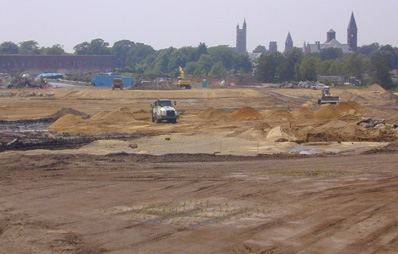
Before restoration: A June 2007 view of the area north of the hurricane dike, following the removal of contaminated sediments. (NOAA)

The original cleanup goals would have required excavating the entire marsh—ripping out the whole thing, despite some areas still functioning as habitat for the area's plants and animals. As a result, NOAA, EPA, and U.S. Army Corps of Engineers were reluctant to excavate the entire wetland. Instead, the agencies took a more targeted approach, beginning in 2001 and 2002. First, they completed a bioavailability study to determine where natural resources were adversely exposed to contaminants from the old tack factory. This study determined which areas of the existing marsh could be preserved while removing the toxic sediment that posed a risk to human health and the environment. The next part of the remedy was undertaken in three phases from 2006 to 2008. Phase one included demolishing several buildings, sheds, and the power plant and excavating 775 cubic yards of contaminated soil and sludge from 10 acres of the designated commercial area of the manufacturing site. Phase two excavated and disposed off-site 38,000 cubic yards of contaminated soil and debris. With NOAA's scientific and technical assistance—and later with help from the Army Corps—EPA, as part of phase three, excavated and later restored 5.4 acres of saltwater and freshwater marsh.
More Than a Remedy: Working Toward Revitalization
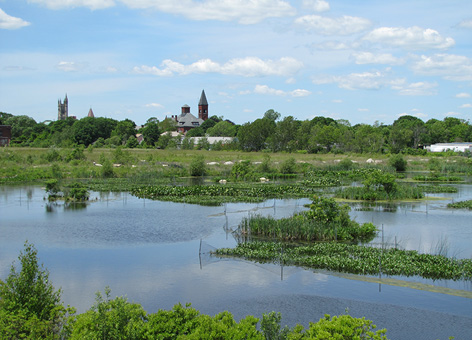
After restoration: A newly created northern salt marsh, shown in June 2013, at the site of the former Atlas Tack factory. Bare spots are filling in but a fully covered wetland landscape is likely still a few years away. (NOAA)

While planning to remove the contaminated wetland sediments, we recognized that the culvert running under the hurricane dike prevented the nearby Atlantic Ocean's tide from replenishing the upstream native saltwater marsh. As a result, invasive reeds were taking over the marsh above the dike. Reconstructing the culvert would have cost millions of dollars, so the agencies got creative. They designed a new strip of land that would divide the existing, poorly functioning saltwater marsh into a smaller, productive saltwater marsh that could be supported with the existing saltwater supply and a new freshwater wetland supported by rainfall and groundwater. The agencies also removed contaminated sediment from and then replanted a salt marsh south of the dike. Across all three marshes, more than 14,000 native marsh plants were planted, providing valuable habitat for birds and other animals. By working together, NOAA, EPA, and Army Corps created an effective cleanup solution for the polluted factory site while enhancing the environment by returning this contaminated marsh to a functioning and sustainable habitat, a process known as ecological revitalization. Today, NOAA, along with the EPA, Army Corps, and Massachusetts Department of Environmental Protection, is helping observe and monitor the success of the restoration projects. A recent visit revealed that two of the marshes already are brimming with healthy plants and wildlife, while the salt marsh which had contaminants removed is showing considerable improvement.
New freshwater marsh with the town of Fairhaven, Mass., in the background.
In spring of 2013, the transformation of the polluted Atlas Tack Superfund site into vibrant coastal habitat is hard to miss. Here, you can see the new freshwater marsh with the town of Fairhaven, Mass., in the background. (NOAA)
Atlas Tack Corporation worker holding metal hardware produced in the factory.
Atlas Tack Corporation became one of the nation’s largest manufacturers of wire tacks, bolts, shoe eyelets, bottle caps, and other small hardware. Unfortunately, these decades of production left a toxic legacy for Fairhaven's coastal marshes. January 17, 1955. (Spinner Publications/All rights reserved)
Node Weight: 
3

Celebrate World Ocean Day by Keeping it Clean

Short title: 
Celebrate World Ocean Day by Keeping it Clean

JUNE 7, 2013 -- June 8 is World Ocean Day, a time to celebrate the ocean which covers most of our planet. The ocean—it's blue, deep, and full of strange-looking forms of life. But beyond its natural beauty and mystery, the ocean is useful to have around for many practical reasons, such as: past ocean life produced enough oxygen to make this planet a nice place to live; it affects the atmosphere, and therefore, the weather and climate; it is full of food humans like to eat; it is fun to play in; and it has lots of materials and mineral resources we use for energy, manufacturing, and transportation. What is the best way to give your thanks for the many benefits the ocean offers us? By protecting it and keeping it clean, of course. Here are a few suggestions for a keeping a healthy and pollution-free ocean:

  • Avoid plastic in your face scrub—those tiny micro-scrubbing beads are likely made of plastic and may end up in the ocean.
  • Learn about your relationship with oil—and the many forms it takes in your everyday life.
  • Get cigarette butts off the beach—all 52.9 million of them.
  • Volunteer for the International Coastal Cleanup in September, find a local World Ocean Day event, or join or organize a beach cleanup at a lake, river, or shoreline near you.
  • Make for happy salmon and other fish that live in both the ocean and rivers by supporting community-based habitat restoration where you live.

What are other ways you could protect and celebrate the ocean? Follow the countdown to World Ocean Day with NOAA's Ocean Service.

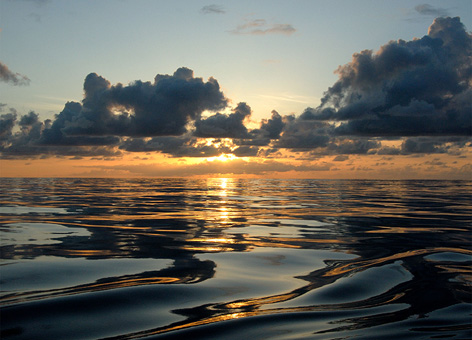
A sunset over the ocean viewed from Kure Atoll.
A sunset viewed from Kure Atoll, located near Midway Atoll in the Northwestern Hawaiian Islands. An atoll is an island of coral that encircles a lagoon partially or completely. (NOAA)
Node Weight: 
3

Pages

Subscribe to response.restoration.noaa.gov RSS