Back to top

Are You Ready for this Summer's Hurricane Season?

Short title: 
Are You Ready for this Summer's Hurricane Season?

JUNE 5, 2013 -- June is here, and with it comes the start of the 2013 Atlantic hurricane season.

Last week I was at a regional emergency response meeting in Addison, Texas, and sat next to Greg Pollock, Deputy Commissioner for the Texas General Land Office. During the meeting, Greg nudged my shoulder, showing me an email alerting him of the potential for Hurricane Barbara to cross from the Pacific Ocean into the Bay of Campeche—making it a potential threat to the Gulf of Mexico.

We were in the last week of May and threats to the Gulf of Mexico are rare this early. I hadn't even started my hurricane season routine of checking the NOAA National Hurricane Center's website every morning before even driving to my office at NOAA's Gulf of Mexico Disaster Response Center.

Following Greg's prompt, I went online and read the updated forecast from NOAA. Hurricane Barbara would impact southern Mexico but likely dissipate crossing it (which is exactly what happened to this tropical storm). At the time, the threat to the Gulf of Mexico was low, but still something to keep an eye on.

Ready to Help Before, During, and After a Disaster

On the front line is NOAA's National Weather Service, the trusted, round-the-clock source of information about severe weather threats. Emergency managers and the public alike depend on them to provide accurate and timely storm predictions and forecasts. I use their online information daily to stay up-to-speed on what storms may be developing for the Gulf of Mexico. The Disaster Response Center provides NOAA with additional support and coordination during natural and manmade disasters. We put our effort into being prepared to respond.

This year, NOAA predicts a worse-than-normal year for tropical storms. "Worse" is my personal way of stating the official forecast of a more-active-than-average or extremely active season, as predicted by NOAA's Climate Prediction Center. Yet, it only takes one storm to bring significant destruction to the coast. For example, in 1992, Hurricane Andrew, a category 5 hurricane, blew in during a less active tropical storm season and struck Florida and Louisiana. The result was 65 people killed (both directly and indirectly) and some $26 billion in damage, mostly in Florida. Only three other hurricanes in U.S. history have cost more in damages: Katrina (2005), Ike (2008), and Sandy (2012).

Living in or on the edge of the coastal zone in Louisiana and Alabama most of my life, I do not take hurricane season lightly. This weekend, I'll spend time checking on the status of my hurricane supplies (find out what you should have in your disaster supply kit) and ensuring my daughter, who attends college in New Orleans, has thought through her plans of when and where to evacuate should a storm threaten southeast Louisiana. Coming home to be with her dad in Mobile, Ala., may not be her best option. The many other NOAA emergency response staff and I likely would not be evacuating, but rather positioning ourselves and our resources to help with the consequences of a severe tropical storm or hurricane. Every year, we hope for the best and plan for the worst. We can't control nature, but we can control how prepared we are for what it throws at us.

Are You Prepared?

If you haven't made your hurricane preparedness plans yet, you shouldn't wait any longer now that the 2013 Atlantic hurricane season has officially started.

The National Hurricane Center recently hosted National Hurricane Preparedness Week, and their website has a wealth of resources to help you get ready for this summer’s hurricane season. You can also watch a NOAA video on how to increase your chances of surviving a hurricane and learn more about how to prepare for all types of hazards on the NOAAWatch website.

This is a post by OR&R's Charlie Henry, director of NOAA's Gulf of Mexico Disaster Response Center.
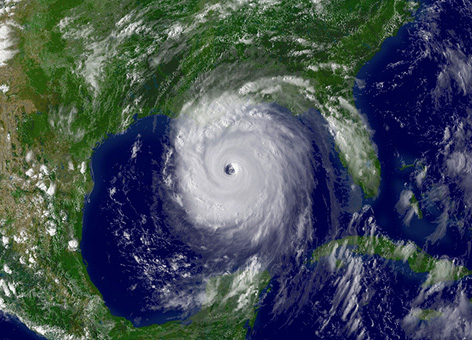
Hurricane Katrina before landfall as visible by satellite in the Gulf of Mexico
On August 28, 2005, Hurricane Katrina was in the Gulf of Mexico, where it powered up to a Category 5 storm on the Saffir-Simpson hurricane scale, packing winds estimated at 175 mph. (NOAA)
Node Weight: 
3

Help Us Plan Early Restoration for the Deepwater Horizon/BP Oil Spill

Short title: 
Help Us Plan Early Restoration for the Deepwater Horizon/BP Oil Spill

JUNE 4, 2013 — The federal agencies and states acting as natural resource trustees* have announced new opportunities for the public to engage in restoration planning for the Deepwater Horizon oil spill in the Gulf of Mexico. We plan to prepare a Programmatic Environmental Impact Statement, or PEIS, to evaluate the potential environmental effects of early restoration projects. We have initiated the public scoping process to assist in preparing the PEIS. The PEIS will include an evaluation of the potential effects of restoration types—and specific projects—proposed as part of future phases of early restoration. It will also look at the cumulative impacts of early restoration. Early restoration was initiated by the April 2011 $1 billion Framework Agreement with BP. Projects could include:

  • creating or improving wetlands.
  • restoring barrier islands and beaches.
  • restoring and protecting bird, fish, turtle and other wildlife habitat.
  • enhancing recreational experiences.

Read a list of the next phase of early restoration projects to be proposed. The development of the PEIS for early restoration begins with a public scoping period, from June 4 to August 2, 2013. The trustees will hold meetings—one in each of the Gulf states and one in Washington, DC. We are asking for public input on the scope, content, and any significant issues we should consider in developing the PEIS for early restoration. You can also comment on the PEIS for early restoration online, via e-mail, or by sending your comments to: U.S. Fish and Wildlife Service P.O. Box 2099 Fairhope, AL 36533 We initiated development of a comprehensive Gulf Spill Restoration PEIS in February 2011, and work on that PEIS is ongoing. The PEIS announced today is focused specifically and more narrowly on early restoration. Check back often for progress updates and to submit your own restoration project ideas. This story was originally posted on www.gulfspillrestoration.noaa.gov. *Editor's note: This statement originally included "Indian tribes" but no tribes are involved in this damage assessment case.

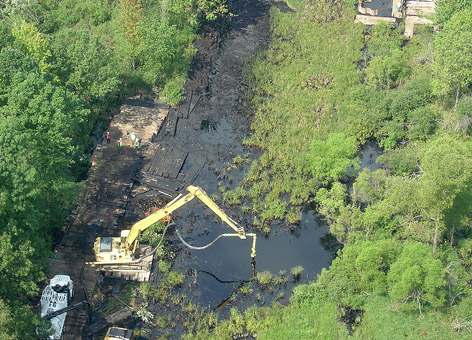
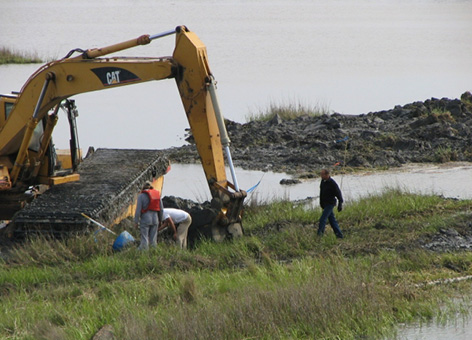
Workers and a crane restoring a wetland in Louisiana.
Restoring a wetland in Louisiana. (NOAA)
Node Weight: 
5

Taking a Closer Look at Marine Debris in Your Backyard

Short title: 
Taking a Closer Look at Marine Debris in Your Backyard

MAY 30, 2013 -- Check out NOAA's Marine Debris Blog for their ongoing series, Marine Debris in Your Backyard, which examines the unique challenges of marine debris and its impacts on various parts of the United States. Join them as they "journey across the nation, looking at the nine different regions the NOAA Marine Debris Program spans and the most common types of debris found in them, and how it may have ended up there." So far, they have visited the following places:

  • Alaska, where remote beaches, rough seas, and limited fair weather mean volunteers have only a few months each year to remove anywhere from one to 25 tons of debris per mile of shoreline.
  • Great Lakes, where 21 percent of the world's surface fresh water resides, discarded fishing lines often entangle wildlife, and rumors of a plastic-filled "garbage patch" are beginning to appear.
  • Pacific Islands, where Hawaii, Guam, American Samoa, the Commonwealth of the Northern Mariana Islands, and a whole lot of open ocean make up the largest region NOAA supports, but where there is so little space for landfills that NOAA helped establish a public-private partnership in Hawaii to turn abandoned fishing gear into a local electricity source.
  • California, where its 1,100 miles of shoreline vary from coastal mountains in the north to well-populated, sandy beaches in the south, and where the nation's first "Trash Policy" will attempt to control the flow of garbage in California's waterways.

Stay tuned as they continue working their way around the shores of the United States, and ask yourself, what does marine debris look like where you live? How do you help keep it out of the ocean? And remember, even if you live hundreds of miles from a beach, a piece of litter such as a cigarette butt (which actually contains plastic) or a plastic bag can still make its way through storm drains and rivers to the ocean. This makes marine debris, no matter where you live, truly everyone's problem.

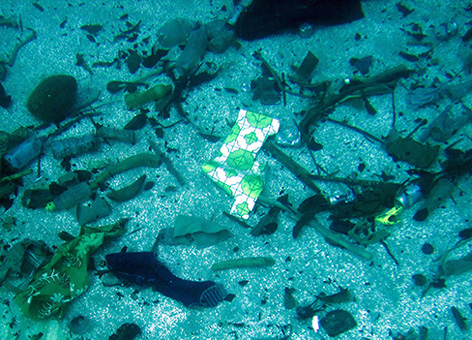
Debris scattered on the ocean floor near the Pacific Islands.
Here's hoping your backyard doesn't look like this: debris scattered on the ocean floor near the Pacific Islands. (NOAA)
Node Weight: 
4

Renewal Ahead for Delaware River, Newest Site of Urban Waters Federal Partnership Program

Short title: 
Renewal Ahead for Delaware River, Newest Site of Urban Waters Federal Partnership Program

A Partnership to Reclaim the River

Yet, the outlook for this river appears hopeful. The Delaware River and the land around it, which includes the greater Philadelphia area, is one of 11 places across the U.S. recently welcomed into the Urban Waters Federal Partnership. In order to restore degraded waterfronts and to revitalize economically depressed areas along the river, this partnership will join forces with state, regional, and local organizations to address economic and environmental problems along the river through Philadelphia. NOAA is one of the federal partners coordinating this effort and Office of Response and Restoration staff in the area will be working to ensure the program's success.

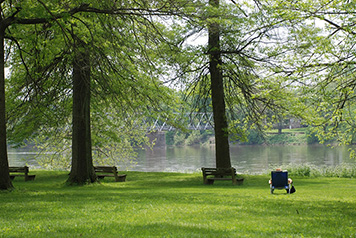
Person in lawn chair at Washington Crossing State Park, north of Philadelphia.
Washington Crossing State Park, north of Philadelphia. (Creative Commons, Nancy Dowd, Rights reserved)

The Urban Waters Federal Partnership furthers the work of other national efforts, such as the Partnership for Sustainable Communities and America's Great Outdoors Initiative. This partnership focuses on a broad range of projects that will protect community investments while also improving erosion and flood control, water quality, economic and environmental health, and access to waterways. One of the specific ways the partnership and NOAA will benefit the region is by supporting the Camden County Municipal Authority's development of Phoenix Park, a community park along the Delaware. This project will involve waterfront and shoreline restoration and will be the centerpiece of a larger project to restore the Camden waterfront. Meanwhile, in Wilmington, the partnership will be able to offer additional support for Fox Point State Park, a relatively new public area created on a former Brownfield property. On another front, NOAA, the National Park Service, and the U.S. Forest Service will lead an Urban Waters Federal Partnership effort to address remaining water quality issues in the river. These problems stem from a history of habitat loss from past dredging and filling on the shoreline, underutilized and contaminated waterfront property, failing infrastructure (including sewers), and threats from climate change. A compelling reason for dealing with these issues is that several species of fish that were caught commercially and recreationally in the urban part of the Delaware River are threatened, such as Atlantic and shortnose sturgeon, shad and river herring, and eel. Furthermore, the Urban Waters Federal Partnership projects will focus on reconnecting underserved communities to their waterfronts.

A History of Restoration

These efforts will complement NOAA's longstanding efforts to clean up and restore the Delaware River from the impacts of oil spills and hazardous waste sites. You can view a map (click to zoom to Delaware) depicting the more than a dozen sites that NOAA is actively working on along the Delaware River and its tributaries. The NOAA Restoration Atlas has additional information about restoration projects in the region that NOAA has helped to support.

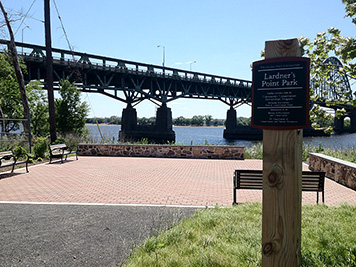
Lardner’s Point features a clean and welcoming waterfront public park, with newly restored shorelines.
Once a bustling ferry terminal on the Delaware River during the industrial revolution, Lardner's Point had fallen into disrepair over the years. Then, in 2004, a tanker released more than 265,000 gallons of oil into the Delaware, exposing this area and hundreds of other miles of shoreline to spilled crude oil. Today, Lardner’s Point features a clean and welcoming waterfront public park, with newly restored shorelines. (NOAA)

One notable example, among many, is Lardner's Point, a newly established waterfront park in Philadelphia, which NOAA, the Urban Waters Federal Partnership, and the Delaware River City Corporation have helped transform from a disused, concrete blight to a vibrant, natural gem. The restored shoreline there is the foundation for continuing revitalization along the central and northern Philadelphia waterfront, as well as community renewal efforts in Chester, Penn., around the Commodore Barry Bridge Diverse activities and communities along the Delaware River make clear its importance and value to the people who live near it. Visible from Philadelphia's major bridges to New Jersey, the Port of Philadelphia is one of the largest freshwater ports in the world, and it shares the urban riverfront with parks and recreational areas. To the north, along the banks of historic towns such as New Hope, Penn., and Lambertville and Stockton, N.J., favorite river activities include fishing, rafting, tubing, and canoeing. Even further north, the Delaware is classified as a National Wild and Scenic River. While to the south, the Delaware Bayshore is home to swimming, boating, and commercial fishing. But for too long, the urban populations along the Delaware River have had limited opportunities to enjoy the river right where they live and work. Fortunately, that is changing. NOAA and the Urban Waters Federal Partnership are building on that momentum, aiming to return to the area and its people the renewed benefits of a healthy, accessible river—one that they can be proud to claim again as their own. Creative Commons photos used under an Attribution-NonCommercial-NoDerivs 2.0 Generic License.

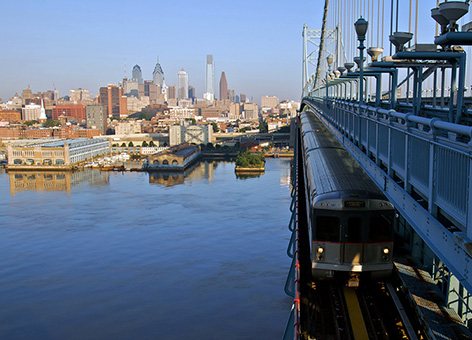
A train crossing over the Delaware River on the Benjamin Franklin Bridge.
A train crossing over the Delaware River on the Benjamin Franklin Bridge from Philadelphia, Penn., to Camden, N.J. (Creative Commons, Bob Snyder, Rights reserved)
A painting of George Washington and his troops crossing the Delaware River.
George Washington crosses the Delaware River, a turning point in the Revolutionary War. (Public Domain, Emanuel Leutze)
Node Weight: 
4

NOAA Report Identifies Shipwrecks with the Potential to Pollute

Short title: 
Finding Wrecks with the Potential to Pollute

MAY 22, 2013 -- The threat of oil spills from historic shipwrecks only occasionally comes to the public's attention. A few notable examples include the S/S Edmund Fitzgerald in the Great Lakes and the S/S Montebello off southern California. But we know that these wrecks are just the tip of a much larger iceberg.

The past century of commerce and warfare has dotted U.S. waters with shipwrecks, many of which have never been surveyed.

Since 2010, NOAA's Office of Response and Restoration and Office of National Marine Sanctuaries, working with the U.S. Coast Guard, have been systematically looking at which of these wrecks might pose a substantial threat of leaking oil still on board. This work is part of NOAA's Remediation of Underwater Legacy Environmental Threats (RULET) project.

We used a tiered approach to develop an initial priority list of vessels for risk assessment. This process narrowed down the estimated 20,000 vessels in U.S. waters to 573 that met the initial criteria. The ships had to be over 1,000 gross tons (making them about 200 feet or longer), built to carry or use oil as fuel, and made of a durable material such as steel.

Additional research revealed the actual number posing a substantial pollution threat was lower because of the violent nature in which some ships sank (many were lost in World War II). This is because, for example, a ship hit and sunk by torpedoes would be less likely to still have intact tanks of oil. And other vessels were taken off our radar because they have fallen apart or were demolished because they were navigational hazards.

We also used computer models to predict the environmental and economic consequences of oil spills from these vessels. Those results then helped us sort out which wrecks might pose the biggest risks.

On May 20, we released both an overall report describing this work and our recommendations and 87 individual wreck assessments. The individual risk assessments highlight not only concerns about potential ecological and socio-economic impacts, but they also characterize most of the vessels as being historically significant. In addition, many of them are grave sites, both civilian and military.

The national report and the 87 risk assessments are available at https://sanctuaries.noaa.gov/protect/ppw/.

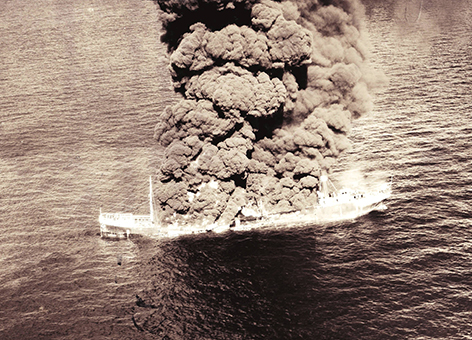
1942 photograph of the location of the burning tanker Potrero del Llano.
On May 14, 1942, the U.S. Army Air Corps photographed the location of the burning tanker Potrero del Llano. (National Archives)
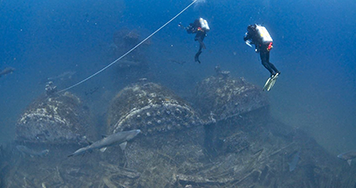
Divers and sharks swim around the shipwreck site of the Dixie Arrow.
Understanding how a shipwreck site formed helps explain why vessels, like the Dixie Arrow which initially carried approximately 86,136 barrels of crude oil, but was demolished during World War II, no longer remain intact and are no longer potentially polluting shipwrecks. (NOAA)
Node Weight: 
4

Over a Century after Texas Strikes Oil, Marsh Restoration Completed for an Old Refinery's Pollution

Short title: 
Over a Century after Texas Strikes Oil, Marsh Restoration Completed for an Old Refinery's Pollution

Oil Boom not Necessarily a Boon

With the oil boom came a number of hazardous substances to the former Gulf Oil refinery site and its surrounding areas. Historically, the refinery produced jet fuel, gasoline, petrochemicals, and a variety of other oil and chemical products. But this took a toll on the site's soil, water, and aquatic habitats. Ecological risk assessment studies led by the state of Texas have revealed the presence of polycyclic aromatic hydrocarbons (PAHs, a toxic component of oil), lead, zinc, nickel, cadmium, copper, and more in the water and sediment on the site. In 2004, NOAA, U.S. Fish and Wildlife Service, and the Texas natural resource trustees, working cooperatively with Chevron, determined that the public was owed ecological restoration for the contaminated surface water, soil, and sediments at the former Gulf Oil refinery [PDF]. Our assessment showed that we could accomplish this by constructing 83 acres of tidal wetland and 30 acres of coastal wet prairie and improving 1,332 acres of coastal wetlands via new water control structures in the Sabine Lake/Neches River basin. Based on this information, the natural resource trustees negotiated with Chevron (which assumed the legal responsibility of the former Gulf Oil site) a $4.4 million settlement of state and federal natural resource damage claims related to the site. This money would go toward implementing the environmental restoration. The settlement included three projects meant to restore coastal habitat to compensate the public for natural resources lost or injured by historical contamination from the refinery. Two of the projects involved restoring a natural hydrology to coastal wetlands by installing water flow enhancement structures and berms. The third project aimed to create intertidal estuarine marsh and coastal wet prairie by using nearby dredge material. These projects were a significant undertaking for Chevron and their contractors. They involved several different restoration techniques, some of which had to be modified in the middle of construction to adapt to changes in the field.

Building Marsh out of Mud Pancakes

In 2002, Chevron set up a pilot project to determine the feasibility of constructing marsh habitat by placing local dredge material into open-water habitat. The resulting constructed marsh terrace was able to maintain the necessary elevation for native marsh vegetation to take root.

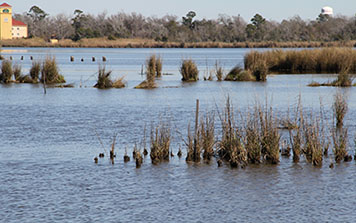
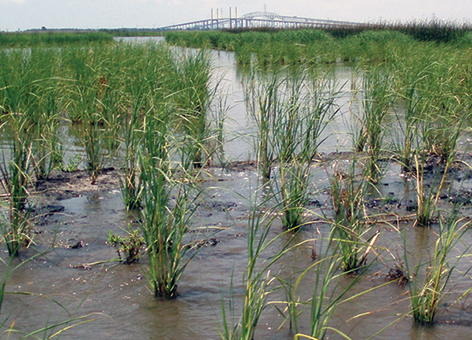
Clumps of planted marsh grass in restored estuarine marsh, looking towards Bridge City.
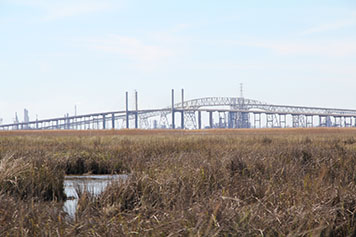
Clumps of planted marsh grass in restored estuarine marsh, looking towards Bridge City. February 1, 2013 (NOAA/National Marine Fisheries Service/Jamie Schubert)

Based on the successful pilot, the full-scale project for building marsh planned to mix dredge material with water, forming slurry that could then be pumped into open water to form mounds and terraces. Once they reached the suitable elevation, the mounds and terraces would later be planted with native marsh grasses. On the other hand, the coastal wet prairie would be constructed by removing dredged sediment to lower the elevation and make it suitable for supporting vegetation found in that habitat type. Full-scale construction for the projects kicked off in 2007. This timeline was pushed back a few years from the pilot project because in 2005 Hurricanes Katrina and Rita increased demand for the heavy equipment used in the marsh environment and also damaged habitat and vegetation at the project site.

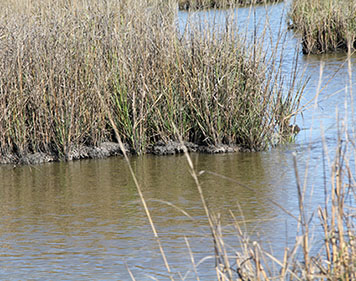
Established estuarine marsh in the Old River South marsh complex. Note the elevated mounds of mud beneath the marsh grass.
Established estuarine marsh in the Old River South marsh complex. Note the elevated mounds of mud beneath the marsh grass. (NOAA/National Marine Fisheries Service/Jamie Schubert)

Another challenge came after Chevron pumped the dredged sediments into the open water to create marsh mounds. Unlike during the pilot project, when the pumped-in sediment stacked well, the sediment used in the marsh construction spread out and formed pancakes instead of the desired mounds. To prevent the sediment from spreading, the restoration team tried changing the pump's spout, but spraying the dredge slurry into mounds was still a challenge. The mounds became mudflats. Changing the construction technique again, they next pumped in dredged sediments and then excavated mounds and terraces. This technique had greater success, but in the end, it was still necessary to pump in additional sediment to some areas to achieve the necessary elevations. Because the team was using so much more dredge material than originally planned, they had to find an alternative sediment source from a nearby canal. If they continued taking sediment from the original source, they would have risked lowering the elevation of the area, which was adjacent to the coastal wet prairie and could affect its hydrology.

View of Rainbow Bridge from restored estuarine marsh.
View of Rainbow Bridge from restored estuarine marsh. (NOAA/National Marine Fisheries Service/Jamie Schubert)

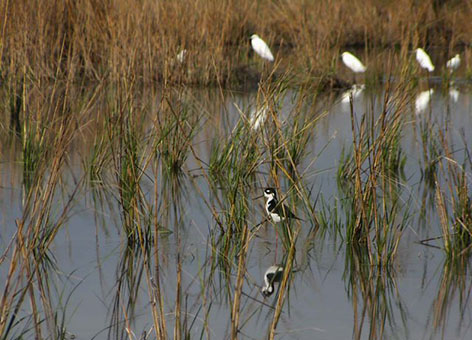
Despite a number of setbacks, the restoration projects were finished in 2009 and after a monitoring period, the trustees certified them as successfully completed in February of 2013. These projects will improve the fish and shellfish abundance in this part of southeast Texas, provide habitat for wildlife and fish, increase recreational opportunities for bird watching and fishing, and improve the habitat for waterfowl (a benefit for hunters). The area is also highly visible for anyone driving south through the Beaumont-Port Arthur area. Just look out your window as you cross the Neches River and you'll see the marsh mounds, coastal wet prairie, and maybe even a few Snowy Egrets on display.

A black-necked Stilt and Snowy Egrets in the restored wetland habitat.
A black-necked Stilt and Snowy Egrets in the restored wetland habitat. (Photo provided courtesy of Chevron.)
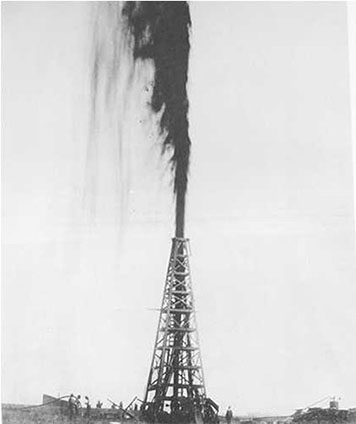
An oil derrick shoots oil 100 feet in the air at Spindletop Hill in 1910.
On January 10, 1910, the famous Lucas gusher, named after the persistent oil explorer who drilled the well, struck oil at Spindletop Hill in a geyser that launched more than 100 feet in the air for nine days. This kicked off the Texas oil boom and was the impetus for opening the nearby Gulf Oil Company refinery. (John Trost)
Node Weight: 
5

Is There a Garbage Patch in the Great Lakes?

Short title: 
Is There a Garbage Patch in the Great Lakes?

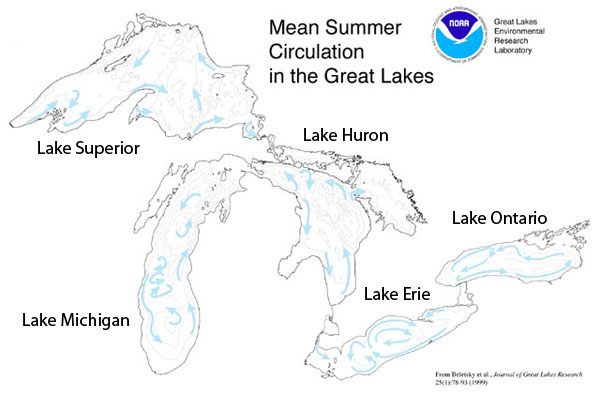
MAY 16, 2013 -- The "Great Pacific Garbage Patch"—a purported island of trash twice the size of Texas floating in the Pacific Ocean—receives a lot of media attention. Recent reports suggest that a similar garbage patch may be developing in the Great Lakes as well. However, based on research we know that the name "garbage patch" is misleading and that there is no island of trash forming in the middle of the ocean. We also know that there is no blanket of marine trash that is visible using current satellite or aerial photography. Yet, there are places in the ocean where currents bring together lots and lots of floatable materials, such as plastics and other trash. While the types of litter gathering in these areas can vary greatly, from derelict fishing nets to balloons, the kind that is capturing the most attention right now are microplastics. These are small bits of plastic often not immediately evident to the naked eye. While we know about the so-called "garbage patches" in the Pacific Ocean, could there be a similar phenomenon in other parts of the world, including the Great Lakes? Recent research on the distribution of plastics in the Great Lakes has people now asking that very question. The Great Lakes are no mere group of puddles. They contain nearly 20% of the world's surface freshwater and have a coastline longer than the East Coast of the United States. Within the Great Lakes system, water flows from Lake Superior and Lake Michigan, the lakes furthest west and highest in elevation, east into Lake Huron. From there, it travels through Lake St. Clair and the Detroit River into Lake Erie. Then, some 6 million cubic feet of water pass over Niagara Falls each minute and into Lake Ontario before flowing through the St. Lawrence River and into the Atlantic Ocean. This water flow influences circulation patterns within and between each of the lakes. Currents within the Great Lakes also are powered by wind, waves, energy from the sun, water density differences, the shape of the lakebed, and the shoreline. These circulation currents have the tendency to create aggregations of garbage and debris in certain areas, just like in the oceans. But, just as in the Pacific Ocean, this doesn’t mean the Great Lakes have floating trash islands either.

Map of average summer water circulation patterns in the Great Lakes.
Average summer water circulation patterns in the Great Lakes. Beletsky et al. 1999 (NOAA Great Lakes Environmental Research Laboratory)

In an effort to better identify and understand how plastic debris is spread throughout the Great Lakes, researchers at the University of Waterloo in Canada have partnered with COM DEV on an exploratory research project. COM DEV is a designer and manufacturer of space and remote sensing technology. Researchers are working with this industry partner to develop and test the ability of different remote sensors to detect plastics in the Great Lakes. If they find the task is feasible and the trial runs prove to be effective, this work could be applied beyond the Great Lakes and across the United States. The NOAA Marine Debris Program, part of the Office of Response and Restoration, is engaged with and following the project. We plan to participate in the next steps of this promising effort. You can learn more about the project and a related workshop on plastic pollution in the Great Lakes.

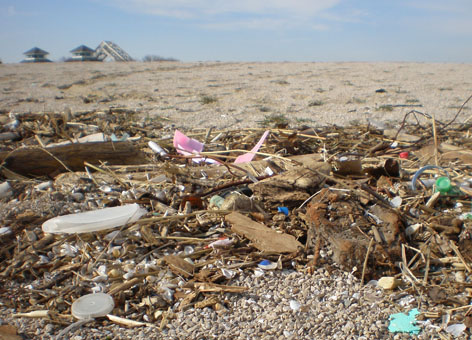
Plastic debris washed up at Maumee Bay State Park on the shores of Lake Erie.
Plastic debris in the form of fragments, bottle caps, food packaging, and smoking products are commonly found on Great Lake beaches. Here, marine debris has washed up at Maumee Bay State Park on the shores of Lake Erie. (NOAA Marine Debris Program)
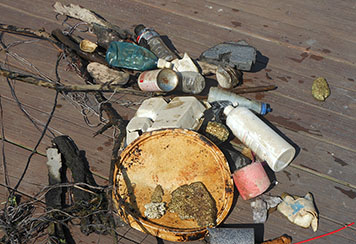
Plastic debris pulled from a Lake Erie marina during a cleanup.
Plastic debris is found in Great Lake waters as well. This debris was pulled from a Lake Erie marina during a cleanup. (NOAA Marine Debris Program)
Node Weight: 
4

Behind the Budget: A Look Ahead for NOAA's Office of Response and Restoration

Short title: 
Behind the Budget: A Look Ahead for NOAA's Office of Response and Restoration

MAY 14, 2013 -- Here, we take a peek into the world of science policy (and the budgets that make it possible) as we hear from Dave Westerholm, director of NOAA's Office of Response and Restoration, about what we can expect as a starting point for this office in the next fiscal year. The White House recently released the President's Budget for Fiscal Year 2014. This budget offers several exciting opportunities for research, development, and growth in response and restoration activities at NOAA. The budget contains close to $4 million in increases for the Office of Response and Restoration (OR&R). I am very proud of the work we do every day at OR&R and am very grateful for all the support that enables this work. In the last year we responded to 139 environmental incidents, including Hurricane Sandy, generated over $800,000 for restoration through the natural resource damage assessment process, opened NOAA's new Gulf of Mexico Disaster Response Center, and saw passage of the Marine Debris Act Amendments of 2012 (which expanded the scope of our office to deal specifically with large amounts of natural disaster debris). While meeting the needs of those critical issues, we have continued to support the ongoing response and damage assessment for the Deepwater Horizon/BP oil spill, looked forward to address emerging challenges in the U.S. Arctic by launching an Environmental Response Management Application (ERMA) online mapping tool for the Arctic region and contributed our expertise to interagency planning and preparedness in support of ongoing energy exploration in the Arctic. I am eager to show you what OR&R can do with the latest budget from the President that will build upon our recent achievements: The fiscal year 2014 budget proposes a $2 million increase for Natural Resource Damage Assessment to increase technical, strategic, and legal support so we can more quickly move more oil spill and hazardous waste site cases toward settlement and support the restoration process. We anticipate that this increase will more than pay for itself in settlement funds recovered from responsible parties and deliver significant return on investment for the American public. There is an increase of $1 million for the NOAA Marine Debris Program to fund a variety of programs and efforts to reduce and prevent the impacts of marine debris. This includes funding for:

  • research programs and academic institutions with demonstrated expertise in the economic impacts of marine debris.
  • alternatives to fishing gear that pose potential marine threats.
  • enhanced tracking, recovery, and identification of lost and discarded fishing gear.
  • efforts to reduce the amount of baseline debris from ocean and non-ocean based sources.

Additionally, the Marine Debris Program's regional marine debris coordination program will receive a funding increase to enhance regional efforts and develop response plans for states in the Northeast, Southeast, and Gulf of Mexico as described under the Marine Debris Act. These plans will help federal, state, and local authorities plan and prepare for the next major marine debris cleanup event, for example, a hurricane. This budget also proposes funding increases for emergency response preparedness in the Arctic and Gulf of Mexico and for our innovative ERMA tool to transition to a cloud computing platform. These funds will allow OR&R to improve our services through participation in more regional response exercises with governmental and private partners and enhance scientific support for the Arctic through increased direct engagement with Arctic communities. I invite you to review the NOAA Fiscal Year 2014 Budget Summary [PDF] for more detailed information on all of NOAA's proposed activities in the President's budget. Each budgetary increase provides a significant opportunity to build NOAA's capacity to assess future oil and chemical spill impacts, plan for increased maritime activity in the Arctic, and expand our scientific and tactical capabilities using state-of-the-art information management. The budget also will help NOAA to develop capabilities that will lead to more effective strategies to prevent and mitigate the effects of marine debris. I hope to work with our office's many partners and supporters in the coming months to ensure OR&R's capacity will continue to meet the rising tide of ocean and coastal challenges to protect lives, property, and the environment and to keep commerce moving. Dave Westerholm currently serves as the Director of NOAA's Office of Response and Restoration. Prior to NOAA, he had several years of corporate experience as both Senior Operations Director and Vice President for Maritime Security, Policy and Communications for Anteon Corporation and then General Dynamics. He is a retired Coast Guard Captain with over 27 years of experience in a variety of fields including maritime safety, port security, and environmental protection.

Wetland grasses replanted in Texas.
Wetland grasses replanted in Texas after a successful damage assessment and restoration process. (NOAA/National Marine Fisheries Service/Jamie Schubert)
Node Weight: 
4

Back to the Shore after Hurricane Sandy

Short title: 
Back to the Shore after Hurricane Sandy
Two boys take a break on the beach in Ocean City, Maryland.
Two boys take a break on the beach in Ocean City, Md., during the summer of 2012, before Hurricane Sandy. (Glenda Powell/all rights reserved)
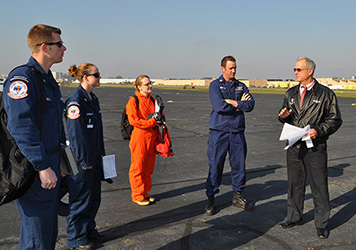
A pollution response team stands outside a helicopter.
A response team formed by the Hurricane Sandy Pollution Response Unified Command prior to an overflight during which the U.S. Coast Guard worked with NOAA to map areas of possible pollution threats in New York and New Jersey. LTJG Alice Drury of OR&R is in the middle of the group. (U.S. Coast Guard)
Node Weight: 
5

Small Boat Confirmed as First Japan Tsunami Debris to Reach California

Short title: 
Small Boat Confirmed as First Japan Tsunami Debris to Reach California

APRIL 26, 2013 — The Consulate General of Japan in San Francisco has confirmed to NOAA that a 20-foot-long skiff found near Crescent City, Calif., is the first verified piece of Japan tsunami debris to turn up in California. Crescent City, a coastal town surrounded by redwoods, is only a twenty-mile drive from Oregon down the iconic, coastal Highway 101.

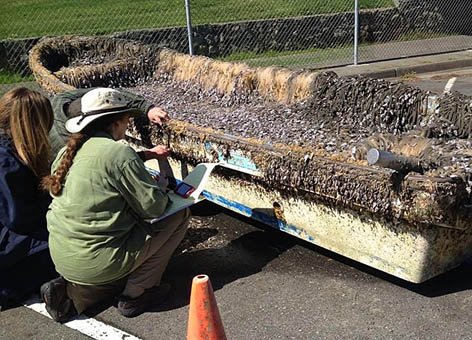
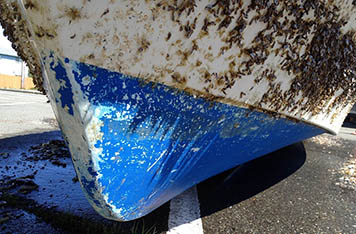
Once the skiff was found, the U.S. Coast Guard and the local sheriff’s office worked quickly to remove it from the shoreline. Help translating the Japanese writing on it came from further down the coast, from staff at California's Humboldt State University. They traced the skiff to Takata High School, located in Japan's Iwate Prefecture, an area devastated by the March 2011 earthquake and tsunami. A teacher from the school reportedly identified the vessel as belonging to them, which the Japanese Consulate has now confirmed. To date, 26 other marine debris items with a confirmed connection to the 2011 tsunami have washed up in Oregon, Washington, Hawaii, Alaska, and Canada's British Columbia. And like so many of them, the small, flat-bottomed boat that washed up in California was thick with gooseneck barnacles, a common and widespread filter feeder that attaches itself to floating objects in the open ocean.

While unusual-looking, these barnacles are not invasive and have a fascinating historical myth purporting that a type of goose developed from gooseneck barnacles because they had similar colors and shapes (a typical-if-faulty basis for classifying life in earlier eras). However, the influx of sea creatures aboard tsunami marine debris also brings the concern that aquatic species hitching a ride to North America may make themselves at home, possibly to the detriment of marine life and commerce communities here in the United States.

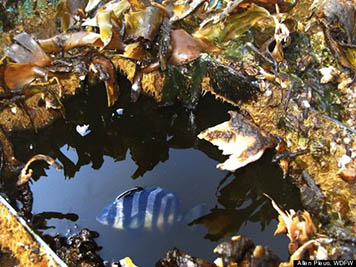
A submerged compartment in the back of the Japanese boat that washed up in Long Beach, Wash., provided a refuge for five striped beakfish
A submerged compartment in the back of the Japanese boat that washed up in Long Beach, Wash., provided a refuge for five striped beakfish. (Washington Department of Fish and Wildlife/Allen Pleus)

This issue was highlighted in the unusual case of another small Japanese boat lost in the 2011 tsunami. The Sai-shou-maru came ashore near Long Beach, Wash., on March 22, 2013, but the inside of it looked like a miniature aquarium. Five live fish were swimming about in a submerged compartment at the back of the boat. They were striped beakfish, a species native to coral reefs mainly in Japanese waters, sometimes found in Hawaii, but certainly not in the cold waters of the Pacific Northwest coast.

According to the Washington State Department of Ecology website, "Besides the five striped beakfish found in the open well of the boat when it washed ashore, the Washington Department of Fish and Wildlife estimates 30 to 50 species of plants and animals were also on the Sai-shou-maru—including potential invasive species. State officials quickly removed the Sai-shou-maru from the beach and collected samples of potential invasive species including the fish, algae, anemones, crabs, marine worms and shellfish." However, most of the species arriving on marine debris are not invasive—even if they are hitchhikers. Keep up with NOAA's latest efforts surrounding the issue of Japan tsunami marine debris at marinedebris.noaa.gov/tsunamidebris.

People examining the barnacle-covered skiff from Japan.
Examining the Japanese skiff that washed up near Crescent City, Calif., on April 7, 2013. This is the first verified item from the Japan tsunami to appear in California. (Redwood Coast Tsunami Working Group)
A close up of the boat's hull reveals the many small gooseneck barnacles.
A close up of the boat's hull reveals the many small gooseneck barnacles, a common open-ocean species. (Redwood Coast Tsunami Working Group)
Node Weight: 
4

Wildlife Webcams Bring NOAA Restoration Projects Live to You

Short title: 
Wildlife Webcams Show NOAA Restoration

Watch Bald Eagles Live

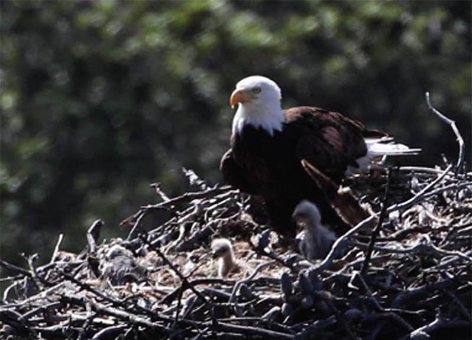
What is cute and cuddly and has wings? You guessed it ... a Bald Eagle chick. What is even better is that you can watch these adorable birds on live webcams that are placed near Bald Eagle nests located on Catalina and Santa Cruz Islands in the California Channel Islands right now. Viewers can watch daily as both male and female adults attend to their chicks by feeding them and keeping them warm. One of the most popular nests to watch is the West End nest on Catalina Island that has triplets for the third year in a row.

For eagle enthusiasts, there is a Channel Islands Eaglecam discussion forum where you can post or read daily nest observations, chat with other enthusiasts, or read updates from the Bald Eagle restoration team. With over 1 million hits each year, the Bald Eagle webcams have captivated audiences all over the world from January to June as these regal birds raise their young.

Diving with the Fish

If you are more interested in what lurks beneath the ocean then you should check out the live fish webcam that is broadcast from Talbert Marsh in the Huntington Beach wetlands. Since the fish webcam has been live, we have observed over 20 species of fish, diving seabirds, an octopus, nudibranchs (colorful sea slugs), and numerous other cool invertebrates. We have also seen fish spawning events, territorial displays of fish, and even sharks. If you want to let us know what you have seen on our webcam, you can fill out our online fish webcam observation sheet.

In case our solar-powered camera is down, you can check out this 10 minute clip recorded from the webcam for a snapshot of what you might normally see. The eelgrass swaying side to side is mesmerizing and you can always catch a glimpse of a fish when you log onto the fish webcam. Test your fish identification skills now! This is a post by Gabrielle Dorr, NOAA/Montrose Settlements Restoration Program Outreach Coordinator.

Bald Eagle adult and chicks in the Pelican Harbor nest on Santa Cruz Island.
A photo of a Bald Eagle adult and chicks in the Pelican Harbor nest on Santa Cruz Island. (Photo Credit: Kevin White, Full Frame Productions/Rights reserved)
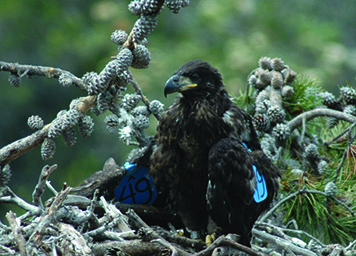
A photo of Bald Eagle A-49, also known as "Princess Cruz," in her nest.
A photo of A-49, also known as "Princess Cruz," in her nest on Santa Cruz Island. She was the first Bald Eagle chick hatched naturally on California’s Santa Cruz Island in over 50 years. (Photo Credit: Peter Sharpe, Institute for Wildlife Studies)
Node Weight: 
3

Sightings of Japan Tsunami Marine Debris

Where is debris from the March 2011 tsunami in Japan washing ashore in the United States? Watch this brief video describing NOAA's efforts to track and monitor reports of debris related to the Japan tsunami.

Video Embed Code: 

Node Weight: 
1
Resources: 

What Do We Know About Transporting Oil Sands in the United States?

Short title: 
What Do We Know About Transporting Oil Sands in the United States?

This is a guest post by University of Washington graduate students Robin Fay, Terry Sullivan, Shanese Crosby, Jeffrey Smith, Ali Kani, and Colin Groark.

APRIL 23, 2013 — Over the past 6 months, our research team has been gathering data and interpreting information to help NOAA's Office and Response and Restoration (OR&R) better prepare for a potential spill of Canadian oil sands product in U.S. waters. (Oil sands are also known as tar sands.)

Our research has sought to provide OR&R, whose experts offer scientific support in case of a marine or coastal oil spill, with:

  • Background and context on oil sands development and transport.
  • In-depth research on the physical properties of oil sands products, national transportation networks, and emerging risks.
  • Analysis of the existing information and policy gaps, and some recommendations aimed at improving pollution response readiness in the event of an oil sands spill.

In doing so, we have worked to answer some key research questions, which we developed with the OR&R and other stakeholders (e.g., Washington State Department of Ecology), including:

  • Would oil sands products sink or float when spilled in salt water? What about fresh water?
  • How might oils sands products weather and change their physical and chemical characteristics once spilled into the environment?
  • How and where are oil sands products already being transported around the U.S. and Washington’s Puget Sound?
  • What are the future plans for expanding the national transportation network for oil sands products?

Our research took us into the technical depths of petroleum chemistry, state-of-the-art oil spill response technology, federal and state regulations, human and environmental health implications, and several types of transportation networks. From early on, it was clear to us just what a complex and far-reaching issue oils sands development really is. In some cases, trying to find answers just led to more questions. Although there are still many things we don’t know for sure and further research is needed, we ultimately were able to get closer to understanding the unique risks and challenges oils sands products pose to pollution responders and the environments they work to protect.

Here are our top five research findings:

  1. All oil sands products are not created equal. They are not homogenous and are not easily categorized by any particular set of characteristics. Their composition and physical properties can vary widely based on many factors, including: what region the product originated from, what chemicals or substances it has been blended with, and how much processing or upgrading it has gone through prior to transport. This means that anticipating appropriate response action for a diverse array of products labeled as “oil sands” is somewhat of a moving target.
     
  2. Very little is known about how oil sands products might weather (or change) in the environment. Some studies have been done on this topic[1], but they have typically tested one or two specific oil sands products in a laboratory setting. Their results cannot be presumed to represent the full range of possible weathering scenarios (e.g., the varying influence of waves, sunlight, wind, etc). Understanding how an oil changes as it weathers in the environment is critical to planning and executing an effective spill response.
     
  3. The United States already receives almost 1.4 million barrels per day of oil sands products from Canada. This oil is transported all over the country by pipeline, rail, tanker ship, and barge. Although the proposed Keystone XL pipeline project is certainly the most visible oil sands infrastructure expansion project currently in the works, it is far from the only one. Many other pipeline expansion and terminal projects have been proposed—such as the Trans Mountain and Northern Gateway expansions proposed by Kinder Morgan and Enbridge—which would bring Alberta oil into Western Canada and even as far as Cherry Point and Anacortes, Wash. If completed, they could more than double the capacity to transport oil sands products into the U.S.
     
  4. While pipeline projects—like the Keystone XL—have met fierce resistance from environmental groups, tribes, and others concerned about the risks these projects might present to their communities, the oil industry already has begun (without fanfare) to use rail for transporting oil sands products instead. Because the network of rail lines already exists, and the regulatory framework governing oil transport by rail is less developed, this segment of their transportation has been expanding rapidly. The full extent of current and planned oil sands transport by rail is unknown.
     
  5. During our assessments, we found critical gaps in the current oversight, rules and regulations, contingency planning requirements, and response capacity to address the increasing transport of oil sands products. In order for regulators and responders to address effectively the emerging risks associated with oil sands products, these gaps must be addressed. Response equipment needs to be developed that is proven to be effective at detecting, containing, and removing oil sands products from the environment. Disclosure requirements for those processing and transporting oil sands products need to be improved so that regulatory agencies can better understand where and how to prioritize their efforts. Additionally, oversight, risk assessment, and contingency planning should be enhanced to take into account the increasing possibility of a spill of oil sands product. This need and the lack of adequate response capacity for oil sands products have been highlighted by the recent spills in Minnesota and Arkansas.

That’s a tall order, and unlikely to happen overnight. But there is some good news. Locally in Washington state, the Washington State Department of Ecology and U.S. Coast Guard in Sector Puget Sound have been pioneers. They are already working to improve their ability to prevent, plan for, and respond to an oil sands product spill. Last December, a conference in Portland, Maine, brought experts together from across the U.S. and Canada to discuss oil sands, and a similar conference recently was held in Seattle on April 16.

Stakeholders and policy makers we spoke with on both coasts, in the Great Lakes region, and in Canada have all begun to consider how increased oil sands development affects their region or function. Oil sands slowly are beginning to appear with greater prominence on the agenda for decision makers, not just for a particular state or project, but as an issue that spans political and geographic boundaries. If oil sands development and transportation continues to receive more and more attention, we hope it will also receive the oversight and response resources necessary to address sufficiently the risks that come with it.

Response operations near the source of the oil sands spill on Talmadge Creek.
Response operations near the source of the oil sands spill on Talmadge Creek near Michigan's Kalamazoo River. August 1, 2010 (U.S. Environmental Protection Agency)
Node Weight: 
4

NOAA Hosts Forum Exploring Oil Sands and the Challenges of When They Spill

Short title: 
NOAA Hosts Forum Exploring Oil Sands and the Challenges of When They Spill

APRIL 23, 2013 — Unless there is a big spill or accident, most people probably don't think much about different types of crude oil, where it comes from, or how it is transported.

Yet there is an ongoing national debate about Canada's Alberta oil sands and whether to complete the Keystone XL pipeline that would carry Alberta oil sands products to refineries in the U.S. Gulf Coast. This proposed pipeline has gotten a lot of attention, but there are existing pipelines carrying oil sands products around Canada and across the border into the U.S., as well as tanker, barge, and rail operations doing the same.

The Exxon Pegasus pipeline spill in Mayflower, Ark., on March 29, 2013, was a reminder that oil sands are already being transported and, whenever oil is transported, there is risk of a spill.

Oil sands are considered an unconventional oil type that has been growing in prominence as oil prices fluctuate and production technologies improve. As a result, there are many questions about how best to respond to spills of crude oil products derived from oil sands. One of the major concerns is the buoyancy of oil sands products, and their potential to sink, especially in sediment-laden waters. The U.S. Environmental Protection Agency is still cleaning up submerged oil from the July 2010 Enbridge pipeline spill in Michigan's Kalamazoo River.

On April 16–17, NOAA's Office of Response and Restoration participated in an Oil Sands Products Forum held at NOAA's Western Regional Center in Seattle, Wash. The forum was sponsored by the Washington State Department of Ecology Spills Program, U.S. Coast Guard, and the Pacific States/British Columbia Oil Spill Task Force. The University of New Hampshire Center for Spills in the Environment facilitated the forum.

The two-day meeting included a full day of presentations and discussions about oil sands (also known as tar sands or bitumen) and their related products—covering everything from extraction, refining, and transportation to chemistry, how they move and react in the environment, and recent case studies of spill responses. Over 50 environmental specialists, oil spill planners, and responders attended from government agencies, tribal governments, nongovernmental organizations, and industry. Several oil sands experts from Canadian agencies and organizations also attended and presented.

On the second day, spill responders were presented with four different spill scenarios involving oil sands products, and the potential issues and challenges highlighted by the different spill situations were thoroughly discussed and recorded. Presentations and meeting notes will be made available through the Center for Spills in the Environment. The focus of this forum was not to discuss whether or not oil sands should be exploited as a resource, but rather, how to prepare better for and then deal effectively with a spill of oil sands products when it happens.

More from NOAA's Response and Restoration Blog

What Do We Know About Transporting Oil Sands in the United States? Read a guest blog post from a graduate research team at the University of Washington about their work gathering and interpreting information to help NOAA's Office of Response and Restoration better prepare for a potential spill of Canadian oil sands product in U.S. waters.

Water and sediment sampling during Enbridge pipeline oil sands spill.
Water and sediment sampling on Morrow Lake near Battle Creek, Mich., during the response to the Enbridge pipeline spill of oil sands product. August 2, 2010 (U.S. Coast Guard)
Node Weight: 
3

The Oil Spill That Helped a South Carolina Community Transform an Abandoned Naval Golf Course Back into a Healthy Coastal Marsh

Short title: 
The Oil Spill That Helped a South Carolina Community Transform an Abandoned Naval Golf Course Back into a Healthy Coastal Marsh

Turning an Oil Spill into an Opportunity

At the end of September in 2002, as the container ship M/V Everreach pulled away from North Charleston for its next destination, approximately 12,500 gallons of oil spilled out of it and into the waters of the Cooper River and Charleston Harbor. The oil was seen over some 30 miles of shoreline and sediments, including tidal flats, fringing marshes, intertidal oyster reefs, sandy beaches, and manmade structures (e.g., docks, piers, bulkheads). Most of the oil concentrated in the vicinity of the North Charleston Terminal on the Cooper River and old Navy base piers and docks.

This spill impacted pelicans and shorebirds, closed a shellfish bed operation, and temporarily disrupted recreational shrimp-baiting in local waters. The state and federal agencies charged with preserving the area's public natural resources—NOAA, U.S. Fish and Wildlife Service, South Carolina Department of Health and Environmental Control, and South Carolina Department of Natural Resources—worked cooperatively with the ship's owner, Evergreen International, to determine the resulting environmental injury and resolve legal claims for natural resource damages.

From Marsh to Golf Course and Back Again

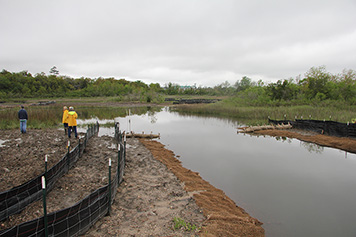
After carefully assessing the impacts, we the natural resource trustees worked with North Charleston's property owners, developers, and local officials to restore a marsh-turned-naval golf course back into a functioning wetland that could support birds, fish, invertebrates, and vegetation.

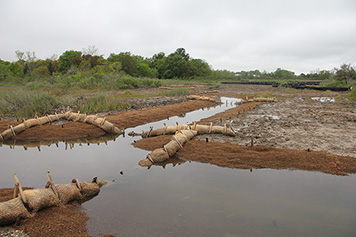
Newly constructed network of creeks through Noisette Creek marsh restoration project.
As part of a restoration project after the 2002 M/V Everreach oil spill, NOAA and our partners constructed a network of tidal creeks along Noisette Creek in North Charleston, S.C. (NOAA/Restoration Center/Howard Schnabolk)

Back in 1901, decades before North Charleston became its own city, the City of Charleston provided riverfront land to the U.S. Navy to develop a naval base. This also involved converting a marsh on the base into a golf course. The former Navy golf course along Noisette Creek in North Charleston was used until the base closed in 1996 and the property was transferred back to the City of North Charleston with a small portion owned by the Noisette Company.

In 2002, the city and Noisette Company began arrangements and planning for the Noisette Preserve, a 135 acre "recreation and nature preserve at the heart of the redevelopment, located around Noisette Creek and its marshes, creeks and inlets" [Final Restoration Plan and Environmental Assessment, PDF]. 

To increase the tidal exchange and drainage needed to restore this area to a salt marsh, the project required removing a berm in two areas along Noisette Creek and constructing a network of tidal creeks throughout the property, which also provides access for recreational paddlers. Roads, drainage tiles, rip-rap, and other sources of debris were removed during the process as well. As a result, the public will be able to enjoy a beautiful living shoreline which supports the surrounding area's ecological services and ultimately benefits activities like boating, fishing, shellfish harvest, and shrimp baiting.

A newly established inlet in the Noisette Creek Preserve, looking towards the interior of the restored marsh.
A newly established inlet in the Noisette Creek Preserve, looking towards the interior of the restored marsh. (NOAA/Restoration Center/Howard Schnabolk)
Supporting Green Communities

In cooperation with Evergreen International, we will monitor the wetland enhancements over the next five years to ensure the project achieves the desired ecological improvements. This project, the first of the planned restoration completed for the Noisette Creek Preserve, has created momentum and excitement for several similar projects slated for this small urban watershed. By aligning these restoration efforts with the larger goals for the City of North Charleston's smart and sustainable growth, we and our partners have been able to build stronger, greener coastal communities and support a thriving local economy—a success for both the environment and the people of North Charleston.

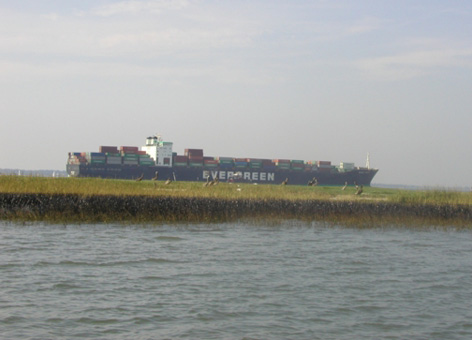
Pelicans and oiled marsh in front of the container ship M/V Everreach in 2002.
Pelicans and dark, oiled marsh are visible in front of the container ship M/V Everreach, which spilled oil into the Cooper River and Charleston Harbor on September 30, 2002. (NOAA)
An aerial view of the former Navy base and the Cooper River up Noisette Creek.
An aerial view of the former Navy base and the Cooper River (foreground) looking up Noisette Creek, dating to approximately 2003. The area restored back to coastal wetlands appears on the left side of the creek. The project site starts where the parking lot ends and extends to the first road crossing the creek. (The Noisette Company/Jim Augustin)
Node Weight: 
4

When Studying How to Clean Oiled Marshes, NOAA Scientists Have Their Work Cut Out for Them

Short title: 
When Studying How to Clean Oiled Marshes, NOAA Scientists Have Their Work Cut Out for Them

When Natural Recovery Is Not Enough

So, when over 30 miles of sensitive salt marshes in Louisiana's Northern Barataria Bay were heavily oiled as a result of the 2010 Deepwater Horizon oil spill, natural recovery was the preferred approach. However, in the areas with the most substantial and persistent oiling, the oil did not appear to be weathering or naturally degrading over time. In these areas, a dense, heavy layer of oiled, matted vegetation was lying overtop thick, fresher-looking emulsified oil (meaning it had water mixed in it). The vegetation mats were limiting the oil's exposure to sunlight, air circulation, and tidal flushing—all natural factors which help break down oil.

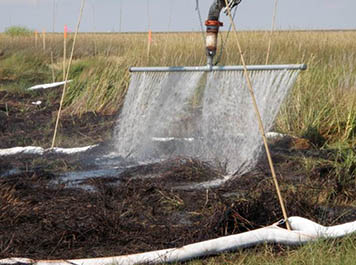
Low-pressure flushing was one of the options we tried for cleaning up the heavily oiled mats of marsh vegetation in Barataria Bay.
Low-pressure flushing was one of the options we tried for cleaning up the heavily oiled mats of marsh vegetation in Barataria Bay. (NOAA/Scott Zengel)

A number of "traditional" methods of marsh cleanup were tried earlier in the spill response, including low-pressure flushing with ambient seawater, skimming, vacuuming, applying materials to absorb the oil, and natural recovery. However, they performed poorly and in some cases caused additional damage to the marsh. So what to do? Since the tried-and-true, traditional methods of cleanup weren't working, this spill's Shoreline Cleanup Assessment Technique (SCAT) program (which surveys an affected shoreline after an oil spill) proposed a field test of various treatment methods, led by the oil spill science experts on NOAA's Scientific Support Team.

In addition to proposing a series of test treatments, they set aside several "no treatment" (natural recovery) sites with similar oiling conditions, and established nearby reference sites as well, both for later comparison to the treated sites. All of the proposed test treatments included cutting the oiled vegetation to expose the thick oil beneath it, in order to accelerate weathering of the oil. In addition to vegetation cutting, the following treatments were tried:

  • Using two different chemical shoreline cleaners that are designed to make oil "lift and float."
  • Low-pressure flushing.
  • Marsh vacuuming.

Weed Whackers, Rakes, and Hedge Trimmers

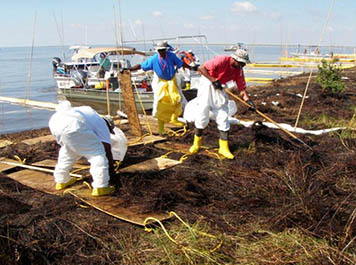
Cleanup workers during the Deepwater Horizon oil spill used walk boards while raking and cleaning marshes to avoid causing further damage to the oiled marshes in Barataria Bay.
Cleanup workers during the Deepwater Horizon oil spill used walk boards while raking and cleaning marshes to avoid causing further damage to the oiled marshes in Barataria Bay. (NOAA/Scott Zengel)

As it turned out, conventional "weed whackers" were no match for the dense, heavily oiled vegetation mats, even when we tried different cutting techniques and cutting attachments. So we raked the vegetation. In the end, the only treatment that showed promise was the vegetation raking. As we monitored the treated plots, however, we found that the ebb and flow of the tide laid the raked vegetation back down on the marsh, reforming the oiled vegetation mats and continuing to trap the layer of thick emulsified oil on the marsh surface. It quickly became apparent to us SCAT program scientists that any successful treatment would require removing the oiled vegetation.

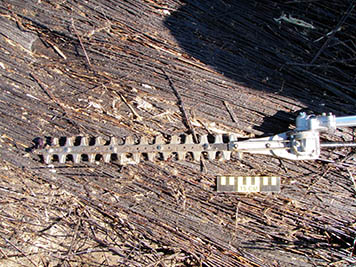
A fresh round of investigation into cutting devices began. Ultimately, a heavy-duty, commercial power hedge trimmer was the solution. It was successfully used to cut through the dense, heavily oiled mats of laid-over vegetation and to cut oiled vegetation that still stood upright.

This type of commercial power hedge trimmer proved to be the tool of choice for cutting through the densely oiled marsh vegetation.
This type of commercial power hedge trimmer proved to be the tool of choice for cutting through the densely oiled marsh vegetation. (NOAA/Scott Zengel)

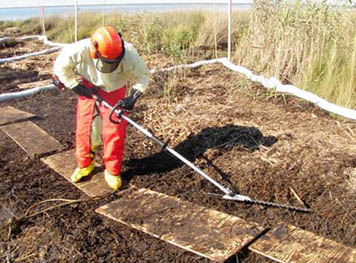
By aggressively raking the oiled vegetation and the thick oil layer on the surface of the marsh, we were able to remove much of the oil, reducing the surface oiling and risk of re-oiling other vegetation. Initial monitoring showed that this approach resulted in completely removing the heavily oiled vegetation mats in the raked and cut plots. Most importantly, the character of the remaining oil on the marsh area changed from mostly thick emulsified oil to a predominance of more weathered surface oil residue that posed far less of a risk to wildlife or for refloating and re-oiling the marsh.

In all, seven miles of the most heavily oiled areas in Northern Barataria Bay, La., were treated by raking and cutting. Most of this work was conducted by hand, using walk boards to reduce the foot traffic in the marsh. It appears that the treatment was effective and that impacts to the marsh from the cleanup action were limited.

After cleanup workers used the hedge trimmers to cut the oiled vegetation mats (seen here), they would rake aggressively the oiled vegetation and thick oil layer beneath, successfully removing much of the remaining oil along Barataria Bay’s test marshes.
After cleanup workers used the hedge trimmers to cut the oiled vegetation mats (seen here), they would rake aggressively the oiled vegetation and thick oil layer beneath, successfully removing much of the remaining oil along Barataria Bay's test marshes. (NOAA/Scott Zengel)

We are continuing to monitor the test plots in order to fully understand whether this cleanup action was the best approach and what the ecological effects or impacts of "treatment" versus "no treatment" are. Stay tuned for a future post that explores the results of the data collected thus far. This is a post by Office of Response and Restoration Biologist Nicolle Rutherford.

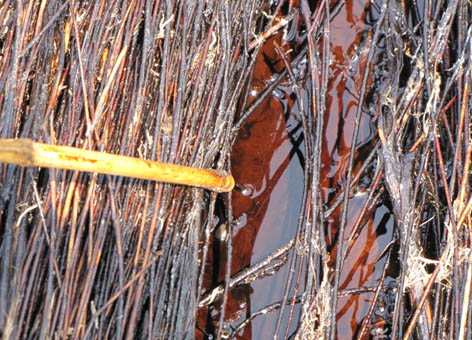
Oil from the Deepwater Horizon spill oozes out from beneath a vegetation mat.
Oil from the Deepwater Horizon spill oozes out from beneath a vegetation mat in a marsh in Barataria Bay's Bay Jimmy, Louisiana. (Louisiana Department of Environmental Quality/Mike Broussard)
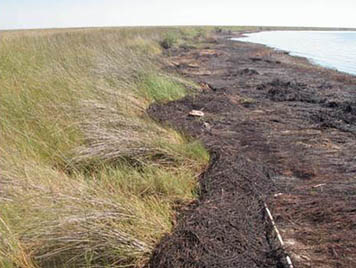
A heavily oiled marsh shoreline in Bay Jimmy, Barataria Bay, Louisiana.
After the 2010 Deepwater Horizon spill, a heavy layer of oiled vegetation mats were preventing the thick emulsified oil underneath from breaking down along Barataria Bay’s marshes. (NOAA/Scott Zengel)
Node Weight: 
5

Baby Mink Jeopardized by Toxic Chemicals in New York's Hudson River

Short title: 
Baby Mink Jeopardized by Toxic Chemicals in New York's Hudson River

APRIL 15, 2013 — This is a guest post by U.S. Fish and Wildlife Service biologist Kathryn Jahn, case manager for the Hudson River Natural Resource Damage Assessment. This story originally appeared in full on the U.S. Fish and Wildlife Service Northeast Region blog.

In the early 1970s, toxic compounds known as polychlorinated biphenyls, or PCBs, were discovered in the water, fish, and sediment of the Hudson River below General Electric Company's plants at Hudson Falls and Fort Edward in New York. Those PCBs have contaminated the surface water, groundwater, sediments, and floodplains of the Hudson River. We find that living resources at every level of the Hudson River's food chains are contaminated with PCBs. We believe that serious adverse effects are likely to be occurring to wildlife exposed to this PCB contamination in the Hudson River. A whole team of people are using their individual and collective expertise to address the problem of PCB contamination in the Hudson River and its effect on wildlife.

My favorite part of this job is the teamwork among all the people working on this issue, and the interactions with our experts and the public. We know that PCBs can cause serious harm to wildlife and other natural resources. Although a cleanup funded by GE is underway for certain sections of the Hudson River, the dredging GE is doing will leave some areas still contaminated with PCBs. The dredging also cannot compensate for past effects of this PCB contamination on the Hudson River's natural resources. For example, dredging will not make up for all the years that public use of the Hudson River fishery has been impaired by fish consumption advisories. Dredging will not return that lost use to the public. In our planning to determine the effects of PCBs on wildlife, we identified mink health as one area to investigate.

Mink are vulnerable to the effects of PCBs. Hudson River mink eat PCB-contaminated fish and other small creatures, and they ingest contaminated water, soil, and sediments as they look for food and build their dens. This led us to suspect that Hudson River mink might be harmed by PCBs in their environment. Read more to find out how PCB contamination might be affecting mink offspring. [Editor's note: And learn about a past report from the Hudson River Natural Resource Trustees, including NOAA, which found that PCBs permeate nearly every part of the Hudson River.]

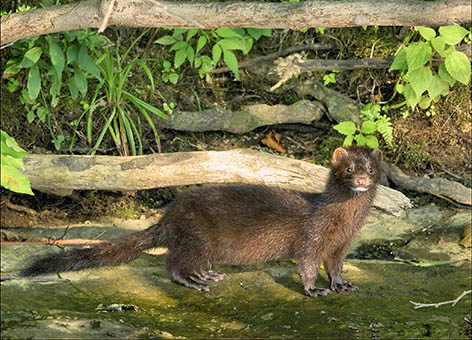
Mink at Bombay Hook National Wildlife Refuge.
Mink at Bombay Hook National Wildlife Refuge. (Don Cooper)
Node Weight: 
3

Texas Restoration Projects to Transform Concrete to Marsh, Undoing Bayou's Pesticide-laden History

Short title: 
Texas Restoration Projects to Transform Concrete to Marsh, Undoing Bayou's Pesticide-laden History

The Site

The Greens Bayou site, located in Houston, is 217 acres of chemical manufacturing facilities, a flood control ditch that leads into the bayou itself, and the undeveloped land that surrounds all of this. Greens Bayou is a tidally influenced area whose brackish waters run into those of the well-trafficked Houston Ship Channel. Historically, the area's chemical plants disposed of untreated liquid waste and wastewaters from manufacturing operations in unlined, earthen ditches, which then flowed into Greens Bayou. These ditches were the primary way pesticides were able to leach into the soil, sediment, surface water, and ground water in this environment. In particular, DDT and its by-products were found at high levels, signaling to us the potential for adverse effects for the bayou's bottom-dwelling invertebrates, fish, and aquatic-dependent wildlife.

The Investigation

Jessica White, a NOAA OR&R Regional Resource Coordinator, became involved with Greens Bayou in 2004. By this time, the Texas Commission on Environmental Quality (TCEQ) had commenced the remedial investigation under the Texas Risk Reduction Program. This investigation included a detailed assessment of risk to the environment, which involved sampling and chemical analysis of sediment, soil, water, and fish tissue from Greens Bayou. The assessment's results indicated that the natural resources found at this site were at risk of injury or loss.

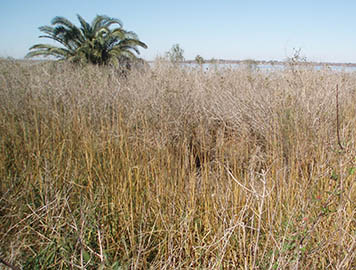
A lone palm tree, a remnant of the ornamental vegetation from the former Brownwood subdivsion, stands amid weedy vegetation at the Baytown Nature Center in Texas. As part of the Greens Bayou restoration projects, this vegetation will be removed and after grading to marsh elevation, the site will be planted with native marsh grasses.
A lone palm tree, a remnant of the ornamental vegetation from the former Brownwood subdivsion, stands amid weedy vegetation at the Baytown Nature Center in Texas. As part of the Greens Bayou restoration projects, this vegetation will be removed and after grading to marsh elevation, the site will be planted with native marsh grasses. (NOAA)

This prompted the natural resources trustees—NOAA, U.S. Fish and Wildlife Service, TCEQ, and the Texas Parks and Wildlife Department—to initiate a Natural Resource Damage Assessment (NRDA) in 2005. This meant the trustees, including White, were performing their own assessment, which used information from the remedial investigation to quantify the harm done to the habitats, fish, birds, and wildlife there. As a result, their assessment continued on a parallel track to the remedial investigation. This collaboration helped them work more efficiently as they collected and analyzed data. At the conclusion of the damage assessment, the trustees determined that this chemical facility site required ecological restoration to offset the past injuries to the forested wetlands and submerged mud bottom habitats. The next step in the NRDA process was to identify suitable restoration projects which would benefit the natural resources that depended on the injured habitats. Restoration is defined as the rehabilitation, replacement, or acquisition of the equivalent natural resources that were lost or injured. In this case, the trustees selected both the route of restoration and acquisition to compensate the public for the loss of these natural resources. (The final damage assessment and restoration plan is available online. [PDF])

A view of the existing shoreline with rubble from prior construction at the Baytown Nature Center.
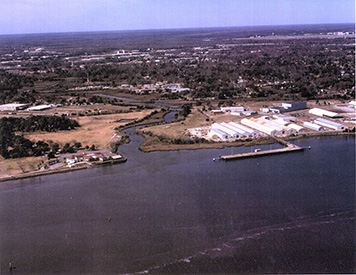
A view of the existing shoreline with rubble from prior construction at the Baytown Nature Center. As part of the planned restoration, this shoreline will be cleaned and graded to create marsh habitat. (NOAA)
The Restoration

The restoration project they chose for the submerged mud bottom habitat was the creation of nearly 11 acres of estuarine marsh at the Baytown Nature Center located in Baytown, Texas. To accomplish this, the existing shoreline and adjacent area will be re-contoured to a lower elevation. Further lowering the elevation of the shoreline will allow more water to infiltrate the land and support the addition of marsh plants. However, this also involves breaking up the concrete sidewalks and foundations remaining from the area's past life as an upscale residential neighborhood known as Brownwood. In the 1940s and 50s, Brownwood became home to impressive two-story residences and their boathouses, framed by palm trees and the San Jacinto River. The death of this booming subdivision came slowly, delivered by local industry's massive extraction of water beneath Brownwood, which caused the land to subside significantly. More than two decades of hurricanes and storm surges began flooding residents out of their sinking homes, and after Hurricane Alicia devastated the area in 1983, the city of Baytown worked with the Federal Emergency Management Agency (FEMA) to buy out the last of Brownwood's homeowners.

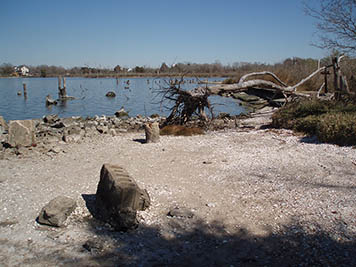
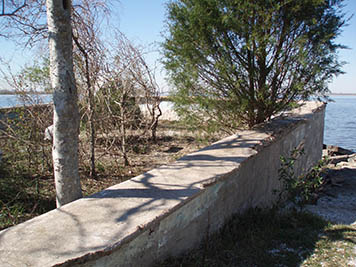
Trees grow up through a remnant of a swimming pool in the former Brownwood subdivision, which today is the Baytown Nature Center. The area will be converted into marsh habitat, but this pool will be left in place as a reminder of the history of this site.
Trees grow up through a remnant of a swimming pool in the former Brownwood subdivision, which today is the Baytown Nature Center. The area will be converted into marsh habitat, but this pool will be left in place as a reminder of the history of this site. (NOAA)
Baytown then agreed to transform the abandoned neighborhood into a public park and nature center. One of the few surviving signs of Brownwood will be a swimming pool the trustees have decided to leave amid the re-created saltmarsh. Across town, on the north side of Houston, the trustees will replace Greens Bayou's lost forested wetland habitat with 100 acres of similar habitat, located in the Spring Creek Greenway. The acreage has already been acquired and placed under a conservation easement. This easement will protect the property, already surrounded by subdivisions, from development. It will also ensure the land is available for the public to enjoy through a number of activities such as nature hiking, biking, and bird-watching. Settlement of the Natural Resource Damage Assessment for the Greens Bayou case includes reimbursement for the trustee assessment and restoration oversight costs as well as the cost to implement the restoration projects (estimated at approximately $375,000 for the Baytown Nature Center project and $417,000 for the Spring Creek project). Both the Baytown Nature Center and Spring Creek Greenway are places where people can enjoy nature in the highly developed Houston area. By partnering with these existing initiatives, the trustees were able to ensure the restoration projects would build on the local momentum to protect and appreciate the natural environment while reversing the ecological damage done at Greens Bayou.
Concrete pad of a former house and boat house remains in Baytown Nature Center.
One of the restoration projects making up for the history of pesticide pollution at Greens Bayou, Texas, will create 11 acres of marsh at the Baytown Nature Center. But this park has a history of its own: here is the concrete pad of a former residence and the remains of a boat house from the once-ritzy but now-abandoned Brownwood subdivision. (NOAA)
A flood control ditch enters Greens Bayou, surrounded by chemical plants.
In the heart of Houston's industrial area, chemical manufacturers spent years dumping untreated waste and pesticides in ditches that eventually leached into Greens Bayou. Here, you can see the mouth of the Harris County Flood Control District Ditch where it enters Greens Bayou. January 30, 2009 (U.S. Fish and Wildlife Service/Tammy Ash)
Node Weight: 
4

After Remaking the Way for Fish, Huge Increases Follow for Migrating Herring in a Massachusetts River

Short title: 
Huge Increases for Migrating Herring in a Massachusetts River

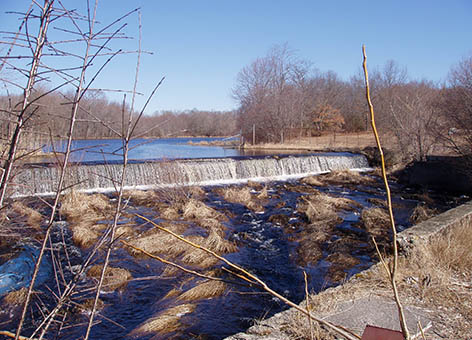
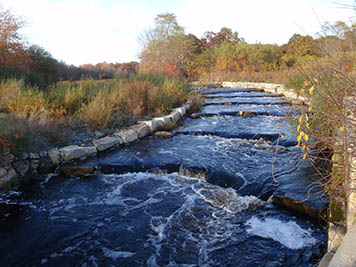
A version of this story first appeared on the NOAA Restoration Center website on April 8, 2013. APRIL 10, 2013 — In 2007, as part of a habitat restoration project, NOAA helped to install stone "fishways" at two dams on the Acushnet River in Massachusetts. These fishways, designed to more closely resemble conditions found in nature, are located in the river channel and allow migrating fish to gradually gain enough elevation to successfully pass over the dams. Since construction, there has been an astounding 1,140% increase in migrating herring able to pass over the dams and access prime spawning grounds, according to data collected by the Massachusetts Division of Marine Fisheries [PDF].

Migrating fish, including river herring and American eels, now have much better access to habitat all along the Acushnet River, which runs 8.5 miles from the spawning areas of the New Bedford Reservoir into New Bedford Harbor and empties into Buzzards Bay. This means more opportunities for herring to grow, thrive, and spawn. Herring are caught commercially and are also important prey fish for other commercial and recreational fish species, such as cod. But, due to very low numbers, there is currently a moratorium on the take of river herring from Massachusetts waters.

Between the 1940s and the 1970s, electrical parts manufacturers discharged wastes containing polychlorinated biphenyls (PCBs) and toxic metals into New Bedford Harbor, resulting in high levels of contamination. NOAA, through the Damage Assessment Remediation and Restoration Program (DARRP), worked with the Commonwealth of Massachusetts and the Department of Interior to fund the design and construction of these fishways. They are part of a restoration plan developed in response to decades of industrial pollution in New Bedford Harbor, a major commercial fishing port and industrial center in southeastern Massachusetts.

According to NOAA, part of this site held the "highest concentrations of PCBs ever documented in a marine environment." So far, 34 projects—including these fishways—have been completed to restore natural resources that were injured or lost due to the contamination. Read more on the case and get the latest updates on restoration. This spring, scientists are hoping to see even bigger runs of herring on the Acushnet. Want to see them in person? The third and fourth weeks of April should be peak migration time for these fish—check out this viewing guide for more information.

The Sawmill Dam before NOAA helped install fishways on the Acushnet River in MA.
The Sawmill Dam before NOAA helped install "fishways," which allow fish to pass more easily over dams, on the Acushnet River in Massachusetts. (NOAA)
View of completed fishway on the Sawmill Dam on the Acushnet River.
After 2007, when NOAA helped improve fish passage over two dams on the Acushnet River in Massachusetts, herring numbers passing through the river increased dramatically. Here, you can see the completed fishway on the Sawmill Dam. (NOAA)
Node Weight: 
4

Pages

Subscribe to response.restoration.noaa.gov RSS