Back to top

Digging for Data at the Alaska Marine Science Symposium

Short title: 
Digging for Data at the Alaska Marine Science Symposium

JAN. 25, 2013 — As Chief of the Spatial Data Branch in NOAA's Office of Response and Restoration, Dr. Amy Merten's focus is all about data. In particular, that means figuring out how to access data related to oil spills: the type of information useful for planning before a spill and for the response, environmental injury assessment, and restoration after a spill. Once Merten and her team get that data, which often comes from other science agencies, universities, and industry, they can then ingest it into Arctic ERMA®, NOAA's online mapping tool for environmental disaster data.

While at the Alaska Marine Science Symposium this week, she has spent much of her time working with experts who provide and manage that kind of data. For example, the Alaska Ocean Observing System (AOOS) provides real-time and historical coastal data to multiple stakeholders, including NOAA for Arctic ERMA. AOOS is also the host for the newly signed data-sharing agreement [PDF] between NOAA and three oil companies (Shell, ConocoPhillips, and StatOil). These companies have agreed to share the physical oceanographic, geological, and biological data they have been collecting near areas of Arctic offshore oil and gas activities since 2009. This is an unprecedented amount of data that the industry now is sharing with the federal government and the public. The data are available at www.aoos.org.

NOAA'S Arctic ERMA geographic information system (GIS) expert, Zach Winters-Staszak, attended the Arctic Mapping Workshop sponsored by NOAA partners at the University of Alaska Fairbanks GINA program. Their geographic information network gives NOAA team access to high-resolution base maps, imagery, high frequency radar, ice radar, webcams, and more. Zach was able to learn about new data sets and new ways for pulling high impact data into Arctic ERMA. Another helpful information source for these NOAA data seekers is NOAA's ShoreZone project. ShoreZone [PDF] is a popular Pacific Northwest dataset of high-resolution aerial videos and photographs of the shoreline in Alaska, British Columbia, Washington, and Oregon at extreme low tide. The photos and videos are augmented with habitat classifications of the different zones along the shoreline, such as salt marsh or kelp beds.

The ERMA team already pulls in ShoreZone data layers into NOAA's Arctic and Pacific Northwest ERMA sites. These data are valuable for preparedness and response to oil spills and for understanding places where oil and marine debris may accumulate naturally. It's especially useful for understanding what the shoreline might look like before going out to survey for signs of oil or marine debris accumulation. It can help responders decide how they are going to access the shore (boat, helicopter, on foot) and what they might expect to find. ShoreZone surveyed the Kotzebue and North Slope regions of the Alaskan Arctic this past summer, which Merten and her team are excited to draw into Arctic ERMA when the photos are available. Read more about Arctic ERMA and NOAA's plans for this environmental data tool.

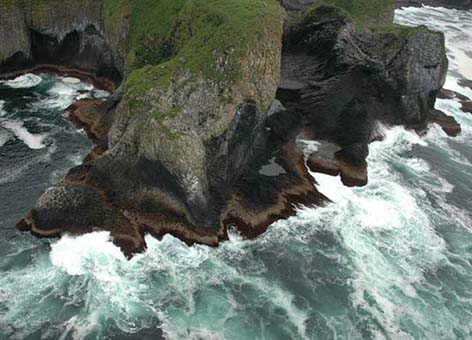
Shoreline view of Kruzof Island, Sitka Sound, Alaska.
The ShoreZone project photographs, maps, and collects information about Pacific Northwest shorelines, like in this view of Kruzof Island, Sitka Sound, Alaska. (NOAA Fisheries)
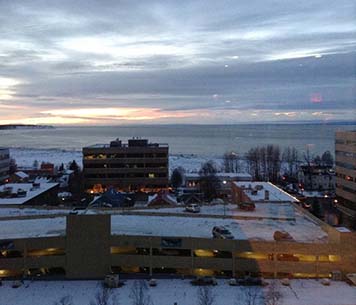
A view of Anchorage from the Alaska Marine Science Symposium.
A view of Anchorage from the Alaska Marine Science Symposium. (NOAA)
Node Weight: 
3

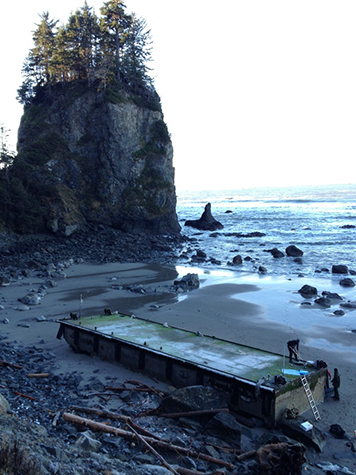
Japan Confirms Dock on Washington Coast Is Tsunami Marine Debris

Short title: 
Japan Confirms Dock on Washington Coast Is Tsunami Marine Debris

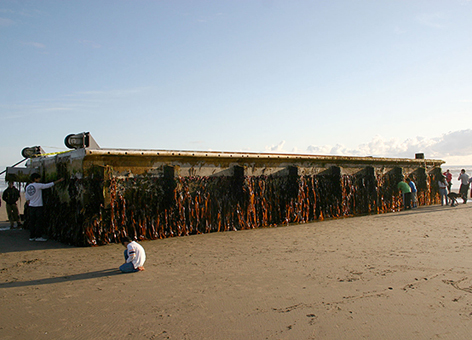
JAN. 18, 2013 — The Japanese Consulate has confirmed that a 65-foot, concrete-and-foam dock that washed ashore in Washington's Olympic National Park in late December 2012 is in fact one of three* docks missing from the fishing port of Misawa, Japan. These docks were swept out to sea during the earthquake and tsunami off of Japan in March 2011, and this is the second dock to be located.

The first dock* appeared on Agate Beach near Newport, Ore., in June 2012. Using our trajectory forecast model, NOAA's Office of Response and Restoration helped predict the approximate location of the dock after an initial sighting reported it to be floating somewhere off of Washington’s Olympic Peninsula. When the dock finally came aground, it ended up both inside the bounds of NOAA's Olympic Coast National Marine Sanctuary and a designated wilderness portion of Olympic National Park.

According to the Washington State Department of Ecology, representatives from Olympic National Park, Washington State Department of Fish and Wildlife, and Washington Sea Grant Program have ventured out to the dock by land several times to examine, take samples, and clean the large structure. Initial results from laboratory testing have identified 30‐50 plant and animal species on the dock that are native to Japan but not the United States, including species of algae, seaweed, mussels, and barnacles.

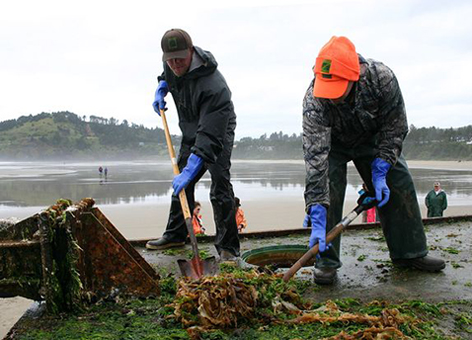
In addition to scraping more than 400 pounds of organic material from the dock, the team washed its heavy side bumpers and the entire exterior structure with a diluted bleach solution to further decontaminate it, a method approved by the National Park Service and Olympic Coast National Marine Sanctuary.

Government representatives are examining possible options for removing the 185-ton dock from this remote and ecologically diverse coastal area. Look for more information and updates on Japan tsunami marine debris at http://marinedebris.noaa.gov/tsunamidebris/.

*[UPDATE 4/5/2013: This story originally stated that four docks were missing from Misawa, Japan and that "the first dock was recovered shortly afterward on a nearby Japanese island." We now know only three docks were swept from Misawa in the 2011 tsunami.]

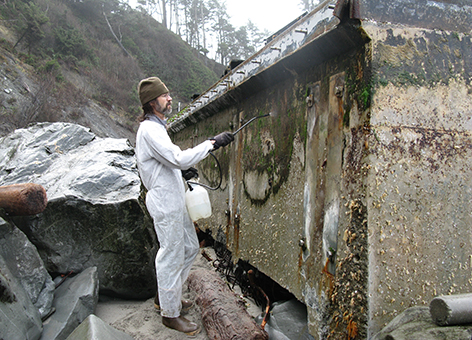
A worker decontaminates the Japanese dock on a Washington coast beach.
January 3, 2013 -- A worker uses a 30% bleach spray to decontaminate and reduce the spread of possible marine invasive species on the Japanese dock which made landfall on Washington’s Olympic Peninsula in December 2012. (Washington Department of Fish and Wildlife/Allen Pleus)
Japanese tsunami dock located on a Washington coast beach.
In order to minimize damage to the coastline and marine habitat, federal agencies are moving forward with plans to remove the dock. In addition to being located within a designated wilderness portion of Olympic National Park, the dock is also within NOAA’s Olympic Coast National Marine Sanctuary and adjacent to the Washington Islands National Wildlife Refuge Complex. (National Park Service)
Node Weight: 
5

Report Reveals Hudson River and Wildlife Have Suffered Decades of Extensive Chemical Contamination

Short title: 
Report: Toxic Impacts on the Hudson River

JAN. 16, 2013 — The Hudson River Natural Resource Trustees, including NOAA, released a report today outlining the magnitude of toxic chemical pollution in New York's Hudson River. The report, "PCB Contamination of the Hudson River Ecosystem" [PDF], documents six years of data and analysis showing that the Hudson River, for more than 200 miles below Hudson Falls, N.Y., is extensively contaminated with polychlorinated biphenyls (PCBs).

Starting in 1947 and for approximately 30 years, manufacturing plants operated by General Electric Company (GE) discharged PCBs into the upper Hudson River, with additional releases of PCBs occurring as well. According to the report, PCBs are a "group of highly toxic compounds that are known to cause cancer, birth defects, reproductive dysfunction, growth impairment, behavioral changes, hormonal imbalances, damage to the developing brain, and increased susceptibility to disease in animals." Hazardous at even very low levels, they make their way up the food chain and become stored in the tissues of wildlife and fish, posing a health threat if people consume them. Analysis of the river from 2002 to 2008 shows that PCBs permeate nearly every part of the river: surface waters, sediments, floodplain soils, fish, birds, wildlife, and other natural resources.

The report further documents decades of high levels of PCBs and likely harmful effects on living organisms exposed to the contamination in the Hudson River. PCB levels in fish were often 10 or more times the U.S. Food and Drug Administration's (FDA) standards for safe consumption (p. 10) and in water samples tested "10 to 10,000 times higher than that deemed safe for aquatic life, fish-eating wildlife and human consumers of fish" (p. 5). As a result of this pollution, the public has lost the use of these natural resources, for example, due to restrictions and advisories for catching and eating fish and navigational losses due to contamination of the Champlain Canal. A Hudson River PCB Forum also was held on January 16, 2013 at Marist College in Poughkeepsie, N.Y. The intent of the forum was to provide mid-Hudson communities with an update on the PCB dredging project and restoration planning by the Natural Resource Trustees.

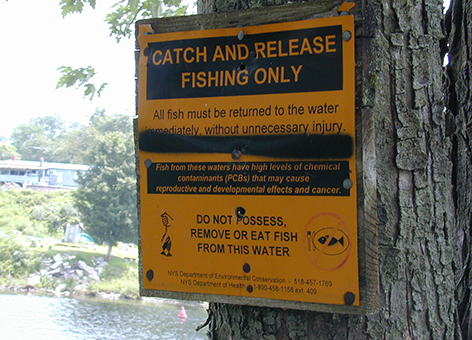
Sign by Hudson River warning against eating contaminated fish.
According to the report, "Fish not only absorb PCBs directly from the river water but are also exposed through the ingestion of contaminated prey, such as insects, crayfish, and smaller fish...New York State's 'eat none' advisory and the restriction on taking fish for this section of the Upper Hudson has been in place for 36 years." (NOAA)
Node Weight: 
4

Looking out for Sea Lions and Salmon Before a Grounded Rig Could Spill a Drop of Oil

Short title: 
Looking out for Sea Lions and Salmon Before a Grounded Rig Could Spill a Drop of Oil

JAN. 11, 2013 — Fortunately, when Royal Dutch Shell's offshore drilling platform, the Kulluk, ran aground on a remote Alaskan island on New Year's Eve, it did not lead to an oil spill. However, the rig held 140,000 gallons of diesel fuel, and throughout the response, the potential for a spill remained a concern. This was especially true because the Kulluk was located in an area with many sensitive natural resources, including harbor seals, marine birds, critical habitat for Steller sea lions, and salmon streams. On top of that, pacific cod and tanner crab harvests take place in that part of Sitkalidak Island, south of Kodiak.

Subsistence foragers from the Old Harbor Native village harvest razor clams from a bed near the grounding site. In light of the potential for an oil spill, restoration specialists from NOAA's Office of Response and Restoration, collaborating with federal and state natural resource trustees, began planning an assessment of the possible harm to natural resources. What if the oil did spill and impact those natural resources? How would we determine what was injured and how badly?

Spill Today, Gone Tomorrow

One of the first steps in this planning effort was to consider where the diesel might go if it spilled and what natural resources it might impact. Spill responders—those considering oil cleanup options—often see diesel spills as less of a concern than spills that involve thicker, heavier oils. This is due to the way that diesel acts when it is spilled on the ocean surface; most of it evaporates into the air and disperses into the water in a few hours, especially in high winds and waves. In this case, NOAA scientists estimated that almost all of the Kulluk's diesel would evaporate or disperse in 4–5 hours if it spilled. This means there would be very little oil for cleanup workers to try to recover from the water's surface.

The Kulluk was grounded near shore and, in the event of a spill, the wind and waves would have pushed the diesel towards the shoreline. In this scenario, diesel could have impacted nearby ocean areas, beaches, rocky shorelines, and stream outlets. The Unified Command took precautionary measures during the grounding and removal of the Kulluk, which included placing containment boom across the mouths of streams in the area to keep out any potentially spilled diesel.

A Toxic Shock

Though diesel may not remain for very long in the environment, it is very toxic to many aquatic species. A diesel fuel spill would have had an immediate and negative effect on the environment. In high seas, like those around the grounded Kulluk, as much as 90 percent of the diesel would disperse into the water. The dispersed diesel could affect marine organisms that live in the water column, on the ocean bottom, or along the shoreline. Past spills of comparable fuels in similar marine environments have killed large numbers of organisms living in the water column or on the ocean bottom in the area where the oil was released: the barge North Cape grounded and spilled oil off Rhode Island during bad weather in 1996, and the ship Tampico Maru grounded and spilled diesel on a remote, rough shoreline in Northern Baja California in 1957.

Diesel is acutely toxic to many zooplankton, bivalve, and crustacean species as well as unhatched and young salmon. Organisms can become "tainted" when they are either exposed to diesel at levels that don't kill them (sublethal) or when they eat other organisms exposed to those levels. In that case, responders would test seafood for safety, and those of us evaluating environmental damages would assess marine organisms' exposure levels with additional testing. Even these sublethal exposures can cause toxic effects that need to be considered in a damage assessment. While initially preparing for a potential damage assessment, we focused on planning for water, sediment, and bivalve (razor clams and blue mussels) sampling as well as on planning shoreline assessments for evidence of injured or dead animals. If we could do this sampling before and/or immediately after a spill, we would have a more accurate assessment of damages to natural resources. Assessing exposure and injury to natural resources is time sensitive, especially in the case of a short-lived contaminant like diesel.

Weather Or Not

However, the far-flung location of the grounding site, as well as the harsh weather conditions, would make sampling in the area challenging. Our planning had to address those logistical challenges. That meant having resources and personnel standing by 40 miles away in Kodiak City, Alaska; arranging for transportation to the site of the rig; securing permission to access the area, and procuring the resources we needed to sample. Given the conditions, accessing the site would have required a helicopter or boat trip to the island and overland transit through grizzly bear habitat, across rough terrain, and private property.

Again, we're happy that the diesel aboard the Kulluk stayed in its tanks while the rig was grounded and moved off of Sitkalidak Island. But new opportunities for oil drilling, commerce, and tourism in the Arctic are expected to bring more marine traffic through these areas. That creates more opportunities for accidents. It is important for us to be prepared to undertake a natural resource damage assessment in the event of an oil spill. Understanding what is at risk, what to expect from the particular oil spilled, and how it all fits in a specific environment is the first step.

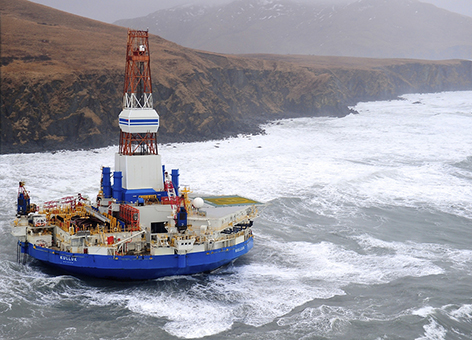
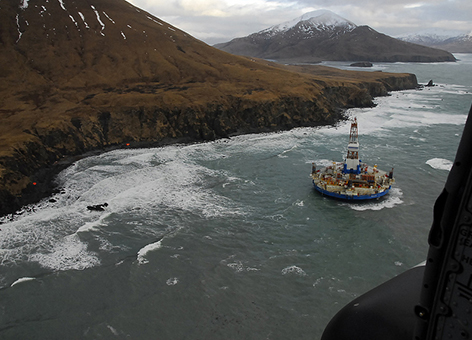
Rocky coast and habitats adjoin the grounded conical drilling unit Kulluk.
Here you can see the rocky coast and habitats near where the conical drilling unit Kulluk sat aground on the southeast shore of Sitkalidak Island about 40 miles southwest of Kodiak City, Alaska, in 40 mph winds and 20-foot seas on Tuesday, Jan. 1, 2013. (U.S. Coast Guard)
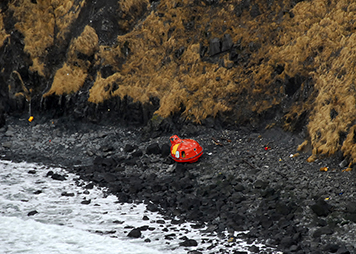
A life raft from grounded rig Kulluk sits on the rocky beach.
A life raft belonging to the conical drilling unit Kulluk, sits on the beach adjacent to the rig 40 miles southwest of Kodiak City, Thursday, Jan. 3, 2012. (U.S. Coast Guard)
Node Weight: 
3

New Legislation Expands Scope of NOAA Marine Debris Program to Deal with Natural Disaster Debris

Short title: 
New Legislation Expands Scope of NOAA Marine Debris Program to Deal with Natural Disaster Debris

JANUARY 9, 2013 -- On December 20, 2012, President Obama signed legislation reauthorizing the NOAA Marine Debris Program [PDF] and its mission to address the harmful impacts of marine debris on the United States. The program, which is housed within NOAA's Office of Response and Restoration, was originally created in 2006 by the Marine Debris Research, Prevention, and Reduction Act. "The NOAA Marine Debris Program is grateful for Congress’s support on this very important issue," said Nancy Wallace, the program's director. "We look forward to continuing our work to ensure the ocean and its coasts, users, and inhabitants are free from the impacts of marine debris." For the most part, the NOAA Marine Debris Program's mandates remain the same: to identify, determine sources of, assess, prevent, reduce, and remove debris, whether along a North Carolina beach or in Lake Michigan. This latest legislation, which was combined with the Coast Guard and Maritime Transportation Act, also highlights education and outreach, regional coordination, and fishing gear research as key activities for the program. However, Congress gave the NOAA Marine Debris Program a new core function to address "severe marine debris events," defined as "atypically large amounts of marine debris" caused by natural disasters. After debris such as floating docks from the March 2011 Japan tsunami began washing up on West Coast beaches, Congress recognized this emerging need to deal with the unusual amounts and types of marine debris which often follow events such as tsunamis or hurricanes. Learn more about what to do if you think you have found marine debris from the Japan tsunami.

Workers scrape marine organisms from the tsunami dock at Agate Beach, Oregon.
A team of about a dozen staff and volunteers organized by the Oregon Department of Fish and Wildlife made quick work of removing marine organisms from the dock on the sand at Agate Beach, Ore. The dock has been confirmed as having gone missing from a Japanese port after the March 2011 tsunami. (Oregon Department of Fish and Wildlife)
Site Themes: 
Node Weight: 
5

Rig Refloated: Update on Efforts to Mobilize Grounded Drill Rig Kulluk in Alaska

Short title: 
Rig Refloated: Update on Efforts to Mobilize Grounded Drill Rig Kulluk in Alaska

UPDATED JAN. 11, 2013 — The Kulluk was refloated at approximately 2:10 a.m. Eastern Standard Time, and the tug Aiviq successfully towed the Kulluk to nearby Kiliuda Bay, an intermediate safe harbor of Kodiak Island. Weather permitting, the U.S. Coast Guard is scheduled to perform an aerial survey at first light to look for any signs of an oil sheen from the rig. Response teams have not detected any oil discharge; both fuel tank soundings taken aboard the Kulluk and infrared equipment trained on the water around the rig as it is being towed indicate that all of the Kulluk's oil is still on board. Here is video of the rig being towed: You can find further updates at the Unified Command's website: http://www.kullukresponse.com/. JANUARY 4, 2013 -- In the narrow window of daylight and safe weather in the Gulf of Alaska, a 12-person salvage team was able to land on the grounded Dutch Royal Shell drilling rig Kulluk on Thursday, January 3, 2013. They were able to complete their assessment of the rig, and while those results are still pending, they reported again no sightings of oil around the large conical rig.

Late on Dec. 31, 2012, during the return transit to Seattle, Wash., for winter maintenance, severe weather and heavy seas forced the Kulluk aground on Sitkalidak Island, just off the larger Alaskan island of Kodiak. NOAA's Office of Response and Restoration (OR&R) has been supporting the U.S. Coast Guard in its response to this grounding. Currently, the response's focus is on being thoroughly prepared to refloat the Kulluk and move it to a safe harbor nearby. As a result, the Unified Command has flown in significant amounts of salvage and safety gear. The salvage team's attempt to remobilize the rig will depend on having all the proper equipment in place and a window of good weather for operations. Because the Kulluk's fuel tanks holding the approximately 140,000 gallons of diesel appear protected in the interior of the rig, the salvage team is not planning to remove the oil prior to relocating the rig. At this time, NOAA has six people in the command post, based in Anchorage, Alaska:

  • An OR&R Scientific Support Coordinator involved in contingency planning to minimize environmental risks during the response.
  • An OR&R natural resource specialist assisting the Scientific Support Coordinator.
  • An OR&R information management specialist.
  • A National Weather Service incident meteorologist collaborating with the Unified Command on custom weather forecasts for the rig grounding area.
  • A National Marine Fisheries Service biologist helping reduce impacts of the response operations on nearby marine mammals, such as the endangered Steller sea lion.
  • An Office of Coast Survey specialist providing detailed nautical charts and data as well as helping identify suitable safe harbors in the area for relocating the rig.

Here is video from a Coast Guard helicopter survey of the grounded Kulluk from January 2, 2013, showing some of the rough conditions the response is forced to deal with. For the latest updates from the Unified Command for this incident, visit https://www.piersystem.com/go/site/5507/ and https://twitter.com/KullukResponse.

Aerial view of conical drilling unit Kulluk grounded offshore near Kodiak Island
A U.S. Coast Guard aerial survey reveals the rugged, remote lanscape and the conical drilling unit Kulluk, grounded 40 miles southwest of Kodiak City, Alaska. Two orange life rafts are visible on the beach adjacent to the rig. Thursday, Jan. 3, 2012. (U.S. Coast Guard)
Node Weight: 
2

NOAA Responds to Shell Drilling Rig Kulluk Grounding in Gulf of Alaska

Short title: 
NOAA Responds to Shell Drilling Rig Kulluk Grounding in Gulf of Alaska

UPDATED JAN. 4, 2013 — The mobile drilling unit Kulluk, Shell Oil’s 266-foot-long floating drill rig, has run aground off the coast of Kodiak Island, Alaska, after encountering severe weather while being towed from Dutch Harbor, Alaska. NOAA’s Office of Response and Restoration is supporting the U.S. Coast Guard in its response to the grounding.

Two tugboats were towing the Kulluk from where it was drilling in the Beaufort Sea south to Seattle, Wash., for winter maintenance when beginning on December 28 the tugs suffered engine trouble and lost connection to the rig in heavy weather and seas approximately 25 miles south of Kodiak Island. The towlines were temporarily reestablished. However, as the towing vessels were guiding the Kulluk to a place of refuge at the west end of Sitkalidak Strait, approximately 20 miles away, stormy weather caused the main tug to lose its connection again and the rig was allowed to drift aground in heavy seas.

Our Scientific Support Coordinator for Alaska is providing modeling products to the Coast Guard in case the approximately 140,000 gallons of diesel fuel aboard the rig start to leak out. He also has been coordinating custom local weather forecasts with the National Weather Service and has participated in one of several aerial surveys of the grounded rig. We have sent an information management specialist to assist at the incident command post in Anchorage, Alaska, and have been gathering data as it becomes available into Arctic ERMA, NOAA’s online GIS tool for environmental disaster response.

As of the evening of January 2, the response has completed a partial assessment of the condition of the rig and fuel tanks, which was hampered by inclement conditions. No leaking oil has been sighted, and the drilling rig appears intact where it grounded near the rocky shoreline. The next step is to finish the assessment and plan to remobilize the rig. Of note is the fact that the shores of Kodiak Island, where the rig grounded, fall within critical habitat for the endangered Steller sea lion.

Location of the drilling rig Kulluk aground on Sitkalidak Island, Alaska, and critical habitat for Steller sea lions.
View from Arctic ERMA showing the location of the drilling rig Kulluk aground on Sitkalidak Island, Alaska, and critical habitat for Steller sea lions. Click to enlarge.

State and federal agencies have been evaluating harm to natural resources from a potential release of diesel fuel from the Kulluk. The rig is located close to two salmon streams, an area where razor clams are harvested for subsistence use, and a planned tanner crab fishery expected to open on January 15. Sampling clams, sediment, and water around the rig would allow NOAA to evaluate harm if fuel would be released and possibly contaminated the surrounding area. However, because the area is remote, traveling there to perform these samples would be challenging. For official updates from the Unified Command for this incident, visit https://www.piersystem.com/go/site/5507/ and https://twitter.com/KullukResponse.

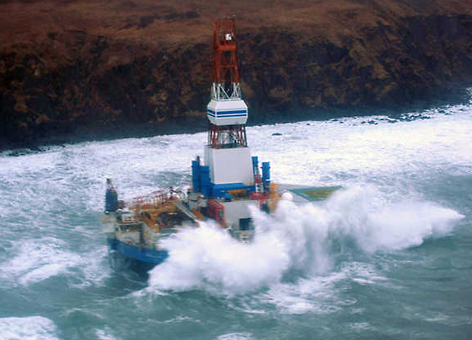
Waves crash over the grounded mobile drilling unit Kulluk.
Waves crash over the mobile offshore drilling unit Kulluk where it sits aground on the southeast side of Sitkalidak Island, Alaska, Jan. 1, 2013. (U.S. Coast Guard)
Node Weight: 
2

Getting the Download During a Disaster: Mapping the Hurricane Sandy Pollution Response

Short title: 
Getting the Download During a Disaster: Mapping the Hurricane Sandy Pollution Response

DEC. 17, 2012 — During a disaster, being able to keep track of the information flowing in about damages and operations can make a huge difference. Here, we give you some from-the-ground perspectives about how essential this can be during a response like the one to Hurricane Sandy.

NOAA Scientific Support Coordinator Ed Levine: The last weekend of October became very hectic for those of us in disaster response as Hurricane Sandy moved its havoc up the U.S. eastern seaboard. After the storm passed, initial reports indicated that coastal New York and New Jersey, especially around Long Island Sound and New York Harbor, were among the hardest hit.

When I arrived at the U.S. Coast Guard's base of operations on Staten Island, N.Y., I was surprised to find that the building was on generator power and back-up lighting; was without heat or telephones; and had minimal computer access and cell phone connectivity. In other words, they were part of the disaster.

Fairly quickly, however, they managed to set up an incident command post. Soon I was able to survey the coastal damage and pollution threats in a Coast Guard helicopter.

Many areas were extremely impacted. There were oils spills in a national park, within the harbor, along the coast, and in the Arthur Kill waterway bordering Staten Island. Shipping containers had been washed off piers and docks into the water and others were strewn about on land, not far from the piles of smaller boats run aground.

Having previously responded to several hurricanes in the Gulf of Mexico, I realized how quickly data management would become a major issue for tracking the pollution response as it progressed. The Coast Guard and other responders need accurate, up-to-date information and maps to coordinate their planning, inform their decisions, and execute their operations. That's where our team of information management specialists enter the picture.

In a city still plagued by power outages, supply shortages, and long lines for gasoline, our Geographic Information Systems (GIS) specialists arrived to a hectic scene at the response command post. They began processing data coming in from field reconnaissance and feeding it into NOAA's Environmental Response Management Application (ERMA®) for the Atlantic Coast. ERMA is an online mapping tool that integrates and synthesizes data—often in real time—into a single interactive map, providing a quick visualization of the situation after a disaster and improving communication and coordination among responders and environmental stakeholders.

Welcome organizers of chaos, the team mapped high-priority locations of pollution and debris, displayed aerial imagery and on-the-ground photography, helped coordinate field team deployment, and identified areas of concern for environmental sensitivity and cultural and historical significance.

NOAA Geographic Information Specialist Jill Bodnar and her team: During the Hurricane Sandy pollution response, my colleagues and I divided the GIS work into two areas: general information management and ERMA support.

Information management is important because it becomes a source of accountability and for providing updates on the progress of cleanup operations and impacts to the surrounding natural resources. Well-run information management is crucial in identifying the priorities and status of pollution events quickly and correctly, which, for example, can help keep a leaking chemical drum from reaching a nearby estuary full of nesting birds.

At the Staten Island command post, Coast Guard field teams would arrive from a day of work and hand their cameras, GPS units, and often their field notes to our information management specialists. Then, we would upload photos, GPS coordinates, and field observations into software programs and spreadsheets, and the work of verifying the data would begin: Did we have all the data pieces we needed? Was it all correct?

Then, the information would get pulled into our central, web-based GIS application, ERMA. There are a few main roles for ERMA at a command post like the one on Staten Island. One of the foremost functions is to help Coast Guard operations field staff members visualize their field data, such as the pollution targets and field photos, and overlay them with post-hurricane satellite imagery onto a map.

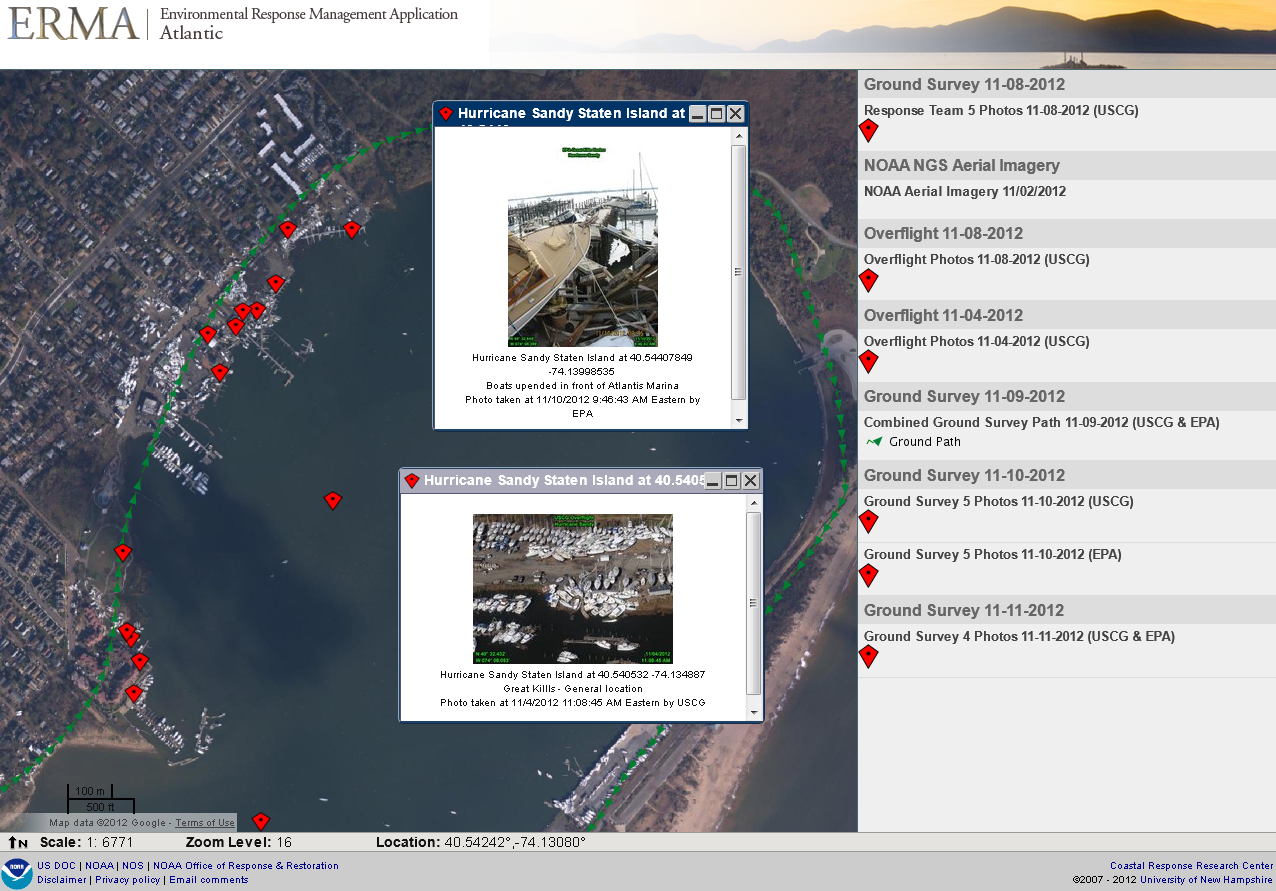
A view of Atlantic ERMA showing Coast Guard field team photos and the aerial survey path taken at Great Kills Harbor Marina.
A view of Atlantic ERMA showing Coast Guard field team photos (red) and the aerial survey path (green) taken at Great Kills Harbor Marina on Staten Island, N.Y., during the post-Hurricane Sandy assessment and cleanup. The data are shown on top of NOAA National Geodetic Survey aerial images taken after the storm and show the impact along the shoreline. The photos were processed in the NOAA Photologger database at the Coast Guard incident command post on Staten Island, uploaded to ERMA, and used by the Coast Guard to prioritize cleanup and plan for the next day’s activities, as well as for briefing agency leaders and partners. (NOAA) Click to enlarge.

NOAA Geographic Information Specialist Matt Dorsey: Field photos are very informative and give a lot of insight to some of the unique and complex issues for pollution prevention and removal following a hurricane or other emergency situations. Some of the less frequent but more challenging scenarios include vessels inside houses, vessels aground a mile away from the closest waterway, and many vessels swept out of marinas into sensitive marsh areas.

Vessels that had been swept into marshes were a big issue while I was there. The Coast Guard wanted to know which sensitive marsh areas had vessels washed into them, how to prioritize these boats for removing oil or gas aboard them, and how to put together a plan for removing the actual vessel without disturbing the area too much more than it already had been.

Jill Bodnar and her team: Using ERMA as the "big picture" of the response helps responders tell the story of a pollution site, such as a grounded fishing boat with a leaking fuel tank. The Coast Guard operations staff was using ERMA to identify these priority locations before they went in the field, and created their own customized maps to take with them. ERMA gave them a lot of freedom in planning their field activities because they did not have to rely solely on a GIS specialist to create and print maps for them.

ERMA also plays other roles for the Unified Command, which uses it to see the most current field data to plan for the next day's activities, to brief Coast Guard leadership on the scale and status of their teams' cleanup operations.

The benefit of everyone using a tool like ERMA is that everyone involved in the response—the Coast Guard, NOAA, Environmental Protection Agency, States of New York and New Jersey, and other agencies—is looking at the most up-to-date data, instead of information that may be a few days old. All of the responders and decision makers, both inside and outside of the incident command post, know they are looking at the same, consistent, high-quality information and using that to prioritize response decisions. Everyone sees the same picture—whether it's the frenzied first day after a disaster or weeks later.

Ed Levine works as Scientific Support Coordinator for NOAA's Office of Response and Restoration, where he provides scientific and technical support during oil and chemical spills in the New York area.

Jill Bodnar graduated from the University of Rhode Island with a Masters degree in natural resources, specializing in using GIS for oil spill response. She has been a geographic information specialist with NOAA's Office of Response and Restoration for over 11 years and has responded to numerous incidents in that time, including Hurricanes Katrina, Ike, Isaac, and Sandy, and the 2007 Cosco Busan and 2010 Deepwater Horizon/BP oil spills.

U.S. Coast Guard oversees the removal of a drum with unknown contents.
In the aftermath of Hurricane Sandy, the U.S. Coast Guard oversees the removal of a drum with unknown contents with New York City in the background. NOAA's ERMA application helped responders prioritize the removal of pollution threats such as this one. (U.S. Coast Guard)
Coast Guard Station New York aftermath from Hurricane Sandy.
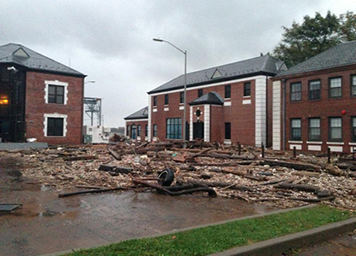
Coast Guard Station New York, located on Staten Island, sustains flooding damage and debris after Hurricane Sandy passes through New York Harbor, Tuesday, Oct. 30, 2012. (U.S. Coast Guard/Petty Officer 1st Class Josh Janney)
Node Weight: 
5

What Are the Increased Risks From Transporting Tar Sands Oil?

Short title: 
What Are the Increased Risks From Transporting Tar Sands Oil?

Tar Sands: The Basics

Tar sands, also referred to as oil sands, are a combination of clay, sand, water, and heavy black viscous oil called bitumen. They can be extracted and processed to separate the bitumen, which is upgraded to synthetic crude oil and refined to make asphalt, gasoline, and jet fuel.

Because of its thick consistency (which resembles peanut butter), bitumen, unlike most conventional crude oils, must be diluted with a cocktail of other petroleum compounds before it is able to flow through pumps and tanks or pipelines for transport. This thinner, more fluid product is called diluted bitumen or dilbit.

Another similar blend made from bitumen and synthetic crude oil is called synthetic bitumen or synbit. Over the past decade, this resource which was previously uneconomical due to the high cost of extraction has become profitable as oil prices have increased and extraction technologies have improved. While many countries, including the U.S., have known deposits of tar sands, the world's largest reserves are located across three deposits in northern Alberta, Canada—the Athabasca, Cold Lake, and Peace River deposits. The Government of Alberta estimates its total reserves of bitumen at about 170 billion barrels.

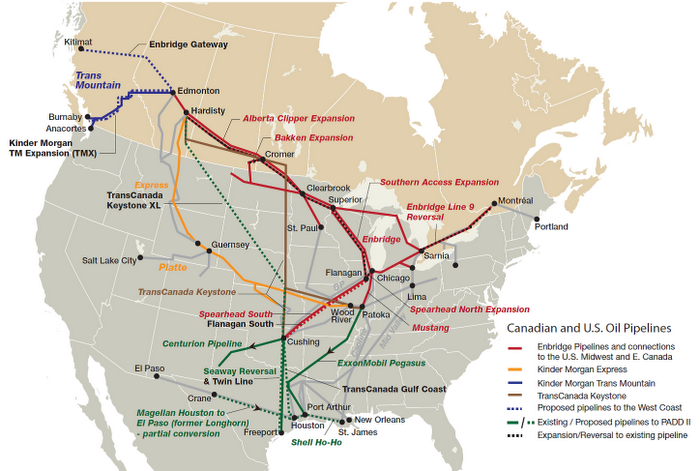
A map of current and proposed Canadian and U.S. oil pipelines which carry tar sands oils.
A map of current and proposed Canadian and U.S. oil pipelines which carry tar sands oils. It includes the proposed TransCanada Keystone XL pipeline which would cross the U.S.-Canadian border and six U.S. states. (Canadian Association of Petroleum Producers/The Facts on Oil Sands Report 2012)
 

Increased Spill Risks and NOAA

Canada has been producing tar sands products since 1967, but recently, production has ramped up substantially.

Because Canada exports most of its tar sands products, the transportation infrastructure for bitumen—pipelines, rail, and ships—has been expanding as well. A notable example is the proposed TransCanada Keystone XL pipeline which would cross the Canadian-U.S. boundary, extending from Alberta to Texas.

Other proposed projects would increase transportation capacity for tar sands products on both the Atlantic and Pacific Coasts. Expanding traffic to markets in the U.S., Asia, and elsewhere is predicted to increase the potential for spills in and around the Great Lakes, Washington's Puget Sound, and at other major U.S. shipping terminals and river crossings.

NOAA's Office of Response and Restoration has the responsibility to respond to and provide scientific support for oil and chemical spills in U.S. coastal waters. This means OR&R must be able to anticipate and plan for the increased risks that a tar sands oil spill might bring. At present, knowledge about the chemical properties and behavior of tar sands products during a marine spill is limited. For example, would the diluted bitumen float or sink in the brackish waters of many ports, where rivers' fresh water mixes with salty seawater? How should responders be ready to remove that oil if it were suspended in the water column instead of floating on the surface?

These gaps in information make effective spill planning and response more difficult for NOAA and its partners. Key information about tar sands' chemical and physical properties is proprietary, and regulatory agencies' knowledge of where and when this material is being transported is limited as well.

OR&R has been learning on the job how to deal with some of these challenges, as in the 2010 case of an Enbridge pipeline spilling what later turned out to be tar sands oil into Michigan's Kalamazoo River.

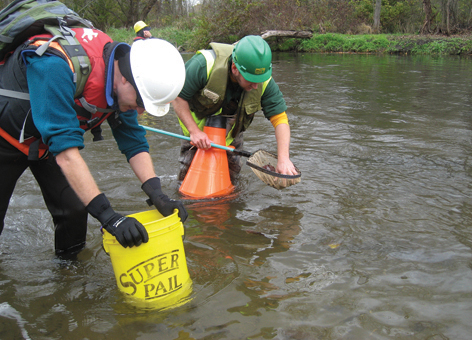
Scientists assessed mussel impacts from response to Kalamazoo River oil spill.
In July of 2010, an Enbridge-owned pipeline spilled oil -- which later turned out to be diluted bitumen from Canadian tar sands -- into the Kalamazoo River in Michigan. Because the heavier elements of the oil became submerged in the river, response-related boat traffic trying to remove the oil ended up crushing freshwater mussels. The scientists shown here were assessing those impacts. (NOAA)
Bitumen.
Bitumen. (Government of Alberta, Canada)
Node Weight: 
5

Submit Your Comments: Studying Decades of Environmental Injuries at the Hanford Nuclear Site

Short title: 
Submit Comments on Restoration at Hanford Nuclear Site

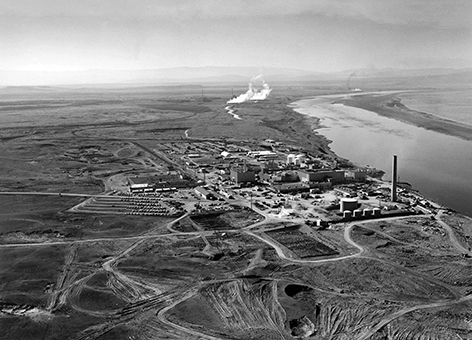
DEC. 12, 2012 — Interesting things are happening at Hanford. After decades of nuclear production, years of cleanup, and chronic contamination, the time has come to begin restoring the land and natural resources of Hanford, Wash. That's why NOAA, along with other agencies and tribes, has started a natural resource damage assessment and is now publishing a document for public review. The Draft Injury Assessment Plan [PDF] describes the first phase of the restoration process, which is to quantify harm to natural resources at the Hanford Nuclear Site. For those of you unfamiliar with the history of the site, between 1944 and 1987, Hanford, located in eastern Washington state, produced plutonium for atomic weapons, starting with the "Fat Man" bomb dropped on Nagasaki, Japan, in 1945.

During the Cold War years, the facilities grew to include nine nuclear reactors and associated processing plants. For decades, Hanford produced radioactive materials for Cold War-era military activities, commercial nuclear energy production, and nuclear medicine. These operations led to the release of radionuclides and contaminants into the arid landscape and the Columbia River, which borders the site, injuring the habitats, wildlife, and people's ability to enjoy the area for recreational and cultural uses. Cleanup at the site began in 1989 and likely will continue well into the future. However, we are concerned about the chronic environmental impacts and believe there is a need to begin restoration now to offset the more than 30 years of injury. Our efforts are different than cleanup. Cleanup involves removing contaminated materials such as buildings, waste, and soil from the landscape.

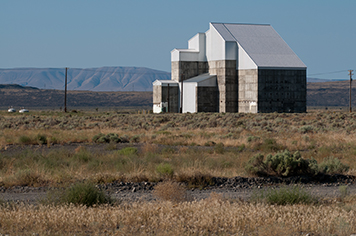
F Reactor sits across the Columbia River at the Hanford Nuclear Site.
The now-remediated F Reactor, a former plutonium productor reactor, sits across the Columbia River at the Hanford Nuclear Site. NOAA and the other natural resource trustees hope to begin reversing the decades of environmental harm at this site. (U.S. Dept. of Energy)

Restoration, on the other hand, involves accounting for and offsetting the harm done to natural resources that continue to feel these impacts while waiting for full cleanup at the site. For example, during past operations at Hanford, leaks and overflows caused contaminants from nuclear reactors to flow directly into the Columbia River, and even though the facilities have long since been closed, the contaminants in the groundwater, such as chromium, have continued to leach into the river to the present day. These contaminants have reached Chinook salmon spawning grounds and the forage and resting areas for sensitive young salmon near the shoreline. This is why NOAA, other agencies, and local tribes believe it is time to begin restoration planning.

The Draft Injury Assessment Plan, which is available for your review, is the first step in planning restoration. We are required by law to describe and quantify harm to impacted habitats and species before we can begin restoration on land or in the river, and we have created a Draft Injury Assessment Plan to accomplish that. No one has completed this kind of assessment at Hanford before, and it will be a challenging and complex task. First, we will pull from existing scientific studies, Hanford site documents, and historical information to create a picture of what harm has been done to the natural resources. Then, we will plan additional studies only where the picture is not already clear. Once we fill in these missing pieces with data, we will be better prepared to determine the scale and type of restoration needed and begin the appropriate projects.  

Assessing past, present, and future environmental injuries will not be easy, which is why we need your input on our plan. Let us know what you think of our proposed approach. You can find out more about our efforts and obtain copies of the Draft Injury Assessment Plan [PDF] at www.hanfordnrda.org.

Submit your comments by January 4, 2013 to: Mr. Larry Goldstein (Larry.Goldstein@ecy.wa.gov) Hanford Natural Resource Trustee Council Chair Washington State Department of Ecology Nuclear Waste Program P.O. Box 47600 Olympia, WA 47600 360-407-6573 In addition, a public meeting will be held on Wednesday, December 12, 2012 from 6:00 p.m. to 8:30 p.m. in the Richland Public Library’s Gallery Room, 955 Northgate Drive. Learn more about the Hanford Natural Resource Damage Assessment.

Nuclear reactors line the riverbank at the Hanford Site along the Columbia River
Nuclear reactors line the riverbank at the Hanford Site along the Columbia River in January 1960. The N Reactor is in the foreground, with the twin KE and KW Reactors in the immediate background. The historic B Reactor, the world's first plutonium production reactor, is visible in the distance. (U.S. Dept. of Energy)
Cocooned F Reactor surrounded by grassland and hills at Hanford.
F Area is home to F Reactor, the third of Hanford’s nine plutonium production reactors built to produce plutonium for the nation’s defense program during both World War II and the Cold War. The reactor operated from 1945 to 1965 and was placed in interim safe storage in 2003. (U.S. Dept. of Energy)
Node Weight: 
4

Government of Japan Gifts NOAA $5 Million to Address Tsunami Marine Debris

Short title: 
Government of Japan Gifts NOAA $5 Million to Address Tsunami Marine Debris

DEC. 4, 2012 — On Nov. 30, 2012, the Government of Japan announced a gift of $5 million to the United States, through NOAA's Marine Debris Program, to support efforts in response to marine debris washing ashore in the U.S. from the March 2011 earthquake and tsunami in Japan.

The funds will be used to support marine debris response efforts, such as removal of debris, disposal fees, cleanup supplies, detection and monitoring. NOAA anticipates distributing funds to affected regions as the funds are received from Japan and will work to determine immediate needs and plan for future applications.

Since the disaster, NOAA has been leading efforts with federal, state and local partners to coordinate a response, collect data, assess the debris, and reduce possible impacts to natural resources and coastal communities.

Debris from the disaster has drifted across the Pacific and reached shorelines in the U.S. and Canada. In July, NOAA provided $50,000 each to Alaska, Hawaii, Washington, Oregon, and California to support response efforts.

Items from the tsunami that have drifted to U.S. shores include sports balls, a floating dock, buoys, and vessels. Mariners and the public can help report debris by emailing DisasterDebris@noaa.gov with information on significant sightings.

A 66-foot floating dock from Japan sits on Agate Beach, Oregon.
A 66-foot dock sits on Agate Beach, Oregon. Debris of all different sizes and types from the March 2011 tsunami in Japan has washed ashore in the United States. (Oregon Dept. of Parks and Recreation)
Node Weight: 
5

A Train Derails in Paulsboro, N.J., Releasing 23,000 Gallons of Toxic Vinyl Chloride Gas

Short title: 
A Train Derails in Paulsboro, N.J., Releasing 23,000 Gallons of Toxic Vinyl Chloride Gas

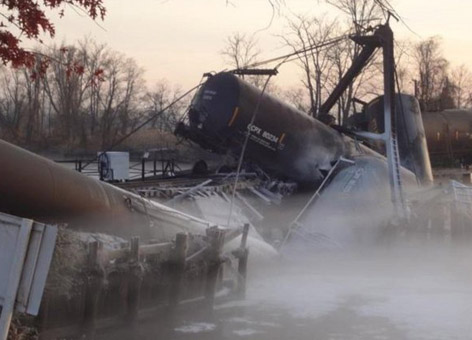
UPDATED DEC. 17, 2012 — Recovery operations are now complete for the derailed train cars carrying vinyl chloride. On Nov. 30, 2012, a train transporting the chemical vinyl chloride derailed while crossing a bridge that collapsed over Mantua Creek, in Paulsboro, N.J., near Philadelphia. Four rail cars fell into the creek, breaching one tank and releasing approximately 23,000 gallons of vinyl chloride. Local, state, and federal emergency personnel responded on scene. A voluntary evacuation zone was established for the area, and nearby schools were ordered to immediately take shelter and seal off their buildings.

Vinyl chloride, which is used to make plastics, adhesives, and other chemicals, is a toxic gas. During this accident, most of the chemical was released directly to the air, and response teams worked to determine how much might have dissolved in the creek's waters, which feed into the Delaware River. U.S. Coast Guard Sector Delaware Bay contacted NOAA's Office of Response and Restoration (OR&R) and requested scientific support for this environmental and public health threat.

The OR&R scientific support team helped address early concerns about the air hazard, centering around possible health effects, evacuation decisions, proper protective equipment for responders, impacts to the Philadelphia airport two miles away, and reactivity between vinyl chloride and another rail car containing ethyl alcohol. OR&R develops software products responders use to address these issues: ALOHA, an air dispersion model, and CAMEO Chemicals, a hazardous material database.

OR&R had a Scientific Support Coordinator (SSC) at the scene of the spill to work with the Coast Guard as they attempted to salvage the derailed cars from the creek and collapsed bridge. While the SSC departed on Dec. 6, a NOAA incident meteorologist remains at the incident command post to provide custom weather forecasts for the affected area, for air monitoring and to identify safe operating conditions for the crane work and other salvage operations.

OR&R's Emergency Response Division also was involved from NOAA's Seattle offices, where they investigated potential problems in case the vinyl chloride accidentally were discharged into the water during salvage operations. In addition, two scientists from NOAA's Center for Operational Oceanographic Products and Services (CO-OPS) had been dispatched to Paulsboro to deploy a current meter and forecast the tides specifically for Mantua Creek (which is driven by tidal flows) to schedule safe crane and dive operations. To help the National Transport Safety Board's investigation into this incident, CO-OPs scientists also will recreate the tidal cycle conditions during the time of the incident.

Removing the derailed train cars proved to be a logistically complicated process. First, the Coast Guard coordinated the removal of the last 600 gallons of vinyl chloride from the breached tank by using acetone and suctioning out the vapors before attempting to move the tank. Next, the response team successfully brought in cranes and barges to remove the rail cars from Mantua Creek, re-establish them on the rail, and have them transported away from the site. Recovery operations for the derailed train cars ended on December 17.

Seven train cars derailed when the bridge over the Mantua Creek.
Seven train cars derailed when the bridge over the Mantua Creek collapsed Friday morning. Four tank cars containing vinyl chloride were dumped into the creek. Nearby residents were evacuated and schools were locked down. Nearly 20 people complained of respiratory distress from the vinyl chloride vapor that leaked from the tank cars. (Photo: Rae Lynn Stevenson/South Jersey Times. All rights reserved.)
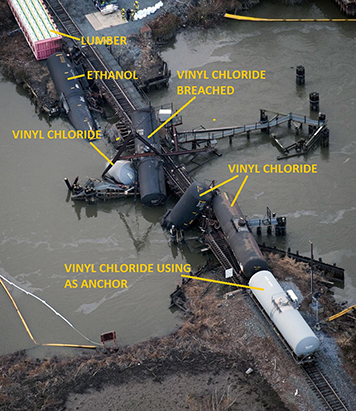
Overview of the overturned train cars carrying vinyl chloride in a creek.
A detailed overview of the overturned train cars carrying vinyl chloride in New Jersey's Mantua Creek. The rail car in the foreground is being used as an anchor to stabilize the derailed cars. (Conrail Derailment Incident Command)
Node Weight: 
5

The Western Flyer: A Sunken Piece of Literary History Is Raised from the Depths

Short title: 
The Western Flyer: A Sunken Piece of Literary History Is Raised from the Depths

PUBLISHED NOV. 28, 2012

By Office of Response and Restoration Assistant Scientific Support Coordinator LTJG Alice Drury and National Marine Fisheries Service Senior Scientist Kevin Bailey

Alice Drury: It was lunchtime on September 24, 2012, when I got the call from the U.S. Coast Guard. It involved a sinking boat, some spilled oil, and author John Steinbeck. But I wouldn't discover this last bit until later.

First, I learned that the F/V Gemini, an old fishing boat moored in Washington's Puget Sound, had sunk directly underneath the Twin Bridges in Swinomish Channel. On its way down, the vessel was slowly leaking diesel. The leak was slow enough and the oily sheen on the surface of the water was so light that the spilled oil was unrecoverable.

Because the water isn't very deep in that area, the upper portions of the sunken boat were visible above the water. Responders very quickly surrounded the boat with protective boom to contain the leak.

I worked with the oceanographers and biologists in my office to provide scientific support not only for this situation but also the worst-case, "what-if" scenario—in case something goes wrong and all of the Gemini's fuel spilled into the surrounding waters.

Fortunately later that afternoon, divers succeeded in pumping the remaining fuel off the Gemini, and the response team was coordinating with the owner to raise the vessel from the channel's bottom.

But it wasn’t until that evening that I noticed in a report the boat was actually named the F/V Western Flyer, not the F/V Gemini, which was only a modern nickname. This led to very interesting—and unexpected—lesson on the history and literature of this creaky wooden boat sunk in the Swinomish Channel.

That's when NOAA fisheries scientist and budding ship biographer Kevin Bailey—and John Steinbeck—entered the picture.

Kevin Bailey: The day the Western Flyer sank, I was visiting the Fisherman's Wharf in Monterey, Calif., the boat's old home in another life. I was there to research a book I am writing about the Western Flyer and was talking with Tim Thomas, the Sardine Guy, who gives walking tours of the harbor and Cannery Row. I learned about the sinking a few days later when a friend forwarded me a notice linked to NOAA's Office of Response and Restoration IncidentNews website.

The Western Flyer is a porthole to the marine environmental history of the northeast Pacific Ocean. Constructed in Tacoma, Wash., in 1937, this wooden-hulled purse seiner lived several lives—surveying in Alaska, fishing for tuna off La Paz, Mexico, seining for sardines near Monterey, Calif.—before it entered literary history as well.

Travels with Steinbeck
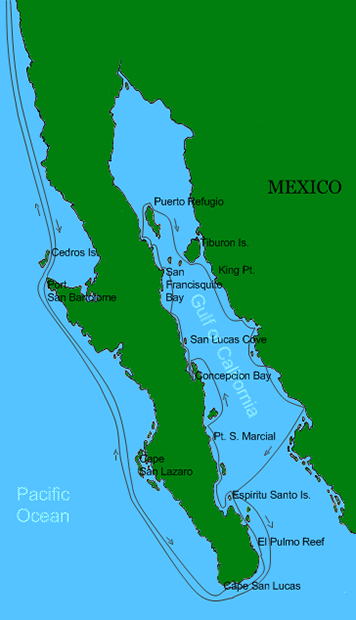
Map of the route around the Gulf of California which John Steinbeck and Ed Ricketts took aboard the F/V Western Flyer.
The route around the Gulf of California which John Steinbeck and Ed Ricketts took aboard the F/V Western Flyer in 1940. Credit: Wikipedia, Creative Commons.

In 1940, only a few years after publishing Of Mice and Men and The Grapes of Wrath, writer John Steinbeck, along with his good friend marine biologist Ed Ricketts, chartered the Western Flyer out of Monterey for $2,500. They were preparing for a six week research cruise to the Sea of Cortez, also known as the Gulf of California.

While the Monterey newspaper characterized the group as "perhaps the strangest crew ever assigned aboard a local work boat," Steinbeck and company managed to sample the marine life while carousing their way down the coast of Baja California into the Gulf of California and back again.

This voyage was made famous in Steinbeck and Ricketts' book, The Log from the Sea of Cortez, the republished narrative of a less successful earlier account and which serves as both a travel log of the trip and a look into Ricketts' influence on Steinbeck.

Steinbeck's experience on the Western Flyer led him to create elements of his later works, including Cannery Row and The Pearl.

Life after the Sea of Cortez

After Steinbeck and Ricketts' voyage, the Western Flyer would make its way back to the Pacific Northwest, changing hands several times and taking new shape as a fishing trawler.

It would haul tens of thousands of pounds of Pacific Ocean perch, a fish known to live up to a hundred years. It would spend the early 1960s surveying more than 20,000 square miles along British Columbia and Alaska in the most extensive fishery survey of that coast up to that time. It would head to Dutch Harbor, Alaska, where it would seek out red king crab, with a cook on board who would later turn out to be the father of a character on Deadliest Catch, a TV series about Alaska king crab fishing.

In 1970, the boat's owner at the time had a penchant for the NASA space missions, renaming the vessel the Gemini. After changing ownership several times again between 1971 and 2010, the Gemini finally ended up in Washington's Swinomish Slough under the Twin Bridges on State Route 20, where it's been sitting since 1997, next to the Swinomish Casino and Lodge.

The Western Flyer/Gemini's most recent owner is an Irish immigrant, a real estate developer living in Key West, Fla. He owns several downtown buildings in John Steinbeck's hometown of Salinas, Calif. When he bought the boat in 2010, he had a plan to restore the Western Flyer, somehow get the boat down to Salinas, and park it inside one of the buildings as part of the decor of a restaurant and boutique hotel.

A Not-so-final Resting Place
The cover of John Steinbeck's book "The Log of the Sea of Cortez,"
The cover of John Steinbeck's "The Log of the Sea of Cortez," the book written about Steinbeck and Ed Ricketts' expedition on the F/V Western Flyer in 1940.

Meanwhile, the boat sat idle for nearly two years—until it sank this past September. The owner told me the boat sank quickly to the bottom because a couple of planks had given way.

I watched a crew refloat the boat at the beginning of October. It seemed hesitant to rise off the bottom where it had rested in the soft mud of the Swinomish Channel for two weeks. But finally the workers succeeded in lifting the vessel, pumping the water out, and putting a temporary patch over the hole.

The owner is sincere about his plan to restore the boat in some fashion, but because of the damage from neglect and sinking, it is going to be an expensive venture, maybe exceeding $600,000. There's a nonprofit group called the Western Flyer Project that wants to bring the ship back to Monterey for restoration, but they don't have the resources to do it right now. We'll have to wait and see what happens to this historic cultural icon, as it continues its rise from the depths.

LTJG Alice Drury is part of the NOAA Corps, where she was assigned first to NOAA Ship McArthur II for two years.

LTJG Drury is now assigned as the Regional Response Officer in OR&R's Emergency Response Division. In that assignment she acts as assistant to the West Coast, Alaska, and Oceania Scientific Support Coordinators.

Kevin McLean Bailey started his career as a marine fisheries biologist and ecologist in 1974 after graduating from the University of California at Santa Barbara. He later obtained his PhD from the University of Washington. He is a Senior Scientist at the Alaska Fisheries Science Center. He is currently writing a book on the Western Flyer and the environmental history of the west coast.

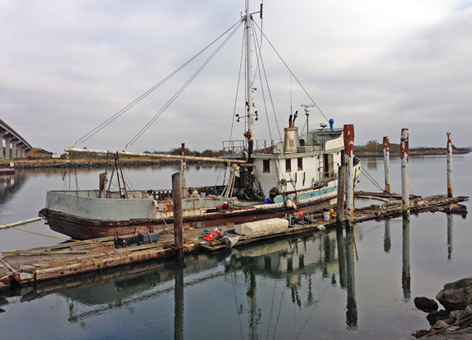
The F/V Gemini, or F/V Western Flyer, after being raised from Swinomish Channel.
The F/V Gemini, which turned out to be the F/V Western Flyer chartered by John Steinbeck, after it was raised from the Swinomish Channel in Washington in October 2012. Photo used with permission from Capt. Richard Rodriguez, BitterEndBlog.com/All Rights Reserved.
Node Weight: 
4

Submit Your Comments: Projects to Improve Bird and Sea Turtle Nesting Habitats Injured in Deepwater Horizon/BP Oil Spill

Short title: 
Submit Comments: Plans to Restore Habitats After Gulf Oil Spill

NOV. 26, 2012 — The public has until December 10, 2012, to submit comments on $9 million in early restoration projects related to the 2010 Deepwater Horizon/BP oil spill. This draft early restoration plan includes two projects aimed at restoring injuries to bird and sea turtle nesting habitats around the Gulf of Mexico. In the wake of the 2010 well blowout, the pollution response operations disturbed these sensitive habitats. The natural resource trustees, including NOAA, hope to have the habitat improvements in place for the spring 2013 nesting season. Part of BP's $1 billion funding for early restoration in the Gulf, this second round of projects includes the following proposals:

  • A comprehensive program for enhanced management of avian (bird) breeding habitat injuries by response in the Florida panhandle, Alabama and Mississippi. This project proposes to protect nesting habitat for beach-nesting birds from disturbance in order to restore habitat impaired by disturbance from oil spill response activities. It is to be conducted on sandy beaches in Escambia, Santa Rosa, Okaloosa, Walton, Bay, Gulf, and Franklin counties, Florida; Bon Secour National Wildlife Refuge (NWR) in Baldwin and Mobile counties, Alabama, and the Gulf Islands National Seashore (GUIS) – Mississippi District.
  • Improving habitat injured by spill response: Restoring the night sky. This project proposes to reduce artificial lighting impacts on nesting habitat for sea turtles, specifically loggerhead turtles, to restore habitat impaired by disturbance from oil spill response activities. It is to be conducted on sandy beach public properties in Baldwin County, Alabama; and Escambia, Santa Rosa, Okaloosa, Walton, Bay, Gulf, and Franklin counties, Florida.

You can submit your comments on these projects in the following ways:

The trustees considered projects based on criteria laid out in federal and state regulations and in the agreement with BP. This is the second in a series of draft early restoration plans developed outlining projects agreed to by the trustees and BP and presented for public input. These draft plans will be finalized to ultimately form a Final Early Restoration Plan. To access both Phase I and II Draft Early Restoration Plans and Environmental Reviews, as well as additional details on the proposed projects, please visit NOAA's Gulf Spill Restoration website. The long-term damage assessment will continue while early restoration planning is under way. BP and the other responsible parties ultimately will be obligated to compensate the public for the entire injury and all costs of the natural resource damage assessment.

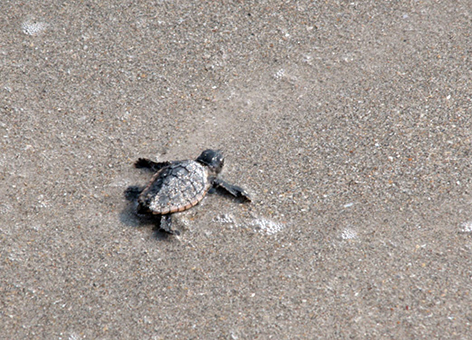
A hatchling loggerhead sea turtle takes to the beach.
A hatchling loggerhead sea turtle takes to the beach on Archie Carr National Wildlife Refuge in Florida. One proposed project focuses on reducing artificial lighting impacts on nesting habitat for these sea turtles. (Paul Tritak/U.S. Fish and Wildlife Service)
Node Weight: 
3

Study Reveals D.C. Community near Anacostia River Are Eating and Sharing Contaminated Fish

Short title: 
Study Reveals D.C. Community near Anacostia River Are Eating and Sharing Contaminated Fish

NOV. 20, 2012 — An extensive study partly funded by NOAA has found that nearly half of the people living near Washington, D.C.'s Anacostia River are unaware of the dangers of eating its fish. The results are prompting a reexamination of how to communicate these important public health risks to a diverse, multilingual, and urban community. The report uncovered further evidence that many local fishermen—who were disproportionately African American, Latino, or Asian—are catching, eating, and sharing potentially contaminated fish with family, friends, and others, greatly expanding the possible long-term health risks to the public. The study estimated some 17,000 people living near the Anacostia could be eating these polluted fish. "Our research confirmed that contaminated fish are, indeed, being shared in the community," said Steve Raabe of OpinionWorks, the company that did the survey. "What we could not have known, prior to embarking upon this effort, is the extent to which this sharing happens and the complex set of factors that drive it."

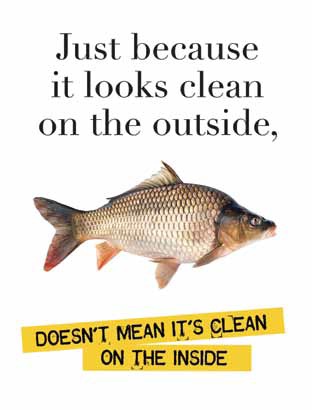
Sign with a clean fish warning about possible pollutants inside.
When shown this ad during interviews with Anacostia River fishermen, one respondent answered, "This (ad) makes you just want to grill it!" This demonstrated "how difficult it is to break through to this audience with a message about unseen contaminants," such as PCBs. (Addressing the Risk 2012 report)
A Dirty History

The Anacostia River, which runs through Maryland and the District of Columbia, has suffered from decades of pollution, mainly from runoff and hazardous waste sites. NOAA has been partnering to evaluate, clean up, and restore the Anacostia watershed since the late 1990s. One of the most notable chemical pollutants in the river is polychlorinated biphenyls (PCBs), which have immune, reproductive, endocrine, and neurological effects, and may cause cancer and affect children's cognitive development. This and other chemicals build up in the river bottom, where they make their way up the food chain and become stored in the tissues of fish, posing a health threat if people consume them. Even though the District of Columbia and Maryland have been issuing warnings about eating Anacostia River fish for more than twenty years, the majority of fishermen and community members surveyed were not aware of these advisories. While both governments tell the public not to eat any channel catfish or carp, this report exposed that these are some of the most commonly caught fish in the river. Furthermore, over half the fishermen reported that "knowing about such a health advisory" would not change whether or how they ate their catch. Researchers found at least two misunderstandings playing into this. One was the fishermen's mistaken belief that they would be able to see contamination on the outside of the fish. Another was their assumption that getting "sick" from the fish would be immediate, in the form of food poisoning, instead of a future risk of cancer.

Hungry Now or Sick Later?

A particularly surprising result from the study was that fishermen along the Anacostia River often are approached by people who ask them to share fish because they do not have enough food. "They will ride around in their cars and look to see if we’re catching fish and ride up and ask, 'Have you caught anything today? Are you going to keep them?'" said one Anacostia fisherman interviewed during the study about sharing his catch with those lacking food.

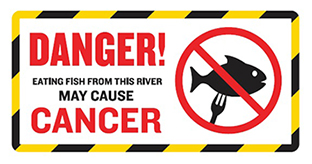
Warning sign reading: Danger: Eating fish from this river may cause cancer.
Researchers found that this kind of direct messaging got the attention of those fishing on the Anacostia River. But simply improving warning signs may not be enough to address the root of the problem. (Addressing the Risk 2012 report)

The community's apparent lack of access to enough affordable food complicates the task of merely delivering a better message about health risks. "The answer to this problem will be far more complex than simply telling anglers not to share their catch," said Raabe. "How can you tell someone who is hungry today not to eat fish that may pose future health risks?" With almost three-quarters of fishermen eating or sharing the fish they catch, those involved in the study are looking at a broad range of possible fixes to this complex problem:

  • Improving health-risk messages to those most affected.
  • Creating more and better opportunities for education, such as fishing tournaments.
  • Introducing healthier alternative protein options to the community, through aquaponics ("a farming technique that grows plants and fish in a recirculating environment") and local fish subscription services (akin to community supported agriculture programs).
  • Increasing the amount of city food gardens and farmers markets in the area.

Along with NOAA, the following organizations were involved in this study: Anacostia Watershed Society, the Chesapeake Bay Trust, Anacostia Riverkeeper, District Government, U.S. Fish and Wildlife Service, and the U.S. Environmental Protection Agency. You can download the complete report at www.anacostiaws.org/fishing, read about ways to reduce exposure to chemical contaminants when eating fish, and learn about efforts to cleanup and restore the Anacostia.

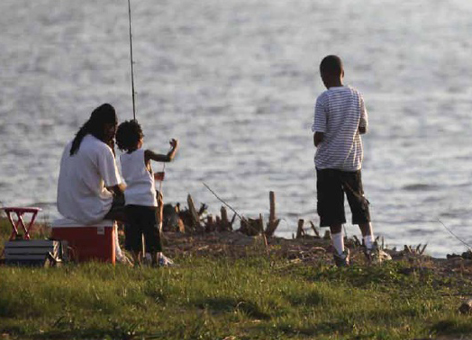
A family fishes on the Anacostia River near Washington, D.C.
A family fishes on Washington, D.C.'s Anacostia River. According to a 2012 report, 74 percent of those fishing this river are eating or sharing fish possibly contaminated by cancer-causing chemical pollutants. Credit: Rebecca Harlan/All rights reserved.
Node Weight: 
4

NOAA Prepared to Deal with Longer-Term Pollution Impacts after Hurricane Sandy

Short title: 
NOAA Prepared to Deal with Longer-Term Pollution Impacts after Hurricane Sandy

NOV. 16, 2012 — Weeks after Hurricane Sandy roared across the East Coast, NOAA's Office of Response and Restoration still has several personnel on scene at the pollution response command post on Staten Island, N.Y. We are working to assess and reduce the remaining environmental impacts from the oil spills, debris, and subsequent cleanup in the wake of Hurricane Sandy.

At this point, our Scientific Support Coordinators are still participating in aerial surveys of the areas affected by oil spills and debris scattered throughout the waters in and around New Jersey and New York. They have been providing guidance on reducing environmental impacts to sensitive habitats during the recovery of freight containers which may contain hazardous materials, large fuel tanks, and large debris, such as a large pleasure craft grounded in coastal wetlands. In addition, they continue to coordinate with the Coast Guard and state environmental officials to establish when it is appropriate to transition from active oil recovery operations, which might involve cleanup workers pumping oil out of the water, to passive cleanup (using absorbent materials) with monitoring.

Our GIS specialists also remain at the command post, managing response data in the web-based data mapping tool, ERMA®. This team has been working with other NOAA offices to display in ERMA post-storm data such as the National Geodetic Survey aerial imagery and Office of the Coast Survey side scan sonar results. Throughout the pollution response, they have been training responders in the command post to use ERMA and providing technical support, for example, improving the organization and flow of data into the application.

They also have been working with other government agencies, including EPA, FEMA, and the states of New York and New Jersey, to obtain and share data for the response. In the week after the storm, NOAA's damage assessment staff began collecting data on impacts to natural resources, especially affected coastal habitats, and coordinating with state and federal co-trustees to determine whether to pursue a natural resource damage assessment and implement environmental restoration. They, along with representatives from New Jersey Department of Environmental Protection and Motiva, performed land and boat surveys of affected sites, including several creeks in New Jersey and New York possibly oiled by the Motiva Refinery spill in Sewarren, N.J. Currently, this team of federal and state trustees is investigating reports of oiled wildlife and habitats in the area of the oil spilled at the Phillips 66 Refinery in Linden, N.J.

Our NOAA damage assessment experts use reports from our responders' aerial surveys to target which creeks and wetland areas to survey for injuries. Recovery after hurricanes such as Sandy can take a very long time, and our office likely will be active in the efforts to promote environmental recovery in the months to come. Stay tuned for more photos, maps, and updates on the pollution-related response efforts at IncidentNews.

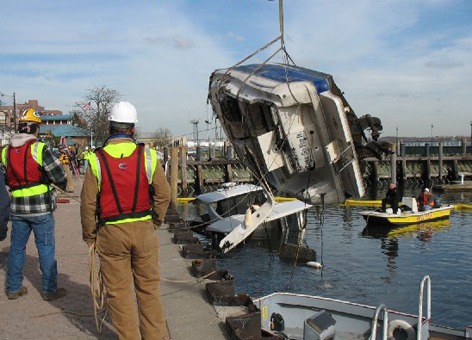
A response team oversees the removal of a sunken boat that was discharging oil.
On November 15, 2012, a Hurricane Sandy response team oversees the removal of a sunken boat that was discharging oil off of Staten Island, N.Y. (U.S. Environmental Protection Agency)
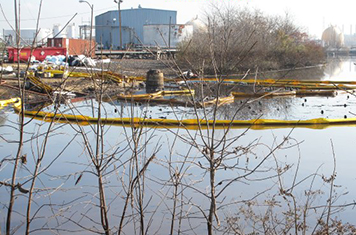
Containment boom surrounds the oil and debris released from tanks in New Jersey.
Containment boom surrounds the oil and debris released from tanks at the Phillips 66 Refinery in Linden, N.J., on November 12, 2012. (NOAA)
Node Weight: 
4

NOAA Awards $500,000 to Research Projects Exploring Impacts of Chemical Dispersants on Marine Habitats

Short title: 
NOAA Awards $500,000 to Research Projects Exploring Impacts of Chemical Dispersants on Marine Habitats

NOV. 15, 2012 — We're pleased to announce that NOAA will provide grants, totaling $500,000, to study the effects of chemical dispersants on the marine environment. Earlier this year, NOAA's Office of Response and Restoration partnered with the Coastal Response Research Center at the University of New Hampshire to make a formal call for research project proposals. We received 36 proposals from researchers and universities across the U.S. and Canada and even a few from scientists in Europe. Those proposals were peer-reviewed this past summer and early fall, and through a competitive selection process, three research projects have been awarded funding. NOAA's research grants are being awarded to the following studies [PDF], which will focus on:
  • Developing a worldwide quantitative database of the toxicological effects of dispersants and chemically dispersed oil.
  • Conducting research to improve understanding of chronic impacts of chemical dispersant and chemically dispersed oil on blue crabs, a commercially important species of marine life.
  • Researching public concerns and improving risk communication tools for oil spills and dispersants.

Over the next year we'll get progress reports from the researchers, and all of the materials will be available online at the University of New Hampshire's website. Congress provided money for these grants out of supplemental research funding following the 2010 Deepwater Horizon/BP oil spill.

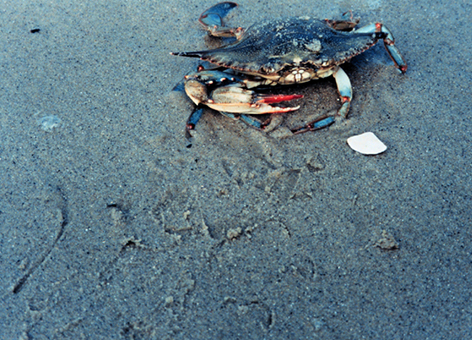
Female blue crab on a beach.
The University of Maryland Center for Environmental Science in Baltimore, Md., has been awarded $150,000 to study the effects of dispersants and dispersed oil on the commercially important blue crab, a keystone species of the Gulf of Mexico and Atlantic coast, and its larvae. A female blue crab (Callinectes sapidus) is pictured here on a beach on Maryland’s Chesapeake Bay. (NOAA)
Node Weight: 
5

Latest Winter Storm Slows But Does Not Worsen Post-Hurricane Sandy Cleanup

Short title: 
Latest Winter Storm Slows But Does Not Worsen Post-Hurricane Sandy Cleanup

NOV. 9, 2012 — In anticipation of the winter storm which came on the heels of Hurricane Sandy, spill response teams based on New York's Staten Island temporarily closed down operations November 7. They have now resumed hazardous spill response activities with little fallout from the storm's strong winds and heavy snows.

NOAA's Office of Response and Restoration is continuing aerial surveys of Arthur Kill, the waterway spanning New Jersey and New York which experienced several hazardous spills in the wake of Hurricane Sandy. These surveys serve as reconnaissance for responders managing the oil spill cleanup. Major response operations for the diesel spilled at the Motiva Refinery in Sewarren, N.J., are beginning to wind down, while cleanup of the biodiesel spilled at the Kinder Morgan terminal in Carteret, N.J., is nearly complete.

At the site of a spill at the Phillips 66 Refinery in Linden, N.J., plenty of heavy waste oil remains to be cleaned up. Despite initial concerns, this week’s nor'easter storm did not wash any of the oil trapped on shore at the Phillips 66 Refinery into the Arthur Kill waterway. In order to prevent further pollution from the many damaged or displaced vehicles, vessels, and tanks in the area, Coast Guard responders are starting to post pollution notices on those items which could contain oil or hazardous materials.

"Because these damaged tanks and vessels threaten both the marine environment and public health, we want to work quickly to identify the owners and reduce negative impact," Coast Guard Cmdr. Eric Doucette, Federal On Scene Coordinator for the pollution response said in a press release Nov. 9.

To help manage the slew of environmental and response information for the Hurricane Sandy response, both NOAA and the U.S. Coast Guard are using ERMA® (Environmental Response Management Application), a web-based GIS tool. NOAA staff at the Staten Island, N.Y., command post are loading response data such as post-hurricane satellite imagery, storm surge coverage, field team aerial survey photos, and pollution locations. They are also working with other agencies, including EPA, FEMA, and the states of New York and New Jersey, to obtain and share data. Having this information in ERMA helps responders in the command post, as well as those not present on scene, to visualize the response operations and aids in making decisions about the response.

Stay tuned for more photos, maps, and updates on the pollution-related response efforts at IncidentNews.

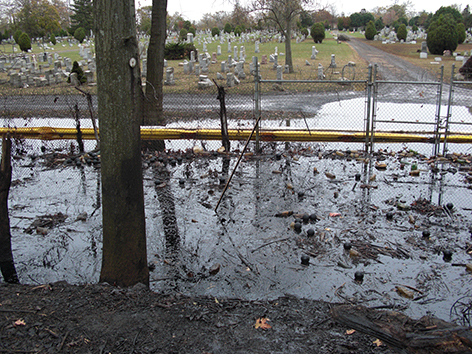
Boom placed to prevent floating oil from reaching a cemetery in New Jersey
Protective boom is placed to prevent floating oil from further reaching a cemetery near the Phillips 66 Refinery in Linden, New Jersey. (NOAA)
Map view of potential storm surge from nor'easter over Hurricane Sandy's actual.
A view of Atlantic ERMA showing potential storm surge from the nor'easter (teal) layered over the actual boundaries of Hurricane Sandy storm surge (blue) in Arthur Kill, New Jersey/New York. (NOAA)
Node Weight: 
2

Three Powerful Tools for Restoring the Gulf of Mexico

Short title: 
Three Powerful Tools for Restoring the Gulf of Mexico

NOV. 7, 2012 — Volunteers. The Internet. Remote sensing.

NOAA's Office of Response and Restoration has been using all three to deal with the environmental aftermath of the 2010 Deepwater Horizon/BP oil spill in the Gulf of Mexico.

At Restore America's Estuaries' recent conference on coastal restoration [PDF], three members of OR&R showed how each of these elements has become a tool to boost restoration efforts in the Gulf.

Managing Data

OR&R scientist George Graettinger explained how responders can use remote sensing technology to assess damage after a major polluting event, such as the Deepwater Horizon/BP spill.

He has helped develop tools that allow both Geographic Information Systems (GIS) specialists and responders to visualize and manage the onslaught of data flooding in during an environmental disaster and turn that into useful information for restoration.

The principle tool for this work is OR&R's ERMA, an online mapping platform for gathering and displaying environmental and response data. During the Deepwater Horizon response, ERMA pulled in remote sensing data from several sources, each with its own advantages and disadvantages:

  • MODIS and MERIS, NASA satellite instruments which each day captured Gulf-wide oceanic and atmospheric data and photos during the Deepwater Horizon response. While very effective in the open ocean, these sensors do not perform well in coastal waters [PDF].
  • AVIRIS, another NASA sensor which took high-resolution infrared imagery from a plane to estimate the amount of oil on the water surface. Its disadvantages included being able to cover only a small area and being limited by weather conditions.
  • SAR (Synthetic Aperture Radar), a satellite radar technology with super-fine spatial resolution. This technology actually transitioned from experimental to operational during the 2010 oil spill response in the Gulf of Mexico. While very effective at "seeing" through cloud cover to detect ocean features, SAR does not allow easy differentiation between thinner and thicker layers of oil on the water surface.

Managing People

"If you spill it, they will come," declared Tom Brosnan, scientist and communications manager for our Assessment and Restoration Division, at his presentation. "They" were the hordes of volunteers offering their eager help after the 2010 well blowout in the Gulf of Mexico caused the largest oil spill in U.S. waters.

Brosnan outlined some of the many challenges of using volunteers productively during an oil spill: legal liability, safety, technical training, logistics, reliability. The National Response Team, a federal interagency group coordinating emergency spill response, has taken a strategic approach to these challenges by creating guidelines for incorporating volunteers into response activities.

Brosnan also pointed out other great opportunities for harnessing the energy of concerned citizens for environmental restoration. One example was partnering with Citizens for a Healthy Bay in Tacoma, Wash. This is a community group soliciting and overseeing volunteer efforts to maintain already completed restoration projects making up for the decades of industrial pollution around Tacoma’s Commencement Bay.

Managing Communications

And no less important, explained NOAA communications specialist Tim Zink, is keeping people engaged after an oil spill is out of the public eye. For the Deepwater Horizon/BP spill, this has been a challenge particularly during the environmental damage assessment process. Zink described the difficulties of continuing to communicate effectively after initial interest from the media has diminished, of many different government trustee organizations trying to speak with one unified voice, and of the need for communication with the public to be framed carefully within the legal and cooperative aspects of the case.

He cited something as simple as a well-run online presence: the Gulf Spill Restoration website. This is a joint effort representing no fewer than three federal government departments (Commerce, State, and Interior) and five state governments. Well-organized and user-friendly, this website serves as a one-stop source of information about the ongoing effort to evaluate and restore environmental injuries in the Gulf of Mexico from the Deepwater Horizon/BP spill.

Among the closing speakers at the conference, Dr. Dawn Wright, chief scientist at GIS software company Esri, reinforced the importance of communicating "inspired science" to policymakers, communities, and other stakeholders throughout the restoration process. As a GIS specialist, she spoke to the many types of sophisticated spatial analysis that are available to anyone with a smartphone. The average person now has unprecedented access to geographic data on earthquakes, flu epidemics, and sea level changes. However, it is up to us to decide how we use these data-rich maps—and other tools—to understand and tell the story of environmental restoration.

ERMA Gulf Response application displays oiling data in Gulf of Mexico.
Here, the ERMA Gulf Response application displays information gathered by SAR remote sensing technology to locate oil in the Gulf of Mexico following the 2010 Deepwater Horizon/BP incident. (NOAA)
Volunteers plant vegatation to restore a section of Commencement Bay, Wash.
Volunteers plant vegatation to restore a section of Commencement Bay, Wash., which was injured by hazardous releases from industrial activities. (NOAA)
Node Weight: 
3

Post Hurricane Sandy, NOAA Aids Hazardous Spill Cleanup in New Jersey and New York

Short title: 
Post Hurricane Sandy, NOAA Aids Hazardous Spill Cleanup in New Jersey and New York

UPDATED NOV. 15, 2012 — Hurricane Sandy's extreme weather conditions—80 to 90 mph winds and sea levels more than 14 feet above normal—spread oil, hazardous materials, and debris across waterways and industrial port areas along the Mid Atlantic. NOAA's Office of Response and Restoration is working with the U.S. Coast Guard and affected facilities to reduce the impacts of this pollution in coastal New York and New Jersey.

We have several Scientific Support Coordinators and information management specialists on scene at the incident command post on Staten Island, N.Y.

Since the pollution response began, Scientific Support Coordinators have been serving as aerial observers on Coast Guard helicopters to survey oil on the water surface particularly in the area of Arthur Kill, N.J./N.Y., in order to locate oil which could be recovered or might be having an environmental impact.

In addition, the response support staff have visited the sites and facilities affected by the spills to survey the extent of oiling and debris and to offer scientific counsel on environmental trade-off decisions for oil spill containment and cleanup efforts.

These efforts are in support of the response to a significant diesel spill at the Motiva Refinery in Sewarren, N.J.; a biodiesel spill at the Kinder Morgan terminal in Carteret, N.J.; a fuel oil spill at the Phillips 66 Refinery in Linden, N.J.; and smaller spills of various petroleum products scattered throughout the waters in and around New Jersey and New York.

One of the challenges facing communities after a devastating weather event is information management. One tool we have developed for this purpose is ERMA, an online mapping tool which integrates and synthesizes various types of environmental, geographic, and operational data. This provides a central information hub for all individuals involved in an incident, improves communication and coordination among responders, and supplies resource managers with the information necessary to make faster and better informed decisions.
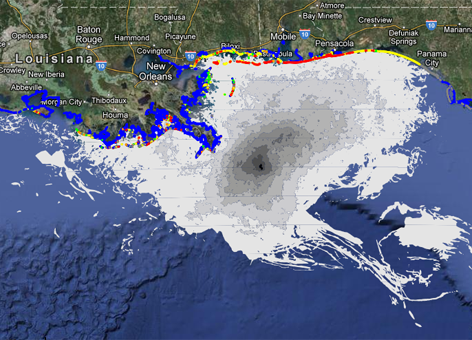
ERMA has now been adopted as the official common operational platform for the Hurricane Sandy pollution response, and we have sent additional GIS specialists to the command post.

Species and Habitats at Risk

The most sensitive habitats in the area are salt marshes, which are often highly productive and are important wildlife habitat and nursery areas for fish and shellfish. Though thin sheens contain little oil, wind and high water levels after the storm could push the diesel deep into the marsh, where it could persist and contaminate sediments. Because marshes are damaged easily during cleanup operations, spill response actions will have to take into account all of these considerations.

In addition, diesel spills can kill the many small invertebrates at the base of the food chain which live in tidal flats and salt marshes if they are exposed to a high enough concentration. Resident marsh fishes, which include bay anchovy, killifish, and silversides, are the fish most at risk because they are the least mobile and occupy shallow habitats. Many species of heron nest in the nearby inland marshes, some of the last remaining marshlands in Staten Island. Swimming and diving birds, such as Canada geese and cormorants, are also vulnerable to having their feathers coated by the floating oil, and all waterfowl have the potential to consume oil while feeding.

Based on the risks to species and habitats from both oil and cleanup, we weigh the science carefully before making spill response recommendations to the Coast Guard.

Tracking the Spilled Oil

Because no two oils are alike, we train aerial observers to evaluate the character and extent of oil spilled on the water. NOAA performs these aerial surveys, or overflights, of spilled oil like in Arthur Kill to determine the status of the oil's source and to track where wind and waves are moving spilled oil while also weathering it. The movement of wind and waves, along with sunlight, works to break down oil into its chemical components. This changes the appearance, size, and location of oil, and in return, can change how animals and plants interact with the oil.

When spilled on water, diesel oil spreads very quickly to a thin film. However, diesel has high levels of toxic components which dissolve fairly readily into the water column, posing threats to the organisms living there. Biodiesel can coat animals that come into contact with it, but it breaks down up to four times more quickly than conventional diesel. At the same time, this biodegradation could cause potential fish kills by using up large amounts of oxygen in the water, especially in shallow areas.

Look for photos, maps, and updates on pollution-related response efforts at IncidentNews and in the recent (Nov. 3) Coast Guard press release.

Check the Superstorm Sandy CrisisMap for aggregated information from NOAA, FEMA, and other sources on weather alerts and observations; storm surge and flood water data; aerial damage assessment imagery; and the locations of power outages, food and gas in New Jersey, and emergency shelters.

This story originally was published Nov. 2, 2012; it has been updated on Nov. 6 and 15, 2012.

Oil sheen visible on the waters of Arthur Kill after Hurricane Sandy.
Oil sheen is visible on the waters of Arthur Kill on the border of New Jersey and New York in the wake of Hurricane Sandy. (NOAA)
Oily debris field in Sheepshead Bay, N.Y., after Hurricane Sandy
Responders face an oily debris field in Sheepshead Bay, N.Y., after Hurricane Sandy. Nov. 2, 2012. (U.S. Coast Guard)
Node Weight: 
3

Pages

Subscribe to response.restoration.noaa.gov RSS