Back to top

Blizzards, Bombs, and Electrofishing: Assessing an Oiled Creek on Alaska's Remote Aleutian Islands

Short title: 
Blizzards, Bombs, and Electrofishing: Assessing an Oiled Creek on Alaska's Remote Aleutian Islands

Mission: Nearly Impossible

APRIL 8, 2013 — In the center of Alaska's rugged Aleutian Islands is the sparsely populated Adak Island. It was here—in the middle of winter on Jan. 11, 2010—that workers at the Adak Petroleum Bulk Fuel facility were filling an underground tank with oil from the supply tanker Al Amerat. But as the tanker sat moored at the dock, its oil began overfilling the 4.8 million gallon underground tank.

Up to 142,800 gallons of #2 diesel flowed out of the tank and eventually into the nearby salmon stream, Helmet Creek. Just over a mile after the creek passes the oil storage facility, it enters the Adak Small Boat Harbor, which is open to Sweeper Cove's marine waters. Helmet Creek is equipped with gates that can partially close off the flow of the stream. That feature played to the response's favor because spill response personnel were able to use these gates, along with boom and absorbent materials, to contain most of the oil spill in the stream.

Only a small percentage of the oil reached the boat harbor and Sweeper Cove. However, Alaska, NOAA, and the U.S. Fish and Wildlife Service, as natural resource trustees, were concerned about injury to both the stream and marine habitats and began a Natural Resource Damage Assessment (NRDA) to investigate potential environmental impacts.

Ian Zelo, Oil Spill Coordinator for the Office of Response and Restoration's Assessment and Restoration Division, got involved the next day, Jan. 12, leading the NOAA team for this injury assessment. While the trustees were coordinating closely with the response, it was clear that they would need to send environmental assessment teams to the island to document the spill and its impacts on local habitats. However, there are only two flights to Adak each week. Zelo knew the next flight to the island was on Jan. 14 and his team needed to be on it. This meant he and the other natural resource trustees had only two days to plan the initial assessment, recruit a field team to take samples, assemble the equipment, and finalize a field sampling protocol. Zelo's role was to coordinate partners and tasks across two federal and four state agencies. On such a short time frame, they could not afford to work using the logical path we usually take: plan, recruit, gear up, and go. They had to scramble and do it all at once.

On the evening of Jan. 13, the assembled field staff had flown to Anchorage, Alaska, with their field gear and were staged there for the 2:00 p.m. flight the next day. A local laboratory would assemble the sampling equipment and have it ready to pick up the following morning. NOAA had a draft sampling protocol that would be finalized while the team was flying so they could be briefed on the details of their mission when they arrived. Things looked good. At 6:30 a.m. on Jan. 14, Zelo got a call from one of the field staff. She had a personal emergency and had to pull out of the mission. Suddenly, things did not look good.

To work safely and to accomplish the sampling goals, they needed four people on the team. He now had 8 hours to find another qualified person or cancel the mission. Working with state partners, he identified and spoke to an Anchorage-based consulting firm by 8:30 a.m. They identified a potential replacement and called him on his drive into the office. By 9:00 he was on his way back home to get ready. With a little over an hour before the flight took off, NOAA was able to get a contract in place to hire the consulting firm and buy the replacement's plane ticket. Once again, the mission was a go.
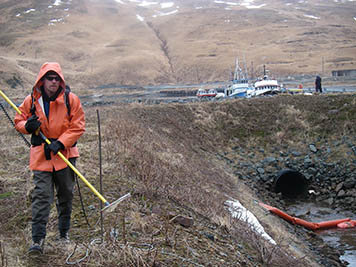
A man on Adak Island is holding an electrified wand and wearing the power pack for sampling fish in a stream via the electrofishing method.
A member of the environmental assessment mission on Adak Island is holding the electrified wand and wearing the power pack for sampling fish via the electrofishing method. (NOAA)

Over the next five weeks, the natural resource trustees sent three field teams to Adak to assess injury caused by the oil spill. Zelo was on the second mission. During the assessment, the team fished both Helmet Creek and similar streams (for comparison) to document the fish communities. One of the methods they used is known as "electrofishing." A common research technique, it involves sticking an electrified wand in the water (while wearing rubber chest waders) to temporarily shock and disable nearby fish and allow them to be caught.

The field teams counted and collected fish for contaminant and developmental analysis. Mussels were collected from sites in and around Sweeper Cover and Finger Bay (a nearby bay farther than they thought the oil might travel, again, for comparison). Trustees also collected dozens of water and sediment samples and surveyed birds. During this assessment, the field teams had to deal with a few unusual challenges. They had to operate at night in order to work at low tide. They were excluded from Helmet Creek for half of the second assessment because the responders discovered unexploded ordnance (potentially explosive weapons), which had to be removed before the field staff could continue. They worked in streams that were partially or fully covered in ice, and on the final mission their assessment was interrupted by a blizzard. Their teams had to recover fish traps from under several feet of snow.

Ready for Restoration
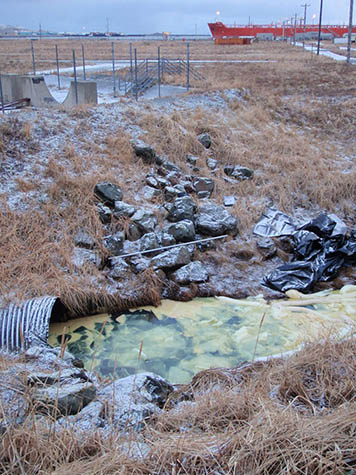
A view of spilled oil next to a culvert in Helmet Creek, with the tanker that supplied the fuel in the background.
January 12, 2010 — A view of spilled oil next to a culvert in Helmet Creek, with the tanker that supplied the fuel in the background. Proposed restoration projects will benefit both salmon and the entire stream ecosystem. (U.S. Fish and Wildlife Service/Lisa Stitler)

In the summer of 2011, the trustees worked cooperatively with Adak Petroleum Bulk Fuel facility, the responsible party, on scoping restoration options. NOAA and the other trustee partners are now nearing a cooperative settlement with the fuel facility. They have reviewed possible restoration projects that could compensate the public for the injuries caused by the spill and have drafted a Damage Assessment and Restoration Plan [PDF] that is available for public comment. In the plan, they present their preferred restoration alternative, which includes a suite of projects to improve the overall quality of Helmet Creek.

Restoration is targeted at pink salmon but also will benefit the entire stream corridor. The proposed work includes restoring access to the creek for fish, removing barrels and other debris, and increasing water flow by plugging a culvert system that is drawing water from the stream. Their goal is to perform this restoration in the summer of 2013.

You can comment on the restoration plan until April 30, 2013. Send comments to: Ian Zelo NOAA Oil Spill Coordinator Assessment and Restoration Division 7600 Sand Point Way NE Seattle, WA 98115 Phone: 206.526.4599 Email: ian.j.zelo@noaa.gov Please provide a subject line, indicating that your comments relate to restoration planning for the Adak 2010 oil spill. Any comments received will become part of the administrative record. Please be aware that your entire comment—including your personal identifying information—may be made publicly available.
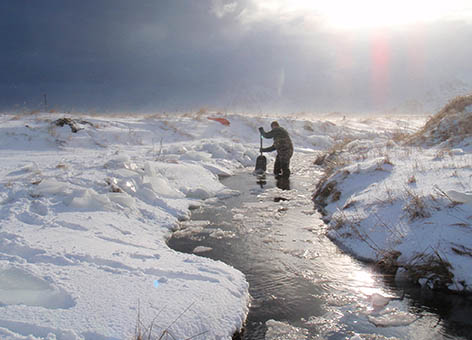
Man breaks the ice to prepare a stream for sampling on Adak Island.
In the wake of the 2010 oil spill on Adak Island, a field team member from the Alaska Department of Fish and Game breaks the ice to prepare a stream for sampling, in this case, for electrofishing. Field teams also were setting small fish traps, which do not require breaking up the ice like this. (NOAA)
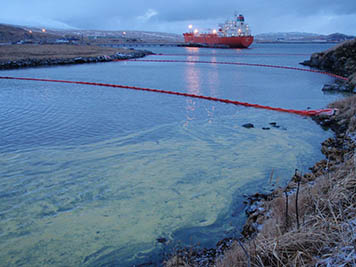
View of spilled oil and boom from the Adak Small Boat Harbor into Sweeper Cove.
January 12, 2010 — Looking out on spilled oil and containment boom from the Adak Small Boat Harbor into Sweeper Cove and the fuel pier. (U.S. Fish and Wildlife Service/Lisa Stitler)
Node Weight: 
3

Japanese Dock Lost in 2011 Tsunami Removed from Washington's Olympic Coast

Short title: 
Japanese Dock Removed from Washington Coast

APRIL 5, 2013 — A large Japanese dock swept across the Pacific Ocean after the March 2011 tsunami has now been removed from Washington's Olympic Coast. Cleanup workers from the Washington-based contractor, The Undersea Company, carried off the last of the now-deconstructed dock's concrete and plastic foam from the beach where it washed ashore. Removal work, which occurred inside Olympic National Park and NOAA's Olympic Coast National Marine Sanctuary, began on March 17 and concluded March 25, 2013. You can watch a time-lapse video of the dock's removal (and related videos): "This operation was challenging—imagine opening up a 185-ton concrete package filled with foam packing peanuts while standing near a helicopter on an extremely remote coastline," said John Nesset, president and C.E.O. of The Undersea Company, in a NOAA press release.

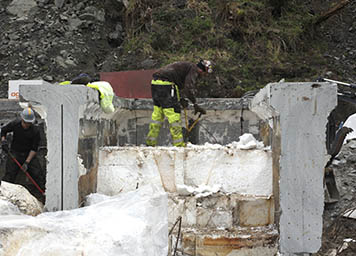
Crews remove foam blocks from a cut-open section of the Japanese dock.
March 19, 2013 — Crews remove foam blocks from a cut-open section of the Japanese floating dock, which beached inside both a national park and national marine sanctuary. (National Park Service/John Gussman)

The dock, weighing 185 tons and measuring 65 feet in length, initially stranded on the Washington coast last December after it and two other docks were torn away from the Port of Misawa, Japan, during the Great East Japan Earthquake of March 11, 2011.

In previous posts, NOAA mentioned that this dock and the one found near Newport, Ore., in June of 2012 were among four docks washed away from Misawa—but we now know that only three docks left the port. The Consulate-General of Japan has alerted us that "earlier news reports erroneously stated that a fourth dock was located on an island in Japan." The NOAA Marine Debris Blog expands further on the whereabouts of the docks: "According to the Consulate-General of Japan, three of the four floating docks located at the Misawa Fishing Port washed away when the tsunami struck. Fishermen reportedly spotted the third missing dock floating near Oahu, north of Molokai, in Hawaii in September. It has not been located since." An interesting aspect is that these three docks were wrenched away from the same port in Japan at the same time during the tsunami in March of 2011.

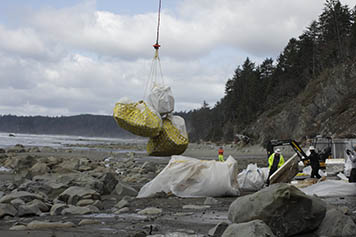
Marshland along the Delaware River.
March 18, 2013 -- The remoteness of the location where the Japanese dock beached required a helicopter to lift loads of foam taken out of the inside of the deconstructed structure. (National Park Service/John Gussman)

Yet, as NOAA oceanographers know quite well, predicting where the Pacific Ocean's currents and winds might carry and eventually deposit them (and when) is a tricky task. So far, "one washed up on Oregon's coast last summer, and a second beached along Washington's coastline in December," pointed out Asma Mahdi of the NOAA Marine Debris Program. "Two identical debris pieces that left Japan's coast at the same time made the journey across the Pacific, but they ended up on the U.S. West Coast six months apart and in very different locations. How can we predict where marine debris will end up?" 

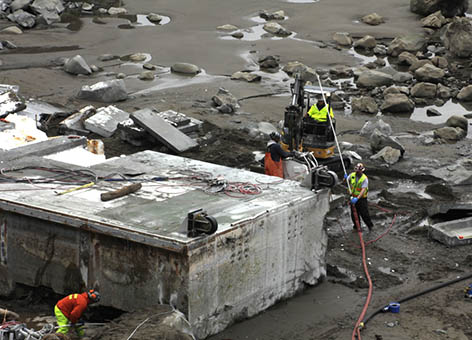
Workers dismantling the Japanese dock washed up on Washington's coast.
March 19, 2013 -- Workers dismantling the dock from Misawa, Japan, which washed up on Washington's Olympic Coast in December of 2012. (National Park Service/John Gussman)
Node Weight: 
5

What Do Hanford's Latest Nuclear Waste Leaks Mean for Environmental Restoration?

Short title: 
What Do Hanford's Latest Nuclear Waste Leaks Mean for Environmental Restoration?

MARCH 29, 2013 — This past February, the U.S. Department of Energy confirmed that six additional nuclear waste storage tanks are leaking at the Hanford Nuclear Reservation in southeast Washington. This revelation has drawn attention once again to the ongoing challenges of assessing, cleaning up, and restoring the environment around a massive nuclear waste site.

To understand how these six aging nuclear waste tanks might affect salmon, the sagebrush-filled desert ecosystem, and nearby Columbia River, it helps to understand more about Hanford’s history. In 1943, the Hanford Site was developed by the U.S. Government for the production of plutonium as part of the Manhattan Project that developed atomic bombs during World War II. The site continued to produce plutonium as well as nuclear energy until the last reactor stopped operating in 1987.

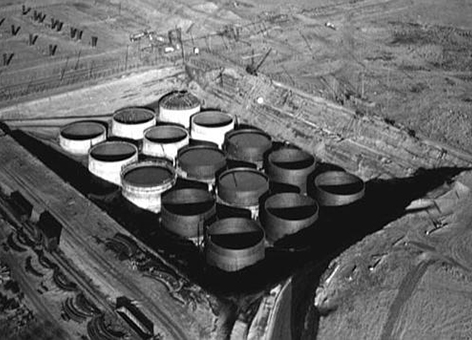
The weapons production and nuclear energy operations at Hanford left dangerous and environmentally harmful solid and liquid waste, creating one of the largest and most complex cleanup projects in the U.S. That effort has been in progress since 1989. Hanford's 177 total storage tanks, some of which date from the 1940s, hold more than 50 million gallons of radioactive waste. These six leaking tanks are among 149 older “single-shell” tanks, which only have one liner. (Tanks constructed more recently feature “double-shells.”) However, these older tanks were designed for a lifespan of only about 20 years.

According to Washington Governor Jay Inslee, "This certainly raises serious questions about the integrity of all 149 single-shell tanks with radioactive liquid and sludge at Hanford.”

While tanks at the site have leaked in the past, news of these recently discovered leaks again raises concerns about the condition of the tanks and underscores the ongoing complexities of this assessment and cleanup. The six leaking tanks pose no immediate threat to natural resources because they are located 200–300 feet above the groundwater table. The State of Washington indicates that there is no immediate or near-term health risk as the leaking tanks are located more than five miles from the Columbia River. In addition, measures are being taken to prevent contamination currently in the soil from entering the river.
While this latest discovery affects the ongoing cleanup, it does not change the focus of the Hanford Natural Resource Damage Assessment because the Hanford Natural Resource Trustee Council is already evaluating harm from contamination flowing into the Columbia River, which borders the site and is home to Chinook salmon and sturgeon. The council includes representatives from NOAA, three tribal organizations, the States of Washington and Oregon, and two other federal agencies. It is tasked with characterizing the cumulative impacts from decades of releases and contamination to the fish, wildlife, and the habitats they rely upon, and determining the cumulative restoration needed to replace, restore, and offset the total decades of damage.

Discovery of the additional leaking tanks illustrates the challenge of that task: to be able to measure the harm over time, even as new sources of contamination are discovered and await cleanup. Each source can add to the cumulative impact and ultimately to the amount of restoration that will eventually be needed to offset damages. For more information about the work of the Hanford Natural Resource Trustee Council, view the Hanford Natural Resource Damage Assessment Injury Assessment Plan, which describes how the council will characterize and quantify the past, ongoing, and future environmental impacts.

Some of the older nuclear waste storage tanks at Hanford in southeast Washington
Some of the older nuclear waste storage tanks at Hanford in southeast Washington. (U.S. Department of Energy)
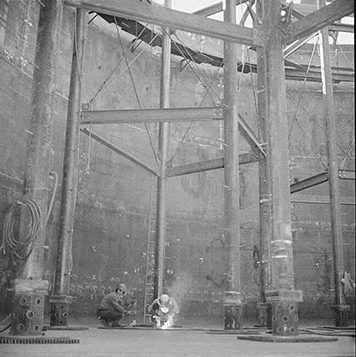
One of the older waste storage tanks under construction at the Hanford Site
One of the older waste storage tanks under construction at the Hanford Nuclear Reservation. (U.S. Department of Energy)
Node Weight: 
5

Removal Operations Continue for Navy Mine Ship on Philippine Coral Reef

Short title: 
Removal Operations Continue for Navy Mine Ship on Philippine Coral Reef

MARCH 29, 2013 — In January, the Navy mine countermeasures ship USS Guardian ran aground on a coral reef in the Philippines, inside Tubbataha Reefs Natural Park. The U.S. Navy removed the approximately 15,000 gallons of fuel aboard the ship and decided that the safest way to extract the Guardian from the reef was to deconstruct and carry it away in smaller sections.

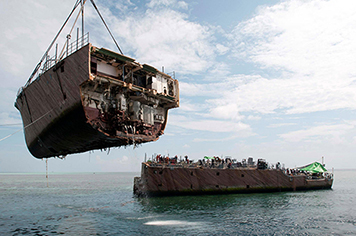
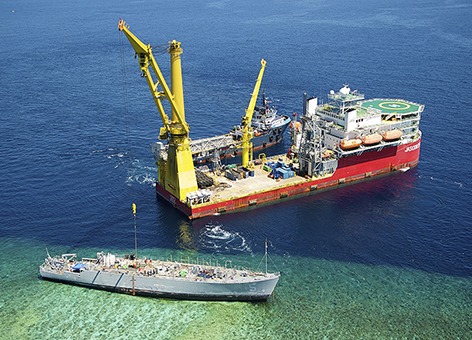
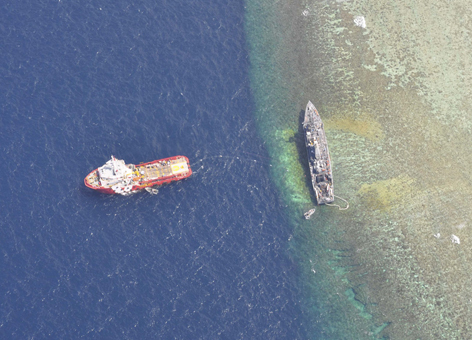
Here are some interesting photos showing how the removal of the grounded "Ex-Guardian" (formerly USS Guardian) is progressing. First, the superstructure (Wheelhouse and above deck structures) was removed as you can see in the top photo. Now the hull is being cut into sections and removed. Earlier this week the bow section, weighing approximately 250 tons, was lifted off the reef and placed onto an awaiting barge (bottom photo).

A crane vessel removes the bow of the mine countermeasure ship Ex-Guardian.
A crane vessel removes the bow of the mine countermeasure ship Ex-Guardian. The U.S. Navy and contracted salvage teams continue damage assessments and the removal of equipment and parts to prepare the grounded ship to be safely dismantled and removed from Tubbataha Reef. (U.S. Navy/Kelby Sanders)

The U.S. Navy has been working closely with the Philippine Coast Guard, Philippine Navy, and Tubbataha Reefs Natural Park during the process. For more information on the removal operations, check out https://www.cpf.navy.mil/news.aspx/010081 You can also find out more about how NOAA works to protect and restore coral reefs after ship groundings in some of our previous NOAA blog posts:

With Tropical Storm Isaac's Passing, Crews Resume Cutting Apart Grounded Ship and Protecting Coral at Mona Island, Puerto Rico

When Coral Reefs Lose a Boxing Match

Salvage operations for grounded Navy mine ship Ex-Guardian on Philippines reef.
Aerial view of the vessels aiding in the dismantling process of the mine countermeasures ship ex-Guardian, which ran aground on the Tubbataha Reef Jan. 17. The U.S. Navy continues to work in close cooperation with the Philippine authorities to safely dismantle Guardian from the reef while minimizing environmental effects. (U.S. Navy/Anderson Bomjardim)
Node Weight: 
3

Marine Debris Student Art Contest Winners Announced

Short title: 
Marine Debris Student Art Contest Winners Announced

MARCH 26, 2013 — The NOAA Marine Debris Program has announced the winners for their annual "Keep the Sea Free of Debris!" Art Contest. As part of their mission to educate the public about the effects of marine debris, they hold an art contest open to kindergarten through 8th grade students. Students are asked to answer two questions in their art submissions: How does marine debris impact you? What are you doing about it?

This year, the NOAA Marine Debris Program received more than 600 hundred entries from 21 states across the nation. The 13 winners will be featured in the upcoming 2014 marine debris planner, due out later this year. View all of the winning entries on Flickr. You can download a digital copy of the 2013 planner [PDF, 52.2MB], which features the winners from the previous year's art contest. The NOAA Marine Debris Program, a division of the Office of Response and Restoration, supports national and international efforts to research, prevent, and reduce the impacts of marine debris.

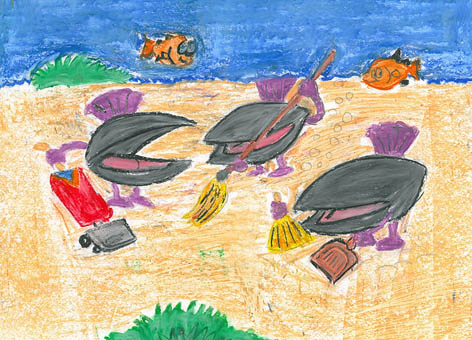
Drawing of clams cleaning the sea floor of debris.
Lindsey B., Grade 8, North Carolina. One of the 2012-2013 winners in the Keep the Sea Free of Debris art contest.
Node Weight: 
4

From Rubber Ducks to Dog Food, Spilling Everything But Oil

Short title: 
From Rubber Ducks to Dog Food, Spilling Everything But Oil

MARCH 22, 2013 — What do rubber duckies, dog food, oranges, wood chips, green dye, hula hoops, peat moss, popcorn, and rice hulls have in common? All have been used to mimic the behavior of spilled oil. These materials are used because in the U.S. dumping oil in the ocean is prohibited, even if it is done intentionally for training, experimental, or testing purposes.

Tank testing has been an alternative, and we use real oil in test tanks such as the one at Ohmsett (an oil spill response and research testing facility in New Jersey), but there are questions about how well these tanks simulate real world conditions, including rough seas, currents, and waves. That means there is a real need for materials that both realistically mimic oil behavior and are safe for use in the environment. They allow us to test computer models, such as NOAA’s GNOME oil forecasting model, and to improve how containment booms and other response tactics work.

On March 21, 2013, experts from around the country gathered at NOAA offices in Seattle, Wash., to discuss the need and best options for oil spill simulants. What alternatives are best? What are the environmental effects of those simulants? What permits are needed? And most importantly, how similar is the behavior compared with real oil? One of the preliminary conclusions from this meeting is that oil behavior is difficult to emulate, and all of the existing simulants have drawbacks.

Stay tuned for a future story about progress in this area, and in the meantime, if you notice a bunch of oranges (or grapefruits or lemons) floating in the water, you may be seeing a test of oil spill preparedness like this one in Florida: Coast Guard, partnering agencies conduct Tidal Inlet Protection Strategy exercise.

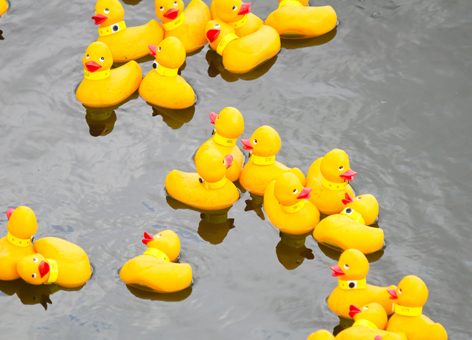
Rubber ducks floating.
Sometimes when responders can't spill oil, they spill rubber ducks. (Credit: Jason Ahrns. Used under Creative Commons Attribution-Noncommercial-No Derivative Works 3.0 United States License.)
Node Weight: 
5

No Oil Spilled, Though Fire Continues after Tug and Barge Hit Gas Pipeline near Louisiana's Bayou Perot

Short title: 
No Oil Spilled, Though Fire Continues after Tug and Barge Hit Gas Pipeline near Louisiana's Bayou Perot

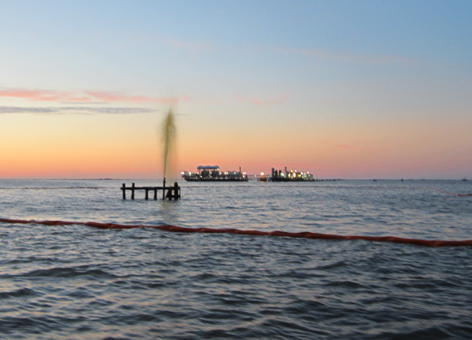
MARCH 14, 2013 — NOAA's Office of Response and Restoration is assisting the U.S. Coast Guard after a tug and barge hit a liquefied petroleum gas pipeline the evening of March 12, 2013, resulting in a fire near Bayou Perot, 30 miles south of New Orleans, La. While the fire was initially reported to be 100 feet tall, it appears to have reduced in size by approximately 30%. The tug, UTV Shanon E. Settoon, carrying 1,000 gallons (24 barrels) of diesel fuel, has grounded, with the fire continuing to burn next to it. The barge it was pushing, Oil Barge SMI 572, appears to remain intact, along with the approximately 93,000 gallons (2,215 barrels) of crude oil it is carrying. NOAA oceanographers have used the GNOME oil spill forecasting software program to model the projected path of potentially spilled oil and will continue to do so on a daily basis.

According to the Coast Guard, "Visual imagery initially indicated potential pockets of crude oil; however, those areas have been determined to be particulate ash from the liquefied natural gas burn off." The NOAA Scientific Support Coordinator in Louisiana has been helping aerial observers map their findings and advising the Coast Guard on various natural resource and pollution response issues. While on an aerial overflight of the area Wednesday afternoon, neither he nor the other observers noted any oil or sheen on the water, and observations of the nearby shoreline have also been free of oil.

Before beginning a pollution investigation and salvage operations, the Coast Guard has been allowing the vessel and residual gas to burn off. The response has sent out containment boom to surround the vessels and skimmers have been deployed for cleanup. The damaged Chevron pipeline, carrying liquefied petroleum gas, has been shut down. Although there were injuries, all four crew members were able to escape from the tug. Watch a U.S. Coast Guard video of an aerial view of the pipeline burning, the damaged vessels, and the response efforts from March 13, 2013. Find the latest updates at the Coast Guard Newsroom.

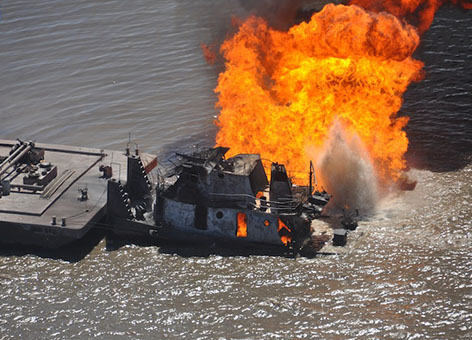
A pipeline burns after it was hit by the tug boat Shanon E. Setton in Louisiana.
A pipeline burns after it was hit by the tug boat Shanon E. Setton, near Bayou Perot 30 miles south of New Orleans, March 13, 2013. The Coast Guard is working with federal, state and local agencies in response to this incident to ensure the safety of responders and contain and clean up any oil that may leak. (U.S. Coast Guard)
Node Weight: 
3

For Submerged Oil Pollution in Western Gulf of Mexico, Restoration Is Coming After 2005 DBL 152 Oil Spill

Short title: 
For Submerged Oil Pollution in Western Gulf of Mexico, Restoration Is Coming After 2005 DBL 152 Oil Spill

MARCH 18, 2013 — Imagine trying to describe the state of 45,000 acres of habitat on the ocean bottom—an area the size of over 34,000 football fields. And you have to do it without four of your five senses. You can't touch it. You can't taste it. You can't smell it. You can't hear it. Sometimes you can barely see a few inches in front of your scuba mask as you swim 60 feet below the surface in the murky waters of the Gulf of Mexico. But that was the task NOAA scientists faced seven years ago in the wake of a large offshore oil spill in the western Gulf of Mexico.

An Oily-Fated Journey

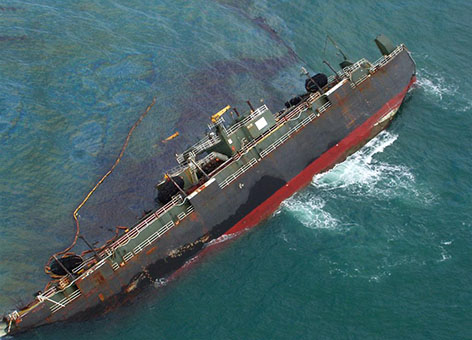
The oil was released from tank barge (T/B) DBL 152 as it was traveling from Houston, Texas, to Tampa, Fla., in November 2005. While in transit, the barge struck the submerged remains of a pipeline service platform that collapsed a few months earlier during Hurricane Rita. The double-hulled barge was carrying approximately 5 million gallons of slurry oil, a type of oil denser than seawater, which meant as the thick oil poured out of the barge, it sank to the seafloor. Eventually, the barge's tug was able to tow it toward shore, hoping to ground and stabilize it in shallower waters. However, the barge grounded unexpectedly 30 miles from shore, releasing more oil and eventually capsizing. Approximately 1.9 million gallons of oil drained into the open waters of the Gulf of Mexico.

To find, track, and clean up the oil in these cloudy waters, oil spill responders used information from divers, remotely operated vehicles (ROVs), and oil trajectory models. Executing this process over such a large area of the seafloor took more than a year. While divers were able to recover an estimated 98,910 gallons of oil, some 1.8 million gallons more remained unrecovered.

NOAA's Damage Assessment, Remediation, and Restoration Program (DARRP) provides the unique scientific and technical expertise to assess and restore natural resources injured by oil spills like the DBL 152 incident as well as releases of hazardous substances and vessel groundings. For more than 20 years, DARRP has worked cooperatively with other federal, tribal, and state co-trustees and responsible parties to assess the injuries and reverse the effects of contamination to our marine resources, including fish, marine mammals, wetlands, reefs, and other ocean and coastal habitats.

Oil Spill Sentinels in the Open Sea

So what happened to the other 1.8 million gallons of oil which were not feasible to clean up? Initially, the oil sank to the ocean bottom, creating a "footprint" of the impacted area.

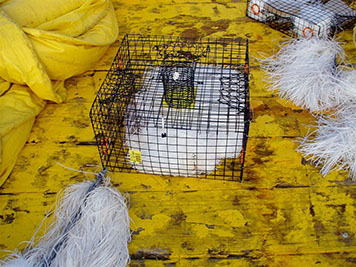
Crab pot sentinels used to detect submerged oil on the seafloor in the Gulf of Mexico. (ENTRIX, Dec. 3, 2005)

Immediately following the spill, NOAA, the U.S. Coast Guard, Texas state trustees, and the responsible party worked together to assess impacts to natural resources and habitats affected by the spill. Scientists collected and analyzed oil samples, bottom-dwelling animals living in the sediments, and samples of sediments and water taken in the oiled areas. In particular, creatures on the seafloor were at risk of being smothered or contaminated by the dense oil as it sank to the bottom.

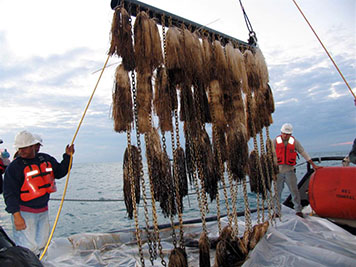
As you might expect, assessing injuries to an area of the open ocean covering 34,000 football fields is no easy task, especially considering how difficult it is to detect the oily culprit itself. Because we couldn't always see the submerged oil over such a large area, oil-absorbing pads were dragged systematically across miles of ocean to locate patches of oil. Underwater sorbent "sentinels," oil-absorbing tools used to detect oil, also were placed and monitored strategically in the predicted path of the spilled oil to tell us if the footprint of the remaining oil at the ocean bottom was relatively stationary, and if not, in what general direction it was moving.

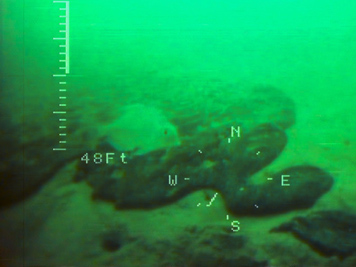
Monitoring revealed the oiled area was moving and dissipating over time as it weathered due to exposure to physical forces such as currents. The environmental assessment showed that fish and organisms living on or near the ocean floor (such as worms, clams, and crabs) were injured by the oil that sank to the bottom of the Gulf of Mexico. That submerged oil impacted approximately 45,000 acres of ocean floor. However, much of this area recovered over time as the oil naturally dissipated and weathering broke it up.

A Path Forward
Submerged oil from Tank Barge DBL 152 on the seafloor in the Gulf of Mexico. (EXTRIX, December 2005)

In March 2013, NOAA released the Damage Assessment and Restoration Plan [PDF] for the DBL 152 incident, which demonstrates that restoration is possible for this oil spill. The plan outlines injuries to natural resources and proposes a restoration project to implement estuarine shoreline protection and salt marsh creation at the Texas Chenier Plain National Wildlife Refuge Complex in Galveston Bay, Texas. The preferred shoreline protection and marsh restoration project proposed in the draft plan is designed to replenish the natural resources lost due to the oiling during the period both when they were injured and while they recovered.

Public comments can be submitted through April 15, 2013 by mailing written comments to: NOAA, Office of General Counsel, Natural Resources Section Attn: Chris Plaisted 501 W. Ocean Blvd., Suite 4470 Long Beach, CA 90802 Or submitting comments electronically at www.regulations.gov (Docket I.D.: NOAA-NMFS-2013-0034). Following the close of the public comment period, NOAA will consider any comments and release a Final Restoration Plan. This comment period is the last step before restoration projects are selected and funding is sought from the Oil Spill Liability Trust Fund for implementation.

Since the party responsible for the oil spill reached its legal limit of liability and is not obligated to pay further liabilities by law, NOAA will submit a claim to the National Pollution Funds Center (NPFC), administered by the U.S. Coast Guard, to cover the cost of enacting the needed environmental restoration. The Pollution Funds Center serves as a safety net to help cover the costs of reclaiming our nation’s invaluable natural resources following these types of events.

Tank barge DBL 152 discharging slurry oil shortly before capsizing in Gulf.
The DBL 152, shown here on November 13, 2005 shortly before capsizing, ended up discharging nearly 2 million gallons of a thick slurry oil, which sank to the floor of the Gulf of Mexico. (ENTRIX)
Heavy chains dragged absorbent material along the seafloor.
Heavy chains dragged absorbent material along the seafloor in the Gulf of Mexico in order to detect submerged oil. (ENTRIX, 11/19/2005)
Node Weight: 
6

Alcoa Aluminum Factories Settle $19.4 Million for Pollution of St. Lawrence River Watershed, Most Will Fund Restoration of Tribal Culture, Recreational Fishing, and Habitat

Short title: 
Alcoa Aluminum Factories Settle $19.4 Million for Pollution of St. Lawrence River Watershed, Most Will Fund Restoration of Tribal Culture, Recreational Fishing, and Habitat

MARCH 27, 2013 — In the northern reaches of upstate New York, just across and upriver from Canada, two factories chug along. Both now owned by aluminum manufacturer Alcoa, these factories have been producing aluminum on the banks of the Grasse and St. Lawrence Rivers since 1903 and 1958. And like many other industries in the past, these two Alcoa plants in Massena, N.Y., discharged a stream of toxic pollutants into the water, air, and soil around them. Now, only a few miles away, dozens of young Mohawk children at the Akwesasne Freedom School attempt to reclaim their Mohawk heritage and a connection with the natural world and traditional practices endangered in part by the area's contaminated history. Today, the majority of the $19.4 million settlement with Alcoa and the former Reynolds Metals Company will go toward healing past wounds to this rich ecological and cultural environment with a suite of proposed restoration projects.

A History of Pollution on the St. Lawrence

Starting in the late 1950s, Alcoa and Reynolds used polychlorinated biphenyls (PCBs) in hydraulic fluid and electrical equipment as they produced aluminum at these two factories. Nearby, General Motors Central Foundry (GM) also used PCBs in the hydraulic fluids when building automotive engines and in electric equipment. The PCBs from these three facilities in turn made their way into the St. Lawrence River, its tributaries the Grasse and Raquette Rivers, and the surrounding area. Banned in 1979, PCBs are a group of persistent and highly toxic compounds which, in addition to causing cancer in animals, affects growth, behavior, reproduction, immune response, and neurological development. Manufacturing activities at these three factories released a slew of other industrial pollutants [PDF] that impacted the environment, including aluminum, fluoride, cyanide, and polycyclic aromatic hydrocarbons (PAHs, a hazardous component of oil, coal, and tar). In 2000, Alcoa purchased Reynolds and as a result, Reynolds' facility is now known as Alcoa East. Its sister facility, Alcoa West, is the longest continually operating aluminum facility in the world. The third, now-shuttered, General Motors factory sits next door to Alcoa East and has already paid approximately $1.8 million for environmental restoration in separate bankruptcy proceedings. Combined with $18.5 million from Alcoa's settlement, the Alcoa and GM settlements will provide approximately $20.3 million for specific projects to restore access to recreational fishing, fish and wildlife, and Mohawk traditional practices and language.

Moving Toward Environmental Restoration

The St. Lawrence Environmental Trustee Council, a group of federal, state, and tribal governments which includes NOAA, has coordinated with the companies to assess the damages to ecological resources, recreational fishing, and the St. Regis Mohawk Tribe's cultural resources. Due to the history of industrial pollution released from these factories into the St. Lawrence River watershed, the sediments, fish, birds, mammals, reptiles, and amphibians along the St. Lawrence, Grasse, and Raquette Rivers have all suffered. Under the U.S. Environmental Protection Agency and the New York State Department of Environmental Conservation, various cleanup activities, such as dredging and capping contaminated river sediments, have been attempting to remediate the polluted environment.

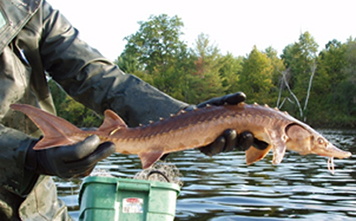
Lake sturgeon stocking.
Improvements to spawning habitat and stocking of lake sturgeon is one of the restoration projects preferred by the natural resource trustees. (Saint Regis Mohawk Tribe)

As part of a process that moves beyond cleanup, the trustees, led by the St. Regis Mohawk Tribe, have identified preferred recreational fishing, ecological, and cultural restoration projects to compensate the public for the resulting environmental injuries. For example, contaminants from the three facilities degraded adult and juvenile fish habitat for species such as the American eel (currently being considered for Endangered Species Act protection) and the state-threatened lake sturgeon. The presence of toxic PCBs triggered fish consumption advisories for the St. Lawrence, Grasse, Raquette, and St. Regis Rivers. In place since 1984, these advisories have resulted in an estimated 221,000–250,000 fewer fishing trips on these rivers, both in the past and into the future. In response, four new boat launches will be constructed and one existing launch will be upgraded to provide shoreline and in-river fishing access points. The trustees also will protect and restore wetland and upland habitat, enhance stream banks, improve impeded fish and other wildlife passage through the rivers, enhance fish stocks and spawning habitat, and restore bird habitat. The preferred restoration projects are described in the St. Lawrence River Environment Restoration Compensation and Determination Plan [PDF]. The public can comment on this plan and on the Alcoa $19.4 million natural resource damage settlement, which includes $18.5 million for restoration and nearly $1 million in reimbursement for past environmental assessment costs.

Reconnecting to the Natural World

One of the most creative examples of the preferred restoration projects centers not on restoring natural resources such as sturgeon, a species important to the St. Regis Mohawk Tribe, but on restoring the unique culture of the Mohawks, which is tied closely to the natural world.

Mohawk tribal elder with reeds for basketmaking.
A tribal apprenticeship program will work to restore traditional Mohawk cultural practices, including basketmaking. (Akwesasne Museum and Cultural Center)

Grassy meadows on both sides of the Lower Grasse River were set aside for the Mohawks of Akewsasne by the Seven Nations of Canada Treaty of 1796. The name Akwesasne means "the land where the partridge drums," a reference to the sound created by the rapids of the St. Lawrence River prior to the construction of dams. The people of Akwesasne were directly impacted by the contamination from the Alcoa, Reynolds, and GM factories. An innovative tribal apprenticeship program will seek to restore traditional Mohawk cultural practices that have been lost or impaired since contamination limited use of the uplands, the rivers, and their natural resources. The tribe, as a trustee, has targeted four traditional areas for apprentices to receive hands-on training from experienced masters:

  • Water, fishing, and use of the river.
  • Horticulture and basketmaking.
  • Medicinal plants and healing.
  • Hunting and trapping.

The apprenticeship program will provide experience in directly harvesting, preparing, preserving, and producing traditional Mohawk cultural products while promoting Mohawk language in each aspect of the training. Restoration funding also will support existing institutions and programs focused on recovering cultural practices and language injured by contaminants from these manufacturing sites. For more information and instructions on how to comment on the preferred restoration projects and the settlement, visit the NOAA Damage Assessment, Remediation, and Restoration Program website.

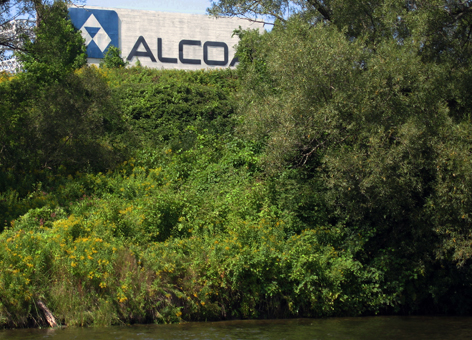
Alcoa aluminum factory with trees.
For decades, two Alcoa alumininum facilities discharged toxic PCBs into the St. Lawrence River, its tributaries the Grasse and Raquette Rivers, and the surrounding area in Massena, N.Y. Alcoa and Reynolds are paying $19.4 million to settle the resulting damages to natural resources. (NOAA)
Node Weight: 
3

Two Years after Japan Tsunami, Beached Dock to be Removed from Washington's Olympic Coast

Short title: 
Two Years after Japan Tsunami, Beached Dock to be Removed from Washington’s Olympic Coast

Planning the Removal

NOAA has contracted a local salvage company in Washington to complete the removal efforts by early April. The contracted company will work with the Sanctuary, Park Service, and local partners in Washington to remove the dock by helicopter after dismantling it on site. This was determined to be the safest and most efficient method for removal. Weighing approximately 185 tons, the dock is 65 feet long, 20 feet wide, and 7.5 feet tall. Most of the dock's volume is Styrofoam-type material encased in steel-reinforced concrete.

According to the Washington State Department of Ecology's website, "The concrete has already been damaged, exposing rebar and releasing foam into the ocean and onto the beach where it can potentially be ingested by fish, birds, and marine mammals. Leaving the dock in place could result in the release of over 200 cubic yards of foam into federally protected waters and wilderness coast."

The cost of removing the dock is being covered by NOAA's Office of National Marine Sanctuaries, the National Park Service, and part of the $5 million fund Japan gifted to the U.S. for tsunami debris cleanup. NOAA's Office of Response and Restoration oceanographers successfully modeled the approximate grounding location of the dock after initially being spotted by the U.S. Coast Guard in December of 2012.

Remembering a Tragedy

Beginning on March 11, 2011, the earthquake and resulting tsunami along Japan's eastern coast claimed nearly 16,000 lives, injured 6,000, and destroyed or damaged countless buildings. As a result of the disaster, NOAA expects a portion of the debris that the tsunami washed into the ocean, such as this floating dock, to reach U.S. and Canadian shores over the next several years. Find more information about Japan tsunami marine debris in this NOAA video and infographic, as well as at the NOAA Marine Debris Program website.

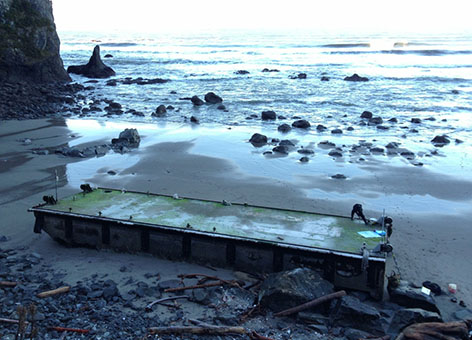
The steel, concrete, and foam Japanese dock beached at Olympic National Park.
Swept away during the Japan tsunami of March 11, 2011, the steel, concrete, and foam dock beached at Olympic National Park, Wash., nearly two years later. (National Park Service)
Node Weight: 
4

NOAA and Canadian Partners Share Arctic Data Across Borders

Short title: 
NOAA and Canadian Partners Share Arctic Data Across Borders

MARCH 8, 2013 — The United States and our neighbors to the north in Canada share a border approximately 5,525 miles long. Some 1,538 miles (or roughly 28%) of which are shared with the State of Alaska alone.

And with this shared boundary comes shared natural resources, shared interests, and the need for a shared understanding of how we can work together to protect our communities, wildlife, and environment from the escalating risk of oil spills and other accidents in the Arctic.

To that end, NOAA's Office of Response and Restoration co-hosted a workshop in Edmonton, Alberta, Canada, with the Inuvialuit Settlement Region Joint Secretariat (a Canadian delegate representing aboriginal interests to the Arctic Council) and the University of New Hampshire's Coastal Response Research Center from February 12–13, 2013. The goal was to bring together representatives from both the U.S. and Canada to examine the potential for incorporating Canadian data into NOAA's online mapping tool, Arctic ERMA®.

Arctic ERMA (Environmental Response Management Application) is an online Geographic Information Systems (GIS) tool being used to prepare and plan for Arctic pollution response, assessment, and environmental restoration. ERMA brings together critical information needed for an effective emergency response in the Arctic's distinctive conditions, such as the extent and concentration of sea ice, locations of ports and oil and gas pipelines, and vulnerable environmental resources which could be harmed by an oil spill.

Discussions at the workshop focused on identifying the regional gaps in data in Arctic ERMA, usable data formats, and how to improve functionality and access to information and tools that would help in the case of an oil spill or environmental accident. Workshop participants spanned multiple areas of expertise: government emergency responders, environmental protection and fisheries managers, weather and natural resource agencies, private industry, non-governmental organizations, local indigenous communities, and universities.

By the end, the workshop improved our understanding of U.S. and Canadian data management practices and systems, how we identify both the data that are available and still needed, and what the long-term training needs are for Arctic communities. We also discussed at length how to better incorporate traditional local knowledge about landscapes and natural resources in Arctic ERMA. We hope that engaging in these conversations and building strong relationships today will promote the kind of cooperation and collaboration that will carry us through any environmental emergencies in the future.

This joint workshop is a project under the Arctic Council's Emergency, Prevention, Preparedness and Response Working Group and under the agreement between Environment Canada and NOAA. Learn more about how the Office of Response and Restoration is preparing for oil spills and other pollution incidents in the Arctic.

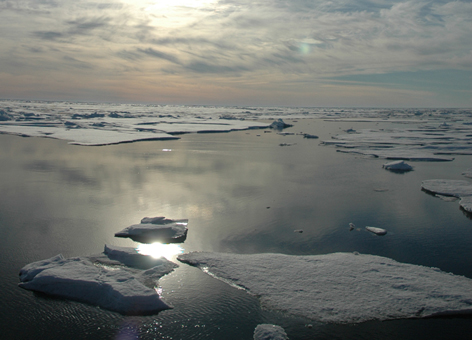
Arctic Ocean, Canada Basin, July 22, 2005.
Arctic Ocean, Canada Basin, July 22, 2005. (NOAA/Jeremy Potter)
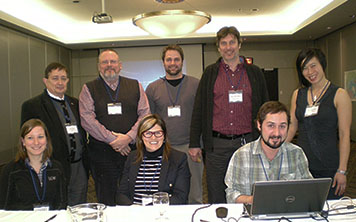
The workshop participants came from a variety of organizations.
The workshop participants came from a variety of organizations. Here, top row: NASA, Consultant, Canada Department of Fisheries and Oceans, Canadian Ice Service, Joint Secretariat. Bottom row: Aboriginal Affairs and Northern Dev. Canada, Environment Canada, NOAA. (University of New Hampshire/Kathy Mandsager)
Node Weight: 
2

Déjà vu on the Sheboygan River: Transitioning from Cleanup to Restoration in Wisconsin

Short title: 
Déjà vu on the Sheboygan River: Transitioning from Cleanup to Restoration in Wisconsin

A Superfund Site in the Making

Throughout the 20th century, industrial facilities released the hazardous chemicals polychlorinated biphenyls (PCBs), polycyclic aromatic hydrocarbons (PAHs), metals, and more into the Sheboygan River and adjacent floodplains. These chemicals have been measured at high concentrations in the river sediments and fish, limiting the public’s ability to use and enjoy the Sheboygan River for years. For example, resident fish and waterfowl from the river are unsafe to eat because the high contaminant levels exceed U.S. Department of Agriculture standards.

To address this contamination, the EPA's Superfund Division has designated the lower 14 miles of the Sheboygan River and the adjacent floodplains for cleanup. On Winter's most recent visit to the river in the fall of 2012, cleanup crews were in their final season of work on a project that has been underway for many years, beginning with emergency sediment removal in 1978. But how do you actually "clean" a polluted river like the Sheboygan? For the upstream stretch of the river, completed in 2006–2007, a crew had to suck up contaminated sediments from the riverbed, suspend them in water so they flow as slurry, and then pump the slurry through a pipeline.

Next, they pumped it into "geotubes," large porous bags that allow the river water to seep out but keep the sediment and solid pollutants inside. A wastewater treatment plant removed any remaining contamination from the water. Once the sediment was dry enough, it was transported to a specially designed hazardous waste landfill. Cleanup in the downstream stretch of the river in 2011–2012 used similar methods, as well as an excavator to scoop up some of the sediments and embedded pollutants.

Gearing up for Restoration

As this cleanup was winding down, Winter and her NOAA colleagues traveled to Sheboygan, Wis., to meet with other federal and state scientists studying the affected area. NOAA, the U.S. Fish and Wildlife Service, and the Wisconsin Department of Natural Resources serve as trustees for the public while conducting a Natural Resource Damage Assessment (NRDA). During this process, the trustees collect and evaluate data to identify the natural resources that have been injured by contamination and to quantify the resulting injuries to the environment. For example, injuries might include increased tumor rates in fish or reduced prey available for fish to eat. Luckily, the Sheboygan River is well-studied; we have data investigating animal populations and habitat quality from the 1970s to the present.

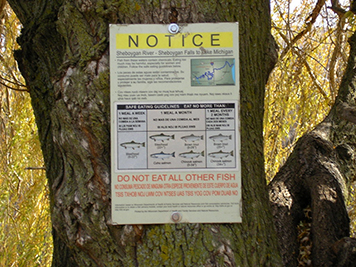
Fish consumption advisories, as seen posted here along the river, have been in place on the Sheboygan River since 1979.
Fish consumption advisories, as seen posted here along the river, have been in place on the Sheboygan River since 1979. (Wisconsin Department of Natural Resources/Vic Pappas)

Once the trustees know precisely what the injuries are from this pollution, they work with the public to choose projects that will address those injuries. For example, this might include creating or enhancing wetlands that will provide better areas for fish to find food. Trustees then require the parties responsible for the contamination either to fund or implement these restoration projects themselves.

In 2012, this restoration process kicked off when the trustees undertook a preliminary assessment. They examined the current state of scientific information on the Sheboygan River's sediments, soils, water, invertebrates, fish, birds, mammals, and reptiles to determine whether it is reasonable to pursue a full damage assessment, which would compensate the public for the natural resources hurt by the Sheboygan's history of toxic chemicals. The preassessment screen [PDF] documents this work.

What did they conclude after the preliminary assessment? That injury to these resources was likely and that damage assessment is warranted. Next, the trustees will develop an Assessment Plan that will describe the methods that will be used to quantify damages. Trustees will invite the public to comment on the Assessment Plan. Stay tuned and check out the links below to access data and documents related to this site.

Data
  • Query Manager database: This is the general informational page for Query Manager, NOAA’s database and query tool for environmental chemistry data. Follow the link to the download page to obtain the database, map, and dictionary for Great Lakes data (which includes Sheboygan River and Harbor data) and to obtain the Query Manager software for interacting with the database.
  • NOAA is developing a new interface for accessing this data which will be available at ProjectDIVER.org. Project DIVER is currently a work in progress.
Documents
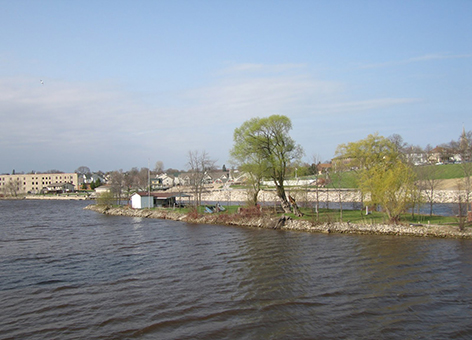
Looking upstream on the Sheboygan River in Wisconsin.
Looking upstream on the Sheboygan River from the Pennsylvania Avenue Bridge in downtown Sheboygan, Wisconsin. This section of the river was dredged in 2011 to remove sediment contaminated with PCBs and PAHs. (NOAA)
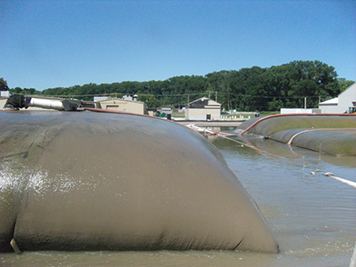
Large, porous "geotubes" shown filled with sediment from the Sheboygan River.
"Geotubes," show here filled with sediment, were used to remove contaminants from Sheboygan river sediments. In the background, pipes collected weepwater which oozed out of the geotubes and left behind contaminated sediments. (U.S. Environmental Protection Agency)
Node Weight: 
5

Get Answers to All Your Questions about Japan Tsunami Marine Debris

Short title: 
Get Answers to All Your Questions about Japan Tsunami Marine Debris

MARCH 5, 2013 — What happened to the massive amounts of debris swept into the ocean by the tsunami that inundated Japan's coast in March 2011? How much is out there? How has the NOAA Marine Debris Program, a division of the Office of Response and Restoration, been involved? Learn the answers to these questions and more in the following NOAA infographic, documents, and video about Japan tsunami marine debris.

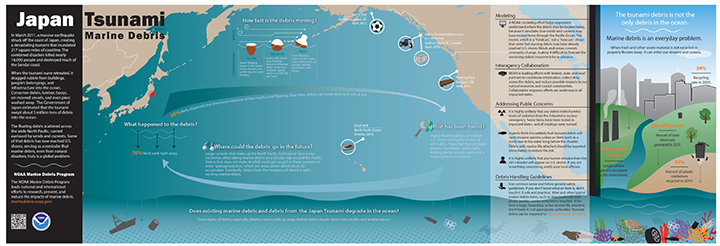
Get a visual snapshot of the issue of in our Japan tsunami marine debris infographic [PDF]. Find out at a glance about subjects including what tsunami debris has been found, NOAA efforts to model its path, and the likelihood of debris carrying invasive marine species.

Japan tsunami marine debris NOAA infographic
Learn more about the issue of Japan tsunami marine debris with this NOAA infographic. Click to enlarge and download.

Share information about tsunami debris, get tips for cleaning up beaches, and more in our handy brochure [PDF].

Download the video file, shown above, on Japan tsunami marine debris [MP4, 31 MB]. If you think you have found tsunami debris from Japan, read our debris handling guidelines. UPDATED MARCH 7, 2013: Thanks to everyone who joined us during our TweetChat about tsunami debris with the Office of Response and Restoration's Marine Debris Program Director, Nancy Wallace. She was available on Twitter to answer questions about radioactivity, floating docks, and anything else you can think of related to Japan tsunami marine debris.

  • What: Twitter chat with NOAA Marine Debris Program Director Nancy Wallace
  • When: Wednesday, March 6, 2013 at 3:00 p.m. ET
  • How: Tweet your questions to @NOAAdebris using hashtag #TsunamiDebris

Follow the archive of the conversation via the hashtag #TsunamiDebris on Twitter.

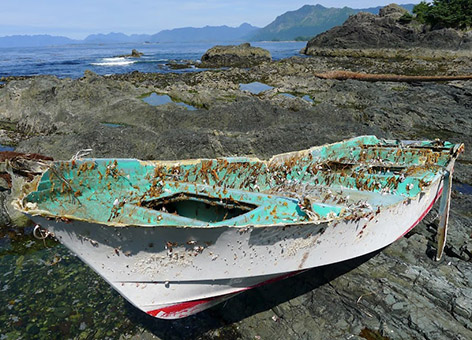
The small boat which washed up on remote Canadian island is tsunami debris.
The small boat which washed up on remote Spring Island, British Columbia, Canada, was positively identified as a vessel lost during the 2011 Japan tsunami. Credit: Kevin Head.
Node Weight: 
3

From Paper to Pixels: Mapping Pollution Response in the Digital Age

Short title: 
From Paper to Pixels: Mapping Pollution Response in the Digital Age

The Past: Paper Cuts

Jill Bodnar's specialty is using Geographic Information Systems (GIS) during pollution responses, and she has honed these skills in numerous drills and incidents over her past 12 years working at NOAA. Through the mid-2000s, NOAA's information management team of GIS specialists like Bodnar would come to a pollution response with CDs full of base data as a starting point for the affected area. These CDs contained nautical charts, Environmental Sensitivity Index data showing natural resources at risk from oiling, state agency Area Contingency Plans, roads and waterways, and occasionally even aerial imagery. All of this information was fed into the GIS program on our laptop computers at the command post.

Next came the data pouring in from field observers working at the spill. This included the type and location of oil observed during overflight surveys, sightings of wildlife in the area, and strategies for placing oil containment boom. NOAA GIS specialists then would build maps reflecting this information and showing the status of cleanup operations. Responders waited as their paper maps were created and printed out before they briefed the leaders of the response (the Unified Command) or headed back into the field, maps in hand. The process was time-consuming, and the information management team often worked under very stressful conditions and late into the night. There was only enough time to get the basic information on to a map as soon as possible.
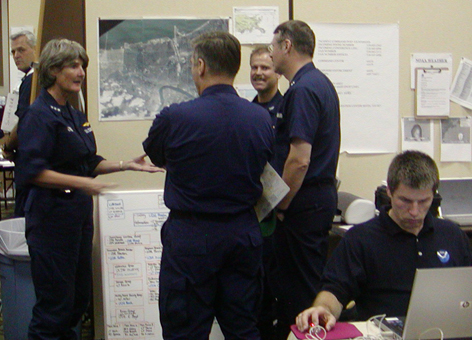
A big change in how maps were used at responses happened during Hurricane Katrina in 2005, which was around the time Google Earth and its satellite imagery became accessible to people without expensive desktop GIS programs. Suddenly, everyone at the command post wanted to print large, poster-sized maps layered over satellite imagery, which helped visualize the flooded carnage of New Orleans, surrounding neighborhoods, and coastal areas.

While the imagery provided unprecedented detail, printing it required a great deal of blue ink and plotter paper, which would quickly run out, hampering our efforts. Luckily Bodnar had a contact at Hewlett-Packard who sent them boxes and boxes of extra plotter paper and ink, and FedEx was able to deliver it to them despite their own issues with the hurricane. It was like Christmas (except with more paper cuts)!
But an even bigger change was in store when the Office of Response and Restoration (OR&R) unveiled the jump to modern-day web mapping for pollution response: the Environmental Response Management Application (ERMA®).
The Present and Future: Pixels

ERMA is an online mapping tool that integrates and synthesizes data—often in real time—into a single interactive map, providing a quick visualization of the situation after a disaster and improving communication and coordination among responders and environmental stakeholders. Developed by OR&R, U.S. Environmental Protection Agency, and University of New Hampshire, ERMA originally was released as a regional pilot project in New Hampshire in 2007. It has since expanded across the continental U.S., Caribbean, Arctic, and Pacific Islands.

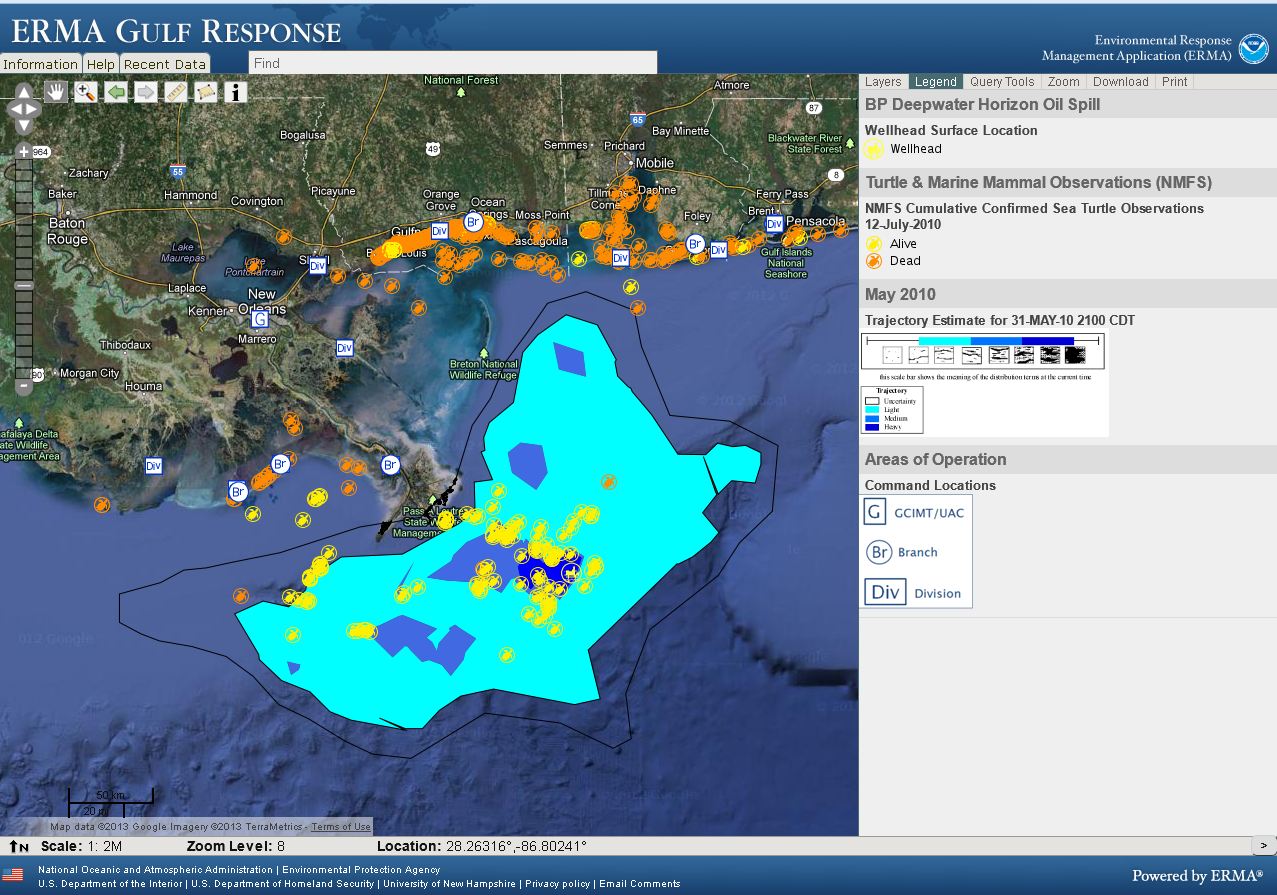
The Deepwater Horizon/BP spill public ERMA site showing satellite imagery and bathymetry, forecasted paths of oil, command post locations, and sea turtle observations. Unlike a static map, the user is able to turn on any layers and zoom to their area of interest. Click image to enlarge. (NOAA)

But ERMA's most pivotal role has been in response to the Deepwater Horizon/BP oil spill in 2010. Federal, state, and local spill responders used ERMA to convey what was happening at the front lines of this massive spill: what shoreline had been oiled and how badly, satellite approximations of the spill's extent, fishery closures, and stranded marine life. At the height of the response, there were six different command posts around the Gulf of Mexico and in Washington, DC. NOAA had GIS specialists in each of them, uploading data 24/7 so that ERMA could be used in briefings to the Unified Command, the White House, NOAA leadership, and to the public via the ERMA Gulf Response website (a public-access version of ERMA). Once released to the public, ERMA was highlighted and used by media outlets to show, for example, current fishing closure areas.

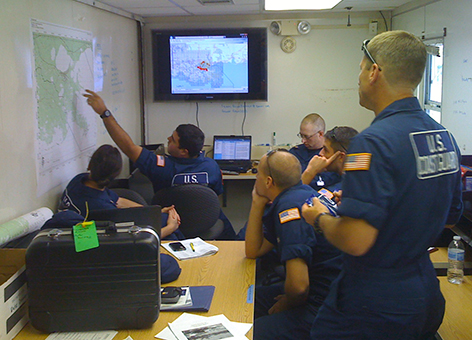
The U.S. Coast Guard uses ERMA during the response to Hurricane Isaac in September 2012.
The U.S. Coast Guard uses ERMA during the response to Hurricane Isaac in September 2012. (NOAA)

In addition, ERMA allowed hundreds of responders and thousands of public users to see the information they needed—coming from multiple sources—at any time, heralding a new era in response where access to data and maps wasn't limited to a GIS specialist's printing capabilities.

Nearly three years later, the NOAA GIS team and other responders around the country are still working on the Deepwater Horizon/BP spill, which includes documenting resulting environmental injuries, and ERMA is a key technology helping them do that job.

More recently, ERMA was put into action during the Hurricane Sandy pollution response in the fall of 2012. During that response, ERMA was used successfully to show federal and state responders and NOAA and Coast Guard leadership post-hurricane satellite imagery, dozens of priority pollution locations, and on-the-ground field photos of impacted areas. Throughout this high-visibility event, ERMA put the most important data they needed to see in their hands.

To some extent, paper maps will always have their place at a response, especially since there is often no Internet connection, say, on a boat in the Gulf of Mexico. GIS specialists will always manage data and create maps to tell a story, but more than ever, ERMA is placing data at the fingertips of responders, often reducing the number of paper maps printed.

The emerging technologies behind ERMA and the power of the Internet are transforming how NOAA collects and manages information and how that translates to making decisions during an oil spill or hurricane response—resulting in more efficient and effective use of time, resources, and money. Not to mention saving Bodnar's fingers from future paper cuts.

U.S. Coast Guard uses NOAA GIS satellite image map during Hurricane Katrina.
Just a few days after Hurricane Katrina hit New Orleans, U.S. Coast Guard Admirals discuss search and rescue strategies in front of a satellite image pieced together by NOAA Geographic Information Systems specialists. (NOAA)
Node Weight: 
4

Broken Louisiana Wellhead No Longer Leaking Oily Mixture

Short title: 
Broken Louisiana Wellhead No Longer Leaking Oily Mixture

MARCH 1, 2013 — A damaged wellhead leaking an oily mixture in the Mississippi River Delta has been successfully capped after two days. The U.S. Coast Guard in New Orleans contacted NOAA and the Office of Response and Restoration on February 26 after a 42-foot crew boat owned by Swift Energy collided with an inactive wellhead in Lake Grande Ecaille, a saltwater bay approximately 11 miles west of Empire, La. The wellhead was broken and began releasing a combination of oil and water, though the exact content of the release is not known. Containment booms and skimming equipment have been deployed to limit the extent of the oil spill and begin cleaning it up.

According to the Coast Guard, “The estimated maximum potential discharge from the wellhead was fewer than 1,260 gallons of crude oil and 1,134 gallons of oily water per day.” The well has been inactive for about six years, and no flow lines are attached, reducing the risk of further oil being released and indication of well abandonment. Office of Response and Restoration emergency response staff have provided oil spill trajectories forecasting the path of the oil and offered counsel on environmental resources at risk to help the Coast Guard know where the oily mixture is likely to go and what habitat is in need of protection.

There has been a concern about a potential health and fire hazard posed by hydrogen sulfide released in the oil. This area is a known "sour" crude oil field which contains hydrogen sulfide (a toxic gas). The well was capped and secured the afternoon of Thursday, February 28.

Leaking wellhead in Lake Ecaille, located in the Mississippi River Delta.
Leaking wellhead in Lake Ecaille, located in the Mississippi River Delta, on February 27, 2013. (U.S. Coast Guard)
Node Weight: 
3

Ships Aground on Coral Reefs, Then and Now: The USS Guardian vs. NOAA Ship Fathomer

Short title: 
Ships Aground on Coral Reefs, Then and Now: The USS Guardian vs. NOAA Ship Fathomer

This is a post by Office of Response and Restoration Incident Operations Coordinator, Doug Helton. FEB. 25, 2013 — On Jan.17, 2013, the Navy mine countermeasures ship USS Guardian ran aground on a coral reef in the Philippines. Salvage experts evaluated various options for removing the ship, including towing or pulling it off the reef, but concluded that such efforts would cause even more damage to the reef and the ship's hull.

Earlier this month, the Navy decided to dismantle the ship and remove it in smaller sections in order to minimize damage to the reef and surrounding marine environment. The Tubbataha Reef, where the ship grounded in the Sulu Sea, is a marine park and UNESCO World Heritage Site, recognized for its biodiversity, pristine reefs, and protected nesting habitat for marine birds and sea turtles. The photos of the stranded ship and the concern about the corals in this part of the world reminded me of a story about the old U.S. Coast and Geodetic Survey (USC&GS) vessel Fathomer.

The USC&GS mission was to survey the U.S. coastline and create nautical charts of the coast to help increase maritime safety. Today, this part of NOAA is called the Office of Coast Survey, which produces navigational products, data, and services to keep maritime commerce moving and to protect life and property at sea. I came across old photos of the Fathomer when I was working on a project studying the impact of vessel groundings on corals. That story ended quite differently than the USS Guardian, and shows how environmental protection has become a much bigger concern for salvors. In the old days, the focus of salvage was strictly to save the ship and cargo, but modern salvors (salvage crews) have a much bigger emphasis on protecting the environment.

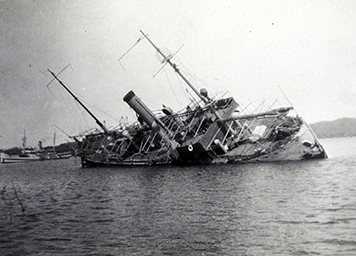
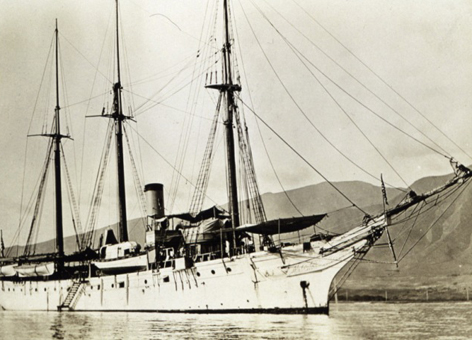
On Aug. 15, 1936, the Fathomer dragged anchor in a typhoon and, like the USS Guardian, ended up grounded on a coral reef in the Philippine Islands[1]. At that time, the Philippines were a commonwealth of the United States, and the Fathomer was surveying and charting the islands. The story of the Fathomer's grounding and salvage is a good sea story, complete with rum. All of the crew survived the storm and grounding, but the official history mentions that "Everyone was bruised and suffering from exhaustion and exposure. Two quarts of brandy, stored in the sick bay, were rationed out to all hands, and undoubtedly resulted in no one developing a severe cold or pneumonia." The entire crew was later commended for their "seamanship, courage and fortitude."

But what I found most interesting was the salvage efforts. Buried in the official history are some details that show that coral reef protection was not a concern in 1936. For example, a pile driver was used to place a "cluster of piles driven on the reef," and these pilings were "backed by three anchors imbedded in the reef." Wire ropes were then used to try to bring the Fathomer upright and haul it off the reef, but those efforts were unsuccessful and ultimately the reef was dynamited and the loose coral was dredged, allowing the Fathomer to be towed to deeper water. The removal of the USS Guardian is ongoing, but thankfully, it is clear, almost 80 years later, that coral reef protection will be very high on the list of priorities.


[1] The Fathomer worked in the Philippines from 1905-1941. After the 1936 typhoon, Fathomer resumed survey duties in the Philippine Islands. During World War II the ship was used in the defense of the Philippines and was lost in April 1942 when the American and Filipino defenders surrendered the Bataan Peninsula.
USS Guardian grounded on coral reef with tug removing fuel and wastewater.
Petroleum-based products and human wastewater are removed from the U.S. Navy mine countermeasure ship USS Guardian, which ran aground on the Tubbataha Reef in the Sulu Sea on Jan. 17. No fuel has leaked since the grounding and all of it has been safely removed. With the deteriorating integrity of the ship, the weight involved, and where it has grounded on the reef, dismantling the ship in sections is the only supportable salvage option. (U.S. Navy)
NOAA Fathomer aground on a coral reef in the Philippines after a typhoon in 1936
The NOAA ship Fathomer aground on a coral reef in the Philippines after the typhoon of August 15, 1936. (NOAA)
Node Weight: 
3

$2 Million in Aquatic Restoration Projects Proposed for Polluted Housatonic River in Connecticut

Short title: 
$2 Million in Aquatic Restoration Projects Proposed for Polluted Housatonic River in Connecticut

FEBR. 22, 2013 — NOAA, the U.S. Fish and Wildlife Service, and the State of Connecticut released a proposal to use approximately $2 million from a 1999 settlement with General Electric Company (GE) to fund projects to increase fish habitat and restore marshes on the Housatonic River. Between 1932 and 1977, GE discharged polychlorinated biphenyls (PCBs) and other chemical wastes from its facility in Pittsfield, Mass, into the Housatonic River, which runs through western Massachusetts and Connecticut. As a result, the Housatonic's fish, wildlife, and their habitats suffered from the effects of these highly toxic compounds.

Part of an amendment to the 2009 restoration plan [PDF] for the Housatonic site, these latest projects highlight aquatic restoration because the original plan primarily focused on recreational and riparian restoration, with more than half of those projects already complete. The amendment identifies seven preferred restoration projects and three non-preferred alternatives to increase restoration of injured aquatic natural resources and services. These projects aim to more fully compensate the public for the full suite of environmental injuries resulting from GE’s decades of PCB contamination by:

  • Enhancing wetland habitat for birds, fish, and other wildlife.
  • Supporting native salt marsh restoration by eradicating nonnative reeds and removing large debris (e.g., plywood and lumber).
  • Restoring migratory fish and wildlife passages by removing dams and constructing bypass channels.
  • Promoting recreational fishing, other outdoor activities, and natural resource conservation.

The 1999 legal settlement with GE included $7.75 million for projects in Connecticut aimed at restoring, rehabilitating, or acquiring the equivalent of the natural resources and recreational uses of the Housatonic River injured by GE's Pittsfield facility pollution. Settlement funds grew to more than $9 million in an interest-bearing fund. NOAA and its co-trustees are using the majority of the remaining $2,423,328 of those funds to implement these additional aquatic natural resources projects.

Public comments and additional project proposals for this draft amendment to the restoration plan will be accepted through March 11, 2013. Comments should be sent to Robin Adamcewicz, Department of Energy and Environmental Protection, Eastern District Headquarters, 209 Hebron Road, Marlborough, CT 06447, or emailed to robin.adamcewicz@ct.gov Learn more about Restoring Natural Resources in Connecticut's Housatonic River Watershed [PDF].

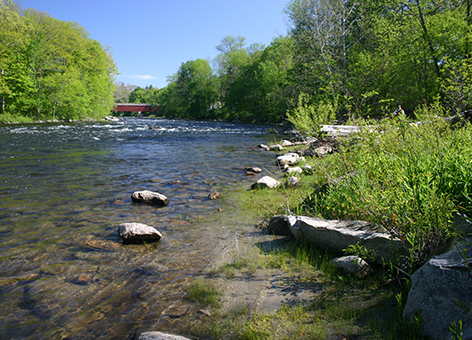
Housatonic River with covered bridge.
The latest round of aquatic restoration projects for the Housatonic River will also indirectly improve water quality, increase buffering during coastal storms, and reduce runoff pollution into the river. (NOAA)
Node Weight: 
1

When Setting Fire to an Oil Spill in a Flooded Louisiana Swamp is a Good Thing

Short title: 
When Setting Fire to an Oil Spill in a Flooded Louisiana Swamp is a Good Thing

FEB. 12, 2013 — The longer NOAA Scientific Support Coordinator LTJG Kyle Jellison works in the Gulf of Mexico, the more he comes to understand why oil spill responders claim that "every spill is a unique situation." He has been providing scientific support for a pollution response in the remote, wooded swamp tucked inside Bayou Sorrel, about an hour outside of Baton Rouge, La. In early January, a pipeline running underground ruptured, and responders believed it was leaking just a few barrels of crude oil onto land.

Then came the rains ... and the flooding ... and then even more flooding.

Right now, up to 4 feet of water is covering the entire affected area (about 1 acre), and cleanup crews are wading through the oil slick in hip waders. This has been quite the challenge. Part of Jellison's job is to help figure out how to expedite this cleanup while minimizing damage to the environment. For this case, the response team agreed that it was time to get out the matches and get ready for a fire. It is not for every spill that in situ burning, or the controlled burning of spilled oil "in place," comes up.

This was the first incident that Jellison has been involved with where burning has been seriously discussed as a spill response option and one of only a few burns conducted in an environment other than a marsh, where the practice is more common for removing oil. (You may remember similar burns on the open ocean during the 2010 Deepwater Horizon/BP oil spill.) In preparation for the burn, they needed to consider many factors: public safety and health, worker safety and health, effects to vegetation and animal species, proper conditions to sustain combustion, controls for limiting collateral damage, potential quantity of oil removed, and more.

Cleanup crew in boats and hip waders work to sop up the leftover oil using sorbent pads and boom in a wooded swamp.
Oil still remains in part of the flooded Louisiana swamp, where a cleanup crew in boats and hip waders worked to sop up the leftover oil using sorbent pads and boom on February 4, 2013. (NOAA/LTJG Kyle Jellison)

The response team determined that rising flood waters would complicate the cleanup operation and increase the probability of the oil escaping containment and spreading throughout the swamp. Controlled burning, on the other hand, could rapidly remove a high percentage of oil while causing minimal local damage to area plant species. (With their roots protected underwater, the plants would be able to grow back after the oiled upper portions were burned off.) As these plans took shape, burn team safety was paramount, and cleanup crews corralled the oil to create thick pools of oil for combustion.

Considering the circumstances, the in situ burns seemed like a great success. The fire team was able to ignite three patches of pooled oil with a handheld propane brush torch; one burn lasted 5 minutes and the other two burns lasted 15 minutes. The fires did not spread outside the oiled area, and they have heard no reports of injury or ill health.

With 35 minutes of total combustion, the burns were able to remove an estimated 20 to 30 barrels of oil from the affected swamp, leaving 30 to 40 barrels behind for further clean up. But how did the responders end up having dealing with so many barrels of oil if initial reports were that only a few barrels leaked? The rain and the flooding have been drawing oil up from the soils surrounding the ruptured pipeline, and the oil has been rising to the water's surface. If the pipeline buried about 6 feet underground can generate a pool of oil at the surface under dry conditions, how much oil has really been released? Could more oil show up later?

Efforts are underway to better understand this tricky situation by placing a closed loop of containment boom over the source point for several days. If more oil appears inside the boom, then the soil is continuing to release oil. If that is the case, this oily situation might persist for months to come, but only time will tell. Stay tuned at IncidentNews.noaa.gov.

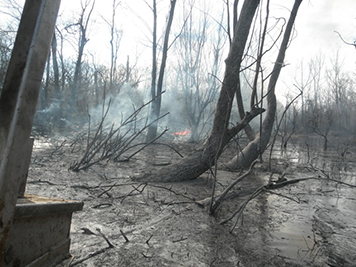
Smoke and fire from a controlled burn in a wooded Lousiania swamp.
A view of one of the controlled burns to remove oil spilled in a wooded swamp outside of Baton Rouge, Louisiana, on January 19, 2013. (U.S. Coast Guard)
After the in situ burn incinerated oil from a wooded swamp at Bayou Sorrel.
Taken January 19, 2013, after the in situ burn incinerated oil from a wooded swamp at Bayou Sorrel. The landscape may look stark, but the controlled burn removes the oil and allows the vegetation to regenerate in a cleaner environment. (U.S. Coast Guard)
Node Weight: 
3

Where Are the Pacific Garbage Patches?

Short title: 
Where Are the Pacific Garbage Patches?

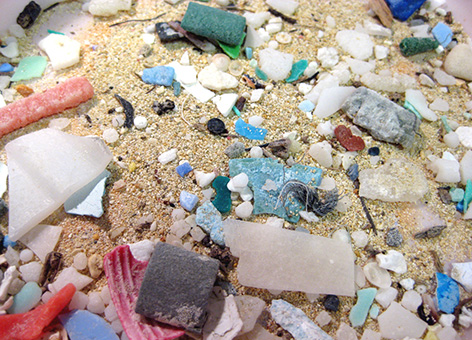
FEB. 7, 2013 — The Pacific Ocean is massive. It's the world's largest and deepest ocean, and if you gathered up all of the Earth's continents, these land masses would fit into the Pacific basin with a space the size of Africa to spare. While the Pacific Ocean holds more than half of the planet's free water, it also unfortunately holds a lot of the planet's garbage (much of it plastic). But that trash isn't spread evenly across the Pacific Ocean; a great deal of it ends up suspended in what are commonly referred to as "garbage patches." A combination of oceanic and atmospheric forces causes trash, free-floating sea life (for example, algae, plankton, and seaweed), and a variety of other things to collect in concentrations in certain parts of the ocean. In the Pacific Ocean, there are actually a few "Pacific garbage patches" of varying sizes as well as other locations where marine debris is known to accumulate.

The Eastern Pacific Garbage Patch (aka "Great Pacific Garbage Patch")

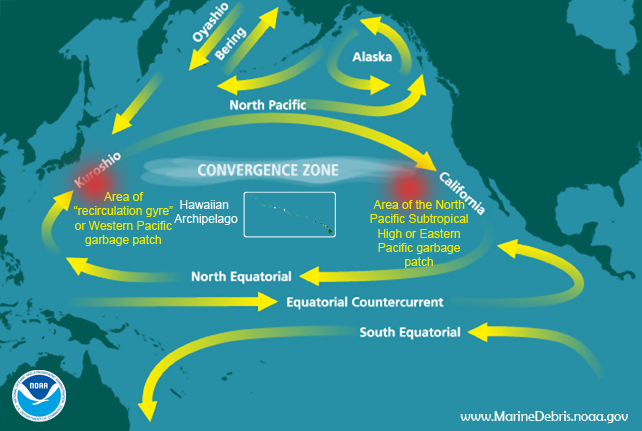
In most cases when people talk about the "Great Pacific Garbage Patch," they are referring to the Eastern Pacific garbage patch. This is located in a constantly moving and changing swirl of water roughly midway between Hawaii and California, in an atmospheric area known as the North Pacific Subtropical High. NOAA National Weather Service meteorologist Ted Buehner describes the North Pacific High as involving "a broad area of sinking air resulting in higher atmospheric pressure, drier warmer temperatures and generally fair weather (as a result of the sinking air)." This high pressure area remains in a semi-permanent state, affecting the movement of the ocean below. "Winds with high pressure tend to be light(er) and blow clockwise in the northern hemisphere out over the open ocean," according to Buehner. As a result, plastic and other debris floating at sea tend to get swept into the calm inner area of the North Pacific High, where the debris becomes trapped by oceanic and atmospheric forces and builds up at higher concentrations than surrounding waters. Over time, this has earned the area the nickname "garbage patch"—although the exact content, size, and location of the associated marine debris accumulations are still difficult to pin down.

Map of ocean currents, features, and areas of marine debris accumulation including garbage patches in the Pacific Ocean.
This map is an oversimplification of ocean currents, features, and areas of marine debris accumulation (including "garbage patches") in the Pacific Ocean. There are numerous factors that affect the location, size, and strength of all of these features throughout the year, including seasonality and El Niño/La Niña. (NOAA Marine Debris Program)
The Western Pacific Garbage Patch

On the opposite side of the Pacific Ocean, there is another so-called "garbage patch," or area of marine debris buildup, off the southeast coast of Japan. This is the lesser known and studied, Western Pacific garbage patch. Southeast of the Kuroshio Extension (ocean current), researchers believe that this garbage patch is a small "recirculation gyre," an area of clockwise-rotating water, much like an ocean eddy (Howell et al., 2012).

North Pacific Subtropical Convergence Zone

While not called a "garbage patch," the North Pacific Subtropical Convergence Zone is another place in the Pacific Ocean where researchers have documented concentrations of marine debris. A combination of oceanic and atmospheric forces create this convergence zone, which is positioned north of the Hawaiian Islands but moves seasonally and dips even farther south toward Hawaii during El Niño years (Morishige et al., 2007, Pichel et al., 2007). The North Pacific Convergence Zone is an area where many open-water marine species live, feed, or migrate and where debris has been known to accumulate (Young et al. 2009). Hawaii's islands and atolls end up catching a notable amount of marine debris as a result of this zone dipping southward closer to the archipelago (Donohue et al. 2001, Pichel et al., 2007). But the Pacific Ocean isn't the only ocean with marine debris troubles. Trash from humans is found in every ocean, from the Arctic (Bergmann and Klages, 2012) to the Antarctic (Eriksson et al., 2013), and similar oceanic processes form high-concentration areas where debris gathers in the Atlantic Ocean and elsewhere.

You can help keep trash from becoming marine debris by (of course) reducing, reusing, and recycling; by downloading the NOAA Marine Debris Tracker app for your smartphone; and by learning more at the NOAA Marine Debris Program's website.

Literature Cited

Bergmann, M. and M. Klages. 2012. Increase of litter at the Arctic deep-sea observatory HAUSGARTEN. Marine Pollution Bulletin, 64: 2734-2741.

Donohue, M.J., R.C. Boland, C.M. Sramek, and G.A Antonelis. 2001. Derelict fishing gear in the Northwestern Hawaiian Islands: diving surveys and debris removal in 1999 confirm threat to coral reef ecosystems. Marine Pollution Bulletin, 42 (12): 1301-1312.

Eriksson, C., H. Burton, S. Fitch, M. Schulz, and J. van den Hoff. 2013. Daily accumulation rates of marine debris on sub-Antarctic island beaches. Marine Pollution Bulletin, 66: 199-208.

Howell, E., S. Bograd, C. Morishige, M. Seki, and J. Polovina. 2012. On North Pacific circulation and associated marine debris concentration. Marine Pollution Bulletin, 65: 16-22.

Morishige, C., M. Donohue, E. Flint, C. Swenson, and C. Woolaway. 2007. Factors affecting marine debris deposition at French Frigate Shoals, Northwestern Hawaiian Islands Marine National Monument, 1990-2002. Marine Pollution Bulletin, 54: 1162-1169.

Pichel, W.G., J.H. Churnside, T.S. Veenstra, D.G. Foley, K.S. Friedman, R.E. Brainard, J.B. Nicoll, Q. Zheng and P. Clement-Colon. 2007. Marine debris collects within the North Pacific Subtropical Convergence Zone [PDF]. Marine Pollution Bulletin, 54: 1207-1211.

Young L. C., C. Vanderlip, D. C. Duffy, V. Afanasyev, and S. A. Shaffer. 2009. Bringing home the trash: do colony-based differences in foraging distribution lead to increased plastic ingestion in Laysan albatrosses? PLoS ONE 4 (10).

Microplastics in sand.
Microplastics, small plastics less than 5 millimeters long, are an increasingly common type of marine debris found in the water column (including the "garbage patches") and on shorelines around the world. Based on research to date, most commonly used plastics do not fully degrade in the ocean and instead break down into smaller and smaller pieces. (NOAA Marine Debris Program)
Node Weight: 
4

NOAA Heritage Week 2013

Short title: 
NOAA Heritage Week 2013

It's NOAA Heritage Week: Explore your world and learn how NOAA—the National Oceanic and Atmospheric Administration—takes the pulse of the planet every day and protects and manages ocean and coastal resources. The week of Feb. 4, NOAA is hosting a series of free lunchtime presentations at the Gateway to NOAA exhibit on a variety of timely topics. It started with ocean acidification's effects on oysters and ends Friday with microscopic images of ocean life. Gateway to NOAA is located at 1325 East-West Highway in Silver Spring, Maryland.

NOAA Heritage Week Open House in Maryland

Join us on NOAA's Silver Spring, Maryland, campus on Saturday, Feb. 9 from 9 a.m. to 4 p.m. for free activities, including engaging talks by NOAA experts, interactive exhibits, special tours, and hands-on activities for ages 5 and up. Meet and talk with scientists, weather forecasters, hurricane hunter pilots, and others who work to understand our environment, protect life and property, and conserve and protect natural resources. Look forward to making origami whales, viewing seahorse X-rays, building an ocean buoy, or getting "shocked" learning about lightning safety with NOAA. Visit www.noaa.gov/openhouse for details. Adults, please bring a photo ID to enter this federal facility.

Protecting America's Heritage

In communities across America, NOAA is preserving the nation's heritage. For example, NOAA promotes the message that our heritage resources belong to everyone, and that we all have a role to play in preserving them for future generations. NOAA's Florida Keys National Marine Sanctuary offers a Web-based shipwreck trail that highlights the region's rich maritime history and encourages the public to visit the Keys and dive the trail's nine carefully chosen, mapped, and interpreted sites. Learn more at preserveamerica.noaa.gov/welcome.html.

NOAA Coast and Geodetic Survey Steamer PATTERSON in Hawaii in 1913.
NOAA's heritage stretches back far: The NOAA Coast and Geodetic Survey Steamer PATTERSON was in service on the Pacific Ocean from 1884-1919. It's shown here in Wailuku, Hawaii, in 1913. (NOAA)
Node Weight: 
2

Pages

Subscribe to response.restoration.noaa.gov RSS