Back to top

During the Chaos of Oil Spills, Seeking a System to Test Potential Solutions

Short title: 
Vetting Ideas for Dealing with Oil Spills

MARCH 10, 2016 -- In the pre-dawn hours of January 7, 1994, the tank barge Morris J Berman ran aground near San Juan, Puerto Rico, damaging coral and spilling more than 800,000 gallons of a thick, black fuel oil.

Strong winds and waves battered the barge as it continued to leak and created dangerous conditions for spill responders.

During the hectic but organized spill response that followed [PDF] the barge's grounding, a number of vendors appeared at the command post with spill cleanup products which they assured responders would fix everything. This scenario had played out at many earlier oil spills, and nearly every time, these peddled products were treated differently, at various times sidelined, ignored, tested, or put to use.

It’s not unexpected for the initial situation at any emergency response—be it medical, natural disaster, fire, or oil spill—to be chaotic. Responders are dealing with limited resources, expertise, and information at the very beginning.

As the situation progresses, additional help, information, and experts typically arrive to make things more manageable. Usually, in the middle of all this, people are trying to be helpful, or make a buck, and sometimes both.

At the spill response in Puerto Rico, the responders formed an official ad hoc group charged with cataloging and evaluating each new suggested cleanup product or technology. The group involved local government agencies, NOAA, and the U.S. Coast Guard. It began to develop a systematic approach to what had typically been a widely varying process at previous oil spills.

The methodology the group developed for this case was rough and quickly implemented for the situation at hand. Over the course of the several months required to deal with the damaged barge and oil spill, the ad hoc group tested several, though not all, of the potential cleanup products.

Approaching Order

A few years later, another group took this process a step further through the Regional Response Team III, a state-federal entity for response policy, planning, and coordination for West Virginia, Maryland, Delaware, Pennsylvania, Virginia, and the District of Columbia.

This working group set out to develop a more organized and systematic way to deal with alternative oil spill response techniques and technologies, those which aren't typically used during oil spill responses. After many months of working collaboratively, this multi-agency working group, which included Ed Levine and his colleagues in NOAA's Office of Response and Restoration, produced the approach known as the Alternative Response Tools Evaluation System (ARTES).

This system allows a special response team to rapidly evaluate a proposed response tool and provide feedback in the form of a recommendation to the on-scene coordinator, who directs spill responses for a specified area. This coordinator then can make an informed decision on the use of the proposed tool.
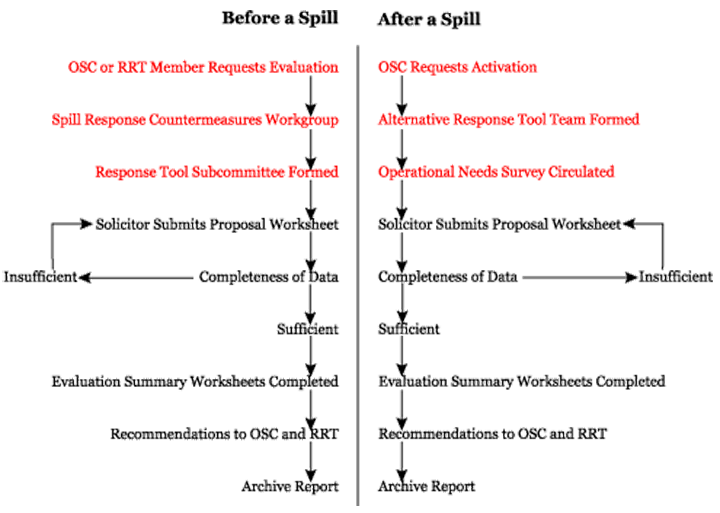
A flow chart showing the Alternative Response Tools Evaluation System (ARTES) process both before and after a spill.
The Alternative Response Tools Evaluation System (ARTES) process is designed for use both before and after a spill. "OSC" stands for on-scene coordinator, the person who directs a spill response, and "RRT" stands for Regional Response Team, the multi-agency group charged with spill response policy, planning, and coordination for different regions of the United States.

The ARTES process is designed for two uses. First, it can be used to assess a product's appropriateness for use during a specific incident, under specific circumstances, such as a diesel spill resulting from a damaged tug boat on the Mississippi River. Second, the process can serve as a pre-evaluation tool during pre-spill planning to identify conditions when a proposed product would be most effective.

One advantage of the ARTES process is that it provides a management system for addressing the numerous proposals submitted by vendors and others during a spill. Subjecting all proposals to the same degree of evaluation also ensures that vendors are considered on a "level playing field."

Although developed for one geographic region, the ARTES process quickly became adopted by others around the country and has been included in numerous local and regional response plans.

Once the ARTES process was codified, several products including an oil solidifier and a bioremediation agent underwent regional pre-spill evaluations. Ed Levine, one of NOAA's Scientific Support Coordinators at the time, was involved in several of those evaluations as well as one during an actual spill.

A Flood of Oil ... and Ideas
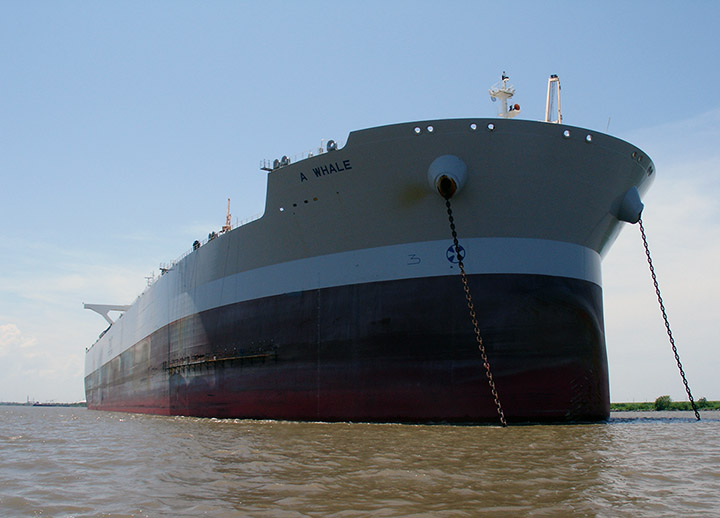
A super tanker ship with a large slit in the bow anchored in the Gulf of Mexico.
The super tanker "A Whale" after testing during the Deepwater Horizon oil spill. The skimming slits on its bow are being sealed because it was not able to perform as designed. This vessel design was one of more than 80,000 proposals for surface oil spill response submitted during the spill. (NOAA)

Another defining moment for the ARTES process came in 2010 during the Deepwater Horizon oil spill. Within the first week of the spill, the unified command, the multi-agency organization which coordinates the response and includes those responsible for the spill, was inundated with suggestions to cap the leaking well and clean up the oil released into the Gulf of Mexico.

At one of the morning coordination meetings, the BP incident commander shared his frustration in keeping up with the deluge of offers. He asked if anyone had a suggestion for dealing with all of them. Levine's hand shot up immediately.

After the meeting Levine spoke with leaders from both BP and the U.S. Coast Guard and described the ARTES process to them. They gave him the go-ahead to implement it. Boy, did he not know what they were in for!

As the days went by, the number of submissions kept growing, and growing, and growing. What started out as a one-person responsibility—recording submissions by phone and email—was soon taken over by a larger group staffed by the Coast Guard and California Office of Spill Prevention and Response and which eventually grew into a special unit of the response.

A dedicated website was created to receive product proposals and ideas, separate them into either a spill response or well capping method, track their progress through the evaluation system, and report the final decision to archive the idea, test it, or put it to use during the spill.

People who submitted ideas were able to track submissions and remain apprised of each one's progress. Eventually, 123,000 individual ideas were submitted and tracked, 470 made the initial cut, 100 were formally evaluated, and about 30 were implemented during response field operations. Of the original 123,000 submissions, there were 80,000 subsurface and 43,000 surface oil spill response ideas.

One of the many proposals for cleaning up the oil took the form of the ship A Whale. It was a super tanker with a large slit in the bow at the waterline that was meant to serve as a huge skimmer, pulling oil off the ocean surface. Unfortunately, testing revealed that it didn't work.

Some other examples of submissions included sand-cleaning machines and a barge designed to be an oil skimming and storage device (nicknamed the "Bubba Barge") that actually did work. On the other hand, popular proposals such as human hair, feathers, and pool "noodles" didn't perform very well.

Even under the weight of this incredible outpouring of proposals, the ARTES process held up, offering a great example of how far pre-planning can go.
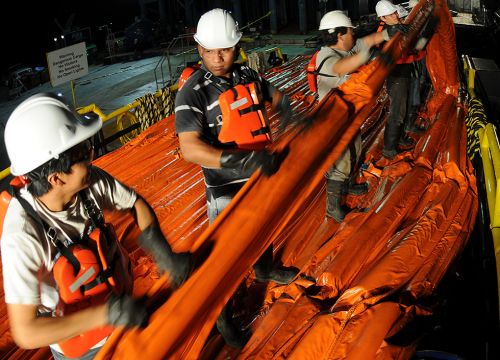
Response workers load oil containment boom onto a supply ship in Louisiana.
NOAA helped develop a systematic approach to vetting new and non-traditional spill response products and techniques during the fast-paced atmosphere of an oil spill. We helped implement this system during the 2010 Deepwater Horizon oil spill to evaluate the tens of thousands of ideas proposed during the spill. (U.S. Coast Guard)
Node Weight: 
2

How Much Oil Is on That Ship?

Short title: 
How Much Oil Is on That Ship?

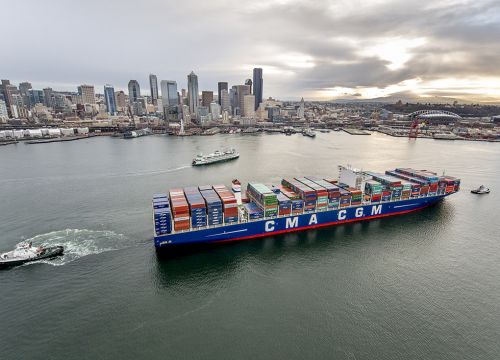
MARCH 8, 2016 -- Like many people with an interest in the maritime industry, NOAA's Doug Helton has been following the story of the huge container ship Benjamin Franklin that recently visited Seattle's port.

The news stories about it were full of superlatives.

It was the largest cargo vessel to visit the United States, measuring 1,310 feet in length, or longer than the height of two Space Needles.

This massive ship can carry 18,000 shipping containers, known in the business as 20-foot equivalent units or TEUs. That is more than double the cargo of most container ships calling on the Port of Seattle.

Loaded on a train (and most of them will be) those containers would stretch more than 68 miles, or the distance from Tacoma, Washington, to Everett.

Considering this ship's massive size made Helton wonder how much fuel is on board. After some research, he found out: about 4.5 million gallons. That makes it just a bit bigger than his sailboat which holds only 20 gallons of fuel.

Understanding the potential volumes of oil (either as fuel or cargo) carried on ships is a major consideration in spill response planning.

All tank vessels (tankers and barges) and all non-tank vessels (freighters, cruise ships, etc.) larger than 400 gross tons have to have vessel response plans. Key metrics in those plans include listing the maximum amount of oil that could be spilled (known as the worst case discharge) and the maximum most probable discharge, which, for non-tank vessels, is generally defined as 10% of the vessel's total fuel capacity.

What about other types of vessels? How much oil in the form of fuel or cargo do they typically carry?

Here are some approximate numbers, many of which are pulled from this Washington State Department of Ecology report [PDF]:

  • Small speedboat (12–20 feet): 6–20 gallons
  • Sailing yacht (33–45 feet) : 30–120 gallons
  • Motor yacht (40–60 feet) : 200–1,200 gallons
  • Large tanker truck: 5,000–10,000 gallons
  • Small tugboat (30–60 feet): 1,500–25,000 gallons
  • Petroleum rail car: 30,000 gallons
  • Boeing 747 airplane: 50,000–60,000 gallons
  • Ocean-going tugboat (90–150 feet): 90,000–190,000 gallons
  • Puget Sound jumbo ferry (440 feet): 130,000 gallons
  • Microsoft co-founder Paul Allen’s yacht M/V Octopus (416 feet): 224,000 gallons
  • Bulk carrier of commodities such as grain or coal (500–700 feet): 400,000–800,000 gallons
  • Large cruise ship (900–1,100 feet): 1–2 million gallons
  • Inland tank barge (200–300 feet): 400,000–1.2 million gallons
  • Panamax container ship that passes through the Panama Canal (960 feet): 1.5–2 million gallons
  • Container ship Benjamin Franklin (1,310 feet): 4.5 million gallons
  • Ocean-going tank barge (550–750 feet): 7 million–14 million gallons
  • T/V Exxon Valdez and similar large oil tankers (987 feet): 55 million gallons

Thanks to developing technologies, such "mega-vessels" as the Benjamin Franklin appear to be on the rise, a trend we're watching along with the International Tanker Owners Pollution Federation and University of Washington.

How will these larger ships carrying more oil affect the risk of oil spills and how should NOAA prepare for these changes? Stay tuned.

The massive container ship Benjamin Franklin pulls into the Port of Seattle.
The container ship Benjamin Franklin, the largest cargo ship to visit the United States, arrives in Elliott Bay at the Port of Seattle on February 29, 2016. Credit: Don Wilson/Port of Seattle
Node Weight: 
2

Redrawing the Coast After Sandy: First Round of Updated Environmental Sensitivity Data Released for Atlantic States

Short title: 
Environmental Sensitivity Data Updated for Post-Sandy East Coast
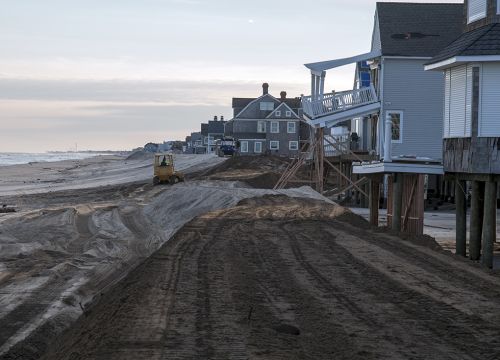
Machines moves sand to rebuild a New Jersey beach by Sandy-damaged houses.
In Brick, New Jersey, construction crews rebuild the beaches in front of homes damaged by Hurricane Sandy. This huge storm actually changed the shape of shorelines up and down the East Coast. (Federal Emergency Management Agency/FEMA)
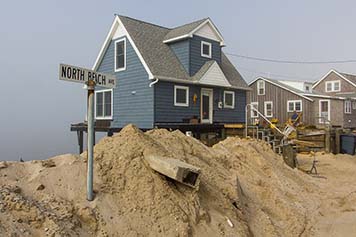
A street sign is buried under huge piles of sand in front of a beach community.
In the wake of Sandy, we've been updating our Environmental Sensitivity Index maps and data and adding new features, such as storm surge inundation data. Hurricane Sandy's flooding left significant impacts on coastal communities in eleven Atlantic states. (Federal Emergency Management Agency/FEMA)
Node Weight: 
4

How Do We Use Satellite Data During Oil Spills?

Short title: 
How Do We Use Satellite Data During Oil Spills?

FEBRUARY 19, 2016 -- Did you know satellites measure many properties of the Earth's oceans from space?

Remote sensing technology uses various types of sensors and cameras on satellites and aircraft to gather data about the natural world from a distance.

These sensors provide information about winds, ocean currents and tides, sea surface height, and a lot more.

NOAA's Office of Response and Restoration is taking advantage of all that data collection by collaborating with NOAA's Satellite and Information Service to put this environmental intelligence to work during disasters such as oil spills and hurricanes.

Remote sensing technology adds another tool to our toolbox as we assess and respond to the environmental impacts of these types of disasters.

In these cases, which tend to be larger or longer-term oil spills, NOAA Satellites analyzes earth and ocean data from a variety of sensors and provides us with data products such as images and maps.

We're then able to take that information from NOAA Satellites and apply it to purposes ranging from detecting oil slicks to determining how an oil spill might be impacting a species or shoreline.

Slick Technology

During an oil spill, observers trained to identify oil from the air go out in helicopters and planes to report an oil slick's exact location, shape, size, color, and orientation at a given time. Analogous to this "remote sensing" done by the human eye, satellite sensors can help us define the extent of an oil slick on the ocean surface and create a target area where our aerial observers should start looking for oil.

In the case of a large oil spill over a sizable area such as the Gulf of Mexico, this is very important because we can't afford the time to go out in helicopters and look everywhere or sometimes weather conditions may make it unsafe to do so.

Satellite remote sensing typically provides the aerial footprint or outline of the surface oil (the surface oiling extent). However, oil slicks are patchy and vary in the thickness of the oil, which means having the outline of the slick is useful, but we still need our observers to give us more detailed information. That said, we're starting to be able to use remote sensing to delineate not just the extent but also the thickest parts of the slicks.

Armed with information about where spilled oil may be thickest allows us to prioritize these areas for cleanup action. This "actionable oil" is in a condition that can be collected (via skimmers), dispersed, or burned as part of the cleanup process.

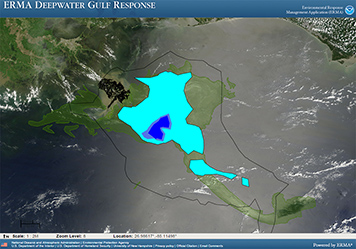
You can see how we mapped the surface oiling extent during the Deepwater Horizon spill based on data analyses from NOAA Satellites into our online response mapping program ERMA.

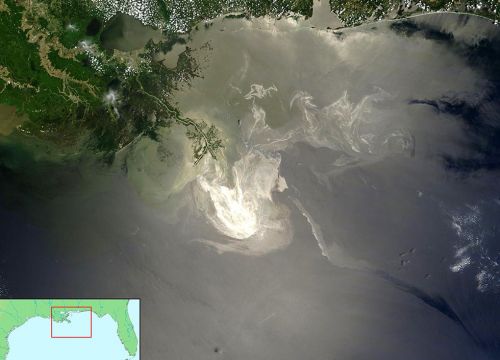
A view of the Deepwater Horizon oil spill from NASA's Terra Satellites.
A view of the Deepwater Horizon oil spill from NASA's Terra Satellites on May 24, 2010. When oil slicks are visible in satellite images, it is because they have changed how the water reflects light, either by making the sun’s reflection brighter or by dampening the scattering of sunlight, which makes the oily area darker. (NASA)
Satellite views of Deepwater Horizon actual extent and oil spill forecasts.
The three blue shapes represent the NOAA oil spill trajectory for May 17, 2010, showing potential levels of oiling during the Deepwater Horizon oil spill. The green outline represents the aerial footprint or oil extent for the same day, which comes from the NOAA satellite program. All of these shapes appear on a NASA MODIS Terra Satellite background image, as shown in our online response mapping program ERMA. (NOAA)
Node Weight: 
2

What Are Our Options for Restoring Lands Around Washington's Hanford Nuclear Reservation?

Short title: 
Restoration Options for the Hanford Nuclear Reservation
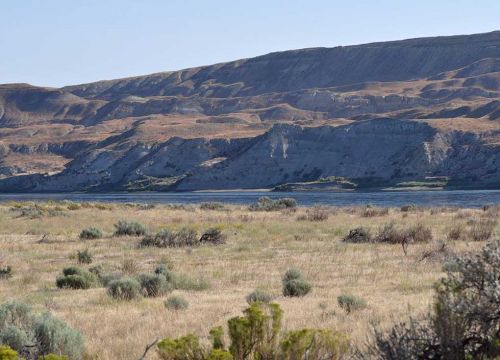
Shrub-covered plains next to a river and bluffs beyond.
The dry shrub-steppe habitat at Washington's Hanford Nuclear Reservation is rare for the region because it is so extensive, intact, and relatively healthy. (Department of Energy)
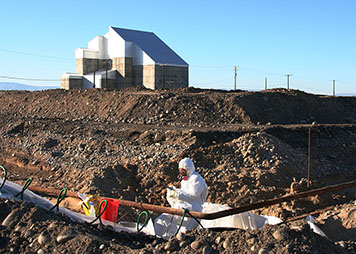
A worker drains a pipe that contains liquid chromium next to a nuclear reactor.
From the 1940s to 1980s, the Hanford site was used to produce plutonium in nuclear weapons, and which today is home to the largest environmental cleanup in the United States. Here, a cleanup worker deals with chromium pollution near one of the decommissioned nuclear reactors. (Department of Energy)
Node Weight: 
4

How Do You Keep Killer Whales Away From an Oil Spill?

Short title: 
Keeping Killer Whales Away From Oil Spills

This is a guest post by Lynne Barre of NOAA Fisheries.

FEBRUARY 8, 2016 -- I sleep better at night knowing that we have a plan in place to keep endangered Southern Resident killer whales away from an oil spill.

Preventing oil spills is key, but since killer whales, also known as orcas, spend much of their time in the busy waters around Seattle, the San Juan Islands, and Vancouver, British Columbia, there is always a chance a spill could happen.

The Southern Residents are a small and social population of killer whales, so an oil spill could have major impacts on the entire population if they were in the wrong place at the wrong time.

We've learned from past experience with the 1989 Exxon Valdez oil spill that killer whales and other marine mammals don’t avoid oiled areas on their own and exposure to oil likely can affect their populations.

New information on impacts from the 2010 Deepwater Horizon oil spill on bottlenose dolphins (a close relative of killer whales) gives us a better idea of how oil exposure can affect the health and reproduction of marine mammals.

Oil spills are a significant threat to the Southern Resident population, which totals less than 90 animals, and the 2008 recovery plan [PDF] calls for a response plan to protect them.

We brought experts together in 2007 to help us identify tools and techniques to deter killer whales from oil and develop a response plan so that we'd be prepared in case a major oil spill does happen.

The Sound of Readiness

Killer whales are acoustic animals. They use sound to communicate with each other and find food through echolocation, a type of biosonar. Because sound is so important, using loud or annoying sounds is one way that we can try to keep the whales away from an area contaminated with oil.

We brainstormed a variety of ideas based on experience with killer whales and other animals and evaluated a long list of ideas, including sounds, as well as more experimental approaches, such as underwater lights, air bubble curtains, and hoses.

After receiving lots of input and carefully evaluating each option, we developed an oil spill response plan for killer whales that includes three main techniques to deploy quickly if the whales are headed straight toward a spill. Helicopter hazing, banging pipes (oikomi pipes), and underwater firecrackers are on the short list of options.

Here's a little more about each approach:

  • Helicopters are often available to do surveillance of oil and look for animals when a spill occurs. By moving at certain altitudes toward the whales, a helicopter creates sound and disturbs the water’s surface, which can motivate or “haze” whales to move away from oiled areas.
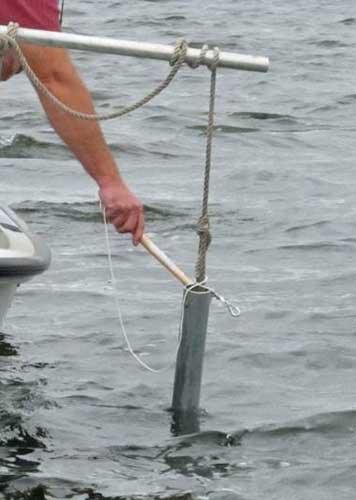
  • Banging pipes, called oikomi pipes, are metal pipes about eight feet long which are lowered into the water and struck with a hammer to make a loud noise. These pipes have been used to drive or herd marine mammals. For killer whales, pipes were successfully used to help move several whales that were trapped in a freshwater lake in Alaska.
  • Underwater firecrackers can also be used to deter whales. These small explosives are called “seal bombs” because they were developed and can be used to keep seals and sea lions away [PDF] from fishing gear. These small charges were used in the 1960s and 1970s to help capture killer whales for public display in aquaria. Now we are using historical knowledge of the whales’ behavior during those captures to support conservation of the whales.

In addition, our plan includes strict safety instructions about how close to get and how to implement these deterrents in order to prevent injury of oil spill responders and the whales. In the case of an actual spill, the wildlife branch within the Incident Command (the official response team dealing with the spill, usually led by the Coast Guard) would direct qualified responders to implement the different techniques based on specific information about the oil and whales.

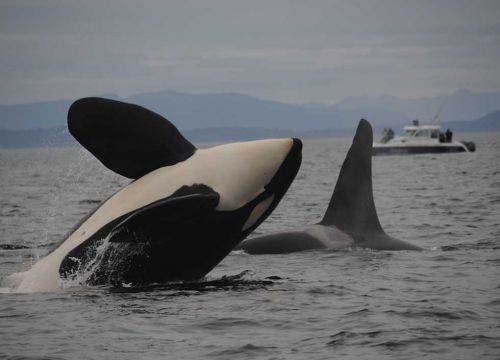
Two killer whales (orcas) breach in front a boat.
NOAA developed an oil spill response plan for killer whales that includes three main techniques to deploy quickly to keep these endangered animals away from a spill. (NOAA)
A person uses a pipe to hit a larger metal pipe hanging off a boat in water.
Oikomi pipe (banging pipe) suspended from small vessel during oil spill drill in Washington’s San Juan Islands. (Photo courtesy of Washington Department of Fish and Wildlife)
Node Weight: 
4

Accidents on a Flooded Lower Mississippi River Keep NOAA Busy with a Rash of Spills

Short title: 
Accidents on a Flooded Lower Mississippi River
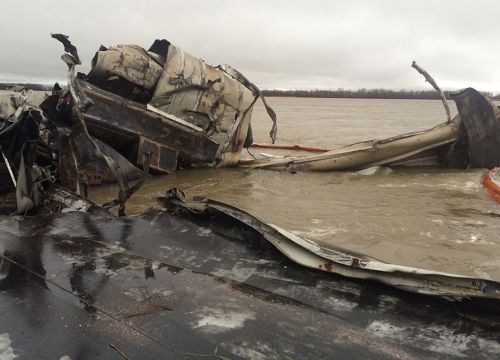
Damaged barge on the Mississippi River.
A barge carrying slurry oil being pushed by the towing vessel Amy Francis hit the Natchez-Vidalia Bridge, Jan. 21, 2016. The barge reportedly has a maximum potential of more than 1 million gallons of slurry oil on board. (U.S. Coast Guard)
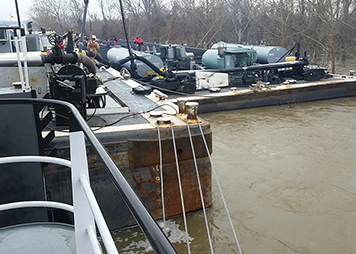
Workers on a river edge pump oil from a damaged barge.
Response crews remove oil from the damaged MM-46 barge, Jan. 23, 2016, on the Mississippi River. Crews estimate that approximately 76,000 gallons of clarified oil mixture is still unaccounted for. Crews continue to take soundings of the damaged barge tank to determine the amount spilled while assessment teams work to locate missing product. (U.S. Coast Guard)
Node Weight: 
3

Alaska Updates Plan for Using Dispersants During Oil Spills

Short title: 
Alaska Updates Dispersant Plan
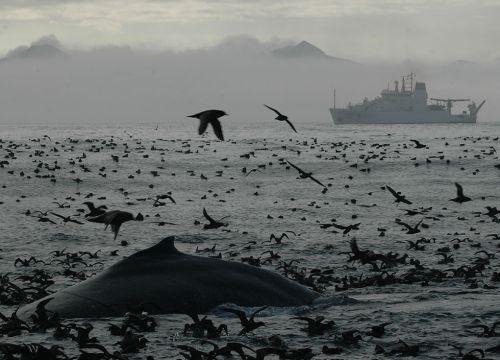
Humpback whale and seabirds at surface of Bering Sea with NOAA ship beyond.
By breaking crude oils into smaller droplets, chemical dispersants reduce the surface area of an oil slick as well as the threats to marine life at the ocean surface, such as whales and seabirds. (NOAA)
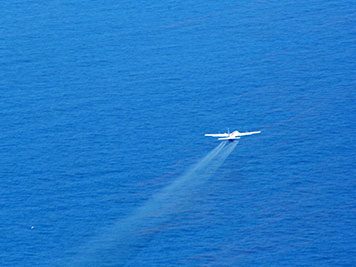
Airplane sprays dispersants over an oil slick in the Gulf of Mexico.
Although only used once in an Alaskan oil spill, dispersants have already been an approved oil spill response tool in the state for a number of years. This new plan improves the decision procedures and designates areas where dispersant use may be initiated rapidly. (U.S. Environmental Protection Agency)
Node Weight: 
3

Working to Reverse the Legacy of Lead in New Jersey's Raritan Bay

Short title: 
A Legacy of Lead in New Jersey’s Raritan Bay
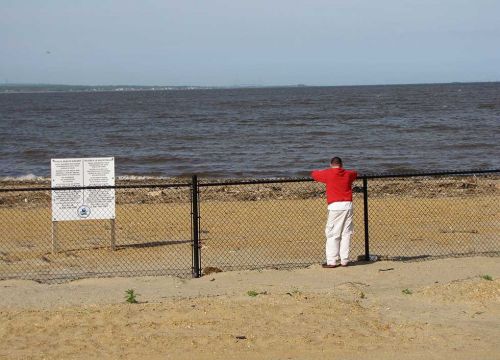
Person standing at a fenced-off beach closed to the public.
Some of the beach front at Old Bridge Waterfront Park in New Jersey's Raritan Bay Slag Superfund site is closed to fishing, swimming, and sunbathing due to lead contamination leaching from metal slag used in the construction of a seawall and to fortify a jetty. (NOAA)
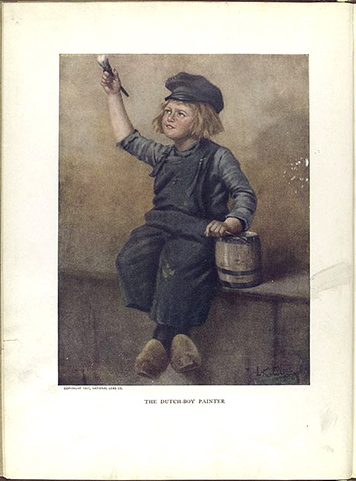
Illustration of a little boy painting used in Dutch Boy paints logo.
This image was adopted by the National Lead Company in 1913 for its Dutch Boy paints. A version of it still is in use today. (New York Public Library Digital Collections/Public domain)
Node Weight: 
4

Helping a 7-year-old Oceanographer Study Oil Spills in Washington's Waters

Short title: 
Helping a 7-year-old Oceanographer Study Oil Spills

JANUARY 11, 2016 -- One spring day in 2014, a shy young boy sidled up to the booth Ashley Braun, a writer with NOAA, was standing at during an open house hosted at NOAA's Seattle campus.

His blond head just peaking over the table, this then-six-year-old, Alek, accompanied by his mom and younger sister, proceeded to ask how NOAA's oil spill trajectory model, GNOME, works.

This was definitely not the question Braun was expecting from a child his age.

After he set an overflowing binder onto the table, Alek showed her the printed-out web pages describing our oil spill model and said he wanted to learn how to run the model himself.

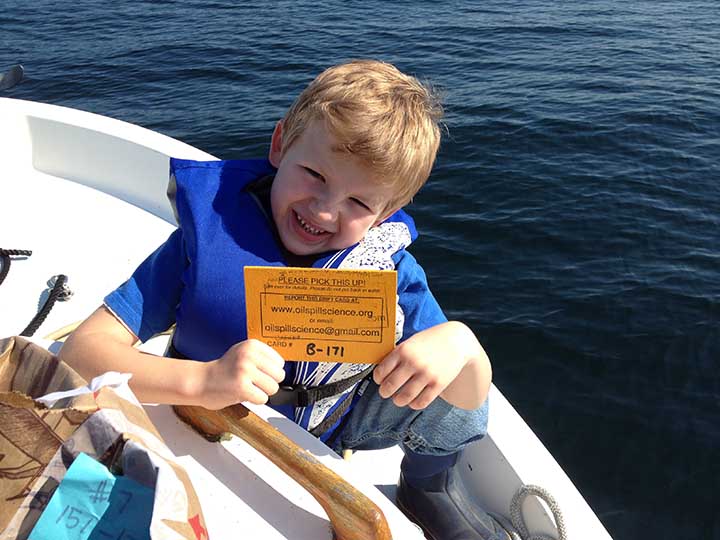
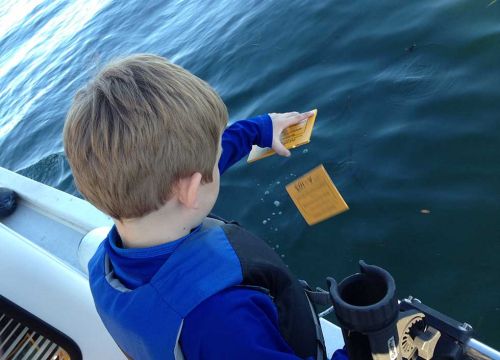
He was apparently planning a science project that would involve releasing "drift cards," small biodegradable pieces of wood marked with identifying information, into Washington's Salish Sea to simulate where spilled oil might travel along this heavily trafficked route for oil tankers.

Luckily, Chris Barker, one of our oceanographers who run this scientific model, was nearby and Braun introduced them.

But that wasn't her last interaction with this precocious, young oceanographer-in-training. Alek later asked Braun to serve on his science advisory committee (something she wished her middle school science fair projects had the benefit of having). She was in the company of representatives from the University of Washington, Washington State Department of Ecology, and local environmental and marine organizations.

Over the next year or so, Braun would direct his occasional questions about oil spills, oceanography, and modeling to the scientists in NOAA's Office of Response and Restoration.

Demystifying the Science of Oil Spills

According to the Washington Department of Ecology, the waters of the Salish Sea saw more than 7,000 journeys by oil tankers traveling to and from six oil refineries along its coast in 2013. Alek's project was focused on Rosario Strait, a narrow eastern route around Washington's San Juan Islands in the Salish Sea. There, he would release 400 biodegradable drift cards into the marine waters, at both incoming and outgoing tides, and then track their movements over the next four months.

The scientific questions he was asking in the course of his project—such as where spilled oil would travel and how it might affect the environment—mirror the types of questions our scientists and oil spill experts ask and try to answer when we advise the U.S. Coast Guard during oil spills along the coast.

As Alek learned, multiple factors influence the path spilled oil might take on the ocean, such as the oil type, weather (especially winds), tides, currents, and the temperature and salinity of the water. He attempted to take some of these factors into account as he made his predictions about where his drift cards would end up after he released them and how they would get there.

As with other drift card studies, Alek relied on people finding and reporting his drift cards when they turned up along the coast. Each drift card was stamped with information about the study and information about how to report it.

A young boy in a life jacket holding a yellow wooden card and sitting on the edge of a boat.
Alek released 400 biodegradable drift cards near Washington’s San Juan Islands in the Salish Sea, at both incoming and outgoing tides, and tracked their movements to simulate an oil spill. (Used with permission of Alek)

NOAA has performed several drift card studies in areas such as Hawaii, California, and Florida. One such study took place after the December 1976 grounding of the M/V Argo Merchant near Nantucket Island, Massachusetts, and we later had some of those drift cards found as far away as Ireland and France.

A young boy drops wooden yellow cards off the side of a boat into water.
Dropping the first round of drift cards off a boat in Washington's San Juan Islands, a kindergartner kicked off his experiment to study oil spills. (Used with permission of Alek)
A hand-drawn map of oil tanker travel, a thank-you note, and a donation letter.
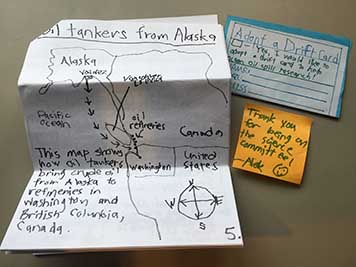
Alek did a lot of work learning about how oil tankers travel from Alaska to Washington waters and about the threat of oil spills. He even fund-raised to cover the cost of materials for his drift cards. (NOAA)
Node Weight: 
3

What's It Like Saving Endangered Baby Sea Turtles in Costa Rica?

Short title: 
Saving Endangered Baby Sea Turtles

Thinking (and Acting) Globally

Ever since I graduated from the University of Washington in 2012, I've wanted to make a positive impact on the dwindling populations of endangered species around the world. I started by volunteering to help orphaned and injured wildlife at the PAWS Wildlife Center near Seattle, Washington (where I recently volunteered during a vegetable oil spill). As I've worked with these animals, my desire of making a global impact on wildlife conservation has increased more and more. In December 2015, I finally got my chance to do it when I traveled to Costa Rica to volunteer with ASVO.

ASVO's primary goal is to promote active conservation in protected areas, beaches, and rural communities of Costa Rica. They have a volunteer program in around 20 different areas of the country, staffed by some 2,300 volunteers, comprising both local and international volunteers from around the world.

Turtle Time

I was working with Olive Ridley sea turtles, a vulnerable species likely to become endangered in the foreseeable future. Their main threats to survival are direct harvest of adults and eggs, incidental capture in commercial fisheries, loss of nesting habitat, and predators. During nesting season in Costa Rica, people with ASVO patrol the beaches for female turtles laying their eggs and then gather the eggs and place them at a hatchery. This way, the eggs are protected from poachers, predators, and other threats, both human and environmental. The eggs incubate in the hatchery for between 52 and 58 days before hatching.

Left: Young woman in sunglassess holds a box of sand with three baby turtles. Right: A group of newly hatched sea turtles on a beach viewed in red light.
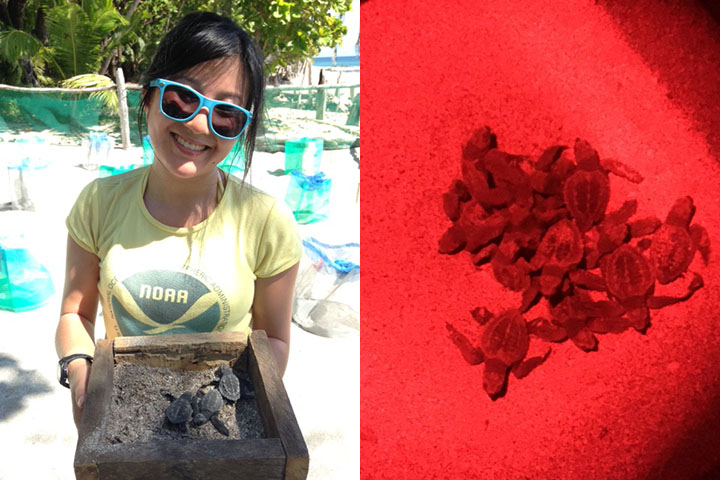
Left, NOAA's Valerie Chu traveled to Costa Rica as a volunteer to help protect young sea turtles and give them a head start. (Used with permission of Valerie Chu) Right, Volunteers working at night could only use red light because sea turtles are very sensitive to white light, which can disorient them. (Used with permission of Julie Watanuki)

Because I had arrived at the end of sea turtle nesting season, I mostly handled the hatchlings and released them into the ocean. When the newly hatched turtles had completely emerged from their nests, I would—while wearing a glove—pick up each one from its nest and head to the ocean. I would then set the turtles down on the sand and watch them walk into the ocean. Some turtles would lose their way because they would walk in the wrong direction or get swept aside by a big wave, so it was my job to make sure they found their way to the ocean without mishap.

Most of my turtle volunteer shifts were at night, and because sea turtles are very sensitive to white light, we could only use a red light while handling them. During night shifts, we were always paired with a second person, allowing us to have one person handle the hatched turtles while the other could stand guard at the hatchery (a very important job, as I observed my first night).

After releasing the turtles, I had to record the number of turtles released, the time of the release, and other notes. Each of the nests held roughly 80-100 eggs, and about 50-70 eggs would hatch, which was an incredible sight.

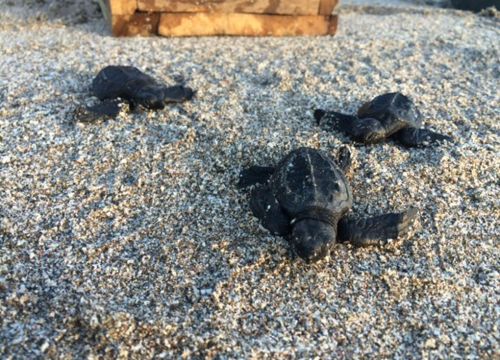
Three newly hatched Olive Ridley sea turtles crawl across sand.
Newly hatched Olive Ridley sea turtles make their way toward the ocean. (Used with permission of Julie Watanuki)
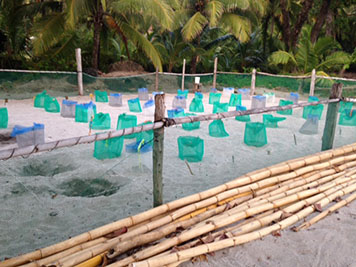
Rows of nets cover sandy sea turtle nests, surrounded by fencing.
Volunteers with ASVO place sea turtle eggs collected from Costa Rican beaches into a hatchery with nets covering the nests to protect them from poachers, predators, and other threats. The eggs hatch less than two months later. (Used with permission of Valerie Chu)
Node Weight: 
4

How Will Climate Change, New Technologies, and Shifting Trade Patterns Affect Global Shipping?

Short title: 
Global Shipping in a Changing World

This is a guest post by University of Washington graduate students Megan Desillier, Seth Sivinski, and Nicole White.

DECEMBER 21, 2015 -- A warming climate is opening up new shipping routes through the Arctic Ocean as summer sea ice shrinks.

Developing technologies allow mega-ships unprecedented in size and cargo to take to the seas.

North America is increasingly exporting oil, shifting global trade patterns.

Each of these issues poses a suite of potential challenges for safely shipping commodities across the ocean and around the world. Out of these challenges, new risks are emerging in marine transportation that NOAA and the maritime industry need to consider.

Our group of three graduate students at the University of Washington, with the support of the International Tanker Owners Pollution Federation (ITOPF) and NOAA's Office of Response and Restoration, are looking to understand how the world's shipping dynamic has changed in recent years and how these emerging challenges in marine transportation will affect that dynamic.

And then we aim to answer: how should NOAA and ITOPF best prepare for responding to these new risks?

In the course of this research project, we will attempt to identify and assess significant emerging risks in marine transportation that have the potential to lead to oil or chemical spills. We are focused on three drivers of emerging risks in the global shipping network: developing technologies, changing patterns of marine trade, and shifting environmental conditions due to climate change. Each of these drivers will be considered within three distinct time frames: the present, 4-10 years from now, and more than 10 years from now.

Risky Business

The emerging risks that we will identify and assess come from analyzing the network of global cargo ship movements, focusing on the emerging usage of the Northern Sea Route, Northwest Passage, Trans-Arctic Route, the Panama Canal, the Suez Canal, and the possibility of a future Nicaraguan Canal.

At this point in our project, we have come across several interesting findings relating to each of our three main research areas. Within the area of developing technology, for example, we are examining the emerging risk of "mega-vessels," which include "mega-containers," "mega-tankers," and "mega-bulkers," depending on their cargo type. These mega-vessels are massive and measure significantly larger than previous, standard-sized vessels. For example, any container ship over 10,000 twenty-foot equivalent units, or TEUs, can be considered a "mega-ship." However, the largest mega-vessel to date can handle 18,000 TEUs. Bulk carri

ers are used to transport unpackaged cargo in bulk, such as grain, ore, and cement. These ships have also grown in size to the new mega-bulkers, which can handle over 80,000 deadweight tons (DWT), as opposed to the most common, smaller-sized bulk carrier that can handle 60,000 DWTs. In addition, ships are carrying riskier cargoes, which, depending on the cargo, can lead to a dangerous phenomenon known as liquefaction. In general, liquefaction can occur during events like earthquakes, when intense shaking causes "water-saturated sediment temporarily [to lose] strength and [act] as a fluid."

This phenomenon can also happen on board ships when a cargo, like nickel-ore, becomes wet either before being loaded or while on board and then liquefies due to the ship's movements. When that happens, the liquefied cargo quickly destabilizes the ship and can lead to it sinking. There are numerous cases of cargo liquefaction occurring on standard-sized bulk carrier ships, which can result in the loss of both crew and vessel.

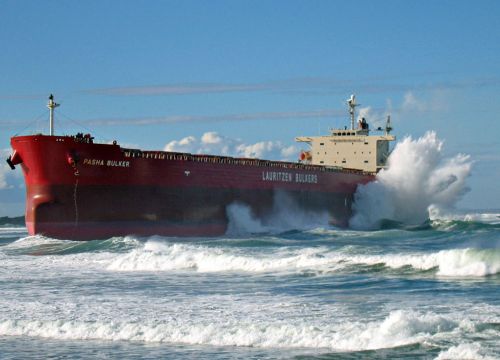
Large waves crash on a huge cargo ship aground on a beach.
After a major storm, a massive bulk cargo ship, the Pasha Bulker, ran aground on a beach in Australia in 2007. (Credit: Tim J. Keegan/Creative Commons Attribution-Share Alike 2.0 Generic license)
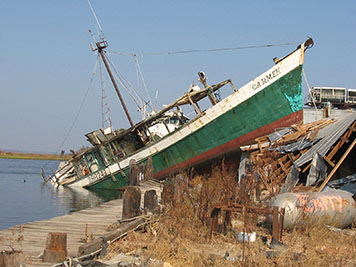
Fishing vessl half in water and half on a damaged building.
Hurricane Katrina's storm surge left this fishing vessel on top of a local fish dealer shop in Mississippi. Even small changes in sea levels can have major effects on storm surge. How will a changing climate affect affect global shipping? (NOAA)
Node Weight: 
4

Why Is It So Hard to Count the Number of Animals Killed by Oil Spills?

Short title: 
Estimating the Number of Animals Killed by Oil Spills
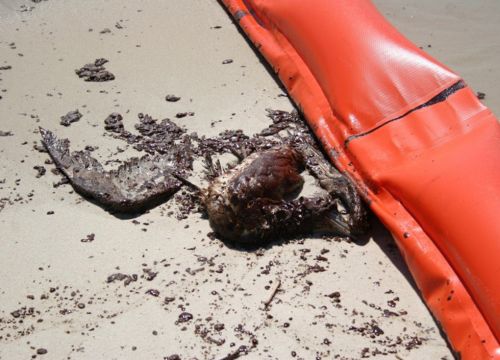
Dead bird covered in oil next to spill containment boom on a beach.
Many animals directly killed by oil spills will never be found at all for a number of reasons. Even if people can find a dead animal carcass, it might be too decomposed to tell if oil killed it. (Department of Interior)
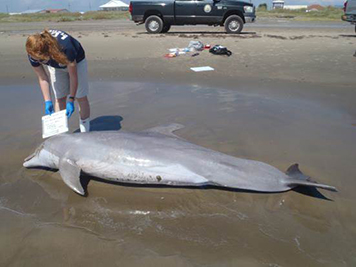
Scientist records data on a dead dolphin on a beach.
Oil spills can have indirect effects that don’t necessarily kill animals and plants, at least, not right away, but those impacts can lead to death and health and reproductive problems months or years later. (Credit: Louisiana Department of Fisheries and Wildlife)
Node Weight: 
3

On the Hunt for Shipping Containers Lost off California Coast

Short title: 
Shipping Containers Lost off California Coast

DECEMBER 16, 2015 -- On December 11, 2015 the Matson container ship M/V Manoa was en route to Seattle from Oakland, California, when it lost 12 large containers in heavy seas.

At the time of the spill, the ship was maneuvering in order to allow the San Francisco Bay harbor pilot to disembark.

The containers, which are 40 feet long and 9 feet wide, are reported as empty except for miscellaneous packing materials, such as plastic crates and packing materials such as Styrofoam.

Luckily there were no hazardous materials in the cargo that was spilled.

The accident occurred about eight miles outside of the Golden Gate Bridge in the Greater Farallones National Marine Sanctuary. Three containers have come ashore, two at or near Baker Beach, just south of the Golden Gate Bridge, and one at Mori Point near Pacifica, California. The search continues for the others.

The Coast Guard is responding to this incident with assistance from NOAA, the National Park Service, State of California, and City of San Francisco. The responsible party is working with an environmental contractor to recover the debris and containers.
The Coast Guard asks that if a container is found floating or approaching shore to exercise caution and notify the Coast Guard Sector San Francisco Command Center at 415-399-7300.

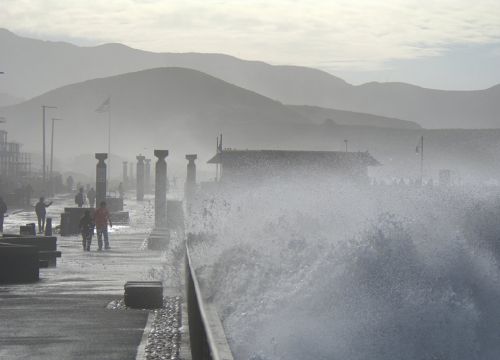
Large waves break on a pier that people are walking along.
The M/V Manoa lost 12 containers in stormy seas off the coast of California in the area of the Greater Farallones National Marine Sanctuary. (Credit: Beach Watch/mojoscoast)
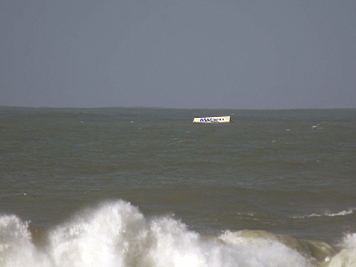
A Matson shipping container floating off the California coast.
So far, three of the 12 lost shipping containers have washed ashore on California beaches. The search continues for the others. (Credit: Beach Watch/mojoscoast)
Node Weight: 
3

What Was the Fate of Lake Erie's Leaking Shipwreck, the Argo?

Short title: 
Fate of Leaking Shipwreck in Lake Erie

DECEMBER 10, 2015 — At the end of October, we reported that our oil spill experts were helping the U.S. Coast Guard with a spill coming from the tank barge Argo in Lake Erie. The unusual twist in this case was that the leaking Argo was located at the bottom of the lake under approximately 40 feet of water. Nearly 80 years earlier, on October 20, 1937, this ship had foundered in a storm and sank in western Lake Erie.

At this point, the pollution response for the Argo is wrapping up, and we have more information about this shipwreck and the fate of its cargo. For example, we knew that originally this ship was loaded with thousands of barrels of crude oil and benzol (an old commercial name for the chemical benzene), but after decades of sitting underwater, were the eight tanks holding them still intact? How much of the oil and chemical cargo was still inside them? What exactly was causing the discolored slicks on the lake surface? What was the threat to people and the environment from this pollution?

In Less Than Ship-Shape

Based on our previous work with NOAA's Remediation of Underwater Legacy Environmental Threats (RULET) project, we had identified the Argo as a potential pollution threat in 2013. It was one of five potentially polluting wrecks identified in the Great Lakes. However, the exact location of the wreck was unknown, and the barge was thought to be on the Canadian side of the lake.

But in September 2015, the Cleveland Underwater Explorers located the vessel, which was confirmed to be in U.S. waters of Lake Erie and appeared from side-scan sonar survey imagery to be intact. Divers commissioned by the Coast Guard surveyed the wreck in October and found its eight cargo tanks were intact. Yet they also observed something slowly leaking from a small rivet hole in the vessel’s structure. After sampling the leaking material, we now know that it was primarily benzene with traces of a light petroleum product.

Two people on a boat inspect a diver in a full dive suit.
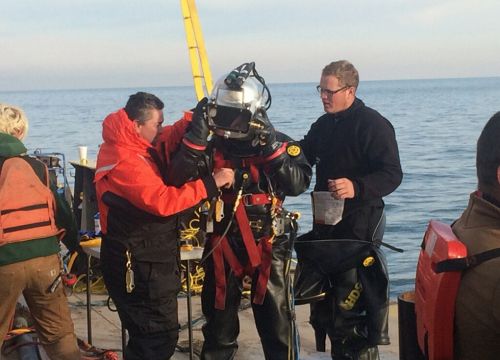
A diver, wearing a positive pressure dive suit, is inspected by his coworkers prior to conducting dive operations for the Argo response in Lake Erie, Nov. 24, 2015. Divers conducting operations during the Argo response are required to wear specialized dive suits designed for the utmost safety to the diver while ensuring flexibility, ease of decontamination, and chemical resistance. (U.S. Coast Guard)
Two hands place a label on a jar of oil.
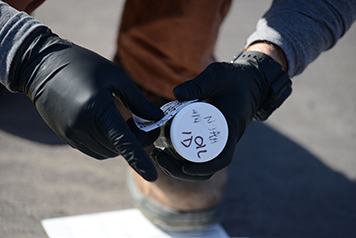
A responder labels a sample of product for analysis extracted from the Lake Erie Barge Argo Nov. 11, 2015. NOAA was involved in coordinating environmental sampling and analysis of the leaking chemicals coming from this 1937 shipwreck. (U.S. Coast Guard)
Node Weight: 
3

When Vegetable Oil Coats Local Birds, One NOAA Staffer Swaps Computer Software for Rubber Gloves and Soapy Water

Short title: 
Volunteering to Clean Oiled Birds

This is a post by the Office of Response and Restoration's Valerie Chu.

DECEMBER 1, 2015 -- While I work for a part of NOAA that responds to oil and chemical spills, I'm normally behind the scenes.

My job is to check if the computer software programs run properly so that they can do things like predict the impacts of pollution on aquatic species.

But a recent and unusual vegetable oil spill in my own backyard brought me to the front lines for the first time.

While food-based oils don't tend to be as toxic as petroleum-based oils, they can still harm wildlife in a number of ways, such as coating feathers or fur and destroying the insulating properties that keep animals warm in aquatic environments.

An accidental spill of cooking oil in Seattle, Washington, ended up affecting dozens of ducks and geese in a neighborhood pond. The oiled birds are being treated at PAWS Wildlife Center in Lynnwood, Washington, with a group called Focus Wildlife International providing treatment to these birds.

Left: Cleanup workers in a boat remove vegetable oil from a pond with booms and absorbant pads. Right: Two Canada geese try to preen oil from their feathers next to a pond.
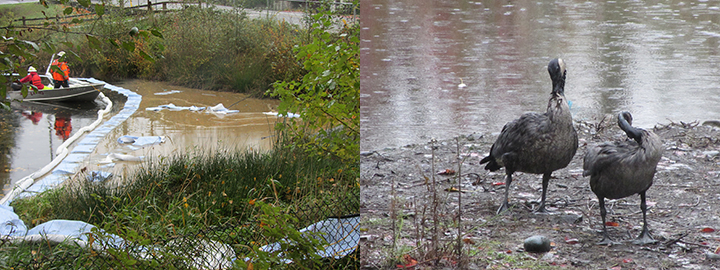
Left, responders collected spilled vegetable oil in an area where it was easier to remove from the Seattle pond. November 7, 2015. Right, when birds get oil on their feathers, it destroys the insulating properties of the feathers and their ability to stay warm. These Canada geese were preening their feathers to try to remove the vegetable oil. (Copyright: Washington State Department of Ecology)

That's how I got involved with this spill, even though NOAA is not involved with this spill response. I'm a volunteer Wildlife Care Assistant at PAWS and have been volunteering there for about two years. The primary goal at PAWS is to rehabilitate sick, injured, and orphaned wildlife and then release them back into the wild. They care for more than 260 species, ranging from eagles and chickadees to seals and bears. Saturday, November 21, 2015 was my first time volunteering with oiled wildlife.

As I learned, the process of washing each oiled bird involves multiple washing tubs, a rinsing station, warm water, and lots of Dawn dish soap. I was assigned several tasks to help with the washing. First, I had to give the oiled birds eye drops to help protect their eyes from the soap. In addition, I dumped washing tubs after they were used, refilled the tubs with warm water, and cleaned the enclosure containing some of the oiled birds.

Two women in overalls and gloves spray water to rinse oil and soap from a Canada goose.
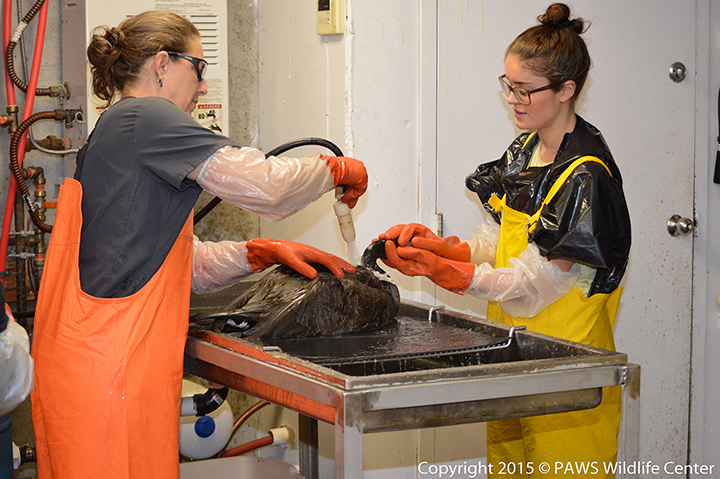
Each oiled bird is carefully washed and rinsed multiple times to remove oil from its feathers. (Copyright: PAWS Wildlife Center)

Interestingly, I also recorded the start and end times of washing and rinsing for each bird. The washing and rinsing process times varied with the birds' cooperation, as well as the degree of oiling. If there was an uncooperative bird, then the process would definitely take longer. In total, I volunteered for four hours and helped wash vegetable oil off of two Canada geese.

Overall, it was really fulfilling for me to help wash birds affected by this spill because it combined my career in spill response software with my hobby of caring for wildlife. Spending my Saturday washing oiled birds was absolutely worthwhile for me, giving me first-hand experience with what it is like to care for animals affected by an oil spill.

And more than ever, this experience has encouraged me to continue developing software tools for spill response and volunteering with oiled wildlife.

Three people help wash an oiled goose in big soapy wash tubs.
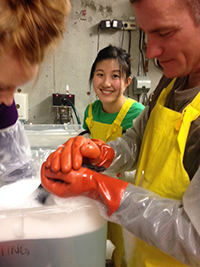
Valerie Chu, at center, volunteers with PAWS to help clean oiled birds in Seattle, Washington.

Valerie Chu is an Environmental Scientist who has been providing support for the Office of Response and Restoration's Emergency Response Division software projects since 2012, when she obtained her undergraduate degree in Environmental Science and Resource Management and then started working with NOAA and Genwest. During her spare time, she volunteers with animal welfare-related causes such as PAWS and Zazu's House Parrot Sanctuary.

Closeup of an oiled Canada goose in a wash tub while gloved hands wash it.
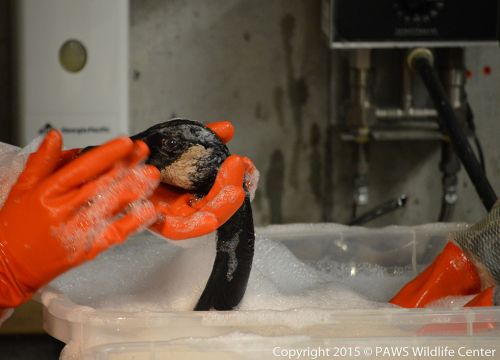
A Canada goose gets carefully washed after a vegetable oil spill in Seattle, Washington, coated its feathers. (Copyright: PAWS Wildlife Center)
Node Weight: 
4

Explore Oil Spill Data for Gulf of Mexico Marine Life With NOAA GIS Tools

Short title: 
Explore Oil Spill Data With NOAA GIS Tools
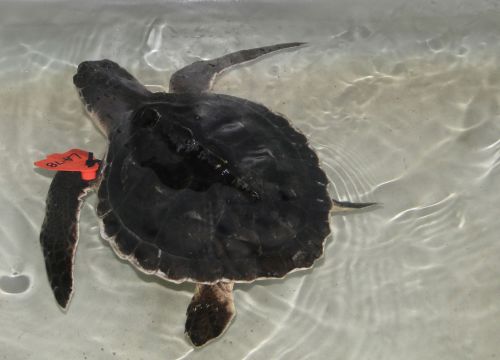
A Kemp's Ridley sea turtle, cleaned and tagged, in a tank.
A Kemp's Ridley turtle, now cleaned and recuperating, that was oiled during the Deepwater Horizon oil spill. NOAA has a number of tools to help you access the huge amount of data about sea turtles and other marine life gathered during the Deepwater Horizon oil spill. (NOAA)
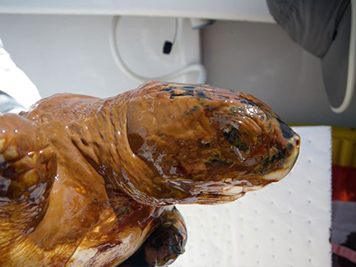
The head and front portion of a Kemp's Ridley sea turtle covered in oil.
Close-up of an oiled Kemp's Ridley turtle captured during a June 1, 2010 survey of the Gulf of Mexico. You can use NOAA tools to find data about turtles sighted and captured in the wake of the Deepwater Horizon oil spill. (NOAA)
Node Weight: 
3

Using NOAA Tools to Help Deal with the Sinking Problem of Wrecked and Abandoned Ships

Short title: 
NOAA Tools for Dealing with Wrecked and Abandoned Ships

NOVEMBER 13, 2015 -- Walk along a waterfront in the United States and wherever you find boats moored, you won't be hard pressed to find one that has been neglected or abandoned to the point of rusting, leaking, or even sinking.

It's a sprawling and messy issue, one that is hard to fix. When you consider the thousands of shipwrecks strewn about U.S. waters, the problem grows even larger.

How do these vessels end up like this in the first place?

Old ships, barges, and recreational vessels end up along coastal waters for a number of reasons: they were destroyed in wartime, grounded or sunk by accident or storm, or just worn out and left to decay.

By many estimates shipping vessels have a (very approximate) thirty-year lifetime with normal wear and tear. Vessels, both large and small, may be too expensive for the owner to repair, salvage, or even scrap.

So, wrecked, abandoned, and derelict ships can be found, both invisible and in plain sight, in most of our marine environments, from sandy beaches and busy harbors to the deep ocean floor.

As we've discussed before, these vessels can be a serious problem for both the marine environment and economy. While no single comprehensive database exists for all wrecked, abandoned, and derelict vessels (and if it did, it would be very difficult to keep up-to-date), efforts are underway to consolidate existing information in various databases to get a larger view of the problem.

NOAA has created several of these databases and resources, each created for specific needs, which are used to map and track shipwrecks and abandoned vessels. These efforts won't solve the whole issue, but they are an important step along that path.

Solution to Pollution

NOAA's Remediation of Underwater Legacy Environmental Threats (RULET) project identifies the location and nature of potential sources of oil pollution from sunken vessels. These include vessels sunk during past wars, many of which are also grave sites and now designated as national historic sites. The focus of RULET sites are wrecks with continued potential to leak pollutants.

Many of these wrecks begin to leak years, even decades, after they have sunk. An example of such a wreck is Barge Argo, recently rediscovered and found to be leaking as it lay 40 feet under the surface of Lake Erie. The barge was carrying over 4,500 barrels of crude oil and the chemical benzol when it sank in 1937. It had been listed in the NOAA RULET database since 2013. U.S. Coast Guard crews, with support from NOAA's Office of Response and Restoration, are currently working on a way to safely remove the leaking fuel and cargo.

As in the Barge Argo case, the RULET database is especially useful for identifying the sources of "mystery sheens" —slicks of oil or chemicals that are spotted on the surface of the water and don’t have a clear origin. NOAA's Office of National Marine Sanctuaries and Office of Response and Restoration jointly manage the RULET database.

Information in RULET is culled from a larger, internal NOAA Sanctuaries database called Resources and Undersea Threats (RUST). RUST lists about 30,000 sites of sunken objects, of which about 20,000 are shipwrecks. Other sites represent munitions dumpsites, navigational obstructions, underwater archaeological sites, and other underwater resources.

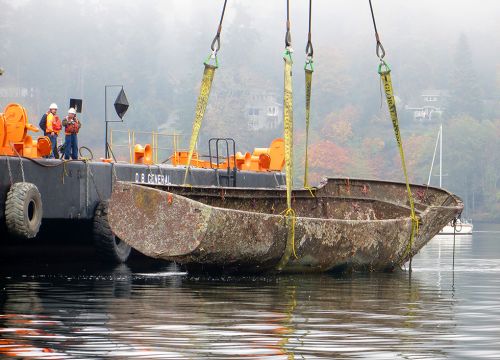
Workers direct the lifting of a rusted boat from a waterway onto a barge.
Clearing a derelict vessel from the Hylebos Waterway in Tacoma, Washington. NOAA has created several tools and resources for mapping, tracking, and dealing with shipwrecks and abandoned vessels. (Washington Department of Natural Resources/ Tammy Robbins) Used under Creative Commons Attribution-NonCommercial-NoDerivs 2.0 Generic license.
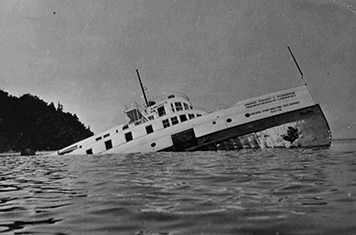
Black and white photo of a steam ship half sinking in the Great Lakes.
The S/S America sank after hitting rocks in Lake Superior in 1928, but the wreck was found close to the water surface in 1970. This ship has become the most visited wreck in the Great Lakes, where divers can still see a Model-T Ford on board. (Public domain)
Node Weight: 
2

Remembering the Veterans That Served America and the Historic Shipwrecks They Left Behind

Short title: 
Historic Shipwrecks Left Behind by War
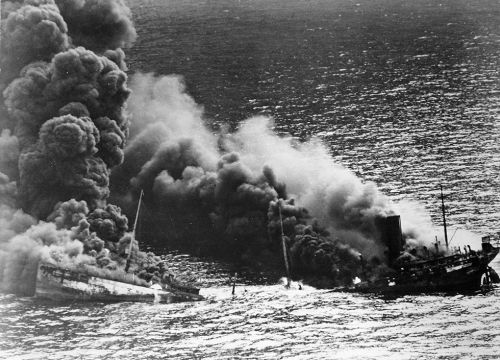
Smoke rises from a sinking tanker in the Atlantic Ocean.
Beyond their military and historic significance, these wrecks also represent an enormous human toll. The Allied tanker Dixie Arrow was torpedoed in 1942 by a German submarine during the Battle of the Atlantic. The wreck lies off North Carolina's Cape Hatteras, but due to the way it was destroyed, this wreck does not likely pose any threat of pollution today. (U.S. Navy/National Archives)
Map showing locations of 20,000 shipwrecks in United States waters.
More than 20,000 shipwrecks exist in U.S. waters. Many are naval and commercial vessels destroyed during wartime. (NOAA)
Node Weight: 
4

Pages

Subscribe to response.restoration.noaa.gov RSS